
Devon has been battered by the elements this week. My mum lives in a new house in a village in Devon. With new build properties, there has been a move to make sure that the buildings are energy efficient and heating supplies are sustainable, homes well insulated, which are all a good things and help the planet and also should help bring mums energy costs down in the long run.
Devon also got hit by snow this week on Thursday and although there was enough snow to stop the buses running for a few hours where I live in Exeter, where mum lives the storm took out the electricity supply too.

She has an air pump at the garden which is run by electricity where air pumps heats up hot water, that then go to under floor heating pipes under the floors downstairs and takes hot water upstairs to radiators and a water storage unit. Well the village that she lives in had this power cut and on Thursday her electric was off from 09:30am to 4pm and during this time the temperature dropped too and snow fell.
I was worried about her and unfortunately the mobile phone network also went down in the area at about the same time, for all I know also due to having no electricity supply too. When I managed to get hold of her just after 4pm she was ok but cold and the heating was able to come on as soon as the electricity came back on, but she was so cold that she had to spend much of the day in bed just to keep warm and comfortable.
So over the weekend I have been trying to research possible ways of providing electricity or other support for her during a power cut. On the weekend we also had our second name storm of the season, I was staying with my mum and at around 6 am this morning the wind was blowing and the rain was pouring down there was another brief power cut although this time the power came straight back on fortunately. It is likely there will be more storms and power cuts on the way this season too.
So I started to do some research into possibly energy or devises that could assist mum during a power cut and the first thing I started looking into was the possibly of what they call a power station its a kind of rechargeable large battery, that people take on holiday when they go camping. I though wouldn’t it be great if maybe it could power a kettle and a heater, while the electric is off in the house that would be an awesome comfort to my mum and the only worry then would be where to plug it in and how many cups of tea she could make and how long it could heat a room for.
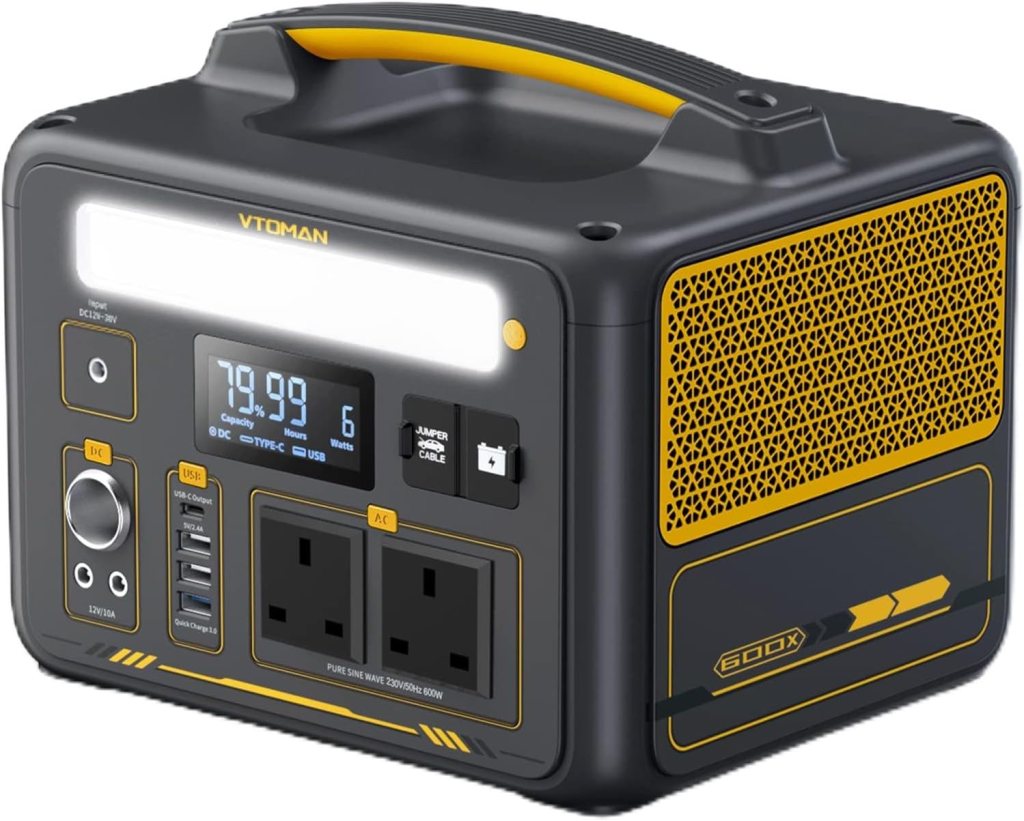
But from what little research I have done so far it take a huge amount of electricity to heat up a kettle let alone an electric heater, which would use a huge amount of electricity that a simply battery powered station simply could not provide. If lucky you might be able to heat up a small camping kettle a few times a battery charge, whilst spending something like £500 or more on a battery power station powerful enough to be able to heat the kettle and not much else. I don’t think the technology of kettles heating up water has changed much in over 50 or more as there has not been seen to be a need for that kind of invention we just switch them on at the mains and they work.
My Dad also sensible suggested a thermos flask for her to keep hot water in, for what every hot drink she might want to make use of it for. You can get ones that are 500ml or 1000ml in size made by thermos that will keep water heated for potentially up to 24 hours. There are minor problems with doing this though. To provide hot water during a power cut firstly, you don’t know when the power cut is going to happen so you would need to fill it with hot water before any big storm is forecast, just in case. Secondly if you accidently forget to fill it up or don’t fill it up before the electric goes off its no use to you whatsoever.

Price wise though it’s much more realistic to by a thermos flask for £25 and make good use of it rather than spend £500 or more on a battery power station that is not powerful enough to heat up your home kettle. So it looks like Santa will be getting mum a thermos flask for Christmas and as for the electric battery power station although it sounds like a great idea sadly it’s just not practical or powerful enough for the budget that we have.
It feels like better minds than mine will need to tackle these issues head on as if we are planning to have properties more dependant on just electric for there power needs no more gas central heating systems or wood burners or oil heating systems in home then homes in communities which are vulnerable to the elements and power cuts when storms take place will also have to have some sort of back up system that can continue to supply electricity while the main power is off during winter months.
Were nowhere near investing in a solar panel roof for to be covered in snow or for the sky to be covered in clouds and she doesn’t have the land to place a working wind powered generator onto. If the batteries for home power stations could improve or if home electrical products became less power hungry then that is certainly an investment for the future. But for now I think we will stick to a thermos flask.


 Welcome to Huwspace
You must be logged in to post a comment.