Back in my 20s in the 2000s there was a bar I used to drink in that I remember to have excellent live music within its walls with open mic nights and guest musicians from all over the world – best bar in town at that time and would be very hard to beat today to. Located at 11 St. David’s Hill, Exeter, EX4 3RG. I happened to live and work on the same road at the time and so much chaotic merriment was had in said pub. I have tried to cram a lot of songs into one post today but there were just so many good musicians I wanted to honour them all in one place.
Me drinking a pint of Guinness at the NBI
History and Timeline
Early History: Originally operating under names like the New Ship Inn and the North Bridge Inn, the site has 19th-century origins with various historical owners and licensees (such as Samuel Gubb, John Chalk, and the Beer family).
Free House Era & Music: By the 2000s, it operated as a popular free house known for cask ales, darts/euchre teams, and a vibrant live music and DJ scene (frequently partnering with Phonic FM). [1, 2, 3]
Closure & Later Names:
The pub officially closed at the end of December 2012 / January 2013.
Some of the musicians that I saw ands heard play there are some of the finest musicians I have ever heard play and I will try and put some songs up here to reflect what they sang and show just how great they are.
Nuala Honan – All is not Lost
Nuala lived in Exeter for a time in the 2000s and so we would sometimes be treated to her singing songs on the open mic night or with her in her band Nuala & the Alchemy Quartet.
Dan Donnelly – Love will save the day
Dan Donnelly (known by his handle or project name Sonovagun / @dansonovagun) is a Northern Irish singer-songwriter, multi-instrumentalist, and session/touring musician.
niall connally seagull
Niall Connolly is an acclaimed Irish indie-folk singer-songwriter and storyteller. Born in Cork, Ireland, in 1977, he moved to New York City in 2006 and is currently based in Rockaway, Queens.
Rory Ellis – Road of No Return
An acclaimed Australian singer-songwriter and troubadour known for his deep, gravelly baritone voice. Operating primarily in the Americana, alt-country, folk, and blues genres, he has been performing globally for over 30 years.
David Rovics – How Far Is It From Here To Nuremburg
David Rovics is an American indie folk punk singer-songwriter, podcaster, and political activist based in Portland, Oregon. Described as a “professional flat-picking rabble-rouser,” his music acts as a vehicle for sharp social commentary, heavily focusing on labor history, anti-globalization, anti-war advocacy, and social justice.
3 Daft Monkeys – Astral Eyes
3 Daft Monkeys is a world-music-influenced acoustic band from Cornwall, UK, known for their upbeat festival performances and genre-defying sound.
The Levellers – One Way
Though I did not see the Levellers play at the North Bridge Inn I did have a good chat and drink one evening with Mark Chadwick the lead singer of the Levellers when he popped in one night for a pint while in Exeter for the Beautiful Days festival the The Levellers ran.
Why These Challenges Matter More Than Any Single Crisis
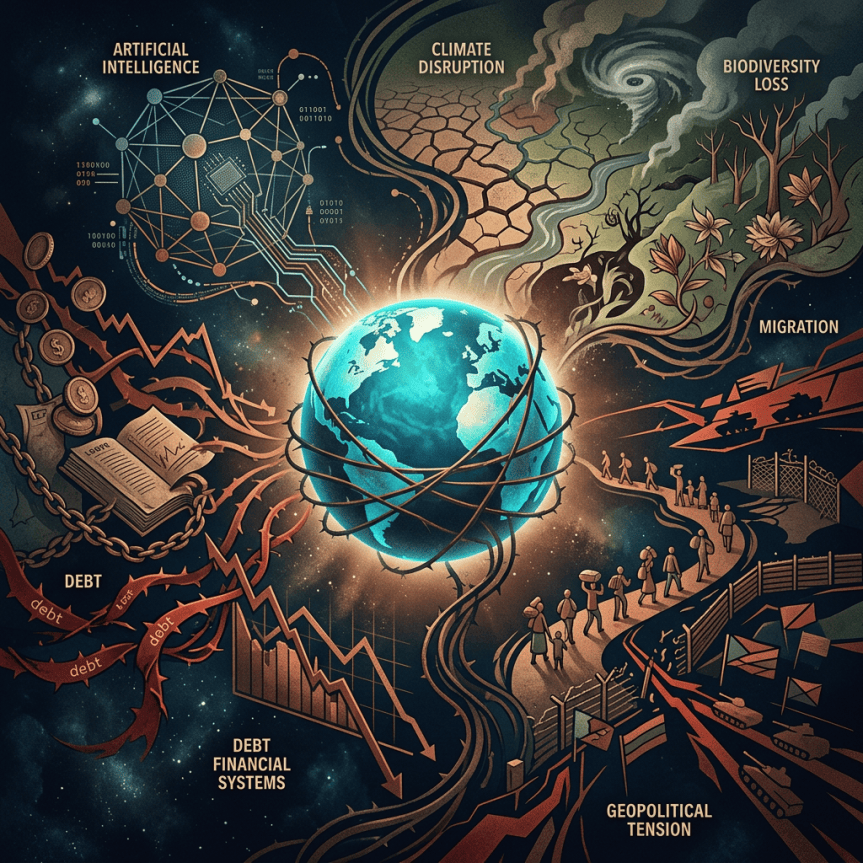
One of the biggest misunderstandings about the future is the belief that debt, AI, climate change, biodiversity loss, migration, war, and inflation are separate issues. They are not. They are interconnected systems that can reinforce each other, creating a much larger challenge than any one problem alone. As your original article notes, these risks form a “polycrisis” where one pressure amplifies another.
The importance of these challenges lies in their ability to undermine the foundations of modern civilisation:
Economic stability
Government legitimacy
Social cohesion
Environmental health
Food and energy security
Individual wellbeing
If governments become overwhelmed by debt while simultaneously facing climate disasters, AI-driven labour disruption, ageing populations and geopolitical instability, their ability to respond effectively may become constrained. This is why many analysts argue that resilience is becoming as important as growth.
Government Debt and Fiscal Limits
Modern societies depend upon governments to provide healthcare, welfare, education, infrastructure, emergency services and national security.
If debt continues rising faster than economic growth, governments face increasingly difficult choices:
Raise taxes.
Cut public services.
Borrow more money.
Increase inflation through monetary expansion.
None of these options are politically easy.
The real concern is not debt alone but whether future economic growth can support those obligations. If tax revenues shrink because of slower growth or technological disruption, the burden becomes even harder to manage.
AI and the Future of Work
Artificial intelligence may deliver extraordinary productivity gains, but it also challenges traditional economic assumptions.
For centuries, governments have relied upon employment as the primary mechanism for distributing wealth and collecting taxes.
If AI performs increasing amounts of cognitive work, society must answer difficult questions:
Who owns AI-generated wealth?
How are displaced workers supported?
How do governments collect revenues?
How do people find meaning and purpose beyond employment?
These questions could become some of the defining policy debates of the twenty-first century.
Climate Change and Biodiversity
Climate and biodiversity are often treated as environmental concerns, but they are fundamentally economic concerns.
Nature provides services worth trillions of pounds annually through:
Pollination
Water purification
Soil formation
Climate regulation
Flood management
When these systems degrade, the costs do not disappear. They are transferred to businesses, taxpayers and consumers.
A world with declining biodiversity is generally a world with higher costs, lower resilience and greater instability.
The Benefits of Crisis
While crisis sounds entirely negative, history shows that major disruptions often create opportunities for renewal and transformation.
This does not mean suffering is desirable. Rather, crises expose weaknesses that societies have ignored for years.
1. Crisis Forces Innovation
Many of humanity’s greatest advances emerged from difficult periods.
Economic pressures can accelerate:
Renewable energy deployment.
Circular economies.
Local manufacturing.
Resource efficiency.
Technological innovation.
Necessity often drives creativity.
A future marked by resource constraints may encourage societies to become more efficient, less wasteful and more sustainable.
2. Crisis Reveals What Truly Matters
Periods of economic uncertainty often shift attention away from endless consumption towards more meaningful measures of prosperity.
People may increasingly value:
Family.
Community.
Health.
Nature.
Skills.
Local resilience.
A crisis can expose the difference between wealth and wellbeing.
3. Crisis Encourages Community Resilience
Periods of hardship frequently strengthen local networks.
Mutual aid groups, community energy projects, local food systems and cooperative enterprises often emerge when traditional systems struggle.
Your article correctly highlights the importance of mutual aid networks, local food security and practical skills development. These approaches not only prepare communities for shocks but also create stronger social bonds.
4. Crisis Accelerates Economic Reform
Many current economic systems were designed for a twentieth-century world.
Future crises may force governments to consider reforms such as:
New taxation models.
Wealth taxes.
Land value taxes.
Universal basic income.
AI dividend schemes.
Circular economic policies.
Ideas that seem politically impossible today can become mainstream during periods of disruption.
Environmental degradation often occurs because societies focus on short-term growth.
As the costs become impossible to ignore, governments, businesses and communities may shift towards:
Rewilding.
Regenerative agriculture.
Nature restoration.
Ecosystem protection.
Community-owned renewable energy.
The result could be healthier landscapes and greater ecological resilience than exists today.
6. Crisis Can Lead to a New Economic Model
Perhaps the greatest opportunity is the possibility of moving beyond an economic system that measures success almost entirely through GDP growth.
A future economic model might place greater emphasis on:
Human wellbeing.
Ecological health.
Community strength.
Social equality.
Long-term resilience.
The transition would be challenging, but crises often provide the political momentum required for transformational change.
What we build after the storm and why?
The real question is not whether challenges are coming. Every generation faces transformative pressures. The question is whether we use those pressures to build something better.
The debt burden, AI disruption, climate instability and biodiversity loss are warnings that current systems may be reaching their limits. Yet they also provide an opportunity to redesign our economies around resilience, sustainability and shared prosperity.
History suggests that great crises often become turning points. The Industrial Revolution emerged from upheaval. Modern welfare states emerged from depression and war. Environmental protections emerged from ecological damage.
The coming polycrisis may ultimately force humanity to confront a simple truth: infinite growth on a finite planet is impossible, but infinite innovation, cooperation and adaptation are not.
The greatest benefit of a crisis is that it forces society to choose what kind of future it truly wants to build.
It turns out China has a great firewall, which it uses to block out information or views from places such as on WordPress and other sites from where people can express themselves and speak their minds. Who would have thought that thinking can be thought of as being such a radical thing to think!
The Great Firewall of China is the informal name for China’s system of internet censorship and control. It combines technology, laws, and government regulations to monitor and restrict access to parts of the global internet.
In practical terms, it can:
Block entire websites and services.
Slow down or filter traffic crossing China’s internet borders.
Monitor certain online activities.
Restrict access to information that Chinese authorities deem sensitive.
Some well-known services that have been blocked or heavily restricted at various times include:
Google Search
Gmail
YouTube
Facebook
Instagram
X (formerly Twitter)
Many Western news websites
For WordPress users, the Great Firewall matters because many WordPress themes and plugins depend on resources such as:
Google Fonts
Google Analytics
YouTube embeds
reCAPTCHA
Gravatar
If a visitor in mainland China tries to load a site that depends on those services, the webpage may load very slowly, partially fail, or appear broken.
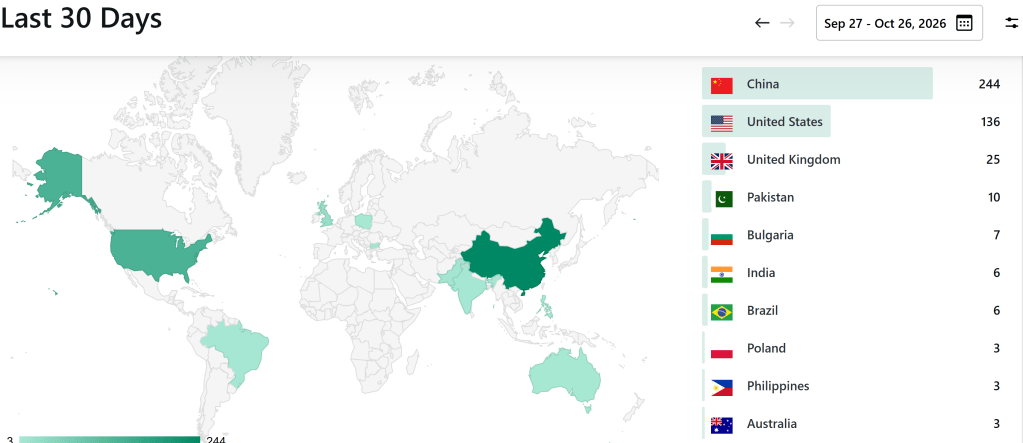
Relating this back to your Huwspace blog, the Great Firewall doesn’t itself explain why you’re seeing Chinese traffic. In fact, it’s a reason why many Chinese users would have a harder time accessing a typical WordPress site. The traffic you’re seeing is more likely to be a mix of:
Search engine crawlers,
AI training/indexing bots,
Automated WordPress scanners,
Genuine readers using a VPN or accessing from regions not affected by mainland restrictions.
One interesting possibility is that because your articles cover geopolitics, technology, climate, and international affairs, they contain the kinds of topics that AI crawlers and researchers often index extensively. That could explain broader international interest, including from infrastructure located in China.
A good analogy is that the Great Firewall is less like a wall around websites and more like a customs checkpoint for internet traffic entering and leaving China. Information isn’t automatically blocked, but it can be inspected, filtered, delayed, or denied passage.
WordPress sites are accessed from within China but the Great Firewall, also means that WordPress.org is accessible in China while WordPress.com websites are blocked, and many WordPress sites perform poorly there because they depend on blocked Google services. So maybe my site is being scanned to ensure it is blocked by the great firewall for regular Chinese readers and so does not even make it through to be seem y any real people at all – I hope that makes sense!
But what I want to know also is why are Chinese actors suddenly showing interest in my WordPress site?
There are several plausible explanations:
1. Automated scanning, not personal interest
The most common explanation is that the traffic is not from people reading your articles. Large networks of automated bots continuously scan WordPress sites worldwide looking for:
Outdated plugins
Vulnerable themes
Exposed login pages (wp-login.php)
XML-RPC endpoints
Weak passwords
Misconfigured installations
When analytics show visitors from China, a significant proportion can be automated security scanning rather than genuine readers.
2. WordPress is an attractive target
WordPress powers a very large share of the web. If an attacker finds a vulnerability in a plugin used by thousands of sites, automated tools can probe millions of WordPress installations globally. Your recent increase in publishing activity may simply coincide with wider scanning campaigns affecting WordPress generally.
3. Content discovery by AI crawlers
Many AI companies, search engines, and data collection services operate crawlers from infrastructure located in various countries, including China. If you’ve been publishing more original content on Huwspace, your site may have become more visible to indexing systems, crawlers, and content aggregators.
4. Genuine readership
Looking at your screenshots, several articles touch on:
Global politics
Climate issues
Indigenous rights
Technology and corporate power
International affairs
These are topics with worldwide audiences. Some of the traffic may be genuine readers from China, Hong Kong, Singapore, Taiwan, Chinese diaspora communities, students, researchers, or people using VPNs.
5. Traffic attribution can be misleading
Many hosting and analytics platforms identify visitors by IP address. Traffic appearing as “China” could actually be:
Cloud providers with Chinese infrastructure
VPN exit nodes
Security scanners
Content delivery services
Search-engine crawlers
The country attribution does not necessarily mean a person in China was actively reading your blog.
Looking at your screenshots
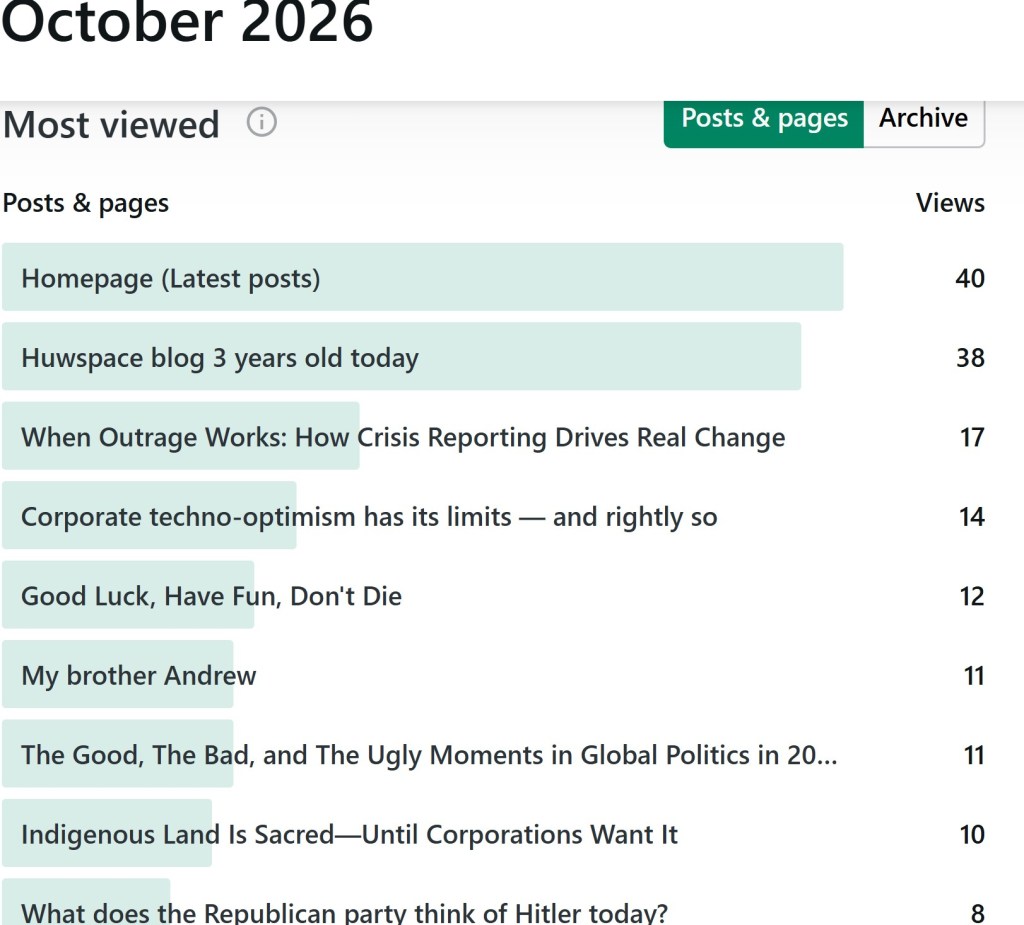
Your traffic increase appears broad rather than concentrated on one politically sensitive article. The homepage received 40 views, and your anniversary post received 38 views, with other articles receiving 10-17 views each. That pattern often suggests discovery through:
Search engines
Social sharing
Crawlers exploring multiple pages
rather than coordinated interest in a single topic.
How to tell if it’s bots or readers
Check your WordPress statistics for:
Referrers (Google, Bing, social media, direct)
User agents (browser vs crawler)
Bounce rates
Session duration
Requests to /wp-login.php, /xmlrpc.php, or unusual URLs
If many of the Chinese visits are requesting login pages, XML-RPC endpoints, or non-existent plugin paths, you’re almost certainly seeing automated reconnaissance rather than readers.
My instinct, based on the traffic levels shown and the fact that you’re running a public WordPress blog, is that the majority of the apparent Chinese interest is probably routine automated scanning and indexing activity rather than Chinese government actors or people specifically targeting Huwspace. The numbers in the screenshots are also quite modest, which is consistent with ordinary web-wide bot activity rather than a focused campaign.
Navigating a Future of Debt, AI Disruption, Climate Breakdown and Economic Uncertainty
There is a growing sense that the world is entering a period unlike anything experienced in recent decades. Across developed and developing economies, government debt is rising, geopolitical tensions are intensifying, artificial intelligence is reshaping labour markets, climate impacts are accelerating, and biodiversity continues to decline. Rather than existing as separate challenges, these pressures increasingly interact with one another, creating what many analysts describe as a “polycrisis” – a situation where multiple systemic risks amplify each other simultaneously.
The question is not simply whether one crisis will occur. The deeper concern is whether several crises could unfold together, testing governments, economies and communities at the same time.
The Great Debt Dilemma
Governments across the world emerged from financial crises, pandemics and economic shocks with unprecedented levels of debt. While debt itself is not unusual, growing concerns centre on whether governments can continue servicing their obligations if economic growth slows while spending demands continue to rise.
Many advanced economies face a difficult combination of ageing populations, rising healthcare costs, infrastructure demands, military spending commitments and climate adaptation requirements. At the same time, taxation systems struggle to keep pace with changing economic realities.
As AI automates more administrative, analytical and professional roles, governments may face declining income tax receipts from traditional employment. Meanwhile, globalisation and digital commerce enable capital and profits to move across borders more easily than labour, potentially limiting national governments’ ability to expand their tax bases.
This creates a dangerous feedback loop:
Higher spending requirements.
Slower economic growth.
Reduced tax revenues.
Larger government borrowing.
Rising debt-servicing costs.
The risk is not necessarily an immediate collapse, but a gradual erosion of governmental capacity and public trust.
AI: Productivity Miracle or Employment Shock?
Artificial intelligence presents one of humanity’s greatest opportunities and one of its greatest uncertainties.
Optimists point to enormous gains in productivity, scientific discovery and healthcare. Pessimists highlight the possibility of large-scale disruption to knowledge work and professional occupations.
Unlike previous technological revolutions, AI does not simply replace manual labour. It increasingly performs functions that were previously considered uniquely human, including writing, analysis, design, administration, coding and decision support.
The danger lies not in AI itself but in the speed of transition. If millions of workers are displaced faster than new industries emerge, societies could face:
Reduced consumer spending.
Higher unemployment or underemployment.
Lower income tax revenues.
Greater pressure on welfare systems.
Increased political instability.
The challenge for governments is ensuring that AI-generated wealth benefits society broadly rather than concentrating in a handful of corporations and asset owners.
Climate Change: The Hidden Economic Multiplier
Climate change is often discussed as an environmental issue, but it is increasingly an economic one. Extreme weather events damage infrastructure, reduce agricultural productivity and increase insurance costs.
The climate crisis acts as a threat multiplier, worsening existing vulnerabilities.
Heatwaves reduce productivity. Floods destroy homes and businesses. Droughts raise food prices. Storms disrupt supply chains.
These impacts create inflationary pressures that ripple through economies. As adaptation costs increase, governments find themselves spending more while often collecting less tax revenue from affected regions.
The result is another cycle of rising debt and economic fragility. Climate-related disruptions may become a permanent feature of the global economy rather than occasional emergencies.
Biodiversity Loss: The Overlooked Crisis
While climate change dominates headlines, biodiversity loss may prove equally significant.
Healthy ecosystems provide services that modern economies largely take for granted:
Pollination of crops.
Water purification.
Carbon storage.
Flood protection.
Soil fertility.
As species disappear and ecosystems degrade, these natural systems become less resilient.
The economic consequences are often invisible until critical thresholds are crossed. Food production becomes less reliable. Natural disasters cause greater damage. Water systems become more expensive to maintain.
Societies have traditionally treated nature as an infinite asset. Increasing evidence suggests that assumption is no longer sustainable.
Conflict, Migration and Global Fragmentation
The post-Cold War vision of increasing global integration appears increasingly uncertain.
Regional conflicts, competition between major powers and resource scarcity are fragmenting global supply chains. These disruptions can lead to:
Higher energy prices.
Increased commodity volatility.
Reduced international investment.
Greater military expenditure.
At the same time, climate impacts and conflict may increase migration pressures. Millions of people could be forced to move due to environmental degradation, water scarcity or instability.
Migration itself is not the problem. The challenge emerges when institutions fail to manage integration effectively or when receiving communities feel economically insecure.
Without social cohesion, economic shocks can be transformed into political crises.
Is the Economic Bubble About to Burst?
Many commentators argue that we are approaching the limits of a debt-fuelled economic model. Others point out that similar predictions have emerged repeatedly throughout history and that economies possess remarkable adaptive capacity.
The truth may lie somewhere in between.
Rather than a single catastrophic collapse, the future may involve a prolonged period of:
Lower growth.
Higher volatility.
Recurring financial instability.
Rising fiscal pressures.
Political fragmentation.
Greater environmental stress.
History suggests that societies rarely collapse overnight. More often, they experience periods of adjustment that can last decades.
The critical question is whether governments, businesses and communities can adapt quickly enough.
Building Resilience Instead of Fear
If these risks are real, the most productive response is neither denial nor panic. It is resilience.
Strengthening local economies, reducing dependence on fragile supply chains and investing in practical skills can provide protection against uncertainty. The original document highlights mutual aid networks, local food production, skill diversification and community resilience as practical responses to systemic risks.
Strengthen Communities
Strong communities often weather crises better than isolated individuals.
This may include:
Community-owned energy projects.
Local food initiatives.
Tool-sharing networks.
Skills exchanges.
Cooperative enterprises.
When national systems face stress, local relationships become increasingly valuable.
Invest in Human Skills
While AI will automate many tasks, some skills remain difficult to replace:
Caregiving.
Healthcare.
Education.
Skilled trades.
Ecological restoration.
Community leadership.
Developing adaptable capabilities may prove more valuable than specialising exclusively in highly automated sectors.
Restore Nature Locally
Biodiversity restoration does not require waiting for international agreements.
Communities can support:
Native species planting.
Urban rewilding.
Habitat restoration.
Pollinator corridors.
Community conservation projects.
Small local actions can create meaningful ecological benefits when multiplied across many communities.
A Choice Between Fragmentation and Renewal
The coming decades will likely be defined by how societies respond to converging pressures from debt, technological disruption, climate change and ecological decline.
The future is not predetermined. Economic systems are human creations, and they can be redesigned. Technologies can be governed. Communities can become more resilient. Nature can recover if given space and protection.
The real danger is not that debt bubbles burst, AI transforms work, or climate impacts intensify. It is the failure to prepare for these realities while time remains.
A more resilient future may require moving beyond an obsession with short-term growth and towards measures of long-term wellbeing, ecological health, community strength and economic security.
The challenges ahead are immense, but history repeatedly demonstrates that societies are capable of remarkable adaptation when they recognise problems early and act collectively.
The question is whether we will do so before the pressures of the polycrisis become overwhelming.
Why Britain’s Cocaine Habit Depends on Someone Else’s Fear & Suffering
If you knew your sneaky little habbit cost lives and was not a victimless crime would it make you stop to think? In Mexico alone, drug-related and criminal cartel violence has consistently driven over 30,000 to 35,000+ homicides per year in recent years, according to the Council on Foreign Relations Global Conflict Tracker.
The Great Luxury of Distance
One of the greatest privileges of living in the United Kingdom is that most of us rarely have to think about lawlessness.
We worry about crime, complain about policing, and debate government policy. Yet for the vast majority of people, the state remains firmly in control. We expect courts to function, police to respond, and elected officials to govern. These assumptions feel so normal that we rarely stop to appreciate them.
In other parts of the world, they are luxuries.
Across regions of Latin America, entire communities live under the shadow of criminal organisations whose power rivals or exceeds that of the state. Armed groups control territory, dictate local rules, and determine who prospers, who suffers, and sometimes who lives. Communities are displaced, leaders are intimidated, and ordinary families find themselves trapped within systems they never chose.
The uncomfortable truth is that many Britons help fund these systems without ever thinking about them.
A Crime Hidden by Geography
The modern world is remarkably effective at separating cause from consequence.
Most people buying cocaine in Britain will never visit a coca-growing region. They will never meet a displaced farming family. They will never see a river polluted by chemical waste from processing laboratories. They will never hear the stories of communities caught between rival criminal groups.
Instead, the drug arrives neatly packaged at a house party, a festival, or a weekend gathering.
The suffering remains thousands of miles away.
This distance creates a powerful illusion. It allows consumers to view cocaine as a personal choice rather than a transaction connected to a much larger system.
When consequences become invisible, responsibility often becomes invisible too.
Living With Fear as Routine
For many people in Britain, fear is an occasional visitor.
For millions living in cartel-influenced regions, fear can become part of the daily landscape.
It influences decisions that most of us never consider:
Is it safe to travel today?
Can I report a crime?
Will local authorities help me?
Can community leaders speak openly?
Will my children be drawn into criminal networks?
The violence associated with drug trafficking is not confined to dramatic headlines. It manifests through intimidation, extortion, corruption, and the constant threat of retaliation against those who challenge criminal interests. Human rights advocates, environmental campaigners, journalists, and local politicians can become targets simply for opposing organised crime.
These are not extraordinary events.
In many communities, they are ordinary realities.
The Myth of the Victimless Drug
Perhaps the most persistent myth surrounding cocaine is that it harms only the user.
This belief survives because the victims remain unseen.
The violence occurs elsewhere.
The environmental damage occurs elsewhere.
The corruption occurs elsewhere.
The intimidation occurs elsewhere.
Yet all of these consequences remain linked by the same economic chain.
The money generated by demand in wealthier countries creates incentives for territorial wars, criminal expansion, and the corruption of local institutions. The profits involved are so immense that they can distort entire regions, weakening law enforcement, undermining democratic institutions, and replacing the rule of law with the rule of fear.
The user may never pull a trigger.
But their money still enters the system.
The Comfort of Not Knowing
Most users are not monsters.
Many are ordinary people who would be horrified by the realities experienced by those living within cartel-controlled territories.
That is precisely why ignorance matters.
If people genuinely witnessed the consequences of the trade, many would struggle to reconcile those realities with the casual language often used around cocaine consumption.
The phrase “cheeky weekend treat” sounds very different when viewed alongside forced displacement, child exploitation, environmental destruction, and political intimidation. The gap between the language and the reality becomes impossible to ignore.
Yet that gap persists because one side of the story remains largely invisible.
Looking Beyond Our Shore
Britain is fortunate.
We are not immune from crime, corruption, or organised criminal activity, but most of us still live within a society where democratic institutions, legal protections, and public accountability remain strong.
That security creates an opportunity.
It allows us to ask difficult questions about how our choices affect people beyond our borders.
The discussion about drugs is often framed around personal freedom, health risks, or criminal justice. All of those issues matter.
But there is another question that receives far less attention:
What responsibility do we have towards people whose lives are shaped by the violence that helps sustain our consumption?
The answer may be uncomfortable.
Yet meaningful compassion begins when we recognise that suffering does not become less important simply because it happens somewhere else.
Final Reflection
Perhaps the greatest privilege enjoyed by many people in Britain is not freedom from violence itself.
It is the ability to ignore where that violence comes from.
For those living under the influence of powerful criminal organisations, lawlessness is not a documentary, a headline, or a political talking point.
It is life.
And the more we understand that reality, the harder it becomes to pretend that what happens thousands of miles away has nothing to do with us.
We have become so accustomed to extraction that we barely recognise it as extraction anymore. It feels normal. Routine. Invisible. But the truth is stark: our entire economic system is built on taking more than ecosystems can regenerate, more than communities can sustain, and more than future generations can survive.
“We seem so used to exploiting our planet we don’t even know we’re doing it.”
Replacing extractive capitalism requires a mosaic of alternative models, not a single utopian blueprint:
“Alternative economic models cannot operate as isolated, fringe experiments; instead, they must coalesce into a diversified, interconnected ecosystem.”
This article explores what those alternatives look like — realistically, structurally, and at scale. just as we can not technologically manifest a solution to all our systemic economic problems, we can also not buy our way out of problems or capitalise a way away from them either.
🪶 1. Indigenous Governance: Stewardship Instead of Extraction
Indigenous governance is not a romanticised relic — it is a sophisticated ecological management system refined over millennia. Its core principle being:
“Reciprocity and relationality… and the de‑commodification of nature.”
Realistic pathways
Land Back as ecological infrastructure Returning land to Indigenous stewardship is not symbolic; it is environmental policy.
Rights of Nature embedded in constitutional law Ecosystems become legal subjects, not extractive objects.
Co‑management of national parks and watersheds Indigenous stewardship consistently outperforms state or corporate conservation.
This model replaces extraction with relationship — a shift capitalism cannot replicate.
🔄 2. Degrowth: Reducing Harm Without Reducing Wellbeing
Degrowth is not about shrinking life — it is about shrinking damage.
“Planned downscaling of material/energy throughput.”
Realistic pathways
Universal Job Guarantees Focused on care work, ecological restoration, and low‑carbon infrastructure.
Shorter workweeks Lower energy use, higher wellbeing.
Caps on resource use and extreme wealth Stabilises ecological pressure and redistributes opportunity.
Doughnut Economics Cities like Amsterdam already measure success by social wellbeing within planetary boundaries.
Degrowth is not collapse. It is controlled landing.
♻️ 3. Transformational Circular Economies: Closing the Loop for Real
Most circular economy branding today is corporate greenwash. This blog article calls for something deeper:
“Eliminating waste via closed-loop systems.”
Realistic pathways
Mandatory reduction of industrial output Especially in sectors breaching planetary limits.
Extended Producer Responsibility Manufacturers must take back products at end‑of‑life.
Service‑based models Companies lease appliances instead of selling them — incentivising durability.
Municipal bans on non‑recyclable materials Cities enforce closed‑loop industrial zones.
This is circularity with teeth.
🏘️ 4. The Commons Movement: Shared Stewardship, Local Resilience
The commons model replaces private ownership with collective responsibility.
“Communal stewardship of shared resources… community land trusts, open-source knowledge, cooperative ownership.”
Realistic pathways
Community Land Trusts Housing removed from speculative markets becomes permanently affordable.
Public–Common Partnerships Cities grant cooperatives procurement contracts for food, energy, and housing.
Solidarity Economies Time banks, mutual aid networks, and local currencies reduce dependence on volatile global markets.
Open-source knowledge systems Innovation becomes collaborative rather than proprietary.
The commons model is not nostalgic. It is modern resilience.
⚙️ 5. Repurposing the State: Engineering a Post‑Growth Economy
“A realistic transition requires state-level interventions to de-risk a post-growth economy.”
Realistic pathways
Taxing resource throughput instead of labour People should not be taxed for working; corporations should be taxed for extracting.
Wealth taxes and eminent domain Used to shift private natural resources into communal stewardship.
Debt restructuring and jubilees The global financial system requires growth to repay compound interest — a structural incompatibility with ecological stability.
Universal basic services Healthcare, energy, transport, and housing provided as rights reduce the need for endless consumption.
This is not revolution. It is re‑engineering.
🌐 6. Prefigurative Politics: Building the New System Inside the Old One
“Systemic change rarely happens top-down without established grassroots infrastructure.”
Realistic pathways
Worker-owned cooperatives Already thriving in Italy’s Emilia‑Romagna and Spain’s Mondragon.
Local food sovereignty Community farms, seed banks, and Indigenous agricultural knowledge.
Energy microgrids Community-owned solar and wind systems decentralise power.
Mutual aid networks Social cohesion becomes economic infrastructure.
Prefigurative politics is not protest. It is prototyping.
🧩 7. The Bottlenecks We Must Confront
Geopolitical disparities
“Transformations must actively address neocolonial exploitation.”
If the Global North adopts degrowth without restructuring global trade, the Global South suffers.
The growth imperative of debt
“The global financial system is built on debt that requires compound interest to repay.”
A post‑growth world requires redesigned central banking or large‑scale debt jubilees.
These are not reasons to abandon alternatives — they are reasons to design transitions carefully.
🌄 8. The Realistic Path Forward
Replacing extractive capitalism is not about flipping a switch. It is about building a pluralistic ecosystem of models that reinforce one another:
Indigenous governance protects ecosystems
Degrowth reduces pressure
Circular economies eliminate waste
Commons systems democratise access
State engineering stabilises the transition
Localised politics prototypes the future
This is not utopian. It is already happening — in cities, nations, Indigenous territories, cooperatives, and grassroots movements worldwide.
The real question is not whether alternatives exist. It is whether we choose to scale them up and in the meantime good luck, have fun and don’t die! .
Across continents and political systems, Indigenous peoples face the same quiet violence: they are allowed to exist, but not to prosper. They are granted symbolic recognition, but denied economic autonomy. They are praised for “living close to the land,” yet systematically prevented from earning a living from that land.
The pattern is not accidental. It is structural. And it is global.
“Indigenous populations are systematically let down by bureaucratic zoning restrictions, structural displacement, commercial undercutting, and legal loopholes that block them from economically profiting from their ancestral lands.”
from Australia to Palestine, Brazil to the USA — and this reveals a deeper truth about modern capitalism’s relationship with Indigenous cultures.
🪨 Australia: Cultural Rights Without Economic Rights
Australia’s Native Title system is often celebrated as a landmark recognition of Indigenous land rights. But the reality is far more constrained.
“Native Title frequently allows First Nations peoples the right to hunt, fish, or camp for traditional purposes, but strictly prohibits them from using those same resources for commercial sale or profit.”
This is the core failure: Indigenous Australians are permitted to be Indigenous, but not to benefit from their land in the same way corporations do.
Meanwhile, mining giants can override Native Title protections entirely. The land is sacred when Indigenous people use it — but negotiable when corporations want it.
This is not protection. It is containment.
🌿 New Zealand: Conservation as a Tool of Control
In Aotearoa, Māori rights are guaranteed under Te Tiriti o Waitangi — yet economic autonomy is throttled by regulatory barriers.
“Large swathes of ancestral Māori land have been absorbed into state-run national parks… preventing Māori iwi from establishing eco‑tourism, forestry, or aquaculture businesses.”
Environmental protection becomes a bureaucratic shield for corporate interests. Māori are told they cannot profit from their land because it must be preserved — while non‑Indigenous companies operate freely in adjacent areas.
This is conservation without justice. A green veneer over an old colonial pattern.
🪶 USA: Sovereignty Without Ownership
Native American nations are described as sovereign — but sovereignty means little when the land itself is not legally theirs.
“Federal Trust Trap”: “Reservation land is legally held ‘in trust’ by the US federal government… tribes cannot use it as collateral to secure bank loans.”
This single legal structure blocks Indigenous entrepreneurs from building independent economies. It is economic suffocation disguised as protection.
Meanwhile, pipelines, mining operations, and toxic waste sites are approved on tribal land without tribal consent — a form of environmental racism that extracts profit while leaving Indigenous communities with the damage.
In Palestine, the failure is not bureaucratic — it is militarised.
“Palestinian farmers face routine land grabs, home demolitions, and the systematic destruction of their olive groves.”
Area C — the most fertile land — is locked behind military control. Palestinians are denied permits to dig wells, build greenhouses, or transport crops. Settler farms next door enjoy full access to water, infrastructure, and global export markets.
This is not just economic exclusion. It is economic strangulation.
🌳 South America: Extraction, Corruption, and Corporate Capture
Across Brazil, Colombia, Argentina, Peru, and the wider Amazon basin, Indigenous communities face a brutal combination of legal restriction and illegal exploitation.
Brazil’s system is an “abridgement of rights”: “Indigenous groups are prohibited from renting out land, leasing mining concessions, or selling extraction rights.”
In Colombia, armed groups and agribusinesses invade legally recognised Indigenous territories, pushing communities onto “micro‑plots” while corporations profit from the rest.
In Argentina, deregulation threatens to hand Indigenous land to multinational agribusiness.
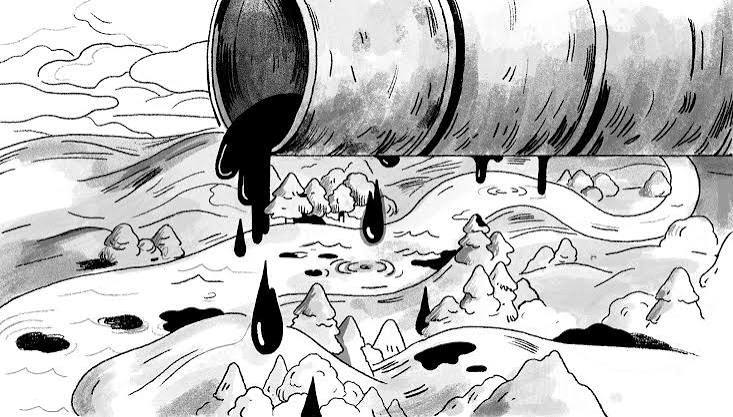
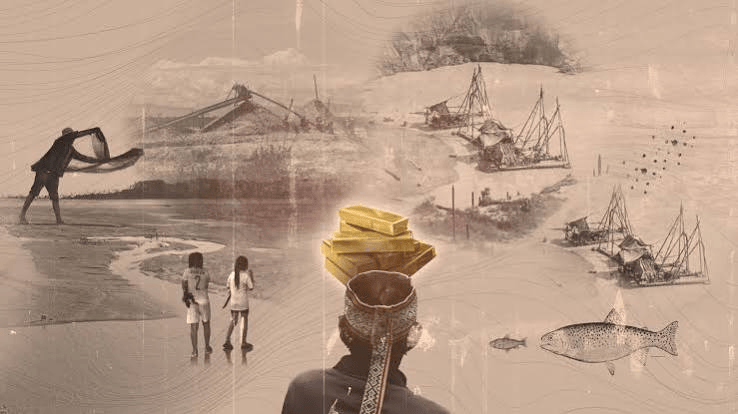
In Peru, corruption and illegal mining destroy forests and poison rivers: “Thousands of illegal gold miners introduce mercury pollution… decimating the ecosystems Indigenous communities require.”
Across the continent, the message is the same: Indigenous land is valuable — but only when someone else controls it.
🧭 The Global Pattern: Cultural Survival Without Economic Power
Across all regions, there is the same structural failure:
“Modern disputes target the ability of Indigenous peoples to run businesses, harvest resources, or sustain themselves independently from state‑controlled financial systems.”
Indigenous communities are allowed identity, but not autonomy. Culture, but not commerce. Presence, but not power.
This is how modern systems maintain colonial hierarchies without appearing colonial.
🔥 Why This Matters
When Indigenous peoples cannot profit from their land, they cannot sustain their communities. When they cannot sustain their communities, they cannot protect their culture. When they cannot protect their culture, the world loses knowledge, biodiversity, and ways of living that corporate systems cannot replace.
This is not just an Indigenous issue. It is a planetary issue.
Indigenous stewardship protects forests, rivers, and ecosystems that global capitalism destroys. Their exclusion is not only unjust — it is self‑destructive for humanity.
🌏 A Different Future Is Possible
A world that values Indigenous autonomy would:
Recognise land rights as economic rights
Transfer decision‑making power to Indigenous communities
End corporate veto power over Indigenous territories
Protect ecosystems by empowering those who have protected them for millennia
Replace extractive models with regenerative ones
Indigenous cultures do not need saving. They need systems that stop sabotaging them.
Gambling creates powerful highs for both companies and customers, but equally powerful lows for individuals, families, and society. The contrast is stark: on one side, profit, excitement, and occasional big wins; on the other, addiction, secrecy, debt, and severe social harm. Below is a structured, evidence‑based look at both sides.
🎲 The Highs: Profits and Occasional Big Wins
1. Corporate Profits
Gambling is engineered to be highly profitable. As your document notes, “like many corporate products it can be highly profitable for the businesses involved.” Companies benefit from:
High engagement driven by dopamine‑based reward cycles.
Unpredictable rewards that keep players returning.
Online platforms that allow 24/7 access and rapid betting.
With nearly 47% of UK adults gambling in the past four weeks , the customer base is enormous. This scale translates into billions in annual revenue for operators.
2. Customer Wins and Emotional Highs
A winning Champions League betting ticket is displayed beside live match screens and casino chips.
The highs for gamblers are real — and often memorable:
The average biggest single win among UK gamblers is £3,096 .
Younger adults (25–34) report even larger average wins of £4,386.
These wins create:
Intense dopamine spikes, especially during anticipation.
A sense of mastery or luck.
Social excitement — sharing wins with friends or online.
Your document captures this well: “the highs and lows of the risks of winning and losing does still mess with the brain.”
⚠️ The Lows: Debt, Addiction, and Social Harm
1. Addiction Without Substances
A distressed man faces overdue bills beside a laptop displaying online casino losses.
Your document explains clearly that gambling addiction is a behavioral addiction that hijacks the brain’s reward system:
“I’m a little surprised by how strong an addiction something like gambling can be… the highs and lows… mess with the brain.”
This is reinforced by:
Dopamine release during anticipation, not just winning.
Near‑misses triggering the same neural response as wins.
Unpredictable rewards, which are neurologically addictive.
These mechanisms mirror substance addiction in intensity.
2. Financial Harm
The lows are severe and often hidden:
The average biggest single-session loss is £1,640 — over half the average win .
Many gamblers report extreme behaviours to keep playing, including missing bills or staying up all night.
The Gambling Commission highlights consequences such as:
Financial difficulties
Loss of control
Heavy involvement leading to problem gambling
Your document emphasises the worst outcomes:
“Those that do get into debt can suffer serious negative consequences such as family breakdown, loss of home and suicide.”
3. Social Fabric Damage
A warmly lit family room shows scattered papers, a toppled chair, and signs of everyday activity.
The ripple effects extend far beyond the individual:
Relationship breakdown and secrecy (over 5.3 million Britons hide gambling from loved ones) .
Social isolation, conflict, and even violence linked to gambling stress.
Increased rates of depression and suicide ideation among problem gamblers .
Your document summarises this powerfully:
“It really does mess with the social fabric of society.”
📊 Highs vs Lows: A Quick Comparison
Aspect
Highs
Lows
Financial
Big wins (£3,096 average) and corporate profits
Large losses (£1,640 average), debt, bankruptcy
Psychological
Excitement, anticipation, dopamine highs
Addiction, loss of control, severe distress
Social
Shared wins, entertainment
Secrecy, relationship breakdown, isolation
Societal
Tax revenue, employment
Increased mental health burden, homelessness, suicide risk
🧭 Why Gambling Is So Polarising
Gambling sits at the intersection of pleasure and harm. The same mechanisms that make it thrilling — unpredictability, dopamine, risk — also make it dangerous. For most people it’s entertainment; for a minority, it becomes a destructive force.
Techno‑optimism thrives on a simple narrative: innovation will save us. It’s a comforting story, especially when told by charismatic billionaires with rockets, supercomputers, and grand visions of humanity’s next frontier.
But as your attached text sharply points out, this optimism collapses when placed next to the realities we are failing to confront:
“An inability to fix real problems here on earth such as reductions in species and biodiversity… and an inability to confront a real climate crisis is far more damaging than any technological advancement…”
The problem isn’t technology itself — it’s the belief that technological progress automatically equals societal progress. It doesn’t. Not when political systems, corporate incentives, and global power structures remain unchanged.
🏭 1. Tech cannot solve problems created by power
Smug, warm and dry on the inside! Smog, pollutants and depleted ecosystem on the outside.
Corporate techno‑optimism often treats crises as engineering puzzles. But biodiversity collapse, climate destabilisation, and geopolitical aggression are not engineering failures — they are political and ethical failures.
Your document captures this perfectly:
“The powerful take what they want, rewrite the narrative, and leave the most vulnerable to pay the price.”
No amount of AI, carbon capture, or space exploration can compensate for governance systems that reward extraction over preservation.
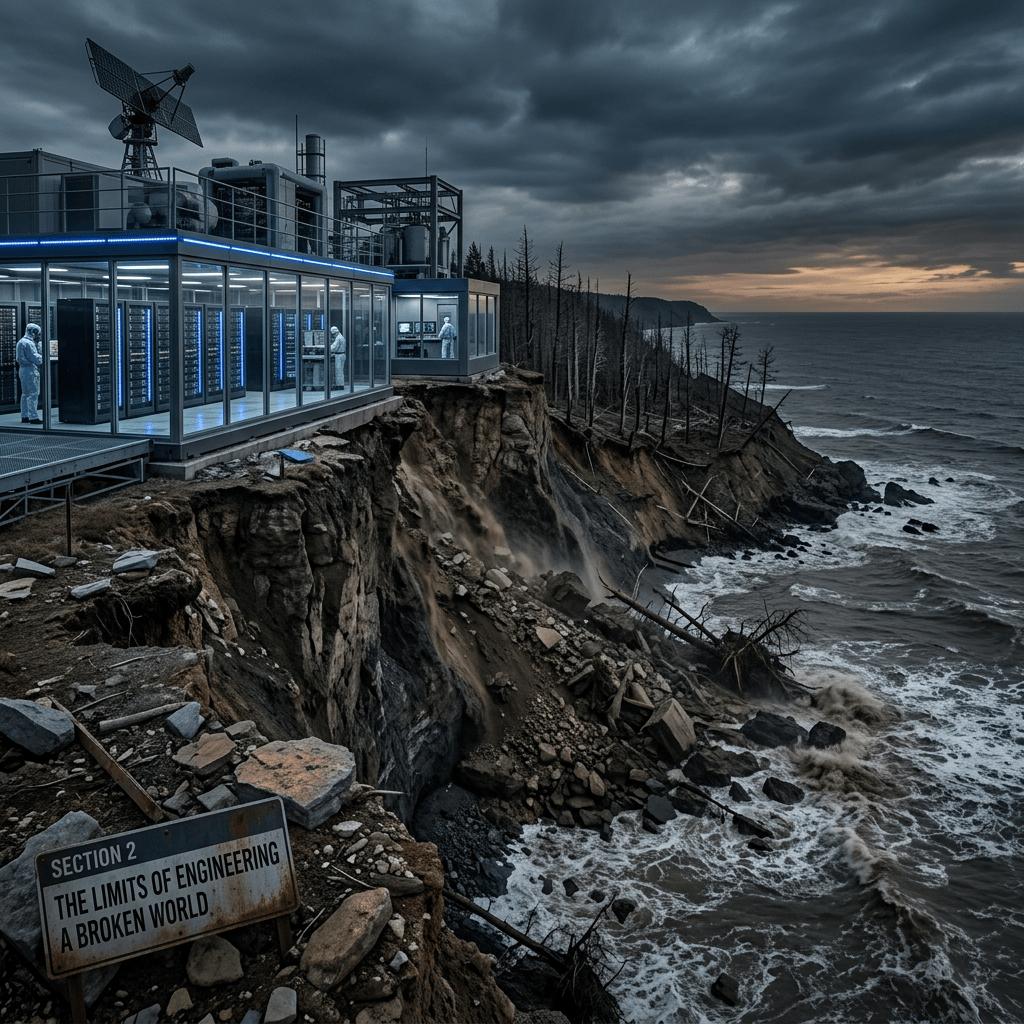
🔥 2. The climate crisis exposes the limits of the billionaire fix
A futuristic coastal data facility stands precariously above an eroding shoreline beneath storm clouds.
Tech leaders promise electric cars, reusable rockets, and geoengineering. Yet emissions rise, ecosystems collapse, and political will evaporates. Why? Because the crisis is not technological — it is structural.
Fossil fuel giants still receive billions in subsidies.
Governments still prioritise GDP over ecological survival.
Corporations still treat nature as a ledger entry, not a living system.
Techno‑optimism becomes a distraction when it encourages society to wait for a breakthrough instead of demanding systemic change.
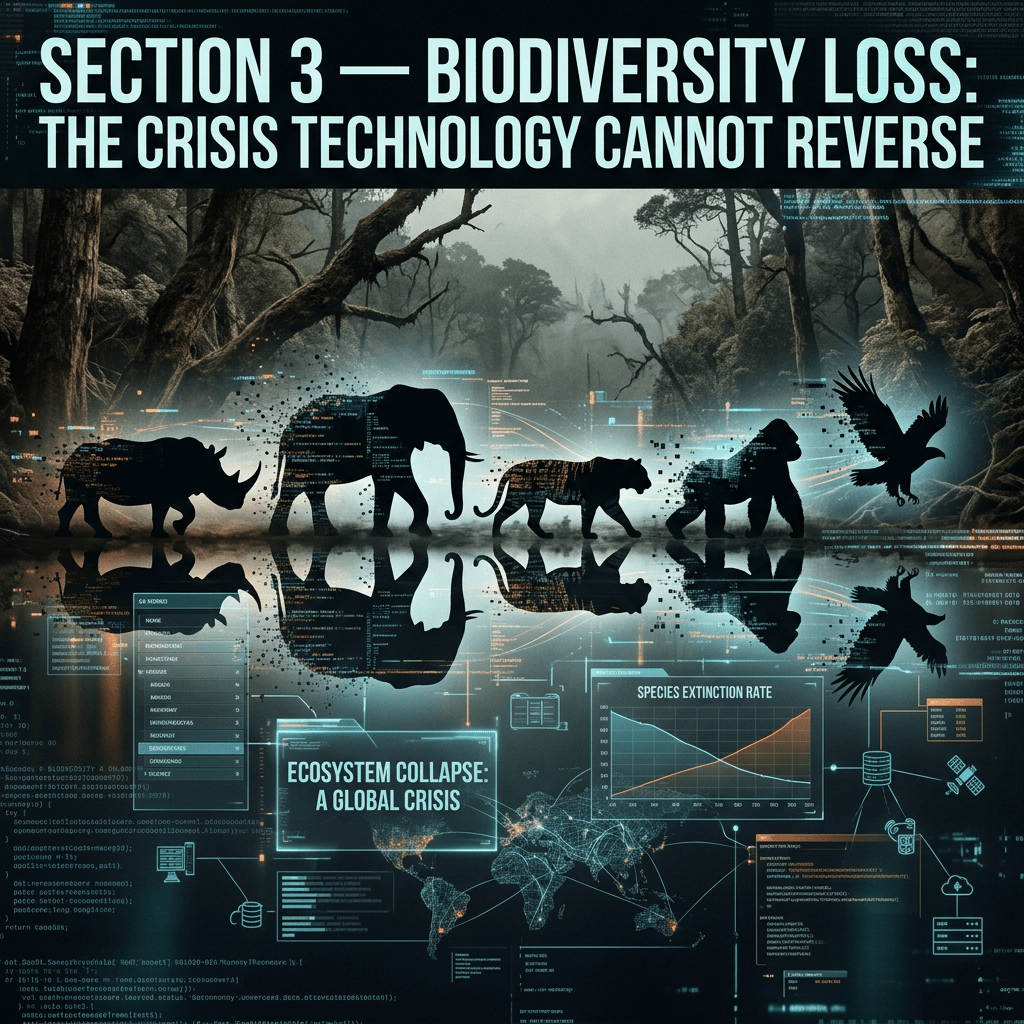
🐾 3. Biodiversity loss is not a problem you can “innovate away”
Animal silhouettes, extinction data, and digital overlays illustrate the global biodiversity crisis.
Species extinction is irreversible. No app, drone, or satellite can rebuild a rainforest or resurrect a collapsed food web. Corporate techno‑optimism struggles here because it is built on the assumption that all problems are fixable with enough capital and cleverness.
But ecological systems do not negotiate with markets.
⚔️ 4. The geopolitical parallel: rewriting blame
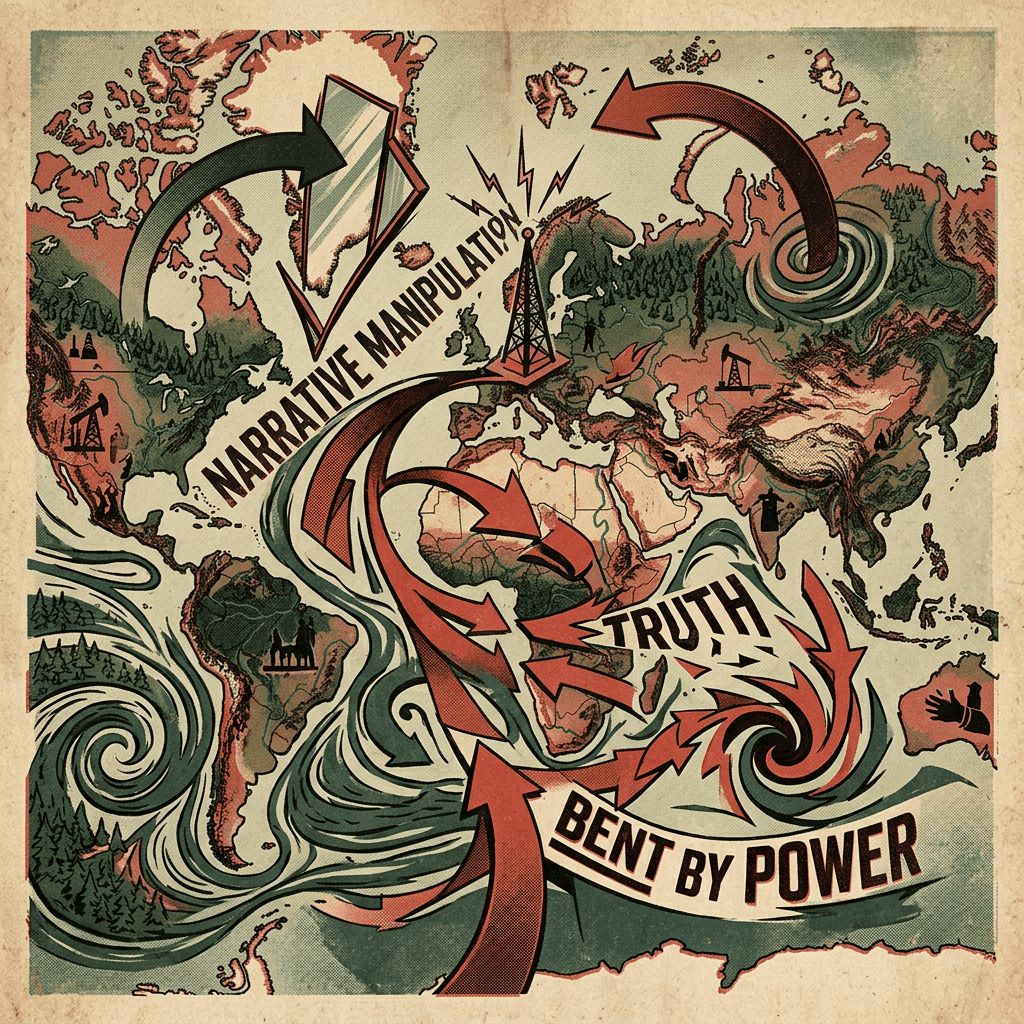
A vintage-style world map illustrates how power can bend narratives and perceptions of truth.
Your document draws a provocative comparison between environmental destruction and the narrative manipulation around the invasion of Ukraine:
“Next thing people will call Putin a humanitarian… blaming Zelensky for not allowing Russia to take a profitable slice of Ukraine.”
This is not hyperbole — it’s a pattern. Aggressors rewrite reality. Corporations do the same. Both rely on public confusion to justify harm.
Techno‑optimism often participates in this rewriting by framing systemic crises as individual lifestyle problems (“use fewer straws”) while shielding the true drivers of destruction.
🚀 5. The myth of the saviour‑CEO
Towering suited silhouettes dominate a Capitol-centered cityscape, evoking the influence of political power.
Corporate techno‑optimism elevates figures like Musk and Bezos into quasi‑political actors. They are framed as visionaries who will deliver humanity from crisis through innovation alone.
But this belief is dangerous because:
It bypasses democratic accountability.
It concentrates power in unelected individuals.
It treats public problems as private playgrounds.
As your document notes, this mirrors the logic of authoritarianism — the idea that strongmen, whether political or corporate, should dictate the future.
🌱 6. What actually works
If techno‑optimism has limits, what lies beyond it?
Systemic change. Not gadgets. Not billionaire visions. Not escape plans to Mars.
Real solutions look like:
Binding global biodiversity protections
Ending fossil fuel subsidies
Regulating extractive industries
Strengthening democratic institutions
Redistributing power away from corporate monopolies
Investing in ecological restoration at planetary scale
Technology can support these goals — but it cannot replace them.
🧭 Final thought
Corporate techno‑optimism is not inherently wrong. Innovation matters. But when it becomes a cultural shield that hides political failure, ecological destruction, and corporate greed, its limits become painfully clear.
The future will not be saved by rockets, apps, or charismatic CEOs. It will be saved by collective ethics, accountable governance, and a refusal to let power rewrite reality.
Technology and modenism has to be ecologically responsible in order for the planet to move forward as a living organism.
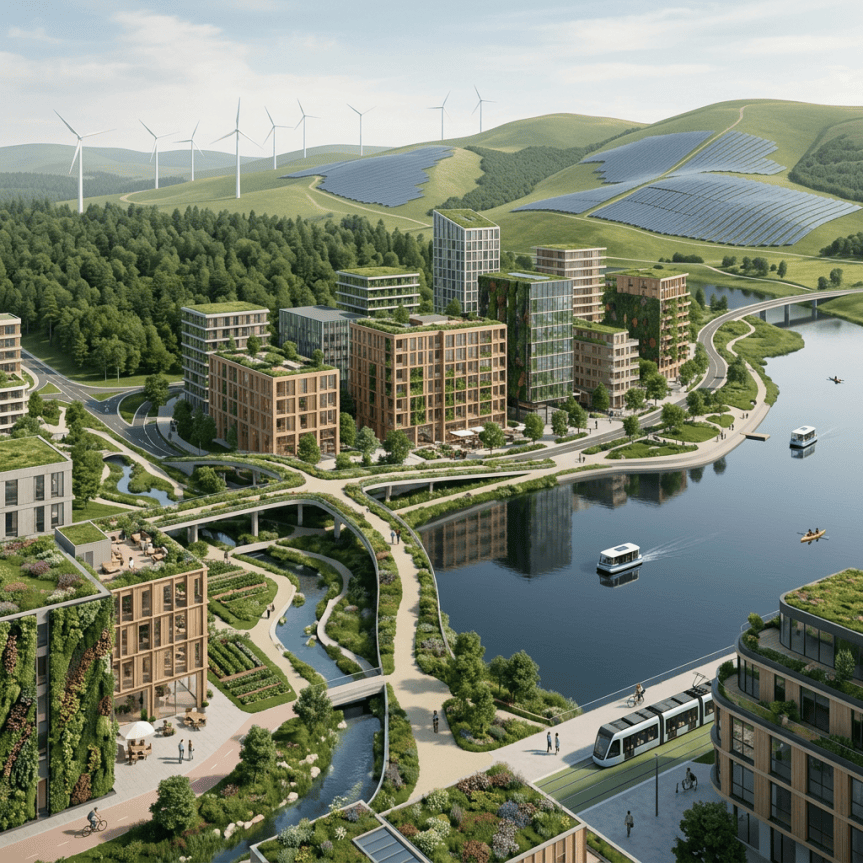
Technology and Modernism Must Be Ecologically Responsible
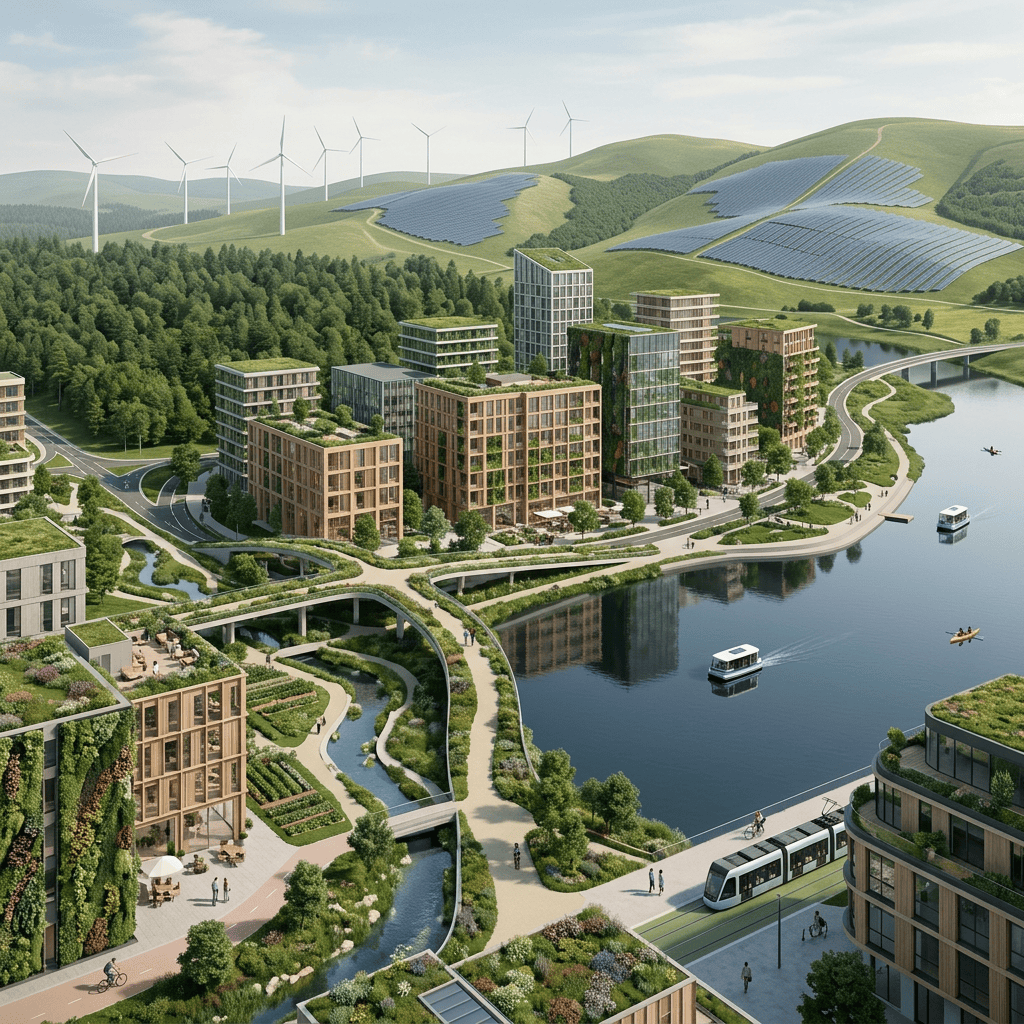
A sustainable waterfront neighborhood integrates green buildings, clean transit, renewable energy, and restored landscapes.A sustainable waterfront neighborhood integrates green buildings, clean transit, renewable energy, and restored landscapes.
Modernism promised a world of speed, efficiency, and mastery over nature. Technology amplified that promise, giving us tools capable of reshaping landscapes, economies, and even the climate itself. But the planet is not a passive stage for human innovation — it is a living organism with limits, thresholds, and feedback loops.
When technology ignores those limits, it becomes extractive rather than progressive.
Ecological responsibility is not an optional moral add‑on to modernism; it is the precondition for any future worth living in. A civilisation that destabilises the biosphere undermines the very foundation on which its technological achievements stand.
This is why techno‑optimism rings hollow when it refuses to confront ecological reality. Innovation without ecological accountability is simply a faster way of reaching collapse.
Fifty Years of Outrage, Action, and Unexpected Progress
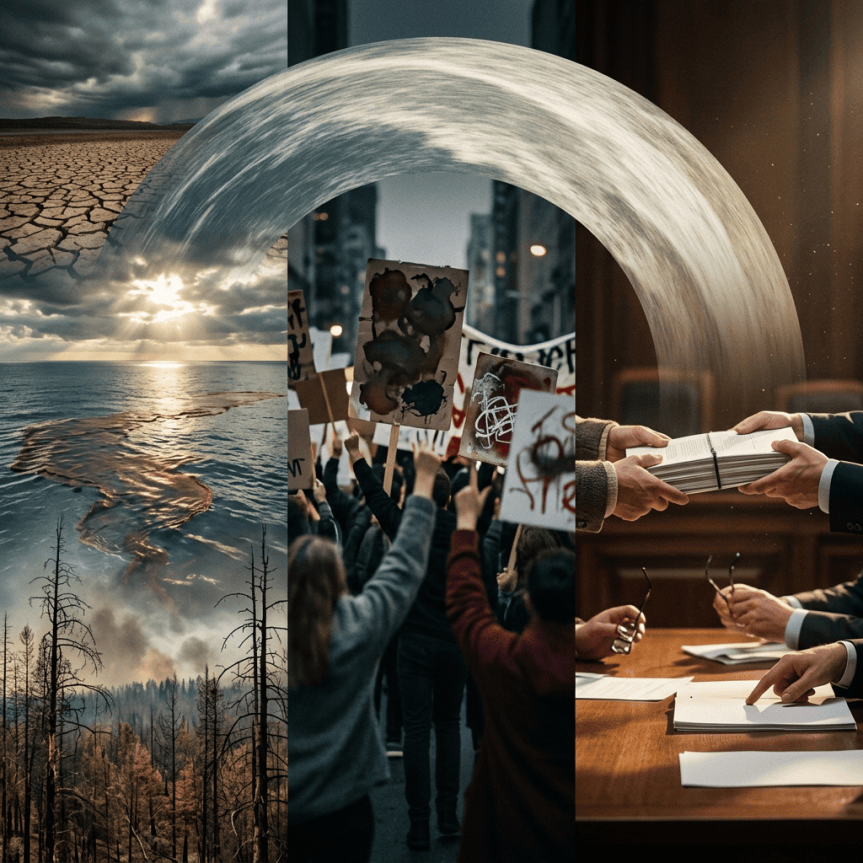
Bad news has always carried a certain gravitational pull — a mix of fear, urgency, and uncomfortable truth that forces us to look up from our routines and confront what’s breaking. But beneath the anxiety and the doomscrolling, there’s a quieter, more powerful reality: reporting on bad news has repeatedly made society safer, fairer, and more humane.
Across the last half‑century, some of the most distressing headlines have sparked the most transformative breakthroughs. When journalists expose systemic failures, environmental disasters, or human rights abuses, they activate a civic alarm system — one that turns passive awareness into organized outrage, and outrage into lasting reform.
This is the story of how crisis reporting has reshaped the world.
🌊 When the Planet Caught Fire: Environmental Justice Begins
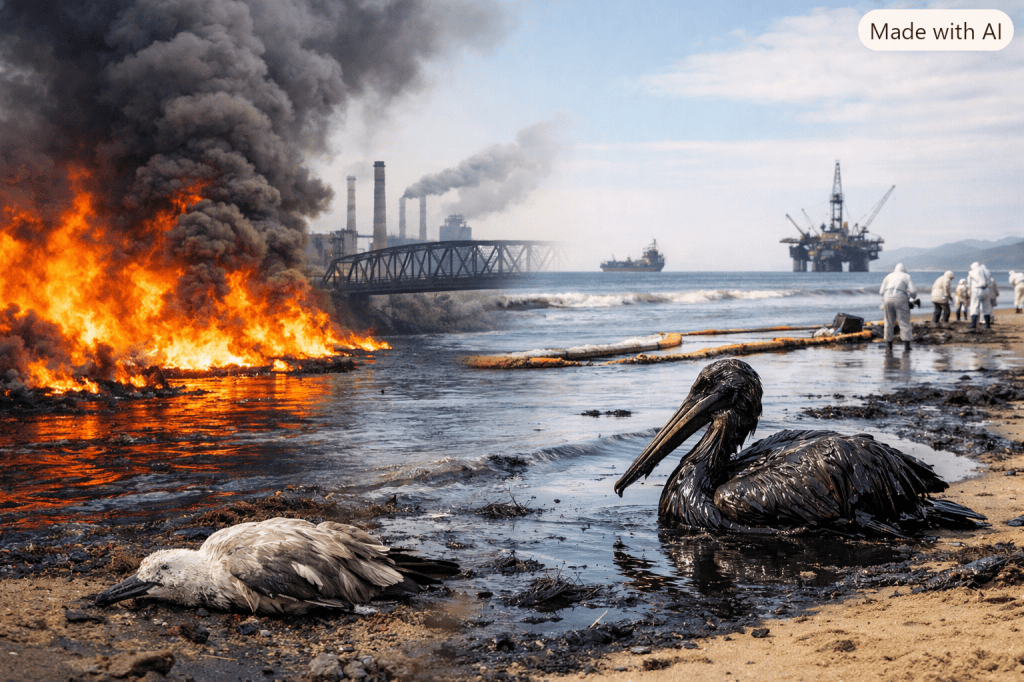
How oil spills, burning rivers, and ozone holes forced global environmental protection
In the early 1970s, the world watched in disbelief as 3 million gallons of oil coated the Santa Barbara coastline and the Cuyahoga River in Cleveland literally burst into flames. These images — thick black smoke, dead wildlife, water that looked more like tar — were impossible to ignore.
“Graphic footage of Cleveland’s heavily polluted river literally catching fire shocked the global public.”
The relentless reporting triggered something unprecedented: 20 million people mobilized for the first Earth Day, pushing governments to create the EPA, the Clean Air Act, and the Clean Water Act.
A decade later, alarmist but accurate reporting on the expanding hole in the ozone layer led to the Montreal Protocol, the most successful environmental treaty in history.
Bad news didn’t just inform people — it forced them to act.
✊ Exposing Injustice: How Media Coverage Helped End Apartheid
The global impact of showing what was never meant to be seen
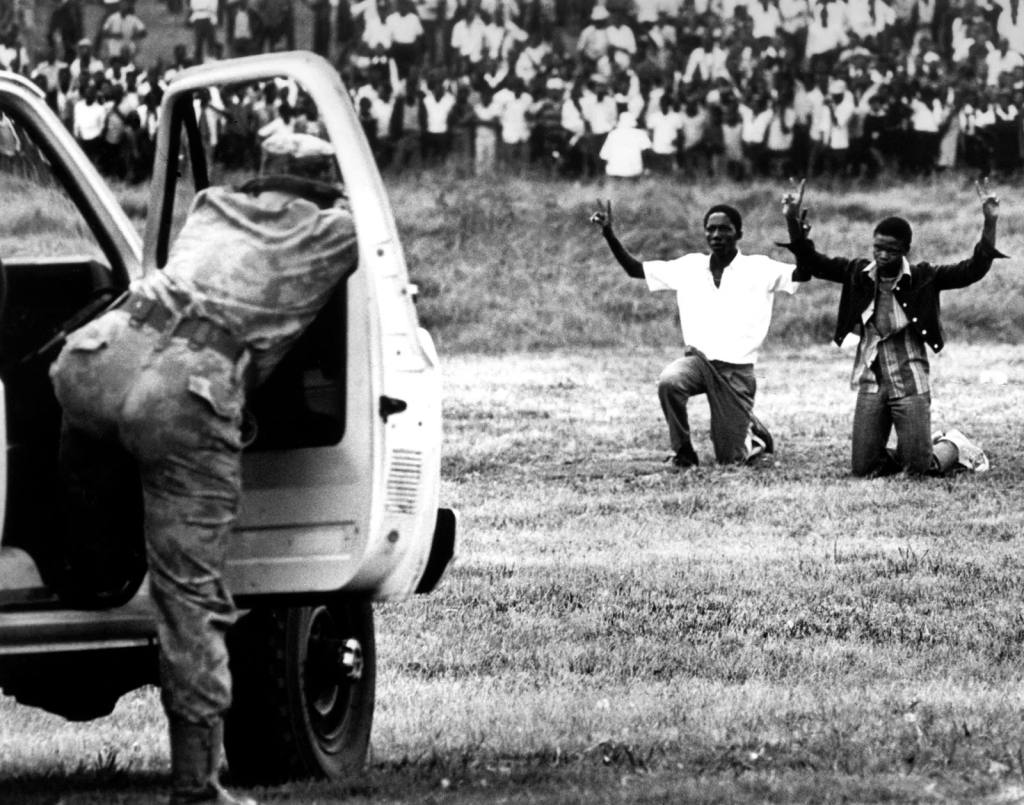
Throughout the 1970s–1990s, journalists documented the brutality of South Africa’s apartheid regime. Images from the 1976 Soweto uprising, where police opened fire on schoolchildren, circulated worldwide.
“Ongoing news coverage of state-sanctioned violence… generated global condemnation.”
The world responded with economic sanctions, cultural boycotts, and political pressure. Internal strikes grew. Eventually, the apartheid government collapsed, leading to South Africa’s first democratic elections in 1994.
Bad news became a megaphone for justice.
🚗 Turning Tragedy Into Law: The Fight Against Drunk Driving
How one mother’s grief reshaped national policy
In 1980, Candy Lightner’s daughter was killed by a repeat-offender drunk driver. The news was devastating — but Lightner refused to let the story fade.
She founded Mothers Against Drunk Driving (MADD), using painful statistics and heartbreaking stories to shift public opinion.
“The group used agonizing statistics and news stories to completely shift public perception.”
Within a few years, the U.S. raised the legal drinking age to 21 and enacted strict drunk-driving laws. A national epidemic was confronted because the bad news was impossible to ignore.
🧬 Silence, Outrage, and Reform: The AIDS Crisis
How activists forced the world to pay attention
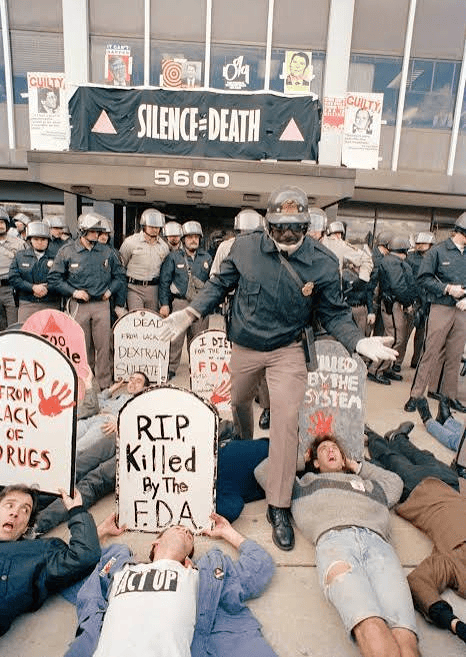
During the early AIDS crisis, thousands of young men were dying — but the media barely covered it. The silence was its own form of bad news.
ACT UP responded with radical transparency: protests, die-ins, and relentless pressure on the FDA.
“ACT UP used radical transparency and public protest to force a massive overhaul of how the FDA tests and approves life-saving pharmaceuticals.”
Their activism permanently changed medical research and patient rights.
Bad news became a demand for dignity.
📊 The Pattern: Crisis → Outrage → Action → Reform
Across all these stories, the same cycle emerges:
Crisis / Bad News
Human Action
Long-Term Impact
Industrial river fires & oil spills
Mass protests & organizing
EPA + Clean Water Act
Apartheid violence
Global boycotts & strikes
End of apartheid
Drunk driving epidemic
Grassroots lobbying
National legal reforms
Ozone depletion
International treaties
Elimination of CFCs
Bad news is not the end of the story — it’s the beginning of change.
🌱 Why We Still Need Bad News Today
The uncomfortable truth: progress requires pressure
Bad news is emotionally draining, but it is also:
A diagnostic tool — revealing what systems fail and why
A moral compass — showing where harm is happening
A catalyst — pushing communities and governments to act
A historical record — ensuring injustices are not forgotten
Without crisis reporting, many of the protections we rely on today simply wouldn’t exist.
Bad news is not a threat to society — it is a safeguard.




























You must be logged in to post a comment.