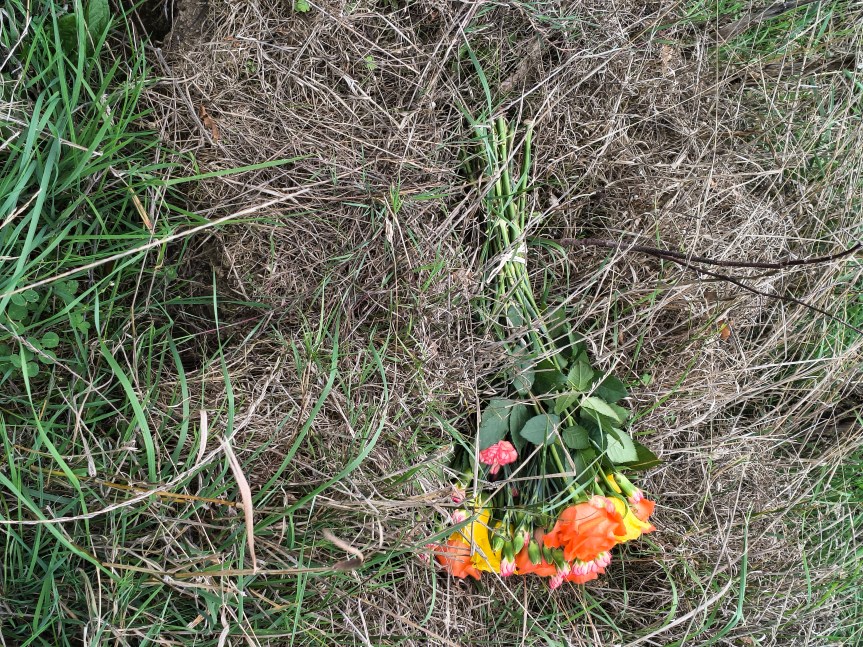
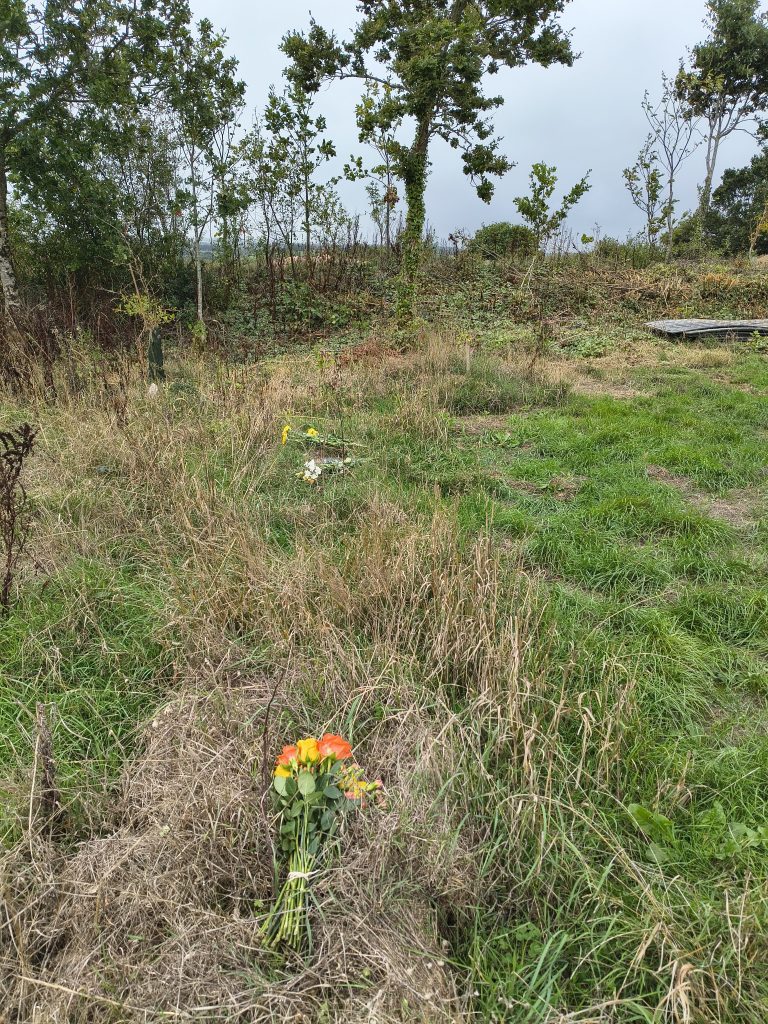
On Saturday 19th September me and mum bought some flowers and set off to drive to the woodland/moorland burial site in which we lay my Dad to rest in last year.
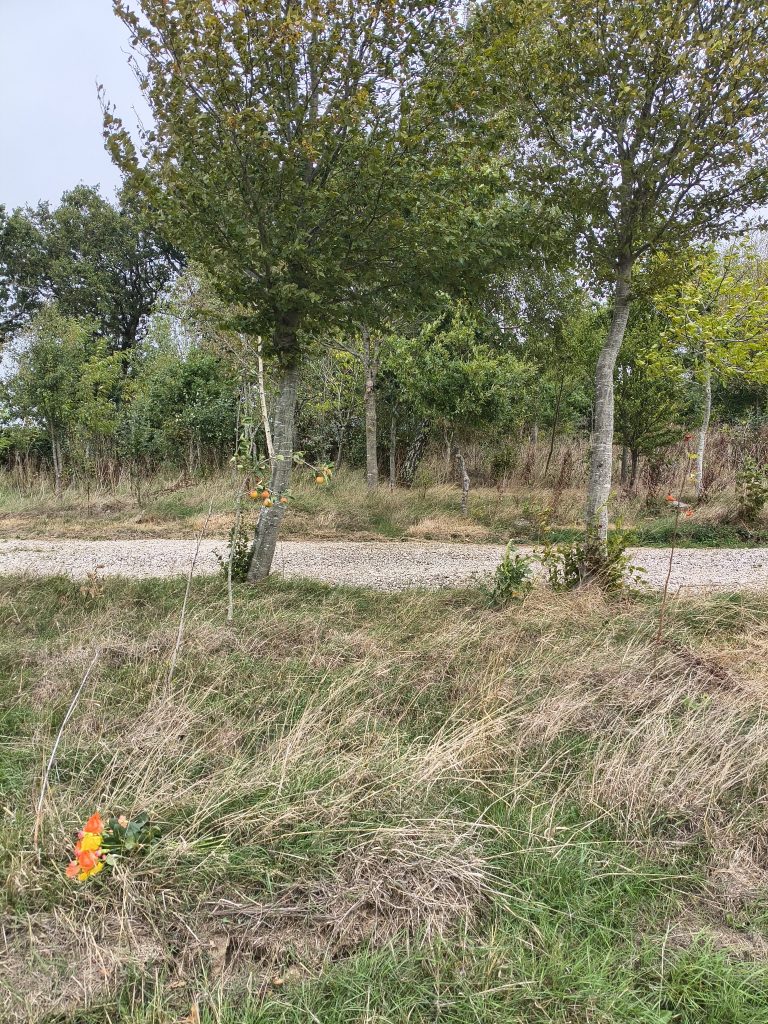
Mum had not been to the site before and the only time I had been there was on the day of his funeral. I was struggling to remember where he was! It’s a relatively small beautiful site and we needed the help of Dad’s partner, Shamen who was able to send a photo of where the plot was in relation to some trees and hedges. I had a good feeling and was grateful that we visited Dad’s site. The weather was a little misty and grey which kind of added to the mysticality of the site. I know dad would have found it amusing with me stumbling around the site trying to work out where he was.
When we laid him to rest we organised a pipe tobacco and matches with him in his coffin. (These were items that he had carried around with him for most of his adult life and it only seemed fitting to let him have them on the other side of life too.
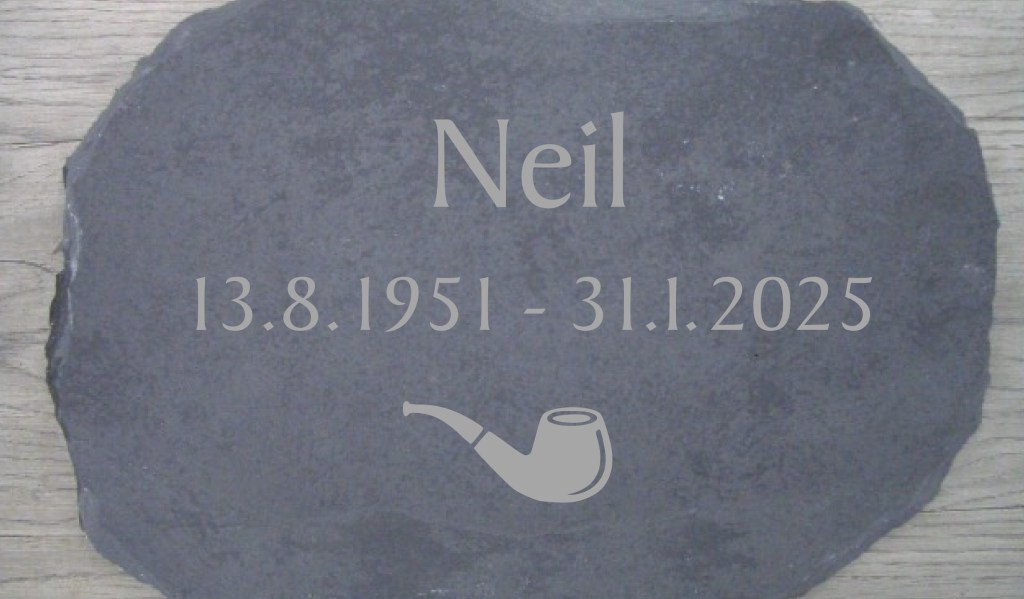
We have also designed a slate to go on his grave which will be ready in a few weeks which I think is very fitting for him (having a pipe on the image too).
As much as I think about him and my brother almost every other day I feel Dad would have appreciated the visit to where he now rests that we did today and I am pleased he has a sight for us to visit. My brother Andy’s ashes were scattered to sea from one of his favourite beaches in Cornwall which now seems quite far away to me so please Dad is nearer by still.
The narrative around elections used to be its the economy stupid though now the right seem to be desperately playing it as its the dangerous economic migrant and people are voting for this narrative across the western democratic globe in large numbers and the causes and affects of such voting patterns though playing out in the USA we have not fully seen the consequence yet of the immigrants out focus in society yet. Most people claim to be good honest Christian folk in western nations but our voting patterns seem to show an opposite to love and empathy in a divide conquer and rule pattern of political play instead.
Public concern over immigration is highly complex and driven by a mix of self-interest, economic anxieties, and cultural values, rather than simple selfishness. Political scientists and polling data show that while far-right parties successfully capitalise on these concerns to win votes, the motivations of voters span a broad spectrum of legitimate public policy anxieties.
Why Voters Support Far-Right Immigration Platforms
Political scientists categorise the motivations behind anti-immigration sentiment into three distinct pillars:
Motivation Category
Core Driver
Common Voter Concerns
Economic Self-Interest
Protection of personal livelihood and resources.
* Fear of wage suppression in lower-skilled sectors. * Increased competition for affordable housing and public services.
“Compositional Amenities”
Preservation of familiar social environments.
* Rapid changes to local neighbourhoods, schools, and workplaces. * Concerns over social cohesion and cultural integration.
Political Protest
Frustration with mainstream governance.
* Perception that centrist parties have failed to control borders or manage public infrastructure.
It does also beg the question if it’s such a contentious and yet majority motivating issue for the public, heaven forbid but why don’t more parties take a harder line on immigration – just for the votes.
The Political Strategy of the Far Right
Far-right and populist parties across the West—such as Reform UK in Britain or the Alternative for Germany AfD – have experienced a surge in support by directly linking immigration to everyday domestic struggles.
By framing immigration as an immediate threat to the economic well-being and security of the “in-group,” these parties transform a macro-level policy issue into a deeply personal, pocketbook issue for the individual voter. Sociological studies indicate that when public infrastructure feels strained, voting to limit immigration is often viewed by individuals not as malice, but as a rational act of self-preservation.
President Donald Trump can be seen as an example of the damage done by the far right today when elected with deliberate lies and misrepresentation to the voting public, wilful ignorance and breaking of political laws and unlawfully operating political institutions also causing irreparable damage with with ice on immigration, unlawful tariffs on trade and illegal wars in middle east.
The Critical Perspective: Institutional Damage and Policy Overreach
Critics align closely with the view that his tenure significantly strained democratic norms and international law:
Immigration & ICE: Critics point to policies like the family separation mandate at the US-Mexico border and expanded Immigration and Customs Enforcement (ICE) detentions as humanitarian crises that damaged the moral standing of the United States.
Trade Tariffs: Many economists argue that his administration’s unilateral tariffs—particularly on allies and China—disrupted global supply chains, violated World Trade Organisation principles, and acted as a consumption tax on domestic consumers.
Foreign Policy & Military Action: Critics highlight actions like the 2020 assassination of Iranian General Qasem Soleimani as provocative escalations that bypassed traditional congressional approval and risked wider, unlawful conflict.
Democratic Institutions: His rhetoric surrounding election integrity, ongoing legal challenges regarding his handling of classified documents, and actions related to the events of January 6, 2021, are frequently cited as deliberate attempts to undermine institutional trust.
With a straight face and without irony his supports argue that the actions Trump takes are in defence of the working man (or his wealthy benefactors and himself) as a necessary disruption of a failed political establishment. Even though it is his actions and policies that are intent on causing the state and even international institutions to fail.
International aid is currently in a state of unprecedented, generational collapse following the second Trump administration’s sweeping financial cuts and structural dismantlement.
As the world’s largest single aid donor, the absolute withdrawal of U.S. financial backing has created a massive funding vacuum that other wealthy nations have been unable or unwilling to fill.
The Scale of the Funding Collapse
Dismantling of USAID: Following a total freeze initiated in January 2025, the Trump administration systematically dismantled the United States Agency for International Development (USAID), transferring nominal duties to the State Department. The agency’s final operations permanently closed in September 2026.
80%+ Program Cancellations: Driven by spending-reduction initiatives like the “Doge” project managed by Elon Musk, the U.S. cancelled between 80% and 83% of its global foreign aid projects, leaving a funding gap exceeding $35 billion across 120 countries.
Plummeting Global Humanitarian Funds: According to data from the Financial Tracking Service, total global humanitarian funding imploded from roughly €23.97 billion down to €7.34 billion between 2025 and 2026. Direct U.S. humanitarian support alone plummeted from approximately $14 billion to $3.7 billion.
Multilateral Withdrawals: In January 2026, President Trump signed a memorandum withdrawing the U.S. from 66 international organizations, including 31 United Nations entities. UN anchor funding for humanitarian crises was slashed to just $2 billion (down from historic averages of $8 billion to $10 billion), strictly barring any projects related to climate change.
Global Consequences and “The Domino Effect”
The shockwaves of the U.S. withdrawal have crippled non-governmental organizations (NGOs) and severely altered the geopolitical aid landscape:
Sector / Region Affected
Core Impact
The “Domino Effect” on Donors
Following the U.S. retreat, other wealthy donor nations (such as Canada and various European countries) scaled back their own anti-poverty funds or shifted focuses toward trade and economic development.
Healthcare in Africa
The loss of USAID funding has destabilized critical local frameworks fighting HIV, malaria, and tuberculosis. Nations heavily reliant on aid—such as Mozambique, which suffered a 50% cut in U.S. health assistance—face immediate coverage gaps, medicine stockouts, and understaffed facilities.
Central & Northern America
In regions previously reliant on the U.S. for two-thirds of their humanitarian budgets, programs managing families displaced by gang violence and extreme weather have ceased. Funding in Honduras dropped to just 10% of what was needed, while initiatives in El Salvador and Guatemala were entirely discontinued.
NGO Disruption
Major international non-profits were hit by immediate “stop-work” orders. For example, BRAC (the world’s largest non-profit) was forced to suspend programs affecting 3.5 million people overnight.
While the European Union and its member states have stepped up to cover over 40% of remaining global development aid, a substantial portion of Europe’s aid remains heavily directed toward Ukraine. Experts from organizations like Refugees International and Oxfam warn that the current outlook remains extraordinarily bleak, leaving millions of the world’s most vulnerable populations entirely without a safety net.
To ethically minded Christian folk these should be matters that matter but more often than not they are ignored at best and blatantly cast aside as ‘we can’t take refugees and immigrants there is no room and we hate them as there not our type of people they are criminals. Such views and stereo types are then promoted and fuelled further by political activists and politicians.
Trumps economic incompetence has also resulted in his two terms in office leading to the US national debt having increased by approximately $11.6 trillion. The total national debt crossed a historic milestone of $40 trillion so Trumps incompetence on the economy is also not an issue that concerns immigrant haters but fear of foreigners is still an international fear voting issue and thus we go full circle – there and back again a racists tail.
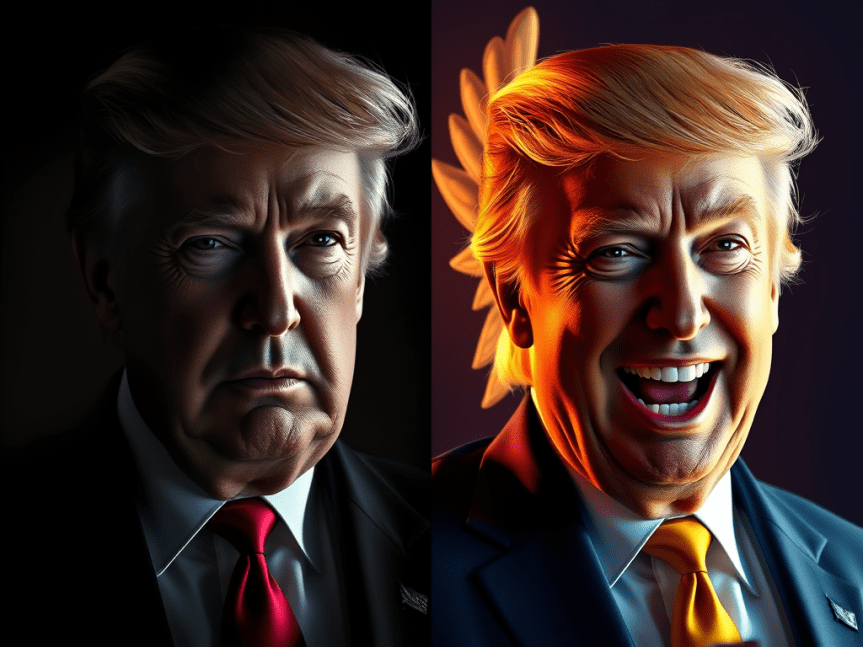
Whether Donald Trump is “evil” is a matter of intense public debate and subjective judgment, with no consensus. The term is used by various critics, supporters, and observers to describe his character, policies, and political impact from widely differing perspectives.
Arguments for Characterizing Him as evil
Critics and some public figures often use the term “evil” to describe Trump based on his actions and rhetoric:
Moral and Ethical Critique: Figures like actor Robert De Niro have explicitly called him “evil,” citing a lack of morals, ethics, or regard for others.
Impact of Policies: Some commentators argue that his policies, such as certain immigration measures or his handling of the COVID-19 pandemic, have caused significant suffering and death, which they categorize as a form of “multidimensional evil”.
Political Rhetoric: His use of language to demonise domestic political opponents—labelling them as “evil”—is seen by some as a dangerous shift in American political discourse.
Cultural Symbolism: In popular culture and media, Trump has been frequently depicted or used as a template for villainous characters, representing archetypes of greed and cynicism.
Counter-Perspectives and Alternative Labels
Other observers reject the “evil” label, offering different interpretations:
Incompetence vs. Malice: Some critics argue he is not evil but rather a “chaotic fool” or “buffoon” whose detrimental impacts stem from ego and incompetence rather than calculated malevolence.
“Necessary Evil”: Some supporters or pragmatic observers have characterized him as a “necessary evil”—a disruptive force required to challenge established political systems.
Psychological Framing: Many analysts prefer clinical or psychological terms, such as “narcissistic” or “pathological,” to describe his behaviour rather than moralistic terms like “evil”.
Perception and Bias
Research suggests that whether an individual perceives Trump as “devil or messiah” is often influenced by their own pre-existing biases or political echo chamber and how they weigh his public persona as a successful businessman against his controversial actions as a political leader.
Sinner or saint in the time of political echo chambers/
Maybe in a time of political echo chambers where environments are often created by social media algorithms and selective exposure, where individuals only encounter information, opinions, and beliefs that reflect and reinforce their own. These insular spaces, sometimes termed “neotribalism,” intensify political polarization, normalize extreme views, and shield users from opposing perspectives. such a time is the perfect time to create a sinner or a saint in Donald Trump. We don’t want to see the good in what we perceive to be bad and alternatively those that see only the good in what he does are ignorant to the bad.
But also on the other hand if Donald Trump himself only chooses to listen and follow his own political echo chambers perspective and train of thought, then what will he loose out on or what damage will be done or has or is already being done by ignoring a more overarching or balanced set of views and perspectives on politics and the globe. Presidents can now be hoodwinked just as easily as people can by their own political echo chambers.
Final a religious perspective to Trumps entourage
Pastors pray over Trump in the Oval Office
In Matthew 23:3, Jesus tells his followers to obey the teachings of the scribes and Pharisees, but not to follow their actions, stating: “for they talk but do not do”. This is a warning against hypocrisy, specifically criticizing religious leaders who preach the law but do not practice it themselves.
Key details regarding this, and similar phrasing:
Context: Jesus was calling out hypocritical leaders who “tie up heavy, cumbersome loads” (strict religious rules) but are unwilling to lift a finger to help.
Meaning: This is a command to follow the authorized, sound doctrine (“what they say”), but avoid copying the behaviour of those who fail to live up to it (“what they do”).
While Donald Trump runs around and spreads his wrath to all and sundry in a continues and seemingly unstoppable motion. It must be asked what reckoning will there be for him, either when or even before his time is spent in the presidential office. Just turning on my little TV this evening and listening to the tone of conversations and news articles it does finally feel like something has or is changing and the mad king of democracy will no longer be able to afford to get everything his own way from now on.
As of January 2026, the concept of a “reckoning” for Donald Trump refers to several impending legal, political, and social challenges scheduled to unfold throughout the year:
1. The 2026 Midterm Elections (November 3, 2026)
Political analysts describe the upcoming midterms as a primary “reckoning” for the second Trump presidency. While Trump’s name will not be on the ballot, the elections will serve as a referendum on his administration’s first year back in power. If Democrats regain control of the House of Representatives, they could launch new impeachment proceedings, which some describe as a “visceral reckoning” for his recent executive actions.
2. Supreme Court and Legal Challenges
The 2026 Supreme Court term is set to address multiple cases that could redefine or limit Trump’s presidential authority. Key issues include:
Executive Power Disputes: The court will hear cases regarding the president’s power to fire federal officials, such as those at the Federal Reserve.
Immunity and Investigations: While past rulings granted expansive immunity, the administration currently faces more than 400 lawsuits related to policies on immigration, trade, and the economy.
Media Defamation: Trump is personally involved in several high-stakes lawsuits against major media outlets, including a $10 billion claim against the Wall Street Journal and a $15 billion claim against the New York Times.
3. Internal MAGA and Public Backlash
Critics and even some supporters suggest a potential “reckoning” within his base over specific unmet promises or controversial actions:
Epstein Files: There is growing frustration among some “MAGA” supporters regarding the administration’s failure to release the full Jeffrey Epstein files as previously suggested.
Foreign Interventions: The January 2026 U.S. military raid to capture Venezuelan President Nicolás Maduro has sparked a debate within his base. While many applaud the action, others see it as a contradiction of his “America First” promise to avoid foreign entanglements.
International Withdrawal: The January 8, 2026, executive order to withdraw from 66 international organizations, including the UN Framework Convention on Climate Change, is creating a “foreign policy reckoning” for U.S. allies.
4. Moral and Institutional Reckoning
Social commentators describe 2026 as a year of “moral reckoning” for American democracy, citing the administration’s use of active-duty military for mass deportations and the weaponization of the Justice Department against critics. These observers argue that the survival of democratic institutions depends on how these actions are held to account by the courts and the public in the coming months.
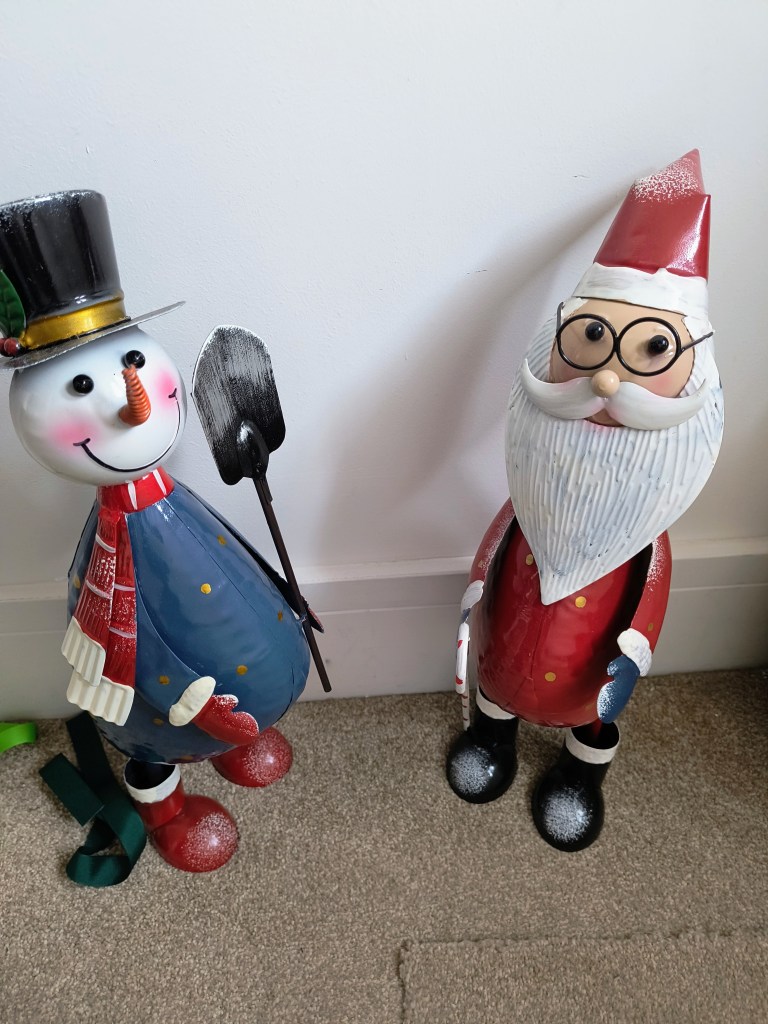
I spent some time at mums this weekend where we have been getting out some Christmas decorations and putting up Christmas trees. Dad will not be around this year and with us losing him at the beginning of this year and him becoming unwell last Christmas with his last pint being on Christmas eve in a pub out with me and his last full meal being on Chirstmas day it will be da different sort of feel to Christmas.
Mum’s tree in officeMums main tree in homeTwo little fellas fresh out of their box
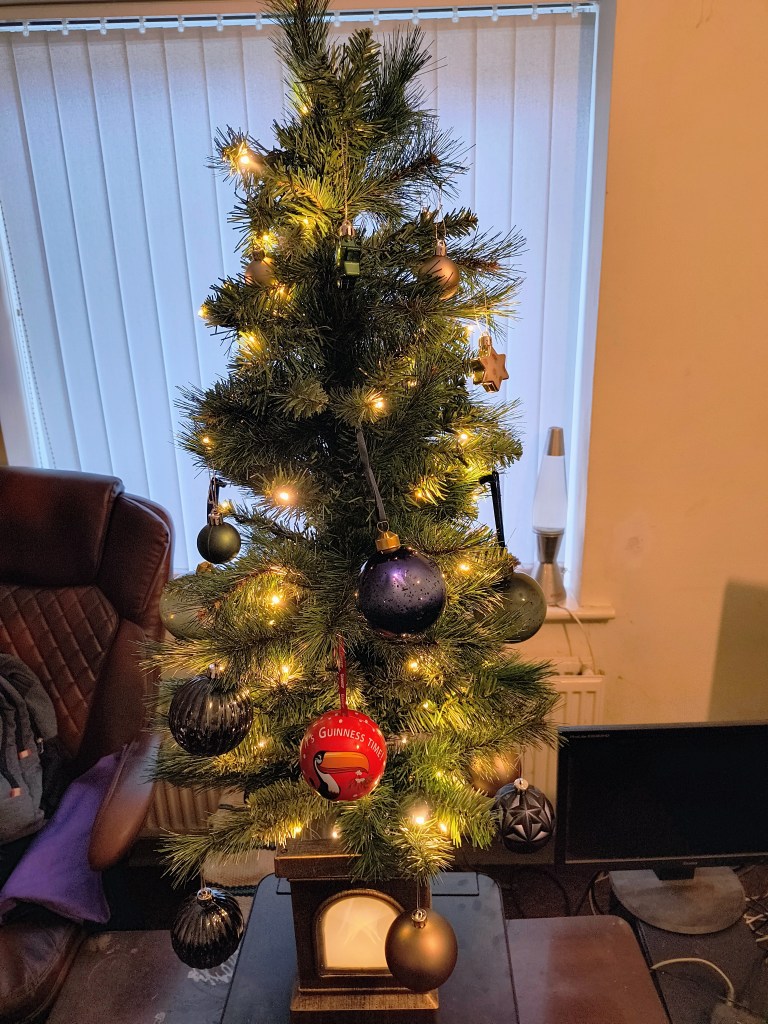
When I got home this afternoon I decorated my first tree in my own home. I wanted to do it this year as with things being different so I fancied a change myself and getting a tree putting it up and decorated it will bring a little Christmas cheer into my home though it won make up for the storm clouds we faced last year.
My brother would have been 53 this year on Saturday November 29th
Andy with his dog Sam and Andy’s son Ben with his dog Defor
Had by brother survived his moment of madness, when he took his own life I know there would have been so much more joy to have come through and for him in his life path no matter which road it could have led him down. I was doing a Google search about him tonight as I know there was information on him on the internet about being a paranormal investigator and wondered what I migth still find.
I found the video below which I just find too spooky to watch myself of my brother from beyond the grave talking to ghosts. Its just a bit too spooky and close to comfort for me to listen and watch. I know he is still around and sends me and mum signs of his presence, for me it might be buggering around with the electrics on my nights out singing karaoke, as if he is having his moment up on the stage up there with me too, when I get up and sing. I can often get electric lights flickering next to me for no apparent reason too and it often makes me think it’s simply him saying hello bro.
I know there are lots of people that don’t believe in the supernatural and they believe it to be either fraud or coincidence. But for me though not religious I am very much a spiritual person and believe and hope that right and light will triumph over wrong and darkness wherever and whenever it must or can.
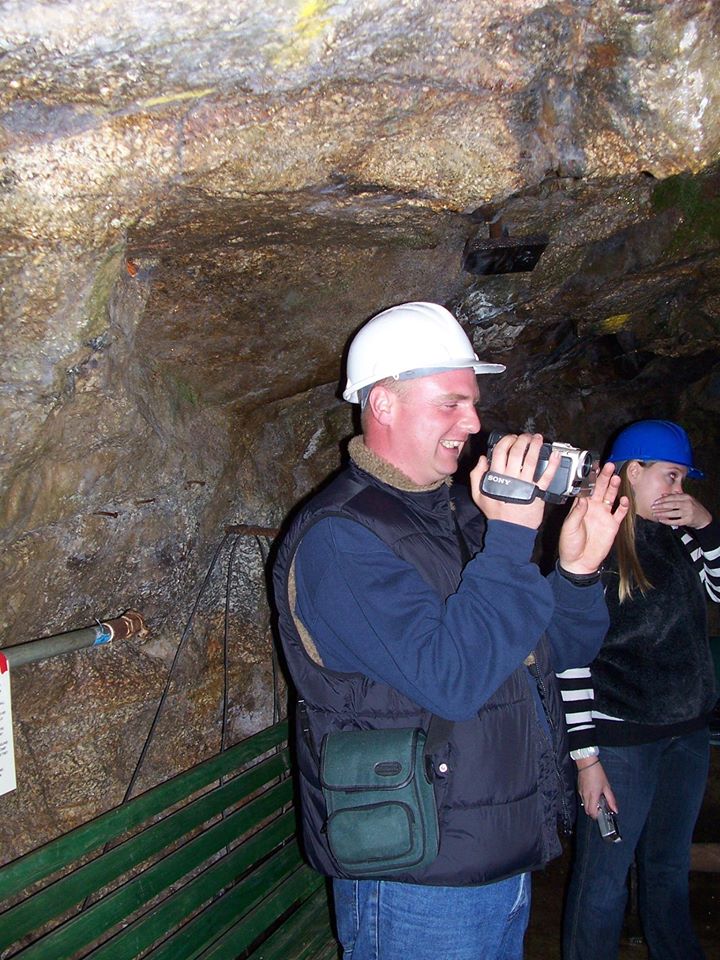
Ghost box In Poldark Mine Cornwall UK with GHOST- Andy “Ed” Edwards, Soph Beharrell & Nettie Tasker.
Furthe rinformation on this page on youtube says the following – This was filmed in 2010 at Poldark Mine Cornwall UK. with GHOST UK. A team of Paranormal Investigators – Andy “Ed” Edwards, Sophi Beharrell, Jeanette “Nettie” Tasker & Simon Colgan. (Simon was unavailable for this investigation) This was the first time we had used the Ghost box aka Spirit box in the mine with amazing results. We have investigated many places, but found the mine to be a perfect place to use the Ghost box. We have experienced the draining of the batteries from our equipment many times, but you can see from this investigation this also happens with Soph’s Video Camera. Thanks for watching.
The phrase, “The poor will always have you,” is an inversion of a well-known quote from the New Testament of the Bible, which in modern translations generally reads, “The poor you will always have with you“.
This statement is recorded in the Gospels of Matthew (26:11), Mark (14:7), and John (12:8), and is part of Jesus’ response to his disciples when they object to a woman anointing him with expensive perfume that could have been sold to help the poor.
Origin and Context
Jesus’ statement is a direct allusion to Deuteronomy 15:11 in the Old Testament, which states, “For there will never cease to be poor in the land; that is why I am commanding you to open wide your hand to your brother and to the poor and needy in your land”.
Meaning and Interpretation
When Jesus said this, he was not dismissing the plight of the poor or suggesting that poverty is an unchangeable fate to be ignored. Instead, the original context highlights several points:
A Call to Action: By referencing Deuteronomy, Jesus was reminding his followers of their ongoing, God-given responsibility to be open-handed and generous toward the poor.
Prioritizing Worship: The statement served as a defense of the woman’s act of worship. Jesus emphasized that while the disciples would always have opportunities to help the poor, the unique, physical opportunity to honor him before his imminent death and burial was fleeting.
Critique of Motives: In John’s Gospel, the objection came from Judas Iscariot, who was a thief and did not genuinely care for the poor, adding a layer of rebuke to those who use concern for the needy as a mask for their own self-righteousness or misplaced priorities.
In summary, the phrase is a reminder of the perpetual existence of poverty in a fallen world and a constant call for believers to show ongoing compassion and generosity, but it also establishes the importance of wholehearted devotion and worship of Christ.
I am not normally one for looking to biblical texts for inspiration but this just struck a cord with me this morning. Although I am employed (happyish in my work) receive enough pay to keep a roof over my head and to try to save money for rainy days and buy goods and services that I think I need in my life, there is very little leftover to do anything else with after that.
Not that I need more money for myself but there is also a complete lack of employment opportunities to move up any form of career ladder nowadays across Britain, even if I made the time and effort to apply for other jobs. Unlike in my youth, administration manager roles or project support staff roles roles just no longer exist in a way like they used to. I know people with a desire to work that are finding it extremely difficult to step into employment now and have never witnessed an employment market as difficult and competitive as the one that exists today.
There are ways and means of getting into work and you must go the extra mile if unemployed every time to prove your worth to potential employers. I have always looked to work in a place of my choice doing something that interests me as a volunteer when out of work and that has always proved so far to be an excellent stepping stone to employed work and also a huge motivator to get out of bed and rewarding me with enjoyment and self respect.
I had up until recently been contributing small amounts or money each month to the Green Party and also a charity called International Rescue. I stopped those payments recently and it has to some extent been playing on my mind. How can someone like me help people those with less than what I have.
I would like to think there are many ways I can continue to help others. Such as how I vote, what I advocate for in the political system. What I say on my blog, what I believe in and live by. Helping a friend with less cash than me with a drink on a night out or making sure they have enough money to safely get a taxi home or other little things like that are small wins that help the people that I respect and want to support.
Poverty has felt like a real life possibility for me at times one which could if I am unlucky enough or we are all propelled into some cataclysm come back top haunt me. I was homeless (for a very short time myself once, which lead to me having the home that I have now lived in for over 15 years provided by a housing association which I now also work voluntarily for on a scrutiny panel to help improve the housing association for others, they have helped me so I am helping them now. I have always found in life that when I can not afford to give to a charity or good cause financially I can always make up for by giving my time and effort instead.
I have also been on benefits in the past when out of work or unwell with which without which I could have had nothing although saying that I have always had the love and support of my parents. They will not always be around to help me though which does make me focus my mind on ensuring I am there to stand on my own two feet on my own. To think of safety nets is not just theoretical for me but absolutely vital in order to have gone from where I was to where I am today.
To pay my way in life and hold my own not relying on anyone now financially but myself is a huge achievement to me. Though some might see holding your own and paying your way as perhaps a form of failure to me it is a genuine success. Well it must be some kind of religious quotes day for me so I will bail out with another interesting quote from the bible. “Blessed are the poor in spirit, for theirs is the kingdom of heaven”.
JAMES – Sit Down (Original Rough Trade Version Music Video)
A repeated mistake is like running around on a giant hamster wheel, exhausted and weary not knowing how to step off the darn thing or where the stop button is or not knowing when or how to press the stop button or how or when to step off. Repeating the same mistakes again and again while not learning a thing from them is defiantly a mad idea!
To repeat a mistake is often described as making a choice rather than an accident the second or subsequent time.
Common sayings and proverbs related to this concept include:
“A mistake repeated more than once is a choice.” – Paulo Coelho
“You can never make the same mistake twice because the second time you make it, it’s not a mistake, it’s a choice.” – Unknown
“If you make the same mistake twice, it is no longer a mistake, it is a habit.”
“Insanity is doing the same thing over and over again and expecting a different result.” (Often attributed to Albert Einstein, but likely not his)
“Fool me once, shame on you; fool me twice, shame on me.”
“As a dog returns to his vomit, so a fool repeats his folly” (from the Book of Proverbs in the Bible).
The underlying idea in these expressions is the importance of learning from past errors and taking responsibility for one’s actions and the resulting consequences.
It seems to me politics is the biggest field of play, where this type of collective irresponsibility tends to take place.
Where an elected wealth of political officials, wish to control our finances and keep people within poverty instead of lifting them up out of it, maintain and enhance their own wealth crying foul to those from abroad that might no longer wish to be impoverished . Hmm what would Jesus think of such monetarising people and forces? From what I have read of the bible and learned from my religious teachers then those that choose to enrich themselves at the expense of others such as billionaires, wealthy politicians, using their own power to line their pockets with even greater profits, would repulse the son of god and if you believe in monsters heading to your definition of hell then that is what they likely are too.
What attracts, tempts or even provides people with conviction to vote for such inhumane politicians is hard to know what thoughts go through their heads or try to contemplate what they believe in and why they have those thought thought for such hateful people and views I do not know and will (god willing) likely never know or have.
Life is precious and time is short and for each of the power-hungry politicians voted into power across the globe chosen by their peers or people – Trump, Putin, Xi and Netanyahu are all incredibly dangerous political beasts we will be incredibly fortuitous to escape this time in the worlds history unscathed. Sadly each leader will be thinking from their own perspective, that they must be strong men in order to fight and conquer their own monsters. But what happens when they are the monsters that should instead need to be stopped or in someway fought.
They each poses within them the capability to light a match that within their hands could then set fire to million trees and sadly it takes only one of these four to strike first to make it all come crashing down.
When we are born into this world we arrive with nothing and when we depart this earth we depart with as little as when we arrived. It is what we do with our time here that truly makes our existence all worthwhile.
The National – ‘The System Only Dreams in Total Darkness’
So how did it come to me blogging about this – well with a considerable amount of thoughtful scepticism. I started thinking about who decides what is a miracle in today’s world and what does that say about all miracles and whether they have happened or not and whether that matters anyway!
Simply put mainly according to AI’s interpretation on this issue (who would have believed a few years ago that AI would be attempting to teach a human on the divinity of a miracle, but here we are) a miracle is an extraordinary and welcome event that is not explicable (meaning capable of being explained) or understood by natural or scientific laws and is therefore attributed to a divine agency.
A miracle is generally understood as an extraordinary event that is attributed to supernatural forces or divine intervention, often defying natural or scientific laws.
It’s also used more broadly to describe any amazing or wonderful event, regardless of whether it has supernatural connotations.
Here’s a more detailed breakdown:
1. Supernatural/Divine Interpretation:
Many religions associate miracles with the actions of a deity or other supernatural being.
These events are often seen as signs of God’s power or intervention in human affairs.
Examples include healing the sick, raising the dead, or performing other feats beyond natural capabilities.
2. Broader Usage:
In everyday language, “miracle” can refer to any highly improbable but positive event, like surviving a disaster or experiencing a stroke of good luck.
This usage emphasizes the unexpected and beneficial nature of the event.
For example, “a miracle of modern engineering” might describe a complex structure that was incredibly difficult to build.
3. Key Characteristics:
Unexplained or inexplicable: Miracles are often events that cannot be readily explained by natural or scientific laws.
Extraordinary or wonderful: They are events that stand out as exceptional and remarkable.
Potentially supernatural: In many cases, miracles are associated with supernatural agency, but this is not always the case in broader usage.
So for now where my ponderings have led me to consider whether divine miracles occur on daily basis and are real events or a thing of fiction. It’s fascinating that god requires no proof and yet a miracle is the greatest proof or all of god exists.
To me the greatest miracle of all is the miracle of life and followed by the existence of all and the wonder and beauty of all living things especial humans and other conscious beings. This is truly wondrous miracle of existence and also clear proof of a divine being at work for me – what it does not tell me though in any way, shape or form whatsoever is whether that divine being is a Buddhist, Muslim, Jew or Christian.
Religious labels and the divine have for most of my life been lost on me and therefore if one religion tells me something is not a sin and another tells me it is then how do I or anyone know else know which is the most appropriate interpretation to take? Or for that matter if one religions says that something is a miracle and another religion says no it never happened then who is the divine messenger of god and who is not? I expect it boils back down to individual belief and perceptions of those rules and regulations for certain beliefs, faiths and/or religions to be perceived and believed to be right or wrong, true or false.















 Welcome to Huwspace
You must be logged in to post a comment.