
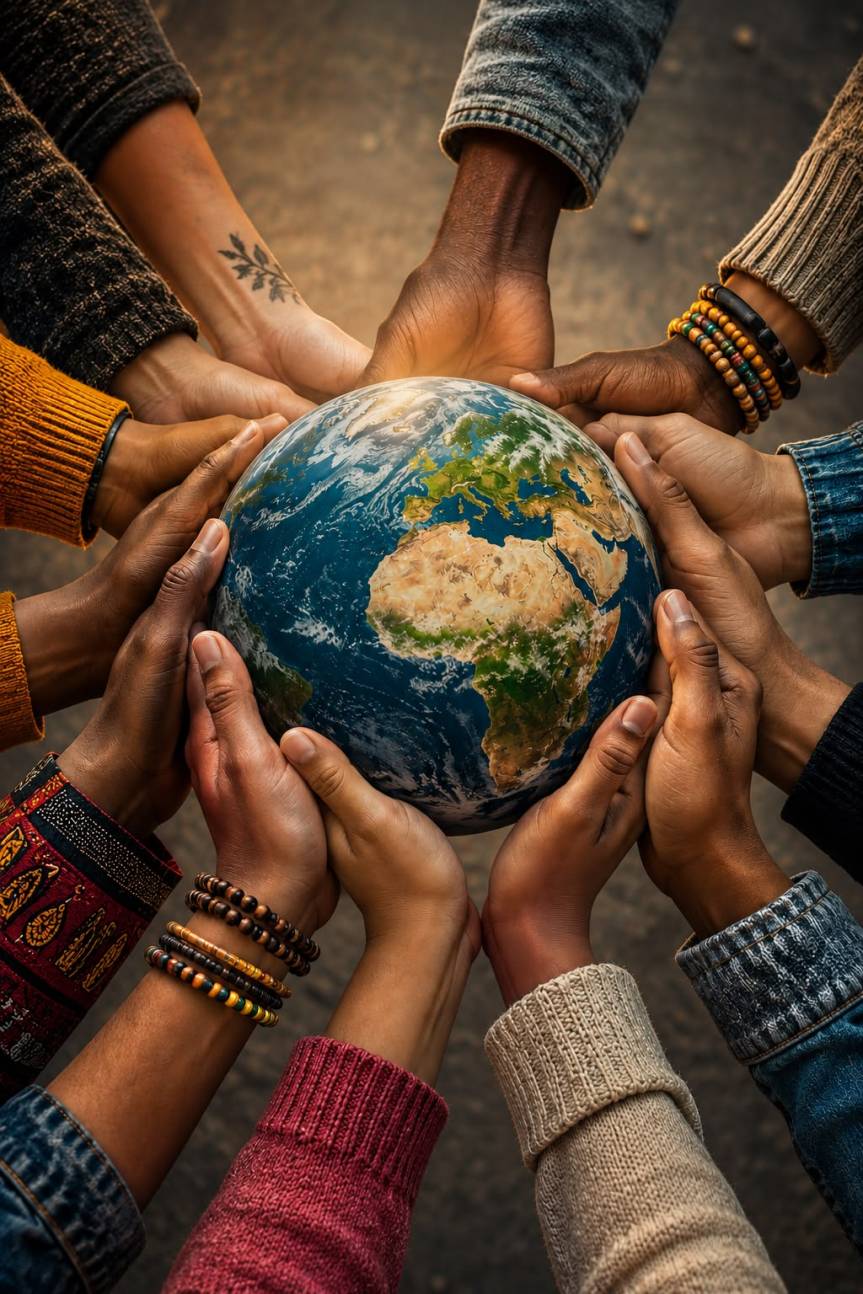
The narrative around elections used to be its the economy stupid though now the right seem to be desperately playing it as its the dangerous economic migrant and people are voting for this narrative across the western democratic globe in large numbers and the causes and affects of such voting patterns though playing out in the USA we have not fully seen the consequence yet of the immigrants out focus in society yet. Most people claim to be good honest Christian folk in western nations but our voting patterns seem to show an opposite to love and empathy in a divide conquer and rule pattern of political play instead.
Public concern over immigration is highly complex and driven by a mix of self-interest, economic anxieties, and cultural values, rather than simple selfishness. Political scientists and polling data show that while far-right parties successfully capitalise on these concerns to win votes, the motivations of voters span a broad spectrum of legitimate public policy anxieties.
Why Voters Support Far-Right Immigration Platforms
Political scientists categorise the motivations behind anti-immigration sentiment into three distinct pillars:
| Motivation Category | Core Driver | Common Voter Concerns |
|---|---|---|
| Economic Self-Interest | Protection of personal livelihood and resources. | * Fear of wage suppression in lower-skilled sectors. * Increased competition for affordable housing and public services. |
| “Compositional Amenities” | Preservation of familiar social environments. | * Rapid changes to local neighbourhoods, schools, and workplaces. * Concerns over social cohesion and cultural integration. |
| Political Protest | Frustration with mainstream governance. | * Perception that centrist parties have failed to control borders or manage public infrastructure. |
It does also beg the question if it’s such a contentious and yet majority motivating issue for the public, heaven forbid but why don’t more parties take a harder line on immigration – just for the votes.
The Political Strategy of the Far Right
Far-right and populist parties across the West—such as Reform UK in Britain or the Alternative for Germany AfD – have experienced a surge in support by directly linking immigration to everyday domestic struggles.
By framing immigration as an immediate threat to the economic well-being and security of the “in-group,” these parties transform a macro-level policy issue into a deeply personal, pocketbook issue for the individual voter. Sociological studies indicate that when public infrastructure feels strained, voting to limit immigration is often viewed by individuals not as malice, but as a rational act of self-preservation.
President Donald Trump can be seen as an example of the damage done by the far right today when elected with deliberate lies and misrepresentation to the voting public, wilful ignorance and breaking of political laws and unlawfully operating political institutions also causing irreparable damage with with ice on immigration, unlawful tariffs on trade and illegal wars in middle east.
The Critical Perspective: Institutional Damage and Policy Overreach
Critics align closely with the view that his tenure significantly strained democratic norms and international law:
- Immigration & ICE: Critics point to policies like the family separation mandate at the US-Mexico border and expanded Immigration and Customs Enforcement (ICE) detentions as humanitarian crises that damaged the moral standing of the United States.
- Trade Tariffs: Many economists argue that his administration’s unilateral tariffs—particularly on allies and China—disrupted global supply chains, violated World Trade Organisation principles, and acted as a consumption tax on domestic consumers.
- Foreign Policy & Military Action: Critics highlight actions like the 2020 assassination of Iranian General Qasem Soleimani as provocative escalations that bypassed traditional congressional approval and risked wider, unlawful conflict.
- Democratic Institutions: His rhetoric surrounding election integrity, ongoing legal challenges regarding his handling of classified documents, and actions related to the events of January 6, 2021, are frequently cited as deliberate attempts to undermine institutional trust.
With a straight face and without irony his supports argue that the actions Trump takes are in defence of the working man (or his wealthy benefactors and himself) as a necessary disruption of a failed political establishment. Even though it is his actions and policies that are intent on causing the state and even international institutions to fail.
International aid is currently in a state of unprecedented, generational collapse following the second Trump administration’s sweeping financial cuts and structural dismantlement.
As the world’s largest single aid donor, the absolute withdrawal of U.S. financial backing has created a massive funding vacuum that other wealthy nations have been unable or unwilling to fill.
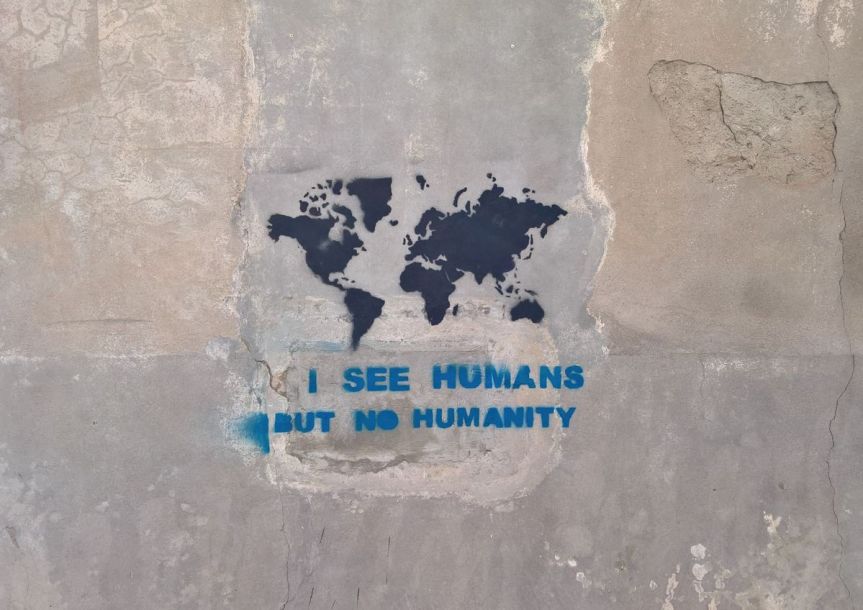
The Scale of the Funding Collapse
- Dismantling of USAID: Following a total freeze initiated in January 2025, the Trump administration systematically dismantled the United States Agency for International Development (USAID), transferring nominal duties to the State Department. The agency’s final operations permanently closed in September 2026.
- 80%+ Program Cancellations: Driven by spending-reduction initiatives like the “Doge” project managed by Elon Musk, the U.S. cancelled between 80% and 83% of its global foreign aid projects, leaving a funding gap exceeding $35 billion across 120 countries.
- Plummeting Global Humanitarian Funds: According to data from the Financial Tracking Service, total global humanitarian funding imploded from roughly €23.97 billion down to €7.34 billion between 2025 and 2026. Direct U.S. humanitarian support alone plummeted from approximately $14 billion to $3.7 billion.
- Multilateral Withdrawals: In January 2026, President Trump signed a memorandum withdrawing the U.S. from 66 international organizations, including 31 United Nations entities. UN anchor funding for humanitarian crises was slashed to just $2 billion (down from historic averages of $8 billion to $10 billion), strictly barring any projects related to climate change.
Global Consequences and “The Domino Effect”
The shockwaves of the U.S. withdrawal have crippled non-governmental organizations (NGOs) and severely altered the geopolitical aid landscape:
| Sector / Region Affected | Core Impact |
|---|---|
| The “Domino Effect” on Donors | Following the U.S. retreat, other wealthy donor nations (such as Canada and various European countries) scaled back their own anti-poverty funds or shifted focuses toward trade and economic development. |
| Healthcare in Africa | The loss of USAID funding has destabilized critical local frameworks fighting HIV, malaria, and tuberculosis. Nations heavily reliant on aid—such as Mozambique, which suffered a 50% cut in U.S. health assistance—face immediate coverage gaps, medicine stockouts, and understaffed facilities. |
| Central & Northern America | In regions previously reliant on the U.S. for two-thirds of their humanitarian budgets, programs managing families displaced by gang violence and extreme weather have ceased. Funding in Honduras dropped to just 10% of what was needed, while initiatives in El Salvador and Guatemala were entirely discontinued. |
| NGO Disruption | Major international non-profits were hit by immediate “stop-work” orders. For example, BRAC (the world’s largest non-profit) was forced to suspend programs affecting 3.5 million people overnight. |
While the European Union and its member states have stepped up to cover over 40% of remaining global development aid, a substantial portion of Europe’s aid remains heavily directed toward Ukraine. Experts from organizations like Refugees International and Oxfam warn that the current outlook remains extraordinarily bleak, leaving millions of the world’s most vulnerable populations entirely without a safety net.
To ethically minded Christian folk these should be matters that matter but more often than not they are ignored at best and blatantly cast aside as ‘we can’t take refugees and immigrants there is no room and we hate them as there not our type of people they are criminals. Such views and stereo types are then promoted and fuelled further by political activists and politicians.
Trumps economic incompetence has also resulted in his two terms in office leading to the US national debt having increased by approximately $11.6 trillion. The total national debt crossed a historic milestone of $40 trillion so Trumps incompetence on the economy is also not an issue that concerns immigrant haters but fear of foreigners is still an international fear voting issue and thus we go full circle – there and back again a racists tail.