
The British Press Crisis: Disconnect and Accountability

The Cost of Noise: How and why the British Press Lost the Public


Introduction: A System That No Longer Serves

There is a growing disconnect in Britain-between the public and the press that claims to inform it.

Once positioned as the “fourth estate,” the British press was meant to challenge power, expose wrongdoing, and provide citizens with the information needed to make informed decisions. Today, many critics argue it has drifted far from that role.

Instead, it increasingly reflects a system driven by corporate concentration, political alignment, and commercial survival, often at the expense of truth and public interest.

This isn’t just a media issue. It’s a democratic one.


A Concentrated Voice: When Few Control the Narrative

Britain’s press may look diverse, but structurally it is anything but.

Just three major corporations control around 90% of national print circulation and a significant share of online reach.

This level of concentration gives enormous influence to a small number of proprietors, including billionaire-owned media groups and large public corporations.

Why this matters

When ownership is concentrated:

  • Editorial direction becomes centralised
  • Certain political or economic perspectives are amplified
  • Others are marginalised or ignored

The result is not outright censorship—but something subtler: a narrowing of the national conversation.


Case Study: Phone Hacking and the Limits of Accountability

One of the clearest examples of systemic failure in the British press is the phone-hacking scandal.

The now-defunct News of the World, part of News UK, was shut down after widespread illegal surveillance of individuals, including celebrities and ordinary citizens.

The consequences were significant:

  • Over £1 billion paid in legal settlements by News UK
  • Public inquiries into press ethics
  • Exposure of close relationships between media and political elites

Yet despite this, critics argue the structural issues remain unchanged:

  • Self-regulation continues to dominate
  • Legal action remains inaccessible to most citizens
  • Cultural incentives within media organisations have not fundamentally shifted

The lesson is stark: even the most high-profile scandal did not fully reform the system.


Sensationalism and the Attention Economy

Modern journalism is no longer shaped purely by editorial judgement—it is shaped by clicks, shares, and engagement metrics.

The shift toward digital media has intensified this pressure, encouraging:

  • Outrage-driven headlines
  • Simplified, polarised narratives
  • High-volume, low-depth reporting

This has led to a growing reliance on “clickbait” and emotionally charged content, often at the expense of accuracy and nuance.

Example: Health Misinformation

The document highlights research linking media misinformation to increased NHS costs, with tens of millions spent on preventable hospitalisations.

This demonstrates a key point:

When the press prioritises engagement over accuracy, the cost is not just informational—it is financial and societal.


Political Alignment: Reporting or Campaigning?

Many British newspapers openly align with political ideologies. While this is not new, its impact has intensified due to concentrated ownership and declining trust.

Publications frequently:

  • Support specific parties or policies
  • Frame issues to reinforce ideological narratives
  • Selectively omit inconvenient facts

Example: Brexit Coverage

While perspectives varied, critics have argued that sections of the press:

  • Promoted simplified or emotionally charged narratives
  • Downplayed complex economic realities
  • Framed political choices as inevitable rather than debatable

This aligns with findings in your document that economic issues are often presented without sufficient nuance, limiting public understanding.

The result is a public discourse shaped less by evidence—and more by narrative.


The Quiet Harm: Ordinary People Without Protection

The impact of a failing press is not limited to politics—it affects individuals directly.

Under the current system:

  • Legal action against media organisations is prohibitively expensive
  • Independent arbitration mechanisms have been weakened
  • Citizens have limited recourse against false or intrusive reporting

Real-world impact

For ordinary people, this means:

  • Reputational damage with little chance of correction
  • Invasion of privacy without meaningful consequences
  • A sense of powerlessness against large media institutions

This imbalance reinforces the idea of “virtual impunity” within the press.


Democracy Under Pressure

A functioning democracy relies on an informed public.

When the press fails in its role, the consequences ripple outward:

1. Reduced Scrutiny of Power

Political decisions face less challenge, allowing:

  • Poor policy-making
  • Wasteful public spending
  • Potential corruption

2. Economic Misunderstanding

The document highlights a lack of economic literacy in reporting, leading to:

  • Oversimplified fiscal debates
  • Misleading narratives around public spending

3. Social Division

To drive engagement, media increasingly:

  • Amplifies cultural conflicts
  • Promotes polarising viewpoints
  • Circulates fringe or misleading narratives

The result is a fragmented society, where agreement on basic facts becomes difficult.


When Truth Becomes Secondary

Perhaps the most damaging shift is the erosion of truth itself.

Truth is often:

  • Distorted through selective reporting
  • Replaced by emotionally driven narratives
  • Undermined by weak correction mechanisms

Example: Corrections That Don’t Correct

Even when inaccuracies are acknowledged:

  • Corrections are often buried
  • Published long after the original story
  • Fail to reach the same audience

By then, public opinion has already been shaped.


The Bigger Picture: A System Built for Itself

Taken together, these issues point to a deeper structural problem.

The British press is no longer simply flawed—it is incentivised to behave this way.

  • Commercial models reward outrage
  • Ownership structures reward alignment
  • Weak regulation enables repetition

This creates a system where:

The pursuit of truth is often secondary to the pursuit of influence and revenue.


Conclusion: What Is Lost

This is not just a critique of journalism—it is a warning.

When the press fails:

  • Citizens lose access to reliable information
  • Power operates with less scrutiny
  • Society becomes more divided

Ultimately, the cost is not just economic or political.

It is the erosion of a shared reality—the foundation on which democracy depends.

The voters have spoken across the UK

But have the politicians in power listened? Members of Parliament in the Labour Party this evening are starting to put wheels into motion to remove the Labour Prime Minster, Keir Starmer from office as the head of the UK government. The necessary evil about politics and human nature is people do not like to speak out, protest or show dissent unless or until they feel what is politically happening directly affects them it appears this even relates directly to Labour members of Parliament.

Abstract red rose with fragmented, shattered petals on a textured gray background

If Starmer goes he will be a casualty of not only his own poor policy decisions and a straight jacketed poor election manifesto which promised to not increase peoples income tax whilst trying to fix austerity of the Conservative years of government mismanagement and cut backs. The billion pound elephant in the room is always the need to tax wealth of the rich which will potentially destabilise financial markets whilst make enemies of the wealthy press and media empires of the world whilst tackling the genuine black holes of multimillionaires absorbing wealth and financial assets and turning them merely into digits on a spread sheet which society is locked out of benefiting from until we tax it back.

Sadly the Labour Party does not seem ready for the challenges that the UK really needs to face up to but who is ready to if not them? I wrote a blog post below back in November 2024 about Labours’ downfall from what it appeared to be good policies at the time and sadly things went and got a lot worse for them even quicker than they might have thought. Well in the UK many buisness are presently going bust due to UK economic and the global economic climate, it seems parties and Prime Ministers can go bust too.

A goose stepped boot of fascism has Reformed and has its hold on the body of the UK

Nigel Farage’s Reform UK has emerged as a significant force on the British right by capitalizing on anger over immigration, the cost of living, and disillusionment with mainstream parties. They really have smashed through into a form of political mainstream acceptability and voted in by considerable political sales and gullibility and buy in to what ever Farage is choosing to peddle to the masses.

Political Shifting: The party has successfully shifted the UK political spectrum to the right, with some observers positioning them as a radical right populist party that challenges liberal democratic norms, rather than a classical fascist movement.

Have we not seen and heard this all before – there is a old economic phrase if the “When America sneezes, the world catches a cold” is a long-standing economic adage, popular since the 1929 Great Depression, highlighting that a U.S. economic downturn (the sneeze) causes severe global financial instability (the cold). It stems from an 1830s phrase by Klemens von Metternich regarding France. It seems that the US fascism through Trump is being exported across the world right now too. Also exporting chaos and crisis caused by Trumps war with Iran is also causing a cold economic climate for the world and the UK is economically feeling the shivers from the increase in prices in fuel, food and future product purchases and companies left, right and centre going bust like I have not seen in nearly 30 years or so in the UK. It’s easier and also neater to blame the UK government and punish them during voting at election time for forces well out of UK politicians and peoples control.

Capitalizing on Discontent: Reform draws support by exploiting dissatisfaction with both the Conservative and Labour parties. Nigel Farage and his party, Reform UK, have positioned themselves as a “plague on both your houses” alternative to the traditional Conservative and Labour parties in the UK, feeding on voter disillusionment and anger toward the political establishment – this sounds almost very Trump like in its regurgitating into the political arguments ok the UK just like the US.

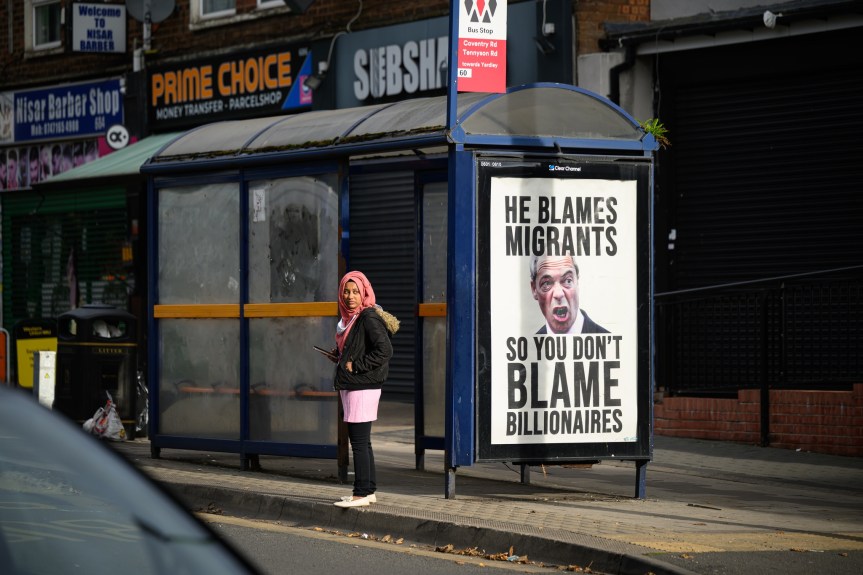
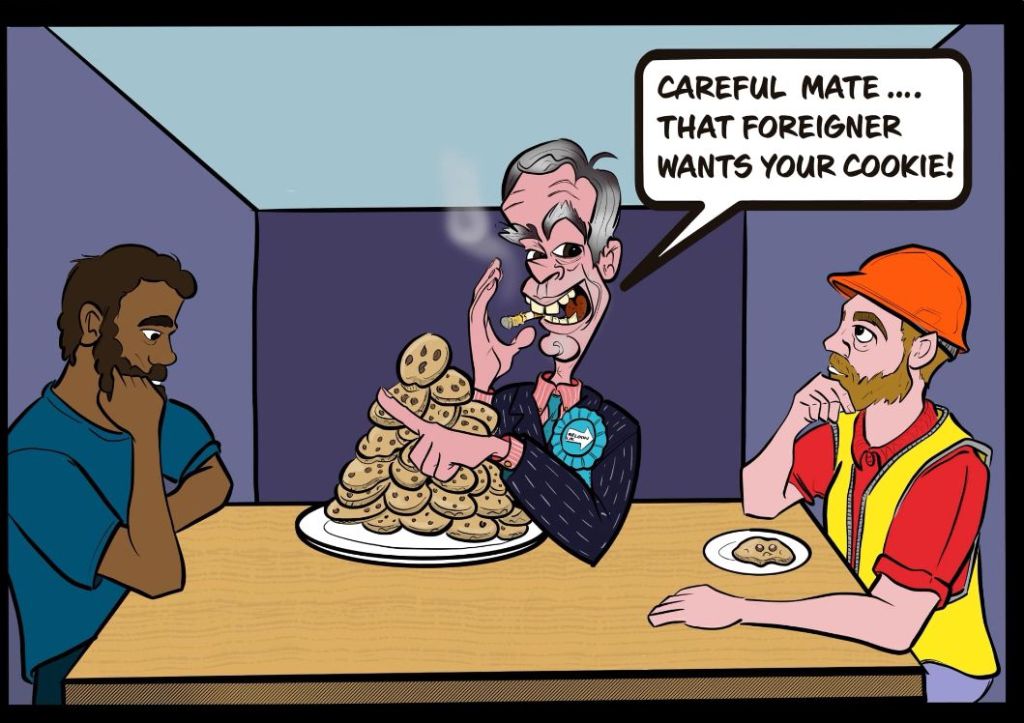
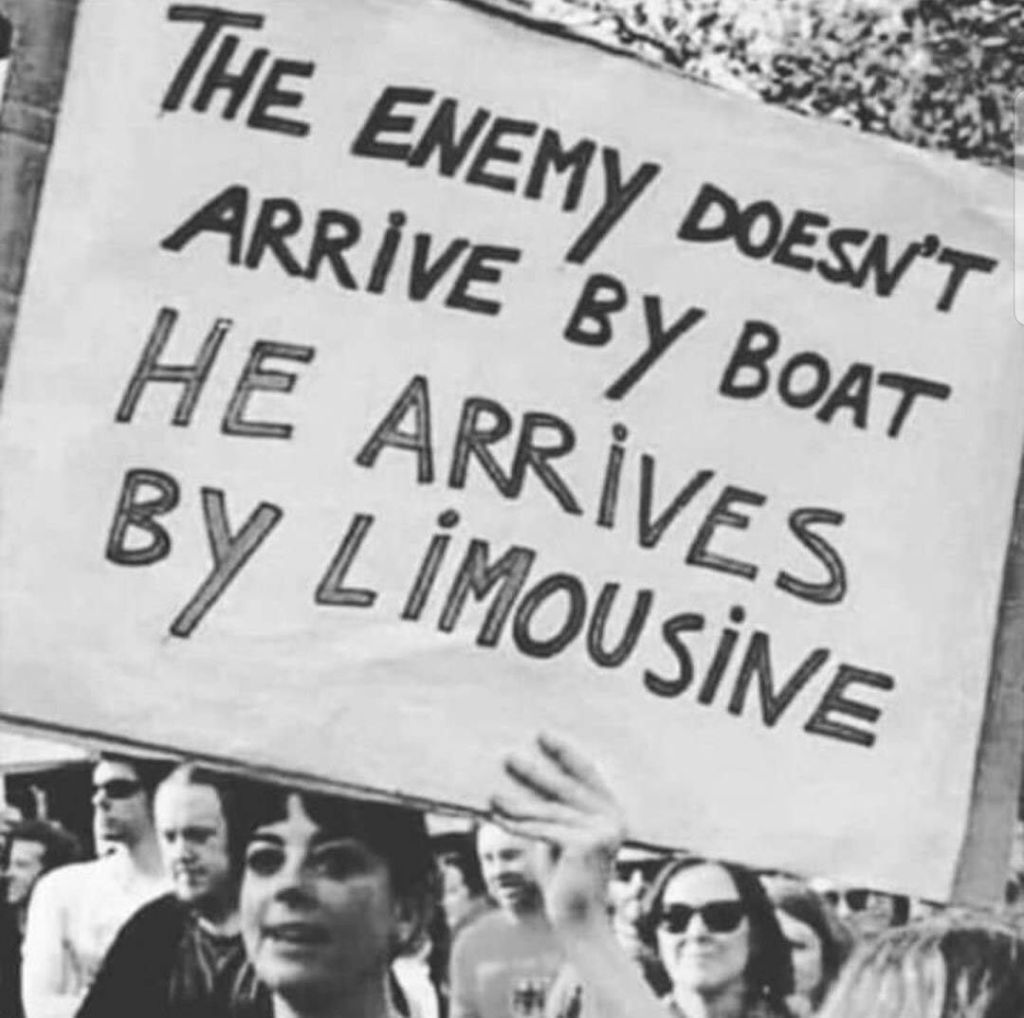
Anti-Immigration Sentiment: The party focuses heavily on immigration, which has fuelled its support. This is sadly very popular for the majority of people in the UK blame the foreigners for your own short comings, hate a foreigner for your own self loaving and lastly blame the foreigner not the billionaires for the problems destroying the society and nations that we all thought we lived in and love.

Populist Rhetoric: Nigel Farage presents the party as a defender of “the people” against a “corrupt elite,” a common populist strategy. This picture is very much echoed by the mainstream giants of the press such as Murdoc owning press.

Defections: Several former Conservative MPs and members have joined Reform, strengthening its position. To me this is just a rehashing and reinvention of the right wing wealthy classes who historically maintain power in the UK and globally – I have seen it happen a lot in British media when the right wing really show their teeth and do not pull their punches in hating the enemy and doing their damnedest to make sure you hate them to.

Social Media and Technology: The rise is facilitated by social media, which allows for the rapid spread of far-right ideologies and populist narratives.

There are a lot of fake, dishonest or false narrative social media accounts churning out hate speech on social media today boasting about how much they hate the left love Reform this is sadly new to me but its just a another weapon in the armoury of the wealthy and far right.

What does this all mean to a United Kingdom and does Nigel Farage now have the keys to Downing Street and the heart of British politics in 3 years time? Sadly I think it does it appears wealth, hate and might are presently stronger across the world and UK love, peace and righteousness reasoning.

Farage and Trump have infiltrated fascism into the western world in a way that Hitler could only dream of.

Leaving Europe has seriously economically damaged the UK although initiated by Farage he seems to be the master beneficiary of the pain and no gain that has happened due to this.

Globally taking placed wars orchestrated by power players such as Putin and Trump and climate damage due to climate change (ignored by Trump and Farage) are bound to result in immigrants escaping with their lives to places that they stand a better change to live and thrive and survive and rather than try to understand and respect peoples fears and attempts to make a better life, we demonise them and teach and promote the hating of them so as to avoid the real enemy that of excessive manipulation of us for the benefit of the billionaires classes and to maintain their power and wealth to exploit and play with the rest of us as there toys or digits on a spreadsheet rather than free thinking and feeling human beings that we are.

Huw UK Job Market review 2026

Though I have successfully managed to navigate many a storm in my employment history and keep my head above water maintaining a position in the job market for most of the last 30 years or so. Surviving the closure of companies, redundancies and also businesses no longer having enough money to hire me or restructuring me out of a roles on the odd occasion. I am more blessed with some of the areas that I have worked than cursed and have met some great people along the way and had a lot of fun at times spending some of the money that I have hard earned. I have at no time found getting a job or trying to get promoted or change jobs easy, in anyway shape or form and there are several patterns of behaviour by employers across the post industrial service sector that have developed across the service sector and government employers that are a concern for me and do not look to change in the medium to short term if any thing things are getting worse and accelerating into a darker place quicker now than ever before.

My present employer no longer employees any administration staff (by way of having admin in any job titles) to undertake work even though a considerable amount of what I would call administrative work still needs to take place in order for the organisation to function effectively and efficiently and get things done. You are either an apprentice an employment officer, employment support officer or manager, senior manager or director. More often than not you also need to have direct experience of doing a job already before they will hire you to do a job so internal recruitment opportunities are very few and far between unless, you have probably guessed it, you are already doing the job you are applying for.

I get this (I don’t like it though) and understand this how they operate and so to gain experience and improve my employability I go out of my comfort zone and so have expanded my employment experiences by in the last 10 months working part time on top of my full time job role for a housing association on a residents board that explores areas of change and improvement to be recommended to the housing association by residents and staff. I have enjoyed this role its been an unpaid post and has really helped me expand my knowledge base and experience whilst also helped me learn new skills and hopefully prove that I am employable to other potential employers in the long run.

So with my new found set of skills and employment experiences I started to try and look for other areas of work both with my own employer and also with other organisations that I would hope to work for and with. In a relatively short space of time I managed to get invited to two interviews out of three adverts that i had applied for, so not too bad success rate so far. One of the roles was an administration role which would have resulted in a pay cut and leaving the organisation I work for now and the other role was a potential promotion into an almost corporate executive role.

Well I had both interviews on the same day and the role that really stood out as a better opportunity was the one with my present employer, although in hindsight that interview went terribly right from the start and the project lead had no interest in hiring me and I think she did not even want to interview me either and I was possibly sifted out as a potentially suitable recruit by HR not her.

Just before I left the interview I spoke up saying thank you for this interview opportunity it really does feel like exciting times to work here, to which the HR person on the panel agreed and the project manager of the role quibbled in to say that the whole thing was a nightmare, leaving me with an impression that she was either overwhelmed and out of her depth or just disinterested in the whole concept of the project that she faced trying to hire a team of people to do her job for her with which was not me. Suffice to say I was told that I did not have the job and did not have the correct employment experience. So why they bothered to interview me in the first place god only knows. I also was not offered the other role due to a better candidate on the day too.

Not just viewing this from my personal experience of employment and employability over the last 30 years but the service sector or office and government based employment roles that have sustained an employment for the last 30 years no longer exist and are likely to not return under current trends and predictions.

My first job that I got that opened my world to being a productive employee in an organisation that I loved to work for and appreciated my working for them in my early 20’s I just cant see me being able to obtain the role again if I were trying to enter a role in the job market in todays environment compared with pack in the 1990’s.

My employment experience consisted of a failed degree which then led me to move in with parents and work at a local Castle on the edge of Dartmoor for a charity called the National Trust doing gardening for them, that opportunity led me to go and work for a local Estate Agents as an office junior, which then led to me then getting an awesome varied and rewarding job with the Devon Wildlife Trust as a low and behold Administrative Assistant, where I earned enough money to move out of my parents house and in with some friends, I though my career truly had begun and I felt I could work hard and be rewarded for my hard work at the same time.

The whole concept of no more admin anymore in a lot of employers across the developed world and the computerisation and automation of roles for efficiency purposes is both logical and a race to the jobless market. If we get rid of all employees or a large proportion of employees through ever innovative forms of computerisation and automation, just what are said employees or unemployees supposed to do with themselves and how will they afford to buy products and services within an economy and how will a developed economy sustain itself with an ever increasing populace that are either unable or due to the barriers they face unwilling to work and contribute income taxes into a system that has sustained people throughout my lifetime.

Better to have lived, worked and lost than to have never lived, worked and lost at all.

This is about not just living a rewarding life and navigating personal or global storms, but having enough money to live a rewarding life keeping your head above water and being done in a way that is sustainable for all not just a lucky few.

James – Sometimes

Britain Isn’t Working

Chained To A Past That Locks Away Its Future!

I’ve lived in the UK long enough to know its contradictions intimately. This is a country that can produce Oxford mathematicians, Glastonbury headliners, and Nobel‑winning scientists — yet can’t run a functioning train network on a rainy Tuesday. A country that invented the industrial revolution but now struggles to build a railway line without it becoming a national scandal.

The UK isn’t a failed state. It’s a stalled one. And the data backs that up.

This isn’t a doom‑scrolling exercise. It’s an attempt to understand why a country with so much potential consistently underperforms — and what it would take to turn it around.

Britain’s Economy Has Been Flatlining for 15 Years

Let’s start with the numbers, because they’re brutal.

  • GDP per capita in the UK has grown only 6% since 2007. The US grew 21% in the same period. Germany: 15%.
  • Productivity — the engine of living standards — has grown at 0.3% per year since 2008. Before the financial crisis, it was 2%.
  • Real wages are still below their 2008 level. That’s not normal. It’s unprecedented in modern British history.

This is the longest period of wage stagnation since the Napoleonic Wars. Think about that. Two centuries of progress — and then a flatline.

Why it matters

When productivity stalls, everything else stalls: wages, public services, investment, optimism. You can feel it in the national mood — the sense that the country is working harder but getting nowhere.

Why it’s happening

Because the UK rewards rent‑seeking (property, financial extraction) more than value creation (innovation, skills, manufacturing). Because we underinvest in infrastructure, R&D, and people. Because our planning system is a productivity‑killing machine.

What would make it better

  • A national investment strategy focused on green energy, AI, biotech, and advanced manufacturing.
  • Planning reform so we can actually build things again.
  • Tax incentives that reward innovation, not speculation.
  • A skills system that treats vocational excellence as a national asset.

Britain doesn’t lack talent. It lacks a system that knows what to do with it.

Public Services Are Failing Because They’re Designed for a Different Century

You don’t need statistics to know the NHS is struggling — but the statistics are still shocking.

  • NHS waiting lists: 7.6 million people.
  • Average time to charge an offender in England: over 400 days.
  • Local councils: 1 in 5 at risk of effective bankruptcy.
  • Train cancellations: highest on record.

This isn’t because people aren’t working hard. It’s because the system is structurally broken.

The deeper issue

Britain runs 21st‑century problems on 19th‑century institutional architecture. Westminster is hyper‑centralised, overloaded, and allergic to long‑term planning.

What would make it better

  • Multi‑year funding settlements so services can plan instead of firefight.
  • A national digital transformation programme across health, justice, and local government.
  • Workforce strategies that treat staff as humans, not line items.
  • Radical simplification: fewer agencies, clearer accountability.

We don’t need to spend like Scandinavia to get Scandinavian outcomes. We need to design like Scandinavia.

The UK Has a Confidence Problem — and It Shows Up in the Data

This is the part that feels personal.

Britain has slipped into a cultural posture of low expectations. We’ve normalised decline. We’ve become experts at explaining why things can’t be done.

And the data reflects that psychology:

  • The UK invests less than 1% of GDP in public R&D. South Korea invests 4.9%.
  • Business investment is 30% below the OECD average.
  • The UK builds half as many homes per capita as France.
  • We take longer to build infrastructure than almost any developed country.

This isn’t just economics. It’s culture. A country that doesn’t believe in its future won’t invest in it.

What would make it better

  • A national narrative of renewal, not nostalgia.
  • Civic education that builds agency and critical thinking.
  • A media ecosystem that rewards depth, not outrage.
  • A political class that talks about the future instead of the past.

Britain needs to rediscover ambition. Not arrogance — ambition.

Our Democracy Doesn’t Feel Democratic

Trust in politics is at historic lows. And again, the numbers tell the story:

  • The UK has one of the least proportional electoral systems in the developed world.
  • Millions of votes effectively don’t count in safe seats.
  • Turnout among young people is collapsing.

People aren’t apathetic. They’re alienated.

What would make it better

  • Proportional representation or a hybrid system.
  • Citizens’ assemblies for long‑term issues like climate, AI, and constitutional reform.
  • Radical transparency in political funding.
  • Digital participation tools that bring people into policymaking.

Democracy isn’t just voting. It’s agency. And Britain has been quietly stripping agency away.

The Real Problem: Britain Has No National Project

This is the heart of it.

Countries that thrive have a mission. A story about what they’re building and why it matters.

Japan: robotics and advanced manufacturing. South Korea: technology and innovation. Denmark: green energy. The US: AI, biotech, and frontier science.

The UK? We don’t know. We haven’t known for a long time.

What would make it better

Britain needs a national project big enough to unite people and concrete enough to guide policy. For example:

  • Becoming the world leader in green energy.
  • Building the most advanced digital public services on the planet.
  • Creating Europe’s innovation supercluster.
  • Designing a new social contract for the 21st century.

A country without a project becomes a museum. A country with a project becomes a magnet.

Britain Isn’t Broken — It’s Under‑Designed

This is the part where I get frustrated, because the UK’s problems are not mysterious. They’re structural, cultural, and entirely fixable.

Britain has the talent. Britain has the resources. Britain has the institutional memory.

What it lacks is the decision to reinvent itself.

A better Britain isn’t a fantasy. It’s a design challenge. And like all design challenges, it begins with imagination, clarity, and the courage to build something new.

Britain must learn from its past but not live within its past – reform the monarchy, tax those that profit from others at no expense to themselves. Free people to work and be creative. Do not punish those that can’t work because of those that won’t work. Create a state that does not promise all to everyone and consistently delivers nothing to no one.

Amy Macdonald – The Human Demands

Live, Work, Die Repeat

The UK economy consists of workers, unemployed and those that profit from the status quo.  

The UK economy in 2026 is characterized by a high-inequality structure where the richest 1% own roughly 21% of wealth, while over 14 million people live in poverty. A weakening labor market has seen unemployment rise to 5.2% with over 9 million economically inactive, often due to long-term sickness, while corporate profits have contributed significantly to cost-of-living pressures.

Those that Work (75.0% employment rate): As of Oct-Dec 2025, approximately 34.24 million people are in work, though the labor market has loosened, with payrolled employees falling in early 2026.

Those that Don’t (20.8% inactivity rate): Economic inactivity remains high, driven primarily by long-term sickness, and an aging population, with youth unemployment (18-24) hitting high levels in early 2026.

Those that Profited: Wealth concentration is high; the richest 56 billionaires hold more wealth than 27 million other people combined. This group’s wealth has grown significantly faster than earnings, benefiting from capital growth, while many households face stagnant incomes and high costs. 

The UK economy in 2026 is defined by a widening gap between earned income and accumulated wealth, with persistent “economic inactivity” and high levels of wealth concentration among a small minority. 

1. Those Who Work (The Employed)

The workforce remains the primary driver of the economy, though it faces significant pressure from “fiscal drag” and rising costs. 

Employment Rate: As of late 2025/early 2026, the UK employment rate stands at approximately 75.0%.

Tax Burden: Many workers are paying more in direct taxes due to frozen income tax thresholds (Personal Allowance remains at £12,570), a phenomenon known as “fiscal drag” that brings more people into higher tax brackets as nominal wages rise.

Income Inequality: The top 1% of income taxpayers account for 12.9% of all pre-tax income, while the bottom 10% account for just 0.3%. 

2. Those Who Don’t (The Unemployed and Inactive)

This group includes both those looking for work and a historically large number of people who are “economically inactive.” 

Unemployment: The unemployment rate has risen to 5.2% (approx. 1.88 million people), with youth unemployment (ages 16–24) being particularly high at 16%–17%.

Economic Inactivity: Roughly 20.8% of the working-age population (over 9 million people) is economically inactive.

Health Drivers: A major driver of this inactivity since 2020 has been long-term health conditions, which remain at historically high levels. 

3. Those Who Have Profited (The Wealthy)

Wealth in the UK is increasingly decoupled from active work, favoring those with existing assets like property and pensions. 

Wealth Concentration: The top 10% of households own more than one-third of the national wealth, with an average of roughly £2.3 million per person. The bottom 10% have almost no net wealth.

Asset Divide: Total household wealth is over 15 times higher for those who own their homes outright compared to those who rent.

Difficulty of Advancement: In 2008, it took 10 years of typical earnings to move from the middle to the top of the wealth distribution; by 2018, this had increased to 16 years, making it harder for working families to “climb” through labor alone.

Corporate Profiteering: Some analysis suggests a “profiteering crisis,” where corporate profits have outpaced wage growth, further concentrating gains among shareholders and asset owners. 

Survive, vote and demand change for the better for you and all.

Those of us blessed to live in democracies should vote for and advocate for positive political and economic change. With the rise of the green party as a potential political and economic force for good in the UK this can only be positive for all. Old invested interests will fight hard for the states quo to continue but what even if there reaches a threshold when even the statues quo of profiting at the expense of everything else also ultimately becomes unsustainable then change must and will come. We should vote and advocate for what shape that change must and will be in the form of.

With rising pressures on human employment stability and continued worsening growths in gaps in wealth between those that exploit others and those that are exploited, political change needs to take place to readdress a balance between the humans that have a right to live and exist over those that wish to dominate for their own self interests at the expense of others.

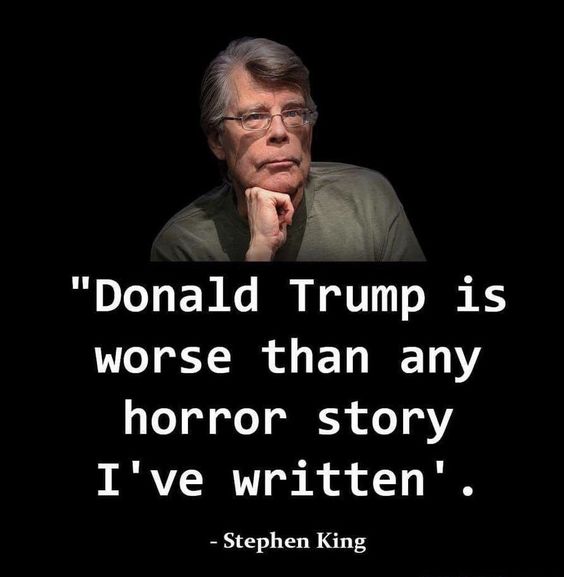
Is Donald Trump a ‘Saint’ or a ‘Sinner’ in the time of political echo chambers?

Whether Donald Trump is “evil” is a matter of intense public debate and subjective judgment, with no consensus. The term is used by various critics, supporters, and observers to describe his character, policies, and political impact from widely differing perspectives.

Arguments for Characterizing Him as evil

Critics and some public figures often use the term “evil” to describe Trump based on his actions and rhetoric:

  • Moral and Ethical Critique: Figures like actor Robert De Niro have explicitly called him “evil,” citing a lack of morals, ethics, or regard for others.
  • Impact of Policies: Some commentators argue that his policies, such as certain immigration measures or his handling of the COVID-19 pandemic, have caused significant suffering and death, which they categorize as a form of “multidimensional evil”.
  • Political Rhetoric: His use of language to demonise domestic political opponents—labelling them as “evil”—is seen by some as a dangerous shift in American political discourse.
  • Cultural Symbolism: In popular culture and media, Trump has been frequently depicted or used as a template for villainous characters, representing archetypes of greed and cynicism. 

Counter-Perspectives and Alternative Labels

Other observers reject the “evil” label, offering different interpretations:

  • Incompetence vs. Malice: Some critics argue he is not evil but rather a “chaotic fool” or “buffoon” whose detrimental impacts stem from ego and incompetence rather than calculated malevolence.
  • “Necessary Evil”: Some supporters or pragmatic observers have characterized him as a “necessary evil”—a disruptive force required to challenge established political systems.
  • Psychological Framing: Many analysts prefer clinical or psychological terms, such as “narcissistic” or “pathological,” to describe his behaviour rather than moralistic terms like “evil”.

Perception and Bias

Research suggests that whether an individual perceives Trump as “devil or messiah” is often influenced by their own pre-existing biases or political echo chamber and how they weigh his public persona as a successful businessman against his controversial actions as a political leader.

Sinner or saint in the time of political echo chambers/

Maybe in a time of political echo chambers where environments are often created by social media algorithms and selective exposure, where individuals only encounter information, opinions, and beliefs that reflect and reinforce their own. These insular spaces, sometimes termed “neotribalism,” intensify political polarization, normalize extreme views, and shield users from opposing perspectives. such a time is the perfect time to create a sinner or a saint in Donald Trump. We don’t want to see the good in what we perceive to be bad and alternatively those that see only the good in what he does are ignorant to the bad.

But also on the other hand if Donald Trump himself only chooses to listen and follow his own political echo chambers perspective and train of thought, then what will he loose out on or what damage will be done or has or is already being done by ignoring a more overarching or balanced set of views and perspectives on politics and the globe. Presidents can now be hoodwinked just as easily as people can by their own political echo chambers.

Final a religious perspective to Trumps entourage

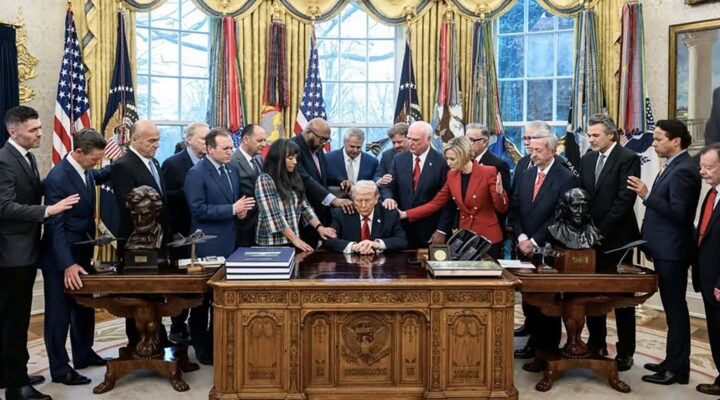
Pastors pray over Trump in the Oval Office

In Matthew 23:3, Jesus tells his followers to obey the teachings of the scribes and Pharisees, but not to follow their actions, stating: “for they talk but do not do”. This is a warning against hypocrisy, specifically criticizing religious leaders who preach the law but do not practice it themselves. 

Key details regarding this, and similar phrasing:

  • Context: Jesus was calling out hypocritical leaders who “tie up heavy, cumbersome loads” (strict religious rules) but are unwilling to lift a finger to help.
  • Meaning: This is a command to follow the authorized, sound doctrine (“what they say”), but avoid copying the behaviour of those who fail to live up to it (“what they do”).

Have people forgotten about Gaza due to the invasion of Iran

From the murder of many thousands of civilians in Gaza not even perceived to be human by some of their killers to a change in pace and pursuit of an illegal invasion of an unlawful nation state. As of late February 2026, the estimated number of Palestinians killed in the ongoing war has reached significant levels, with official and independent sources reporting varying figures based on direct and indirect causes.

Reported Death Toll (Gaza)

  • Official Recorded Deaths: At least 73,188 Palestinians have been reported killed in the Gaza Strip since the conflict began on 7 October 2023.
  • Total Reported Deaths (Including West Bank): Some sources indicate the total number of Palestinians killed across both Gaza and the West Bank exceeds 80,692.
  • Indirect Deaths: Independent studies, including those published in The Lancet, suggest the total death toll could be significantly higher—possibly surpassing 186,000 to 335,500—when accounting for indirect causes such as starvation, disease, and the collapse of the healthcare system.
  • Demographics: Women and children are estimated to make up approximately 70% of the total fatalities

The vast majority of the West see Israel as a beacon of democracy in the middle east with a right to exist sadly leading to inherent will and right to enter ongoing wars to fight for its survival against its enemies that it sees if it does not destroy will destroy her.

While the Israel-Palestine conflict remains a critical, ongoing situation, the new, high-intensity conflict with Iran—which has included strikes on Tehran and retaliation from Iranian forces—has created a “Tale of Two Wars,” where the latter dominates international headlines and diplomatic focus.

Here is a breakdown of the situation as of March 2026:

  • Shifting Focus & “Forgotten” Fears: Palestinians in Gaza have expressed deep concern that their ongoing, dire situation is being overlooked as the world focuses on the rapidly escalating conflict between Israel, the US, and Iran.
  • Impact on Humanitarian Aid: The outbreak of the Iran conflict has had direct, immediate consequences for Gaza. Israel blocked border crossings to Gaza following air strikes on Iran, causing fear of renewed famine and causing supply lines for humanitarian aid to be severely disrupted.
  • Ongoing Catastrophe in Gaza: Despite the shift in attention, the situation in Gaza remains critical, with reports of continued, intense, and, in some cases, widening, military actions, following a two-year period of severe destruction.
  • The “Two Wars” Context: The 2026 conflict is being characterized by the simultaneous, yet competing, catastrophes of a new war with Iran and the continuing humanitarian crisis in Gaza, with the former often acting as a “shadow” that masks the ongoing devastation in the latter. 
  • While international awareness of the situation in Gaza remains, the intensity and potential for a massive, regional war with Iran have altered the primary focus of international media and political leaders, creating a perception that Palestine is being forgotten.

The main justification for war with Iran is the fear that Iran will develop a nuclear bomb capacity if not stopped. This would be an existential threat to Israel, given Tehran’s frequent rhetoric calling for the destruction of the Israeli state. So although the war with Iran might be seen as one that must be fort, must it be thought unlawfully and does it excuse or explain Israel’s actions in Palestine.

Gaza by David Rovics


Amazon and Red Nose Day: A Controversial Partnership

Jeff Bezos outsourced his staff and tax responsibilities while asking us to raise funds for red nose day to help fight local and global poverty.

The Red Nose Day Controversy

Partnership Role: Since 2023, Amazon has been the official home of the Red Nose, handling the production and distribution of the noses and related merchandise.

Public Reaction: Critics and some members of the public have labelled the partnership as hypocritical, arguing that a company accused of aggressive tax avoidance is being positioned as a champion for addressing poverty and the cost of living in the UK.

Employee Fundraising: While Amazon encourages its staff to participate in fundraising activities like virtual photobooths and fancy-dress walks, critics point out that these same workers have reportedly faced benefit cuts to fund their own pay rises. 

Staff and Outsourcing Allegations

Worker Conditions: Reports have surfaced of Amazon warehouse workers being under significant pressure to meet targets, with some reportedly sleeping in tents because they cannot afford local rent on their wages.

Relief Fund Backlash: During the pandemic, Amazon faced intense criticism for allowing the public to donate to a relief fund for its own contract and seasonal workers, despite the company’s multi-billion dollar profits. 

UK Tax Responsibilities

Reported Tax Gap: Campaigners estimate that Amazon’s “systematic corporation tax avoidance” may have cost the UK Treasury as much as £575 million in 2024 alone.

Tax Credits: Investigations by Tax Justice UK highlighted that Amazon’s main UK division paid no corporation tax in 2022 and instead received millions in government tax credits for infrastructure investments.

The idea that “charity is people stepping in where governments are failing” is a widely discussed perspective, particularly in the context of rising demand for food banks, housing support, and social care in the UK. While charities have historically played a role in social welfare, evidence suggests they are increasingly serving as a, sometimes strained, safety net due to gaps in state provision.

Ani DiFranco – Work Your Way Out

Hannah Spencer: From Plumber to Parliamentarian

A Historic Breakthrough in Gorton and Denton

Hannah Spencer’s victory in the Gorton and Denton by‑election marks one of the most significant political upsets in modern Greater Manchester history. Winning 14,980 votes (40.7%), she not only defeated Reform UK’s Matt Goodwin but pushed Labour — the area’s dominant force since 1931 — into third place.

Her win brings the Green Party’s total representation in the House of Commons to five MPs, joining Siân Berry, Adrian Ramsay, Carla Denyer, and Ellie Chowns.

A Working‑Class Story That Resonated

Spencer’s background is central to her political appeal. A plumber and qualified plasterer, she trained after leaving school at 16 and continued working while campaigning — even telling clients she’d have to cancel their booked jobs because she was “heading to Parliament.”

She has lived in Manchester her entire life, leads the Green group on her local council, and previously ran for Mayor of Greater Manchester. Despite this experience, she insists she “did not grow up wanting to be a politician,” positioning herself as a genuine working‑class representative rather than a career political figure.

Her personal life adds to her grounded image: she’s a marathon runner and shares her home with four rescued greyhounds.

Why Her Victory Matters

Spencer’s win is more than a local upset — it signals a broader shift in British politics:

  • Labour’s declining dominance: The party’s vote collapsed dramatically, reflecting wider dissatisfaction with Keir Starmer’s leadership. Polls now suggest he is the most unpopular prime minister since modern surveys began.
  • Green Party momentum: Party leader Zack Polanski described the result as “tearing the roof off British politics,” arguing that there are now no “no‑go areas” for the Greens.
  • A new kind of Green MP: Spencer embodies a shift away from the party’s traditional middle‑class image, aligning instead with cost‑of‑living concerns and working‑class representation.

Her victory speech captured this mood, declaring:

“We defeated the parties of billionaire donors.”

What Comes Next?

As the Green Party’s first ever by‑election winner, Spencer enters Parliament with significant symbolic weight. Her challenge now is to translate her grassroots credibility into national influence — and to show that her win is not an anomaly but part of a growing realignment in British politics.