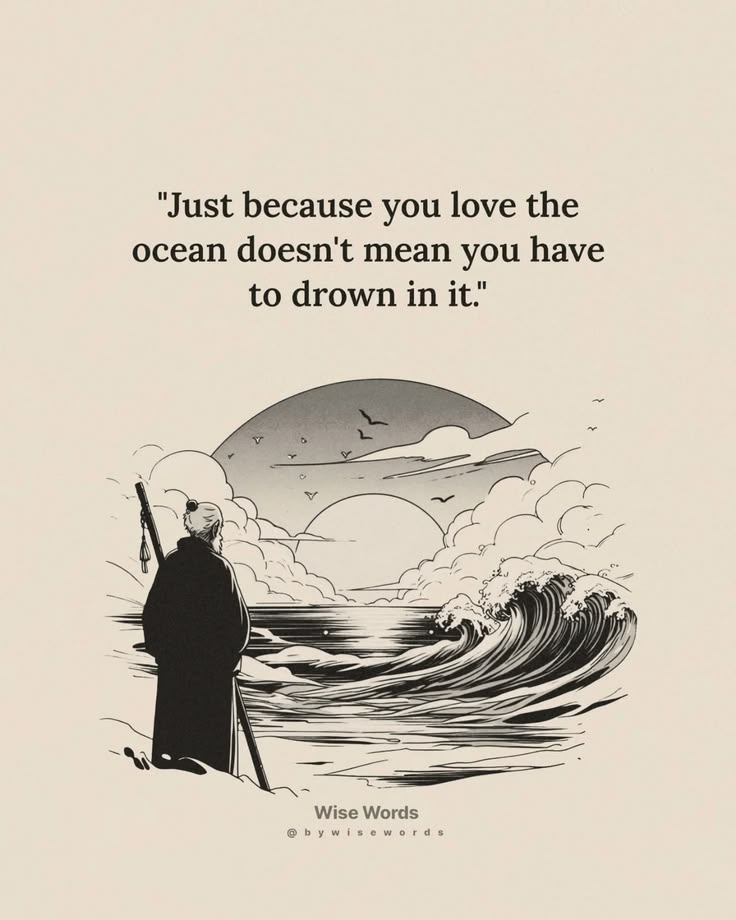
Sometimes I find myself and others in crisis, not one of there making but one that they or myself or others are very much being weathered by and emotionally unable to take shelter from what is raining down.
Although the instinct is sometimes to try and wipe them or yourself dry with reassuring words and all knowing answers, such words and answers can not always stop the emotional rain.
its upsetting and frustrating for both you and a person caught in an emotional storm, but sometimes its better to wait for a storm to pass before you look for a place to recharge from the storm. Sometimes you will only know a storm will have passed once the darn thing has finished and not knowing what it will do or when it will stop can be frustrating in its self.
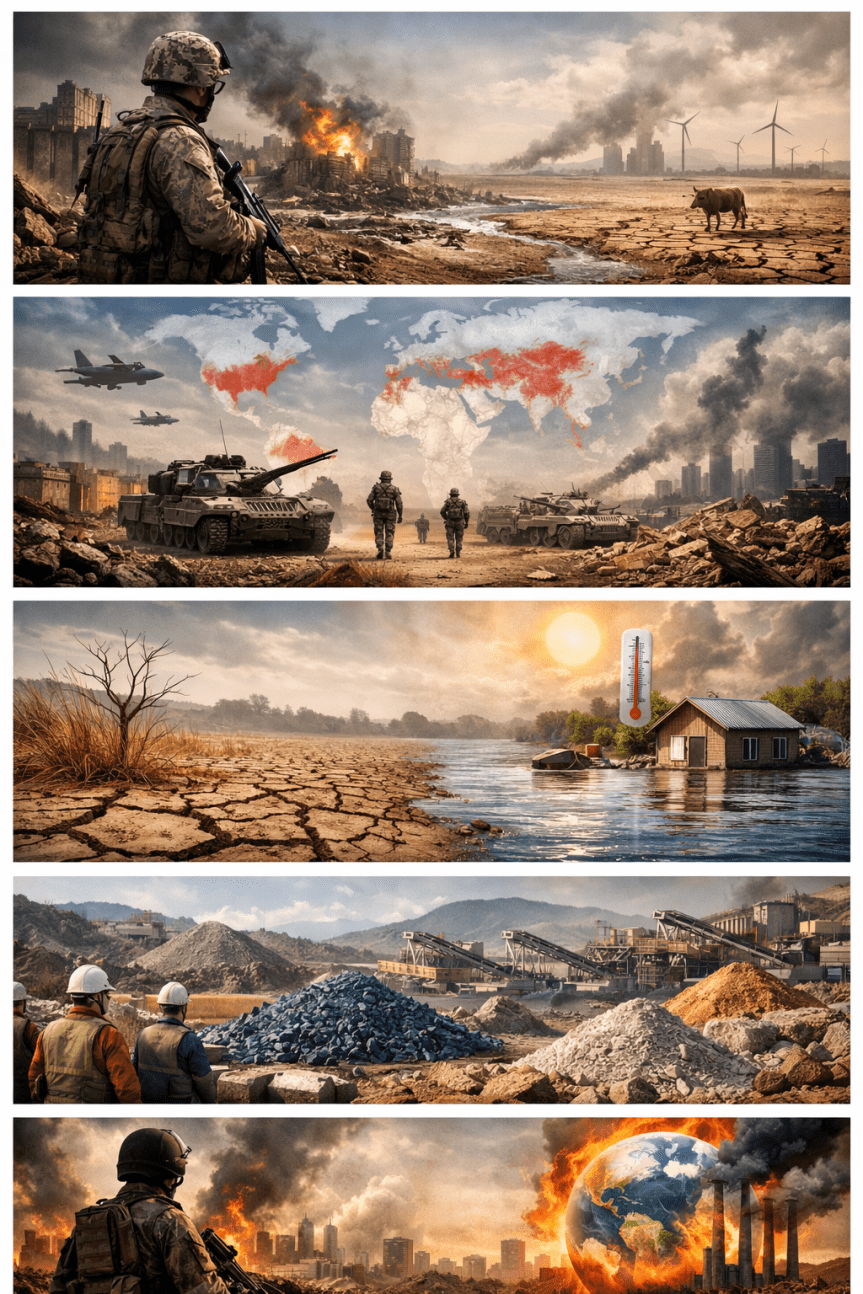
On an economic front there is a storm coming in the UK. Lots of business some long established business have been being announced as going bust in the UK and it really does feel like we are on the cusp of an economic storm of a recession with concerns on job fronts, stock market highs leading to potential stock market lows and Trumps war in the middle east and threats of tariffs and tantrums to those that don’t support his brain rotten madness there really are potentially several economic storms on the horizon.
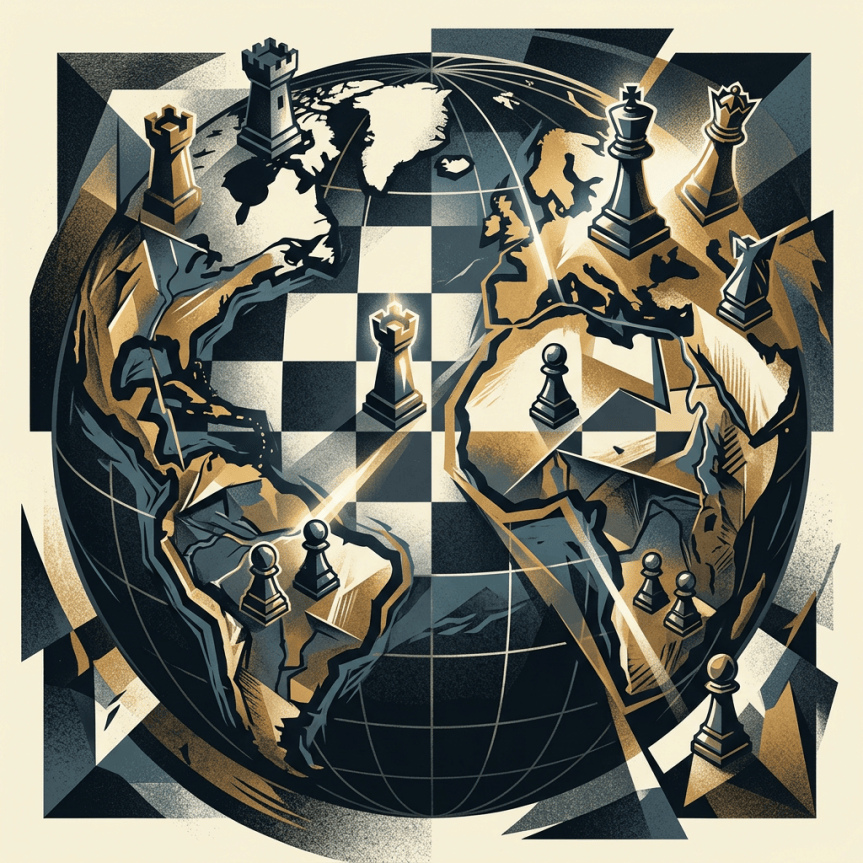
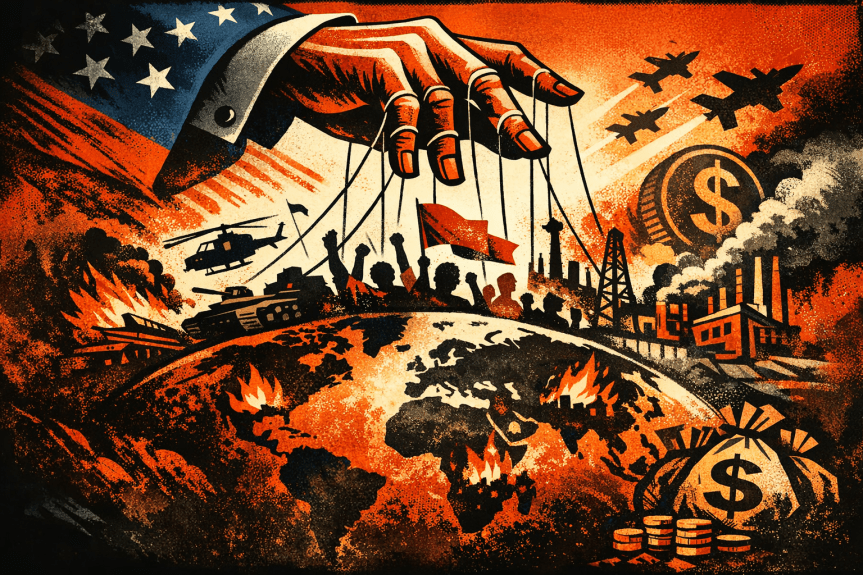
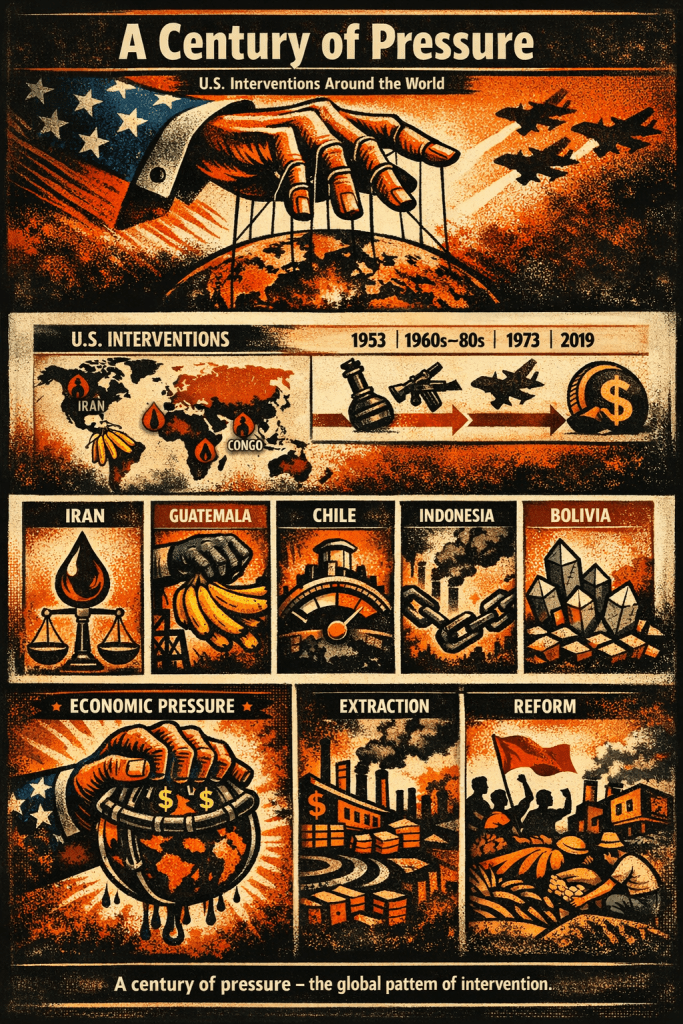
For the last hundred years, the United States has repeatedly intervened—covertly, economically, and sometimes militarily—against governments that tried to redistribute wealth, nationalise resources, or break from Western corporate and strategic influence. Historians argue that these actions were driven by Cold War ideology, corporate lobbying, and the desire to maintain a U.S.-led global order.
What was good for a country, its people and it’s ability to stand taller on it’s own two feet would not necessarily match with what would be in the interests of the US. When an agenda of profit over people would and continues to override the agenda, then something was going to have to give and yes people are going to suffer at the expense of profit. This is not a question of simply destroying possible authoritarian undemocratic non US influenced countries across the globe that worked against the interests of the US. But often a case of destroying left leaning democracies of countries that no longer saw the US as having their democracies interests at heart and looked to stand on their own two feet rather than in someone else’s corporate shadow. Israel’s belief to wipe out infrastructure and opposition across the middle east at this present time with the support and backing of Donald Trumps government appears to come across as regime destruction on steroids.
Below is tour of ten countries where left‑leaning governments attempted major reforms—and what happened next.
Iran (1953) — Oil Nationalisation Meets Cold War Anxiety
Mossadegh nationalised Iran’s oil to fund national development. The U.S. and UK removed him, restoring Western control of oil and installing the Shah. Impact: dictatorship, repression, and decades of instability.
Guatemala (1954) — Land Reform vs. United Fruit
Árbenz redistributed unused land, including United Fruit’s vast holdings. A CIA-backed coup followed. Impact: a 36‑year civil war and mass atrocities.
Congo (1960–61) — Lumumba’s Independence Project
Lumumba wanted Congo’s mineral wealth to benefit its citizens. He was removed and later killed during Cold War manoeuvring. Impact: Mobutu’s long dictatorship and entrenched poverty.
Brazil (1964) — Social Reform Meets U.S. Alarm
Goulart pushed land and tax reform and expanded voting rights. Washington supported a military coup. Impact: 21 years of authoritarian rule.
Indonesia (1965) — The Anti‑Communist Purge
Sukarno balanced nationalist and communist factions. The U.S. supported forces that eliminated the PKI. Impact: mass killings and Suharto’s authoritarian regime.
Chile (1973) — Allende’s Democratic Socialism
Allende nationalised copper and expanded social programmes. The U.S. backed efforts to destabilise his government. Impact: Pinochet’s dictatorship and widespread human rights abuses.
Nicaragua (1980s) — The Sandinista Revolution
The Sandinistas expanded healthcare, literacy, and land reform. The U.S. funded Contra forces to undermine them. Impact: civil conflict and economic collapse.
Grenada (1983) — Maurice Bishop’s Vision
Bishop promoted workers’ rights and social programmes. The U.S. invaded after internal political turmoil. Impact: end of an independent development model.
Burkina Faso (1987) — Sankara’s Anti‑Imperialism
Sankara pursued vaccination, women’s rights, and debt rejection. He was killed in a coup widely viewed as externally influenced. Impact: reversal of reforms and renewed dependency.
Bolivia (2019) — Lithium, Gas, and Indigenous Power
Morales nationalised resources and reduced poverty. He was forced out amid disputed election claims. Impact: political instability and policy reversals.
The Pattern
Across these cases, historians highlight recurring themes:
Corporate lobbying: United Fruit, ITT, major oil firms.
Cold War containment: fear of Soviet influence.
Prevention of alternative models: successful left‑leaning democracies risked inspiring others.
The result was often the same: authoritarian regimes, economic dependency, and long-term instability, while the U.S. secured strategic allies, resource access, and corporate protection.
Trump as Continuity, Not Exception
Trump’s foreign policy sits in the same long arc of U.S. interventionism—but with a different style and toolkit rather than a different underlying logic.
Continuities with past interventions
Same core objectives:Regime alignment, not democracy per se. Like earlier coups and covert ops, Trump’s moves aimed to weaken governments seen as hostile to U.S. interests—especially left‑leaning or anti‑U.S. ones (Venezuela, Iran, Cuba, Nicaragua)—and to favour regimes or oppositions more open to U.S. strategic and corporate priorities.
Economic warfare instead of classic coups: Where the 1950s–70s used CIA coups and military backing, Trump leaned heavily on sanctions, financial strangulation, and diplomatic isolation—“maximum pressure” on Iran, crushing sanctions on Venezuela, tightening the embargo on Cuba. The mechanism changed, but the goal—forcing political change by making the economy scream—echoes Chile under Allende.
Targeting left or left‑populist governments:
Venezuela: Recognition of Juan Guaidó, sanctions on oil, and open talk of regime change mirror older U.S. hostility to resource‑nationalising, left‑populist governments in Latin America.
Cuba & Nicaragua: Expanded sanctions and rhetorical framing of these states as part of an “authoritarian socialist” axis continues the Cold War pattern of isolating left governments in the hemisphere.
Iran: “Maximum pressure” and talk of regime change fit the long line from the 1953 coup through to contemporary attempts to weaken the Islamic Republic.
Protection of strategic and corporate interests: Just as United Fruit, copper companies, and oil majors shaped earlier interventions, Trump’s policies aligned with energy, defence, and financial interests: backing Gulf monarchies, supporting fossil‑fuel exporters, and pushing for favourable investment conditions in Latin America while punishing governments that nationalised or tightly controlled key sectors.
What’s different about the Trump era
More overt, less covert: Earlier interventions were often deniable; Trump frequently said the quiet part out loud—talking openly about “taking the oil,” “dominance in the western hemisphere,” or regime change in Venezuela and Iran. The underlying logic wasn’t new; the candour was.
Transactional framing instead of grand ideology: Cold War presidents wrapped interventions in anti‑communist rhetoric and “freedom” language. Trump framed many moves as deals, leverage, and dominance—America First rather than a universal mission—though the effect on targeted states (economic collapse, political destabilisation) often resembled earlier anti‑left operations.
Less state‑building, more pressure and exit: Compared with Bush’s Iraq or earlier occupations, Trump was less interested in long‑term reconstruction and more in short, sharp pressure: sanctions, recognition of rival leaders, targeted strikes (e.g. killing Soleimani) and then stepping back, leaving fractured political landscapes behind.
How to read Trump in the longer history
If you zoom out, Trump looks less like a rupture and more like a loud, stripped‑down version of an old pattern:
Left‑leaning or anti‑U.S. governments that control strategic resources are pressured, isolated, or targeted.
Economic tools (sanctions, financial blockades) now do much of the work that coups and covert ops once did.
The language has shifted—from anti‑communism to “terrorism,” “dictatorship,” or “socialism”—but the structural aim is similar: prevent alternative economic and political models that might weaken U.S. strategic and corporate advantage.
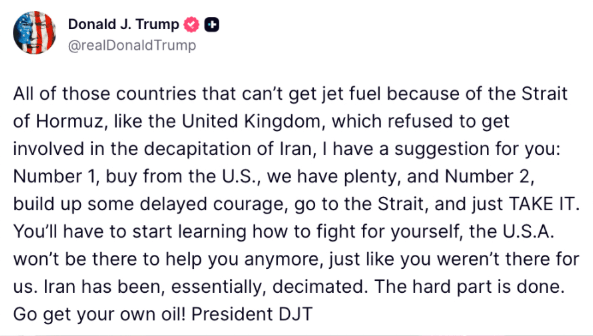
You just can’t make this stuff up in a very Game of Thrones style the President of the USA has just tweeted the above tweet. Just when countries are trying to deal with Trump and Netanyahu’s oil war Trump decides to set fire to social media with a Molotov cocktail. He is certainly no cool and calm head in a self engineered social, political and economic storm or war.
Matthew E. White – Rock & Roll Is Cold (Official Video)
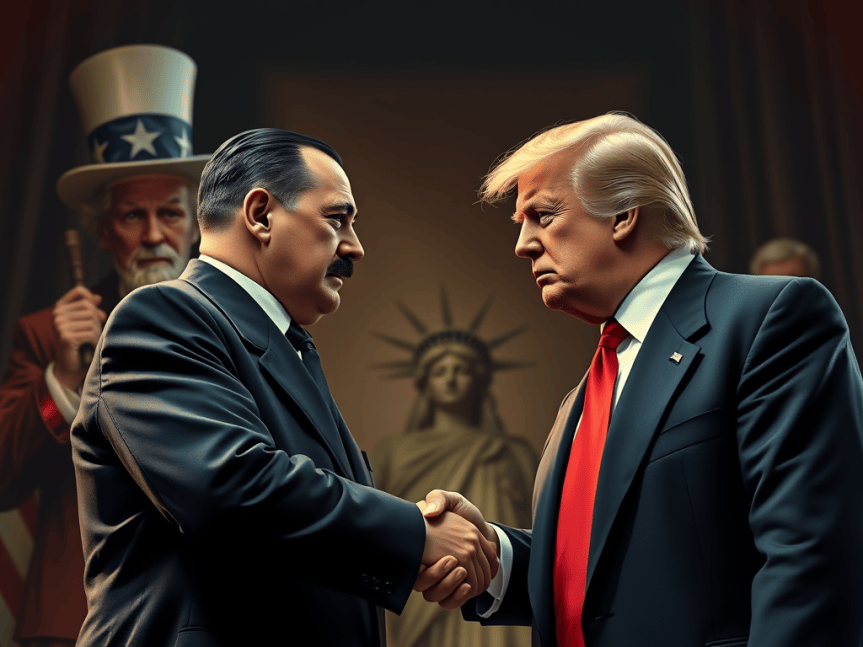
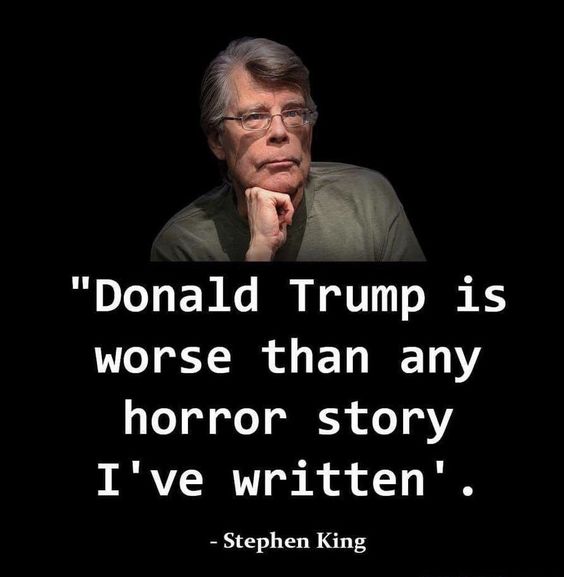
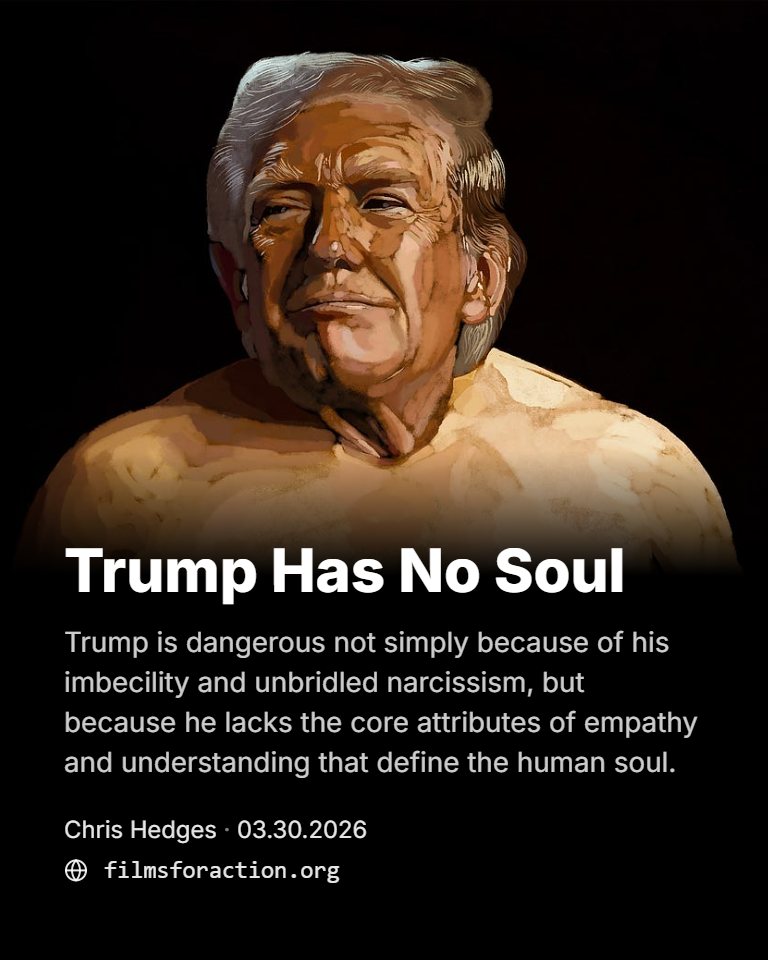
Whether Donald Trump is “evil” is a matter of intense public debate and subjective judgment, with no consensus. The term is used by various critics, supporters, and observers to describe his character, policies, and political impact from widely differing perspectives.
Arguments for Characterizing Him as evil
Critics and some public figures often use the term “evil” to describe Trump based on his actions and rhetoric:
Moral and Ethical Critique: Figures like actor Robert De Niro have explicitly called him “evil,” citing a lack of morals, ethics, or regard for others.
Impact of Policies: Some commentators argue that his policies, such as certain immigration measures or his handling of the COVID-19 pandemic, have caused significant suffering and death, which they categorize as a form of “multidimensional evil”.
Political Rhetoric: His use of language to demonise domestic political opponents—labelling them as “evil”—is seen by some as a dangerous shift in American political discourse.
Cultural Symbolism: In popular culture and media, Trump has been frequently depicted or used as a template for villainous characters, representing archetypes of greed and cynicism.
Counter-Perspectives and Alternative Labels
Other observers reject the “evil” label, offering different interpretations:
Incompetence vs. Malice: Some critics argue he is not evil but rather a “chaotic fool” or “buffoon” whose detrimental impacts stem from ego and incompetence rather than calculated malevolence.
“Necessary Evil”: Some supporters or pragmatic observers have characterized him as a “necessary evil”—a disruptive force required to challenge established political systems.
Psychological Framing: Many analysts prefer clinical or psychological terms, such as “narcissistic” or “pathological,” to describe his behaviour rather than moralistic terms like “evil”.
Perception and Bias
Research suggests that whether an individual perceives Trump as “devil or messiah” is often influenced by their own pre-existing biases or political echo chamber and how they weigh his public persona as a successful businessman against his controversial actions as a political leader.
Sinner or saint in the time of political echo chambers/
Maybe in a time of political echo chambers where environments are often created by social media algorithms and selective exposure, where individuals only encounter information, opinions, and beliefs that reflect and reinforce their own. These insular spaces, sometimes termed “neotribalism,” intensify political polarization, normalize extreme views, and shield users from opposing perspectives. such a time is the perfect time to create a sinner or a saint in Donald Trump. We don’t want to see the good in what we perceive to be bad and alternatively those that see only the good in what he does are ignorant to the bad.
But also on the other hand if Donald Trump himself only chooses to listen and follow his own political echo chambers perspective and train of thought, then what will he loose out on or what damage will be done or has or is already being done by ignoring a more overarching or balanced set of views and perspectives on politics and the globe. Presidents can now be hoodwinked just as easily as people can by their own political echo chambers.
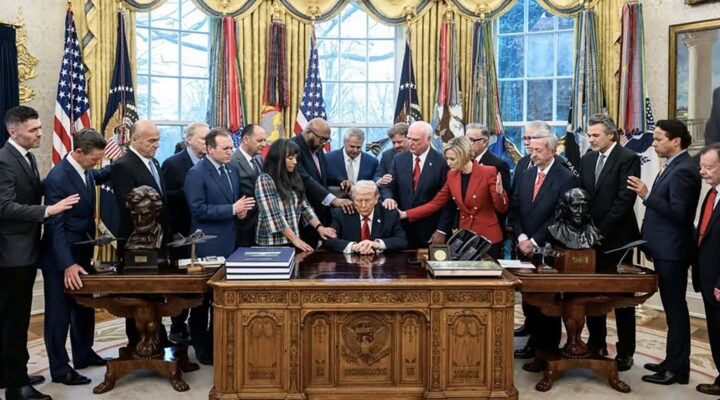
Final a religious perspective to Trumps entourage
Pastors pray over Trump in the Oval Office
In Matthew 23:3, Jesus tells his followers to obey the teachings of the scribes and Pharisees, but not to follow their actions, stating: “for they talk but do not do”. This is a warning against hypocrisy, specifically criticizing religious leaders who preach the law but do not practice it themselves.
Key details regarding this, and similar phrasing:
Context: Jesus was calling out hypocritical leaders who “tie up heavy, cumbersome loads” (strict religious rules) but are unwilling to lift a finger to help.
Meaning: This is a command to follow the authorized, sound doctrine (“what they say”), but avoid copying the behaviour of those who fail to live up to it (“what they do”).
From the murder of many thousands of civilians in Gaza not even perceived to be human by some of their killers to a change in pace and pursuit of an illegal invasion of an unlawful nation state. As of late February 2026, the estimated number of Palestinians killed in the ongoing war has reached significant levels, with official and independent sources reporting varying figures based on direct and indirect causes.
Reported Death Toll (Gaza)
Official Recorded Deaths: At least 73,188 Palestinians have been reported killed in the Gaza Strip since the conflict began on 7 October 2023.
Total Reported Deaths (Including West Bank): Some sources indicate the total number of Palestinians killed across both Gaza and the West Bank exceeds 80,692.
Indirect Deaths: Independent studies, including those published in The Lancet, suggest the total death toll could be significantly higher—possibly surpassing 186,000 to 335,500—when accounting for indirect causes such as starvation, disease, and the collapse of the healthcare system.
Demographics: Women and children are estimated to make up approximately 70% of the total fatalities
The vast majority of the West see Israel as a beacon of democracy in the middle east with a right to exist sadly leading to inherent will and right to enter ongoing wars to fight for its survival against its enemies that it sees if it does not destroy will destroy her.
While the Israel-Palestine conflict remains a critical, ongoing situation, the new, high-intensity conflict with Iran—which has included strikes on Tehran and retaliation from Iranian forces—has created a “Tale of Two Wars,” where the latter dominates international headlines and diplomatic focus.
Here is a breakdown of the situation as of March 2026:
Shifting Focus & “Forgotten” Fears: Palestinians in Gaza have expressed deep concern that their ongoing, dire situation is being overlooked as the world focuses on the rapidly escalating conflict between Israel, the US, and Iran.
Impact on Humanitarian Aid: The outbreak of the Iran conflict has had direct, immediate consequences for Gaza. Israel blocked border crossings to Gaza following air strikes on Iran, causing fear of renewed famine and causing supply lines for humanitarian aid to be severely disrupted.
Ongoing Catastrophe in Gaza: Despite the shift in attention, the situation in Gaza remains critical, with reports of continued, intense, and, in some cases, widening, military actions, following a two-year period of severe destruction.
The “Two Wars” Context: The 2026 conflict is being characterized by the simultaneous, yet competing, catastrophes of a new war with Iran and the continuing humanitarian crisis in Gaza, with the former often acting as a “shadow” that masks the ongoing devastation in the latter.
While international awareness of the situation in Gaza remains, the intensity and potential for a massive, regional war with Iran have altered the primary focus of international media and political leaders, creating a perception that Palestine is being forgotten.
The main justification for war with Iran is the fear that Iran will develop a nuclear bomb capacity if not stopped. This would be an existential threat to Israel, given Tehran’s frequent rhetoric calling for the destruction of the Israeli state. So although the war with Iran might be seen as one that must be fort, must it be thought unlawfully and does it excuse or explain Israel’s actions in Palestine.
So why is democracy seen as the worst form of government bar all other forms of governance tried?
Democracy is often characterized as the “worst form of government” primarily through a famous aphorism attributed to Winston Churchill: “Indeed it has been said that democracy is the worst form of Government except for all those other forms that have been tried from time to time”.
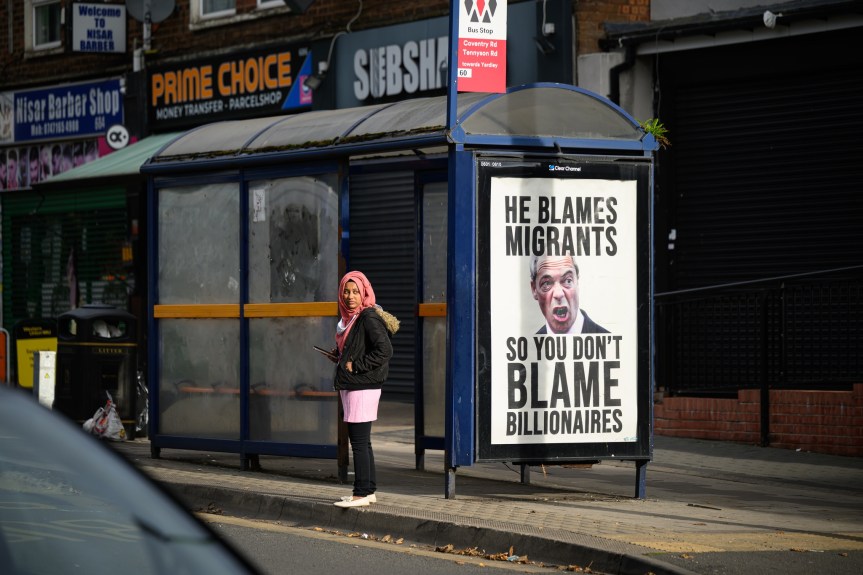
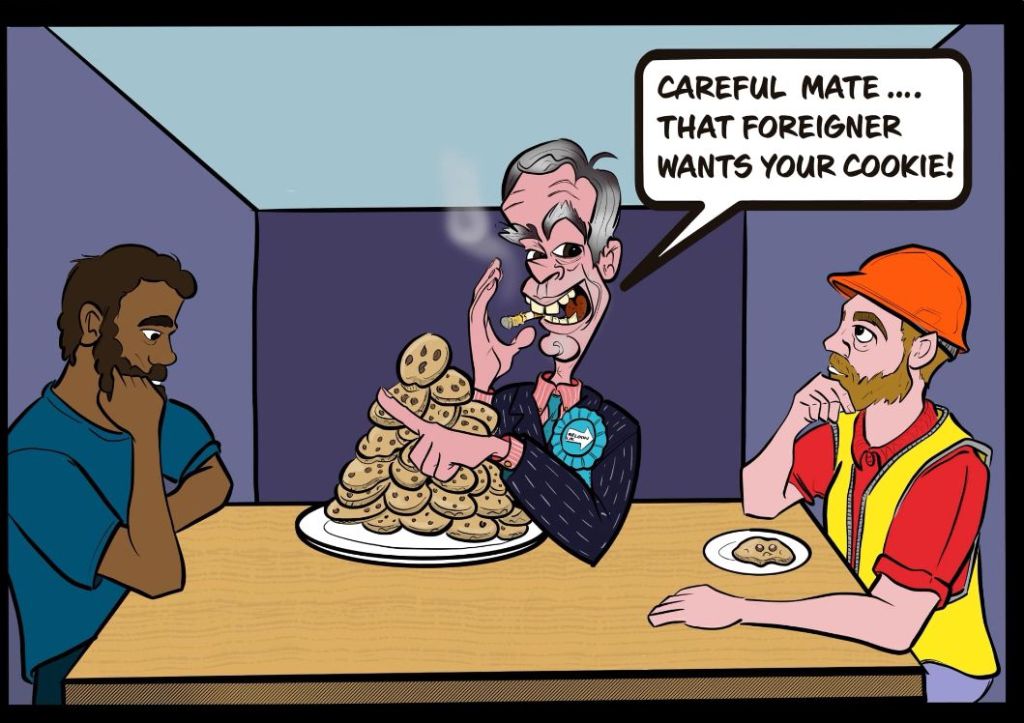
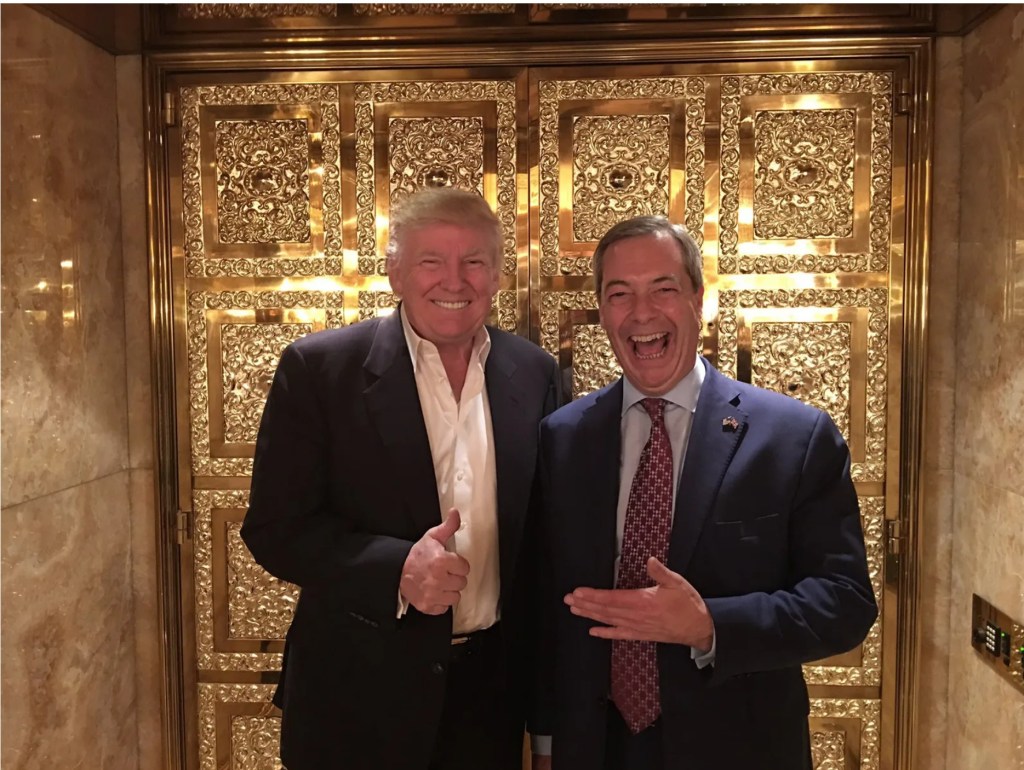
In the UK we could end up having a Reform government led by Nigel Farage in after the next general election or the very threat of this happening could in effect keep him voted out, the idea of a Britsh Trumping of social norms and political structures is a delight to some and terrifying to others. The political party Reform now has so many dangerous former Conservative Politicians in it they are more regurgitated Tories than they are reformed human beings.
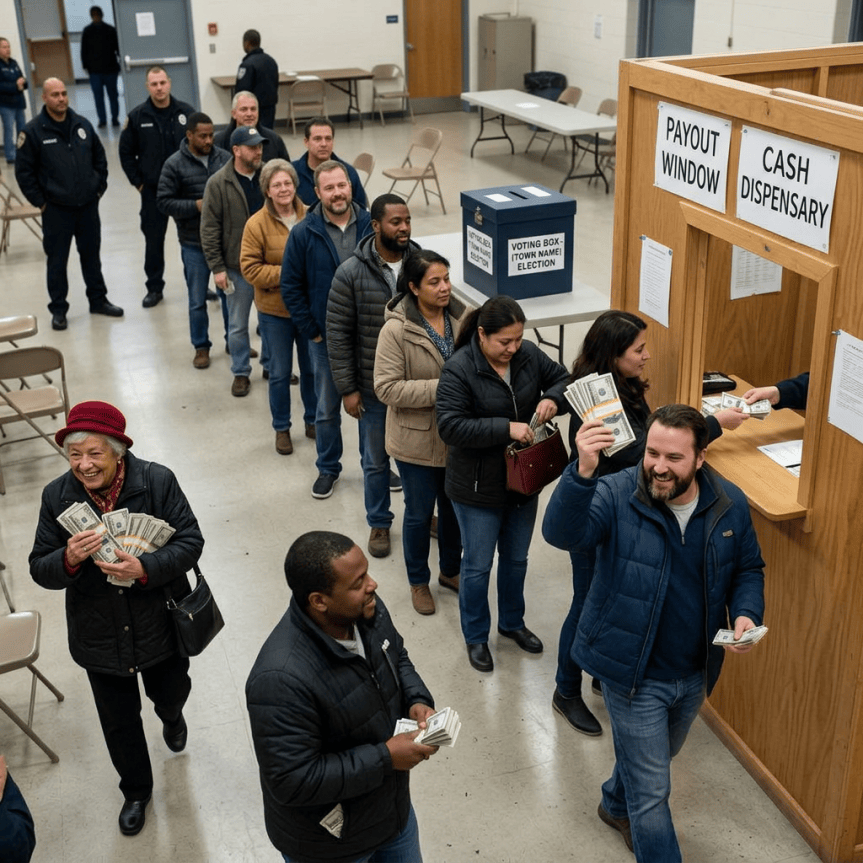
Life, the world and technological futures seem to be creating the perfect storm for our future endeavours which as we vote and how we are governed will show the best and worst of us all. Do we care for ourselves or others, rich man, poor man, beggar man or thief. How should we act and treat one another when a crisis is right at our feet.
The political sentiment for democracy being the best of a bad bunch reflects a pragmatic recognition that while democratic systems are riddled with inherent flaws—such as inefficiency, corruption, and the potential for “mob rule”—they remain preferable to authoritarian alternatives that lack accountability and individual justice.
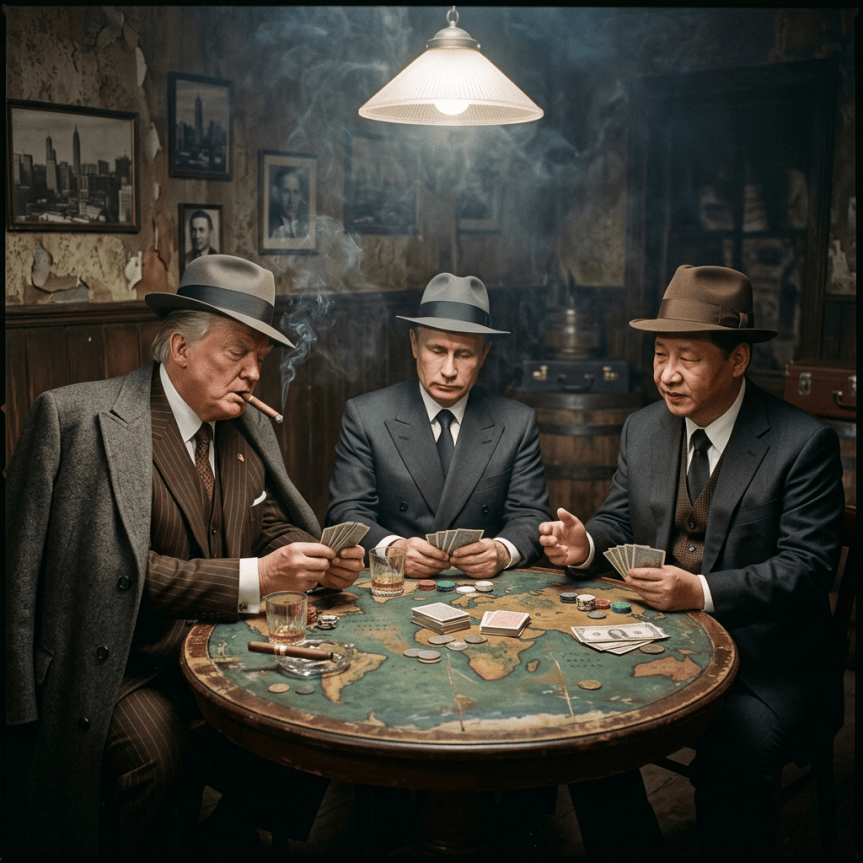
Russia, China and Iran all must supress, lock up and kill their own citizens as well as ones abroad in order to maintain their supremacy and there are not enough words on a board to express the horror and suffering they inflict on others in order to get their own way. Democracies do not aspire to be brutal totalitarian regimes but in stead aim to fend of the madness of such regimes from inflicting their brutality and suppressing nature onto us all.
Core Philosophical and Practical Criticisms of democracies
The perception of democracy as a “bad” or “flawed” system stems from several long-standing arguments:
1. Competence and “Mob Rule”
Voter Ignorance: A central critique, dating back to Plato, is that democracy gives equal weight to the votes of experts and those who may be “incompetent” or poorly informed. Modern studies have shown that many voters lack basic civic knowledge, making them susceptible to emotional manipulation and propaganda.
Tyranny of the Majority: Critics like Alexis de Tocqueville and John Stuart Mill warned that a “poor majority” could dominate decision-making at the expense of minority rights and individual excellence.
Mob Law: Churchill himself distinguished true democracy from “mob law,” where armed groups or “gangsters” seize power under the guise of popular will to implement totalitarian regimes.
2. Structural Inefficiencies
Slow Decision-Making: Unlike autocracies, where a single leader can act quickly, democracies require constant deliberation, negotiation, and compromise, which can lead to stagnation or gridlock during crises.
Short-Termism: Electoral cycles incentivize politicians to prioritize immediate, popular benefits to win votes, often ignoring long-term risks like climate change, debt crises, or pension sustainability.
3. Corruption and Elite Capture
Influence of Money: Democratic systems are often criticized for becoming “oligarchies” in practice, where economic elites and special interest groups have significantly more influence over policy than the average citizen.
Iron Law of Oligarchy: Sociologists have argued that any organization, including a democracy, eventually becomes dominated by a small elite due to the practical demands of organizing power.
Contemporary Challenges (2025–2026)
Current political analysis highlights specific modern threats that exacerbate these negative perceptions:
Erosion of Trust: As of early 2025, global trust in democratic institutions like parliaments has significantly declined, while trust in the police has risen. This disillusionment often leads to support for populist leaders who promise to dismantle existing democratic structures.
Information Ecology: The spread of algorithmically-driven disinformation and “fake news” has made it difficult to establish a common factual basis for democratic debate.
Polarization: Modern democracies are facing extreme political fragmentation and the formation of “echo chambers,” making social discourse across political lines increasingly difficult.
The “Least Bad” Perspective
Despite these significant failings, democracy is defended as the only social order consistent with justice and human dignity. Proponents argue that its “built-in flaws” and tendency to decay are actually safeguards; a certain level of skepticism and the ability to change leaders without violence are advantages that other systems, which are often more brittle, do not possess.
Democracies hold a kinship to freedom like a shining beacon in the dark
Political freedoms to vote, freedom of expression, Freedom to think and freedom to do and be.
Though these freedoms have in some ways restrictions so that one persons freedom does not inflict damage or disregards another persons freedom it is I feel our freedoms that are the eternal beacon of hope which guides and shapes our democracies to not just survive but to live on into a forever future like the eternal flame of freedom, hope and democracy.
The “eternal flame” serves as a global symbol for freedom, hope, and democracy, manifesting in several prominent memorials and monuments worldwide:
Key Memorials & Symbols
The King Center Eternal Flame (Atlanta, USA): Located at the tomb of Dr. Martin Luther King, Jr., it was recently restored to reaffirm King’s vision for justice and peace. It serves as a reminder that the work of freedom and democracy is a shared, ongoing responsibility.
Flame of Democracy (Constitution Hill, South Africa): Lit by Nelson Mandela to commemorate the 15th anniversary of South Africa’s constitution. It burns outside the Constitutional Court as a symbol of the country’s liberation and the enduring spirit of human rights.
Flame of Peace (Hiroshima, Japan): Lit in 1964, this flame is intended to burn until all nuclear weapons are destroyed, representing hope for a world defined by peace rather than conflict.
Freedom Park Eternal Flame (Pretoria, South Africa): A symbol of gratitude and remembrance for those who played pivotal roles in South Africa’s liberation struggle.
The Centennial Flame (Ottawa, Canada): First lit in 1967, it commemorates the first hundred years of Canadian Confederation and symbolizes the spirit of national unity.
Cultural and Global Context
Artistic Expression: Musicians like Bruce Springsteen have recently launched tours (e.g., “Land of Hope and Dreams”) explicitly centered on themes of democracy and defending the American ideal.
United Nations: Secretary-General António Guterres has used the metaphor to urge the world to “keep the flame of democracy alive” for future generations.
International Day of Democracy: Observed annually on 15 September, this day reinforces the idea that democracy must be nurtured and defended as a “flame” that requires active citizen participation.
British Politician Keir Starmer working for and with Trump as he sees that he can’t afford to deny his lies for what he calculates the United Kingdom will lose politically and economically.
What red lines if any have been drawn and what will it take to cross them?
Keir Starmer’s government (elected in 2024) has prioritized a pragmatic, realpolitik approach to managing the UK’s “special relationship” with Donald Trump’s US administration. While he has publicly condemned Trump’s past rhetoric and some specific actions, he has avoided drawing explicit public “red lines,” opting instead for diplomatic engagement to protect UK national interests.
Stated Position on Trump
Starmer has moved from calling Trump’s past comments “absolutely repugnant” to adopting a more measured, Prime Ministerial tone, stating that a leader must work with whoever the American people elect. He has emphasized the need to “make it work” due to the importance of the UK-US relationship.
In 2026, Prime Minister Keir Starmer’s relationship with President Donald Trump is defined by a “realpolitik” strategy that prioritizes economic and national security over ideological confrontation. Facing a global landscape altered by aggressive U.S. actions, Starmer has adopted a “softly-softly” approach to manage the risks of a trade war and maintain the UK’s influence.
Strategic Pragmatism and “Atlantic Bridge” Diplomacy
Starmer has resisted choosing between the U.S. and the EU, attempting to position the UK as a bridge between the two. This calculation is driven by several factors:
Avoiding Trade Penalties: Starmer led efforts to cut deals with the Trump administration to insulate the UK from high tariffs. However, this has come at a cost; the UK recently ceded to U.S. threats regarding pharmaceutical tariffs, which may increase costs for the NHS.
Security Alignment: In recent calls (January 7–8, 2026), Starmer and Trump agreed on the need to deter Russian aggression in the Arctic, despite deep tensions over other U.S. maneuvers.
The “Trump Corollary”: Following the U.S. military intervention in Venezuela in early 2026, Starmer declined to condemn the action’s legality, focusing instead on maintaining a “holding position” to avoid alienating the White House.
Key Areas of Friction in 2026
“Red Lines” and Crossing Them
Starmer has avoided drawing firm public red lines, a strategy that has drawn criticism from opposition parties and some Labour backbenchers who accuse him of “craven subservience”.
International Law: The closest an implicit “red line” has been tested is over US military actions in Venezuela and Trump’s comments on acquiring Greenland in January 2026. While the Scottish First Minister and others urged Starmer to condemn these actions as breaches of international law, Starmer declined to do so publicly, stating it was “for the US to justify the actions it has taken” and that he was waiting for all the facts. This pragmatic approach suggests that verbal condemnation of US military action is not a red line that would break the relationship.
NATO Commitment: Starmer has stressed the importance of backing Ukraine and maintaining a strong Euro-Atlantic security alliance, which is a core value for his government. A significant US withdrawal from NATO or security cooperation would force a major UK policy rethink, although Starmer has not publicly stated this would end the relationship.
Trade: The Starmer government has engaged in trade discussions with the Trump administration, making compromises such as reducing import tariffs on cars and scrapping tariffs on US beef to secure deals and prevent trade wars. This demonstrates a willingness to make concessions to maintain economic stability.
Potential Political and Economic Losses
Starmer and analysts have identified several potential political and economic risks associated with Trump’s presidency:
Political/Diplomatic:
Loss of moral compass: By refusing to condemn actions like the invasion of Venezuela, critics argue the UK government risks losing its moral authority on the international stage and its standing as an advocate for international law.
Subservience: The perception of the UK as a subservient partner to the US (where the “US says jump, Britain asks how high”) is a significant political risk that can be exploited by domestic rivals like Reform UK.
Isolation: Trump’s “America First” approach and hostility to multi-lateral institutions may leave the UK more exposed on security and global issues, pushing Britain into a “strategic bind” between the US and Europe.
Economic:
Tariff wars: Trump’s use of tariffs has created significant economic uncertainty. While the UK has so far managed to mitigate some of the worst impacts through negotiation, the threat of tariffs (e.g., on pharmaceuticals) remains and could impact the NHS and other sectors.
Trade-offs: Securing trade deals with the US has required painful concessions, such as the potential impact on the NHS through pharmaceutical access or the agricultural sector via increased US imports.
Reduced EU cooperation: The necessity to court Trump for a US trade deal may impede Starmer’s goal of achieving closer economic ties with the EU, which some analysts believe offers a larger potential GDP boost than a US deal.
It seems at this moment time it seems almost like it is the powerless with the most to lose or who have already lost so much, that show the greatest power to stand up against Trump.
While Donald Trump runs around and spreads his wrath to all and sundry in a continues and seemingly unstoppable motion. It must be asked what reckoning will there be for him, either when or even before his time is spent in the presidential office. Just turning on my little TV this evening and listening to the tone of conversations and news articles it does finally feel like something has or is changing and the mad king of democracy will no longer be able to afford to get everything his own way from now on.
As of January 2026, the concept of a “reckoning” for Donald Trump refers to several impending legal, political, and social challenges scheduled to unfold throughout the year:
1. The 2026 Midterm Elections (November 3, 2026)
Political analysts describe the upcoming midterms as a primary “reckoning” for the second Trump presidency. While Trump’s name will not be on the ballot, the elections will serve as a referendum on his administration’s first year back in power. If Democrats regain control of the House of Representatives, they could launch new impeachment proceedings, which some describe as a “visceral reckoning” for his recent executive actions.
2. Supreme Court and Legal Challenges
The 2026 Supreme Court term is set to address multiple cases that could redefine or limit Trump’s presidential authority. Key issues include:
Executive Power Disputes: The court will hear cases regarding the president’s power to fire federal officials, such as those at the Federal Reserve.
Immunity and Investigations: While past rulings granted expansive immunity, the administration currently faces more than 400 lawsuits related to policies on immigration, trade, and the economy.
Media Defamation: Trump is personally involved in several high-stakes lawsuits against major media outlets, including a $10 billion claim against the Wall Street Journal and a $15 billion claim against the New York Times.
3. Internal MAGA and Public Backlash
Critics and even some supporters suggest a potential “reckoning” within his base over specific unmet promises or controversial actions:
Epstein Files: There is growing frustration among some “MAGA” supporters regarding the administration’s failure to release the full Jeffrey Epstein files as previously suggested.
Foreign Interventions: The January 2026 U.S. military raid to capture Venezuelan President Nicolás Maduro has sparked a debate within his base. While many applaud the action, others see it as a contradiction of his “America First” promise to avoid foreign entanglements.
International Withdrawal: The January 8, 2026, executive order to withdraw from 66 international organizations, including the UN Framework Convention on Climate Change, is creating a “foreign policy reckoning” for U.S. allies.
4. Moral and Institutional Reckoning
Social commentators describe 2026 as a year of “moral reckoning” for American democracy, citing the administration’s use of active-duty military for mass deportations and the weaponization of the Justice Department against critics. These observers argue that the survival of democratic institutions depends on how these actions are held to account by the courts and the public in the coming months.
Well it’s either a coincidence that this so called “Narco-Terrorism” state of a nation has tonnes of oil or the state of Venezuela has been targeted for it’s oil reserves on the pretence of it being an illegitimate government that simply no one would care about. Such reckless statesmanship by Trump could present a green light to both China and Russia to do as they choose in their own spheres of influence tearing up all agreed post world war two international rules of law and understandings on statehood. The day is truly a dark one indeed and the world is a more dangerous place thanks to Trump.
When you begin to accept the simple truth that Donald Trump lies in his presentations and statements in order to get his own way, this whole mess that is the invasion and kidnapping of the president of Venezuela really is a shit sandwich.
News media stations over in the UK are reading out the Trumps administrations statements as newsworthy factual documents whilst many of the citizens here have or are waking up to the fact that Donald Trump is a bad man that lies a lot and a con artist – but none of that is yet coming across in the mainstream media or our political representatives.
On January 3, 2026, the Trump administration launched Operation Absolute Resolve, a large-scale military strike and Special Forces raid in Caracas that resulted in the capture of Venezuelan President Nicolás Maduro and his wife, Cilia Flores. They were subsequently transported to New York to face federal charges.
The Trump administration has provided several primary reasons for this intervention:
1. Law Enforcement and “Narco-Terrorism”
The central legal justification used by the administration is the enforcement of a 2020 U.S. Department of Justice indictment.
Criminal Charges: Maduro and Flores were charged with narco-terrorism conspiracy, cocaine importation, and weapons offenses.
Drug Influx: Trump accused the Maduro government of leading the “Cartel de los Soles” and flooding the U.S. with illegal drugs, including fentanyl and cocaine.
2. National Security and Migration
Border Control: Trump explicitly blamed Maduro for the surge of Venezuelan migrants to the U.S., claiming Maduro “emptied his prisons” to force inmates to migrate.
Foreign Influence: U.S. officials highlighted Maduro’s close ties to Iran, Cuba, and Russia, accusing him of providing a foothold for hostile actors (including Hezbollah) in the Western Hemisphere.
3. Economic and Oil Interests
In public remarks following the raid, Trump stated that the U.S. would now “run” Venezuela until a “safe, proper, and judicious transition” could be made.
Oil Reserves: Trump announced plans for U.S. oil companies to move into Venezuela—which holds the world’s largest proven crude oil reserves—to rebuild infrastructure and “take back” oil wealth.
Reimbursement: He suggested that oil proceeds would be used to reimburse the U.S. for its efforts and for American interests previously pushed out of the country.
Current Status (as of January 6, 2026)
Court Proceedings: Maduro and Flores have pleaded not guilty in a Manhattan federal court. Maduro has characterized his capture as a “kidnapping” and himself as a “prisoner of war”.
Interim Government: Following the raid, Vice President Delcy Rodríguez was sworn in as interim president in Caracas. The Trump administration has warned her she must comply with U.S. demands—including cracking down on drug flows and removing Iranian and Cuban operatives—to avoid a similar fate.
International Legality: The operation has been widely condemned by the UN Secretary-General and various world leaders as a violation of international law and the UN Charter.
Political freedom is the capacity of individuals to participate in their society’s governance and political processes without unreasonable external constraints. It is often categorized into negative freedom (the absence of interference from the state) and positive freedom (the actual capacity to exercise one’s rights).
Core Components of Political Freedom
Political Participation: The right to vote, run for office, and hold governments accountable.
Freedom of Expression: The ability to hold, receive, and share opinions and ideas—including unpopular or shocking ones—without state censorship.
Freedom of Assembly and Association: The right to form political parties, unions, or groups and to conduct peaceful protests and demonstrations.
Rule of Law: A system where governmental power is constrained by fixed, public laws applied equally to all, preventing arbitrary abuse of power.
Political freedom does not entail absolute, unrestricted liberty; it comes with limitations designed to protect public order, national security, and the rights and reputations of others. Actions that abuse or undermine the freedom of others are generally excluded from the scope of political freedom.
Specific actions and behaviours that do not entail political freedom (and are often restricted by law) include:
Incitement to violence or hatred: Political freedom does not protect speech that encourages or incites violence, hatred, or discrimination against individuals or groups based on their religion, ethnicity, race, gender, or sexual orientation.
Defamation and slander: The right to freedom of expression does not extend to damaging the reputation or rights of others through libel or slander.
Rebellion and unlawful conduct: Using the right to freedom to incite people to rebel against the government or engage in other unlawful conduct is not protected.
Disorderly conduct and carrying weapons: While peaceful assembly is a key political right, this right does not extend to carrying weapons during a meeting or procession, or engaging in behaviour likely to cause a breach of the peace.
Online abuse and harassment: Forcing others off communication platforms through abuse or online mobbing is not considered a valid exercise of freedom of expression.
Actions that violate others’ rights: Political freedom does not grant a “freedom to pollute” or deforest, as such activities create negative consequences that violate other groups’ liberty to not be exposed to harm.
Treason or sedition: Actions that undermine the state or national security can be subject to legal restrictions.
In essence, the limits of political freedom are generally drawn where its exercise infringes upon the fundamental rights and safety of other members of society. Laws define what people must not do, while individual responsibility and morality guide what people ought to do beyond legal constraints.
You must be logged in to post a comment.