Understanding the Surge of Global Conflicts Amidst Climate Crises

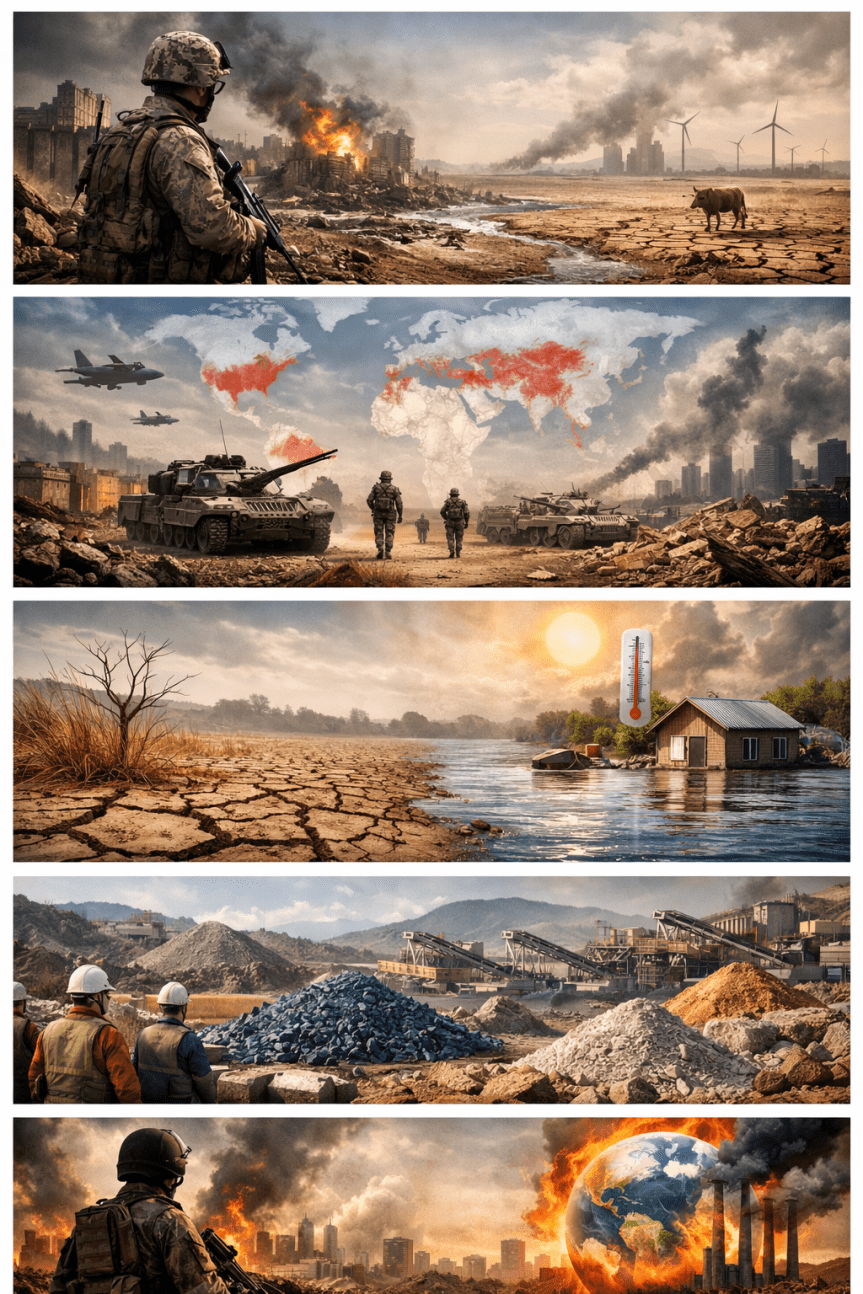
The 2020s have unfolded as a decade of overlapping crises — pandemics, political instability, economic shocks, and a sharp resurgence of war. But beneath the headlines lies a deeper question: are wars genuinely more common today, and if so, are climate pressures and diminishing resources part of the cause?

Conflict research suggests the answer to the first question is yes. The second is more complicated.

Recent data from global conflict monitors shows that state‑based wars have reached their highest levels since World War II, driven by major conflicts in Ukraine, Gaza, Sudan, Ethiopia, and Myanmar. Wars and armed conflicts have become significantly more common and deadly since 2020, reaching their highest levels since World War II. This marks a clear break from the relative stability of the early 2000s and 2010s.

The New Landscape of War

The post‑2020 conflict environment is defined by several striking shifts:

  • Record-high active state conflicts
  • Annual battle deaths exceeding 240,000
  • Foreign interventions doubling since 2008
  • Global military spending rising to $2.9 trillion

These trends point to a world where diplomacy is weakening, geopolitical rivalry is intensifying, and international norms are eroding.

One particularly alarming metric is that peace agreements are failing, with only 4% of conflicts ending via treaties compared to 23% in the 1970s.

The machinery of peace is breaking down. There seems to be less will for peace and greater investment in sustained conflict.

Climate Change: Not the Spark, but the Fuel

Climate change and resource scarcity are often cited as causes of modern conflict. Yet the evidence shows they are not primary drivers — they are risk multipliers.

Climate as a Threat Multiplier

Climate change rarely ignites wars directly. Instead, it destabilises societies already under strain:

  • Droughts destroy crops and livelihoods
  • Floods displace communities
  • Desertification pushes pastoralists into farming regions
  • Extreme weather undermines fragile governments

Climate change does not typically cause direct inter-state warfare. Instead, it worsens underlying social and economic vulnerabilities.

When livelihoods collapse, recruitment by armed groups becomes easier. When governments fail to respond, grievances deepen. When desperation rises, violence follows.

Scarcity — and Abundance — of Resources

Resource scarcity fuels localised conflicts, especially in fragile regions:

  • Water shortages
  • Loss of arable land
  • Competition between herders and farmers

But abundance can be even more dangerous.

The global race for lithium, cobalt, nickel, and rare minerals — essential for green technology — has intensified geopolitical competition. In places like the DRC, resource wealth funds armed groups and prolongs war.

The War–Climate Feedback Loop

The relationship between war and climate is not one‑directional. It is a destructive cycle.

Global militaries account for roughly 5.5% of all global greenhouse gas emissions… war heavily accelerates climate change.

Conflict destroys infrastructure, burns cities, and releases massive emissions. Rebuilding after war produces even more.

Climate change increases conflict risk. Conflict accelerates climate change. A vicious loop.

Some might argue that the real drivers of Post‑2020 conflict are as follows – but these assumptions lead to more questions than answers

Despite environmental pressures, the perceived influential drivers of modern war remain political:

  • Weak governance and corruption
  • Breakdown of diplomacy
  • Major powers ignoring international norms
  • Foreign interventions escalating local conflicts
  • Rising authoritarianism and geopolitical rivalry

Climate change amplifies these forces, but for me increasing wars and fights for resources were very much predicted to be on the cards years ago as an output due to climate crisis, global warming and a hunt for resources.

Conclusion: A Hotter World, A Colder Politics

Wars are more common in the 2020s — not because the planet is simply running out of resources, but because political systems are failing to manage the pressures of a warming, crowded, unequal world.

Climate change doesn’t start wars. But it makes them easier to start, harder to stop, and far more devastating.

The 2020s show us a world where environmental stress and geopolitical instability now move in tandem. Understanding this relationship is essential if we hope to break the cycle.

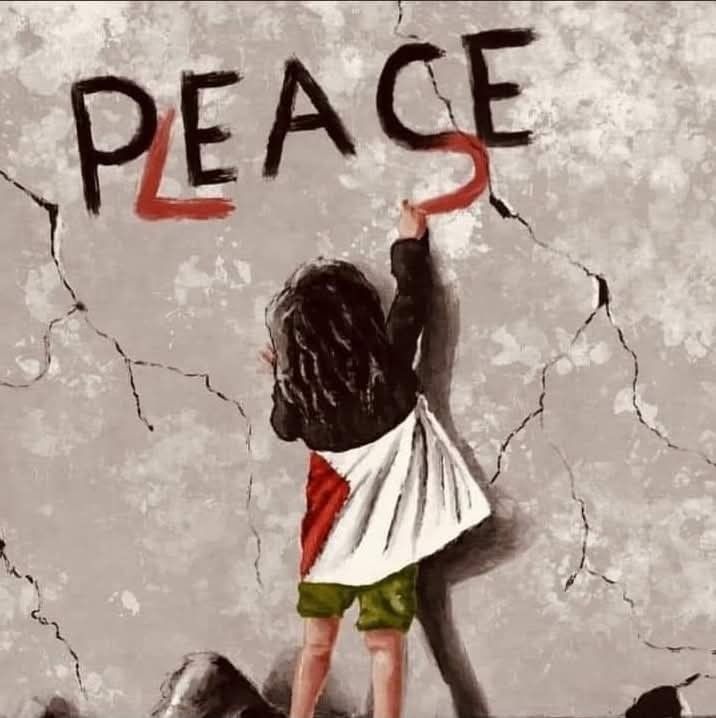
Have people forgotten about Gaza due to the invasion of Iran

From the murder of many thousands of civilians in Gaza not even perceived to be human by some of their killers to a change in pace and pursuit of an illegal invasion of an unlawful nation state. As of late February 2026, the estimated number of Palestinians killed in the ongoing war has reached significant levels, with official and independent sources reporting varying figures based on direct and indirect causes.

Reported Death Toll (Gaza)

  • Official Recorded Deaths: At least 73,188 Palestinians have been reported killed in the Gaza Strip since the conflict began on 7 October 2023.
  • Total Reported Deaths (Including West Bank): Some sources indicate the total number of Palestinians killed across both Gaza and the West Bank exceeds 80,692.
  • Indirect Deaths: Independent studies, including those published in The Lancet, suggest the total death toll could be significantly higher—possibly surpassing 186,000 to 335,500—when accounting for indirect causes such as starvation, disease, and the collapse of the healthcare system.
  • Demographics: Women and children are estimated to make up approximately 70% of the total fatalities

The vast majority of the West see Israel as a beacon of democracy in the middle east with a right to exist sadly leading to inherent will and right to enter ongoing wars to fight for its survival against its enemies that it sees if it does not destroy will destroy her.

While the Israel-Palestine conflict remains a critical, ongoing situation, the new, high-intensity conflict with Iran—which has included strikes on Tehran and retaliation from Iranian forces—has created a “Tale of Two Wars,” where the latter dominates international headlines and diplomatic focus.

Here is a breakdown of the situation as of March 2026:

  • Shifting Focus & “Forgotten” Fears: Palestinians in Gaza have expressed deep concern that their ongoing, dire situation is being overlooked as the world focuses on the rapidly escalating conflict between Israel, the US, and Iran.
  • Impact on Humanitarian Aid: The outbreak of the Iran conflict has had direct, immediate consequences for Gaza. Israel blocked border crossings to Gaza following air strikes on Iran, causing fear of renewed famine and causing supply lines for humanitarian aid to be severely disrupted.
  • Ongoing Catastrophe in Gaza: Despite the shift in attention, the situation in Gaza remains critical, with reports of continued, intense, and, in some cases, widening, military actions, following a two-year period of severe destruction.
  • The “Two Wars” Context: The 2026 conflict is being characterized by the simultaneous, yet competing, catastrophes of a new war with Iran and the continuing humanitarian crisis in Gaza, with the former often acting as a “shadow” that masks the ongoing devastation in the latter. 
  • While international awareness of the situation in Gaza remains, the intensity and potential for a massive, regional war with Iran have altered the primary focus of international media and political leaders, creating a perception that Palestine is being forgotten.

The main justification for war with Iran is the fear that Iran will develop a nuclear bomb capacity if not stopped. This would be an existential threat to Israel, given Tehran’s frequent rhetoric calling for the destruction of the Israeli state. So although the war with Iran might be seen as one that must be fort, must it be thought unlawfully and does it excuse or explain Israel’s actions in Palestine.

Gaza by David Rovics


Older men declare war

But it is the youth that must fight and die – Herbert Hoover

Trump warns ‘all hell is going to break out’ if Gaza hostage deadline not met by Hamas

How the Palestinians are treated in Gaza really does remind me of the execution scenes in the film Schindler’s list. I dread to think what the final solution is in the mind of Trump and Netanyahu for the Palestinian people.

When you see a whole nation or race of people as an enemy you no longer see them as people at all.

The Liquidation of the Krakow Ghetto – Max Richter “Last Days” / scene from “Schindler’s List”

The Krakow Ghetto was one of five major, metropolitan Jewish ghettos created by Nazi Germany in the new General Government territory during the German occupation of Poland in World War II. It was created for the purpose of exploitation, terror, and persecution of local Polish Jews, as well as the staging area for separating the “able workers” from those who would later be deemed unworthy of life. The Ghetto was liquidated between June 1942 and March 1943, with most of its inhabitants sent to Belzec extermination camp and Plaszow slave-labor camp, and exterminated also at Auschwitz concentration camp.