So What Has Just Happened?

Twenty Days of Questions on a Small Planet

From local music memories to artificial intelligence, from political upheaval to climate anxiety, from economic uncertainty to hope for a better future. The last few weeks at Huwspace have been a journey across the issues shaping our communities, our countries and our world.

There are moments when history appears to move slowly.

Then there are moments when everything seems to happen at once.

The last twenty days on Huwspace have felt very much like the latter.

We have moved from remembering Exeter’s cultural heritage in articles such as Remembering Exeter’s North Bridge Inn and Its Live Music Legacy to examining major political, economic and technological forces reshaping the modern world. [huwspace.com]

At first glance these topics seem unrelated.

They are anything but.

Every article has ultimately been asking the same question:

How do we build a fairer, wiser and more sustainable future on a rapidly changing planet?

Looking Back to Move Forward

One of the most personal recent pieces, Remembering Exeter’s North Bridge Inn and Its Live Music Legacy, reflected on the importance of local music venues, artistic communities and the friendships that form around shared experiences. [huwspace.com]

In an age increasingly defined by digital life, there is something powerful about remembering places where people gathered not through algorithms but through genuine human connection.

The future matters.

But so does remembering what made communities strong in the first place.

The Economy Through Everyday Eyes

Economic questions have featured heavily throughout recent Huwspace discussions.

In Budget 2026: What It Means for Me, My Family and the Rest of the UK, the focus was not on abstract Treasury spreadsheets but on what government decisions actually mean for families, pensioners, savers and household bills. [huwspace.com]

Similarly, From Branches to Bots: Is Lloyds Bank Systematically Destroying its Customer Services? explored whether technological efficiency and corporate profitability are beginning to come at the expense of human relationships and personalised service. [huwspace.com]

Together these articles examined a growing concern felt by many ordinary people: are modern economies serving communities, or are communities increasingly expected to serve economies?

Democracy Under Pressure

Politics has remained a recurring theme throughout the last few weeks.

The Voters Have Spoken Across the UK asked whether political leaders are truly listening to public concerns amid growing frustration with traditional parties and institutions. [huwspace.com]

Across the Atlantic, both How Trump’s Rhetoric Wins Elections and Risks Losing Him Power and Democratic Socialism Is Not Marxism: Why America Should Not Fear It explored why political debate has become increasingly emotional, polarised and driven by competing visions of society. [huwspace.com], [huwspace.com]

Whether discussing Britain or America, the underlying issue remains the same:

How can democracy respond effectively when societies themselves are becoming more fragmented, more connected and more complex at the same time?

Artificial Intelligence and Human Responsibility

Artificial intelligence has emerged as one of the defining topics of our age.

In Trump’s AI Dismissal: Understanding the Risks and Realities, Huwspace explored competing perspectives on the risks and opportunities created by rapidly advancing AI technologies. [huwspace.com]

Will artificial intelligence transform healthcare, education and scientific research for the better?

Almost certainly.

Will it also create challenges concerning power, employment, misinformation and inequality?

Almost certainly.

Technology itself does not determine our future.

How we choose to use technology does.

Living Within Planetary Limits

Environmental issues have appeared again and again across recent articles, not because they are fashionable topics, but because they sit behind almost every other challenge humanity faces.

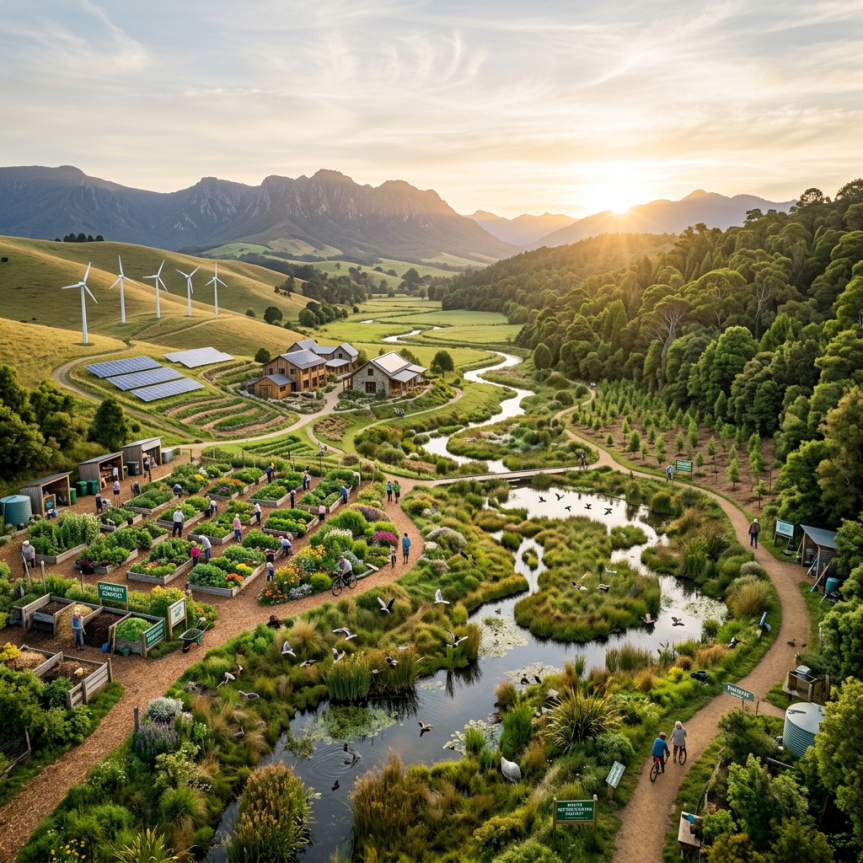
In We Exploit the Planet Without Realising It – So What Can We Build Instead?, Huwspace examined alternative economic approaches to sustainability and questioned whether endless extraction can ever be compatible with long-term human wellbeing. [bing.com]

Likewise, The UK Royal Family Care About Many of the Crises Affecting the Planet, But Is This Enough? asked an increasingly important question: is awareness alone enough, or does genuine change require far more than concern and good intentions? [huwspace.com]

The evidence increasingly suggests that awareness is only the beginning.

Why Bad Things Happen

One of the most thought-provoking recent discussions came through Do Bad Things Happen Because of Greed or Poor Choices?. [huwspace.com]

Looking at war, climate change and biodiversity loss, the article explored a difficult truth:

Many of humanity’s greatest challenges are not inevitable.

They emerge from decisions.

Some driven by fear.

Some by short-term thinking.

Some by greed.

But if human choices contribute to our problems, human choices can also contribute to their solutions.

That should give us hope.

So What Has Just Happened?

Over the last twenty days, Huwspace has not simply reported on events.

It has explored the forces beneath them.

We have looked at communities and culture.

At politics and power.

At economics and inequality.

At artificial intelligence and technological change.

At climate risks and environmental limits.

At leadership, responsibility and social justice.

The subjects have varied enormously, but the underlying question has remained remarkably consistent:

What kind of future are we trying to create?

Reasons for Optimism

It is easy to focus exclusively on crisis.

Political division.

Environmental pressures.

Economic uncertainty.

Technological disruption.

Yet another story is unfolding alongside those challenges.

People are asking harder questions.

Citizens are becoming more informed.

Communities are adapting.

Technology continues to create possibilities that previous generations could hardly imagine.

Perhaps most importantly, millions of people continue trying to understand how to build a better future.

History rarely moves in a straight line.

Progress is messy.

Democracy is messy.

Humanity is messy.

But the past twenty days on Huwspace suggest that people have not given up on the future.

And that may be the most encouraging sign of all.


Huwspace.com

Big Questions. A Small Planet.

Exploring the ideas, challenges and possibilities shaping our shared future, one conversation at a time.

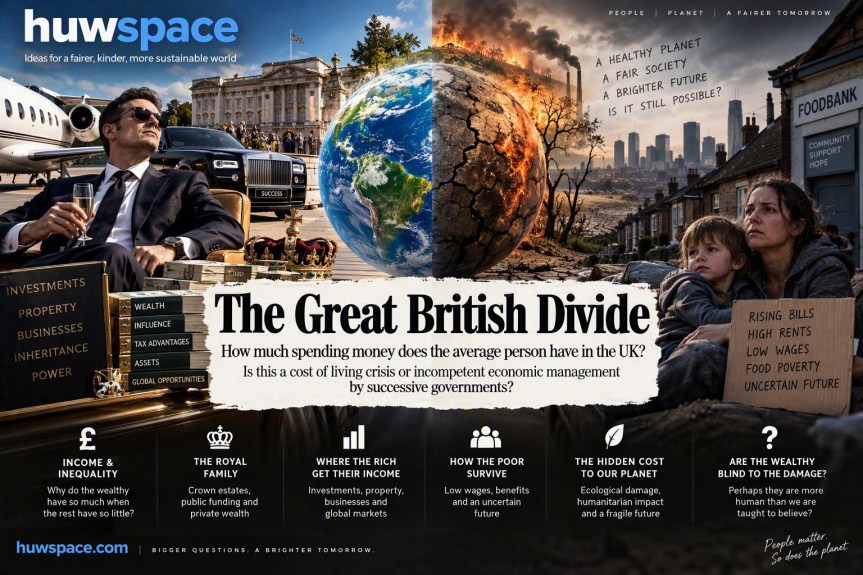
From Wages to Wealth: Who Really Profits in Modern Britain?

When millions of people are counting pennies before payday while a growing number of individuals accumulate wealth measured in millions or even billions, it raises an uncomfortable question. Is Britain’s cost of living crisis simply the result of bad luck and global events, or is it the consequence of decades of economic decisions made by successive governments?

A Nation Under Pressure

For many people across the United Kingdom, the term “cost of living crisis” has become part of daily life. Rising prices, increasing rents, higher mortgage payments, elevated energy bills and expensive food have squeezed household budgets to breaking point.

The average UK household has an equivalised disposable income of around £32,300 per year after direct taxation, but this figure masks a much harsher reality. Once housing, utilities, transport, food and other essentials are paid for, many households are left with very little genuinely discretionary income.

The difference between statistical averages and lived experience is enormous. Someone earning a reasonable salary in London, Bristol or Manchester may still struggle to save, while a person on a lower income may be one unexpected bill away from financial crisis.

The result is that many people no longer feel poor in the traditional sense. Instead, they feel permanently insecure.

Cost of Living Crisis or Economic Mismanagement?

The answer is probably both.

There is little doubt that global events have played a major role. The pandemic disrupted global supply chains, energy markets became volatile following international conflicts, and central banks increased interest rates to tackle inflation. These events affected economies across the world.

Yet many economists argue that Britain’s problems run much deeper. Years of austerity, sluggish productivity growth, weak business investment, housing shortages and the economic friction associated with Brexit left the UK particularly exposed when global shocks arrived.

The uncomfortable truth is that successive governments of all political colours share responsibility.

Conservative governments often prioritised fiscal restraint and market-led solutions. Labour governments generally increased spending on public services but rarely challenged the fundamental structures driving wealth inequality. Neither side fundamentally altered a system that increasingly rewards those who own assets rather than those who rely solely upon wages.

As a consequence, Britain has experienced years of relatively weak wage growth while asset values, particularly housing and investments, have surged.

The Two Economies of Modern Britain

Britain increasingly resembles a country operating two separate economies.

The first economy belongs to those whose wealth comes primarily from work.

The second belongs to those whose wealth comes primarily from ownership.

The distinction is crucial.

If you stop working, your income stops.

If you own enough assets, your income continues regardless.

This is perhaps the single most important factor explaining why the rich have become richer while many ordinary households have struggled.

How Millionaires Make Their Money

Many people imagine the wealthy earning extraordinary salaries. While some do, the UK’s richest individuals increasingly derive their income from ownership rather than employment.

Investment Income

Shares in companies provide dividend payments.

A millionaire with a substantial investment portfolio may receive thousands or even millions of pounds annually without performing any additional work. As businesses grow and generate profits, shareholders benefit.

Business Ownership

The wealthiest individuals frequently own businesses outright or hold significant stakes within them.

Rather than receiving wages alone, they benefit from dividends, retained profits and increases in company valuation.

Property and Land

Property remains one of the greatest engines of wealth creation in Britain. Research highlighted in the source document notes that property is among the largest sources of wealth for the richest households. Income can be generated through commercial rents, residential portfolios and land development.

While renters see housing as a monthly expense, landlords often see it as a monthly income stream.

Capital Gains

Another key advantage available to wealthy individuals is asset appreciation.

Stocks, property and land often increase in value over time. When these assets are sold, significant profits can be realised through capital gains, which have historically often been taxed differently from employment income.

In simple terms, many wealthy people earn money while they sleep because their assets continue working on their behalf.

The Royal Family: A Different Kind of Wealth

No discussion about wealth in Britain would be complete without examining the position of the monarchy.

The Royal Family occupies a unique financial position that combines public funding, historic land ownership and private wealth.

The Sovereign Grant

Official royal duties are funded through the Sovereign Grant, which reached approximately £137.9 million according to the source document. This funding mechanism is linked to profits generated by the Crown Estate.

Historic Estates

The Duchy of Lancaster provides private income to the King, while the Duchy of Cornwall provides income to the heir to the throne. These large property portfolios generate substantial revenues through land, commercial property and other investments.

Private Wealth

The monarchy also benefits from privately owned estates, inheritance and investments accumulated across generations.

Supporters argue that the monarchy contributes economically through tourism, diplomacy and national identity.

Critics argue that it represents one of Britain’s clearest examples of inherited privilege and concentrated wealth.

Regardless of which side one supports, the Royal Family demonstrates how ownership of land and assets remains a powerful source of long-term financial security.

How the Poorest Survive

At the other end of society, the financial picture looks entirely different.

The poorest households generally possess little or no asset wealth and instead depend almost entirely upon wages, benefits or both.

Low-Paid Employment

Many people experiencing poverty are working.

They often work in retail, hospitality, social care, logistics or other service-sector occupations where wages remain relatively low and employment can be insecure. Zero-hours contracts and gig economy arrangements can leave workers uncertain about future earnings.

State Support

Benefits including Universal Credit, housing support and disability payments provide essential lifelines for many households. These payments frequently prevent extreme hardship rather than providing financial comfort.

No Assets, No Cushion

One of the most important differences between rich and poor is resilience.

When wealthy households face setbacks, they often have savings, investments, property or other resources to draw upon.

The poorest households frequently have no such safety net. The source document notes that the lowest wealth groups possess little wealth and often receive no income from investments, dividends or property ownership.

Every financial shock becomes a crisis.

Why the Gap Keeps Growing

The widening divide is not simply about income.

It is about ownership.

Wages have generally grown far more slowly than asset prices over the past several decades. Someone who bought a property twenty or thirty years ago may have accumulated hundreds of thousands of pounds in wealth through rising house prices alone.

Meanwhile, younger generations face higher housing costs, higher rents and larger barriers to asset ownership.

The result is a cycle where:

  • Asset owners accumulate more wealth.
  • Their wealth generates additional income.
  • That income purchases more assets.
  • The cycle repeats.

Those without assets remain dependent on wages that often struggle to keep pace with inflation.

So Who Is to Blame?

The honest answer is that there is no single villain.

Global events have clearly contributed to the current squeeze on household finances.

However, it would also be difficult to argue that three decades of economic policy have consistently prioritised broad-based prosperity. Housing shortages, rising inequality, weak productivity growth, stagnant wages and increasing asset concentration have developed over many years and under multiple governments.

The cost of living crisis may therefore be less a temporary crisis and more a symptom of deeper structural problems.

Conclusion: A Question of Wealth, Not Just Income

Perhaps the most important question facing Britain is not how much people earn, but what they own.

The UK’s richest individuals often derive income from investments, businesses, property and inherited assets. The poorest depend primarily upon wages and state support. The Royal Family occupies a unique middle ground of public funding, historic landed wealth and private assets.

When one group’s money works for them while another group’s survival depends entirely on selling their labour, inequality becomes almost inevitable.

The debate should therefore move beyond the cost of living and towards a broader discussion about wealth creation, ownership, housing, taxation and economic opportunity.

Because if millions of working people are finding that hard work no longer guarantees financial security, then Britain’s challenge may not simply be a cost of living crisis.

It may be a wealth distribution crisis decades in the making.

There might be no villains but their certainly are humans that should be held to account for their actions or lack of action.

If the wealthy are truly more intelligent, strategic and far-sighted than everyone else, why has the world accumulated unprecedented debt, ecological decline, biodiversity collapse, housing shortages and widening inequality under their stewardship or ownership? Perhaps the answer is not that they are evil, nor uniquely wise. Perhaps they are simply human. Exceptionally successful humans, certainly, but humans nevertheless. Capable of remarkable innovation and extraordinary blindness in equal measure.

There is a common assumption that the wealthy are rich because they are uniquely insightful, rational or far-sighted. If that were entirely true, we might expect them to be the first people to recognise threats such as climate change, biodiversity collapse, social instability, resource depletion and growing inequality.

Yet history suggests something different.

Many wealthy individuals and institutions are exceptionally skilled at navigating the existing economic system. That is not necessarily the same as understanding the long-term consequences of that system.

A hedge fund manager may understand financial markets brilliantly while having little understanding of ecological systems. A property developer may understand land values but not biodiversity. A technology entrepreneur may understand innovation but underestimate social disruption. Wealth often indicates expertise in a specific domain, not universal wisdom.

The deeper irony is that many of the world’s richest people have become wealthy through activities that depend upon stable societies, functioning ecosystems and long-term public trust. Yet the incentives of modern capitalism often reward short-term gains over long-term sustainability.

This creates what economists call a “tragedy of the commons”.

An individual corporation can profit by extracting more resources, cutting costs or maximising returns. However, if every corporation behaves this way simultaneously, the collective outcome may be environmental degradation, social fragmentation and political instability that ultimately harms everyone, including the wealthy.

The problem may not be greed alone.

It may be human nature.

We often imagine the ultra-wealthy as somehow different from ordinary people. In reality, billionaires and monarchs are still subject to the same psychological biases as everyone else:

  • They favour short-term rewards over distant risks.
  • They become accustomed to their circumstances.
  • They seek confirmation of existing beliefs.
  • They surround themselves with people who share similar worldviews.
  • They struggle to imagine systemic collapse because they have rarely experienced vulnerability.

In that sense, their blindness may not demonstrate superhuman cunning but very human limitations.

The Roman aristocracy did not prevent the decline of Rome.

European nobility did not foresee the French Revolution.

Industrialists often ignored pollution until rivers caught fire and cities became unliveable.

Financial elites repeatedly failed to predict economic crashes despite possessing enormous expertise.

Intelligence does not eliminate human frailty.

In fact, wealth can sometimes insulate people from reality. Rising food prices, failing public transport, overstretched healthcare and deteriorating housing conditions are often experienced first and most intensely by ordinary citizens. Those with wealth can frequently buy alternatives, delaying their awareness of wider social problems.

There is also a moral question.

If someone can see the damage and continues anyway, that is one issue.

If they genuinely cannot see the damage because they have become detached from the consequences of their actions, that is another.

Both are troubling, but the second possibility may be more common than we like to admit.

The uncomfortable conclusion is that wealth may be a measure of success within a system, but it is not necessarily a measure of wisdom about whether that system is sustainable. The richest people in society may understand how to win the game, while remaining surprisingly poor at recognising when the game itself is putting both theirs and our future at risk.

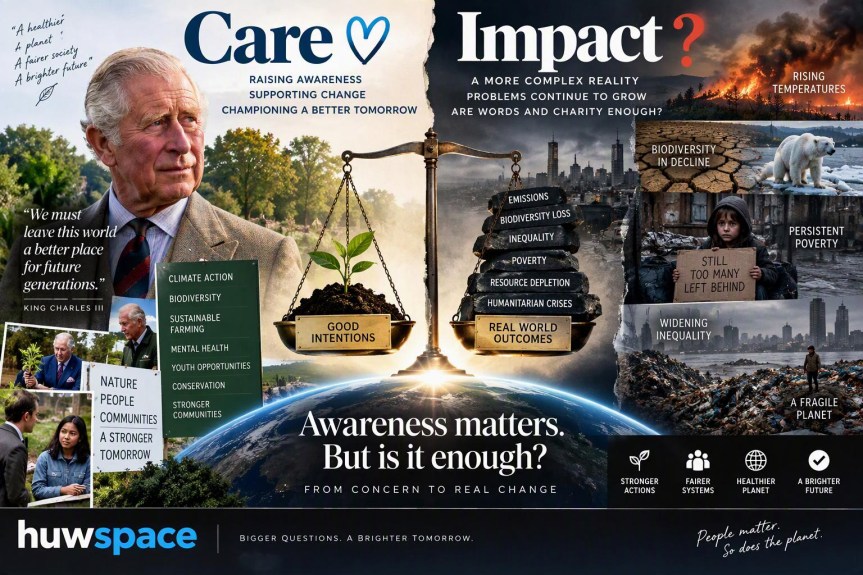
The UK Royal Family care about many of the crisis affecting the planet but is this enough?

The world has never had more awareness of its greatest challenges. Climate change dominates headlines. Biodiversity loss is discussed at global summits. Poverty statistics fill government reports. Billionaires, monarchs, politicians and business leaders regularly speak about creating a better future. Yet despite all this awareness, many of the problems themselves continue to grow.

The uncomfortable question facing humanity is no longer whether people care.

The question is whether caring is enough.

The Age of Awareness

We live in an era where information is abundant.

Scientists have spent decades warning about climate change. Conservationists have highlighted the collapse of wildlife populations. Economists have documented growing inequality. Humanitarian organisations regularly report on hunger, displacement and conflict.

Unlike previous generations, we cannot claim ignorance.

The evidence is visible everywhere.

Wildfires, floods, droughts, rising living costs, growing food insecurity and widening wealth gaps are no longer distant possibilities. They are experiences affecting millions of people today.

On the surface this should give us hope. More people seem aware of these challenges than ever before.

Yet awareness alone has not delivered the transformation many expected.

The Paradox of Modern Leadership

Many of society’s most influential figures genuinely appear concerned.

Environmental initiatives are funded.

Charities receive donations.

International agreements are signed.

Public speeches call for action.

Even institutions often criticised for privilege and wealth, including the Royal Family, have devoted considerable attention to environmental and social issues over recent decades.

The paradox is striking.

If so many powerful people care, why do so many crises continue to worsen?

This is not a question aimed solely at royalty, politicians or billionaires.

It applies to all of us.

Humanity collectively understands the problems better than ever before, yet struggles to respond with sufficient speed and scale.

The Difference Between Care and Impact

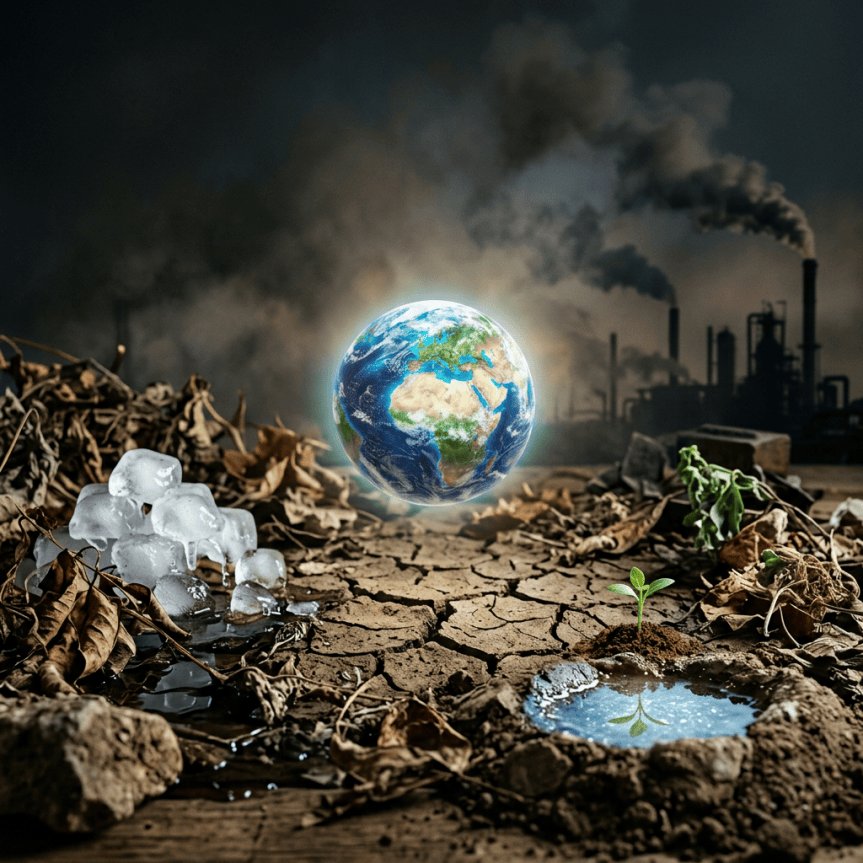
The image accompanying this article highlights a distinction that is rarely discussed.

On one side sits care.

Good intentions.

Awareness.

Concern.

Advocacy.

Education.

Charitable work.

On the other side sits impact.

Carbon emissions.

Biodiversity loss.

Poverty.

Resource depletion.

Social inequality.

Humanitarian crises.

The two are not always connected.

Someone may genuinely care about homelessness while supporting economic structures that make housing unaffordable.

An organisation may promote sustainability while consuming vast amounts of resources.

A government may pledge climate action while approving environmentally damaging projects.

The gap between intention and outcome is often where progress becomes stalled.

Perhaps the Wealthy Are More Human Than We Think

Society often portrays the wealthy as possessing extraordinary foresight.

They are frequently described as visionaries, innovators and strategic thinkers.

Yet history suggests that wealth does not guarantee wisdom.

The wealthy and influential remain susceptible to the same human limitations as everyone else:

  • Short-term thinking.
  • Confirmation bias.
  • Groupthink.
  • Fear of change.
  • Attachment to existing systems.
  • Difficulty imagining large-scale collapse.

The reality may be less sinister and more troubling.

Perhaps many people in positions of influence genuinely care about humanity and the planet.

Perhaps they simply struggle to overcome the same psychological limitations that affect all human beings.

If this is true, then the problem is not merely one of bad individuals making bad decisions.

It is a problem of systems built around human weaknesses.

A System Designed for Growth

Modern economies are remarkably effective at generating wealth.

They are far less effective at recognising ecological boundaries.

Success is often measured through:

  • Economic growth.
  • Corporate profits.
  • Asset appreciation.
  • Consumer spending.

Very rarely is success measured by:

  • Biodiversity recovery.
  • Community resilience.
  • Mental wellbeing.
  • Long-term ecological stability.
  • Intergenerational fairness.

This creates a fundamental contradiction.

A system can generate extraordinary prosperity while simultaneously creating environmental and social damage that is not immediately visible on financial balance sheets.

The result is a world where positive intentions frequently collide with powerful economic incentives.

The Comfort Trap

For affluent societies and wealthy individuals, another challenge exists.

Protection from consequences.

Those with greater resources can often shield themselves from problems for longer.

Rising food prices may be inconvenient rather than devastating.

Water shortages may seem distant.

Environmental degradation may occur far from daily life.

Economic instability may be cushioned by savings, investments and property ownership.

The danger is that genuine concern can exist alongside practical detachment.

People may understand a crisis intellectually without experiencing it directly.

This can create a false sense that gradual change is sufficient when the challenges require far more ambitious action.

Beyond Blame

It is tempting to search for villains.

To blame politicians.

Billionaires.

Corporations.

Royalty.

Previous generations.

While all institutions should be subject to scrutiny, the reality is rarely that simple.

The climate crisis, biodiversity loss and growing inequality emerged from countless decisions made by billions of people operating within systems designed around growth, consumption and competition.

That does not remove responsibility.

It broadens it.

The challenge becomes not identifying a handful of guilty individuals, but understanding how entire societies can care deeply about a problem while continuing to contribute towards it.

From Awareness to Transformation

Awareness remains important.

Without awareness there can be no action.

The mistake is believing awareness alone is enough.

Real change occurs when concern is translated into measurable outcomes.

When policies change.

When incentives change.

When communities change.

When institutions become accountable not merely for what they promise but for what they achieve.

The future will not be shaped by who cares the most.

It will be shaped by who succeeds in turning care into impact.

A Final Thought

Perhaps one of the greatest myths of modern society is that intelligence, wealth or influence automatically produce wisdom.

The evidence suggests otherwise.

The environmental crisis, the cost of living crisis, biodiversity decline and growing inequality have all emerged during a period of unprecedented knowledge, wealth and technological capability.

The problem may not be that humanity lacks awareness.

The problem may be that awareness has become a substitute for action.

Because a healthier planet, a fairer society and a brighter future will not emerge simply because people care about them.

They will emerge only when caring becomes powerful enough to change the systems that shape our world.


People matter. So does the planet.

The challenge facing humanity is no longer learning what is wrong. The challenge is finding and funding the courage, wisdom and collective determination to do enough about it.

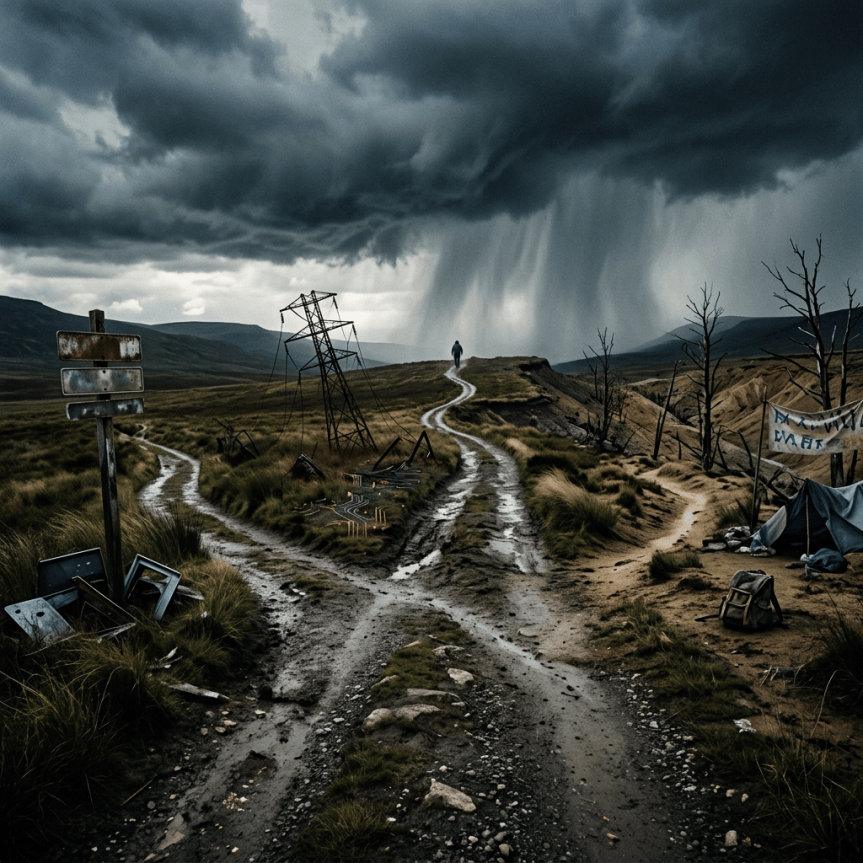
The Gathering Storm: Part Two

Why These Challenges Matter More Than Any Single Crisis

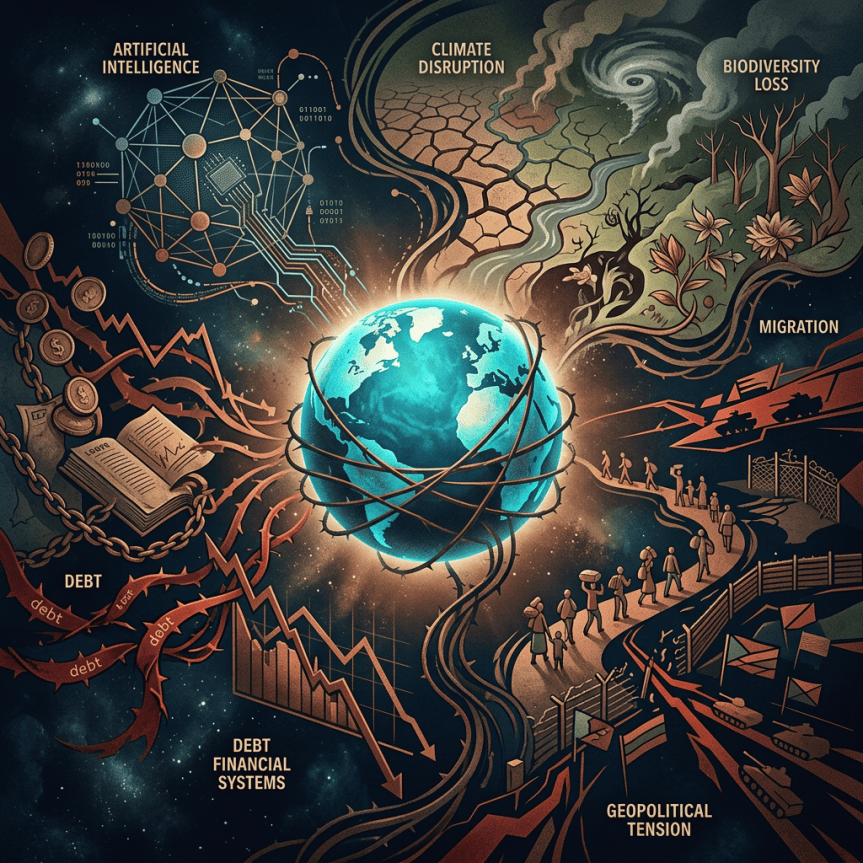
One of the biggest misunderstandings about the future is the belief that debt, AI, climate change, biodiversity loss, migration, war, and inflation are separate issues. They are not. They are interconnected systems that can reinforce each other, creating a much larger challenge than any one problem alone. As your original article notes, these risks form a “polycrisis” where one pressure amplifies another.

The importance of these challenges lies in their ability to undermine the foundations of modern civilisation:

  • Economic stability
  • Government legitimacy
  • Social cohesion
  • Environmental health
  • Food and energy security
  • Individual wellbeing

If governments become overwhelmed by debt while simultaneously facing climate disasters, AI-driven labour disruption, ageing populations and geopolitical instability, their ability to respond effectively may become constrained. This is why many analysts argue that resilience is becoming as important as growth.

Government Debt and Fiscal Limits

Modern societies depend upon governments to provide healthcare, welfare, education, infrastructure, emergency services and national security.

If debt continues rising faster than economic growth, governments face increasingly difficult choices:

  • Raise taxes.
  • Cut public services.
  • Borrow more money.
  • Increase inflation through monetary expansion.

None of these options are politically easy.

The real concern is not debt alone but whether future economic growth can support those obligations. If tax revenues shrink because of slower growth or technological disruption, the burden becomes even harder to manage.

AI and the Future of Work

Artificial intelligence may deliver extraordinary productivity gains, but it also challenges traditional economic assumptions.

For centuries, governments have relied upon employment as the primary mechanism for distributing wealth and collecting taxes.

If AI performs increasing amounts of cognitive work, society must answer difficult questions:

  • Who owns AI-generated wealth?
  • How are displaced workers supported?
  • How do governments collect revenues?
  • How do people find meaning and purpose beyond employment?

These questions could become some of the defining policy debates of the twenty-first century.

Climate Change and Biodiversity

Climate and biodiversity are often treated as environmental concerns, but they are fundamentally economic concerns.

Nature provides services worth trillions of pounds annually through:

  • Pollination
  • Water purification
  • Soil formation
  • Climate regulation
  • Flood management

When these systems degrade, the costs do not disappear. They are transferred to businesses, taxpayers and consumers.

A world with declining biodiversity is generally a world with higher costs, lower resilience and greater instability.


The Benefits of Crisis

While crisis sounds entirely negative, history shows that major disruptions often create opportunities for renewal and transformation.

This does not mean suffering is desirable. Rather, crises expose weaknesses that societies have ignored for years.

1. Crisis Forces Innovation

Many of humanity’s greatest advances emerged from difficult periods.

Economic pressures can accelerate:

  • Renewable energy deployment.
  • Circular economies.
  • Local manufacturing.
  • Resource efficiency.
  • Technological innovation.

Necessity often drives creativity.

A future marked by resource constraints may encourage societies to become more efficient, less wasteful and more sustainable.

2. Crisis Reveals What Truly Matters

Periods of economic uncertainty often shift attention away from endless consumption towards more meaningful measures of prosperity.

People may increasingly value:

  • Family.
  • Community.
  • Health.
  • Nature.
  • Skills.
  • Local resilience.

A crisis can expose the difference between wealth and wellbeing.

3. Crisis Encourages Community Resilience

Periods of hardship frequently strengthen local networks.

Mutual aid groups, community energy projects, local food systems and cooperative enterprises often emerge when traditional systems struggle.

Your article correctly highlights the importance of mutual aid networks, local food security and practical skills development. These approaches not only prepare communities for shocks but also create stronger social bonds.

4. Crisis Accelerates Economic Reform

Many current economic systems were designed for a twentieth-century world.

Future crises may force governments to consider reforms such as:

  • New taxation models.
  • Wealth taxes.
  • Land value taxes.
  • Universal basic income.
  • AI dividend schemes.
  • Circular economic policies.

Ideas that seem politically impossible today can become mainstream during periods of disruption.

5. Crisis Creates Ecological Restoration Opportunities

Environmental degradation often occurs because societies focus on short-term growth.

As the costs become impossible to ignore, governments, businesses and communities may shift towards:

  • Rewilding.
  • Regenerative agriculture.
  • Nature restoration.
  • Ecosystem protection.
  • Community-owned renewable energy.

The result could be healthier landscapes and greater ecological resilience than exists today.

6. Crisis Can Lead to a New Economic Model

Perhaps the greatest opportunity is the possibility of moving beyond an economic system that measures success almost entirely through GDP growth.

A future economic model might place greater emphasis on:

  • Human wellbeing.
  • Ecological health.
  • Community strength.
  • Social equality.
  • Long-term resilience.

The transition would be challenging, but crises often provide the political momentum required for transformational change.


What we build after the storm and why?

The real question is not whether challenges are coming. Every generation faces transformative pressures. The question is whether we use those pressures to build something better.

The debt burden, AI disruption, climate instability and biodiversity loss are warnings that current systems may be reaching their limits. Yet they also provide an opportunity to redesign our economies around resilience, sustainability and shared prosperity.

History suggests that great crises often become turning points. The Industrial Revolution emerged from upheaval. Modern welfare states emerged from depression and war. Environmental protections emerged from ecological damage.

The coming polycrisis may ultimately force humanity to confront a simple truth: infinite growth on a finite planet is impossible, but infinite innovation, cooperation and adaptation are not.

The greatest benefit of a crisis is that it forces society to choose what kind of future it truly wants to build.

Derrin Nauendorf – Shipwrecked

The Gathering Storm: Part One

Navigating a Future of Debt, AI Disruption, Climate Breakdown and Economic Uncertainty

There is a growing sense that the world is entering a period unlike anything experienced in recent decades. Across developed and developing economies, government debt is rising, geopolitical tensions are intensifying, artificial intelligence is reshaping labour markets, climate impacts are accelerating, and biodiversity continues to decline. Rather than existing as separate challenges, these pressures increasingly interact with one another, creating what many analysts describe as a “polycrisis” – a situation where multiple systemic risks amplify each other simultaneously.

The question is not simply whether one crisis will occur. The deeper concern is whether several crises could unfold together, testing governments, economies and communities at the same time.

The Great Debt Dilemma

Governments across the world emerged from financial crises, pandemics and economic shocks with unprecedented levels of debt. While debt itself is not unusual, growing concerns centre on whether governments can continue servicing their obligations if economic growth slows while spending demands continue to rise.

Many advanced economies face a difficult combination of ageing populations, rising healthcare costs, infrastructure demands, military spending commitments and climate adaptation requirements. At the same time, taxation systems struggle to keep pace with changing economic realities.

As AI automates more administrative, analytical and professional roles, governments may face declining income tax receipts from traditional employment. Meanwhile, globalisation and digital commerce enable capital and profits to move across borders more easily than labour, potentially limiting national governments’ ability to expand their tax bases.

This creates a dangerous feedback loop:

  • Higher spending requirements.
  • Slower economic growth.
  • Reduced tax revenues.
  • Larger government borrowing.
  • Rising debt-servicing costs.

The risk is not necessarily an immediate collapse, but a gradual erosion of governmental capacity and public trust.

AI: Productivity Miracle or Employment Shock?

Artificial intelligence presents one of humanity’s greatest opportunities and one of its greatest uncertainties.

Optimists point to enormous gains in productivity, scientific discovery and healthcare. Pessimists highlight the possibility of large-scale disruption to knowledge work and professional occupations.

Unlike previous technological revolutions, AI does not simply replace manual labour. It increasingly performs functions that were previously considered uniquely human, including writing, analysis, design, administration, coding and decision support.

The danger lies not in AI itself but in the speed of transition. If millions of workers are displaced faster than new industries emerge, societies could face:

  • Reduced consumer spending.
  • Higher unemployment or underemployment.
  • Lower income tax revenues.
  • Greater pressure on welfare systems.
  • Increased political instability.

The challenge for governments is ensuring that AI-generated wealth benefits society broadly rather than concentrating in a handful of corporations and asset owners.

Climate Change: The Hidden Economic Multiplier

Climate change is often discussed as an environmental issue, but it is increasingly an economic one. Extreme weather events damage infrastructure, reduce agricultural productivity and increase insurance costs.

The climate crisis acts as a threat multiplier, worsening existing vulnerabilities.

Heatwaves reduce productivity. Floods destroy homes and businesses. Droughts raise food prices. Storms disrupt supply chains.

These impacts create inflationary pressures that ripple through economies. As adaptation costs increase, governments find themselves spending more while often collecting less tax revenue from affected regions.

The result is another cycle of rising debt and economic fragility. Climate-related disruptions may become a permanent feature of the global economy rather than occasional emergencies.

Biodiversity Loss: The Overlooked Crisis

While climate change dominates headlines, biodiversity loss may prove equally significant.

Healthy ecosystems provide services that modern economies largely take for granted:

  • Pollination of crops.
  • Water purification.
  • Carbon storage.
  • Flood protection.
  • Soil fertility.

As species disappear and ecosystems degrade, these natural systems become less resilient.

The economic consequences are often invisible until critical thresholds are crossed. Food production becomes less reliable. Natural disasters cause greater damage. Water systems become more expensive to maintain.

Societies have traditionally treated nature as an infinite asset. Increasing evidence suggests that assumption is no longer sustainable.

Conflict, Migration and Global Fragmentation

The post-Cold War vision of increasing global integration appears increasingly uncertain.

Regional conflicts, competition between major powers and resource scarcity are fragmenting global supply chains. These disruptions can lead to:

  • Higher energy prices.
  • Increased commodity volatility.
  • Reduced international investment.
  • Greater military expenditure.

At the same time, climate impacts and conflict may increase migration pressures. Millions of people could be forced to move due to environmental degradation, water scarcity or instability.

Migration itself is not the problem. The challenge emerges when institutions fail to manage integration effectively or when receiving communities feel economically insecure.

Without social cohesion, economic shocks can be transformed into political crises.

Is the Economic Bubble About to Burst?

Many commentators argue that we are approaching the limits of a debt-fuelled economic model. Others point out that similar predictions have emerged repeatedly throughout history and that economies possess remarkable adaptive capacity.

The truth may lie somewhere in between.

Rather than a single catastrophic collapse, the future may involve a prolonged period of:

  • Lower growth.
  • Higher volatility.
  • Recurring financial instability.
  • Rising fiscal pressures.
  • Political fragmentation.
  • Greater environmental stress.

History suggests that societies rarely collapse overnight. More often, they experience periods of adjustment that can last decades.

The critical question is whether governments, businesses and communities can adapt quickly enough.

Building Resilience Instead of Fear

If these risks are real, the most productive response is neither denial nor panic. It is resilience.

Strengthening local economies, reducing dependence on fragile supply chains and investing in practical skills can provide protection against uncertainty. The original document highlights mutual aid networks, local food production, skill diversification and community resilience as practical responses to systemic risks.

Strengthen Communities

Strong communities often weather crises better than isolated individuals.

This may include:

  • Community-owned energy projects.
  • Local food initiatives.
  • Tool-sharing networks.
  • Skills exchanges.
  • Cooperative enterprises.

When national systems face stress, local relationships become increasingly valuable.

Invest in Human Skills

While AI will automate many tasks, some skills remain difficult to replace:

  • Caregiving.
  • Healthcare.
  • Education.
  • Skilled trades.
  • Ecological restoration.
  • Community leadership.

Developing adaptable capabilities may prove more valuable than specialising exclusively in highly automated sectors.

Restore Nature Locally

Biodiversity restoration does not require waiting for international agreements.

Communities can support:

  • Native species planting.
  • Urban rewilding.
  • Habitat restoration.
  • Pollinator corridors.
  • Community conservation projects.

Small local actions can create meaningful ecological benefits when multiplied across many communities.

A Choice Between Fragmentation and Renewal

The coming decades will likely be defined by how societies respond to converging pressures from debt, technological disruption, climate change and ecological decline.

The future is not predetermined. Economic systems are human creations, and they can be redesigned. Technologies can be governed. Communities can become more resilient. Nature can recover if given space and protection.

The real danger is not that debt bubbles burst, AI transforms work, or climate impacts intensify. It is the failure to prepare for these realities while time remains.

A more resilient future may require moving beyond an obsession with short-term growth and towards measures of long-term wellbeing, ecological health, community strength and economic security.

The challenges ahead are immense, but history repeatedly demonstrates that societies are capable of remarkable adaptation when they recognise problems early and act collectively.

The question is whether we will do so before the pressures of the polycrisis become overwhelming.

Frank Turner – The Next Storm (Official Video)

🌍 We Exploit the Planet Without Realising It — So What Can We Build Instead?

We have become so accustomed to extraction that we barely recognise it as extraction anymore. It feels normal. Routine. Invisible. But the truth is stark: our entire economic system is built on taking more than ecosystems can regenerate, more than communities can sustain, and more than future generations can survive.

“We seem so used to exploiting our planet we don’t even know we’re doing it.”

Replacing extractive capitalism requires a mosaic of alternative models, not a single utopian blueprint:

“Alternative economic models cannot operate as isolated, fringe experiments; instead, they must coalesce into a diversified, interconnected ecosystem.”

This article explores what those alternatives look like — realistically, structurally, and at scale. just as we can not technologically manifest a solution to all our systemic economic problems, we can also not buy our way out of problems or capitalise a way away from them either.

🪶 1. Indigenous Governance: Stewardship Instead of Extraction

Indigenous governance is not a romanticised relic — it is a sophisticated ecological management system refined over millennia. Its core principle being:

“Reciprocity and relationality… and the de‑commodification of nature.”

Realistic pathways

  • Land Back as ecological infrastructure Returning land to Indigenous stewardship is not symbolic; it is environmental policy.
  • Rights of Nature embedded in constitutional law Ecosystems become legal subjects, not extractive objects.
  • Co‑management of national parks and watersheds Indigenous stewardship consistently outperforms state or corporate conservation.

This model replaces extraction with relationship — a shift capitalism cannot replicate.

🔄 2. Degrowth: Reducing Harm Without Reducing Wellbeing

Degrowth is not about shrinking life — it is about shrinking damage.

“Planned downscaling of material/energy throughput.”

Realistic pathways

  • Universal Job Guarantees Focused on care work, ecological restoration, and low‑carbon infrastructure.
  • Shorter workweeks Lower energy use, higher wellbeing.
  • Caps on resource use and extreme wealth Stabilises ecological pressure and redistributes opportunity.
  • Doughnut Economics Cities like Amsterdam already measure success by social wellbeing within planetary boundaries.

Degrowth is not collapse. It is controlled landing.

♻️ 3. Transformational Circular Economies: Closing the Loop for Real

Most circular economy branding today is corporate greenwash. This blog article calls for something deeper:

“Eliminating waste via closed-loop systems.”

Realistic pathways

  • Mandatory reduction of industrial output Especially in sectors breaching planetary limits.
  • Extended Producer Responsibility Manufacturers must take back products at end‑of‑life.
  • Service‑based models Companies lease appliances instead of selling them — incentivising durability.
  • Municipal bans on non‑recyclable materials Cities enforce closed‑loop industrial zones.

This is circularity with teeth.

🏘️ 4. The Commons Movement: Shared Stewardship, Local Resilience

The commons model replaces private ownership with collective responsibility.

“Communal stewardship of shared resources… community land trusts, open-source knowledge, cooperative ownership.”

Realistic pathways

  • Community Land Trusts Housing removed from speculative markets becomes permanently affordable.
  • Public–Common Partnerships Cities grant cooperatives procurement contracts for food, energy, and housing.
  • Solidarity Economies Time banks, mutual aid networks, and local currencies reduce dependence on volatile global markets.
  • Open-source knowledge systems Innovation becomes collaborative rather than proprietary.

The commons model is not nostalgic. It is modern resilience.

⚙️ 5. Repurposing the State: Engineering a Post‑Growth Economy

“A realistic transition requires state-level interventions to de-risk a post-growth economy.”

Realistic pathways

  • Taxing resource throughput instead of labour People should not be taxed for working; corporations should be taxed for extracting.
  • Wealth taxes and eminent domain Used to shift private natural resources into communal stewardship.
  • Debt restructuring and jubilees The global financial system requires growth to repay compound interest — a structural incompatibility with ecological stability.
  • Universal basic services Healthcare, energy, transport, and housing provided as rights reduce the need for endless consumption.

This is not revolution. It is re‑engineering.

🌐 6. Prefigurative Politics: Building the New System Inside the Old One

“Systemic change rarely happens top-down without established grassroots infrastructure.”

Realistic pathways

  • Worker-owned cooperatives Already thriving in Italy’s Emilia‑Romagna and Spain’s Mondragon.
  • Local food sovereignty Community farms, seed banks, and Indigenous agricultural knowledge.
  • Energy microgrids Community-owned solar and wind systems decentralise power.
  • Mutual aid networks Social cohesion becomes economic infrastructure.

Prefigurative politics is not protest. It is prototyping.

🧩 7. The Bottlenecks We Must Confront

Geopolitical disparities

“Transformations must actively address neocolonial exploitation.”

If the Global North adopts degrowth without restructuring global trade, the Global South suffers.

The growth imperative of debt

“The global financial system is built on debt that requires compound interest to repay.”

A post‑growth world requires redesigned central banking or large‑scale debt jubilees.

These are not reasons to abandon alternatives — they are reasons to design transitions carefully.

🌄 8. The Realistic Path Forward

Replacing extractive capitalism is not about flipping a switch. It is about building a pluralistic ecosystem of models that reinforce one another:

  • Indigenous governance protects ecosystems
  • Degrowth reduces pressure
  • Circular economies eliminate waste
  • Commons systems democratise access
  • State engineering stabilises the transition
  • Localised politics prototypes the future

This is not utopian. It is already happening — in cities, nations, Indigenous territories, cooperatives, and grassroots movements worldwide.

The real question is not whether alternatives exist. It is whether we choose to scale them up and in the meantime good luck, have fun and don’t die! .

The Waterboys – This Land Is Your Land

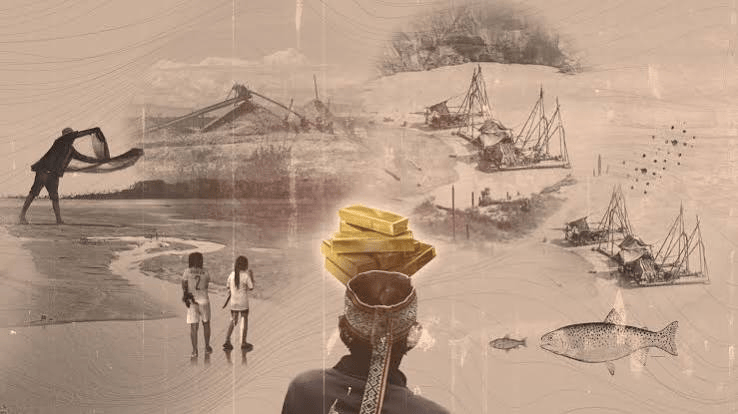
Indigenous Land Is Sacred—Until Corporations Want It

Across continents and political systems, Indigenous peoples face the same quiet violence: they are allowed to exist, but not to prosper. They are granted symbolic recognition, but denied economic autonomy. They are praised for “living close to the land,” yet systematically prevented from earning a living from that land.

The pattern is not accidental. It is structural. And it is global.

“Indigenous populations are systematically let down by bureaucratic zoning restrictions, structural displacement, commercial undercutting, and legal loopholes that block them from economically profiting from their ancestral lands.”

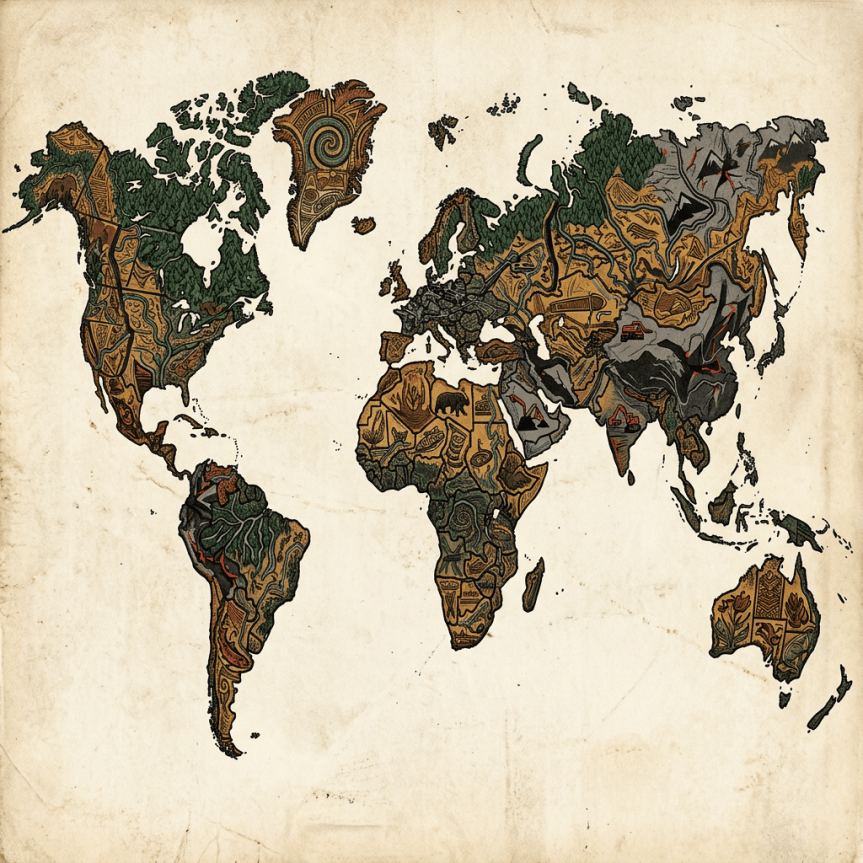
from Australia to Palestine, Brazil to the USA — and this reveals a deeper truth about modern capitalism’s relationship with Indigenous cultures.

🪨 Australia: Cultural Rights Without Economic Rights

Australia’s Native Title system is often celebrated as a landmark recognition of Indigenous land rights. But the reality is far more constrained.

“Native Title frequently allows First Nations peoples the right to hunt, fish, or camp for traditional purposes, but strictly prohibits them from using those same resources for commercial sale or profit.”

This is the core failure: Indigenous Australians are permitted to be Indigenous, but not to benefit from their land in the same way corporations do.

Meanwhile, mining giants can override Native Title protections entirely. The land is sacred when Indigenous people use it — but negotiable when corporations want it.

This is not protection. It is containment.

🌿 New Zealand: Conservation as a Tool of Control

In Aotearoa, Māori rights are guaranteed under Te Tiriti o Waitangi — yet economic autonomy is throttled by regulatory barriers.

“Large swathes of ancestral Māori land have been absorbed into state-run national parks… preventing Māori iwi from establishing eco‑tourism, forestry, or aquaculture businesses.”

Environmental protection becomes a bureaucratic shield for corporate interests. Māori are told they cannot profit from their land because it must be preserved — while non‑Indigenous companies operate freely in adjacent areas.

This is conservation without justice. A green veneer over an old colonial pattern.

🪶 USA: Sovereignty Without Ownership

Native American nations are described as sovereign — but sovereignty means little when the land itself is not legally theirs.

“Federal Trust Trap”: “Reservation land is legally held ‘in trust’ by the US federal government… tribes cannot use it as collateral to secure bank loans.”

This single legal structure blocks Indigenous entrepreneurs from building independent economies. It is economic suffocation disguised as protection.

Meanwhile, pipelines, mining operations, and toxic waste sites are approved on tribal land without tribal consent — a form of environmental racism that extracts profit while leaving Indigenous communities with the damage.

Sovereignty becomes symbolic. Profit remains colonial.

🌾 Palestine: Land as a Weapon

In Palestine, the failure is not bureaucratic — it is militarised.

“Palestinian farmers face routine land grabs, home demolitions, and the systematic destruction of their olive groves.”

Area C — the most fertile land — is locked behind military control. Palestinians are denied permits to dig wells, build greenhouses, or transport crops. Settler farms next door enjoy full access to water, infrastructure, and global export markets.

This is not just economic exclusion. It is economic strangulation.

🌳 South America: Extraction, Corruption, and Corporate Capture

Across Brazil, Colombia, Argentina, Peru, and the wider Amazon basin, Indigenous communities face a brutal combination of legal restriction and illegal exploitation.

Brazil’s system is an “abridgement of rights”: “Indigenous groups are prohibited from renting out land, leasing mining concessions, or selling extraction rights.”

In Colombia, armed groups and agribusinesses invade legally recognised Indigenous territories, pushing communities onto “micro‑plots” while corporations profit from the rest.

In Argentina, deregulation threatens to hand Indigenous land to multinational agribusiness.

In Peru, corruption and illegal mining destroy forests and poison rivers: “Thousands of illegal gold miners introduce mercury pollution… decimating the ecosystems Indigenous communities require.”

Across the continent, the message is the same: Indigenous land is valuable — but only when someone else controls it.

🧭 The Global Pattern: Cultural Survival Without Economic Power

Across all regions, there is the same structural failure:

“Modern disputes target the ability of Indigenous peoples to run businesses, harvest resources, or sustain themselves independently from state‑controlled financial systems.”

Indigenous communities are allowed identity, but not autonomy. Culture, but not commerce. Presence, but not power.

This is how modern systems maintain colonial hierarchies without appearing colonial.

🔥 Why This Matters

When Indigenous peoples cannot profit from their land, they cannot sustain their communities. When they cannot sustain their communities, they cannot protect their culture. When they cannot protect their culture, the world loses knowledge, biodiversity, and ways of living that corporate systems cannot replace.

This is not just an Indigenous issue. It is a planetary issue.

Indigenous stewardship protects forests, rivers, and ecosystems that global capitalism destroys. Their exclusion is not only unjust — it is self‑destructive for humanity.

🌏 A Different Future Is Possible

A world that values Indigenous autonomy would:

  • Recognise land rights as economic rights
  • Transfer decision‑making power to Indigenous communities
  • End corporate veto power over Indigenous territories
  • Protect ecosystems by empowering those who have protected them for millennia
  • Replace extractive models with regenerative ones

Indigenous cultures do not need saving. They need systems that stop sabotaging them.

Solid Ground by Delores Keane

Corporate techno‑optimism has its limits — and rightly so

🌍 The seduction of techno‑optimism

Techno‑optimism thrives on a simple narrative: innovation will save us. It’s a comforting story, especially when told by charismatic billionaires with rockets, supercomputers, and grand visions of humanity’s next frontier.

But as your attached text sharply points out, this optimism collapses when placed next to the realities we are failing to confront:

“An inability to fix real problems here on earth such as reductions in species and biodiversity… and an inability to confront a real climate crisis is far more damaging than any technological advancement…”

The problem isn’t technology itself — it’s the belief that technological progress automatically equals societal progress. It doesn’t. Not when political systems, corporate incentives, and global power structures remain unchanged.

🏭 1. Tech cannot solve problems created by power

Four business professionals discussing strategy in a high-rise conference room
Smug, warm and dry on the inside! Smog, pollutants and depleted ecosystem on the outside.

Corporate techno‑optimism often treats crises as engineering puzzles. But biodiversity collapse, climate destabilisation, and geopolitical aggression are not engineering failures — they are political and ethical failures.

Your document captures this perfectly:

“The powerful take what they want, rewrite the narrative, and leave the most vulnerable to pay the price.”

No amount of AI, carbon capture, or space exploration can compensate for governance systems that reward extraction over preservation.

🔥 2. The climate crisis exposes the limits of the billionaire fix

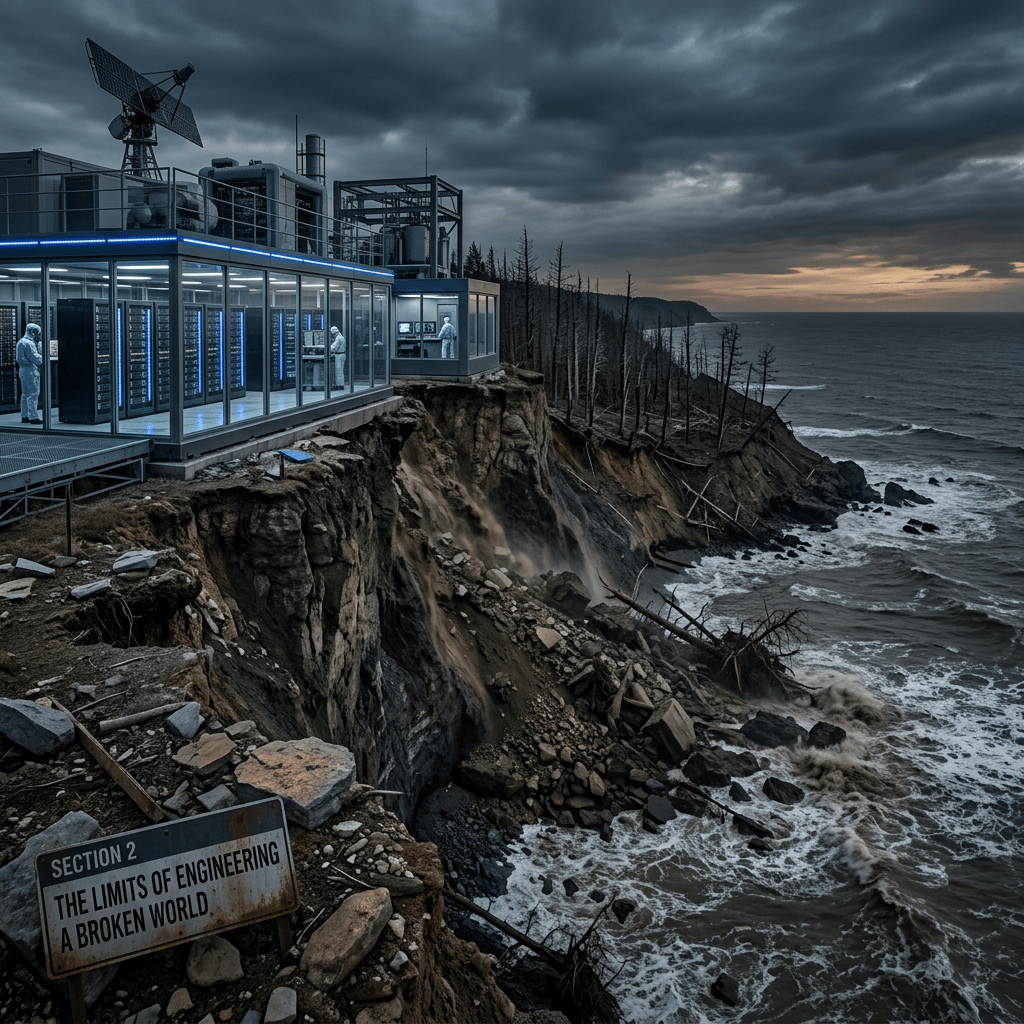
Coastal data facility above collapsing cliffs; sign reads “SECTION 2 THE LIMITS OF ENGINEERING A BROKEN WORLD.”
A futuristic coastal data facility stands precariously above an eroding shoreline beneath storm clouds.

Tech leaders promise electric cars, reusable rockets, and geoengineering. Yet emissions rise, ecosystems collapse, and political will evaporates. Why? Because the crisis is not technological — it is structural.

  • Fossil fuel giants still receive billions in subsidies.
  • Governments still prioritise GDP over ecological survival.
  • Corporations still treat nature as a ledger entry, not a living system.

Techno‑optimism becomes a distraction when it encourages society to wait for a breakthrough instead of demanding systemic change.

🐾 3. Biodiversity loss is not a problem you can “innovate away”

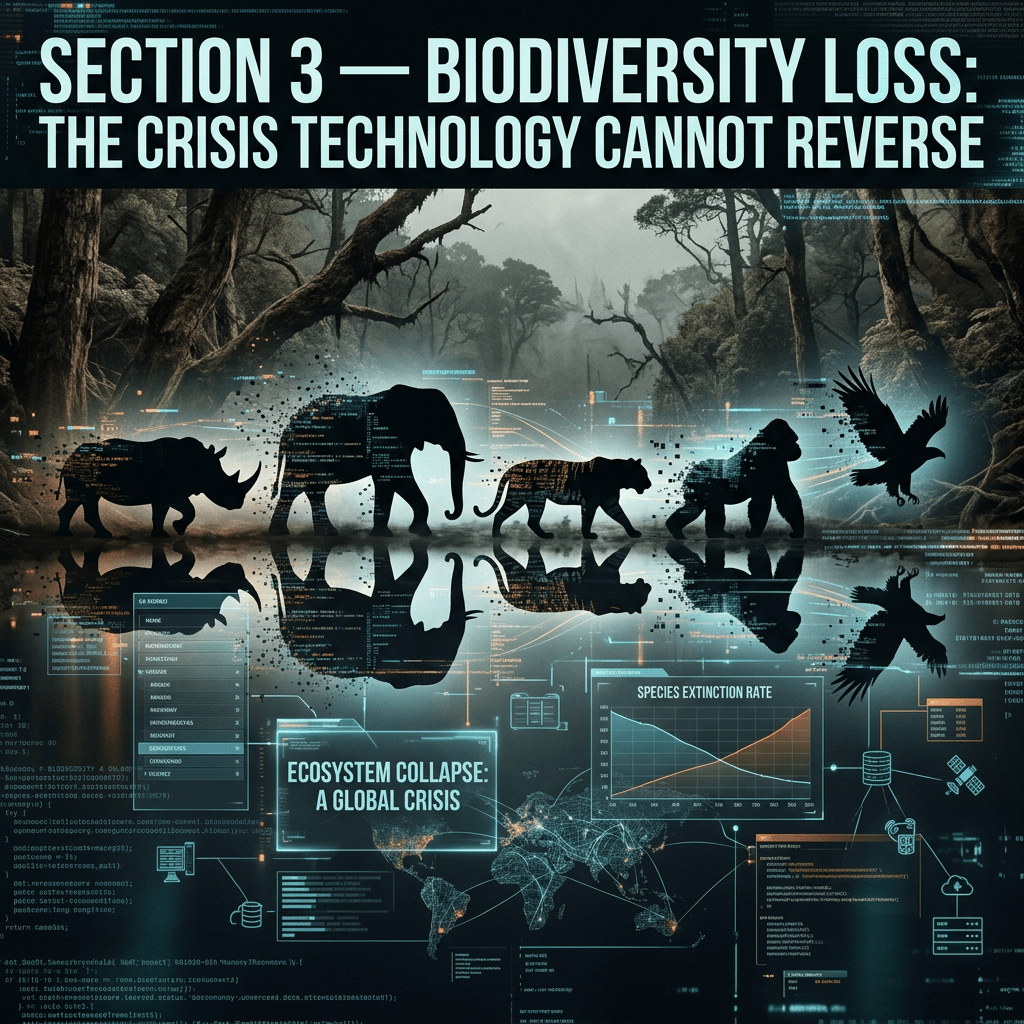
Section 3—Biodiversity Loss: The Crisis Technology Cannot Reverse; Ecosystem Collapse: A Global Crisis; Species Extinction Rate
Animal silhouettes, extinction data, and digital overlays illustrate the global biodiversity crisis.

Species extinction is irreversible. No app, drone, or satellite can rebuild a rainforest or resurrect a collapsed food web. Corporate techno‑optimism struggles here because it is built on the assumption that all problems are fixable with enough capital and cleverness.

But ecological systems do not negotiate with markets.

⚔️ 4. The geopolitical parallel: rewriting blame

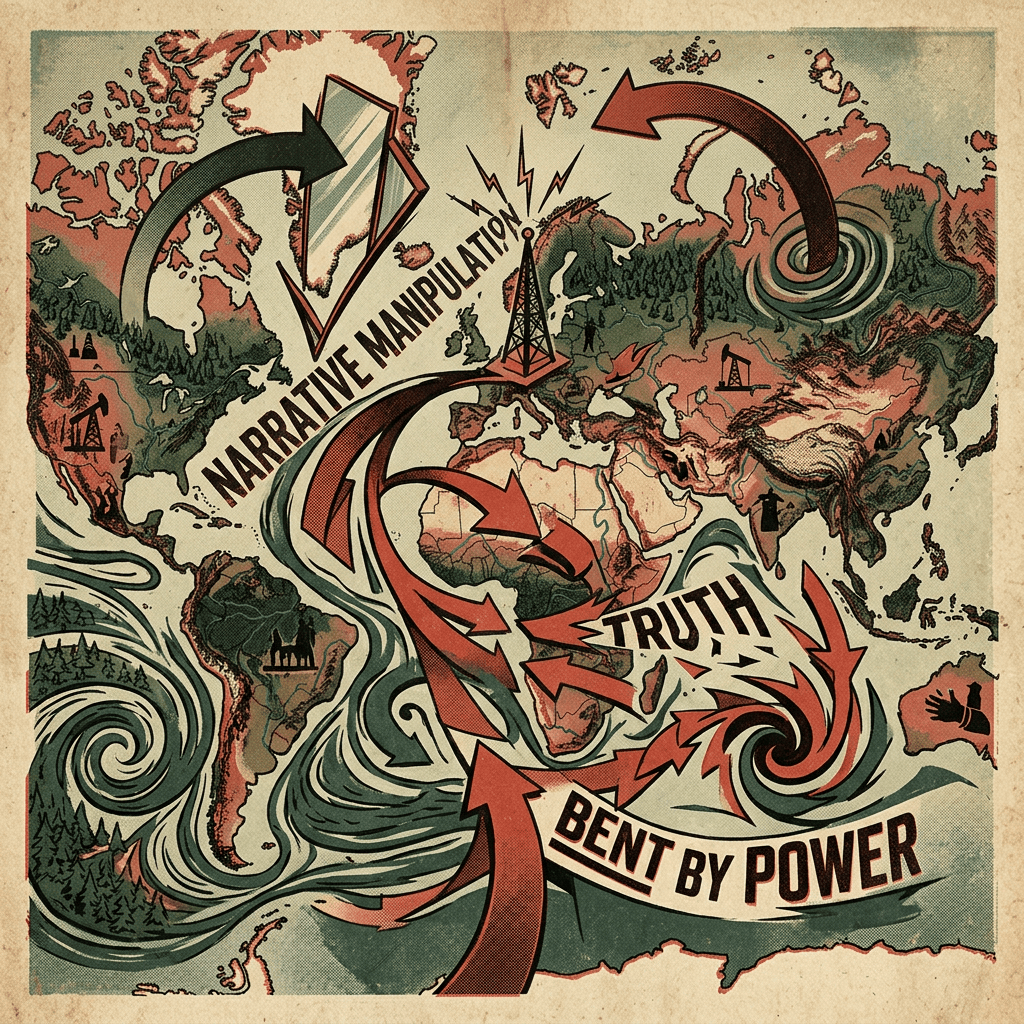
Map labeled NARRATIVE MANIPULATION, TRUTH, and BENT BY POWER
A vintage-style world map illustrates how power can bend narratives and perceptions of truth.

Your document draws a provocative comparison between environmental destruction and the narrative manipulation around the invasion of Ukraine:

“Next thing people will call Putin a humanitarian… blaming Zelensky for not allowing Russia to take a profitable slice of Ukraine.”

This is not hyperbole — it’s a pattern. Aggressors rewrite reality. Corporations do the same. Both rely on public confusion to justify harm.

Techno‑optimism often participates in this rewriting by framing systemic crises as individual lifestyle problems (“use fewer straws”) while shielding the true drivers of destruction.

🚀 5. The myth of the saviour‑CEO

Silhouetted businesspeople towering over the U.S. Capitol and civic buildings
Towering suited silhouettes dominate a Capitol-centered cityscape, evoking the influence of political power.

Corporate techno‑optimism elevates figures like Musk and Bezos into quasi‑political actors. They are framed as visionaries who will deliver humanity from crisis through innovation alone.

But this belief is dangerous because:

  • It bypasses democratic accountability.
  • It concentrates power in unelected individuals.
  • It treats public problems as private playgrounds.

As your document notes, this mirrors the logic of authoritarianism — the idea that strongmen, whether political or corporate, should dictate the future.

🌱 6. What actually works

If techno‑optimism has limits, what lies beyond it?

Systemic change. Not gadgets. Not billionaire visions. Not escape plans to Mars.

Real solutions look like:

  • Binding global biodiversity protections
  • Ending fossil fuel subsidies
  • Regulating extractive industries
  • Strengthening democratic institutions
  • Redistributing power away from corporate monopolies
  • Investing in ecological restoration at planetary scale

Technology can support these goals — but it cannot replace them.

🧭 Final thought

Corporate techno‑optimism is not inherently wrong. Innovation matters. But when it becomes a cultural shield that hides political failure, ecological destruction, and corporate greed, its limits become painfully clear.

The future will not be saved by rockets, apps, or charismatic CEOs. It will be saved by collective ethics, accountable governance, and a refusal to let power rewrite reality.

Technology and modenism has to be ecologically responsible in order for the planet to move forward as a living organism.

Technology and Modernism Must Be Ecologically Responsible

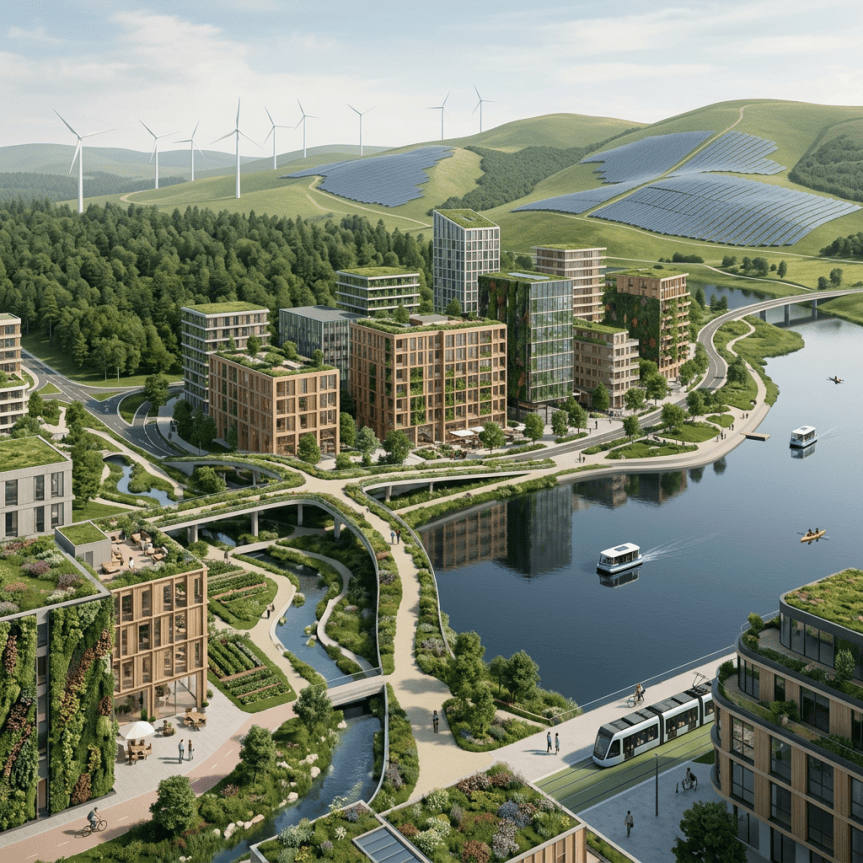
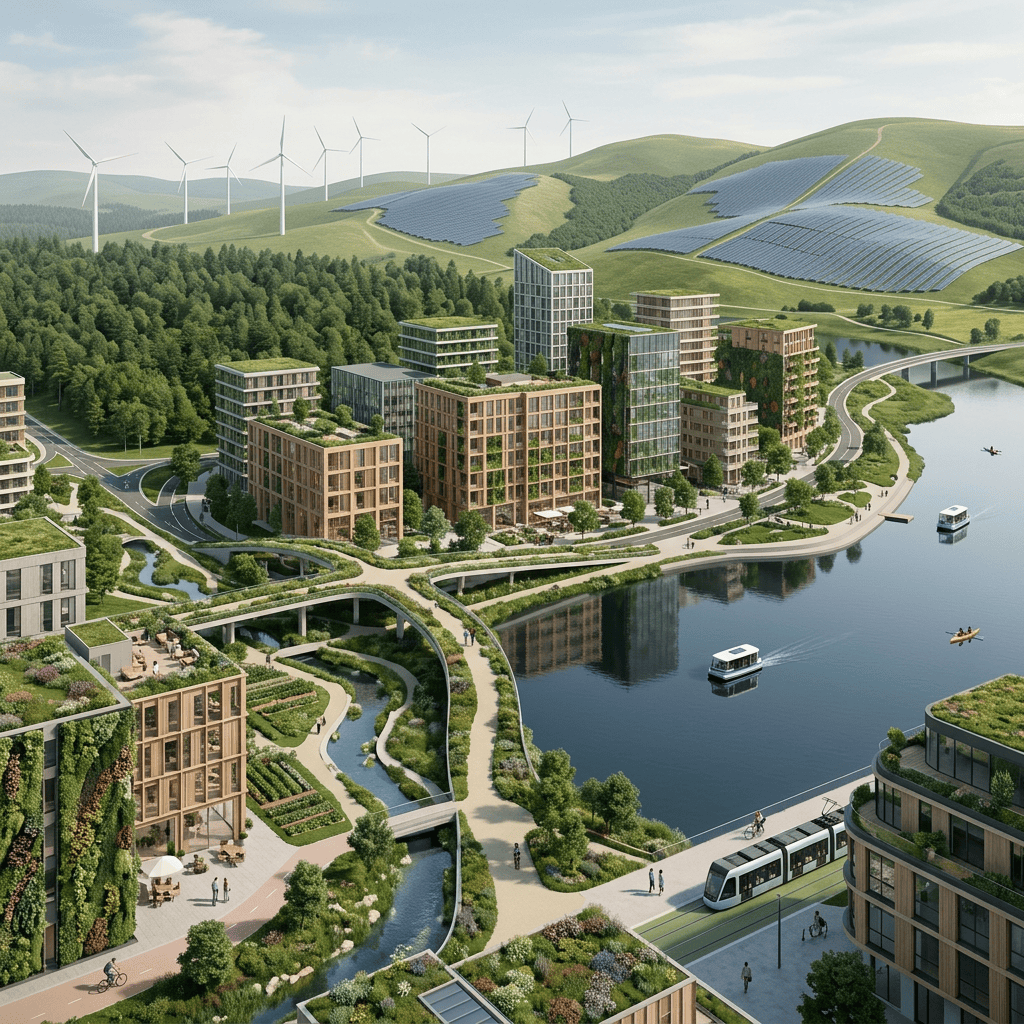
Sustainable waterfront city with green buildings, solar panels, and wind turbines
A sustainable waterfront neighborhood integrates green buildings, clean transit, renewable energy, and restored landscapes.
Sustainable waterfront city with green buildings, solar panels, and wind turbines
A sustainable waterfront neighborhood integrates green buildings, clean transit, renewable energy, and restored landscapes.

Modernism promised a world of speed, efficiency, and mastery over nature. Technology amplified that promise, giving us tools capable of reshaping landscapes, economies, and even the climate itself. But the planet is not a passive stage for human innovation — it is a living organism with limits, thresholds, and feedback loops.

When technology ignores those limits, it becomes extractive rather than progressive.

Ecological responsibility is not an optional moral add‑on to modernism; it is the precondition for any future worth living in. A civilisation that destabilises the biosphere undermines the very foundation on which its technological achievements stand.

This is why techno‑optimism rings hollow when it refuses to confront ecological reality. Innovation without ecological accountability is simply a faster way of reaching collapse.

When Outrage Works: How Crisis Reporting Drives Real Change

Fifty Years of Outrage, Action, and Unexpected Progress

Bad news has always carried a certain gravitational pull — a mix of fear, urgency, and uncomfortable truth that forces us to look up from our routines and confront what’s breaking. But beneath the anxiety and the doomscrolling, there’s a quieter, more powerful reality: reporting on bad news has repeatedly made society safer, fairer, and more humane.

Across the last half‑century, some of the most distressing headlines have sparked the most transformative breakthroughs. When journalists expose systemic failures, environmental disasters, or human rights abuses, they activate a civic alarm system — one that turns passive awareness into organized outrage, and outrage into lasting reform.

This is the story of how crisis reporting has reshaped the world.

🌊 When the Planet Caught Fire: Environmental Justice Begins

How oil spills, burning rivers, and ozone holes forced global environmental protection

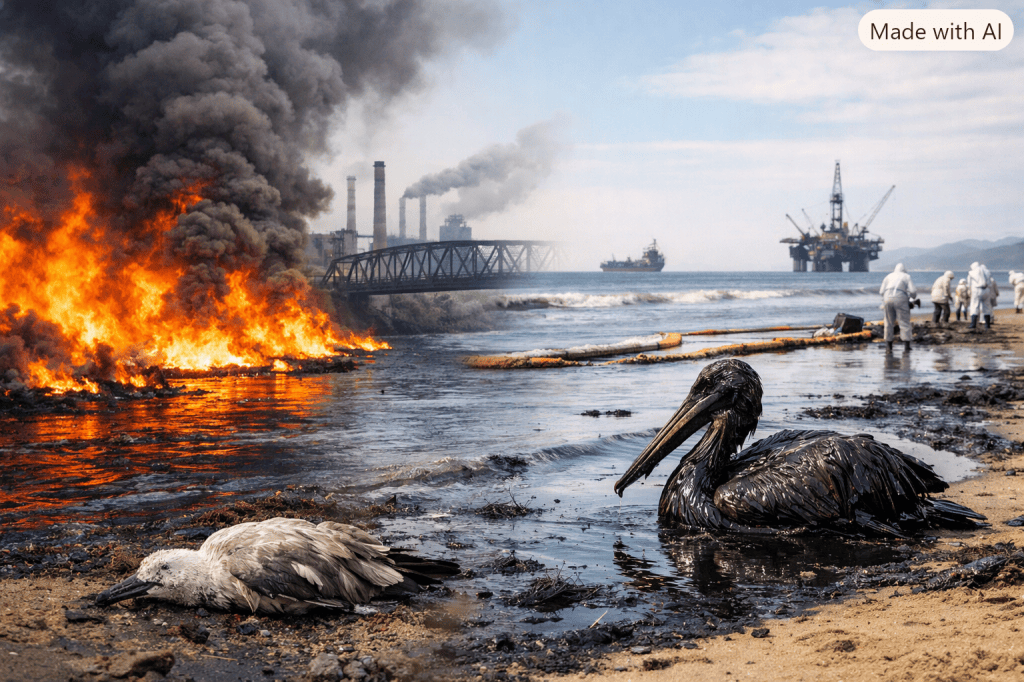
In the early 1970s, the world watched in disbelief as 3 million gallons of oil coated the Santa Barbara coastline and the Cuyahoga River in Cleveland literally burst into flames. These images — thick black smoke, dead wildlife, water that looked more like tar — were impossible to ignore.

“Graphic footage of Cleveland’s heavily polluted river literally catching fire shocked the global public.”

The relentless reporting triggered something unprecedented: 20 million people mobilized for the first Earth Day, pushing governments to create the EPA, the Clean Air Act, and the Clean Water Act.

A decade later, alarmist but accurate reporting on the expanding hole in the ozone layer led to the Montreal Protocol, the most successful environmental treaty in history.

Bad news didn’t just inform people — it forced them to act.

✊ Exposing Injustice: How Media Coverage Helped End Apartheid

The global impact of showing what was never meant to be seen

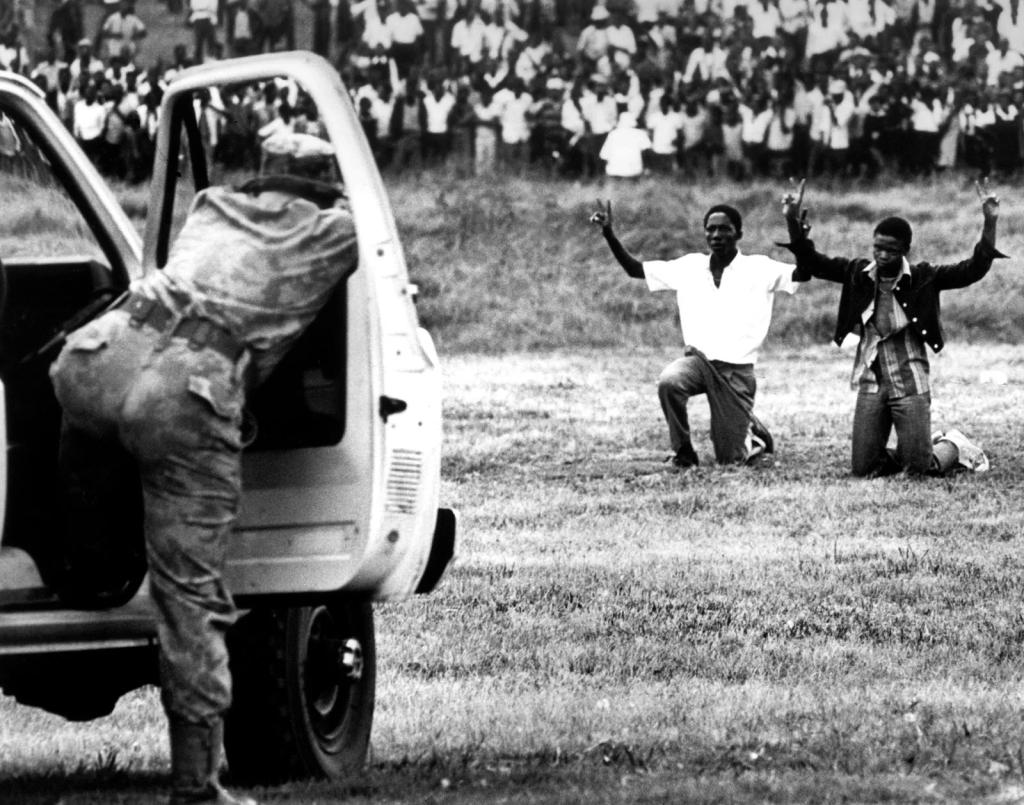
Throughout the 1970s–1990s, journalists documented the brutality of South Africa’s apartheid regime. Images from the 1976 Soweto uprising, where police opened fire on schoolchildren, circulated worldwide.

“Ongoing news coverage of state-sanctioned violence… generated global condemnation.”

The world responded with economic sanctions, cultural boycotts, and political pressure. Internal strikes grew. Eventually, the apartheid government collapsed, leading to South Africa’s first democratic elections in 1994.

Bad news became a megaphone for justice.

🚗 Turning Tragedy Into Law: The Fight Against Drunk Driving

How one mother’s grief reshaped national policy

In 1980, Candy Lightner’s daughter was killed by a repeat-offender drunk driver. The news was devastating — but Lightner refused to let the story fade.

She founded Mothers Against Drunk Driving (MADD), using painful statistics and heartbreaking stories to shift public opinion.

“The group used agonizing statistics and news stories to completely shift public perception.”

Within a few years, the U.S. raised the legal drinking age to 21 and enacted strict drunk-driving laws. A national epidemic was confronted because the bad news was impossible to ignore.

🧬 Silence, Outrage, and Reform: The AIDS Crisis

How activists forced the world to pay attention

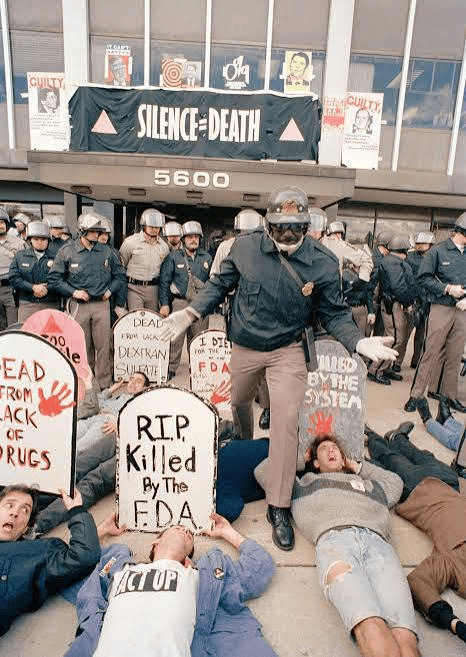
During the early AIDS crisis, thousands of young men were dying — but the media barely covered it. The silence was its own form of bad news.

ACT UP responded with radical transparency: protests, die-ins, and relentless pressure on the FDA.

“ACT UP used radical transparency and public protest to force a massive overhaul of how the FDA tests and approves life-saving pharmaceuticals.”

Their activism permanently changed medical research and patient rights.

Bad news became a demand for dignity.

📊 The Pattern: Crisis → Outrage → Action → Reform

Across all these stories, the same cycle emerges:

Crisis / Bad NewsHuman ActionLong-Term Impact
Industrial river fires & oil spillsMass protests & organizingEPA + Clean Water Act
Apartheid violenceGlobal boycotts & strikesEnd of apartheid
Drunk driving epidemicGrassroots lobbyingNational legal reforms
Ozone depletionInternational treatiesElimination of CFCs

Bad news is not the end of the story — it’s the beginning of change.

🌱 Why We Still Need Bad News Today

The uncomfortable truth: progress requires pressure

Bad news is emotionally draining, but it is also:

  • A diagnostic tool — revealing what systems fail and why
  • A moral compass — showing where harm is happening
  • A catalyst — pushing communities and governments to act
  • A historical record — ensuring injustices are not forgotten

Without crisis reporting, many of the protections we rely on today simply wouldn’t exist.

Bad news is not a threat to society — it is a safeguard.

Do Bad Things Happen Because of Greed or Poor Choices?

Terrible events — wars, ecological collapse, climate destabilisation — often feel like they erupt out of chaos. But when you trace them back, you find something more mundane and more uncomfortable: human decisions. Some are made out of fear, some out of short‑term thinking, and some out of outright greed. Together, they shape the world we live in.

This article explores how greed and poor choices contribute to three major global crises: war, global warming, and biodiversity loss — and why understanding these drivers matters for building a better future.

⚔️ 1. War: When Greed Meets Fear

Modern research shows a strong link between environmental vulnerability and conflict, especially where resources are scarce or degraded. Environmental stress can increase the likelihood of conflict, particularly in regions already facing political instability . Biodiversity loss and environmental degradation can also interact with social tensions, influencing pathways to conflict.

But environmental stress alone doesn’t cause war. Human choices do.

Greed’s role

  • Control of oil, minerals, land, or strategic territory
  • Expansion of political or economic influence
  • Capture of wealth by elites at the expense of the population

Poor choices

  • Leaders escalating tensions instead of negotiating
  • Nations prioritising military spending over diplomacy
  • Short-term political gains trumping long-term stability

Greed creates incentives for conflict; poor choices remove the brakes.

🌡️ 2. Global Warming: A Crisis Built on Short-Term Thinking

Climate change is the most predictable disaster humanity has ever created — and one of the most preventable.

Greed’s role

  • Fossil fuel industries protecting profits
  • Governments prioritising economic growth over sustainability
  • Corporations externalising environmental costs

Poor choices

  • Delaying climate action for decades despite clear warnings
  • Designing cities around cars instead of people
  • Treating nature as infinite rather than fragile

Climate change is not an accident. It is the cumulative result of billions of decisions made without considering long-term consequences.

🐾 3. Biodiversity Loss: The Silent Catastrophe

Biodiversity loss is less visible than war or climate change, but it is just as dangerous. Research shows that environmental degradation can contribute to social instability and conflict, creating feedback loops between ecological decline and human insecurity .

Greed’s role

  • Overexploitation of forests, oceans, and wildlife
  • Industrial agriculture prioritising yield over ecosystems
  • Illegal wildlife trade driven by profit

Poor choices

  • Destroying habitats for short-term development
  • Ignoring ecological warnings
  • Failing to protect species until they are nearly gone

Biodiversity loss is a slow-burning tragedy caused by treating nature as expendable.

🔍 So… Is Greed the Root Cause? Or Poor Choices?

Greed is a powerful accelerant. Poor choices are the spark.

But the deeper truth is this:

Terrible things happen when societies reward short-term gain over long-term wellbeing.

Greed is simply one expression of that imbalance. Poor choices are another. Together, they create systems where destructive outcomes become almost inevitable.

🌱 What Would Better Choices Look Like?

1. Long-term thinking

Policies that look beyond election cycles and profit margins.

2. Shared responsibility

Recognising that environmental and social stability are collective goods.

3. Valuing nature

Treating ecosystems as assets, not obstacles.

4. Reducing inequality

Because unequal societies are more vulnerable to conflict and ecological harm.

5. Transparent governance

Greed thrives in secrecy; accountability reduces its power.

✨ A More Hopeful Ending

The world is not doomed to repeat its mistakes. Greed and poor choices are human behaviours — and humans can change. We can design systems that reward sustainability, cooperation, and long-term thinking. We can choose leaders who value peace over profit. We can build economies that regenerate rather than extract.

Terrible things happen when we fail to act wisely. Better things happen when we decide to.