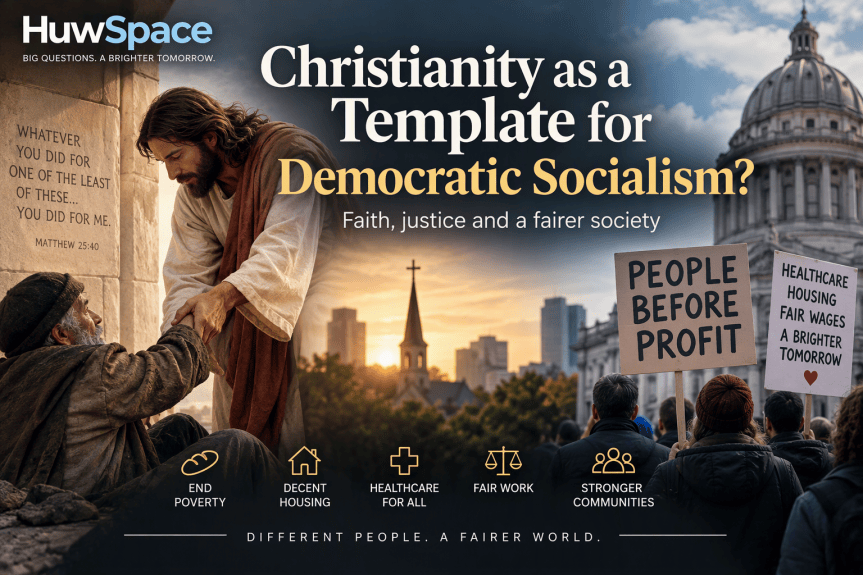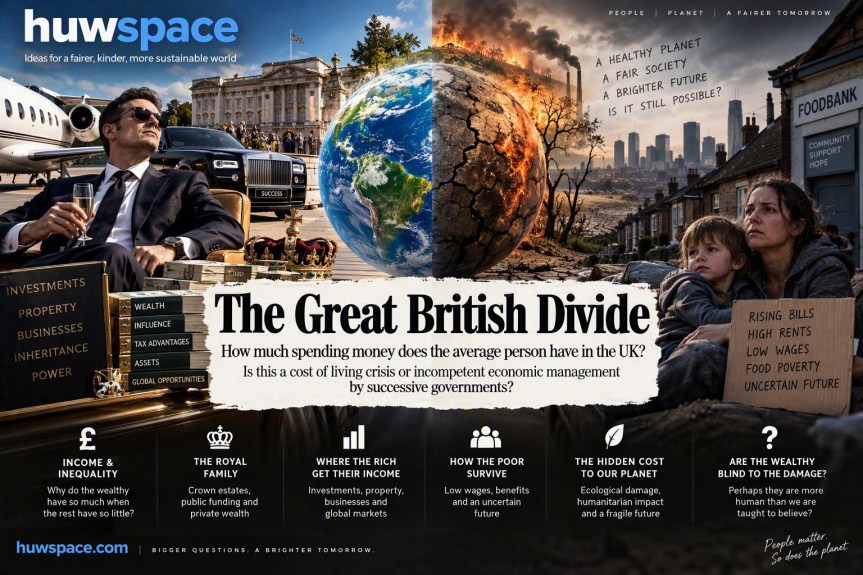
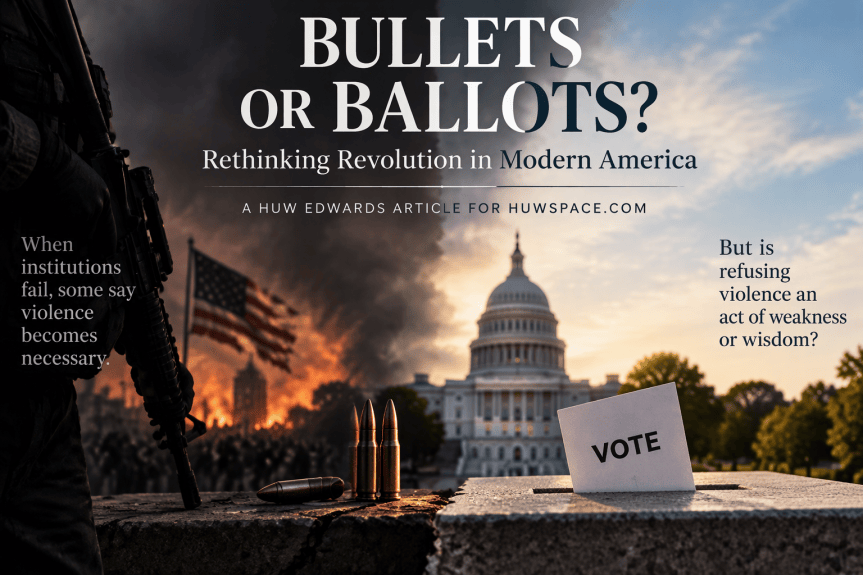
Guy Fawkes, Revolution and the False Promise of Political Violence

By Huw Edwards for Huwspace.com

The revolutionary argument is as old as politics itself. When institutions cease to serve the people, when governments become unresponsive, and when citizens lose faith that change can occur through democratic means, some begin to argue that violence becomes not merely justified but necessary.

It is a powerful idea. It is also one that deserves far greater scrutiny than it often receives.

Throughout history, revolutionaries have claimed that peaceful reform eventually reaches its limits. If the courts are corrupt, the legislature captured, and the political system incapable of meaningful change, then force becomes the only remaining instrument of political action.

Yet an uncomfortable question remains.

Even if institutions fail, why should anyone assume violence will make matters better?

In modern America, what exactly has failed so completely that civil conflict or revolution is seen by some as a rational answer? And what evidence exists that a bloody struggle would produce freedom rather than simply a different form of oppression?

These are not questions of left or right. They are questions of history, morality and common sense.

The Revolutionary Argument

The intellectual case for revolutionary violence is perhaps most closely associated with Frantz Fanon, whose writings on anti-colonial struggle argued that violence could become necessary when oppressed people were denied any meaningful path towards political self-determination. For Fanon, violence was not merely destructive. It could become a means through which the powerless reclaimed agency, dignity and freedom. [researchgate.net], [digitalcom…ns.usu.edu]

The logic is straightforward:

  • Institutions become irredeemably corrupt.
  • Peaceful reform becomes impossible.
  • Resistance becomes a moral obligation.
  • Violence becomes the mechanism through which freedom is achieved.

History contains examples where such arguments carried genuine force. Colonial subjects denied rights, representation and self-government often found themselves confronting systems designed to prevent peaceful change.

Yet accepting that violence may sometimes become understandable is not the same as concluding it is wise.

Hannah Arendt’s Warning

Political philosopher Hannah Arendt offered one of the most important critiques of revolutionary violence.

Arendt argued that violence and power are not the same thing. Violence can destroy institutions, but it cannot by itself create legitimate political authority. Freedom requires trust, participation, civic engagement and durable institutions. Guns alone cannot provide those things. [digitalcom…ns.usu.edu], [researchgate.net]

Her warning was simple but profound.

Revolutions are often successful at tearing down existing structures. They are far less reliable at constructing better ones.

The French Revolution toppled a monarchy only to descend into terror and eventually dictatorship.

The Russian Revolution overthrew Tsarist rule yet produced one of the most authoritarian systems of the twentieth century.

Again and again, history demonstrates that removing an unjust order does not automatically create a just one.

The assumption that freedom naturally follows violence is one of the most dangerous misconceptions in political thought.

America’s Contradiction

Modern America occupies a peculiar place within this debate.

Many political voices appeal to the language of revolution, resistance and even civil conflict. References to 1776 appear regularly in political discourse. The image of the armed citizen standing against tyranny remains deeply embedded in parts of American culture.

But unlike many societies that experienced genuine revolutionary conditions, America still possesses functioning democratic mechanisms.

Citizens vote.

Governments change peacefully.

Political parties compete for power.

Courts continue to rule against governments.

Journalists openly criticise political leaders.

Citizens organise, campaign, protest and publish freely.

None of this means America does not face serious challenges.

Political polarisation has deepened. Trust in institutions has declined. Economic inequality remains severe. Housing costs, healthcare costs and social division continue to affect millions of lives.

These are serious problems.

But serious problems are not the same as complete institutional collapse.

One can argue passionately for reform. It is considerably harder to argue that all peaceful means of reform have been exhausted.

What Exactly Is Failing?

This is perhaps the question most absent from modern revolutionary rhetoric.

What precisely has failed so completely that violence represents a preferable alternative?

If elections still occur, why abandon elections?

If courts still function, why abandon courts?

If free speech exists, why abandon persuasion?

If activism remains legal, why abandon organisation?

Too often, calls for revolution seem rooted less in objective institutional failure and more in political frustration.

An increasing number of people appear willing to regard democratic institutions as legitimate only when those institutions produce outcomes they personally favour.

That is not necessarily opposition to tyranny.

It may simply be disappointment with democracy itself.

Democracy is frustrating by design. It guarantees disagreement, compromise and political defeat as much as it guarantees victory. It promises a process, not a predetermined outcome.

Remember, Remember the Fifth of November

It is fitting that these questions are being asked on Guy Fawkes Night.

Remember, remember, the fifth of November,
Gunpowder, treason and plot.
I see no reason
Why gunpowder treason
Should ever be forgot.

The rhyme recalls the failed Guy Fawkes plot to destroy Parliament in 1605.

Today, some view Guy Fawkes as a symbol of resistance against a broken system. Yet the same question remains as relevant now as it was then: does violence create freedom, or merely more violence?

Had the Gunpowder Plot succeeded, would England have become freer, or would it simply have descended into retaliation, repression and further bloodshed?

That is the challenge modern advocates of revolution must answer. Destroying a political system is far easier than creating a better one. History is filled with movements that successfully overthrew institutions only to replace them with fresh forms of tyranny.

The Fifth of November reminds us not only to remember the plot itself, but to think carefully about what comes after the explosion.

The Historical Record of Political Violence

Supporters of revolutionary violence often emphasise successful struggles for independence and liberation.

Far less attention is given to the countless movements that produced chaos, instability and suffering.

Civil wars are among the most destructive experiences a society can endure.

Even after the fighting ends, the consequences frequently remain for generations.

Communities fracture.

Infrastructure is destroyed.

Political extremism becomes normalised.

Retaliation follows retaliation.

Research into revolutions suggests that violent revolutions can sometimes prove more resistant to counter-revolutionary threats because they create strong security structures capable of defending the new order. [cambridge.org], [cambridge.org]

Yet that observation raises another dilemma.

A state capable of enforcing stability through force is not necessarily a freer state.

Many revolutionary governments become highly effective at suppressing dissent once they achieve power.

The revolution survives.

Liberty does not.

The Liberal Dilemma

Liberals are often criticised for placing too much faith in institutions.

They are accused of excessive patience, endless compromise and a reluctance to confront injustice.

Sometimes those criticisms contain an element of truth.

Yet liberal democracy rests upon a recognition that violence develops its own momentum.

Once violence becomes an accepted political tool, it rarely remains confined to a single purpose.

It changes societies.

It changes movements.

It changes leaders.

Eventually, it changes the people who employ it.

The danger is not merely that violence might fail.

The greater danger may be that it succeeds.

A successful armed movement acquires armed leaders, armed structures and armed habits. Political disagreements that were once settled through debate increasingly become questions of force.

History suggests those habits often outlive the revolution itself.

Wisdom or Weakness?

Some will always argue that refusing violence is an act of weakness.

That real change requires force.

That power never concedes anything voluntarily.

Perhaps there are moments in history where such arguments carry weight.

But there is another perspective.

Perhaps refusing violence reflects an understanding of human nature itself.

Perhaps wisdom lies in recognising that the destruction of institutions is easier than their construction.

Perhaps wisdom lies in understanding that violence often unleashes forces far beyond the control of those who initiate it.

And perhaps wisdom lies in preserving democratic processes precisely because they provide a way of resolving disagreement without killing one another.

Conclusion

On this Fifth of November, as bonfires burn and fireworks illuminate the night sky, it is worth remembering that political violence has always carried an allure far greater than its actual record of success.

The revolutionary argument deserves to be taken seriously. History contains moments when oppression became so severe that resistance appeared unavoidable.

But modern America is not colonial Algeria. It is not Tsarist Russia. It is not a military dictatorship that has extinguished every avenue for peaceful reform.

Before anyone speaks casually about revolution, two questions deserve answers.

What exactly has failed?

And why should anyone believe that bullets will produce a better future than ballots?

The burden of proof lies with those advocating force, not with those exercising restraint.

History suggests that removing what we hate is often much easier than building what we hope for. The wisdom of democracy may not be that it prevents conflict, but that it offers a way of navigating conflict without setting society on fire.


References

As America wrestles with growing political polarisation and increasingly revolutionary rhetoric, the central question is not whether institutions are imperfect, but whether violence has ever proved a reliable route to freedom. On Guy Fawkes Night, Huw Edwards examines the historical case for revolution and the stronger case for restraint.

Van William – Revolution (Music Video) ft. First Aid Kit

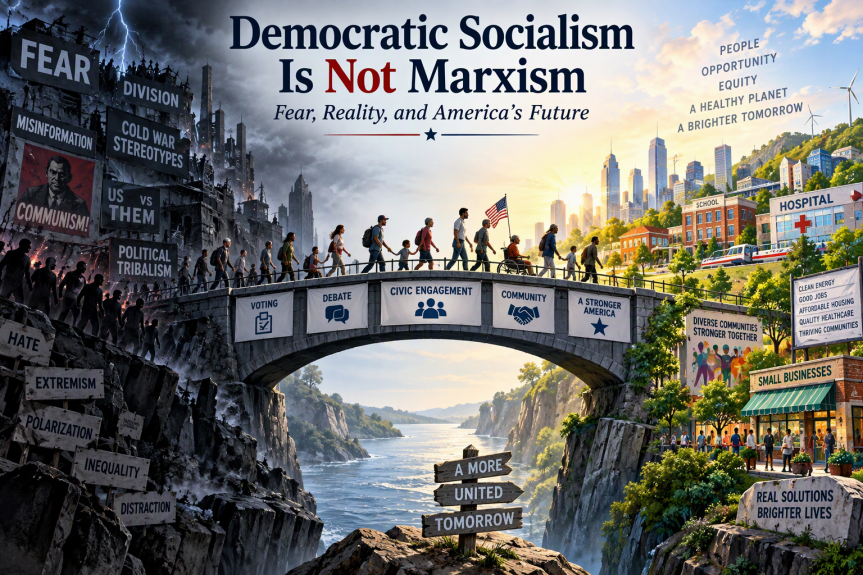
Democratic Socialism Is Not Marxism: Why America Should Not Fear It

By Huw Edwards

The words we fear are often the words we least understand. Few political labels in America generate more misunderstanding, suspicion, and anxiety than “democratic socialism”. Yet before dismissing it as Marxism, anti-American, anti-Christian, or even a sign of the end times, it is worth asking a simple question: what actually is democratic socialism?


America’s Political Ghost Story

For generations, many Americans have been taught to view socialism as a threat to freedom, faith, and prosperity. The term became synonymous with Soviet authoritarianism, Cold War rivalries, and communist dictatorships. Yet history has a habit of simplifying complex ideas into convenient political slogans.

The result is that millions of Americans hear the word socialism and imagine the former Soviet Union, while many modern democratic socialists are talking about something entirely different: affordable healthcare, stronger worker protections, fair taxation, and opportunities for ordinary citizens to thrive.

The first challenge, therefore, is separating democratic socialism from Marxism.


Democratic Socialism and Marxism Are Not the Same Thing

One of the most persistent myths in American politics is that democratic socialism is simply Marxism with a different label.

It is not.

While both ideologies share concerns about inequality and economic power, their methods, goals, and political structures are fundamentally different. The source document highlights several key distinctions. Democratic socialism embraces multi-party democracy, constitutional rights, free elections, free speech, and gradual reform through democratic processes. Marxism traditionally advocates revolutionary transformation and has historically been associated with one-party systems and state ownership of the economy.

In practical terms, democratic socialists want to change society through ballots.

Marxists traditionally wanted to change society through revolution.

That difference matters.

A philosophy that seeks reform through democratic institutions is fundamentally different from one that seeks to replace those institutions altogether.


What Modern American Democratic Socialists Actually Support

Much of the public debate would look very different if Americans focused on the policies rather than the labels.

Modern democratic socialists in the United States typically advocate for:

  • Universal healthcare.
  • Affordable or tuition-free higher education.
  • Stronger labour rights and trade unions.
  • Paid family leave.
  • Higher minimum wages.
  • Investment in clean energy and environmental protection.

Americans may support or oppose these ideas for a variety of legitimate reasons, but none of these proposals involve abolishing democracy, confiscating all private property, or outlawing private business.

They are policy debates taking place within America’s constitutional framework.

That is not Marxism.

That is democracy.


The Cold War Legacy Still Shapes American Thinking

The fear of socialism did not emerge naturally.

It was shaped by real historical events.

The Bolshevik Revolution of 1917, the rise of the Soviet Union, and decades of geopolitical tension encouraged successive generations to treat socialism and communism as interchangeable concepts. During the McCarthy era, socialism came to be viewed not merely as a political ideology but as something inherently anti-American, anti-religious, and even treasonous.

Many Americans inherited these assumptions without ever examining whether they still accurately describe modern democratic socialist movements.

The world has changed, but some political fears remain frozen in time.


Christianity and Democratic Socialism

Perhaps no accusation is more emotionally powerful in parts of America than the claim that socialism is “the work of the devil”.

Such language generates fear, but it rarely generates understanding.

Supporters of democratic socialism often argue that their goals are deeply aligned with moral and religious principles. The source document notes that many Christian traditions emphasise caring for the poor, healing the sick, protecting workers, and supporting the vulnerable.

Reasonable Christians can disagree about the role government should play in achieving those goals.

However, it is difficult to argue that feeding hungry children, treating sick people, reducing poverty, or improving access to education are inherently evil objectives.

The debate should be about methods, costs, effectiveness, and outcomes, not about whether compassion itself is somehow a threat.

Indeed, many of the social programmes Americans already support today, including Social Security and Medicare, were once condemned by critics as dangerous forms of socialism.

History offers a useful reminder that today’s radical idea often becomes tomorrow’s accepted institution.


America Already Uses “Socialist” Ideas

An uncomfortable truth for both supporters and critics is that America has never been a purely free-market society.

The United States already embraces collective solutions in many areas of public life:

  • Public schools.
  • Libraries.
  • Fire departments.
  • Police services.
  • Public infrastructure.
  • Social Security.
  • Medicare.

Most Americans view these services as ordinary parts of modern society rather than dangerous steps toward dictatorship.

Democratic socialists simply argue that similar principles could be applied more broadly to healthcare, education, housing, or environmental protection.

Whether Americans agree with that proposal is another question entirely.

But it is a debate about policy design, not the apocalypse.


Could This Be the Beginning of a Better America?

The United States faces significant challenges.

Economic inequality continues to grow. Millions struggle with healthcare costs. Housing has become increasingly unaffordable in many communities. Trust in political institutions has declined, while social division has intensified.

Supporters of democratic socialism argue that stronger public services and social protections could help address these challenges while preserving democracy and maintaining a market economy. They point to countries such as Denmark, Norway, and Finland, where robust social safety nets coexist with prosperity, innovation, and economic freedom.

These countries are not communist.

They are democratic.

They are capitalist.

Yet they also believe that government has a responsibility to ensure a baseline level of dignity, opportunity, and security for all citizens.


Fear or Possibility?

Every generation faces a choice.

It can view political change through the lens of fear, assuming that every new idea represents the collapse of the old order.

Or it can examine those ideas honestly, testing them against evidence, experience, and democratic debate.

Democratic socialism may not be the answer to every challenge facing America.

Its supporters may overestimate its benefits.

Its critics may underestimate them.

But there is little evidence that modern American democratic socialism resembles the Marxist revolutionary movements that many opponents imagine.

Nor is there evidence that expanding healthcare, improving education, supporting workers, or reducing poverty will somehow usher in the end of civilisation.

Perhaps the more important question is this:

What if the real danger is not that America tries to build a fairer society, but that it becomes too afraid to try?


Reflection

America has always been at its best when it has balanced liberty with responsibility and individual freedom with collective purpose. The debate over democratic socialism should not be reduced to Cold War slogans or religious fear. Instead, it should centre on a timeless question:

How do we build a nation where prosperity, justice, and opportunity are available to all rather than reserved for the fortunate few?

Whatever answer Americans ultimately choose, it should emerge from informed discussion, democratic participation, and a shared commitment to the common good, not from fear of labels.

Donald Trump built much of his political appeal by identifying grievances, frustrations and divisions that many Americans felt had been ignored. The challenge is that highlighting problems is easier than solving them. Social democratic principles, at their best, attempt to move beyond anger and towards practical solutions: healthcare that prevents illness becoming bankruptcy, education that expands opportunity, infrastructure that creates jobs, and democratic institutions that bring people together rather than drive them apart.

Fear can win elections. Solutions build societies. The real test of any political movement is not how effectively it identifies enemies, but how successfully it improves people’s lives. If politics becomes a permanent search for someone to blame, division deepens. If politics becomes a collective effort to solve shared problems, communities become stronger, more resilient and more hopeful.

History suggests that societies thrive not when they are united by fear of one another, but when they are united by a shared belief that tomorrow can be better than today.

First Aid Kit – America (Cover)

Was Donald Trump the Worst President? What History May Decide

For a generation of supporters, Donald Trump is a political revolutionary. They see a strong leader who rejects convention, challenges elites, and is willing to fight for America when others will not.

History, however, may reach a far harsher conclusion.

Future historians may not remember Donald Trump as America’s saviour. They may remember him as one of the most destructive political figures ever entrusted with the power of the American presidency.

Not because of a single scandal. Not because of a single policy failure. Not because opponents disliked him.

But because so much of his political project appears to have been driven by personal grievance, ego, attention, and confrontation rather than by any coherent vision for the future.

When historians assess leaders, they ask a simple question: did this person leave their country and the world in a better condition than they found it?

That question should terrify Trump supporters.

The Cult of Personality

America’s founders deliberately created institutions stronger than any individual.

Trump’s politics reversed that principle.

Loyalty increasingly became centred not upon democratic institutions, constitutional traditions, or conservative principles, but upon one man himself. Disagreement was treated as betrayal. Criticism became evidence of conspiracy. Facts increasingly mattered less than personal allegiance.

This is the language of personality cults, not healthy democracies.

A nation that begins to place faith in individuals above institutions is travelling a dangerous road. History offers countless examples of where that road eventually leads.

An Economy Built on Political Theatre

Trump regularly presents himself as a master businessman with a brilliant long-term vision.

Yet genuine economic strategy requires stability, predictability, investment, and planning.

Trade wars and tariffs may generate applause at political rallies, but economists have repeatedly found that much of the cost falls on American consumers and businesses themselves. Research from the Peterson Institute for International Economics, the Congressional Budget Office, and others found tariffs contribute to higher costs, inflationary pressure, and economic disruption. [piie.com], [cbo.gov], [taxfoundation.org]

The problem is not simply that tariffs can be costly.

The problem is that they are often sold as victories even when the financial burden falls on the very people promised protection.

A great leader tells people difficult truths.

A demagogue tells people convenient lies.

America’s Reputation Diminished

For decades, American influence rested on more than military power.

It rested on trust.

Allies trusted American commitments. Investors trusted American stability. Democracies trusted American leadership.

Trump repeatedly treated allies as adversaries and international cooperation as weakness.

Supporters celebrated this disruption. They called it strength.

But strength without trust becomes isolation.

The world’s most powerful nation cannot lead purely through threats, insults, and displays of force. Sooner or later, other nations start looking for alternatives.

That process may take years.

Its consequences may take decades.

The Iran Question

Perhaps nowhere is the danger of ego-driven politics clearer than in the handling of international conflict.

Military escalation with Iran carries risks far beyond headlines and political speeches. Experts and analysts have repeatedly warned about consequences for regional stability, energy markets, global trade routes, and international security. [congress.gov], [congress.gov], [csis.org]

The real measure of leadership is not how eager a leader is to project strength.

It is whether that leader can avoid unnecessary crises in the first place.

History remembers leaders who prevented wars at least as much as those who fought them.

The tragedy is that Trump’s political style often seems incapable of distinguishing between strategic strength and theatrical aggression.

Climate Change and the Failure of Responsibility

There is perhaps no greater example of short-term thinking than the refusal to engage seriously with climate change.

Future generations will not care who won today’s argument on social media. They will not care who dominated the news cycle. They will not care how many political opponents were insulted.

They will care about whether leaders acted when confronted with mounting environmental risks.

A president thinking twenty years ahead invests in the future.

A president thinking only about the next election invests in the next headline.

The distinction matters.

The consequences will last centuries.

The Politics of Anger

Trump did not create division in America.

But he profited from it.

He understood that outrage is addictive. Fear is powerful. Anger motivates voters.

Again and again, political disagreements became battles. Opponents became enemies. Journalists became villains. Institutions became targets.

The result was a political culture increasingly built on resentment.

A healthy democracy requires trust, compromise, and a shared commitment to reality.

Trump’s political model often appeared to reward the exact opposite.

The Real Legacy

The greatest damage of the Trump era may not be economic.

It may not be diplomatic.

It may not even be geopolitical.

The greatest damage may be cultural.

Millions of people were encouraged to believe that expertise is inherently suspect, that institutions are fundamentally corrupt, that compromise is weakness, and that leadership is measured by dominance rather than wisdom.

Those ideas do not disappear when a presidency ends.

They remain.

They shape societies.

They influence generations.

Conclusion

Was Donald Trump the worst president in American history?

History alone can answer that question.

But there is a powerful case that he represents one of the most dangerous forms of modern political leadership: a leader who transformed politics into spectacle, elevated personal loyalty above democratic norms, encouraged division for political gain, treated international affairs as opportunities for performance, and left America more polarised than when he found it.

Supporters see courage.

Critics see recklessness.

Supporters see strength.

Critics see ego.

Supporters see a man fighting for America.

Critics see a man who spent years fighting almost everyone else, including many of the values that once made America respected throughout the world.

The most damning verdict may ultimately be this:

Donald Trump promised to make America great again.

Yet future historians may conclude that he made America smaller, angrier, less trusted, more divided, and less prepared for the challenges that define the twenty-first century.


References

  • Who Pays for Tariffs? Insights from Recent Research, Peterson Institute for International Economics. [piie.com]
  • How the United States is Eating Trump’s Tariffs, Reuters. [reuters.com]
  • Budgetary and Economic Effects of Increases in Tariffs Implemented Between January and May 2025, Congressional Budget Office. [cbo.gov]
  • Trump Tariffs Tracker: Rates, Revenue and Impact, Tax Foundation. [taxfoundation.org]
  • The Arab Gulf States, the Iran Conflict, and U.S. Relations: In Brief, Congressional Research Service. [congress.gov]
  • U.S. Conflict with Iran, Congressional Research Service. [congress.gov]
  • Latest Analysis: War with Iran, CSIS. [csis.org]

When Maga Money Meets Democracy: The Night America Sent a Message

For years, political commentators have argued that modern elections are auctions, won by those with the deepest pockets and the largest advertising budgets. Tonight, many Americans delivered a different verdict.

A Political Earthquake in Texas

The election result in Texas stands as one of the most significant political developments in a generation. According to the document provided, Democrat James Talarico won the Texas U.S. Senate race, defeating Republican Ken Paxton and ending a decades-long Republican hold on state-wide power.

If this result holds its historical significance, it represents far more than a change of party colour on an electoral map. It signals a deep shift in what voters believe matters.

Texas has long been presented as a symbol of conservative political dominance. Yet elections are ultimately about people, not assumptions. Tonight, voters demonstrated that no state is permanently red and no state is permanently blue. Democracy remains capable of surprising those who mistake today’s reality for tomorrow’s certainty.

A Vote Against Corruption

Many supporters of the Democratic victory see this result not simply as a partisan triumph, but as a rejection of a political culture that too often appears shaped by money, influence and powerful interests.

The campaign was heavily influenced by questions of campaign finance and political integrity. According to the source document, James Talarico built his campaign around grassroots support, anti-corruption themes and concerns about inequality, while overcoming enormous financial opposition.

For many voters, the election appears to have become a referendum on whether democracy is still capable of resisting concentrated wealth and political influence.

The answer from the ballot box was clear: voters cannot simply be purchased.

The Limits of Wealth

Perhaps the most striking lesson from this election is that vast sums of money did not guarantee victory.

The source document states that billionaire-backed spending, including substantial advertising support linked to Elon Musk, became a defining feature of the race. Yet despite this, voters chose a different path.

This matters because modern politics often cultivates a sense of inevitability. Citizens are encouraged to believe that powerful individuals, massive corporations and endless campaign spending determine outcomes before a single vote is cast.

Tonight’s result suggests otherwise.

Money can amplify a voice.

Money can buy advertisements.

Money can dominate headlines.

But money cannot cast a vote.

In a functioning democracy, that power remains with ordinary people.

A Vote For Humanity

Supporters of the Democratic surge will understandably celebrate electoral gains. Yet reducing tonight’s events solely to party politics risks missing the larger significance.

Many voters were motivated by concerns about fairness, accountability, healthcare, economic opportunity and the protection of democratic institutions. Whether one agrees with the outcome or not, these are fundamentally human concerns.

People want governments that work.

People want honesty from leaders.

People want an economy that offers hope rather than permanent insecurity.

People want to believe that future generations can inherit a better society than the one they received.

Seen through this lens, the election becomes more than a Democratic victory. It becomes an expression of faith in democratic participation itself.

Democracy’s Enduring Strength

Across the world, many citizens have become cynical about politics. They see corruption scandals, growing inequality, misinformation and the influence of extreme wealth. Understandably, some ask whether voting still matters.

Tonight offered a reminder that it does.

Democratic systems are imperfect and often frustratingly slow. Yet their strength lies in a simple principle: no billionaire, corporation, government official or media empire ultimately possesses more votes than the people themselves.

The lesson from Texas is not that one party has all the answers.

The lesson is that democracy remains alive.

The lesson is that political power can still change hands peacefully.

The lesson is that ordinary citizens are still capable of shaping history.

And perhaps most importantly, the lesson is that hope remains a powerful force in public life.

Conclusion

The story of this election is not merely that Texas appears to be moving politically. It is that voters demonstrated a willingness to challenge assumptions, reject inevitability and make their own judgement about the future they want.

For supporters, the result will be remembered as a vote for humanity over cynicism, accountability over corruption, and democratic participation over political fatalism.

Whether one celebrates or laments the outcome, one fact remains undeniable:

The people had the final say.

And the best part is, no amount of money could ever replace that.

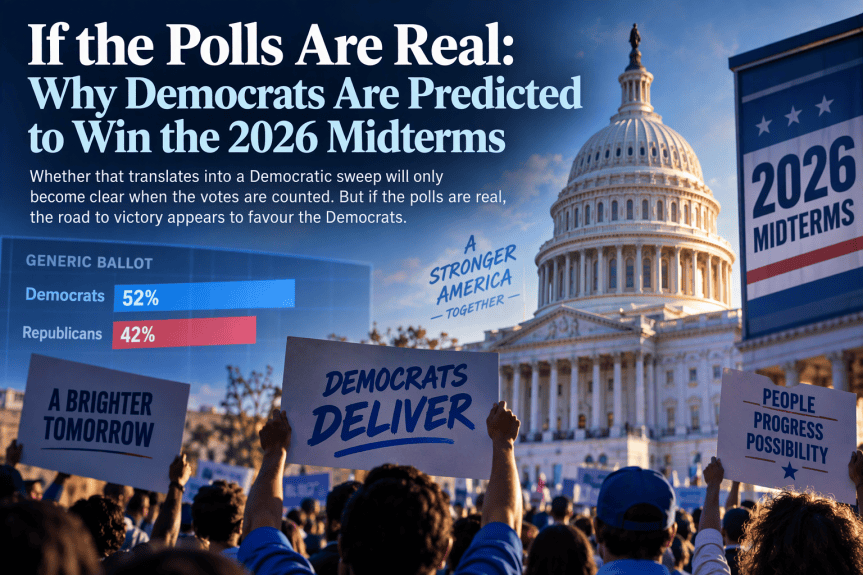
If the Polls Are Real: Why Democrats Are Predicted to Win the 2026 Midterms

Published by Huw Edwards

Politics is often presented as a battle of personalities, slogans and culture wars. Yet beneath the noise lies a more fundamental truth. Most voters do not go to the ballot box thinking about political philosophy. They vote according to whether they feel secure, optimistic and heard.

As America heads towards the 2026 midterm elections, polling suggests that many voters are questioning the direction of the country. If current polling is broadly accurate, Democrats appear likely to regain control of the House of Representatives and have a realistic opportunity to capture the Senate as well.

The key question is not simply who is predicted to win, but what those predictions reveal about the mood of the American electorate.

A Midterm Referendum on the State of America

Midterm elections have historically served as a judgement on those currently governing. They provide voters with an opportunity to reward success, express frustration or demand a change of course.

Current polling suggests the latter may be taking place.

Forecasting models and poll aggregators show Democrats holding a significant national advantage. That has led a number of election analysts to project Democratic gains across multiple competitive districts and states.

This is not necessarily evidence of a dramatic ideological realignment. More often, political change emerges when voters become dissatisfied with existing conditions and seek an alternative.

Why Democrats Are Favoured to Win the House

The strongest case for a Democratic victory lies in the House of Representatives.

Several polling averages place Democrats comfortably ahead nationally, while forecasting models project them winning well above the 218 seats required for a majority.

House elections are particularly sensitive to national sentiment. When a party opens up a substantial lead in nationwide polling, competitive districts frequently move in the same direction.

If those polling numbers hold, the House result may not be especially close.

The question is whether polling has accurately measured voter sentiment or whether hidden turnout patterns will once again produce surprises.

The Economy Remains the Hidden Candidate

Political commentators often become obsessed with party strategy, campaign advertisements and candidate personalities.

Voters tend to focus on more practical matters.

Can they afford housing?

Are wages keeping pace with living costs?

Do they feel confident about their family’s future?

Across much of the developed world, rising living costs, housing affordability challenges and economic uncertainty continue to shape public opinion. While headline economic statistics can appear positive, many households judge reality through the weekly shop, mortgage payments, rent costs and household bills.

When citizens feel financially squeezed, governing parties frequently suffer.

The polling trends observed in the United States may therefore reflect more than partisan loyalty. They may represent a broader expression of economic frustration.

The Senate Battle May Decide the Scale of Victory

Although Democrats appear strongly placed in the House, the Senate remains more complicated.

Senate races are fought state by state rather than district by district. Candidate quality, local concerns and regional political cultures can significantly influence outcomes.

However, polling suggests Democrats have become competitive in several races that Republicans would traditionally expect to hold.

Particular attention has focused on states such as Texas and Maine, where Democratic candidates have reportedly performed strongly against Republican opponents.

If Democrats are able to convert those opportunities into victories, control of the Senate could change hands alongside the House.

That possibility explains why many analysts now view the Senate as genuinely competitive rather than comfortably Republican.

Is This a Vote for Democrats or Against Republicans?

One of the most important political questions of the modern era is whether election victories are driven by enthusiasm or frustration.

Many voters no longer support parties with the loyalty seen in previous generations. Instead, they increasingly vote against outcomes, leaders or policies they dislike.

For some Americans, voting Democrat may reflect support for a different political vision. For others, it may simply represent dissatisfaction with Republican leadership and current national conditions.

The distinction matters.

Victories built upon public frustration can be powerful, but they can also prove temporary if underlying problems remain unresolved.

The Polling Problem

No discussion of American elections would be complete without acknowledging the limitations of polling.

Recent election cycles have demonstrated that polls can miss important shifts in voter behaviour. Turnout differences, late campaign developments and methodological challenges continue to create uncertainty.

Polling should therefore be viewed as an indicator, not a guarantee.

Democrats may be favourites, but favourites do not always win.

Election day remains the final test of every political prediction.

The Overall View

If current polling proves accurate, Democrats appear likely to regain control of the House of Representatives and may also secure control of the Senate.

The deeper story, however, concerns public confidence.

Many voters appear to be questioning whether the political and economic systems serving America today are delivering the security, opportunity and stability they expect. The polling suggests frustration may be outweighing satisfaction, and when that happens political change often follows.

Elections are rarely decided by ideology alone.

They are decided by whether people believe tomorrow will be better than today.

At present, the polls suggest millions of Americans are not entirely convinced.

Whether that translates into a Democratic sweep will only become clear when the votes are counted. But if the polls are real, the road to victory appears to favour the Democrats.


Sources

Election Forecasts

Polling and Analysis

Additional Context

Disclaimer: This article is an analysis of polling and forecast data available before the election. Polls are estimates of public opinion and are not a substitute for the certified election result. Forecasts can change significantly in the final days of a campaign and may not accurately predict voter turnout or election outcomes.


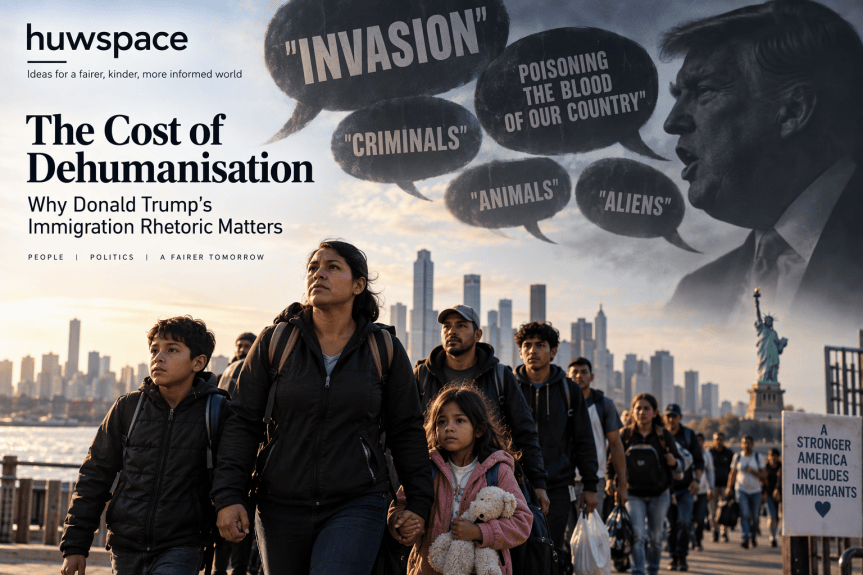
The Cost of Dehumanisation: Why Donald Trump’s Immigration Rhetoric Matters

By Huw Edwards

Words matter. They shape how societies understand themselves, how communities define belonging, and how governments justify the actions they take. When political leaders repeatedly describe groups of people as threats, invaders, or less than human, the consequences can extend far beyond campaign rallies and political speeches.

For more than a decade, immigration has been one of the defining themes of Donald Trump’s political identity. Supporters argue that he speaks bluntly about border security, illegal immigration and national sovereignty. Critics contend that his language goes further, portraying migrants not merely as people who have broken immigration laws but as a broader threat to the nation itself.

This debate is about more than policy.

It is about how language shapes public attitudes, influences political culture and ultimately affects real human lives.


A Politics of Fear

Throughout his political career, Trump has frequently described illegal immigration as an “invasion” and has claimed that migrants are entering the United States from prisons and mental institutions around the world. These themes have become recurring features of his public speeches and campaign rallies. Trump says immigrants are ‘poisoning the blood of our country.’ and Trump repeats ‘poisoning the blood’ anti-immigrant remark both document these statements. [nbcnews.com], [reuters.com]

The choice of the word invasion is significant.

An invasion suggests a military threat. It implies hostile forces crossing borders with harmful intent. When immigration is framed in these terms, people cease to be viewed primarily as individuals, families or workers. Instead, they become part of a perceived enemy force.

Whether intentional or not, this framing can fundamentally alter how the public understands migration, making increasingly aggressive responses appear justified.


When Language Stops Seeing People

Perhaps the most controversial aspect of Trump’s immigration rhetoric has been his use of language that critics describe as dehumanising.

In December 2023, Trump stated that immigrants were “poisoning the blood of our country”, repeating a phrase he had used previously. The remarks generated widespread criticism from historians, civil rights organisations and political opponents because of both their language and historical associations. Trump says immigrants are ‘poisoning the blood of our country.’ and Trump repeats ‘poisoning the blood’ anti-immigrant remark reported extensively on the controversy. [nbcnews.com], [reuters.com]

History demonstrates a troubling pattern.

Groups facing discrimination are often first portrayed as dangerous, criminal, diseased or fundamentally different from the wider population. Language that strips away individuality can make it easier for societies to accept exclusion, hostility or unequal treatment.

That does not mean inflammatory rhetoric inevitably leads to discrimination or violence. It does mean that language should never be dismissed as meaningless.

Words influence perceptions.

Perceptions influence behaviour.

Behaviour shapes society.


Facts, Evidence and Political Narratives

Trump has often connected immigration with crime, social decline and economic pressure. In speeches and interviews he has argued that migrants bring criminality and that foreign countries are sending dangerous individuals into the United States. Trump revives ‘blood and soil’ rhetoric at New Hampshire rally documents several of these claims. [independent.co.uk]

Critics challenge these assertions, arguing that broad claims about immigrants and crime frequently fail to reflect the wider evidence available from researchers and public policy experts. This disagreement highlights a wider issue in modern politics.

Fear is emotionally powerful.

Statistics are not.

A dramatic anecdote often receives far more attention than years of research. As a result, public perceptions can become shaped by narratives that feel true rather than evidence that can be demonstrated.

Immigration policy deserves serious debate.

It also deserves careful attention to facts.


The Human Stories Behind the Headlines

Lost amidst political arguments are the individual people whose lives are affected.

The family escaping gang violence.

The refugee fleeing conflict.

The student seeking opportunity.

The parent searching for a safer future for their children.

Immigration is not simply an abstract political issue. It is a human reality experienced by millions of people across the world.

Most migrants do not leave their homes casually. They often do so because they believe that remaining where they are presents greater risks than starting over somewhere new.

Reducing complex human lives to labels such as criminals, invaders or threats obscures this reality.


Why This Matters Beyond America

The significance of Trump’s rhetoric extends beyond the United States.

American political narratives often influence public debates throughout Europe and other democratic nations. Similar language describing migrants as threats to national identity, economic stability or public safety has increasingly appeared across many Western democracies.

Critics warn that normalising dehumanising language can encourage prejudice, deepen social divisions and increase hostility towards minority communities. Trump revives ‘blood and soil’ rhetoric at New Hampshire rally notes concerns expressed by civil rights advocates regarding the impact of such rhetoric. [independent.co.uk]

Political language does not remain confined to campaign events.

It enters public discourse.

It shapes conversations.

It influences how communities see each other.


Border Security and Human Dignity Are Not Opposites

None of this requires dismissing legitimate concerns about border security.

Nations have the right to enforce their laws, manage migration effectively and maintain secure borders.

The issue is not whether immigration rules should exist.

The issue is how those conversations are conducted.

It should be possible to support strong border controls while recognising the dignity and humanity of those affected by immigration policies.

A mature democracy should be capable of enforcing laws without demonising people.

Indeed, it is during difficult political debates that respect for human dignity becomes most important.


The Responsibility of Leadership

Political leaders do more than propose policies.

They define the tone of public conversation.

They influence what citizens view as acceptable.

They shape how societies discuss vulnerable groups.

When leaders repeatedly portray migrants as invaders, contaminants or criminals, critics argue that such language risks encouraging broader social hostility and division. Trump repeats ‘poisoning the blood’ anti-immigrant remark and Trump revives ‘blood and soil’ rhetoric at New Hampshire rally both document warnings from commentators, scholars and advocacy groups regarding these concerns. [reuters.com], [independent.co.uk]

Leadership should not merely appeal to fears.

It should challenge societies to rise above them.


Final Thoughts

History often remembers societies not for the walls they built but for the values they defended.

The debate over immigration will continue. There will always be disagreements about border controls, asylum systems and national identity.

Those debates are both legitimate and necessary.

But there is an important distinction between critiquing immigration policy and dehumanising immigrants.

One seeks solutions.

The other seeks scapegoats.

Donald Trump’s rhetoric has proven politically effective because it speaks to genuine anxieties about border security and social change. Yet the repeated use of language portraying migrants as invaders, criminals and contaminants carries risks that extend far beyond any election cycle. [nbcnews.com], [reuters.com], [independent.co.uk]

The real measure of a society is not how it treats the powerful.

It is how it speaks about those with the least power to defend themselves.

And in that respect, words matter.


References

  1. Trump says immigrants are ‘poisoning the blood of our country.’ NBC News (17 December 2023). Available at: NBC News Article [nbcnews.com]
  2. Trump repeats ‘poisoning the blood’ anti-immigrant remark. Reuters (16 December 2023). Available at: Reuters Article [reuters.com]
  3. Trump revives ‘blood and soil’ rhetoric at New Hampshire rally. The Independent (16 December 2023). Available at: The Independent Article

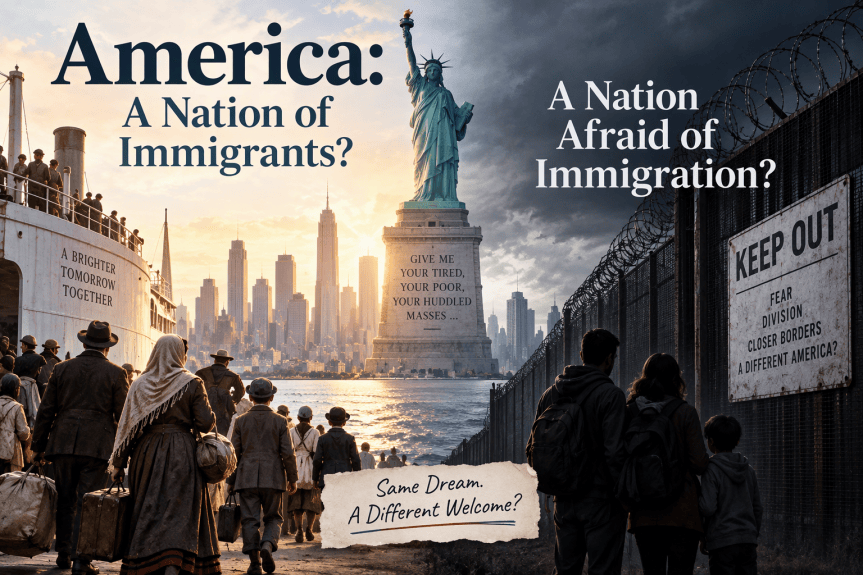
America: A Nation of Immigrants or a Nation Afraid of Immigration?

The Hopes, Fears and Contradictions of the American Dream

By Huw Edwards


“Give me your tired, your poor, your huddled masses yearning to breathe free.”

For generations, the United States has presented itself as a beacon of opportunity. From the Statue of Liberty to Hollywood, from Silicon Valley to the open highways of the American West, the national story has often been one of newcomers arriving with hope and determination.

Yet alongside that story lies another.

Almost every major wave of immigration has been accompanied by fears of cultural change, economic competition, crime, political instability or threats to national identity. Americans are not unique in this regard. Throughout history, societies have often viewed newcomers with suspicion. What makes the United States remarkable is that this anxiety repeatedly emerges within a nation built almost entirely through migration.


A Country Built By Successive Waves Of Immigration

The phrase “nation of immigrants” is not simply political rhetoric.

With the exception of Native Americans and the descendants of enslaved people brought by force, most Americans can trace their ancestry to people who arrived seeking opportunity, safety or a better future. Europeans fleeing poverty, Jews escaping persecution, Asians pursuing opportunity, refugees escaping conflict and Latin American migrants seeking work have all contributed to building modern America.

Yet many groups now considered fully American were once viewed as outsiders.

Irish immigrants were accused of undermining social order.

Italian immigrants were portrayed as criminals.

Chinese migrants faced exclusionary laws.

Jewish refugees encountered quotas and suspicion.

Each generation seems to identify a new group that supposedly cannot integrate.

History repeatedly demonstrates otherwise.


The Reality Is More Complicated Than Politics Suggests

Immigration debates are frequently framed as a battle between compassion and security.

Reality is far more complicated.

Historical evidence suggests that not all immigrants remained permanently in the United States. Significant numbers returned home voluntarily after earning money or supporting families. Others left because they could not establish successful lives in America or because policy changes made remaining difficult. Estimates suggest that between one-fifth and one-third of immigrants who arrived since the early twentieth century ultimately departed rather than permanently settle.

The commonly used image of immigration as a one-way permanent movement often fails to reflect historical reality.

Migration has frequently been temporary, circular and shaped by economic circumstances.


Are Americans Being Taught To Fear Immigrants?

This is where the debate becomes politically charged.

Some commentators argue that politicians, media organisations and wealthy public figures deliberately amplify fears about immigration because fear is politically useful.

Others argue that public concerns arise from genuine pressures relating to housing, wages, infrastructure, social cohesion and border management.

The truth is likely to contain elements of both.

Political messaging undeniably influences public opinion. At the same time, dismissing all concerns about immigration as prejudice risks ignoring legitimate questions about how modern states manage migration effectively.

The challenge facing any democracy is distinguishing between evidence-based concerns and narratives designed primarily to provoke fear.


The Elon Musk Contradiction

One of the more interesting figures within the modern immigration debate is Elon Musk.

Musk was born in South Africa and later became a United States citizen after immigrating legally.

Critics point to an apparent contradiction between his immigrant background and support for stronger border controls.

Supporters argue there is no contradiction at all, maintaining that legal immigration and irregular migration are separate issues.

Whatever position readers take, Musk highlights an important reality.

Immigrants are not a single political group. They hold diverse opinions about economics, national identity, border policy and social change. The assumption that immigrants automatically support unrestricted immigration is not supported by evidence.


Why Some Immigrants Support Restrictions

One of the most uncomfortable observations throughout history is that groups who once faced discrimination can subsequently become sceptical of newer arrivals.

This is not usually driven by hatred.

More often it reflects concerns about competition, assimilation, social acceptance or fairness.

Individuals who spent years navigating legal immigration pathways may naturally question why others should follow different routes.

This dynamic has appeared repeatedly throughout American history and reveals something broader about human nature.

People often become protective of opportunities they fought hard to obtain.


Success Story Or Invasion?

Language matters.

Those favouring immigration tend to describe people as workers, families, asylum seekers and future citizens.

Those favouring stricter controls often describe large-scale migration as an uncontrolled influx, crisis or invasion.

Both frames shape public perceptions long before facts are examined.

The reality is that immigration has delivered enormous economic, cultural and scientific benefits to the United States. Many of America’s most successful businesses were founded by immigrants or their children.

At the same time, governments do have a responsibility to maintain confidence in borders, enforce laws and manage migration at levels communities can successfully absorb.

Ignoring either reality weakens the debate.


The Fear Experienced By Immigrants

Lost within many political arguments is the fact that immigrants themselves often live with significant uncertainty.

Fear of detention.

Fear of deportation.

Fear of family separation.

Fear that changing laws may suddenly alter years of planning and sacrifice.

While some Americans worry about immigration, many immigrants worry about America.

Understanding both perspectives may be essential if meaningful solutions are ever to be found.


What One Hundred Years Of History Suggests

The immigration debate often swings between extremes.

Some claim immigration is the solution to economic problems.

Others suggest it is the cause of economic problems.

History supports neither position.

Immigration has consistently provided labour, innovation and entrepreneurship that contributed significantly to American growth. It has also periodically generated social tensions, political conflict and policy challenges.

The challenge is not deciding whether immigration is good or bad.

The challenge is managing it in a way that balances opportunity, compassion, security and public trust.


Conclusion: Remembering The Stranger At The Gate

America remains one of history’s greatest immigrant success stories.

It is also a country that repeatedly fears the people who most resemble its own ancestors.

That contradiction may never completely disappear.

What history teaches, however, is that today’s outsiders often become tomorrow’s neighbours, colleagues, business owners and citizens.

The real question is not whether America should abandon its borders or abandon its identity as a nation of immigrants.

The real question is whether it can remember its own history.

Every American family that arrived from elsewhere was once viewed as foreign.

Every established community was once the newcomer.

Every generation faces the choice between fear and confidence.

Perhaps the future of the American dream depends upon choosing confidence more often than fear.


Sources & Further Reading

Immigration History & Assimilation

Immigration Statistics

Historical Immigration Policy

Return Migration Research

Additional Context

Jesus, Justice and the Left: Can Christians Back Socialism?

Many Christians are comfortable with personal charity but become uncomfortable when the discussion turns to taxation, welfare, regulation or wealth redistribution.

Yet the Bible contains repeated warnings not merely about individual sin but about unjust systems. The prophets Amos, Isaiah and Micah condemned rulers, elites and economic arrangements that crushed the poor. Their criticism was political as well as spiritual.

Jesus himself spoke far more about wealth and poverty than many modern Christians realise:

“Whatever you did for one of the least of these brothers and sisters of mine, you did for me.”

  • Matthew 25:40

The challenge is obvious. If society knowingly permits avoidable poverty, suffering or exclusion, are Christians fulfilling their obligations simply by donating to charity, or do they have a duty to change the structures creating those problems?

Democratic Socialism as Applied Christianity?

Democratic socialism argues that economic life should be organised around human wellbeing rather than the accumulation of private wealth alone.

Many Christians see echoes of Gospel values in this idea:

  • Healthcare based on need rather than ability to pay.
  • Fair wages and dignified working conditions.
  • Housing as a human necessity.
  • Collective responsibility for the vulnerable.
  • Constraints on excessive concentrations of wealth and power.

None of these ideas require the abolition of markets or private property. Rather, they attempt to place moral limits around them.

In that sense, democratic socialism can be viewed not as a replacement for Christianity but as one political expression of Christian ethics.

The Conservative Christian Challenge

The strongest objection is not that Christians should ignore suffering.

Instead, conservative Christians argue that Christian virtue loses something when it is enforced through the state. A gift given freely reflects love; taxation is compulsory.

This is a serious argument, but it raises another question:

If voluntary charity alone were sufficient, why has poverty remained so persistent throughout history?

Hospitals, public education, sanitation, worker protections and social security systems were not created solely through individual acts of kindness. They emerged because societies collectively decided that certain forms of suffering were unacceptable.

A Reflection

Perhaps the more interesting question is not whether Christianity demands socialism, but whether Christianity can remain purely private.

A faith centred on loving one’s neighbour cannot avoid confronting politics for long. Politics determines whether children go hungry, whether elderly people receive care, whether workers can live with dignity and whether opportunity is available only to the fortunate few.

Christians may legitimately disagree about the mechanisms. Some will favour markets with safeguards. Others will favour democratic socialism. Still others will advocate community-led solutions.

What becomes harder to defend is the notion that faith has nothing to say about economic injustice at all.

If Christ repeatedly stood alongside the poor, the marginalised and the powerless, then Christians must ask themselves a difficult question:

Not whether they should help their fellow human beings, but whether they are willing to support the changes necessary to prevent that suffering from arising in the first place.

For many believers, that journey leads naturally toward democratic socialism. For others, it does not.

But it is a question that Christianity cannot easily ignore.

Christianity does not automatically produce a single political ideology. Christians can disagree about markets, taxation, welfare and the size of the state. Yet it is difficult to read the teachings of Jesus and conclude that society should be organised without regard for justice, equality of human worth and concern for the vulnerable.

The Gospel may not explicitly demand democratic socialism, but it does seem to demand something that troubles both the political left and right: a society in which power serves people rather than people serving power.

If every human being possesses equal value before God, then social justice and democratic participation become more than political preferences. They become expressions of a deeper spiritual truth about human dignity itself.

Seth Lakeman – Poor Man’s Heaven

From Branches to Bots: Is Lloyds Bank Systematically Destroying its Customer Services?

For generations, banking was built on relationships. Customers knew the people behind the counter, local branches were part of the community, and major financial decisions were discussed face-to-face with trained professionals. Today, many customers increasingly feel that those values are being sacrificed in the pursuit of higher profits and lower operating costs and those customers are right.

Record Profits, Vanishing Service

Lloyds Bank reported statutory pre-tax profits of £6.6 billion during the first nine months of 2026, representing a substantial increase on the previous year. Much of that growth was driven by higher interest income generated during a period of elevated interest rates.

On paper, shareholders have reason to celebrate.

For many staff and customers, however, the picture looks rather different.

Tracking a running, multi-decade total of exact redundancies is challenging because banks record reductions through complex channels: formal compulsory redundancies, voluntary severance packages, and natural attrition (not replacing workers who leave).

However, looking at structural headcount data reveals a stark transformation: Since its post-financial crisis peak in 2009, Lloyds Bank has permanently eliminated over 47,000 positions, shrinking its workforce by approximately 44%. If looking strictly at traditional, branch-facing customer advisory roles over a full 30-year trajectory, retail union data indicates that well over 70% of those specific frontline positions have been permanently dissolved as the bank prioritises transactions over relationships.

Across the country, branches continue to disappear, staffing levels are reduced, and the availability of face-to-face support is becoming increasingly rare. Critics argue that ordinary customers are paying the price for a business strategy built around cost reduction, automation and digital-first banking.

The contrast is difficult to ignore. At a time when household budgets remain under pressure, banks are generating billions in profits while simultaneously removing many of the services that once justified their presence on Britain’s high streets.

From Banking Relationships to Transaction Processing

There was a time when banks did much more than process payments.

Customers could walk into a branch and speak to someone who understood mortgages, savings, investments and personal circumstances. Banking was about advice, guidance and trust.

Today, many customers feel they are no longer treated as individuals but as transactions.

As digital banking expands, physical interaction is increasingly being replaced by apps, automated systems and chatbots. The result is a growing perception that banks are moving away from relationship-based banking and becoming little more than transaction-processing platforms.

While technology undoubtedly offers convenience, convenience is not the same thing as service.

Checking a balance on a mobile phone is easy. Discussing a bereavement, resolving fraud, arranging a complex mortgage or dealing with financial hardship is not. Those situations require empathy, judgement and human understanding.

The Disappearance of Professional Advice

Perhaps the greatest concern is the gradual removal of experienced advisors from local branches. The staff will even in form you over the phone not to bother going into a branch if you need financial advice and guidance there is no one there now to guide or advise and they are profiting from this attitude.

Many Lloyds branches now primarily focus on basic transactions while customers requiring more detailed assistance are often directed towards digital channels or telephone services. The expectation appears to be that technology can replace much of the personal interaction that once defined retail banking.

Yet financial decisions are rarely simple.

Buying a first home, planning for retirement, managing an inheritance or recovering from fraud are deeply personal matters. In these moments, people do not want another app notification. They want to speak to a knowledgeable professional who can answer questions, provide reassurance and explain options clearly.

Reducing access to human expertise may improve efficiency metrics, but it risks undermining the very trust upon which banking depends. Some customers are unable and choose not to se online banking apps and they are being punished, side-lined and ignored by Lloyds.

The Customers Being Left Behind

Whilst younger customers may embrace digital services, not everyone can.

Older residents, people with disabilities, those without reliable internet access and individuals facing complex financial challenges often depend heavily on human support. Consumer groups have repeatedly highlighted concerns that these customers are being pushed to the margins by rapid digital transformation.

Long telephone waiting times, chatbot loops and reduced staffing can leave vulnerable customers feeling frustrated and isolated.

For a bank whose success was built upon serving communities throughout the United Kingdom, this poses a serious question:

Who is being left behind in the race towards efficiency?

Lloyds’ Defence

Lloyds would argue that it is responding to changing customer behaviour.

The bank points to increasing use of mobile banking, the high costs of maintaining extensive branch networks and alternative support options such as telephone and digital services. It maintains that customers increasingly prefer to bank online and that resources should follow demand.

There is some truth to this argument but it does not reflect the true nature of commerce and what people need from a banking institution such as Lloyds.

Millions of people do indeed use mobile banking every day and expect digital services to be available around the clock.

The problem is not digital banking itself.

The problem arises when digital banking stops being an option and starts becoming the only option.

A Dangerous Commercial Gamble

Lloyds may believe it is following the future.

It may instead be removing one of its greatest competitive advantages.

Banking products are increasingly similar. Most banks offer mobile apps, online services, current accounts, savings products and credit facilities. The human relationship is often what differentiates one institution from another.

Financial planning from cradle to grave is no longer offered in branch and if every major bank becomes simply another icon on a smartphone screen, customer loyalty becomes fragile.

Switching banks has never been easier. Through the Current Account Switch Service, customers can move elsewhere with minimal effort. If relationships disappear, competitors need only offer a slightly better rate or incentive to attract customers away.

In attempting to cut costs today, Lloyds may be weakening the loyalty that protects its business tomorrow. If Lloyds is reducing its services to mere buttons on an app then this is a service that for those that want or need it will likely be incentivised to go somewhere else.

The Rise of Alternatives

Interestingly, the market may already be responding.

Building societies such as have openly embraced branch-based banking as a competitive advantage, promising customers continued access to local services and human interaction.

Credit unions continue to provide community-focused services delivered by real people. Banking hubs have emerged to restore physical access where branches have closed. Even the Post Office has become an essential lifeline for many communities abandoned by traditional banks.

These developments suggest that while technology may dominate banking transactions, demand for human contact has not disappeared.

Far from it.

Banking Is About People

Technology should enhance customer service, not replace it.

The danger for Lloyds is that in focusing relentlessly on efficiency, digitisation and shareholder returns, it risks forgetting the fundamental purpose of banking: helping people manage some of the most important aspects of their lives.

An app can tell you your balance.

An algorithm can process a payment.

A chatbot can answer basic questions.

But none of them can replace trust, empathy and professional human judgement.

Those qualities remain valuable, regardless of how advanced technology becomes.

The real question facing Lloyds is not whether customers need branches.

It is whether customers still need people.

The answer, despite all the enthusiasm surrounding digital banking, remains overwhelmingly clear.

They do.


What Lloyds may regard as modernisation, many customers increasingly experience as withdrawal. The challenge for the bank is not simply delivering banking services more cheaply. It is proving that banking can remain personal in an age where human interaction is steadily being treated as an unnecessary cost rather than a vital service.

Brassed Off (1996)- Danny’s speech

From Wages to Wealth: Who Really Profits in Modern Britain?

When millions of people are counting pennies before payday while a growing number of individuals accumulate wealth measured in millions or even billions, it raises an uncomfortable question. Is Britain’s cost of living crisis simply the result of bad luck and global events, or is it the consequence of decades of economic decisions made by successive governments?

A Nation Under Pressure

For many people across the United Kingdom, the term “cost of living crisis” has become part of daily life. Rising prices, increasing rents, higher mortgage payments, elevated energy bills and expensive food have squeezed household budgets to breaking point.

The average UK household has an equivalised disposable income of around £32,300 per year after direct taxation, but this figure masks a much harsher reality. Once housing, utilities, transport, food and other essentials are paid for, many households are left with very little genuinely discretionary income.

The difference between statistical averages and lived experience is enormous. Someone earning a reasonable salary in London, Bristol or Manchester may still struggle to save, while a person on a lower income may be one unexpected bill away from financial crisis.

The result is that many people no longer feel poor in the traditional sense. Instead, they feel permanently insecure.

Cost of Living Crisis or Economic Mismanagement?

The answer is probably both.

There is little doubt that global events have played a major role. The pandemic disrupted global supply chains, energy markets became volatile following international conflicts, and central banks increased interest rates to tackle inflation. These events affected economies across the world.

Yet many economists argue that Britain’s problems run much deeper. Years of austerity, sluggish productivity growth, weak business investment, housing shortages and the economic friction associated with Brexit left the UK particularly exposed when global shocks arrived.

The uncomfortable truth is that successive governments of all political colours share responsibility.

Conservative governments often prioritised fiscal restraint and market-led solutions. Labour governments generally increased spending on public services but rarely challenged the fundamental structures driving wealth inequality. Neither side fundamentally altered a system that increasingly rewards those who own assets rather than those who rely solely upon wages.

As a consequence, Britain has experienced years of relatively weak wage growth while asset values, particularly housing and investments, have surged.

The Two Economies of Modern Britain

Britain increasingly resembles a country operating two separate economies.

The first economy belongs to those whose wealth comes primarily from work.

The second belongs to those whose wealth comes primarily from ownership.

The distinction is crucial.

If you stop working, your income stops.

If you own enough assets, your income continues regardless.

This is perhaps the single most important factor explaining why the rich have become richer while many ordinary households have struggled.

How Millionaires Make Their Money

Many people imagine the wealthy earning extraordinary salaries. While some do, the UK’s richest individuals increasingly derive their income from ownership rather than employment.

Investment Income

Shares in companies provide dividend payments.

A millionaire with a substantial investment portfolio may receive thousands or even millions of pounds annually without performing any additional work. As businesses grow and generate profits, shareholders benefit.

Business Ownership

The wealthiest individuals frequently own businesses outright or hold significant stakes within them.

Rather than receiving wages alone, they benefit from dividends, retained profits and increases in company valuation.

Property and Land

Property remains one of the greatest engines of wealth creation in Britain. Research highlighted in the source document notes that property is among the largest sources of wealth for the richest households. Income can be generated through commercial rents, residential portfolios and land development.

While renters see housing as a monthly expense, landlords often see it as a monthly income stream.

Capital Gains

Another key advantage available to wealthy individuals is asset appreciation.

Stocks, property and land often increase in value over time. When these assets are sold, significant profits can be realised through capital gains, which have historically often been taxed differently from employment income.

In simple terms, many wealthy people earn money while they sleep because their assets continue working on their behalf.

The Royal Family: A Different Kind of Wealth

No discussion about wealth in Britain would be complete without examining the position of the monarchy.

The Royal Family occupies a unique financial position that combines public funding, historic land ownership and private wealth.

The Sovereign Grant

Official royal duties are funded through the Sovereign Grant, which reached approximately £137.9 million according to the source document. This funding mechanism is linked to profits generated by the Crown Estate.

Historic Estates

The Duchy of Lancaster provides private income to the King, while the Duchy of Cornwall provides income to the heir to the throne. These large property portfolios generate substantial revenues through land, commercial property and other investments.

Private Wealth

The monarchy also benefits from privately owned estates, inheritance and investments accumulated across generations.

Supporters argue that the monarchy contributes economically through tourism, diplomacy and national identity.

Critics argue that it represents one of Britain’s clearest examples of inherited privilege and concentrated wealth.

Regardless of which side one supports, the Royal Family demonstrates how ownership of land and assets remains a powerful source of long-term financial security.

How the Poorest Survive

At the other end of society, the financial picture looks entirely different.

The poorest households generally possess little or no asset wealth and instead depend almost entirely upon wages, benefits or both.

Low-Paid Employment

Many people experiencing poverty are working.

They often work in retail, hospitality, social care, logistics or other service-sector occupations where wages remain relatively low and employment can be insecure. Zero-hours contracts and gig economy arrangements can leave workers uncertain about future earnings.

State Support

Benefits including Universal Credit, housing support and disability payments provide essential lifelines for many households. These payments frequently prevent extreme hardship rather than providing financial comfort.

No Assets, No Cushion

One of the most important differences between rich and poor is resilience.

When wealthy households face setbacks, they often have savings, investments, property or other resources to draw upon.

The poorest households frequently have no such safety net. The source document notes that the lowest wealth groups possess little wealth and often receive no income from investments, dividends or property ownership.

Every financial shock becomes a crisis.

Why the Gap Keeps Growing

The widening divide is not simply about income.

It is about ownership.

Wages have generally grown far more slowly than asset prices over the past several decades. Someone who bought a property twenty or thirty years ago may have accumulated hundreds of thousands of pounds in wealth through rising house prices alone.

Meanwhile, younger generations face higher housing costs, higher rents and larger barriers to asset ownership.

The result is a cycle where:

  • Asset owners accumulate more wealth.
  • Their wealth generates additional income.
  • That income purchases more assets.
  • The cycle repeats.

Those without assets remain dependent on wages that often struggle to keep pace with inflation.

So Who Is to Blame?

The honest answer is that there is no single villain.

Global events have clearly contributed to the current squeeze on household finances.

However, it would also be difficult to argue that three decades of economic policy have consistently prioritised broad-based prosperity. Housing shortages, rising inequality, weak productivity growth, stagnant wages and increasing asset concentration have developed over many years and under multiple governments.

The cost of living crisis may therefore be less a temporary crisis and more a symptom of deeper structural problems.

Conclusion: A Question of Wealth, Not Just Income

Perhaps the most important question facing Britain is not how much people earn, but what they own.

The UK’s richest individuals often derive income from investments, businesses, property and inherited assets. The poorest depend primarily upon wages and state support. The Royal Family occupies a unique middle ground of public funding, historic landed wealth and private assets.

When one group’s money works for them while another group’s survival depends entirely on selling their labour, inequality becomes almost inevitable.

The debate should therefore move beyond the cost of living and towards a broader discussion about wealth creation, ownership, housing, taxation and economic opportunity.

Because if millions of working people are finding that hard work no longer guarantees financial security, then Britain’s challenge may not simply be a cost of living crisis.

It may be a wealth distribution crisis decades in the making.

There might be no villains but their certainly are humans that should be held to account for their actions or lack of action.

If the wealthy are truly more intelligent, strategic and far-sighted than everyone else, why has the world accumulated unprecedented debt, ecological decline, biodiversity collapse, housing shortages and widening inequality under their stewardship or ownership? Perhaps the answer is not that they are evil, nor uniquely wise. Perhaps they are simply human. Exceptionally successful humans, certainly, but humans nevertheless. Capable of remarkable innovation and extraordinary blindness in equal measure.

There is a common assumption that the wealthy are rich because they are uniquely insightful, rational or far-sighted. If that were entirely true, we might expect them to be the first people to recognise threats such as climate change, biodiversity collapse, social instability, resource depletion and growing inequality.

Yet history suggests something different.

Many wealthy individuals and institutions are exceptionally skilled at navigating the existing economic system. That is not necessarily the same as understanding the long-term consequences of that system.

A hedge fund manager may understand financial markets brilliantly while having little understanding of ecological systems. A property developer may understand land values but not biodiversity. A technology entrepreneur may understand innovation but underestimate social disruption. Wealth often indicates expertise in a specific domain, not universal wisdom.

The deeper irony is that many of the world’s richest people have become wealthy through activities that depend upon stable societies, functioning ecosystems and long-term public trust. Yet the incentives of modern capitalism often reward short-term gains over long-term sustainability.

This creates what economists call a “tragedy of the commons”.

An individual corporation can profit by extracting more resources, cutting costs or maximising returns. However, if every corporation behaves this way simultaneously, the collective outcome may be environmental degradation, social fragmentation and political instability that ultimately harms everyone, including the wealthy.

The problem may not be greed alone.

It may be human nature.

We often imagine the ultra-wealthy as somehow different from ordinary people. In reality, billionaires and monarchs are still subject to the same psychological biases as everyone else:

  • They favour short-term rewards over distant risks.
  • They become accustomed to their circumstances.
  • They seek confirmation of existing beliefs.
  • They surround themselves with people who share similar worldviews.
  • They struggle to imagine systemic collapse because they have rarely experienced vulnerability.

In that sense, their blindness may not demonstrate superhuman cunning but very human limitations.

The Roman aristocracy did not prevent the decline of Rome.

European nobility did not foresee the French Revolution.

Industrialists often ignored pollution until rivers caught fire and cities became unliveable.

Financial elites repeatedly failed to predict economic crashes despite possessing enormous expertise.

Intelligence does not eliminate human frailty.

In fact, wealth can sometimes insulate people from reality. Rising food prices, failing public transport, overstretched healthcare and deteriorating housing conditions are often experienced first and most intensely by ordinary citizens. Those with wealth can frequently buy alternatives, delaying their awareness of wider social problems.

There is also a moral question.

If someone can see the damage and continues anyway, that is one issue.

If they genuinely cannot see the damage because they have become detached from the consequences of their actions, that is another.

Both are troubling, but the second possibility may be more common than we like to admit.

The uncomfortable conclusion is that wealth may be a measure of success within a system, but it is not necessarily a measure of wisdom about whether that system is sustainable. The richest people in society may understand how to win the game, while remaining surprisingly poor at recognising when the game itself is putting both theirs and our future at risk.