
Huw UK Job Market review 2026

Though I have successfully managed to navigate many a storm in my employment history and keep my head above water maintaining a position in the job market for most of the last 30 years or so. Surviving the closure of companies, redundancies and also businesses no longer having enough money to hire me or restructuring me out of a roles on the odd occasion. I am more blessed with some of the areas that I have worked than cursed and have met some great people along the way and had a lot of fun at times spending some of the money that I have hard earned. I have at no time found getting a job or trying to get promoted or change jobs easy, in anyway shape or form and there are several patterns of behaviour by employers across the post industrial service sector that have developed across the service sector and government employers that are a concern for me and do not look to change in the medium to short term if any thing things are getting worse and accelerating into a darker place quicker now than ever before.

My present employer no longer employees any administration staff (by way of having admin in any job titles) to undertake work even though a considerable amount of what I would call administrative work still needs to take place in order for the organisation to function effectively and efficiently and get things done. You are either an apprentice an employment officer, employment support officer or manager, senior manager or director. More often than not you also need to have direct experience of doing a job already before they will hire you to do a job so internal recruitment opportunities are very few and far between unless, you have probably guessed it, you are already doing the job you are applying for.

I get this (I don’t like it though) and understand this how they operate and so to gain experience and improve my employability I go out of my comfort zone and so have expanded my employment experiences by in the last 10 months working part time on top of my full time job role for a housing association on a residents board that explores areas of change and improvement to be recommended to the housing association by residents and staff. I have enjoyed this role its been an unpaid post and has really helped me expand my knowledge base and experience whilst also helped me learn new skills and hopefully prove that I am employable to other potential employers in the long run.

So with my new found set of skills and employment experiences I started to try and look for other areas of work both with my own employer and also with other organisations that I would hope to work for and with. In a relatively short space of time I managed to get invited to two interviews out of three adverts that i had applied for, so not too bad success rate so far. One of the roles was an administration role which would have resulted in a pay cut and leaving the organisation I work for now and the other role was a potential promotion into an almost corporate executive role.

Well I had both interviews on the same day and the role that really stood out as a better opportunity was the one with my present employer, although in hindsight that interview went terribly right from the start and the project lead had no interest in hiring me and I think she did not even want to interview me either and I was possibly sifted out as a potentially suitable recruit by HR not her.

Just before I left the interview I spoke up saying thank you for this interview opportunity it really does feel like exciting times to work here, to which the HR person on the panel agreed and the project manager of the role quibbled in to say that the whole thing was a nightmare, leaving me with an impression that she was either overwhelmed and out of her depth or just disinterested in the whole concept of the project that she faced trying to hire a team of people to do her job for her with which was not me. Suffice to say I was told that I did not have the job and did not have the correct employment experience. So why they bothered to interview me in the first place god only knows. I also was not offered the other role due to a better candidate on the day too.

Not just viewing this from my personal experience of employment and employability over the last 30 years but the service sector or office and government based employment roles that have sustained an employment for the last 30 years no longer exist and are likely to not return under current trends and predictions.

My first job that I got that opened my world to being a productive employee in an organisation that I loved to work for and appreciated my working for them in my early 20’s I just cant see me being able to obtain the role again if I were trying to enter a role in the job market in todays environment compared with pack in the 1990’s.

My employment experience consisted of a failed degree which then led me to move in with parents and work at a local Castle on the edge of Dartmoor for a charity called the National Trust doing gardening for them, that opportunity led me to go and work for a local Estate Agents as an office junior, which then led to me then getting an awesome varied and rewarding job with the Devon Wildlife Trust as a low and behold Administrative Assistant, where I earned enough money to move out of my parents house and in with some friends, I though my career truly had begun and I felt I could work hard and be rewarded for my hard work at the same time.

The whole concept of no more admin anymore in a lot of employers across the developed world and the computerisation and automation of roles for efficiency purposes is both logical and a race to the jobless market. If we get rid of all employees or a large proportion of employees through ever innovative forms of computerisation and automation, just what are said employees or unemployees supposed to do with themselves and how will they afford to buy products and services within an economy and how will a developed economy sustain itself with an ever increasing populace that are either unable or due to the barriers they face unwilling to work and contribute income taxes into a system that has sustained people throughout my lifetime.

Better to have lived, worked and lost than to have never lived, worked and lost at all.

This is about not just living a rewarding life and navigating personal or global storms, but having enough money to live a rewarding life keeping your head above water and being done in a way that is sustainable for all not just a lucky few.

James – Sometimes

Britain Isn’t Working

Chained To A Past That Locks Away Its Future!

I’ve lived in the UK long enough to know its contradictions intimately. This is a country that can produce Oxford mathematicians, Glastonbury headliners, and Nobel‑winning scientists — yet can’t run a functioning train network on a rainy Tuesday. A country that invented the industrial revolution but now struggles to build a railway line without it becoming a national scandal.

The UK isn’t a failed state. It’s a stalled one. And the data backs that up.

This isn’t a doom‑scrolling exercise. It’s an attempt to understand why a country with so much potential consistently underperforms — and what it would take to turn it around.

Britain’s Economy Has Been Flatlining for 15 Years

Let’s start with the numbers, because they’re brutal.

  • GDP per capita in the UK has grown only 6% since 2007. The US grew 21% in the same period. Germany: 15%.
  • Productivity — the engine of living standards — has grown at 0.3% per year since 2008. Before the financial crisis, it was 2%.
  • Real wages are still below their 2008 level. That’s not normal. It’s unprecedented in modern British history.

This is the longest period of wage stagnation since the Napoleonic Wars. Think about that. Two centuries of progress — and then a flatline.

Why it matters

When productivity stalls, everything else stalls: wages, public services, investment, optimism. You can feel it in the national mood — the sense that the country is working harder but getting nowhere.

Why it’s happening

Because the UK rewards rent‑seeking (property, financial extraction) more than value creation (innovation, skills, manufacturing). Because we underinvest in infrastructure, R&D, and people. Because our planning system is a productivity‑killing machine.

What would make it better

  • A national investment strategy focused on green energy, AI, biotech, and advanced manufacturing.
  • Planning reform so we can actually build things again.
  • Tax incentives that reward innovation, not speculation.
  • A skills system that treats vocational excellence as a national asset.

Britain doesn’t lack talent. It lacks a system that knows what to do with it.

Public Services Are Failing Because They’re Designed for a Different Century

You don’t need statistics to know the NHS is struggling — but the statistics are still shocking.

  • NHS waiting lists: 7.6 million people.
  • Average time to charge an offender in England: over 400 days.
  • Local councils: 1 in 5 at risk of effective bankruptcy.
  • Train cancellations: highest on record.

This isn’t because people aren’t working hard. It’s because the system is structurally broken.

The deeper issue

Britain runs 21st‑century problems on 19th‑century institutional architecture. Westminster is hyper‑centralised, overloaded, and allergic to long‑term planning.

What would make it better

  • Multi‑year funding settlements so services can plan instead of firefight.
  • A national digital transformation programme across health, justice, and local government.
  • Workforce strategies that treat staff as humans, not line items.
  • Radical simplification: fewer agencies, clearer accountability.

We don’t need to spend like Scandinavia to get Scandinavian outcomes. We need to design like Scandinavia.

The UK Has a Confidence Problem — and It Shows Up in the Data

This is the part that feels personal.

Britain has slipped into a cultural posture of low expectations. We’ve normalised decline. We’ve become experts at explaining why things can’t be done.

And the data reflects that psychology:

  • The UK invests less than 1% of GDP in public R&D. South Korea invests 4.9%.
  • Business investment is 30% below the OECD average.
  • The UK builds half as many homes per capita as France.
  • We take longer to build infrastructure than almost any developed country.

This isn’t just economics. It’s culture. A country that doesn’t believe in its future won’t invest in it.

What would make it better

  • A national narrative of renewal, not nostalgia.
  • Civic education that builds agency and critical thinking.
  • A media ecosystem that rewards depth, not outrage.
  • A political class that talks about the future instead of the past.

Britain needs to rediscover ambition. Not arrogance — ambition.

Our Democracy Doesn’t Feel Democratic

Trust in politics is at historic lows. And again, the numbers tell the story:

  • The UK has one of the least proportional electoral systems in the developed world.
  • Millions of votes effectively don’t count in safe seats.
  • Turnout among young people is collapsing.

People aren’t apathetic. They’re alienated.

What would make it better

  • Proportional representation or a hybrid system.
  • Citizens’ assemblies for long‑term issues like climate, AI, and constitutional reform.
  • Radical transparency in political funding.
  • Digital participation tools that bring people into policymaking.

Democracy isn’t just voting. It’s agency. And Britain has been quietly stripping agency away.

The Real Problem: Britain Has No National Project

This is the heart of it.

Countries that thrive have a mission. A story about what they’re building and why it matters.

Japan: robotics and advanced manufacturing. South Korea: technology and innovation. Denmark: green energy. The US: AI, biotech, and frontier science.

The UK? We don’t know. We haven’t known for a long time.

What would make it better

Britain needs a national project big enough to unite people and concrete enough to guide policy. For example:

  • Becoming the world leader in green energy.
  • Building the most advanced digital public services on the planet.
  • Creating Europe’s innovation supercluster.
  • Designing a new social contract for the 21st century.

A country without a project becomes a museum. A country with a project becomes a magnet.

Britain Isn’t Broken — It’s Under‑Designed

This is the part where I get frustrated, because the UK’s problems are not mysterious. They’re structural, cultural, and entirely fixable.

Britain has the talent. Britain has the resources. Britain has the institutional memory.

What it lacks is the decision to reinvent itself.

A better Britain isn’t a fantasy. It’s a design challenge. And like all design challenges, it begins with imagination, clarity, and the courage to build something new.

Britain must learn from its past but not live within its past – reform the monarchy, tax those that profit from others at no expense to themselves. Free people to work and be creative. Do not punish those that can’t work because of those that won’t work. Create a state that does not promise all to everyone and consistently delivers nothing to no one.

Amy Macdonald – The Human Demands

Live, Work, Die Repeat

The UK economy consists of workers, unemployed and those that profit from the status quo.  

The UK economy in 2026 is characterized by a high-inequality structure where the richest 1% own roughly 21% of wealth, while over 14 million people live in poverty. A weakening labor market has seen unemployment rise to 5.2% with over 9 million economically inactive, often due to long-term sickness, while corporate profits have contributed significantly to cost-of-living pressures.

Those that Work (75.0% employment rate): As of Oct-Dec 2025, approximately 34.24 million people are in work, though the labor market has loosened, with payrolled employees falling in early 2026.

Those that Don’t (20.8% inactivity rate): Economic inactivity remains high, driven primarily by long-term sickness, and an aging population, with youth unemployment (18-24) hitting high levels in early 2026.

Those that Profited: Wealth concentration is high; the richest 56 billionaires hold more wealth than 27 million other people combined. This group’s wealth has grown significantly faster than earnings, benefiting from capital growth, while many households face stagnant incomes and high costs. 

The UK economy in 2026 is defined by a widening gap between earned income and accumulated wealth, with persistent “economic inactivity” and high levels of wealth concentration among a small minority. 

1. Those Who Work (The Employed)

The workforce remains the primary driver of the economy, though it faces significant pressure from “fiscal drag” and rising costs. 

Employment Rate: As of late 2025/early 2026, the UK employment rate stands at approximately 75.0%.

Tax Burden: Many workers are paying more in direct taxes due to frozen income tax thresholds (Personal Allowance remains at £12,570), a phenomenon known as “fiscal drag” that brings more people into higher tax brackets as nominal wages rise.

Income Inequality: The top 1% of income taxpayers account for 12.9% of all pre-tax income, while the bottom 10% account for just 0.3%. 

2. Those Who Don’t (The Unemployed and Inactive)

This group includes both those looking for work and a historically large number of people who are “economically inactive.” 

Unemployment: The unemployment rate has risen to 5.2% (approx. 1.88 million people), with youth unemployment (ages 16–24) being particularly high at 16%–17%.

Economic Inactivity: Roughly 20.8% of the working-age population (over 9 million people) is economically inactive.

Health Drivers: A major driver of this inactivity since 2020 has been long-term health conditions, which remain at historically high levels. 

3. Those Who Have Profited (The Wealthy)

Wealth in the UK is increasingly decoupled from active work, favoring those with existing assets like property and pensions. 

Wealth Concentration: The top 10% of households own more than one-third of the national wealth, with an average of roughly £2.3 million per person. The bottom 10% have almost no net wealth.

Asset Divide: Total household wealth is over 15 times higher for those who own their homes outright compared to those who rent.

Difficulty of Advancement: In 2008, it took 10 years of typical earnings to move from the middle to the top of the wealth distribution; by 2018, this had increased to 16 years, making it harder for working families to “climb” through labor alone.

Corporate Profiteering: Some analysis suggests a “profiteering crisis,” where corporate profits have outpaced wage growth, further concentrating gains among shareholders and asset owners. 

Survive, vote and demand change for the better for you and all.

Those of us blessed to live in democracies should vote for and advocate for positive political and economic change. With the rise of the green party as a potential political and economic force for good in the UK this can only be positive for all. Old invested interests will fight hard for the states quo to continue but what even if there reaches a threshold when even the statues quo of profiting at the expense of everything else also ultimately becomes unsustainable then change must and will come. We should vote and advocate for what shape that change must and will be in the form of.

With rising pressures on human employment stability and continued worsening growths in gaps in wealth between those that exploit others and those that are exploited, political change needs to take place to readdress a balance between the humans that have a right to live and exist over those that wish to dominate for their own self interests at the expense of others.

Is Our Global System Corrupt or Immoral? Insights and Impacts

Whether our global system is immoral or corrupt is one of the most debated questions in modern philosophy, economics, and sociology. There isn’t a single factual answer, but rather a tension between two primary perspectives:

The Argument for Systemic Corruption

Critics argue the system is inherently flawed because it often prioritises capital accumulation over human well-being. They point to: 

  • Extreme Inequality: A tiny percentage of the population holds more wealth than the bottom half of the globe combined.
  • Environmental Exploitation: Economic growth often relies on the depletion of natural resources, leading to the climate crisis.
  • Power Imbalance: Large corporations and wealthy individuals often have disproportionate influence over political legislation, which can undermine democratic processes. 
  • Environmental Degradation: The current economic model relies on extracting natural resources, which has led to overshooting planetary boundaries. Seven out of eight earth system boundaries—including climate, biodiversity, and fresh water—have been breached.
  • Inequality: Despite overall growth in global GDP, wealth inequality is increasing in most countries. This leads to a concentration of power and wealth, where “marginalized communities often bear a disproportionate burden of environmental pollution and degradation”.
  • Unsustainability: The focus on short-term profit and “planned obsolescence” results in excessive waste and pollution. The current model is described by some researchers as an “environmental pyramid scheme” that depends on intergenerational theft.
  • Social Distress: Modern economic life, characterized by high-demand jobs and job insecurity, is linked to lower social connectedness and higher mental distress. 

The Argument for Systemic Progress

Conversely, proponents argue that the current global exchange has done more to improve the human condition than any previous system. They point to: 

  • Poverty Reduction: Global extreme poverty rates have plummeted over the last 50 years.
  • Innovation: Competition drives advancements in medicine, technology, and renewable energy.
  • Rule of Law: While imperfect, modern systems have established human rights frameworks and international trade laws that provide a level of stability unprecedented in history. 

Conclusion on Future Outlook

Ineffective Decoupling: It is unlikely that economic growth can be fully decoupled from environmental damage at a global scale, meaning a, “selective downscaling of production and consumption” is necessary to lower the ecological footprint.

Fundamental Transformation Needed: Research indicates that to ensure a “good life for all within the planet’s limits,” the current system must be drastically restructured.

Towards a “Wellbeing Economy”: Many experts advocate for a shift toward “wellbeing economies” that prioritize sustainability, social health, and environmental safety over purely economic, growth-based metrics like GDP.

Hannah Spencer: From Plumber to Parliamentarian

A Historic Breakthrough in Gorton and Denton

Hannah Spencer’s victory in the Gorton and Denton by‑election marks one of the most significant political upsets in modern Greater Manchester history. Winning 14,980 votes (40.7%), she not only defeated Reform UK’s Matt Goodwin but pushed Labour — the area’s dominant force since 1931 — into third place.

Her win brings the Green Party’s total representation in the House of Commons to five MPs, joining Siân Berry, Adrian Ramsay, Carla Denyer, and Ellie Chowns.

A Working‑Class Story That Resonated

Spencer’s background is central to her political appeal. A plumber and qualified plasterer, she trained after leaving school at 16 and continued working while campaigning — even telling clients she’d have to cancel their booked jobs because she was “heading to Parliament.”

She has lived in Manchester her entire life, leads the Green group on her local council, and previously ran for Mayor of Greater Manchester. Despite this experience, she insists she “did not grow up wanting to be a politician,” positioning herself as a genuine working‑class representative rather than a career political figure.

Her personal life adds to her grounded image: she’s a marathon runner and shares her home with four rescued greyhounds.

Why Her Victory Matters

Spencer’s win is more than a local upset — it signals a broader shift in British politics:

  • Labour’s declining dominance: The party’s vote collapsed dramatically, reflecting wider dissatisfaction with Keir Starmer’s leadership. Polls now suggest he is the most unpopular prime minister since modern surveys began.
  • Green Party momentum: Party leader Zack Polanski described the result as “tearing the roof off British politics,” arguing that there are now no “no‑go areas” for the Greens.
  • A new kind of Green MP: Spencer embodies a shift away from the party’s traditional middle‑class image, aligning instead with cost‑of‑living concerns and working‑class representation.

Her victory speech captured this mood, declaring:

“We defeated the parties of billionaire donors.”

What Comes Next?

As the Green Party’s first ever by‑election winner, Spencer enters Parliament with significant symbolic weight. Her challenge now is to translate her grassroots credibility into national influence — and to show that her win is not an anomaly but part of a growing realignment in British politics.

The Case Against Monarchy in Modern Democracies

Many a revolution and civil war has played out across the world in many a country including the UK to sever the head of a monarch from the political control of a country. It seems bizarre in this day and age that Britain has a monarch as the head of it’s state, political and religious institutions. But what is even more bizarre is the strength of will at the heart of the establishment to maintain the status quo and make no change to this set of institutions, state of affairs or even review or to ensure transparency concerning where money goes to the monarch and how or why it is then spent.

For me this is not an argument about whether a King or Queen are good people or not but whether they have the right to be born into the role they play and I strongly believe that there should be no birth right to any position in our state let alone that of the head of state.

Arguments against supporting monarchies in democratic societies generally center on principles of equality, accountability, and the desire for a modern, meritocratic state. Critics argue that inherited power is fundamentally incompatible with the democratic ideal that all citizens are equal and that leaders should be chosen by the people.

  1. Lack of Democratic Accountability 

A core tenet of democracy is that leaders must be answerable to the people they serve. 

No Choice or Removal: Unlike elected officials, monarchs cannot be held to account or removed at the ballot box by the public.

Hereditary Risk: Relying on inheritance means there is no selection process to ensure the leader is capable; a nation risks being stuck with an incompetent, “petty,” or “vindictive” individual for decades. 

2. Incompatibility with Popular Sovereignty

Democracy is rooted in the idea that power belongs to the people, not a specific family. 

Anachronism: Critics view monarchy as a vestige of a feudal past that has no place in a modern world where legitimacy should derive from the consent of the governed.

Secrecy and Lobbying: In some systems, monarchies are exempt from transparency laws (like Freedom of Information requests), allowing for “lobbying by stealth” for private business interests. 

3. Economic and Social Costs

Opponents often point to the tangible burdens of maintaining a royal institution. 

Taxpayer Expense: Critics argue that the significant funds spent on the “extravagant lifestyle” of a royal family—including security, travel, and palace maintenance—could be better used for public services.

Colonial Legacy: For former colonies, retaining a distant monarch as a head of state can be seen as an obstacle to fully reconciling with their history and achieving true national independence. 

4. Institutional Resilience vs. Democratic Values

While some argue that constitutional monarchies provide stability, critics contend: 

Borrowed Time: Monarchies in democratic countries are often described as “operating on borrowed time,” requiring manufactured goodwill to survive.

Fragile Neutrality: A monarch’s perceived neutrality is easily shattered if they attempt to intervene in political matters, leading to constitutional crises.

Will the UK always have a monarchy?

Whether the UK will always have a monarchy is uncertain, as it is not guaranteed by law and relies on public support, which has shown a long-term decline. While it remains popular as a symbol of unity and tradition, support dropped to a record low of 54% in 2023, with around 25% favoring abolition. 

Key Factors Regarding the Future of the Monarchy:

Public Opinion & Trends: While a majority still support the institution, backing has fallen from 76% in 2012 to 54% in 2023. A growing minority, now around 25%, supports a republic, marking a 10% increase in just five years.

Constitutional Pathway: There is no legal barrier to abolition; it could be achieved through a parliamentary act and a referendum, creating a new, elected head of state.

Arguments for Removal: Critics argue the institution is incompatible with modern democratic values, lacks transparency, and that its wealth (e.g., the Duchy estates) should belong to the public.

Arguments for Retention: Proponents highlight the monarch’s role in providing political stability, acting as a non-partisan head of state, and contributing to tourism and international soft power.

Future Adaptability: The monarchy’s survival has relied on its ability to adapt to changing times, a strategy that future monarchs like Prince William will likely need to continue to maintain support.

The monarchy’s future depends on the “oxygen of public support” and its ability to remain relevant to future generations, making its permanence not guaranteed. 

Removing the power base of a born and bred King or Queen from the head of the UK will not be easy or happen overnight but it does feel like a form of constitutional madness to still have a monarch today as the head of a democratic society and is very much one that has been in place for so long it is sadly perceived to be a normal state of affairs.

I’m with stupid!

So why is democracy seen as the worst form of government bar all other forms of governance tried?

Democracy is often characterized as the “worst form of government” primarily through a famous aphorism attributed to Winston Churchill: “Indeed it has been said that democracy is the worst form of Government except for all those other forms that have been tried from time to time”

In the UK we could end up having a Reform government led by Nigel Farage in after the next general election or the very threat of this happening could in effect keep him voted out, the idea of a Britsh Trumping of social norms and political structures is a delight to some and terrifying to others. The political party Reform now has so many dangerous former Conservative Politicians in it they are more regurgitated Tories than they are reformed human beings.

Life, the world and technological futures seem to be creating the perfect storm for our future endeavours which as we vote and how we are governed will show the best and worst of us all. Do we care for ourselves or others, rich man, poor man, beggar man or thief. How should we act and treat one another when a crisis is right at our feet.

The political sentiment for democracy being the best of a bad bunch reflects a pragmatic recognition that while democratic systems are riddled with inherent flaws—such as inefficiency, corruption, and the potential for “mob rule”—they remain preferable to authoritarian alternatives that lack accountability and individual justice. 

Russia, China and Iran all must supress, lock up and kill their own citizens as well as ones abroad in order to maintain their supremacy and there are not enough words on a board to express the horror and suffering they inflict on others in order to get their own way. Democracies do not aspire to be brutal totalitarian regimes but in stead aim to fend of the madness of such regimes from inflicting their brutality and suppressing nature onto us all.

Core Philosophical and Practical Criticisms of democracies

The perception of democracy as a “bad” or “flawed” system stems from several long-standing arguments:

1. Competence and “Mob Rule”

  • Voter Ignorance: A central critique, dating back to Plato, is that democracy gives equal weight to the votes of experts and those who may be “incompetent” or poorly informed. Modern studies have shown that many voters lack basic civic knowledge, making them susceptible to emotional manipulation and propaganda.
  • Tyranny of the Majority: Critics like Alexis de Tocqueville and John Stuart Mill warned that a “poor majority” could dominate decision-making at the expense of minority rights and individual excellence.
  • Mob Law: Churchill himself distinguished true democracy from “mob law,” where armed groups or “gangsters” seize power under the guise of popular will to implement totalitarian regimes. 

2. Structural Inefficiencies

  • Slow Decision-Making: Unlike autocracies, where a single leader can act quickly, democracies require constant deliberation, negotiation, and compromise, which can lead to stagnation or gridlock during crises.
  • Short-Termism: Electoral cycles incentivize politicians to prioritize immediate, popular benefits to win votes, often ignoring long-term risks like climate change, debt crises, or pension sustainability. 

3. Corruption and Elite Capture

  • Influence of Money: Democratic systems are often criticized for becoming “oligarchies” in practice, where economic elites and special interest groups have significantly more influence over policy than the average citizen.
  • Iron Law of Oligarchy: Sociologists have argued that any organization, including a democracy, eventually becomes dominated by a small elite due to the practical demands of organizing power. 

Contemporary Challenges (2025–2026)

Current political analysis highlights specific modern threats that exacerbate these negative perceptions:

  • Erosion of Trust: As of early 2025, global trust in democratic institutions like parliaments has significantly declined, while trust in the police has risen. This disillusionment often leads to support for populist leaders who promise to dismantle existing democratic structures.
  • Information Ecology: The spread of algorithmically-driven disinformation and “fake news” has made it difficult to establish a common factual basis for democratic debate.
  • Polarization: Modern democracies are facing extreme political fragmentation and the formation of “echo chambers,” making social discourse across political lines increasingly difficult. 

The “Least Bad” Perspective

Despite these significant failings, democracy is defended as the only social order consistent with justice and human dignity. Proponents argue that its “built-in flaws” and tendency to decay are actually safeguards; a certain level of skepticism and the ability to change leaders without violence are advantages that other systems, which are often more brittle, do not possess. 

Democracies hold a kinship to freedom like a shining beacon in the dark

Political freedoms to vote, freedom of expression, Freedom to think and freedom to do and be.

Though these freedoms have in some ways restrictions so that one persons freedom does not inflict damage or disregards another persons freedom it is I feel our freedoms that are the eternal beacon of hope which guides and shapes our democracies to not just survive but to live on into a forever future like the eternal flame of freedom, hope and democracy.

The “eternal flame” serves as a global symbol for freedom, hope, and democracy, manifesting in several prominent memorials and monuments worldwide: 

Key Memorials & Symbols

  • The King Center Eternal Flame (Atlanta, USA): Located at the tomb of Dr. Martin Luther King, Jr., it was recently restored to reaffirm King’s vision for justice and peace. It serves as a reminder that the work of freedom and democracy is a shared, ongoing responsibility.
  • Flame of Democracy (Constitution Hill, South Africa): Lit by Nelson Mandela to commemorate the 15th anniversary of South Africa’s constitution. It burns outside the Constitutional Court as a symbol of the country’s liberation and the enduring spirit of human rights.
  • Flame of Peace (Hiroshima, Japan): Lit in 1964, this flame is intended to burn until all nuclear weapons are destroyed, representing hope for a world defined by peace rather than conflict.
  • Freedom Park Eternal Flame (Pretoria, South Africa): A symbol of gratitude and remembrance for those who played pivotal roles in South Africa’s liberation struggle.
  • The Centennial Flame (Ottawa, Canada): First lit in 1967, it commemorates the first hundred years of Canadian Confederation and symbolizes the spirit of national unity. 

Cultural and Global Context

Artistic Expression: Musicians like Bruce Springsteen have recently launched tours (e.g., “Land of Hope and Dreams”) explicitly centered on themes of democracy and defending the American ideal. 

United Nations: Secretary-General António Guterres has used the metaphor to urge the world to “keep the flame of democracy alive” for future generations.

International Day of Democracy: Observed annually on 15 September, this day reinforces the idea that democracy must be nurtured and defended as a “flame” that requires active citizen participation.

Don’t Cry – Seal


What do we do when the machines do the work and AI does the thinking?

Will it be heaven or will it be a further insight into hell, the choice might still be ours to make and the only vote is for how it happens and not if?

I have so many friends now that want to work, can work and would love to work. Many of the jobs left are in care work such as nursing and not everyone is built to be a nurse, or delivery services to peoples doors and not everyone is fit enough to cycle quickly or productively enough to peoples homes. It’s not just about the jobs left but all of the jobs being lost or no longer hired for that  we can’t all be doctors, nurses and delivery drivers so what does the future hold for everyone else. I don’t have any solutions but am certainly aware of the fact that right now there is a clear and present danger and problem for humanity.

Our politicians talk about the need to work our ethics teaches us that work sets you free as does our morality. But what about those left that are unable to due to circumstance out of their control what will happen for them. If we can not afford to run the machines that produce goods and services that no one can afford to buy what happens in a consumption focused society then. Our model of production, services and supply is not as resilient as we might think it is and neither are the people that purchase and consume the goods either.

There is so much chatter by economic experts of productivity, but if people are not working who or what is measured as being productive and none productive. Without an income we struggle to purchase and without our ability to purchase an economy will struggle to produce. This is a global issue and not just a local issue, we can neither run or hide from this situation. It will effect all and our only weapon or strength we have is to vote to mitigate from the impact of these changes and that will take time that many might not have.  

In a future where machines handle most or all traditional jobs, society would likely undergo a fundamental shift in how we value time, income, and purpose. 

1. Economic Restructuring

Universal Basic Income (UBI): Governments may implement unconditional cash payments to all citizens to maintain consumer spending and prevent poverty as wages disappear.

Automation Taxes: To fund UBI, some propose taxing the “robot labor” or the massive profits generated by AI-driven corporations.

Decoupling Income from Labor: We may move toward a “post-scarcity” economy where the cost of goods drops drastically, and survival no longer depends on holding a job. 

2. Shifting Human Roles

Focus on “Human Touch”: Roles requiring deep empathy, complex ethics, and interpersonal care (like nursing, therapy, or early childhood education) are expected to remain human-centric.

Creative and Philosophical Pursuits: Freed from survival-based labor, humans could dedicate themselves to the arts, scientific exploration and personal development- though who ultimately picks up the tab for this I do not know.

Moral Custodians: Humans will still be needed to oversee AI ethics, take legal responsibility for machine decisions, and provide “human-in-the-loop” governance. 

3. Immediate Practical Steps

Continuous Upskilling: Focus on “soft skills” like critical thinking, systems understanding, and adaptability, which are harder for AI to replicate.

AI Literacy: Programs like the UK’s AI Skills Hub are already emerging to help workers transition into roles that manage or implement technology.

Reducing Work Hours: Automation could naturally lead to a two- or three-day workweek as productivity gains are shared. 

The future is potentially quite bleak for humanity if we don’t look to address these issues sooner rather than later. We might get a chance to know our value and see what worth we finally have to others whether we are black or white straight or gay, all are humans and have a right to life, that life has value and although there are always rules to live by and for we have the right to live that life for sure.

Mumford & Sons – Blind Leading The Blind

6 year Blogiversary


On February 2020 I started my huwspace.com blog and have had a great deal of enjoyment expressing myself on this site. With music, thoughts and films that are close to my heart that express who I am and write about my perspective on what is going on in my life and in the world. 2020 onwards has been a crazy time really and the 2020’s decade has been one in which so much has happened it’s like the world is going too fast and there is no chance of jumping off at all as we are here for the ride or until our song stops being written or sung.


My mental health has been at times a challenge to during this time. It’s sometimes difficult to know who I am where I fit in and where I belong. This year I am 50 in July a milestone if ever there was one. I have lived in my home now since 2012 in Exeter and it really is a home and base for me which I important to me. I was born in Wales in 1976 and first moved to Devon in 1982 to the village of Spreyton a place which has been a home from home. Though I know I am Welsh and love watching Wales play rugby I also feel strongly a part of Devon due to the roots I have put down here and friends made too.


Being the youngest Edwards in Devon now at what feels like a ripe old age of 49 is a strange experience to have my mum and me enjoy our life here but it feels sad that we are the last parts of the family that moved to Devon left here. It is a wonderful place which I feel very grateful to be living and would not want to live anywhere else for sure.

Sit down by the fire – The Veils

A microcosm of international politics in Britain’s dealings with Donald Trump

British Politician Keir Starmer working for and with Trump as he sees that he can’t afford to deny his lies for what he calculates the United Kingdom will lose politically and economically.

What red lines if any have been drawn and what will it take to cross them?

Keir Starmer’s government (elected in 2024) has prioritized a pragmatic, realpolitik approach to managing the UK’s “special relationship” with Donald Trump’s US administration. While he has publicly condemned Trump’s past rhetoric and some specific actions, he has avoided drawing explicit public “red lines,” opting instead for diplomatic engagement to protect UK national interests. 

Stated Position on Trump 

Starmer has moved from calling Trump’s past comments “absolutely repugnant” to adopting a more measured, Prime Ministerial tone, stating that a leader must work with whoever the American people elect. He has emphasized the need to “make it work” due to the importance of the UK-US relationship. 

In 2026, Prime Minister Keir Starmer’s relationship with President Donald Trump is defined by a “realpolitik” strategy that prioritizes economic and national security over ideological confrontation. Facing a global landscape altered by aggressive U.S. actions, Starmer has adopted a “softly-softly” approach to manage the risks of a trade war and maintain the UK’s influence.

Strategic Pragmatism and “Atlantic Bridge” Diplomacy

Starmer has resisted choosing between the U.S. and the EU, attempting to position the UK as a bridge between the two. This calculation is driven by several factors: 

  • Avoiding Trade Penalties: Starmer led efforts to cut deals with the Trump administration to insulate the UK from high tariffs. However, this has come at a cost; the UK recently ceded to U.S. threats regarding pharmaceutical tariffs, which may increase costs for the NHS.
  • Security Alignment: In recent calls (January 7–8, 2026), Starmer and Trump agreed on the need to deter Russian aggression in the Arctic, despite deep tensions over other U.S. maneuvers.
  • The “Trump Corollary”: Following the U.S. military intervention in Venezuela in early 2026, Starmer declined to condemn the action’s legality, focusing instead on maintaining a “holding position” to avoid alienating the White House. 

Key Areas of Friction in 2026

“Red Lines” and Crossing Them

Starmer has avoided drawing firm public red lines, a strategy that has drawn criticism from opposition parties and some Labour backbenchers who accuse him of “craven subservience”. 

  • International Law: The closest an implicit “red line” has been tested is over US military actions in Venezuela and Trump’s comments on acquiring Greenland in January 2026. While the Scottish First Minister and others urged Starmer to condemn these actions as breaches of international law, Starmer declined to do so publicly, stating it was “for the US to justify the actions it has taken” and that he was waiting for all the facts. This pragmatic approach suggests that verbal condemnation of US military action is not a red line that would break the relationship.
  • NATO Commitment: Starmer has stressed the importance of backing Ukraine and maintaining a strong Euro-Atlantic security alliance, which is a core value for his government. A significant US withdrawal from NATO or security cooperation would force a major UK policy rethink, although Starmer has not publicly stated this would end the relationship.
  • Trade: The Starmer government has engaged in trade discussions with the Trump administration, making compromises such as reducing import tariffs on cars and scrapping tariffs on US beef to secure deals and prevent trade wars. This demonstrates a willingness to make concessions to maintain economic stability. 

Potential Political and Economic Losses

Starmer and analysts have identified several potential political and economic risks associated with Trump’s presidency: 

Political/Diplomatic:

  • Loss of moral compass: By refusing to condemn actions like the invasion of Venezuela, critics argue the UK government risks losing its moral authority on the international stage and its standing as an advocate for international law.
  • Subservience: The perception of the UK as a subservient partner to the US (where the “US says jump, Britain asks how high”) is a significant political risk that can be exploited by domestic rivals like Reform UK.
  • Isolation: Trump’s “America First” approach and hostility to multi-lateral institutions may leave the UK more exposed on security and global issues, pushing Britain into a “strategic bind” between the US and Europe.

Economic:

  • Tariff wars: Trump’s use of tariffs has created significant economic uncertainty. While the UK has so far managed to mitigate some of the worst impacts through negotiation, the threat of tariffs (e.g., on pharmaceuticals) remains and could impact the NHS and other sectors.
  • Trade-offs: Securing trade deals with the US has required painful concessions, such as the potential impact on the NHS through pharmaceutical access or the agricultural sector via increased US imports.
  • Reduced EU cooperation: The necessity to court Trump for a US trade deal may impede Starmer’s goal of achieving closer economic ties with the EU, which some analysts believe offers a larger potential GDP boost than a US deal. 

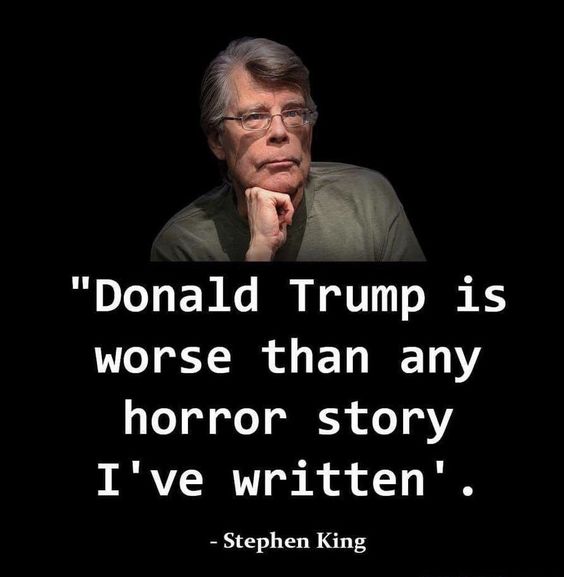
It seems at this moment time it seems almost like it is the powerless with the most to lose or who have already lost so much, that show the greatest power to stand up against Trump.

Politik by Coldplay