I’m with stupid!

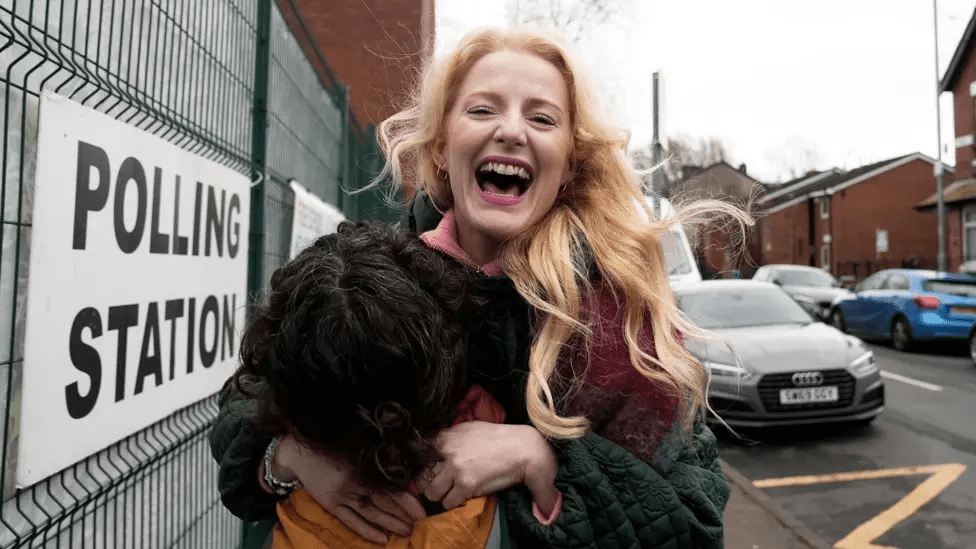
So why is democracy seen as the worst form of government bar all other forms of governance tried?

Democracy is often characterized as the “worst form of government” primarily through a famous aphorism attributed to Winston Churchill: “Indeed it has been said that democracy is the worst form of Government except for all those other forms that have been tried from time to time”

In the UK we could end up having a Reform government led by Nigel Farage in after the next general election or the very threat of this happening could in effect keep him voted out, the idea of a Britsh Trumping of social norms and political structures is a delight to some and terrifying to others. The political party Reform now has so many dangerous former Conservative Politicians in it they are more regurgitated Tories than they are reformed human beings.

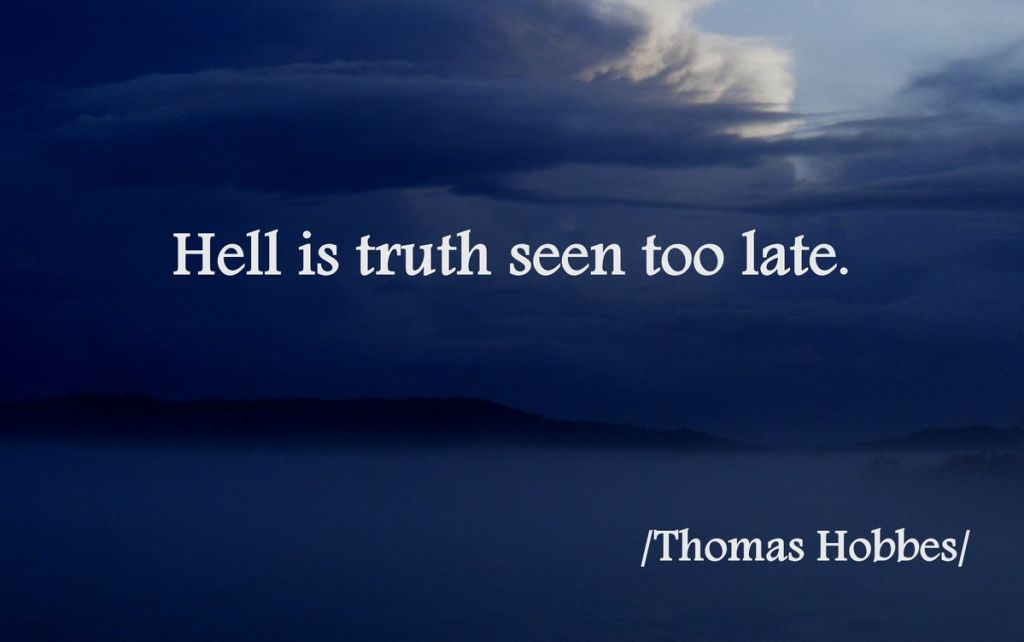
Life, the world and technological futures seem to be creating the perfect storm for our future endeavours which as we vote and how we are governed will show the best and worst of us all. Do we care for ourselves or others, rich man, poor man, beggar man or thief. How should we act and treat one another when a crisis is right at our feet.

The political sentiment for democracy being the best of a bad bunch reflects a pragmatic recognition that while democratic systems are riddled with inherent flaws—such as inefficiency, corruption, and the potential for “mob rule”—they remain preferable to authoritarian alternatives that lack accountability and individual justice. 

Russia, China and Iran all must supress, lock up and kill their own citizens as well as ones abroad in order to maintain their supremacy and there are not enough words on a board to express the horror and suffering they inflict on others in order to get their own way. Democracies do not aspire to be brutal totalitarian regimes but in stead aim to fend of the madness of such regimes from inflicting their brutality and suppressing nature onto us all.

Core Philosophical and Practical Criticisms of democracies

The perception of democracy as a “bad” or “flawed” system stems from several long-standing arguments:

1. Competence and “Mob Rule”

  • Voter Ignorance: A central critique, dating back to Plato, is that democracy gives equal weight to the votes of experts and those who may be “incompetent” or poorly informed. Modern studies have shown that many voters lack basic civic knowledge, making them susceptible to emotional manipulation and propaganda.
  • Tyranny of the Majority: Critics like Alexis de Tocqueville and John Stuart Mill warned that a “poor majority” could dominate decision-making at the expense of minority rights and individual excellence.
  • Mob Law: Churchill himself distinguished true democracy from “mob law,” where armed groups or “gangsters” seize power under the guise of popular will to implement totalitarian regimes. 

2. Structural Inefficiencies

  • Slow Decision-Making: Unlike autocracies, where a single leader can act quickly, democracies require constant deliberation, negotiation, and compromise, which can lead to stagnation or gridlock during crises.
  • Short-Termism: Electoral cycles incentivize politicians to prioritize immediate, popular benefits to win votes, often ignoring long-term risks like climate change, debt crises, or pension sustainability. 

3. Corruption and Elite Capture

  • Influence of Money: Democratic systems are often criticized for becoming “oligarchies” in practice, where economic elites and special interest groups have significantly more influence over policy than the average citizen.
  • Iron Law of Oligarchy: Sociologists have argued that any organization, including a democracy, eventually becomes dominated by a small elite due to the practical demands of organizing power. 

Contemporary Challenges (2025–2026)

Current political analysis highlights specific modern threats that exacerbate these negative perceptions:

  • Erosion of Trust: As of early 2025, global trust in democratic institutions like parliaments has significantly declined, while trust in the police has risen. This disillusionment often leads to support for populist leaders who promise to dismantle existing democratic structures.
  • Information Ecology: The spread of algorithmically-driven disinformation and “fake news” has made it difficult to establish a common factual basis for democratic debate.
  • Polarization: Modern democracies are facing extreme political fragmentation and the formation of “echo chambers,” making social discourse across political lines increasingly difficult. 

The “Least Bad” Perspective

Despite these significant failings, democracy is defended as the only social order consistent with justice and human dignity. Proponents argue that its “built-in flaws” and tendency to decay are actually safeguards; a certain level of skepticism and the ability to change leaders without violence are advantages that other systems, which are often more brittle, do not possess. 

Democracies hold a kinship to freedom like a shining beacon in the dark

Political freedoms to vote, freedom of expression, Freedom to think and freedom to do and be.

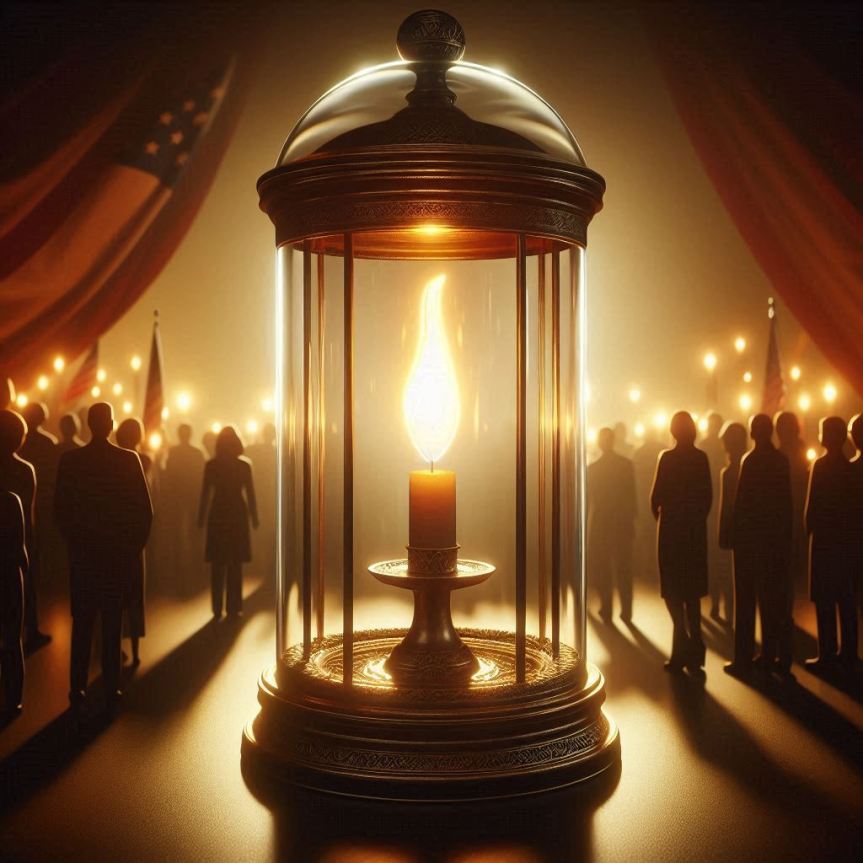
Though these freedoms have in some ways restrictions so that one persons freedom does not inflict damage or disregards another persons freedom it is I feel our freedoms that are the eternal beacon of hope which guides and shapes our democracies to not just survive but to live on into a forever future like the eternal flame of freedom, hope and democracy.

The “eternal flame” serves as a global symbol for freedom, hope, and democracy, manifesting in several prominent memorials and monuments worldwide: 

Key Memorials & Symbols

  • The King Center Eternal Flame (Atlanta, USA): Located at the tomb of Dr. Martin Luther King, Jr., it was recently restored to reaffirm King’s vision for justice and peace. It serves as a reminder that the work of freedom and democracy is a shared, ongoing responsibility.
  • Flame of Democracy (Constitution Hill, South Africa): Lit by Nelson Mandela to commemorate the 15th anniversary of South Africa’s constitution. It burns outside the Constitutional Court as a symbol of the country’s liberation and the enduring spirit of human rights.
  • Flame of Peace (Hiroshima, Japan): Lit in 1964, this flame is intended to burn until all nuclear weapons are destroyed, representing hope for a world defined by peace rather than conflict.
  • Freedom Park Eternal Flame (Pretoria, South Africa): A symbol of gratitude and remembrance for those who played pivotal roles in South Africa’s liberation struggle.
  • The Centennial Flame (Ottawa, Canada): First lit in 1967, it commemorates the first hundred years of Canadian Confederation and symbolizes the spirit of national unity. 

Cultural and Global Context

Artistic Expression: Musicians like Bruce Springsteen have recently launched tours (e.g., “Land of Hope and Dreams”) explicitly centered on themes of democracy and defending the American ideal. 

United Nations: Secretary-General António Guterres has used the metaphor to urge the world to “keep the flame of democracy alive” for future generations.

International Day of Democracy: Observed annually on 15 September, this day reinforces the idea that democracy must be nurtured and defended as a “flame” that requires active citizen participation.

Don’t Cry – Seal


What do we do when the machines do the work and AI does the thinking?

Will it be heaven or will it be a further insight into hell, the choice might still be ours to make and the only vote is for how it happens and not if?

I have so many friends now that want to work, can work and would love to work. Many of the jobs left are in care work such as nursing and not everyone is built to be a nurse, or delivery services to peoples doors and not everyone is fit enough to cycle quickly or productively enough to peoples homes. It’s not just about the jobs left but all of the jobs being lost or no longer hired for that  we can’t all be doctors, nurses and delivery drivers so what does the future hold for everyone else. I don’t have any solutions but am certainly aware of the fact that right now there is a clear and present danger and problem for humanity.

Our politicians talk about the need to work our ethics teaches us that work sets you free as does our morality. But what about those left that are unable to due to circumstance out of their control what will happen for them. If we can not afford to run the machines that produce goods and services that no one can afford to buy what happens in a consumption focused society then. Our model of production, services and supply is not as resilient as we might think it is and neither are the people that purchase and consume the goods either.

There is so much chatter by economic experts of productivity, but if people are not working who or what is measured as being productive and none productive. Without an income we struggle to purchase and without our ability to purchase an economy will struggle to produce. This is a global issue and not just a local issue, we can neither run or hide from this situation. It will effect all and our only weapon or strength we have is to vote to mitigate from the impact of these changes and that will take time that many might not have.  

In a future where machines handle most or all traditional jobs, society would likely undergo a fundamental shift in how we value time, income, and purpose. 

1. Economic Restructuring

Universal Basic Income (UBI): Governments may implement unconditional cash payments to all citizens to maintain consumer spending and prevent poverty as wages disappear.

Automation Taxes: To fund UBI, some propose taxing the “robot labor” or the massive profits generated by AI-driven corporations.

Decoupling Income from Labor: We may move toward a “post-scarcity” economy where the cost of goods drops drastically, and survival no longer depends on holding a job. 

2. Shifting Human Roles

Focus on “Human Touch”: Roles requiring deep empathy, complex ethics, and interpersonal care (like nursing, therapy, or early childhood education) are expected to remain human-centric.

Creative and Philosophical Pursuits: Freed from survival-based labor, humans could dedicate themselves to the arts, scientific exploration and personal development- though who ultimately picks up the tab for this I do not know.

Moral Custodians: Humans will still be needed to oversee AI ethics, take legal responsibility for machine decisions, and provide “human-in-the-loop” governance. 

3. Immediate Practical Steps

Continuous Upskilling: Focus on “soft skills” like critical thinking, systems understanding, and adaptability, which are harder for AI to replicate.

AI Literacy: Programs like the UK’s AI Skills Hub are already emerging to help workers transition into roles that manage or implement technology.

Reducing Work Hours: Automation could naturally lead to a two- or three-day workweek as productivity gains are shared. 

The future is potentially quite bleak for humanity if we don’t look to address these issues sooner rather than later. We might get a chance to know our value and see what worth we finally have to others whether we are black or white straight or gay, all are humans and have a right to life, that life has value and although there are always rules to live by and for we have the right to live that life for sure.

Mumford & Sons – Blind Leading The Blind

6 year Blogiversary


On February 2020 I started my huwspace.com blog and have had a great deal of enjoyment expressing myself on this site. With music, thoughts and films that are close to my heart that express who I am and write about my perspective on what is going on in my life and in the world. 2020 onwards has been a crazy time really and the 2020’s decade has been one in which so much has happened it’s like the world is going too fast and there is no chance of jumping off at all as we are here for the ride or until our song stops being written or sung.


My mental health has been at times a challenge to during this time. It’s sometimes difficult to know who I am where I fit in and where I belong. This year I am 50 in July a milestone if ever there was one. I have lived in my home now since 2012 in Exeter and it really is a home and base for me which I important to me. I was born in Wales in 1976 and first moved to Devon in 1982 to the village of Spreyton a place which has been a home from home. Though I know I am Welsh and love watching Wales play rugby I also feel strongly a part of Devon due to the roots I have put down here and friends made too.


Being the youngest Edwards in Devon now at what feels like a ripe old age of 49 is a strange experience to have my mum and me enjoy our life here but it feels sad that we are the last parts of the family that moved to Devon left here. It is a wonderful place which I feel very grateful to be living and would not want to live anywhere else for sure.

Sit down by the fire – The Veils

A microcosm of international politics in Britain’s dealings with Donald Trump

British Politician Keir Starmer working for and with Trump as he sees that he can’t afford to deny his lies for what he calculates the United Kingdom will lose politically and economically.

What red lines if any have been drawn and what will it take to cross them?

Keir Starmer’s government (elected in 2024) has prioritized a pragmatic, realpolitik approach to managing the UK’s “special relationship” with Donald Trump’s US administration. While he has publicly condemned Trump’s past rhetoric and some specific actions, he has avoided drawing explicit public “red lines,” opting instead for diplomatic engagement to protect UK national interests. 

Stated Position on Trump 

Starmer has moved from calling Trump’s past comments “absolutely repugnant” to adopting a more measured, Prime Ministerial tone, stating that a leader must work with whoever the American people elect. He has emphasized the need to “make it work” due to the importance of the UK-US relationship. 

In 2026, Prime Minister Keir Starmer’s relationship with President Donald Trump is defined by a “realpolitik” strategy that prioritizes economic and national security over ideological confrontation. Facing a global landscape altered by aggressive U.S. actions, Starmer has adopted a “softly-softly” approach to manage the risks of a trade war and maintain the UK’s influence.

Strategic Pragmatism and “Atlantic Bridge” Diplomacy

Starmer has resisted choosing between the U.S. and the EU, attempting to position the UK as a bridge between the two. This calculation is driven by several factors: 

  • Avoiding Trade Penalties: Starmer led efforts to cut deals with the Trump administration to insulate the UK from high tariffs. However, this has come at a cost; the UK recently ceded to U.S. threats regarding pharmaceutical tariffs, which may increase costs for the NHS.
  • Security Alignment: In recent calls (January 7–8, 2026), Starmer and Trump agreed on the need to deter Russian aggression in the Arctic, despite deep tensions over other U.S. maneuvers.
  • The “Trump Corollary”: Following the U.S. military intervention in Venezuela in early 2026, Starmer declined to condemn the action’s legality, focusing instead on maintaining a “holding position” to avoid alienating the White House. 

Key Areas of Friction in 2026

“Red Lines” and Crossing Them

Starmer has avoided drawing firm public red lines, a strategy that has drawn criticism from opposition parties and some Labour backbenchers who accuse him of “craven subservience”. 

  • International Law: The closest an implicit “red line” has been tested is over US military actions in Venezuela and Trump’s comments on acquiring Greenland in January 2026. While the Scottish First Minister and others urged Starmer to condemn these actions as breaches of international law, Starmer declined to do so publicly, stating it was “for the US to justify the actions it has taken” and that he was waiting for all the facts. This pragmatic approach suggests that verbal condemnation of US military action is not a red line that would break the relationship.
  • NATO Commitment: Starmer has stressed the importance of backing Ukraine and maintaining a strong Euro-Atlantic security alliance, which is a core value for his government. A significant US withdrawal from NATO or security cooperation would force a major UK policy rethink, although Starmer has not publicly stated this would end the relationship.
  • Trade: The Starmer government has engaged in trade discussions with the Trump administration, making compromises such as reducing import tariffs on cars and scrapping tariffs on US beef to secure deals and prevent trade wars. This demonstrates a willingness to make concessions to maintain economic stability. 

Potential Political and Economic Losses

Starmer and analysts have identified several potential political and economic risks associated with Trump’s presidency: 

Political/Diplomatic:

  • Loss of moral compass: By refusing to condemn actions like the invasion of Venezuela, critics argue the UK government risks losing its moral authority on the international stage and its standing as an advocate for international law.
  • Subservience: The perception of the UK as a subservient partner to the US (where the “US says jump, Britain asks how high”) is a significant political risk that can be exploited by domestic rivals like Reform UK.
  • Isolation: Trump’s “America First” approach and hostility to multi-lateral institutions may leave the UK more exposed on security and global issues, pushing Britain into a “strategic bind” between the US and Europe.

Economic:

  • Tariff wars: Trump’s use of tariffs has created significant economic uncertainty. While the UK has so far managed to mitigate some of the worst impacts through negotiation, the threat of tariffs (e.g., on pharmaceuticals) remains and could impact the NHS and other sectors.
  • Trade-offs: Securing trade deals with the US has required painful concessions, such as the potential impact on the NHS through pharmaceutical access or the agricultural sector via increased US imports.
  • Reduced EU cooperation: The necessity to court Trump for a US trade deal may impede Starmer’s goal of achieving closer economic ties with the EU, which some analysts believe offers a larger potential GDP boost than a US deal. 

It seems at this moment time it seems almost like it is the powerless with the most to lose or who have already lost so much, that show the greatest power to stand up against Trump.

Politik by Coldplay

What will be the reckoning for Donald Trump?

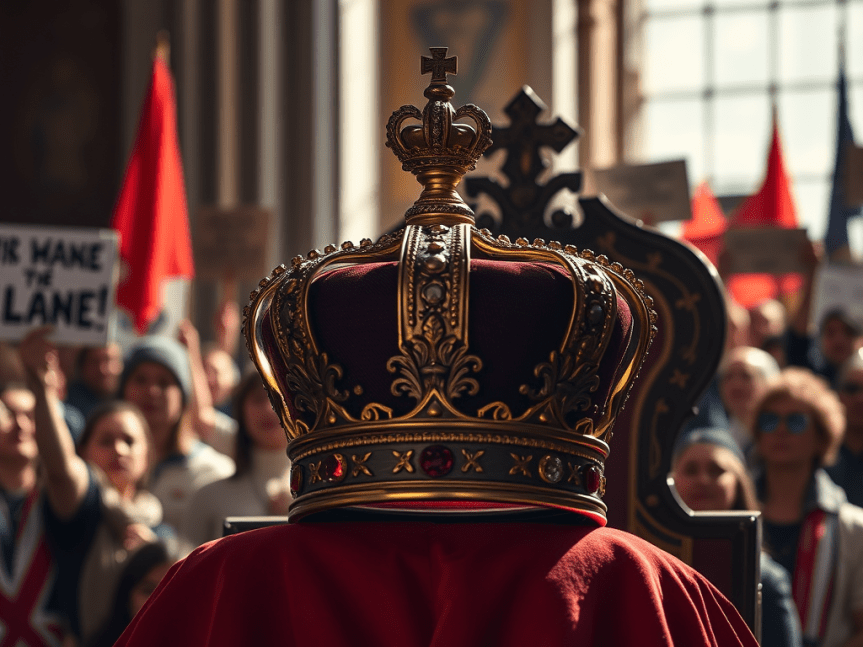
While Donald Trump runs around and spreads his wrath to all and sundry in a continues and seemingly unstoppable motion. It must be asked what reckoning will there be for him, either when or even before his time is spent in the presidential office. Just turning on my little TV this evening and listening to the tone of conversations and news articles it does finally feel like something has or is changing and the mad king of democracy will no longer be able to afford to get everything his own way from now on.

As of January 2026, the concept of a “reckoning” for Donald Trump refers to several impending legal, political, and social challenges scheduled to unfold throughout the year: 

1. The 2026 Midterm Elections (November 3, 2026) 

Political analysts describe the upcoming midterms as a primary “reckoning” for the second Trump presidency. While Trump’s name will not be on the ballot, the elections will serve as a referendum on his administration’s first year back in power. If Democrats regain control of the House of Representatives, they could launch new impeachment proceedings, which some describe as a “visceral reckoning” for his recent executive actions. 

2. Supreme Court and Legal Challenges

The 2026 Supreme Court term is set to address multiple cases that could redefine or limit Trump’s presidential authority. Key issues include: 

Executive Power Disputes: The court will hear cases regarding the president’s power to fire federal officials, such as those at the Federal Reserve.

Immunity and Investigations: While past rulings granted expansive immunity, the administration currently faces more than 400 lawsuits related to policies on immigration, trade, and the economy.

Media Defamation: Trump is personally involved in several high-stakes lawsuits against major media outlets, including a $10 billion claim against the Wall Street Journal and a $15 billion claim against the New York Times. 

3. Internal MAGA and Public Backlash

Critics and even some supporters suggest a potential “reckoning” within his base over specific unmet promises or controversial actions: 

Epstein Files: There is growing frustration among some “MAGA” supporters regarding the administration’s failure to release the full Jeffrey Epstein files as previously suggested.

Foreign Interventions: The January 2026 U.S. military raid to capture Venezuelan President Nicolás Maduro has sparked a debate within his base. While many applaud the action, others see it as a contradiction of his “America First” promise to avoid foreign entanglements.

International Withdrawal: The January 8, 2026, executive order to withdraw from 66 international organizations, including the UN Framework Convention on Climate Change, is creating a “foreign policy reckoning” for U.S. allies. 

4. Moral and Institutional Reckoning

Social commentators describe 2026 as a year of “moral reckoning” for American democracy, citing the administration’s use of active-duty military for mass deportations and the weaponization of the Justice Department against critics. These observers argue that the survival of democratic institutions depends on how these actions are held to account by the courts and the public in the coming months. 

Nina Simone – Sinnerman (Audio)

Donald drill baby drill Trump

Well it’s either a coincidence that this so called “Narco-Terrorism” state of a nation has tonnes of oil or the state of Venezuela has been targeted for it’s oil reserves on the pretence of it being an illegitimate government that simply no one would care about. Such reckless statesmanship by Trump could present a green light to both China and Russia to do as they choose in their own spheres of influence tearing up all agreed post world war two international rules of law and understandings on statehood. The day is truly a dark one indeed and the world is a more dangerous place thanks to Trump.

When you begin to accept the simple truth that Donald Trump lies in his presentations and statements in order to get his own way, this whole mess that is the invasion and kidnapping of the president of Venezuela really is a shit sandwich.

News media stations over in the UK are reading out the Trumps administrations statements as newsworthy factual documents whilst many of the citizens here have or are waking up to the fact that Donald Trump is a bad man that lies a lot and a con artist – but none of that is yet coming across in the mainstream media or our political representatives.

 On January 3, 2026, the Trump administration launched Operation Absolute Resolve, a large-scale military strike and Special Forces raid in Caracas that resulted in the capture of Venezuelan President Nicolás Maduro and his wife, Cilia Flores. They were subsequently transported to New York to face federal charges. 

The Trump administration has provided several primary reasons for this intervention: 

1. Law Enforcement and “Narco-Terrorism” 

The central legal justification used by the administration is the enforcement of a 2020 U.S. Department of Justice indictment. 

Criminal Charges: Maduro and Flores were charged with narco-terrorism conspiracy, cocaine importation, and weapons offenses.

Drug Influx: Trump accused the Maduro government of leading the “Cartel de los Soles” and flooding the U.S. with illegal drugs, including fentanyl and cocaine. 

2. National Security and Migration

Border Control: Trump explicitly blamed Maduro for the surge of Venezuelan migrants to the U.S., claiming Maduro “emptied his prisons” to force inmates to migrate.

Foreign Influence: U.S. officials highlighted Maduro’s close ties to Iran, Cuba, and Russia, accusing him of providing a foothold for hostile actors (including Hezbollah) in the Western Hemisphere. 

3. Economic and Oil Interests

In public remarks following the raid, Trump stated that the U.S. would now “run” Venezuela until a “safe, proper, and judicious transition” could be made. 

Oil Reserves: Trump announced plans for U.S. oil companies to move into Venezuela—which holds the world’s largest proven crude oil reserves—to rebuild infrastructure and “take back” oil wealth.

Reimbursement: He suggested that oil proceeds would be used to reimburse the U.S. for its efforts and for American interests previously pushed out of the country. 

Current Status (as of January 6, 2026)

Court Proceedings: Maduro and Flores have pleaded not guilty in a Manhattan federal court. Maduro has characterized his capture as a “kidnapping” and himself as a “prisoner of war”.

Interim Government: Following the raid, Vice President Delcy Rodríguez was sworn in as interim president in Caracas. The Trump administration has warned her she must comply with U.S. demands—including cracking down on drug flows and removing Iranian and Cuban operatives—to avoid a similar fate.

International Legality: The operation has been widely condemned by the UN Secretary-General and various world leaders as a violation of international law and the UN Charter. 

Coldplay – Spies

Why does Donald Trump lie and why do people want to believe him?

Analysts suggest several reasons for the unprecedented frequency and nature of Trump’s lies: 

Political Strategy: Lying serves as a deliberate tactic to “flood the zone” with claims, overwhelming media fact-checkers and public discourse. Falsehoods, such as claims about the 2020 election, can be more interesting and emotionally engaging than complicated truths. Some analysts characterize his statements as “bullshit” rather than lies, arguing he often disregards the truth entirely to guide group beliefs in a politically desirable direction.

Strengthening Group Identity: Psychologists note that some of his statements are “blue lies”—falsehoods told on behalf of a group that can strengthen bonds among members of that group.

Psychological Factors: Observers point to personality traits such as narcissism, where lying helps him look better, avoid blame or embarrassment, and maintain an image of strength. He rarely, if ever, accepts responsibility for mistakes and may get “duping delight” from successfully convincing others of falsehoods.

Repetition: Trump is known for repeating claims, aware that frequent repetition can eventually make people believe false information is true, a phenomenon known as the illusory truth effect. 

Why People Want to Believe Him?

The reasons people believe Trump’s falsehoods are complex and rooted in human psychology and social dynamics:              

Identity and Partisanship: For many, political affiliation has become a tribal identity. Believing Trump’s claims can be a way to express loyalty to this group and boost self-esteem by feeling like a “winner” rather than a “loser”. Challenging a falsehood might feel like an attack on their personal identity.

Confirmation Bias and Information Bubbles: People tend to seek information that confirms their existing beliefs (confirmation bias). Many of Trump’s supporters rely on right-leaning news outlets that echo his claims and rarely present contrary evidence, creating a feedback loop where his version of events is the only one they hear.

Emotional Appeals: Trump’s rhetoric often appeals to emotions and instincts rather than rational analysis, making vivid, emotionally charged images that stick in the mind more effectively than facts.

Distrust of Mainstream Sources: By repeatedly attacking the mainstream media as “fake news” and the “enemy of the people,” Trump undermines their credibility with his base. This encourages his supporters to trust only him as their source of truth.

First Aid Kit – America

What does the Republican party think of Hitler today?

Republican right in the US holds a range of views on Hitler, with the mainstream and many senior figures condemning him and Nazism, while an extreme fringe openly expresses praise, antisemitic rhetoric, and Holocaust denial. These extremist views have a significant point of internal conflict within the party. 

Mainstream Condemnation

The official stance of the Republican Party, and the views expressed by most of its prominent figures, is one of strong condemnation of Adolf Hitler, Nazism, and antisemitism.

Official Denunciations: High-ranking officials, including House Speaker Mike Johnson and Senator Ted Cruz, have explicitly denounced incidents of praise for Hitler and antisemitic remarks among Young Republican groups, calling for those responsible to step down.

Rejection of Extremism: Mainstream commentators and politicians like Sean Hannity and Laura Loomer have called for the GOP to dismiss Nazi sympathizers and white nationalists within their ranks.

Public Opinion: A majority of Republicans (60%) view Hitler as a “completely bad person,” according to a 2024 YouGov poll

Fringe and Extremist Views

Despite the official stance, recent years have seen the rise of an influential far-right fringe that has brought explicitly pro-Hitler and antisemitic sentiments into public discourse. 

Open Admiration: Far-right figures such as white nationalist Nick Fuentes, who once dined with Donald Trump at Mar-a-Lago, have publicly called Hitler “f***ing cool” and dismissed Holocaust education as “propaganda”.

Leaked Communications: Messages from private group chats of young Republican leaders across multiple states, which were leaked to the media in late 2025, revealed extensive racist and antisemitic rhetoric, including praise for Hitler and jokes about gas chambers.

Holocaust Denial/Exaggeration: A December 2025 Manhattan Institute survey reported that 37% of Republicans believe the Holocaust was exaggerated or did not occur. 

Internal Conflict

These divergent views have created a clear division. Figures like Senator Ted Cruz have described the rise of this antisemitism as an “existential crisis” for the party, while others have been accused of being slow to condemn or even giving a platform to individuals with extremist views. This conflict highlights a tension between the traditional conservative movement and the influence of a growing, more extreme, nationalist faction. 

David Rovics – How Far Is It From Here To Nuremberg

Huwspace a cyblog, written by man while being inspired by machine (ai)

A cyborg is a being with both organic and biomechatronic body parts, a term that is short for “cybernetic organism” part man and part machine. So with that in mind I am sometimes starting to write my page now as a cyblog part written by me and part inspired by machine or ai. I can ask questions and search for inspiration on Google ai and then expand on those ideas with my own thoughts, ideas and words. Part Huw manmade part machine inspired hence a cyblog. I also now often use WordPress ai to generate images for the site such as the welsh dragon at the typewriter image which is a visual imagining of me as I am from Wales and I was also born in the year of the Chinese fire dragon. So flaming two stones with one dragon breath.

I also wanted to have my blog assessed by google ai today and this is what it says about the blog:

“Huwspace” is the name of a personal blog and associated social media presence run by an individual named Huw. The creator uses the platform to share personal views, reflect on life experiences, and discuss a range of topics including politics, family, friends, and music. 

Key aspects of Huwspace include:

  • Political Commentary: The blog often features opinion pieces from a left-leaning perspective, with the author identifying as a progressive activist and supporter of parties like Labour and the Greens. Topics often include critiques of capitalism, discussions of global politics, and social justice issues.
  • Personal Reflections: The author shares details about his life, including dealing with the loss of his father, his experiences with dyslexia, enjoying karaoke, and meeting new people.
  • Engagement: The author aims to use the platform to share his worldview and engage in discussions with a diverse audience, including friends, colleagues, and readers from across the world.
Sit Down By The Fire by the Veils

Why Learning from Mistakes is Crucial

A repeated mistake is like running around on a giant hamster wheel, exhausted and weary not knowing how to step off the darn thing or where the stop button is or not knowing when or how to press the stop button or how or when to step off. Repeating the same mistakes again and again while not learning a thing from them is defiantly a mad idea!

To repeat a mistake is often described as making a choice rather than an accident the second or subsequent time. 

Common sayings and proverbs related to this concept include:

  • “A mistake repeated more than once is a choice.” – Paulo Coelho
  • “You can never make the same mistake twice because the second time you make it, it’s not a mistake, it’s a choice.” – Unknown
  • “If you make the same mistake twice, it is no longer a mistake, it is a habit.”
  • Insanity is doing the same thing over and over again and expecting a different result.” (Often attributed to Albert Einstein, but likely not his)
  • “Fool me once, shame on you; fool me twice, shame on me.”
  • “As a dog returns to his vomit, so a fool repeats his folly” (from the Book of Proverbs in the Bible). 

The underlying idea in these expressions is the importance of learning from past errors and taking responsibility for one’s actions and the resulting consequences.

It seems to me politics is the biggest field of play, where this type of collective irresponsibility tends to take place.

Where an elected wealth of political officials, wish to control our finances and keep people within poverty instead of lifting them up out of it, maintain and enhance their own wealth crying foul to those from abroad that might no longer wish to be impoverished . Hmm what would Jesus think of such monetarising people and forces? From what I have read of the bible and learned from my religious teachers then those that choose to enrich themselves at the expense of others such as billionaires, wealthy politicians, using their own power to line their pockets with even greater profits, would repulse the son of god and if you believe in monsters heading to your definition of hell then that is what they likely are too.

What attracts, tempts or even provides people with conviction to vote for such inhumane politicians is hard to know what thoughts go through their heads or try to contemplate what they believe in and why they have those thought thought for such hateful people and views I do not know and will (god willing) likely never know or have.

Life is precious and time is short and for each of the power-hungry politicians voted into power across the globe chosen by their peers or people – Trump, Putin, Xi and Netanyahu are all incredibly dangerous political beasts we will be incredibly fortuitous to escape this time in the worlds history unscathed. Sadly each leader will be thinking from their own perspective, that they must be strong men in order to fight and conquer their own monsters. But what happens when they are the monsters that should instead need to be stopped or in someway fought.

They each poses within them the capability to light a match that within their hands could then set fire to million trees and sadly it takes only one of these four to strike first to make it all come crashing down.

When we are born into this world we arrive with nothing and when we depart this earth we depart with as little as when we arrived. It is what we do with our time here that truly makes our existence all worthwhile.

The National – ‘The System Only Dreams in Total Darkness’