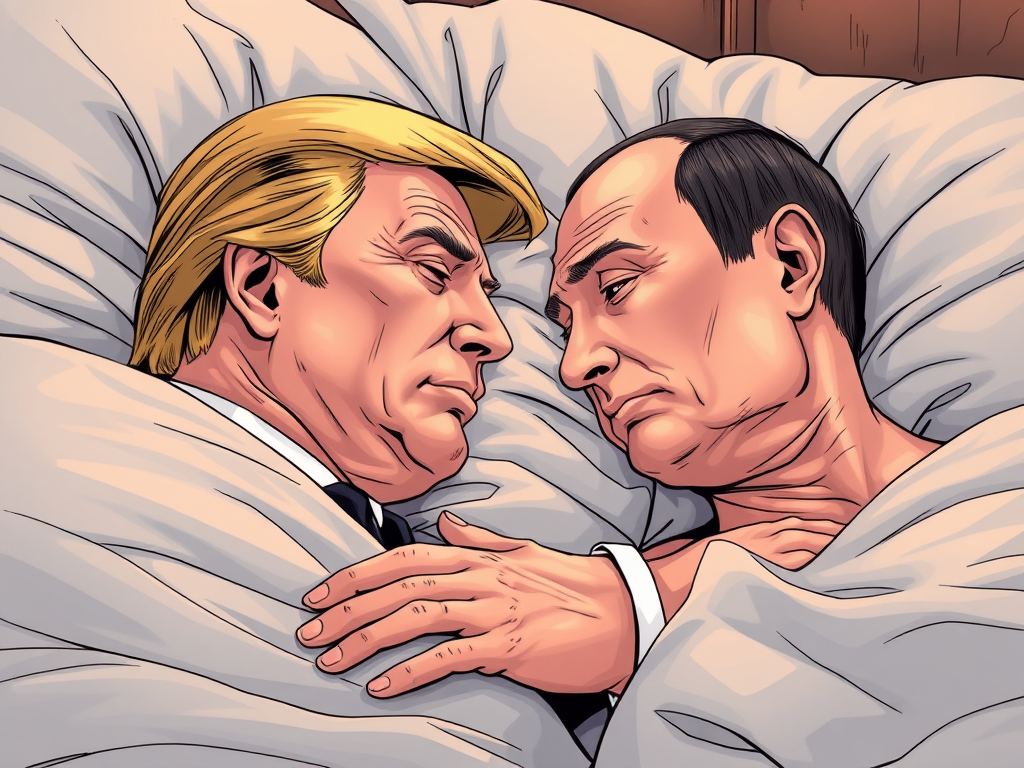

The Nightmare of Modern Authoritarianism

Martin Luther King had a dream that was one of freedom. But what if today we face new chains instead and enslavement due to Trump, Putin and Jinping? We seem to be voting for mob rule and being governed by gangsters. I want to explore the reality behind the nightmare of not exactly living the dream.

Martin Luther King Jr.’s dream of universal freedom against the modern geopolitical landscape presents a stark reality: what King himself later called a “tempered… nightmare” remains an ongoing struggle against new forms of global authoritarianism.

Sadly in this day and age it seems people most most attracted to power on the global stage are least worthy of holding onto it. It seems we are in an age of Machiavellian plots where cunning, deceptive, and highly calculated schemes are used by political leaders to gain or secure their power. Relying on the core idea that “the ends justify the means,” ignoring traditional morality in favour of cold, effective strategy which seem to be trumping all other forms of political power and will, again and again not just in the US but across the globe. Bringing sadly the very fabric and structure of our world to an existential crisis threatening our planet, species and way of life, and at this time an unholy trinity of political leaders seem to be learning and gaining strength from one another and would more likely be honoured and inspired by each other to be at the forefront of our demise, rather than do anything to assist to actually prevent such a catastrophic event from occurring. Sadly time might not not be on our side at the rate that things politically remain statically dangerous or worse our deteriorating environment or ecological destruction. But fortunately they have yet to develop the technological knowhow or break through to enable there own immortality within which to give them an opportunity to then enslave or destroy us all old age and death might reach them before they reach all of us.

I’m genuinely torn between what right now would be worse or better an alien invasion, an ai takeover or a continuation of the unholy Trinity of Trump, Putin and Jinping!

While the “chains” of the 21st century differ from the legalized chattel slavery and Jim Crow segregation Martin Luther King fought against, political analysts and democratic theorists increasingly warn of an era defined by digital surveillance, economic oligarchy, and aggressive autocracy spearheaded by leaders like Donald Trump, Vladimir Putin, and Xi Jinping.

Here is an exploration of how these three figures reflect modern anxieties about the erosion of freedom, contrasted with the enduring philosophy of MLK.


1. The Global Landscape: Three Pillars of Modern Authoritarianism

The modern “nightmare” is often framed not as a single empire, but as a multi-front assault on democratic norms, institutional truth, and personal liberties.

LeaderMechanism of Control / “New Chains”The Reality Behind the Nightmare
Donald Trump
(United States)
Democratic Erosion & Oligarchy
• Populist polarization
• Challenges to electoral systems
• Transactional, power-based foreign policy
An American Oligarchy: Critics argue his second administration weaponises state power and wealth to consolidate control. However, the U.S. features robust institutional guardrails, judicial resistance, and a highly active civil society that pushes back through democratic elections.
Vladimir Putin
(Russia)
State Terror & Neo-Imperialism
• Violent suppression of domestic dissent
• State-controlled media monopolies
• Territorial expansion (e.g., Ukraine)
Totalitarian Autocracy: Russia operates under severe domestic restrictions where anti-war protests or political opposition result in heavy prison sentences. This aligns closely with traditional 20th-century authoritarianism.
Xi Jinping
(China)
Techno-Authoritarianism
• Total digital surveillance (AI, facial recognition)
• The Social Credit System
• Elimination of term limits and absolute party loyalty
The Panopticon State: China represents a highly sophisticated form of digital control. Citizens trade absolute political compliance for economic participation, leveraging state technology to pre-emptively crush dissent.

2. What MLK Said About Dictatorships and Truth

Dr. King was acutely aware of totalitarian threats. In his final speech, “I’ve Been to the Mountaintop” (1968), he explicitly contrasted America’s unfulfilled promises with the overt oppression of autocratic regimes:

“If I lived in China or even Russia, or any totalitarian country, maybe I could understand the denial of certain basic First Amendment privileges, because they hadn’t committed themselves to that over there. But somewhere I read of the freedom of assembly. Somewhere I read of the freedom of speech…”

King argued that the unique danger to Western democracy was hypocrisy—failing to live up to its own foundational principles. Today, the fear is that populist movements in the West are voluntarily adopting the illiberal tactics pioneered by Moscow and Beijing.

3. Structural Exploitation: Economic “Enslavement”

King’s later work, particularly the Poor People’s Campaign, shifted toward economic justice. He famously noted that freedom without economic security is merely a variant form of oppression.

In the modern context, critics note that global capitalism under the influence of tech monopolies and oligarchs has created a different kind of economic bondage:

  • Stagnant Wealth Distribution: The vast division of wealth limits true self-determination.
  • Algorithmic Control: Gig-economy workers and everyday citizens are heavily manipulated by proprietary algorithms that dictate information flow, wages, and consumer habits.

The Reality: Is the Dream Dead?

The reality behind the nightmare is that freedom is a dynamic struggle, not a permanent state. King himself realized that his initial 1963 optimism was somewhat superficial. He adjusted his view to a “solid realism,” acknowledging that progress meets fierce backlash from those terrified of losing power.

The rise of modern autocrats does not mean humanity is permanently enslaved. Instead, as democratic theorists emphasize, it exposes the vulnerabilities of modern societies. The existence of resistance—from domestic voters organizing for upcoming midterms to international solidarity movements—proves that the “network of mutuality” King dreamed of remains the primary weapon against modern authoritarianism.

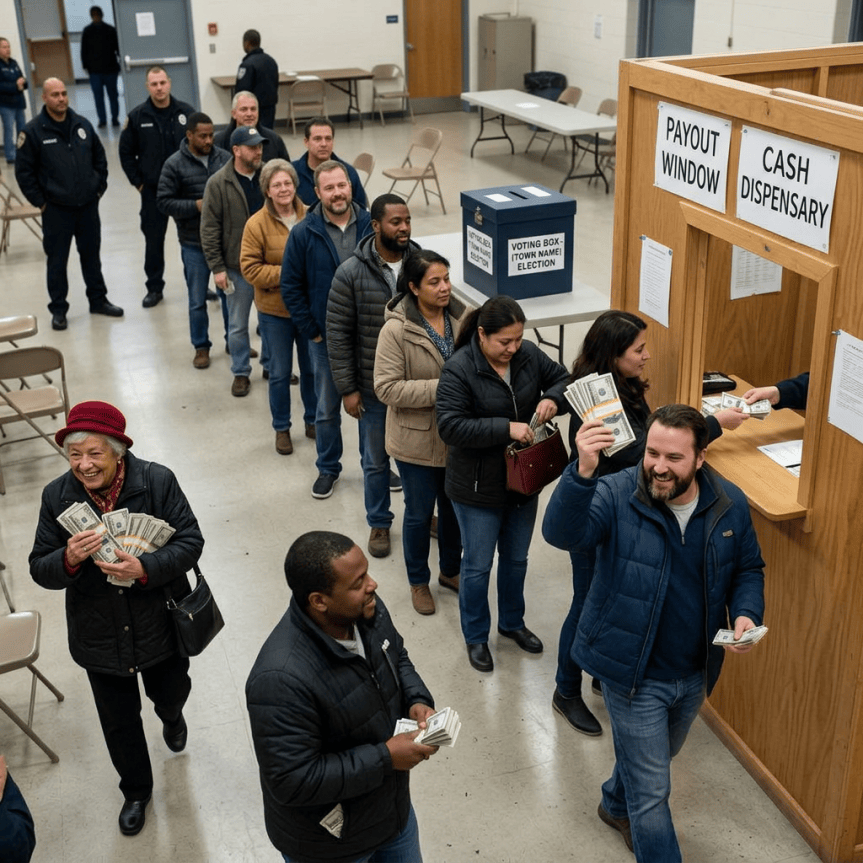
Can Politicians Legally Buy Votes?

Part of me can’t even believe I am posing this question of whether politicans can buy our votes – is democracy that cheap and easy?

Direct vote buying—exchanging physical cash, goods, or direct personal favors for a vote—is strictly illegal in almost all democratic countries. However, politicians frequently navigate a fine legal line by offering sweeping policy promises, tax cuts, or financial incentives targeted at broad groups of voters. While a politician cannot legally hand you a hundred-dollar bill at a polling station, they can legally promise to pass legislation that puts money in your pocket if they win.

he concept of “buying votes” lives in a complex space between outright criminal bribery and standard campaign strategy.

⚖️ The Legal Line: Direct vs. Indirect

To understand how politicians legally “buy” influence, it helps to look at the difference between criminal bribery and policy-based incentives.

Type of IncentiveWhat It Looks LikeIs It Legal?
Direct Cash BriberyHanding an individual cash, groceries, or alcohol in exchange for a ballot.No. Under laws like U.S. Federal Code (18 U.S.C. § 597), it is a federal crime to make an expenditure to any person to vote or withhold their vote.
Targeted Policy PromisesPromising student loan forgiveness, specific tax credits, or localized infrastructure funding.Yes. Courts generally view policy proposals as protected political speech, even if they explicitly offer financial gains to specific groups of voters.
Mass Payout VowsPromising a broad national stimulus or a “dividend” payout contingent on an election outcome.Grey Area. While heavily criticized as political bribes, they are rarely prosecuted because they require congressional approval and are framed as economic policies.

🔍 Current Controversies and Historical Context

The debate over where campaign promises end and voter bribery begins is a massive topic right now:

  • The “Trump Dividend” (September 2026): At a Republican Midterm Convention in Dallas, President Donald Trump promised a $5,000 cash payment to every American adult if Republicans retain control of Congress. While critics and consumer advocacy groups blasted it as an open attempt to bribe voters, legal experts note it mimics historical tax-cut promises and would require a trillion-dollar congressional authorization to ever happen, keeping it outside traditional criminal prosecution.

Past Precedents: In 2021, former President Joe Biden faced similar criticism from opponents when he tied the passage of $2,000 Covid stimulus checks directly to the outcome of the Georgia Senate runoff elections.

Historical Roots: In early American history, vote-buying was much more explicit. During his 1758 run for the Virginia colonial legislature, George Washington famously supplied voters with 144 gallons of wine, beer, and cider to secure a landslide victory.

🌍 Global Perspectives

In many developing democracies, direct vote-buying remains heavily entrenched despite being illegal:

  • Indonesia: Known locally as politik uang (“money politics”), candidates often use a tactic called serangan fajar (“dawn attack”)—handing out small envelopes of cash a day or two before the election.
  • India: Political parties frequently distribute cash or gifts to fence-sitters. Interestingly, political scientists find that while it levels the playing field for candidates, it rarely guarantees a win because voters often take the cash but still vote for whoever they want in the privacy of the voting booth.

Should the trump dividened be illegal?

Whether the “Trump Dividend” should be illegal is a matter of intense legal and ethical debate, dividing legal scholars, politicians, and voters alike.

Under current law, the proposal is almost certainly legal under the First Amendment, as the U.S. Supreme Court heavily protects campaign promises as political speech. However, critics argue that conditional cash payouts erode democratic norms and resemble large-scale political bribery.

The arguments on both sides of the issue outline the core conflict between free speech and ethical campaigning:

Arguments That It Should Be Illegal (The Anti-Dividend View)

Critics, including many Democrats and nonpartisan watchdogs, argue that the proposal violates the spirit, if not the letter, of anti-bribery laws.

  • It Looks Like Explicit Vote-Buying: Legal experts like former federal prosecutor Michael McAuliffe note that conditioning a massive personal financial reward directly on an election outcome crosses an ethical line. Opponents argue it incentivises people to vote out of direct self-interest rather than civic principle.
  • Misuse of Taxpayer Funds: California Governor Gavin Newsom criticized the idea as an attempt to “buy your vote with $5,000 in taxpayer-funded blood money”. Critics argue that public funds should serve the public good, not a specific party’s electoral strategy.
  • Fiscal and Economic Danger: Watchdog groups like the Committee for a Responsible Federal Budget warn the plan would cost roughly $1.2 trillion, severely worsening national debt and fueling inflation. Opponents believe dangling a financially damaging policy to win an election should be restricted.

Arguments That It Should Remain Legal (The Pro-Dividend View)

Supporters and constitutional experts maintain that penalizing this type of speech would severely infringe on American democratic principles. [1, 2]

  • Protected Political Speech: The definitive legal precedent is the 1982 Supreme Court case Brown v. Hartlage. The Court ruled that candidates have a First Amendment right to tell voters how they intend to financially benefit them. Restricting these promises could criminalize ordinary policy proposals, like tax cuts or student loan forgiveness.
  • It Is Not a Direct Bribe: Legal scholars point out that the dividend does not check how an individual voted—every adult citizen would receive it regardless of their party affiliation or whether they voted for a Republican, Democrat, or didn’t vote at all.
  • A Standard Economic Strategy: Vice President JD Vance and other administration officials argue the dividend is a legitimate way to distribute national wealth created by the administration’s tariffs and economic investments back to shareholders—the American people. [1, 2]

The Ultimate Reality: The Congressional Check

Even if the promise is legal to make on the campaign trail, President Trump cannot unilaterally hand out the money. The U.S. Constitution gives Congress the sole power of the purse. House Speaker Mike Johnson confirmed that the plan would require congressional approval. Whether it should be illegal to promise such a pay-out remains a philosophical question, but the legislative process serves as the ultimate barrier to it actually happening.

The gift that keeps on giving

There are also strong arguments for universal income so is a universal basic income the same thing as votes being bought and could this be the start of something more profound and bigger leading to the adoption and provision of a universal income?

A Universal Basic Income (UBI) is fundamentally different from a policy like the Trump Dividend in its frequency, purpose, and structure, even though both involve the government sending direct cash payments to citizens.

Political scientists and economists view a Trump Dividend as a one-off, conditional political payoff, whereas UBI is a permanent, unconditional economic safety net.

The core differences illustrate how they diverge in practice:

📊 Direct Comparison: Trump Dividend vs. Universal Basic Income

FeatureThe Trump DividendUniversal Basic Income (UBI)
FrequencyOne-time pay-out. A single cash injection (e.g., $5,000).Regular and ongoing. Distributed at fixed intervals, usually monthly, forever.
Primary GoalEconomic reward or political incentive. Framed as sharing national growth or wealth from tariffs.Eradicating poverty. Designed to cover basic survival needs (food, shelter) as a baseline floor.
Political ConditionHighly conditional. Explicitly tied to a specific political party winning a legislative majority.Completely non-partisan. Established by permanent law; does not change based on who wins an election.
Target PopulationMeans-tested. Explicitly excludes high-income earners.Truly universal. Paid to every single citizen regardless of their wealth or employment status.
Funding SourceVariable federal revenue. Allegedly funded by temporary mechanisms like tariffs or agency savings.Systemic tax restructuring. Funded via permanent income, carbon, or value-added taxes (VAT).

💡 Why the Distinction Matters

Prominent advocates of cash transfers, like former presidential candidate Andrew Yang, have noted that temporary checks do not provide the long-term psychological and economic security of a UBI.

When a payout is a one-time event, citizens tend to treat it as a windfall bonus (like a tax refund or a stimulus check). Because a UBI is guaranteed every single month, it allows people to make long-term life choices, such as going back to school, leaving an abusive relationship, or starting a business or having a roof over their head, food and clothing.

The Waterboys – This Land Is Your Land

Understanding Voter Support for Far-Right Immigration Policies

The narrative around elections used to be its the economy stupid though now the right seem to be desperately playing it as its the dangerous economic migrant and people are voting for this narrative across the western democratic globe in large numbers and the causes and affects of such voting patterns though playing out in the USA we have not fully seen the consequence yet of the immigrants out focus in society yet. Most people claim to be good honest Christian folk in western nations but our voting patterns seem to show an opposite to love and empathy in a divide conquer and rule pattern of political play instead.

Public concern over immigration is highly complex and driven by a mix of self-interest, economic anxieties, and cultural values, rather than simple selfishness. Political scientists and polling data show that while far-right parties successfully capitalise on these concerns to win votes, the motivations of voters span a broad spectrum of legitimate public policy anxieties.

Why Voters Support Far-Right Immigration Platforms

Political scientists categorise the motivations behind anti-immigration sentiment into three distinct pillars:

Motivation CategoryCore DriverCommon Voter Concerns
Economic Self-InterestProtection of personal livelihood and resources.* Fear of wage suppression in lower-skilled sectors.
* Increased competition for affordable housing and public services.
“Compositional Amenities”Preservation of familiar social environments.* Rapid changes to local neighbourhoods, schools, and workplaces.
* Concerns over social cohesion and cultural integration.
Political ProtestFrustration with mainstream governance.* Perception that centrist parties have failed to control borders or manage public infrastructure.

It does also beg the question if it’s such a contentious and yet majority motivating issue for the public, heaven forbid but why don’t more parties take a harder line on immigration – just for the votes.

The Political Strategy of the Far Right

Far-right and populist parties across the West—such as Reform UK in Britain or the Alternative for Germany AfD – have experienced a surge in support by directly linking immigration to everyday domestic struggles.

By framing immigration as an immediate threat to the economic well-being and security of the “in-group,” these parties transform a macro-level policy issue into a deeply personal, pocketbook issue for the individual voter. Sociological studies indicate that when public infrastructure feels strained, voting to limit immigration is often viewed by individuals not as malice, but as a rational act of self-preservation.

President Donald Trump can be seen as an example of the damage done by the far right today when elected with deliberate lies and misrepresentation to the voting public, wilful ignorance and breaking of political laws and unlawfully operating political institutions also causing irreparable damage with with ice on immigration, unlawful tariffs on trade and illegal wars in middle east.

The Critical Perspective: Institutional Damage and Policy Overreach

Critics align closely with the view that his tenure significantly strained democratic norms and international law:

  • Immigration & ICE: Critics point to policies like the family separation mandate at the US-Mexico border and expanded Immigration and Customs Enforcement (ICE) detentions as humanitarian crises that damaged the moral standing of the United States.
  • Trade Tariffs: Many economists argue that his administration’s unilateral tariffs—particularly on allies and China—disrupted global supply chains, violated World Trade Organisation principles, and acted as a consumption tax on domestic consumers.
  • Foreign Policy & Military Action: Critics highlight actions like the 2020 assassination of Iranian General Qasem Soleimani as provocative escalations that bypassed traditional congressional approval and risked wider, unlawful conflict.
  • Democratic Institutions: His rhetoric surrounding election integrity, ongoing legal challenges regarding his handling of classified documents, and actions related to the events of January 6, 2021, are frequently cited as deliberate attempts to undermine institutional trust.

With a straight face and without irony his supports argue that the actions Trump takes are in defence of the working man (or his wealthy benefactors and himself) as a necessary disruption of a failed political establishment. Even though it is his actions and policies that are intent on causing the state and even international institutions to fail.

International aid is currently in a state of unprecedented, generational collapse following the second Trump administration’s sweeping financial cuts and structural dismantlement.

As the world’s largest single aid donor, the absolute withdrawal of U.S. financial backing has created a massive funding vacuum that other wealthy nations have been unable or unwilling to fill.

The Scale of the Funding Collapse

  • Dismantling of USAID: Following a total freeze initiated in January 2025, the Trump administration systematically dismantled the United States Agency for International Development (USAID), transferring nominal duties to the State Department. The agency’s final operations permanently closed in September 2026.
  • 80%+ Program Cancellations: Driven by spending-reduction initiatives like the “Doge” project managed by Elon Musk, the U.S. cancelled between 80% and 83% of its global foreign aid projects, leaving a funding gap exceeding $35 billion across 120 countries.
  • Plummeting Global Humanitarian Funds: According to data from the Financial Tracking Service, total global humanitarian funding imploded from roughly €23.97 billion down to €7.34 billion between 2025 and 2026. Direct U.S. humanitarian support alone plummeted from approximately $14 billion to $3.7 billion.
  • Multilateral Withdrawals: In January 2026, President Trump signed a memorandum withdrawing the U.S. from 66 international organizations, including 31 United Nations entities. UN anchor funding for humanitarian crises was slashed to just $2 billion (down from historic averages of $8 billion to $10 billion), strictly barring any projects related to climate change.

Global Consequences and “The Domino Effect”

The shockwaves of the U.S. withdrawal have crippled non-governmental organizations (NGOs) and severely altered the geopolitical aid landscape:

Sector / Region AffectedCore Impact
The “Domino Effect” on DonorsFollowing the U.S. retreat, other wealthy donor nations (such as Canada and various European countries) scaled back their own anti-poverty funds or shifted focuses toward trade and economic development.
Healthcare in AfricaThe loss of USAID funding has destabilized critical local frameworks fighting HIV, malaria, and tuberculosis. Nations heavily reliant on aid—such as Mozambique, which suffered a 50% cut in U.S. health assistance—face immediate coverage gaps, medicine stockouts, and understaffed facilities.
Central & Northern AmericaIn regions previously reliant on the U.S. for two-thirds of their humanitarian budgets, programs managing families displaced by gang violence and extreme weather have ceased. Funding in Honduras dropped to just 10% of what was needed, while initiatives in El Salvador and Guatemala were entirely discontinued.
NGO DisruptionMajor international non-profits were hit by immediate “stop-work” orders. For example, BRAC (the world’s largest non-profit) was forced to suspend programs affecting 3.5 million people overnight.

While the European Union and its member states have stepped up to cover over 40% of remaining global development aid, a substantial portion of Europe’s aid remains heavily directed toward Ukraine. Experts from organizations like Refugees International and Oxfam warn that the current outlook remains extraordinarily bleak, leaving millions of the world’s most vulnerable populations entirely without a safety net.

To ethically minded Christian folk these should be matters that matter but more often than not they are ignored at best and blatantly cast aside as ‘we can’t take refugees and immigrants there is no room and we hate them as there not our type of people they are criminals. Such views and stereo types are then promoted and fuelled further by political activists and politicians.

Trumps economic incompetence has also resulted in his two terms in office leading to the US national debt having increased by approximately $11.6 trillion. The total national debt crossed a historic milestone of $40 trillion so Trumps incompetence on the economy is also not an issue that concerns immigrant haters but fear of foreigners is still an international fear voting issue and thus we go full circle – there and back again a racists tail.


Trump’s Ambitions: US Ownership of Global Territories

Whether US President Donald Trump is being “selfish” regarding the Falkland Islands is a matter of intense debate, as observers view his actions through vastly different lenses depending on their perspective on international diplomacy and US interest.

President Donald Trump has repeatedly floated territorial ambitions, suggesting that the United States should own, annex, or reclaim several sovereign nations and territories. Since returning to office for his second term, these proposals have expanded beyond his well-known interest in Greenland to include several countries, territories, and strategic waterways.

Explicitly Suggested for US Ownership or Annexation

Greenland: Trump has intensely revived his campaign to acquire the semi-autonomous Danish territory, calling American ownership an “absolute necessity” for national security. He stated that the US needs to “own” the island to prevent Russian and Chinese control, warning that the US would do it the “easy way” or the “hard way,” and initially refused to rule out annexation by force before shifting to formal negotiations.

The Panama Canal: Trump has publicly stated that the United States should regain control of the Panama Canal, despite the waterway being formally transferred to Panamanian sovereignty in 1999.

Canada: Trump has floated the idea that Canada should become the 51st US state.

Venezuela: He has suggested making Venezuela a US state following his administration’s operations targeting the government of Nicolás Maduro. [1, 2]

The Strait of Hormuz: While not a land territory, Trump posted a map labelling this vital global shipping lane as a US territory. He claimed that because of the US military presence blocking Iran, the US has effective “ownership” and control over which ships may pass.

Micronesia and the Marshall Islands: Trump raised eyebrows by publishing a post that appeared to portray these two independent Pacific island nations as US territories, signalling a desire to bring them under direct US ownership or influence.

Other Strategic Regions Discussed for Control

In addition to the territories above, Trump has suggested taking control or intervening militarily in the Gaza Strip, Cuba, and Mexico. While his administration has not claimed direct ownership over the Falkland Islands, US officials have reportedly threatened to withdraw recognition of British sovereignty over the islands as a transactional lever to force the UK into spending more on defence.

The Perspective That It Is Transactional or “Selfish” concerning the Falklands

Critics—particularly within the UK and the Falkland Islands—argue that the administration is treating a sensitive geopolitical issue and the right to self-determination as a mere bargaining chip. From this viewpoint, the approach is seen as self-serving because:

  • Leverage for Defence Spending: The Daily Telegraph and other outlets reported that US defence officials proposed reviewing support for UK sovereignty over the Falklands specifically to pressure the UK into increasing its military funding and meeting NATO commitments. [1, 2]
  • Disregarding Islanders’ Wishes: Falkland Islanders expressed deep disappointment, stating that treating their home as a “possession” or a “rock to be owned” ignores the 2013 referendum where 99.8% of voters chose to remain a UK British Overseas Territory.
  • Airing Personal Grievances: In a September 2026 interview with GB News, Trump hinted that the US might not come to the UK’s aid in a future conflict, complaining that Britain had “not been there to help me” with conflicts involving Iran. Critics view this as prioritizing personal political grievances over long-standing allied commitments.

The Perspective of “America First”

Supporters and foreign policy realists argue that the President’s stance is not “selfish,” but rather a pragmatic application of his “America First” foreign policy, aimed at maximizing benefits for the United States. From this perspective in other words the what’s in it for me and screw you policy which we have seen on many issues addressed by Trump while in power.

1. The “What’s In It For Me” (The Transaction)

The Trump administration approached a highly sensitive territorial dispute not through the lens of historical alliance or international law, but as economic leverage.

  • The Leverage: US officials explicitly proposed reviewing their stance on the Falklands to pressure the UK into meeting higher NATO spending targets.
  • The Mindset: The logic is strictly transactional: the US will only protect or support a close ally’s core national interests if that ally provides a direct, measurable financial or military return to the US first.

2. The “Screw You” (The Disregard for the Ally)

The policy fundamentally ignores the traditional “Special Relationship,” the wishes of the local population, and the political fallout for the UK government.

  • The Disregard: In a GB News interview, Trump openly shrugged off the UK’s security concerns, stating that Britain had “not been there to help me” with historical conflicts involving Iran.
  • The Mindset: By treating the home of the Falkland Islanders as a mere bargaining chip—or a “rock to be owned”—the policy conveys a blunt message to a long-standing ally: if you do not meet American demands, the US is entirely willing to undermine your national sovereignty and security without remorse.
  • Strengthening Strategic Alliances: President Trump shares close ideological ties with Argentine President Javier Milei. Some analysts see the willingness to pivot on this issue as a way to strengthen ties with a key ally in South America.
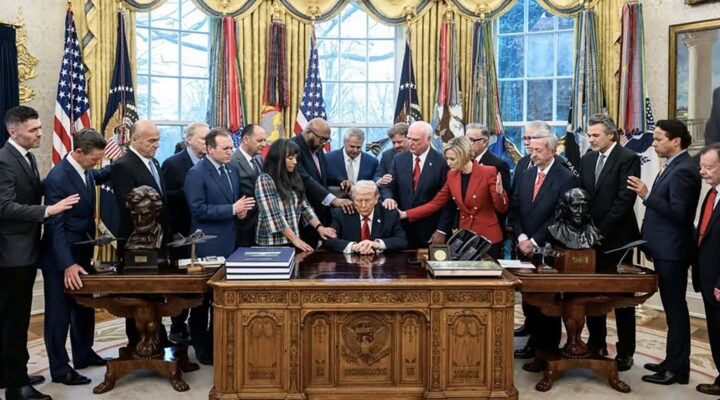
No amount of prayers is going to make this man a righteous man

Ultimately, whether the strategy is viewed as a “selfish” betrayal of a close ally or a shrewd, strategic negotiation depends entirely on whether one prioritizes the traditional US-UK “special relationship” and self-determination, or a transactional approach to international alliance management.

But just because he sits on the throne of the most powerful nation in the world does not make his actions right or supportable at all times. Other countries must be mindful of how they operate around Trump and just hope his term of office will not damage their interests to much before he is out of power.

The Levellers – Plastic Jeezus

What will be the reckoning for Donald Trump?

While Donald Trump runs around and spreads his wrath to all and sundry in a continues and seemingly unstoppable motion. It must be asked what reckoning will there be for him, either when or even before his time is spent in the presidential office. Just turning on my little TV this evening and listening to the tone of conversations and news articles it does finally feel like something has or is changing and the mad king of democracy will no longer be able to afford to get everything his own way from now on.

As of January 2026, the concept of a “reckoning” for Donald Trump refers to several impending legal, political, and social challenges scheduled to unfold throughout the year: 

1. The 2026 Midterm Elections (November 3, 2026) 

Political analysts describe the upcoming midterms as a primary “reckoning” for the second Trump presidency. While Trump’s name will not be on the ballot, the elections will serve as a referendum on his administration’s first year back in power. If Democrats regain control of the House of Representatives, they could launch new impeachment proceedings, which some describe as a “visceral reckoning” for his recent executive actions. 

2. Supreme Court and Legal Challenges

The 2026 Supreme Court term is set to address multiple cases that could redefine or limit Trump’s presidential authority. Key issues include: 

Executive Power Disputes: The court will hear cases regarding the president’s power to fire federal officials, such as those at the Federal Reserve.

Immunity and Investigations: While past rulings granted expansive immunity, the administration currently faces more than 400 lawsuits related to policies on immigration, trade, and the economy.

Media Defamation: Trump is personally involved in several high-stakes lawsuits against major media outlets, including a $10 billion claim against the Wall Street Journal and a $15 billion claim against the New York Times. 

3. Internal MAGA and Public Backlash

Critics and even some supporters suggest a potential “reckoning” within his base over specific unmet promises or controversial actions: 

Epstein Files: There is growing frustration among some “MAGA” supporters regarding the administration’s failure to release the full Jeffrey Epstein files as previously suggested.

Foreign Interventions: The January 2026 U.S. military raid to capture Venezuelan President Nicolás Maduro has sparked a debate within his base. While many applaud the action, others see it as a contradiction of his “America First” promise to avoid foreign entanglements.

International Withdrawal: The January 8, 2026, executive order to withdraw from 66 international organizations, including the UN Framework Convention on Climate Change, is creating a “foreign policy reckoning” for U.S. allies. 

4. Moral and Institutional Reckoning

Social commentators describe 2026 as a year of “moral reckoning” for American democracy, citing the administration’s use of active-duty military for mass deportations and the weaponization of the Justice Department against critics. These observers argue that the survival of democratic institutions depends on how these actions are held to account by the courts and the public in the coming months. 

Nina Simone – Sinnerman (Audio)

Donald drill baby drill Trump

Well it’s either a coincidence that this so called “Narco-Terrorism” state of a nation has tonnes of oil or the state of Venezuela has been targeted for it’s oil reserves on the pretence of it being an illegitimate government that simply no one would care about. Such reckless statesmanship by Trump could present a green light to both China and Russia to do as they choose in their own spheres of influence tearing up all agreed post world war two international rules of law and understandings on statehood. The day is truly a dark one indeed and the world is a more dangerous place thanks to Trump.

When you begin to accept the simple truth that Donald Trump lies in his presentations and statements in order to get his own way, this whole mess that is the invasion and kidnapping of the president of Venezuela really is a shit sandwich.

News media stations over in the UK are reading out the Trumps administrations statements as newsworthy factual documents whilst many of the citizens here have or are waking up to the fact that Donald Trump is a bad man that lies a lot and a con artist – but none of that is yet coming across in the mainstream media or our political representatives.

 On January 3, 2026, the Trump administration launched Operation Absolute Resolve, a large-scale military strike and Special Forces raid in Caracas that resulted in the capture of Venezuelan President Nicolás Maduro and his wife, Cilia Flores. They were subsequently transported to New York to face federal charges. 

The Trump administration has provided several primary reasons for this intervention: 

1. Law Enforcement and “Narco-Terrorism” 

The central legal justification used by the administration is the enforcement of a 2020 U.S. Department of Justice indictment. 

Criminal Charges: Maduro and Flores were charged with narco-terrorism conspiracy, cocaine importation, and weapons offenses.

Drug Influx: Trump accused the Maduro government of leading the “Cartel de los Soles” and flooding the U.S. with illegal drugs, including fentanyl and cocaine. 

2. National Security and Migration

Border Control: Trump explicitly blamed Maduro for the surge of Venezuelan migrants to the U.S., claiming Maduro “emptied his prisons” to force inmates to migrate.

Foreign Influence: U.S. officials highlighted Maduro’s close ties to Iran, Cuba, and Russia, accusing him of providing a foothold for hostile actors (including Hezbollah) in the Western Hemisphere. 

3. Economic and Oil Interests

In public remarks following the raid, Trump stated that the U.S. would now “run” Venezuela until a “safe, proper, and judicious transition” could be made. 

Oil Reserves: Trump announced plans for U.S. oil companies to move into Venezuela—which holds the world’s largest proven crude oil reserves—to rebuild infrastructure and “take back” oil wealth.

Reimbursement: He suggested that oil proceeds would be used to reimburse the U.S. for its efforts and for American interests previously pushed out of the country. 

Current Status (as of January 6, 2026)

Court Proceedings: Maduro and Flores have pleaded not guilty in a Manhattan federal court. Maduro has characterized his capture as a “kidnapping” and himself as a “prisoner of war”.

Interim Government: Following the raid, Vice President Delcy Rodríguez was sworn in as interim president in Caracas. The Trump administration has warned her she must comply with U.S. demands—including cracking down on drug flows and removing Iranian and Cuban operatives—to avoid a similar fate.

International Legality: The operation has been widely condemned by the UN Secretary-General and various world leaders as a violation of international law and the UN Charter. 

Coldplay – Spies

Trump is waging a personal war on our world and us

In real-time with continued unquenchable thirst to manipulation freedoms and thoughts by working to silencing the press that disagree with him or shut down comedians that make fun of him.

Corporation America, the once big belly of the beast of free speech and freedom, now live in fear of Trump and that’s exactly how he wants it and that’s the game he continues to play and he is winning said game. Corporations bend the knee to Trump and these are profound changes to organisations being driven by what makes Donald Trump happy and what makes him laugh and smile. They now look to do what they have to do to make him leave them alone or so to entertain him like a Roman Emperor but instead of sitting at the coliseum standing up and encouraging the massed crowds to be baying for the blood of his enemies he instead takes to social media platforms where he does the same their instead.

Facts and freedom of speech and even a sense of humour are now obstacles to pleasing him. Trump is a fighter and he takes no prisoners and is never happier than when in conflict with others. No good will come from such a war hungry spirit.

But while this war hungry spirit also just so happens to be the President of the USA, manipulating all the powers of the oval office to his will and ensuring his role as commander in chief of America is done purely to suit him, so that he is at war with anyone that might disagree with him or find what he does funny at his expense and call him out or show signs of not lapping up his distortions of truth and reality or all out lies and frankly his bullshit, well right now if your not pro Trump it seems that anything goes in taking you down or denying you oxygen in main stream media channels. The support of the Donald Trump administration really is the only ticket in town that Trump wants to be shown and he’s flexing his political muscles to make this happen right now.

Comedians in western democracies have often entertained us and enlightened us on the dark side of power and media manipulation. Comedians have long used humour to hold political and media figures accountable, exposing hypocrisy and misuse of power through satire, parody, and blunt commentary. By questioning authority and deconstructing official narratives, they offer a powerful counter-narrative to the political status quo.  

Deconstructing the illusion of power

  • Holding leaders accountable: Political comedy makes even the most untouchable or authoritarian leaders appear fallible and human, bringing their power back down to earth. By mocking perceived weaknesses or moral failings, comedians can diminish the aura of infallibility that some leaders try to cultivate.
  • Forcing uncomfortable truths: In oppressive regimes, satire can serve as a release valve and a form of resistance, allowing citizens to share grievances about inefficiency or injustice. Comedians may frame their jabs as a joke, giving them cover while still managing to “sting our consciousness” and highlight moral failures.
  • Targeting hypocrisy: Many comedians specialize in revealing the gap between a politician’s public image and their private actions. By zeroing in on inconsistencies and absurdities, they expose the performance of politics and the self-serving nature of some political agendas. 

Exposing media manipulation

  • Calling out media bias: Comedians like Jon Stewart and Stephen Colbert have long parodied the format of news and punditry shows, drawing attention to how bias shapes the media landscape. This form of parody allows them to critique biased reporting and manipulative framing from within the media’s own structure.
  • Dissecting algorithmic influence: More recently, comedians have turned their attention to the digital landscape. Jon Stewart, for example, has dissected how social media algorithms are designed to incentivize extreme engagement, manipulate users, and promote polarized and misleading content for profit.
  • Focusing on underreported stories: Programs like Last Week Tonight with John Oliver dedicate long segments to covering complex issues that mainstream outlets often ignore or simplify. By using a mix of thorough research and comedy, they shed light on the systemic failures and manipulative practices behind issues like predatory lending, data mining, and problematic local media coverage. 

Famous comedians and their methods

  • The Daily Show (Jon Stewart, Trevor Noah): Famously used a fake news format to deliver hard-hitting political commentary. The show’s “moment of Zen” provided a memorable critique of media absurdity, while field reports and interviews challenged political figures and conventional wisdom.
  • The Colbert Report (Stephen Colbert): Featured Colbert in a satirical persona of a right-wing pundit, mimicking figures like Bill O’Reilly. By using hyperbole to argue from this fabricated, self-important position, Colbert exposed the flaws and hypocrisy of personality-driven political commentary.
  • Last Week Tonight (John Oliver): Combines in-depth investigative reporting with comedic segments. The show often takes on complex policy issues, holding corporations and political systems accountable with deep dives that go far beyond typical news coverage.

ABC suspends talk show host Jimmy Kimmel indefinitely over remarks about right-wing influencer Charlie Kirk’s killing, suddenly the denial of a comedian to express his sense of humour in a joke and have freedom of speech is not making anyone laugh, except perhaps Trump and his supporters who have been calling for the cancelation of his critics for quite some time now.

I expect in Trumps eyes if you silence all mainstream criticism of him he can do no wrong and be seen to tell no lies.

Make America Hate

Trump is an isolationist at heart. There are many things which Trump does not, cannot or has no will to understand when it comes to his world view and he views others as being weak or insignificant, if they do not think and feel the same as him and his outward reaction to those who do not share in his world view is divisive and in the short, medium and long-term extremely damaging to the US, it’s allies and enemies alike. No good will come from Trumps actions and inaction as he seeks to impose his world view on all of us.

With great power comes great responsibility normally and Trump is not responsible to anything or anyone if anything he is a reckless bully or reckless bull in a china shop. His actions and lack of political accountability when signing of executive order after executive order is mind boggling. His overstepping of his executive power with the sacking of state employees, shutting down of government programs is done on a whim and not with any true political oversight judgment or accountability.

With Trump offering trade wars to break up years of stable trading relations and treaties with Canada for what appear to be petty reasoning’s in response to complex problems for the USA e.g. Trump wants Canada to become part of the USA to be used as a strategic asset and profit from this and is punishing Canada for not being part of the USA. Trump is only able to do a lot of the negative things that he is doing because his country the USA is the most powerful trading nation in the world and he is using that power as leverage. If the UK or any other nation in the world tried to do this they would be punished by others and time will see if the US will be punished and how.

His cruel turn on Canada a historic partner and ally is in complete opposition to his views on Russia – Russia really does have an elusive hold over Trump. Not that any conspiracy theorists talk about it but I do wonder if Trumps first wife or current wife could be Russian sympathizers or even agents infiltrating Trumps inner circle and making him a bonified follow of Putin’s Russia as he really does love and respect Russia’s way of doing business and has an affection for Putin.

It’s not just Putin that Trump shows support for he likes and is attracted to the political perspective of authoritarian leaders across the globe and one most damagingly supporting is that of Netanyahu in Israel he does not force a peace deal on Israel and continues to offer them an open-ended offer of arms and a blank cheque to fight against those that wish for autonomy and self governance in Gaza. So he is a man of peace when it suits him in Ukraine but also a man of war when it suits him and the politicians he shows favor to and supports when seeking war in Gaza.

Just a final thoughts I am in no way mad at or wish to upset American citizens the reasons that brought people to vote and not vote for Trump are complex and diverse. I aim to respect and understand what drives people to resort to needing a leader like Trump to vote for whilst at the same time wholeheartedly hating and fearing what Trump is capable of, what he has already done and what he will do next he neither has a moral compass nor proven limits on his power yet.


Never stop fighting, until the fighting is done!

The scenes this week when Trump and his deputy showed their true colours to Zelensky when invited to the oval office was neither a surprise nor justified. They have no interest in the war and are most likely mildly amused by the idea of trying to make a considerable amount of money over carving out a peace deal that they see themselves as the only ones that can broker and make happen. Though countries pay a price for peace for sure – no leader has gone to the negotiation table quite like Trump before.

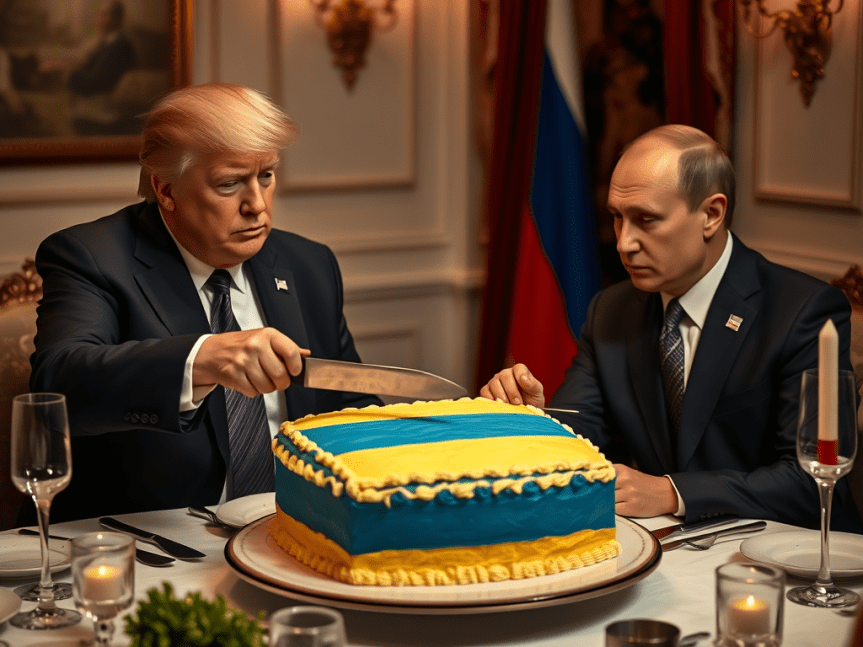
Would you like a slice Mr President, I hear it’s very good.

One thing I am also finding very interesting at present is the tone of different media sites, if you pay attention some will side with Trump (stop having those sites as a main source of information, if you dare as that’s just propaganda and disinformation for the wealthy and ruthless, some see it as being both Trumps fault as well as Zelensky which also makes me feel uncomfortable as they are just still trying to justify what Trump just did and continues to do it reminds me of a quote which is ‘Well, you can put lipstick on a hog and call it Monique, but it’s still a pig’.

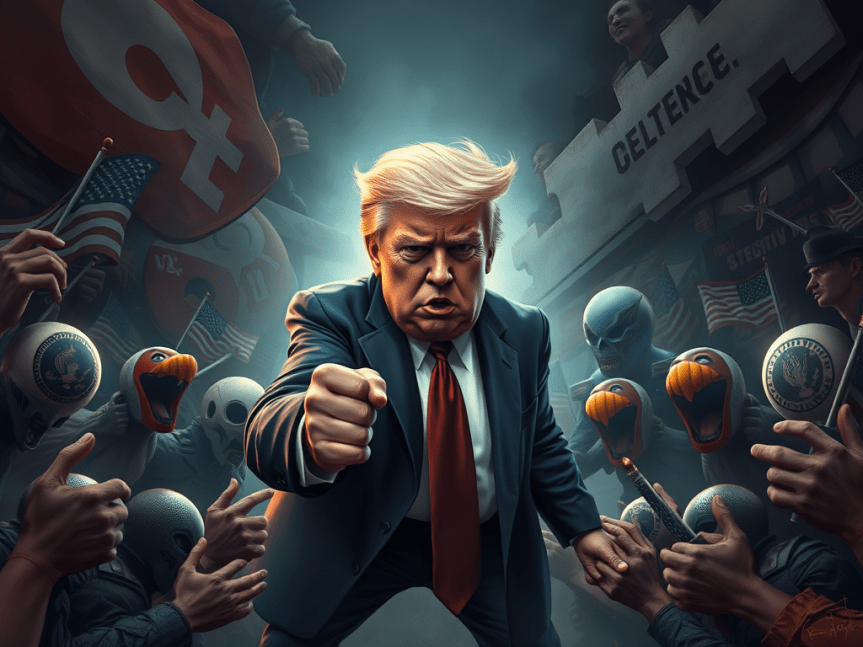
Trumplet Pig getting ready for his next performance

I part of me thought the image above was too much but the fear of the depths of the potential of Trump is a true worry to me and should be to you too. Some news sites really have taken the situation as a serious and unprecedented attack by Trump, which is what it truly and sadly is with an explanation of this story from a news outlet, cannot always explain away the two sides to each argument theory when one such as Trump is being so manipulative of the truth and outspoken in order to try and get his own way and be seen to try and win an argument

Since Trumps election I have found it quite sickening concerning all of the billionaires queuing up to kiss at the hand of the newly crowned king of the USA. Not one of them has an issue with his morality, methods of salesmanship or political perspective, which says just as much about them as it does Trump.

Lest they forgot at the next election in the states their votes will be equal to and not greater that each and every other American citizen. Imagine a world where billionaires were outlawed and their finances confiscated for the greater good. As they don’t care for your vote or your ability to have a job now, why should you care for their ability to be billionaires either.

If Trump is so keen to raise money by excessive and self serving tariffs on the economic industries and places across the globe why not tax mega wealthy of their power and influence instead? In the next four years Trump should not and will not be judged just on how much money he makes or how much power he has – but on what he does with it and what is undone because of it.

Trump now reminds me of the depiction of Al Capone, an American gangster and businessman who attained notoriety during the Prohibition era as the co-founder and boss of the Chicago Outfit from 1925 to 1931 as shown in the movie the The Untouchables a 1987 Film starring Robert De Niro (as Al Capone), Kevin Costner, Sean Connery, Andy Garcia and Charles Martin Smith. It is written by David Mamet and directed by Brian De Palma.

Though in the clip below Al Capone is met with justice I sadly don’t think it likely at present to happen to Trump in his lifetime – Trump is likely to die of old age prior to meeting justice and we have another 4 years of his bullshit still to unravel the world and its workings prior to the end of his presidency.

The Untouchables Movie CLIP – Here Endeth the Lesson (1987)

Teaching Donald Trump on Ukraine!

President Trump is leaning towards and learning more from Putin than he is from Zelensky. This reasoning sheds light on various aspects of his political behaviour and rhetoric.

Firstly, he’s a proven liar, often distorting the truth to suit his narrative and support his positions. This continuous pattern of misinformation creates an environment where trust becomes difficult to establish, not only with the general public but also with international allies.

Moreover, he does not accept that the war in Ukraine was an invasion by Putin’s Russia. This denial can be seen as a troubling alignment with Putin’s narrative, which ultimately undermines the sovereignty of Ukraine and the reality of the conflict at hand.

His lies must be supported by his allies, suggesting a need for a closed circle of support where dissenting opinions are unwelcome. This creates an echo chamber that amplifies falsehoods rather than fostering constructive dialogue or critical examination of facts.

In addition to misleading statements, he’s a proven bully. His brash demeanor and aggressive tactics in both personal and political arenas demonstrate a tendency to intimidate those who oppose him. Coupled with this is an ego that appears to need constant validation and massaging, further complicating his interactions with both leaders and constituents.

Furthermore, he often speaks out on matters that he does not care to understand fully. This lack of depth in comprehension can lead to misguided policies and decisions that have far-reaching implications, not just for the U.S., but for global stability as well.

Trump offers up taking resources off Ukraine, resources that do not belong to him and should be reserved for the needs of the Ukrainian people and their fight for independence. This approach reveals a troubling disregard for international norms and the principles of sovereignty.

Additionally, he accuses Zelensky of being a dictator, a claim that reflects more on Trump’s understanding of democracy than on the reality of Ukraine’s leadership under Zelensky. This kind of accusation showcases a broader tendency to mislabel opponents and allies alike, often for political gain rather than based on actual governance.

Finally, it seems Trump wishes for a world where the United States does not play an essential role. This sentiment, although echoed by some who are weary of entangling alliances, can lead to a dangerous isolationism that disregards the importance of U.S. involvement in global matters. Ironically, while many people share a desire for peace and self-sufficiency among nations, the path to achieving that vision lies through collaboration, not withdrawal.