America: A Nation of Immigrants or a Nation Afraid of Immigration?

The Hopes, Fears and Contradictions of the American Dream

By Huw Edwards


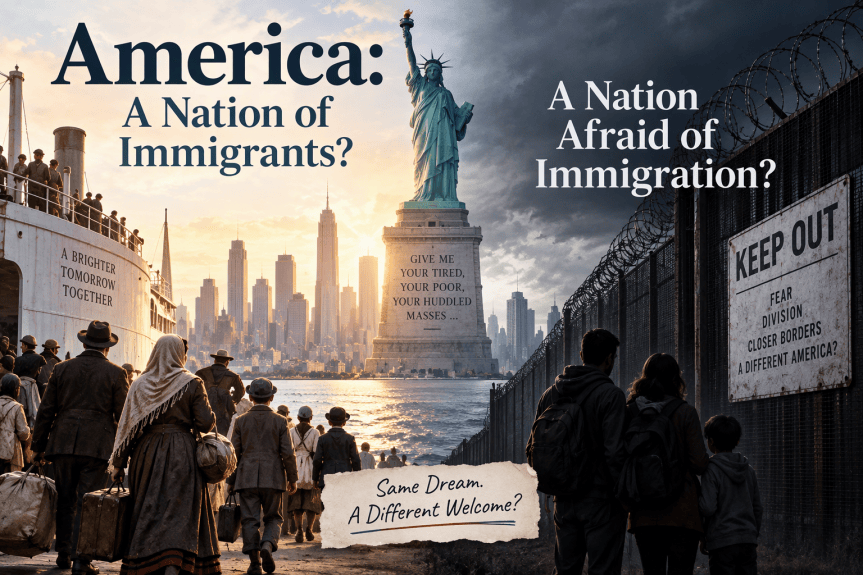
“Give me your tired, your poor, your huddled masses yearning to breathe free.”

For generations, the United States has presented itself as a beacon of opportunity. From the Statue of Liberty to Hollywood, from Silicon Valley to the open highways of the American West, the national story has often been one of newcomers arriving with hope and determination.

Yet alongside that story lies another.

Almost every major wave of immigration has been accompanied by fears of cultural change, economic competition, crime, political instability or threats to national identity. Americans are not unique in this regard. Throughout history, societies have often viewed newcomers with suspicion. What makes the United States remarkable is that this anxiety repeatedly emerges within a nation built almost entirely through migration.


A Country Built By Successive Waves Of Immigration

The phrase “nation of immigrants” is not simply political rhetoric.

With the exception of Native Americans and the descendants of enslaved people brought by force, most Americans can trace their ancestry to people who arrived seeking opportunity, safety or a better future. Europeans fleeing poverty, Jews escaping persecution, Asians pursuing opportunity, refugees escaping conflict and Latin American migrants seeking work have all contributed to building modern America.

Yet many groups now considered fully American were once viewed as outsiders.

Irish immigrants were accused of undermining social order.

Italian immigrants were portrayed as criminals.

Chinese migrants faced exclusionary laws.

Jewish refugees encountered quotas and suspicion.

Each generation seems to identify a new group that supposedly cannot integrate.

History repeatedly demonstrates otherwise.


The Reality Is More Complicated Than Politics Suggests

Immigration debates are frequently framed as a battle between compassion and security.

Reality is far more complicated.

Historical evidence suggests that not all immigrants remained permanently in the United States. Significant numbers returned home voluntarily after earning money or supporting families. Others left because they could not establish successful lives in America or because policy changes made remaining difficult. Estimates suggest that between one-fifth and one-third of immigrants who arrived since the early twentieth century ultimately departed rather than permanently settle.

The commonly used image of immigration as a one-way permanent movement often fails to reflect historical reality.

Migration has frequently been temporary, circular and shaped by economic circumstances.


Are Americans Being Taught To Fear Immigrants?

This is where the debate becomes politically charged.

Some commentators argue that politicians, media organisations and wealthy public figures deliberately amplify fears about immigration because fear is politically useful.

Others argue that public concerns arise from genuine pressures relating to housing, wages, infrastructure, social cohesion and border management.

The truth is likely to contain elements of both.

Political messaging undeniably influences public opinion. At the same time, dismissing all concerns about immigration as prejudice risks ignoring legitimate questions about how modern states manage migration effectively.

The challenge facing any democracy is distinguishing between evidence-based concerns and narratives designed primarily to provoke fear.


The Elon Musk Contradiction

One of the more interesting figures within the modern immigration debate is Elon Musk.

Musk was born in South Africa and later became a United States citizen after immigrating legally.

Critics point to an apparent contradiction between his immigrant background and support for stronger border controls.

Supporters argue there is no contradiction at all, maintaining that legal immigration and irregular migration are separate issues.

Whatever position readers take, Musk highlights an important reality.

Immigrants are not a single political group. They hold diverse opinions about economics, national identity, border policy and social change. The assumption that immigrants automatically support unrestricted immigration is not supported by evidence.


Why Some Immigrants Support Restrictions

One of the most uncomfortable observations throughout history is that groups who once faced discrimination can subsequently become sceptical of newer arrivals.

This is not usually driven by hatred.

More often it reflects concerns about competition, assimilation, social acceptance or fairness.

Individuals who spent years navigating legal immigration pathways may naturally question why others should follow different routes.

This dynamic has appeared repeatedly throughout American history and reveals something broader about human nature.

People often become protective of opportunities they fought hard to obtain.


Success Story Or Invasion?

Language matters.

Those favouring immigration tend to describe people as workers, families, asylum seekers and future citizens.

Those favouring stricter controls often describe large-scale migration as an uncontrolled influx, crisis or invasion.

Both frames shape public perceptions long before facts are examined.

The reality is that immigration has delivered enormous economic, cultural and scientific benefits to the United States. Many of America’s most successful businesses were founded by immigrants or their children.

At the same time, governments do have a responsibility to maintain confidence in borders, enforce laws and manage migration at levels communities can successfully absorb.

Ignoring either reality weakens the debate.


The Fear Experienced By Immigrants

Lost within many political arguments is the fact that immigrants themselves often live with significant uncertainty.

Fear of detention.

Fear of deportation.

Fear of family separation.

Fear that changing laws may suddenly alter years of planning and sacrifice.

While some Americans worry about immigration, many immigrants worry about America.

Understanding both perspectives may be essential if meaningful solutions are ever to be found.


What One Hundred Years Of History Suggests

The immigration debate often swings between extremes.

Some claim immigration is the solution to economic problems.

Others suggest it is the cause of economic problems.

History supports neither position.

Immigration has consistently provided labour, innovation and entrepreneurship that contributed significantly to American growth. It has also periodically generated social tensions, political conflict and policy challenges.

The challenge is not deciding whether immigration is good or bad.

The challenge is managing it in a way that balances opportunity, compassion, security and public trust.


Conclusion: Remembering The Stranger At The Gate

America remains one of history’s greatest immigrant success stories.

It is also a country that repeatedly fears the people who most resemble its own ancestors.

That contradiction may never completely disappear.

What history teaches, however, is that today’s outsiders often become tomorrow’s neighbours, colleagues, business owners and citizens.

The real question is not whether America should abandon its borders or abandon its identity as a nation of immigrants.

The real question is whether it can remember its own history.

Every American family that arrived from elsewhere was once viewed as foreign.

Every established community was once the newcomer.

Every generation faces the choice between fear and confidence.

Perhaps the future of the American dream depends upon choosing confidence more often than fear.


Sources & Further Reading

Immigration History & Assimilation

Immigration Statistics

Historical Immigration Policy

Return Migration Research

Additional Context

Blocking the rivers of trade

Stopping the flow of money & watching some rivers of finance run dry, all for an experiment that will fail and a crash and burn to the US economy.

If we were still in George Orwell’s 1984 novel then the great trade war has begun and if it was up to Trump no matter what damage he does he will be reporting this war as a victory. No matter how many jobs are lost he will be reported as improvements and gains and no matter how much money people loose they will be reported as having increased and gained.

The normal rivers of Economic trade being blocked and dammed by Trumpian probable failing economic policies will cut deep. Damaging both economic systems across the globe and Trumps ego and people’s perception of him as an intelligent and knowledgeable business man. Trump likes to see himself as a brilliant business man and an assumption of this brilliance should be a keen understanding of international economics and trade is unravelling before his eyes and stock markets around the world and recessions are on the horizon while his attempt to block flows of trade fails for the USA and rest of the world. Trade and flows of trade will likely find a way even if this is further away from the USA rather than directly to it. Yes, Trump it will be a painful transition for many but what no one can really predict with and clear insight is what the change will look like and what that change ultimately leads too. Will it result in more or less jobs and money in the USA in the long run is yet to be seen.

Economic policies and trade from country to country can be viewed as flowing of goods and services to and from places across the globe. These flows are natural and part of economic cycles. Where there is financial clout to purchase goods and services and where there is an ability to produce and design, market and provide excellent goods and services and then transport them across the globe then these flows of products and services are natural economic eco systems that take place. It’s a consumers market and Trumps policies go completely against the free flow of consumption and he fails to allow the flow of trade and consumption and in my opinion Trumps policies will ultimately fail just like many of his other policies.

But the fact that he sees himself as such a great business man means that this failure will likely hurt him the most as well as his own country the place he is in fact trying to make great again. With the shocks to share and trading markets and likely continued break down in flows of trade and consumption this will be a damming of the river of financial, goods and services trade. Jobs will be lost, goods will go up in price and business will go out of business.   

Trump says that the USA has been treated unfairly, what he is really stating is he does not agree with the economic flows of finance and he is conducting a global experiment that will likely fail for him and cause more damage to USA and global business than good for goods and services. Trump cannot buy rivers of flow and Trump can not force the USA consumer or businesses to by USA goods and services. Freedom of consumption is natural to human markets and trade he’s peddling ideas and views that will fail and meddling in economic markets and trade flows he simply just does not understand. Like a bull in a china shop its likley there will be a crash or two of the economy.

Top Trumps, Politics Today in the USA

Top Trumps is a card game first published in 1978. Each card contains a list of numerical data, and the aim of the game is to compare these values to try to trump and win an opponent’s card. A wide variety of different packs of Top Trumps has been published.

The US Supreme Court has played a real top card in favour of Trump this week with the ruling that former presidents are partially immune from criminal prosecution. The Supreme Court ruled that Trump and future and past presidents get absolute immunity for official acts carried out as a President.

For a country that lives and dies by the rule of law and power and prestige of its own democracy this is the law to end all laws. To say that one man a President of a county has immunity for official acts carried out is bizarre and surely in conflict with the US Constitution principles of governance.

Well Joe Biden is hated by a huge majority and seen as too old to govern again so it looks very much like your going to get Trumped for your next President.

I just hope he throws all his energy into making money out of the system at the expense of the social fabric of the state and showing off about how super he is and playing lots of golf, while he is President and does not do any serious long lasting damage to your constitution and country. The sooner he has departed from the office of president and this earth the better.

If he starts messing with the freedom of press in your country and the ability of truth to flow freely through your society purely for his own gains, ego and political positioning this will be deeply damaging to the state of play of US political institutions and players.

Chinese & Russian political powerbase’s must be expectant and celebrating a potential Trump victory. Trump will try to dismantle NATO and President Putin will continue to disarm and conquer  the Ukraine and China mght well be tempted to take over Taiwan.

The majority of citizens in all countries across the world will be hoping and praying that Trumps actions and inactions will not come back to haunt them.

Living in a country that is hopefully about to come out of some 14 years of Conservative incompetence in governance this week, it will feel more like relief than a celebration and a severely punished conservative party by the electorate, could end up seeing them becoming the third largest party in British politics rather than the largest.

Sadly the US democratic system is institutionally designed for just the worship or support of two parties and even if Trump seriously damages the support for Republicanism, this will likely be a short term problem for Republicans as there is no grass root movement to ever replace them nor is there the will of the people to see them gone.

Everything is not lost, though for one think he is not in power yet and if he comes to power he will also lose it again.

Coldplay – Everything’s Not Lost (Includes Hidden Track ‘Life Is For Living’)

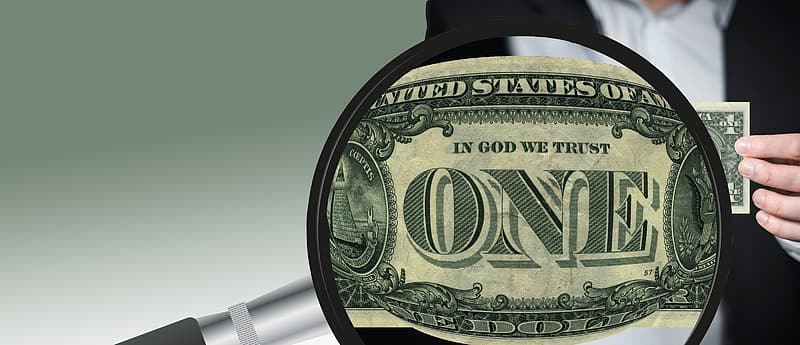
In God We Trust

James Mattis latest speech in full

I have watched this week’s unfolding events, angry and appalled. The words “Equal Justice Under Law” are carved in the pediment of the United States Supreme Court. This is precisely what protesters are rightly demanding. It is a wholesome and unifying demand-one that all of us should be able to get behind. We must not be distracted by a small number of lawbreakers. The protests are defined by tens of thousands of people of conscience who are insisting that we live up to our values-our values as people and our values as a nation.

When I joined the military, some 50 years ago, I swore an oath to support and defend the Constitution. Never did I dream that troops taking that same oath would be ordered under any circumstance to violate the Constitutional rights of their fellow citizens-much less to provide a bizarre photo op for the elected commander-in-chief, with military leadership standing alongside.

 We must reject any thinking of our cities as a “battlespace” that our uniformed military is called upon to “dominate.” At home, we should use our military only when requested to do so, on very rare occasions, by state governors. Militarizing our response, as we witnessed in Washington, D.C., sets up a conflict-a false conflict between the military and civilian society. It erodes the moral ground that ensures a trusted bond between men and women in uniform and the society they are sworn to protect, and of which they themselves are a part. Keeping public order rests with civilian state and local leaders who best understand their communities and are answerable to them.

James Madison wrote in Federalist 14 that “America united with a handful of troops, or without a single soldier, exhibits a more forbidding posture to foreign ambition than America disunited, with a hundred thousand veterans ready for combat.” We do not need to militarize our response to protests. We need to unite around a common purpose. And it starts by guaranteeing that all of us are equal before the law.

Instructions given by the military departments to our troops before the Normandy invasion reminded soldiers that “The Nazi slogan for destroying us…was `Divide and Conquer.’ Our American answer is `In Union there is Strength.” We must summon that unity to surmount this crisis-confident that we are better than our politics.

Donald Trump is the first president in my lifetime who does not try to unite the American people- does not even pretend to try. Instead he tries to divide us. We are witnessing the consequences of three years of this deliberate effort. We are witnessing the consequences of three years without mature leadership. We can unite without him, drawing on the strengths inherent in our civil society. This will not be easy, as the past few days have shown, but we owe it to our fellow citizens; to past generations that bled to defend our promise; and to our children.

We can come through this trying time stronger, and with a renewed sense of purpose and respect for one another. The pandemic has shown us that it is not only our troops who are willing to offer the ultimate sacrifice for the safety of the community. Americans in hospitals, grocery stores, post offices, and elsewhere have put their lives on the line in order to serve their fellow citizens and their country. We know that we are better than the abuse of executive authority that we witnessed in Lafayette Square. We must reject and hold accountable those in office who would make a mockery of our Constitution. At the same time, we must remember Lincoln’s “better angels,” and listen to them, as we work to unite.

Only by adopting a new path-which means, in truth, returning to the original path of our founding ideals-will we again be a country admired and respected at home and abroad.

James Mattis

What is Freedom?

freedom/ˈfriːdəm/ Learn to pronounce nounnoun: freedom; noun: freedom from; plural noun: freedom froms; plural noun: freedoms

  1. 1. the power or right to act, speak, or think as one wants.”we do have some freedom of choice” h Similar:right to

entitlement to privilege prerogative due

  • absence of subjection to foreign domination or despotic government. “he was a champion of Irish freedom” h Similar:independence

self-government self-determination self-legislation self rule home rule sovereignty autonomy autarky democracy self-sufficiency individualism separation non-alignment emancipation enfranchisement manumission h Opposite:dependence the power of self-determination attributed to the will; the quality of being independent of fate or necessity. h Similar: scope latitude leeway margin flexibility facility space breathing space room elbow room licence leave free reina free hand leisure carte blanche

  • h Opposite:restriction

2. the state of not being imprisoned or enslaved.”the shark thrashed its way to freedom” h Similar: liberty liberation release emancipation deliverance delivery dischargenon-confinemen textrication amnesty pardoning manumission disenthralment h Opposite:captivity

  • the state of being unrestricted and able to move easily.”the shorts have a side split for freedom of movement”
  • unrestricted use of something.”the dog has the freedom of the house when we are out”

3. the state of not being subject to or affected by (something undesirable).”government policies to achieve freedom from want” h Similar: exemption immunity dispensation exception exclusion release relief reprieve absolution exoneration impunity letting offa let-offderogation h Opposite:liability4. Britisha special privilege or right of access, especially that of full citizenship of a city granted to a public figure as an honour.”he accepted the freedom of the City of Glasgow”5. archaicfamiliarity or openness in speech or behaviour. h Similar: naturalness openness lack of reserve/inhibition casualness informality lack of ceremony spontaneity ingenuousness impudence familiarity over familiarity presumption forwardness

  1. cheek

Origin

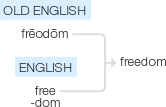
Old English frēodōm (see free, -dom).Translate freedom toUse over time for: Freedom

Freedom Tree, Elizabeth Marina, St. Helier, Great Britain

Food for thought!

Ask not what you can do to your country but what your country can do to you.

President Trump is no Kennedy but let your country have a Future and your children have  a Mother or Father an Uncle or an Aunt a Grandparent or guide or most importantly let your future seed have a life.

Ich bin ein Berliner

“Ich bin ein Berliner“ (German pronunciation: [ˈʔɪç ˈbɪn ʔaɪn bɛɐ̯ˈliːnɐ], “I am a Berliner“) is a speech by United States President John F. Kennedy given on June 26, 1963, in West Berlin. It is widely regarded as the best-known speech of the Cold War and the most famous anti-communist speech. Kennedy aimed to underline the support of the United States for West Germany 22 months after Soviet-occupied East Germany erected the Berlin Wall to prevent mass emigration to the West. The message was aimed as much at the Soviets as it was at Berliners and was a clear statement of U.S. policy in the wake of the construction of the Berlin Wall. Another phrase in the speech was also spoken in German, “Lasst sie nach Berlin kommen” (“Let them come to Berlin”), addressed at those who claimed “we can work with the Communists”, a remark at which Nikita Khrushchev scoffed only days later.

The speech is considered one of Kennedy’s best, both a notable moment of the Cold War and a high point of the New Frontier. It was a great morale boost for West Berliners, who lived in an enclave deep inside East Germany and feared a possible East German occupation. Speaking from a platform erected on the steps of Rathaus Schöneberg for an audience of 120,000, Kennedy said,

From Wikipedia, the free encyclopedia

Jump to navigation Jump to search

https://upload.wikimedia.org/wikipedia/commons/thumb/c/c0/Audio-input-microphone.svg/50px-Audio-input-microphone.svg.pngIch bin ein Berliner (I am a Berliner) speech Play media Speech from the Rathaus Schöneberg by John F. Kennedy, June 26, 1963. Duration 9:01; “Ich bin ein Berliner” first appears at 1:45, then again at 8:43. Ich bin ein Berliner (“I am a Berliner”) speech (audio) Menu 0:00 Audio-only version (Duration 9:22)
Problems playing these files? See media help.
Part of a series on the
History of Berlin
Coat of arms of the City of Berlin
Margraviate of Brandenburg (1157–1806)
Kingdom of Prussia (1701–1918)
German Empire (1871–1918)
Free State of Prussia (1918–1947)
Weimar Republic (1919–1933)
1920s Berlin Greater Berlin Act
Nazi Germany (1933–1945)
Welthauptstadt Germania Bombing of Berlin in World War II Battle of Berlin
West Germany and East Germany (1945–1990)
West Berlin and East Berlin Berlin Wall Berlin Blockade (1948–1949) Berlin Crisis of 1961 “Ich bin ein Berliner” (1963) “Tear Down This Wall” (1987) Fall of the Berlin Wall
Federal Republic of Germany (1990–present)
History of Germany and History of Europe
See also
Timeline of Berlin

June the 2nd 2020 – Where is the Love?

Heart of the free world

I see the U.S.A. as the heart of the free world. With Covin-19, your President’s volatile nature where he bates and try’s to control or cancel all and any he see as his opposites or enemies, along with the recent protests over the death of George Floyd. The heart of the free world is really taking a heart beating and palpitating close to having a full on cardiac arrest.

I never wanted to visit the U.S.A. it always looked too dangerous, too scary and finally too expensive. But some of its people that I meet on the World Wide Web are hugely inspiring and influence my views and perspective on life. They appear if in the realms of fantasy and fiction like living legends, earth angels and walking saints.

So in essence the U.S.A is a paradox.

Paradox/ˈparədɒks/ Learn to pronounce nounnoun: paradox; plural noun: paradoxes

  1. a seemingly absurd or contradictory statement or proposition which when investigated may prove to be well founded or true.

Throughout the history of the free world it has many times thought led and beaten back all in the name of freedom. Free thought, free economicsish (ok but true freedom should be a freedom to purchase the perfect product for example clean water not just the right to flog any old shit to anyone i.e. dirty chemically polluted water). Plus your normal lack of safety netting for those that need support to stand up and get back into the economy is just downright destructive to all.

When the U.S.A gifts freedoms to corporations it has forgotten or refused to equally gift both rights and responsibilities of not being ripped off, persecuted, shot, stolen from or killed to its own citizens regardless of race, creed or colour.

Where all are equal but some more than others