

🌍 The seduction of techno‑optimism
Techno‑optimism thrives on a simple narrative: innovation will save us. It’s a comforting story, especially when told by charismatic billionaires with rockets, supercomputers, and grand visions of humanity’s next frontier.
But as your attached text sharply points out, this optimism collapses when placed next to the realities we are failing to confront:
“An inability to fix real problems here on earth such as reductions in species and biodiversity… and an inability to confront a real climate crisis is far more damaging than any technological advancement…”
The problem isn’t technology itself — it’s the belief that technological progress automatically equals societal progress. It doesn’t. Not when political systems, corporate incentives, and global power structures remain unchanged.
🏭 1. Tech cannot solve problems created by power

Corporate techno‑optimism often treats crises as engineering puzzles. But biodiversity collapse, climate destabilisation, and geopolitical aggression are not engineering failures — they are political and ethical failures.
Your document captures this perfectly:
“The powerful take what they want, rewrite the narrative, and leave the most vulnerable to pay the price.”
No amount of AI, carbon capture, or space exploration can compensate for governance systems that reward extraction over preservation.
🔥 2. The climate crisis exposes the limits of the billionaire fix

Tech leaders promise electric cars, reusable rockets, and geoengineering. Yet emissions rise, ecosystems collapse, and political will evaporates. Why? Because the crisis is not technological — it is structural.
- Fossil fuel giants still receive billions in subsidies.
- Governments still prioritise GDP over ecological survival.
- Corporations still treat nature as a ledger entry, not a living system.
Techno‑optimism becomes a distraction when it encourages society to wait for a breakthrough instead of demanding systemic change.
🐾 3. Biodiversity loss is not a problem you can “innovate away”
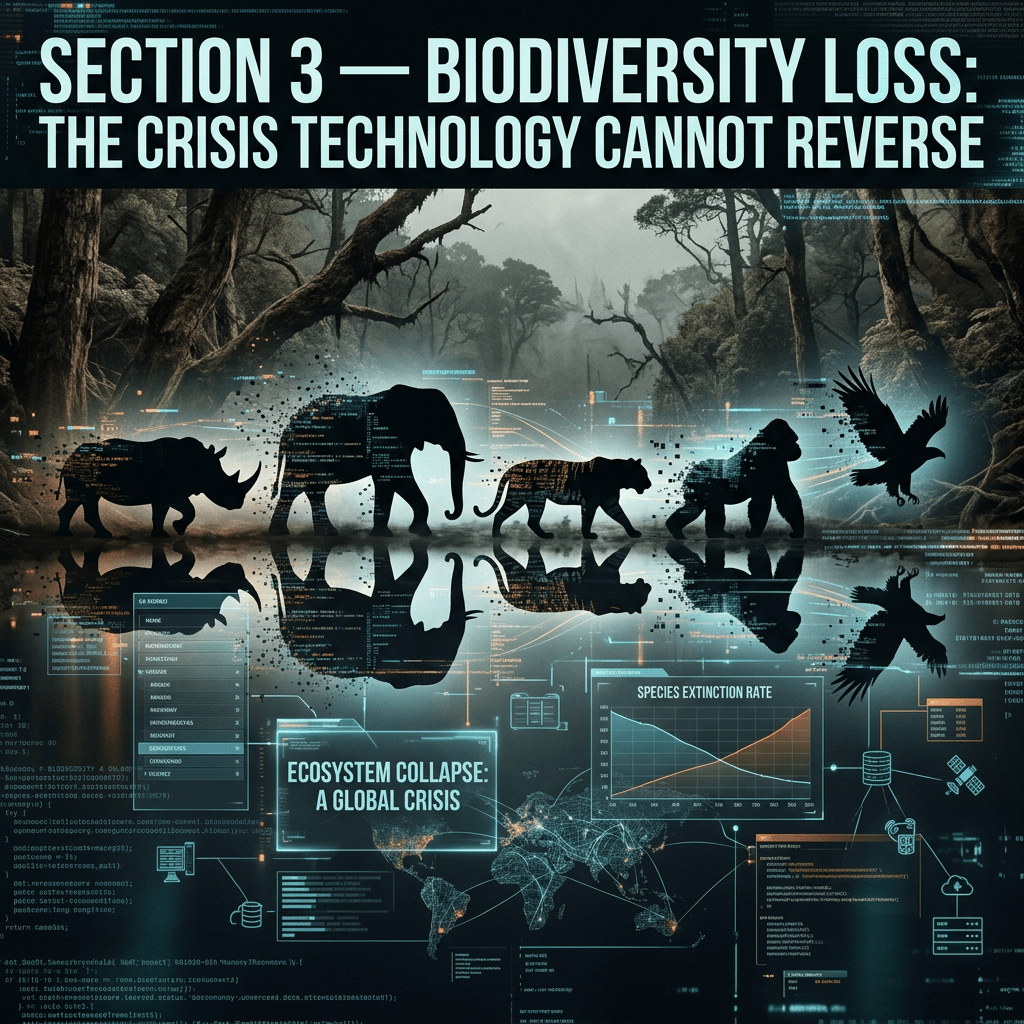
Species extinction is irreversible. No app, drone, or satellite can rebuild a rainforest or resurrect a collapsed food web. Corporate techno‑optimism struggles here because it is built on the assumption that all problems are fixable with enough capital and cleverness.
But ecological systems do not negotiate with markets.
⚔️ 4. The geopolitical parallel: rewriting blame

Your document draws a provocative comparison between environmental destruction and the narrative manipulation around the invasion of Ukraine:
“Next thing people will call Putin a humanitarian… blaming Zelensky for not allowing Russia to take a profitable slice of Ukraine.”
This is not hyperbole — it’s a pattern. Aggressors rewrite reality. Corporations do the same. Both rely on public confusion to justify harm.
Techno‑optimism often participates in this rewriting by framing systemic crises as individual lifestyle problems (“use fewer straws”) while shielding the true drivers of destruction.
🚀 5. The myth of the saviour‑CEO

Corporate techno‑optimism elevates figures like Musk and Bezos into quasi‑political actors. They are framed as visionaries who will deliver humanity from crisis through innovation alone.
But this belief is dangerous because:
- It bypasses democratic accountability.
- It concentrates power in unelected individuals.
- It treats public problems as private playgrounds.
As your document notes, this mirrors the logic of authoritarianism — the idea that strongmen, whether political or corporate, should dictate the future.
🌱 6. What actually works
If techno‑optimism has limits, what lies beyond it?
Systemic change. Not gadgets. Not billionaire visions. Not escape plans to Mars.
Real solutions look like:
- Binding global biodiversity protections
- Ending fossil fuel subsidies
- Regulating extractive industries
- Strengthening democratic institutions
- Redistributing power away from corporate monopolies
- Investing in ecological restoration at planetary scale
Technology can support these goals — but it cannot replace them.
🧭 Final thought
Corporate techno‑optimism is not inherently wrong. Innovation matters. But when it becomes a cultural shield that hides political failure, ecological destruction, and corporate greed, its limits become painfully clear.
The future will not be saved by rockets, apps, or charismatic CEOs. It will be saved by collective ethics, accountable governance, and a refusal to let power rewrite reality.
Technology and modenism has to be ecologically responsible in order for the planet to move forward as a living organism.
Technology and Modernism Must Be Ecologically Responsible
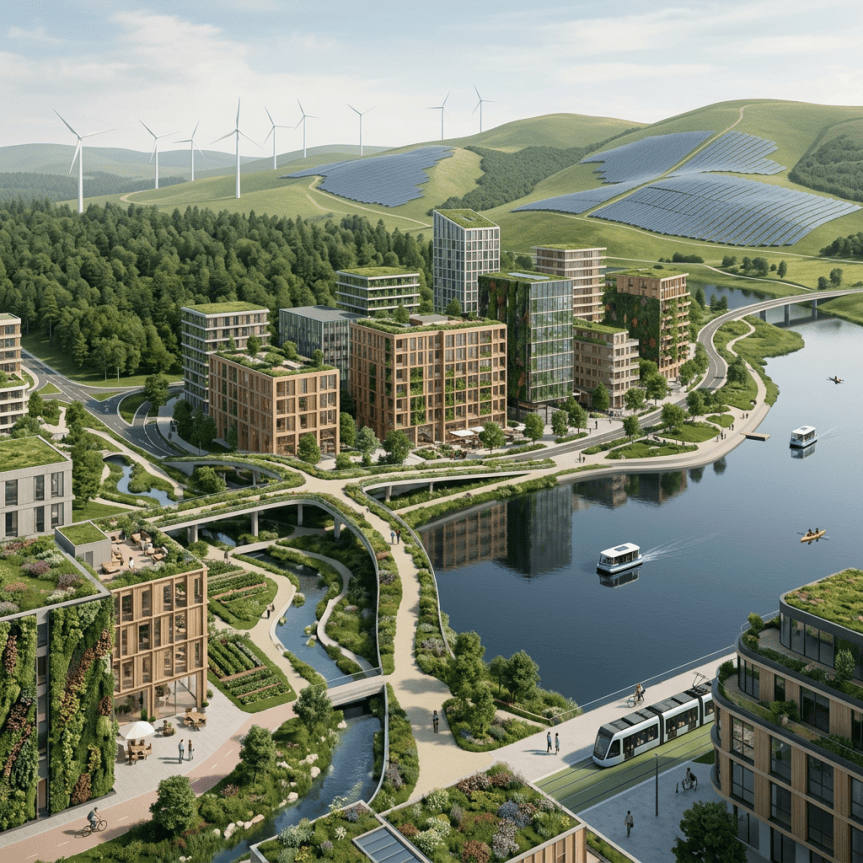
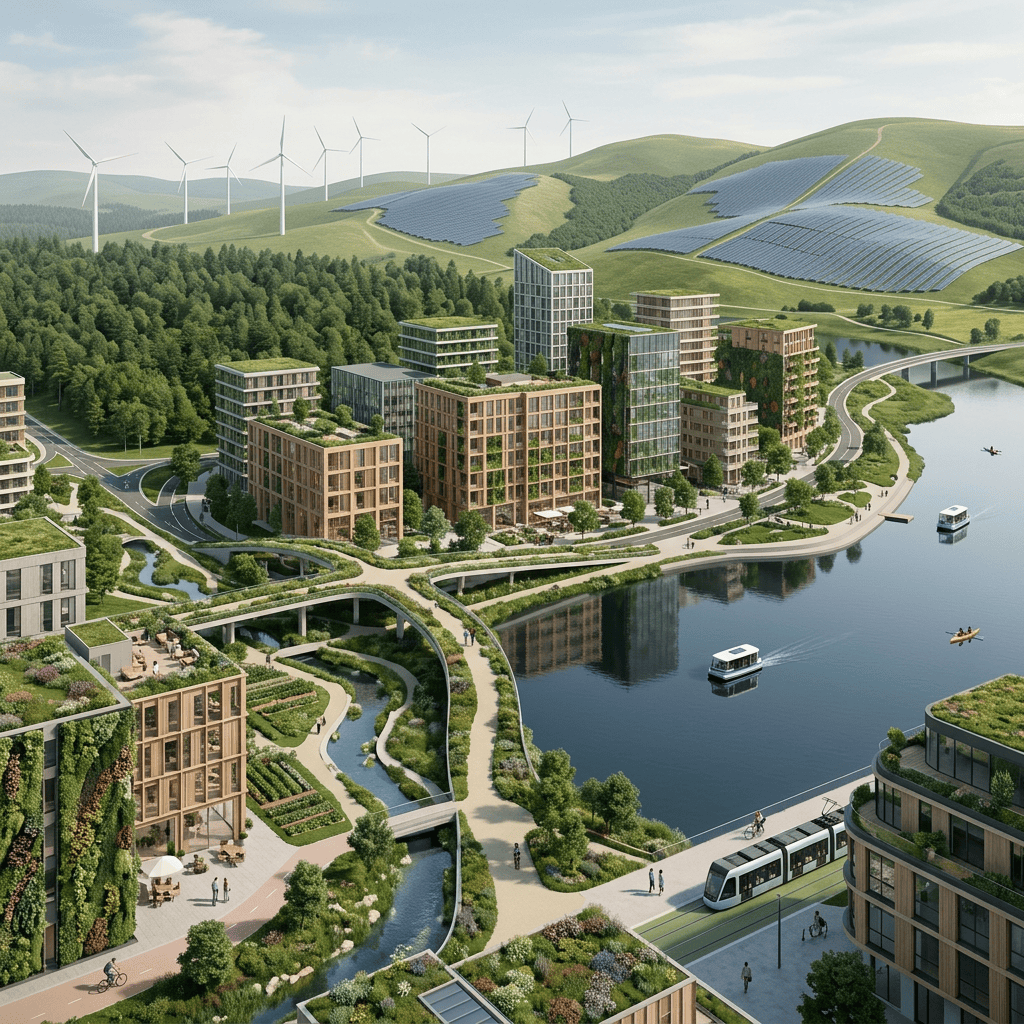
Modernism promised a world of speed, efficiency, and mastery over nature. Technology amplified that promise, giving us tools capable of reshaping landscapes, economies, and even the climate itself. But the planet is not a passive stage for human innovation — it is a living organism with limits, thresholds, and feedback loops.
When technology ignores those limits, it becomes extractive rather than progressive.
Ecological responsibility is not an optional moral add‑on to modernism; it is the precondition for any future worth living in. A civilisation that destabilises the biosphere undermines the very foundation on which its technological achievements stand.
This is why techno‑optimism rings hollow when it refuses to confront ecological reality. Innovation without ecological accountability is simply a faster way of reaching collapse.


