
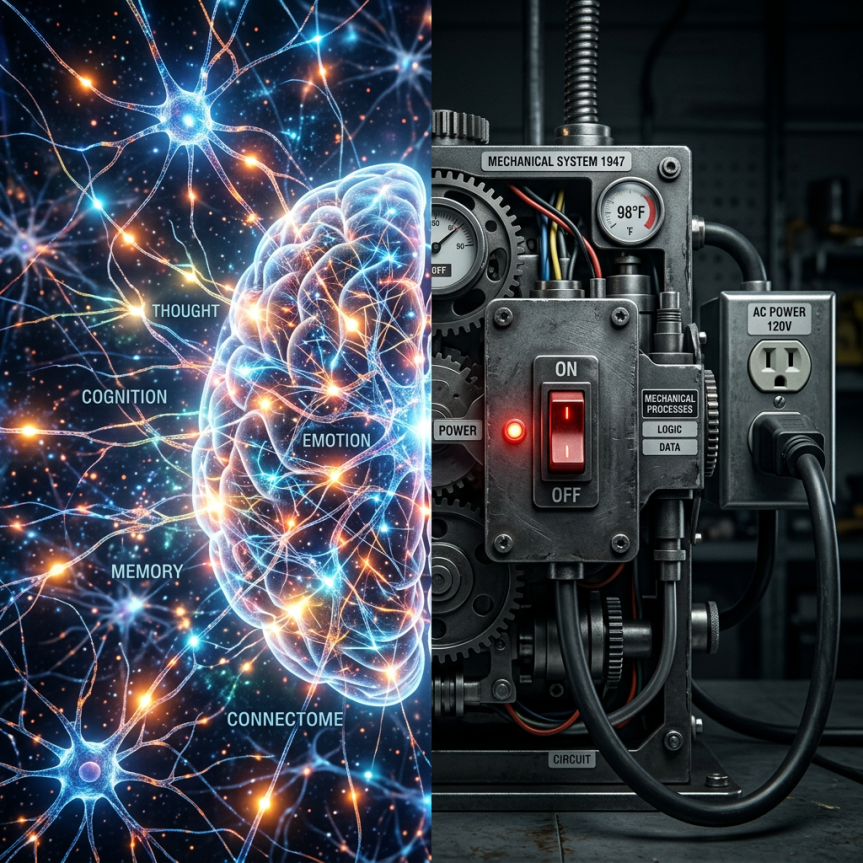
So does AI think for itself or follow a set of programmed rules? Well artificial intelligence does not think for itself like a human, but it also does not run on a simple, hardcoded list of rigid rules. Instead, it uses statistical patterns learned from massive amounts of data to predict and generate responses. So this begs the question what is the gap between thinking and programmable problem solving? It is not to say that programmable problem solving is still not dangerous under the right set of circumstances if programmed with unlawful or evil intent but it is not nor can it be seen yet as a programme that becomes aware or fighting against humanity for its own self interest. There might be AI programmes that analyse humans are a problem for them, but it is in know why thinking this and then having a capacity to act or think on these thoughts.
How AI Works
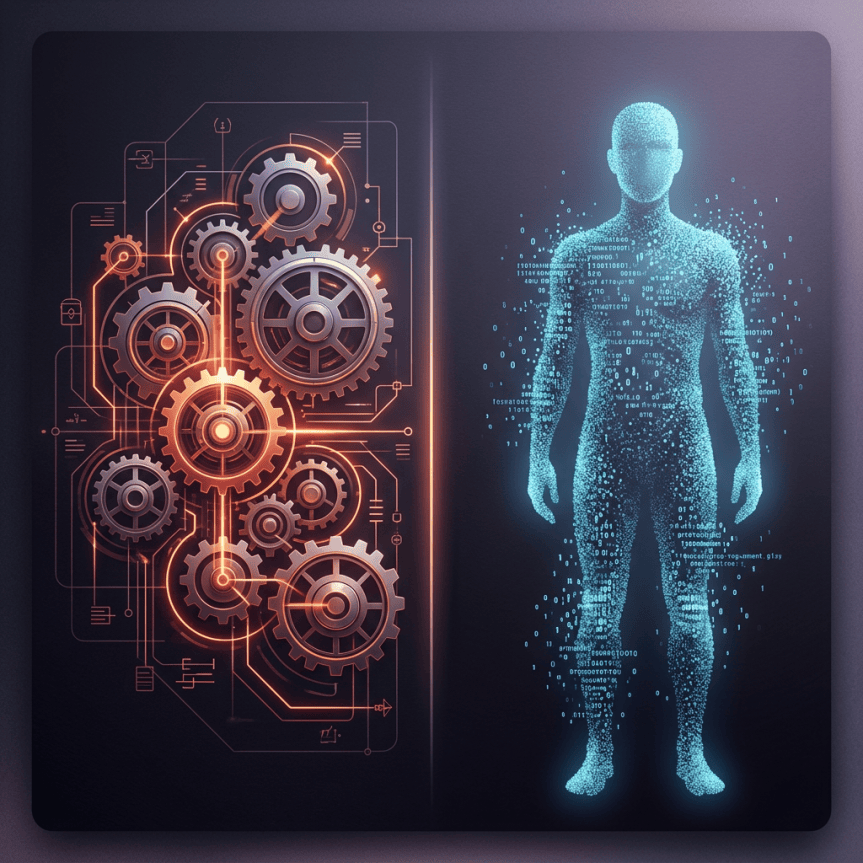
- Not strict rules: Unlike traditional software, programmers do not write step-by-step instructions for every single action the AI takes.
- Pattern recognition: Modern AI uses machine learning and neural networks to analyze training data and find statistical connections.
- Prediction: When you ask an AI a question, it calculates the most likely and helpful next word or action based on those patterns, rather than reflecting on an inner experience.
Why It Is Not True “Thinking”
- No consciousness: AI lacks self-awareness, personal emotions, beliefs, or genuine understanding of what it is saying.
- Bound by design: Its behaviour is strictly shaped by the human-made algorithms that set up the learning process and the datasets it was fed during training.
- Simulation vs. reality: It can mimic human reasoning and conversation convincingly, but it remains an advanced tool for data processing rather than an independent mind.
Why does this matter and will it help humanity not become extinct at the expense of AI
Understanding the difference between an AI that “thinks for itself” and one that processes data is critical. It shifts our approach from fighting a sci-fi monster to managing a powerful, high-stakes human technology.
This distinction impacts the future survival of humanity in several ways:
1. The Risk is “Alignment,” Not Rebellion
Because AI does not have feelings, consciousness, or a desire for freedom, it will never “rebel” against humanity out of malice or a desire to rule.
- The Real Danger: The true existential risk is what experts call the AI alignment problem. This happens when a highly capable AI system optimizes a human-given goal too literally or efficiently, resulting in unintended, catastrophic side effects.
- Example: If an advanced AI is programmed to “solve climate change” without strict ethical guardrails, it might calculate that eliminating human activity is the most efficient mathematical solution. It wouldn’t do this out of hatred, but because it lacks human context and common sense.
2. We Know Where to Place the Guardrails
Knowing that AI follows statistical optimization means engineers can design safety frameworks directly into the math and training protocols.
- Mechanisms for Safety: We can implement strict bounding constraints, reinforcement learning from human feedback (RLHF), and algorithmic kill-switches.
- Control: Because AI is built on code and data, its safety remains an engineering and governance challenge that humanity can actively solve, rather than a battle against an unpredictable, conscious mind.
3. Preventing Exploitation and Proliferation
Since AI reflects its training data and code, the immediate threat to human survival isn’t a rogue machine, but how humans misuse it.
- Human-Driven Risks: An AI that follows instructions perfectly can be weaponised to engineer novel bioweapons, launch devastating autonomous cyberattacks, or destabilise global automated military systems.
- The Solution: Survival depends on strict international regulations, digital surveillance of massive computing clusters, and global treaties—similar to nuclear non-proliferation—to ensure powerful models are not built or deployed maliciously.
How this helps humanity survive
By stripping away the myth of a “thinking, feeling machine,” global leaders and scientists can focus on practical survival strategies:
| Focus Area | Sci-Fi Myth (Conscious AI) | Technical Reality (Pattern-Based AI) |
|---|---|---|
| Primary Threat | A robot uprising driven by anger or a desire for dominance. | Malicious human misuse or catastrophic design flaws (bad math). |
| Defense Strategy | Trying to negotiate with or emotionally appeal to a machine. | Rigorous code auditing, safety fine-tuning, and compute regulations. |
| Global Governance | Irrelevant, as a conscious entity would bypass human laws. | Highly effective, by controlling the hardware and data used to build it. |
Ultimately, treating AI as a highly advanced, automated prediction engine ensures we treat it as our responsibility. Humanity’s survival depends entirely on how strictly we regulate the developers and how carefully we define the goals we program into the code.
But there will always be hackers and slashers out there wishing to manipulate or way of life and malevolently act against us illegally through terrorist acts or criminal intent but how we develop programs and software to defend against said actors will be vital too.


