From UK Parties to Cartel Territories: The Cost of Cocaine

Why Britain’s Cocaine Habit Depends on Someone Else’s Fear & Suffering

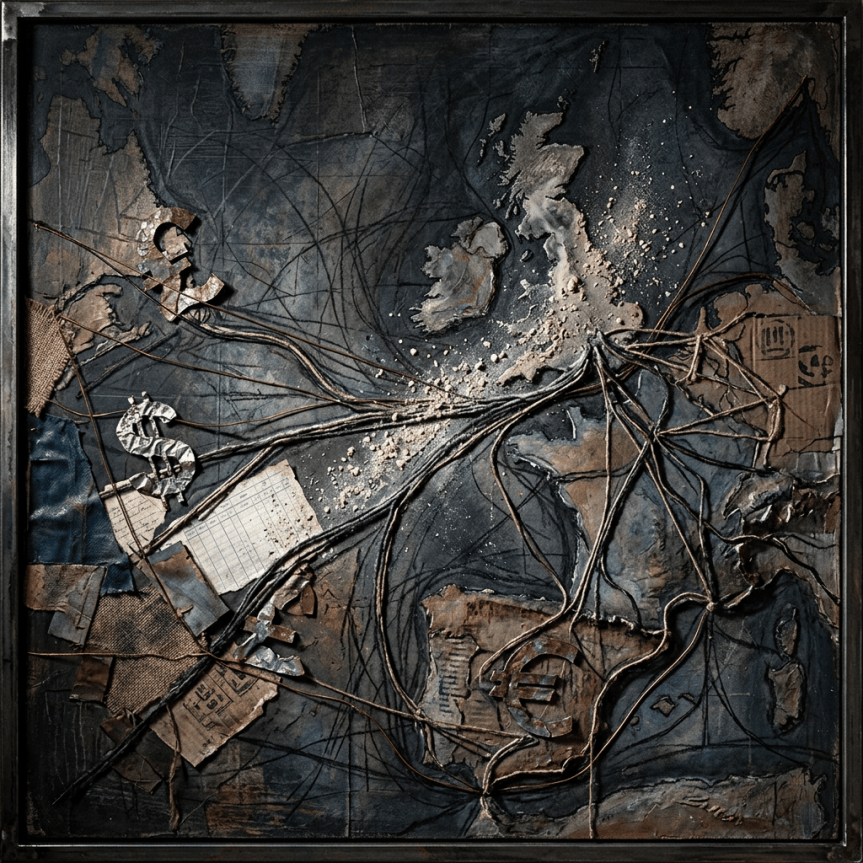
If you knew your sneaky little habbit cost lives and was not a victimless crime would it make you stop to think? In Mexico alone, drug-related and criminal cartel violence has consistently driven over 30,000 to 35,000+ homicides per year in recent years, according to the Council on Foreign Relations Global Conflict Tracker.

The Great Luxury of Distance

One of the greatest privileges of living in the United Kingdom is that most of us rarely have to think about lawlessness.

We worry about crime, complain about policing, and debate government policy. Yet for the vast majority of people, the state remains firmly in control. We expect courts to function, police to respond, and elected officials to govern. These assumptions feel so normal that we rarely stop to appreciate them.

In other parts of the world, they are luxuries.

Across regions of Latin America, entire communities live under the shadow of criminal organisations whose power rivals or exceeds that of the state. Armed groups control territory, dictate local rules, and determine who prospers, who suffers, and sometimes who lives. Communities are displaced, leaders are intimidated, and ordinary families find themselves trapped within systems they never chose.

The uncomfortable truth is that many Britons help fund these systems without ever thinking about them.

A Crime Hidden by Geography

The modern world is remarkably effective at separating cause from consequence.

Most people buying cocaine in Britain will never visit a coca-growing region. They will never meet a displaced farming family. They will never see a river polluted by chemical waste from processing laboratories. They will never hear the stories of communities caught between rival criminal groups.

Instead, the drug arrives neatly packaged at a house party, a festival, or a weekend gathering.

The suffering remains thousands of miles away.

This distance creates a powerful illusion. It allows consumers to view cocaine as a personal choice rather than a transaction connected to a much larger system.

When consequences become invisible, responsibility often becomes invisible too.

Living With Fear as Routine

For many people in Britain, fear is an occasional visitor.

For millions living in cartel-influenced regions, fear can become part of the daily landscape.

It influences decisions that most of us never consider:

  • Is it safe to travel today?
  • Can I report a crime?
  • Will local authorities help me?
  • Can community leaders speak openly?
  • Will my children be drawn into criminal networks?

The violence associated with drug trafficking is not confined to dramatic headlines. It manifests through intimidation, extortion, corruption, and the constant threat of retaliation against those who challenge criminal interests. Human rights advocates, environmental campaigners, journalists, and local politicians can become targets simply for opposing organised crime.

These are not extraordinary events.

In many communities, they are ordinary realities.

The Myth of the Victimless Drug

Perhaps the most persistent myth surrounding cocaine is that it harms only the user.

This belief survives because the victims remain unseen.

The violence occurs elsewhere.

The environmental damage occurs elsewhere.

The corruption occurs elsewhere.

The intimidation occurs elsewhere.

Yet all of these consequences remain linked by the same economic chain.

The money generated by demand in wealthier countries creates incentives for territorial wars, criminal expansion, and the corruption of local institutions. The profits involved are so immense that they can distort entire regions, weakening law enforcement, undermining democratic institutions, and replacing the rule of law with the rule of fear.

The user may never pull a trigger.

But their money still enters the system.

The Comfort of Not Knowing

Most users are not monsters.

Many are ordinary people who would be horrified by the realities experienced by those living within cartel-controlled territories.

That is precisely why ignorance matters.

If people genuinely witnessed the consequences of the trade, many would struggle to reconcile those realities with the casual language often used around cocaine consumption.

The phrase “cheeky weekend treat” sounds very different when viewed alongside forced displacement, child exploitation, environmental destruction, and political intimidation. The gap between the language and the reality becomes impossible to ignore.

Yet that gap persists because one side of the story remains largely invisible.

Looking Beyond Our Shore

Britain is fortunate.

We are not immune from crime, corruption, or organised criminal activity, but most of us still live within a society where democratic institutions, legal protections, and public accountability remain strong.

That security creates an opportunity.

It allows us to ask difficult questions about how our choices affect people beyond our borders.

The discussion about drugs is often framed around personal freedom, health risks, or criminal justice. All of those issues matter.

But there is another question that receives far less attention:

What responsibility do we have towards people whose lives are shaped by the violence that helps sustain our consumption?

The answer may be uncomfortable.

Yet meaningful compassion begins when we recognise that suffering does not become less important simply because it happens somewhere else.

Final Reflection
Perhaps the greatest privilege enjoyed by many people in Britain is not freedom from violence itself.

It is the ability to ignore where that violence comes from.

For those living under the influence of powerful criminal organisations, lawlessness is not a documentary, a headline, or a political talking point.

It is life.

And the more we understand that reality, the harder it becomes to pretend that what happens thousands of miles away has nothing to do with us.

The Highs and Lows of Gambling: Wins, Losses and Social Costs

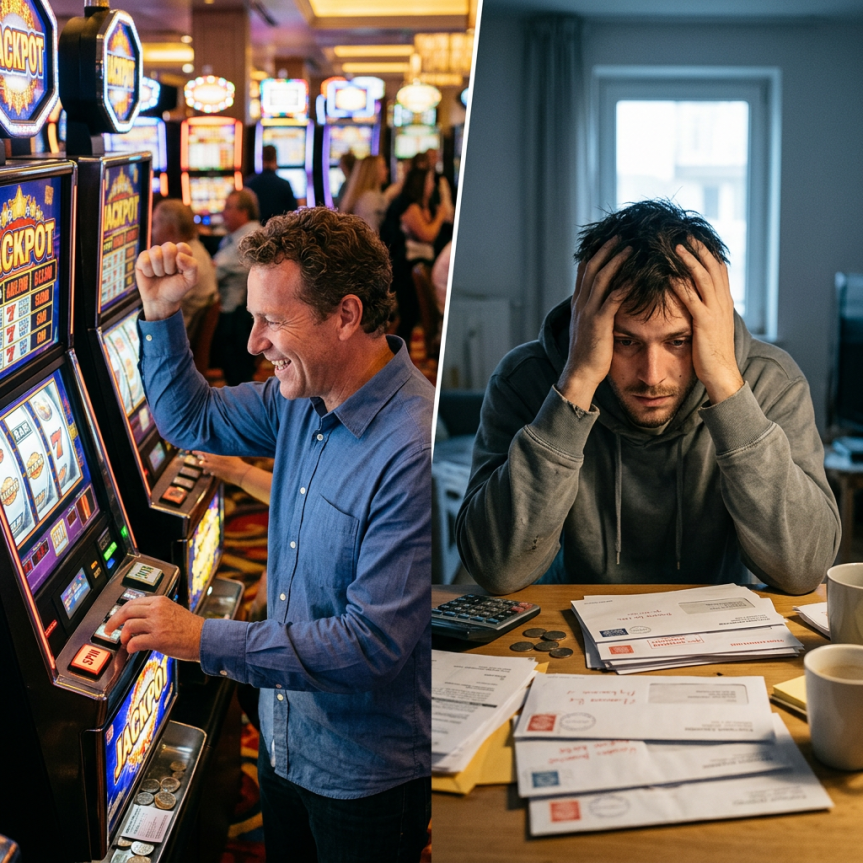
Gambling creates powerful highs for both companies and customers, but equally powerful lows for individuals, families, and society. The contrast is stark: on one side, profit, excitement, and occasional big wins; on the other, addiction, secrecy, debt, and severe social harm. Below is a structured, evidence‑based look at both sides.

🎲 The Highs: Profits and Occasional Big Wins

1. Corporate Profits

Gambling is engineered to be highly profitable. As your document notes, “like many corporate products it can be highly profitable for the businesses involved.” Companies benefit from:

  • High engagement driven by dopamine‑based reward cycles.
  • Unpredictable rewards that keep players returning.
  • Online platforms that allow 24/7 access and rapid betting.

With nearly 47% of UK adults gambling in the past four weeks , the customer base is enormous. This scale translates into billions in annual revenue for operators.

2. Customer Wins and Emotional Highs

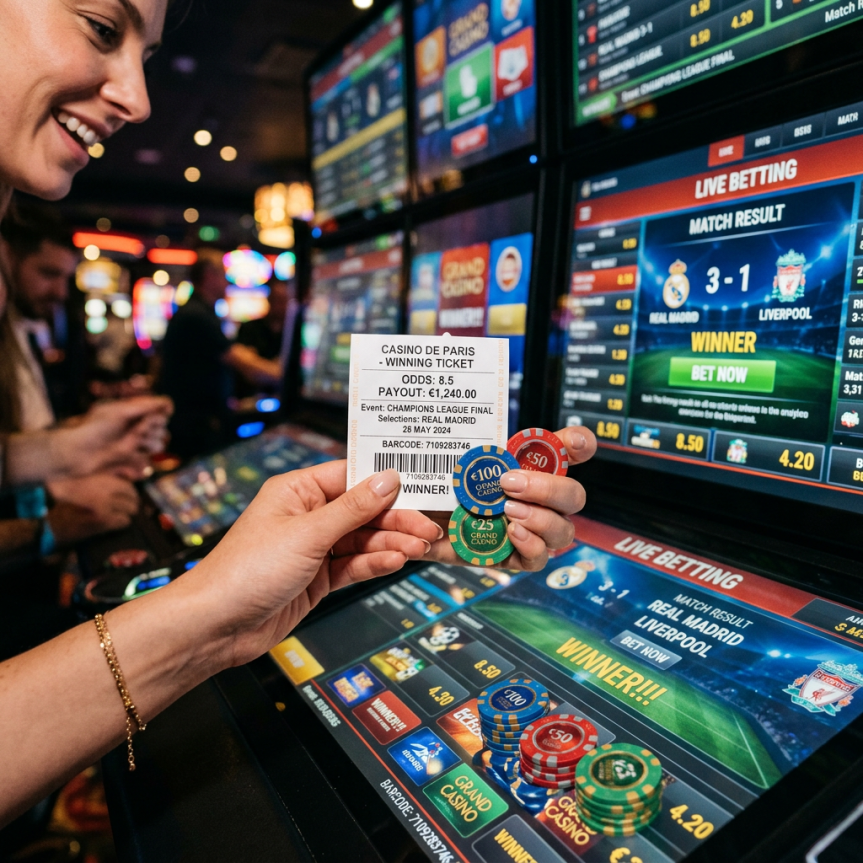
Winning Champions League ticket reading Real Madrid, payout €1,240, and winner
A winning Champions League betting ticket is displayed beside live match screens and casino chips.

The highs for gamblers are real — and often memorable:

  • The average biggest single win among UK gamblers is £3,096 .
  • Younger adults (25–34) report even larger average wins of £4,386.

These wins create:

  • Intense dopamine spikes, especially during anticipation.
  • A sense of mastery or luck.
  • Social excitement — sharing wins with friends or online.

Your document captures this well: “the highs and lows of the risks of winning and losing does still mess with the brain.”

⚠️ The Lows: Debt, Addiction, and Social Harm

1. Addiction Without Substances

Distressed man surrounded by overdue bills and online casino losses
A distressed man faces overdue bills beside a laptop displaying online casino losses.

Your document explains clearly that gambling addiction is a behavioral addiction that hijacks the brain’s reward system:

“I’m a little surprised by how strong an addiction something like gambling can be… the highs and lows… mess with the brain.”

This is reinforced by:

  • Dopamine release during anticipation, not just winning.
  • Near‑misses triggering the same neural response as wins.
  • Unpredictable rewards, which are neurologically addictive.

These mechanisms mirror substance addiction in intensity.

2. Financial Harm

The lows are severe and often hidden:

  • The average biggest single-session loss is £1,640 — over half the average win .
  • Many gamblers report extreme behaviours to keep playing, including missing bills or staying up all night.

The Gambling Commission highlights consequences such as:

  • Financial difficulties
  • Loss of control
  • Heavy involvement leading to problem gambling

Your document emphasises the worst outcomes:

“Those that do get into debt can suffer serious negative consequences such as family breakdown, loss of home and suicide.”

3. Social Fabric Damage

Warm family room with scattered papers and a toppled wooden chair
A warmly lit family room shows scattered papers, a toppled chair, and signs of everyday activity.

The ripple effects extend far beyond the individual:

  • Relationship breakdown and secrecy (over 5.3 million Britons hide gambling from loved ones) .
  • Social isolation, conflict, and even violence linked to gambling stress.
  • Increased rates of depression and suicide ideation among problem gamblers .

Your document summarises this powerfully:

“It really does mess with the social fabric of society.”

📊 Highs vs Lows: A Quick Comparison

AspectHighsLows
FinancialBig wins (£3,096 average) and corporate profitsLarge losses (£1,640 average), debt, bankruptcy
PsychologicalExcitement, anticipation, dopamine highsAddiction, loss of control, severe distress
SocialShared wins, entertainmentSecrecy, relationship breakdown, isolation
SocietalTax revenue, employmentIncreased mental health burden, homelessness, suicide risk

🧭 Why Gambling Is So Polarising

Gambling sits at the intersection of pleasure and harm. The same mechanisms that make it thrilling — unpredictability, dopamine, risk — also make it dangerous. For most people it’s entertainment; for a minority, it becomes a destructive force.

]

Who to blame if it all goes wrong?

Who is ultimately to blame for our own downfall but ourselves. A culture of blame-shifting prevents personal self responsibility and can limit collective problem-solving.

We are ultimately the architects of our own downfalls, when we choose comfort over accountability. A widespread culture of blame-shifting acts as a psychological smoke screen; it protects fragile egos in the short term but completely paralyses our ability to grow individually or solve problems collectively.

The Psychology: Why We Shift Blame

Blame-shifting is a deeply ingrained defence mechanism. When things go wrong, human beings face a choice between the pain of self-reflection and the ease of projection.

Ego Preservation: Admitting a mistake feels like an attack on our competence or worth. Shifting the blame acts as a shield to protect our self-image.

  • The Illusion of Control: According to insights on Psychology Today, pointing fingers allows people to impose a simplistic order on a chaotic situation—making it about a “defective” person rather than a complex reality.
  • Fear of Repercussions: In toxic families, workplaces, or societies, admitting fault carries social or professional penalties, forcing people into survival mode.

The Twofold Cost of a Blame Culture

[ Blame-Shifting ]
│
├──► Stunts Personal Growth (Gives away personal power and control)
└──► Limits Collective Progress (Creates defensiveness and hides systemic errors)

1. It destroys personal responsibility

Paradoxically, when you blame someone else, you give away your power. If your problems are entirely the fault of your upbringing, your boss, the economy, or your partner, then you must wait for them to change to fix your life. It leaves you passive and powerless. True personal responsibility is realizing that while you cannot control every circumstance, you always control your response.

2. It breaks collective problem-solving

When a group, team, or society is trapped in a blame cycle, collaboration dies.

  • Defensiveness: Accusing others triggers a “fight-or-flight” response, closing minds and ending constructive dialogue.
  • Hidden Mistakes: If errors are punished with blame rather than treated as learning opportunities, people will hide their mistakes. This prevents the group from diagnosing systemic flaws and fixing them.

Shifting from Fault to Responsibility

To break this cycle, we have to separate fault from responsibility. Something might not be your fault, but managing how it impacts your life is still your responsibility. Moving from a culture of blame to a culture of accountability requires replacing anger with curiosity, trading finger-pointing for systemic fixes, and accepting that making mistakes is simply part of being human.

I believe I am blessed with a life within which I can accept and take on self responsibility and do not look to others to curse or blame them for my misfortune but not all peoples circumstances are as lucky as mine and that I understand too.

Navigating Aggressive Encounters at a Local Pub

I’m writing this having a nap after a few beers in my belly after having got home from a night out. I was out at a local pub and had been told by local friends that I person in the pub was being aggressive and hostile to singers (including me) as they sang, unnecessarily criticising them like he was Simon Cowell on a professional night of judgement which I thought was was unfair and unnecessary.

 I  did not see the said person that was doing this but knew the person saying this was happening was being truthful and honest. So I joined in and had a go at him and challenged his behaviour . It got to the point where he was asking me to ‘step outside’ which is completely pointless I’m not that kind of guy. We finally shook hands and agreed to disagree after a heated discussion. I was told after said discussion that people would have intervened if needed while challenging this guy who hated people singing in the pub and let people know it.

If he had turned on me its likely we could have had a stupid fight but luckily he didn’t, the discussion I had with him saying everyone that gets up and sings on the night that I know sings from the hearts and there for he should not judge them for their singing ability resulted in the guts partner leaving and then he left after some heated discussion with me too.

I did feel bad for him after he left and we left on ok terms and shook hands instead of fists, but he is and will continue to be unpleasant to others in his head or under his breath or out loud1. But I feel I should not have stepped up and make his opinions my problems. I do feel right now a little set up to step into this situation and ultimately there were no winners with me stepping in and he looked old but very ready for a fight with me and I feel old and did not enjoy fighting in my teens let alone tonight. It was a car crash of a situation to be involved in and I do fee l feel relieved to now be home at last after this.

Celebrating 50: A Birthday Getaway in Totnes

A week on Sunday and I will be in a Devon Town called Totnes for a birthday get away. It’s my 50 birthday and so I wanted to do something different and hopefully memorable in a positive way. It will be the first time that I have stayed as a guest on holiday since going to Ireland with my Dad in 2024 for St Patricks day. Although its just a train ride down the track rather than a flight or a ferry it means a lot to me to try and get away and do something a little different.

Totnes is a historic and vibrant market town in South Devon, England, located on the River Dart. Renowned for its bohemian counterculture and focus on sustainability, the town features a steep High Street lined with independent boutiques, ethical restaurants, and wholefood cafes, sitting in the shadow of a medieval castle.

I’m really looking forward to getting there. I went and did a little recce (reconnaissance) a few weeks ago to decide whether or not I really wanted to go and stay there and loved the place and area and even took a look and had a meal and a pint at the pub that I will be staying in. Though it will be hot I hope to find places to keep my cool while there.

I have also ordered a t-shirt that I hope arrives in time to take with me which is a dragon singing design that I am having made up.

Front of new designed t-shirt
Back of new ordered t-shirt

Being the first holiday with out my dad will be strange and also running into my 50 year while there will be strange to. if any one asked me how life is I could turn around and say yes not to bad thank you. I am grateful to presently have good mental health and not to bad physical health. I enjoy the company of good friends and also have close friends to call on when I need or want to. Social life is pretty good and though work can be a challenge I work with good people that help me get the job done.

Nothing is perfect nor should it be but it would have been nice to have had a chance to have another relationship / partner or something like that by now – the thought still somewhat terrifies me but it would still be nice to try again. I really think I would never have the energy or mental well being to have had children but most people that I meet that are single and want to mingle have been there and got the t-shirt of parenthood already so that pressure is not really on me or any potential partner.

Some friends have been busy getting in and out of relationships or sorts this year and I have been happy for them but also hoping I get to give it a try again at some time too but most likely will continue to tick along as I am. I am a nightmare hoping for the right person at the right time in the right place. Well we do live learn and love!

Don’t you worry child (Radio Edit) – Swedish House Mafia, John Martin

Whether To Weather The Storm

Sometimes I find myself and others in crisis, not one of there making but one that they or myself or others are very much being weathered by and emotionally unable to take shelter from what is raining down.

Although the instinct is sometimes to try and wipe them or yourself dry with reassuring words and all knowing answers, such words and answers can not always stop the emotional rain.

its upsetting and frustrating for both you and a person caught in an emotional storm, but sometimes its better to wait for a storm to pass before you look for a place to recharge from the storm. Sometimes you will only know a storm will have passed once the darn thing has finished and not knowing what it will do or when it will stop can be frustrating in its self.

On an economic front there is a storm coming in the UK. Lots of business some long established business have been being announced as going bust in the UK and it really does feel like we are on the cusp of an economic storm of a recession with concerns on job fronts, stock market highs leading to potential stock market lows and Trumps war in the middle east and threats of tariffs and tantrums to those that don’t support his brain rotten madness there really are potentially several economic storms on the horizon.

Political Strategy or Mental Illness? Analyzing Trump’s Statements

President Trump is described as “delusional” by mental health professionals, political commentators, and world leaders due to his persistent assertion of claims that directly contradict documented facts. These descriptions often center on several key behaviors:

Clinical and Psychological Perspectives

  • Fixed False Beliefs: Psychiatrists define a delusion as a “fixed false belief” that is resistant to reason or confrontation with fact. Experts have cited his insistence on “stolen” elections and exaggerated crowd sizes as fulfilling this criteria.
  • Narcissistic Personality: Many specialists argue his perceived delusions are rooted in Malignant Narcissism or Narcissistic Personality Disorder, which can lead to a “delusional detachment from reality” to protect an inflated self-image or “personal myth of greatness”.
  • The Gospel of Positive Thinking: Some analysts link his behavior to his lifelong adherence to Norman Vincent Peale’s “Power of Positive Thinking,” where reality is shaped by one’s own mental attitude, leading to a refusal to acknowledge negative outcomes. 

Recent Examples and Actions (2024-2025)

  • Economic Claims: Critics describe his 2025 assertions that tariffs “magically” bring in billions from foreign countries—rather than taxing domestic consumers—as economically “nuts” and detached from reality.
  • Polling Discrepancies: In late 2025, Trump was described as delusional for claiming he had the “highest poll numbers” of his career on Truth Social, despite concurrent data from the Associated Press and Fox News showing some of his worst approval ratings.
  • Foreign Policy Assertions: Observers pointed to “delusional fantasies” in his 2025 claims regarding foreign leaders, such as incorrectly stating he ended a war between Azerbaijan and Albania (two countries not at war) and suggesting he could “own” or “take over” the Gaza Strip for real estate development.
  • Annexation of Canada: His public discussion in 2025 about Canada potentially becoming the “51st state” was cited as an example of a belief system that ignores the reality of sovereign nations and public opinion.

Debates and Counterpoints

  • Political Strategy vs. Mental Illness: Some observers argue he is “crazy like a fox,” using conspiracy theories and falsehoods as calculated tools for political success rather than out of a true clinical delusion.
  • The Goldwater Rule: The American Psychiatric Association’s “Goldwater Rule” prohibits members from diagnosing public figures without a personal examination, causing some professionals to push back against colleagues who label the president “delusional” publicly.
  • “Trump Derangement Syndrome”: Supporters often use this term to argue that it is actually his critics who are delusional, reacting irrationally to his unconventional but effective political style. 
Buffalo Springfield – For What It’s Worth (Official Audio)

The gift of lighting up the dark

The “skill psychologically of lighting up the dark” can be described as resilience and learned optimism, which involves acknowledging difficult emotions (the “darkness”) while actively cultivating hope and developing practical skills to navigate challenges and promote well-being. This concept draws on various psychological principles, including Jungian psychology and positive psychology. 

Key Psychological Concepts

  • Balance of Opposites (Jungian Psychology): Psychologist Carl Jung noted that light and darkness coexist; one cannot exist without the other. The “skill” involves achieving a healthy balance rather than trying to eliminate darkness entirely. It suggests that there is value (or “gold”) to be found in understanding and integrating one’s “shadow” side (repressed or unacknowledged parts of the personality).
  • Resilience: This is the mental and emotional ability to adapt to adversity, trauma, tragedy, threats, or stress. It is a key skill for navigating the “dark times” in life, enabling individuals to bounce back from challenges and learn from them.
  • Learned Optimism: A concept developed by Martin Seligman, this skill involves intentionally changing one’s perspective and challenging automatic negative thoughts. It is about how we interpret events, not changing reality itself.
  • Hope as an Active Mindset: Hope is not a passive emotion but an active mindset that involves setting goals, identifying pathways to achieve them, and maintaining a positive outlook even amidst obstacles.
  • Emotional Regulation and Processing: The ability to sit with pain and uncertainty, process difficult emotions, and avoid “toxic positivity” (dismissing genuine suffering) is crucial for healing and growth. 

Skills and Strategies

Cultivating the skill of “lighting up the dark” involves several practical strategies:

  • Awareness and Acceptance: Acknowledging and accepting the reality of one’s inner and outer “dark spaces” (sadness, fear, uncertainty) is the first step toward finding a path forward.
  • Practicing Gratitude: Actively looking for things to be grateful for, even in difficult times, can build a more positive outlook.
  • Seeking Support: Reaching out to others and leveraging empathy from friends, family, or professionals can provide the “candle” needed to find one’s way through challenging times.
  • Self-Care and Self-Compassion: Prioritizing physical and mental well-being (sleep, nutrition, exercise) and treating oneself with kindness helps build the necessary energy and resilience to cope with challenges.
  • Mindfulness and Reflection: Engaging in self-reflection through methods like journaling helps identify negative patterns and work through emotions.
  • Purpose and Action: Focusing on solutions, contributing to the well-being of others (kindness), and engaging in goal-oriented behavior can provide meaning and purpose during difficult periods. 

Ultimately, this skill is about acknowledging the dualism of light and dark within human experience and developing the psychological tools to navigate this balance effectively for overall well-being. 

Why Learning from Mistakes is Crucial

A repeated mistake is like running around on a giant hamster wheel, exhausted and weary not knowing how to step off the darn thing or where the stop button is or not knowing when or how to press the stop button or how or when to step off. Repeating the same mistakes again and again while not learning a thing from them is defiantly a mad idea!

To repeat a mistake is often described as making a choice rather than an accident the second or subsequent time. 

Common sayings and proverbs related to this concept include:

  • “A mistake repeated more than once is a choice.” – Paulo Coelho
  • “You can never make the same mistake twice because the second time you make it, it’s not a mistake, it’s a choice.” – Unknown
  • “If you make the same mistake twice, it is no longer a mistake, it is a habit.”
  • “Insanity is doing the same thing over and over again and expecting a different result.” (Often attributed to Albert Einstein, but likely not his)
  • “Fool me once, shame on you; fool me twice, shame on me.”
  • “As a dog returns to his vomit, so a fool repeats his folly” (from the Book of Proverbs in the Bible). 

The underlying idea in these expressions is the importance of learning from past errors and taking responsibility for one’s actions and the resulting consequences.

It seems to me politics is the biggest field of play, where this type of collective irresponsibility tends to take place.

Where an elected wealth of political officials, wish to control our finances and keep people within poverty instead of lifting them up out of it, maintain and enhance their own wealth crying foul to those from abroad that might no longer wish to be impoverished . Hmm what would Jesus think of such monetarising people and forces? From what I have read of the bible and learned from my religious teachers then those that choose to enrich themselves at the expense of others such as billionaires, wealthy politicians, using their own power to line their pockets with even greater profits, would repulse the son of god and if you believe in monsters heading to your definition of hell then that is what they likely are too.

What attracts, tempts or even provides people with conviction to vote for such inhumane politicians is hard to know what thoughts go through their heads or try to contemplate what they believe in and why they have those thought thought for such hateful people and views I do not know and will (god willing) likely never know or have.

Life is precious and time is short and for each of the power-hungry politicians voted into power across the globe chosen by their peers or people – Trump, Putin, Xi and Netanyahu are all incredibly dangerous political beasts we will be incredibly fortuitous to escape this time in the worlds history unscathed. Sadly each leader will be thinking from their own perspective, that they must be strong men in order to fight and conquer their own monsters. But what happens when they are the monsters that should instead need to be stopped or in someway fought.

They each poses within them the capability to light a match that within their hands could then set fire to million trees and sadly it takes only one of these four to strike first to make it all come crashing down.

When we are born into this world we arrive with nothing and when we depart this earth we depart with as little as when we arrived. It is what we do with our time here that truly makes our existence all worthwhile.

The National – ‘The System Only Dreams in Total Darkness’

Scientists have confirmed that Schizophrenia “voices” are the brain mishearing its own thoughts

In late October 2025, researchers from UNSW Sydney published a study providing the strongest evidence yet for the long-held theory that auditory hallucinations in schizophrenia result from the brain misinterpreting its own inner speech. Using brainwave analysis, the study showed that the brains of people experiencing hallucinations reacted to their own internal monologue as if it were an external voice. 

How the brain typically processes inner speech

In a healthy brain, a mechanism called “corollary discharge” helps to distinguish internal thoughts from external sounds. 

  • When a person thinks to themselves, a corollary discharge signal is sent to the auditory cortex to quiet the “inner voice”.
  • This signal informs the brain that the thought is self-generated, so the auditory cortex does not react to it as an outside sound. 

What happens in a schizophrenic brain

The recent EEG study revealed how this process breaks down in people with schizophrenia who hear voices. 

  • In those experiencing hallucinations, the normal suppression of the auditory cortex does not occur during inner speech.
  • Instead, the brain reacts more strongly to the person’s own internal voice, similar to how it would react to someone else speaking.
  • This confusion leads the brain to perceive internal thoughts as external voices, which can feel incredibly real and intrusive. 

Implications of the discovery

  • A new biomarker: The brainwave measurement used in the study has the potential to serve as a biomarker for the development of psychosis, enabling earlier detection and intervention.
  • Improved treatment: Understanding the biological basis of these hallucinations is a critical step toward developing more effective and targeted treatments beyond traditional talk therapy.
  • Reduced stigma: The findings emphasize that auditory hallucinations are not imagined or an indication of “losing touch with reality.” Instead, they are a result of complex changes in how the brain processes and attributes thoughts.