
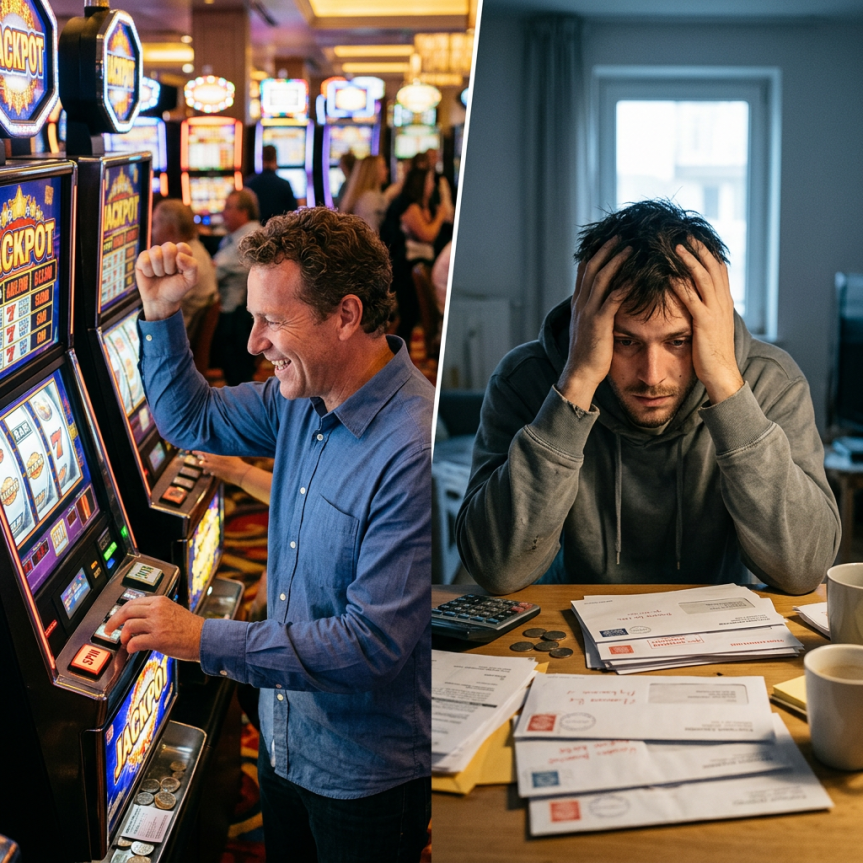
The Highs and Lows of Gambling: Wins, Losses and Social Costs

Gambling creates powerful highs for both companies and customers, but equally powerful lows for individuals, families, and society. The contrast is stark: on one side, profit, excitement, and occasional big wins; on the other, addiction, secrecy, debt, and severe social harm. Below is a structured, evidence‑based look at both sides.

🎲 The Highs: Profits and Occasional Big Wins

1. Corporate Profits

Gambling is engineered to be highly profitable. As your document notes, “like many corporate products it can be highly profitable for the businesses involved.” Companies benefit from:

  • High engagement driven by dopamine‑based reward cycles.
  • Unpredictable rewards that keep players returning.
  • Online platforms that allow 24/7 access and rapid betting.

With nearly 47% of UK adults gambling in the past four weeks , the customer base is enormous. This scale translates into billions in annual revenue for operators.

2. Customer Wins and Emotional Highs
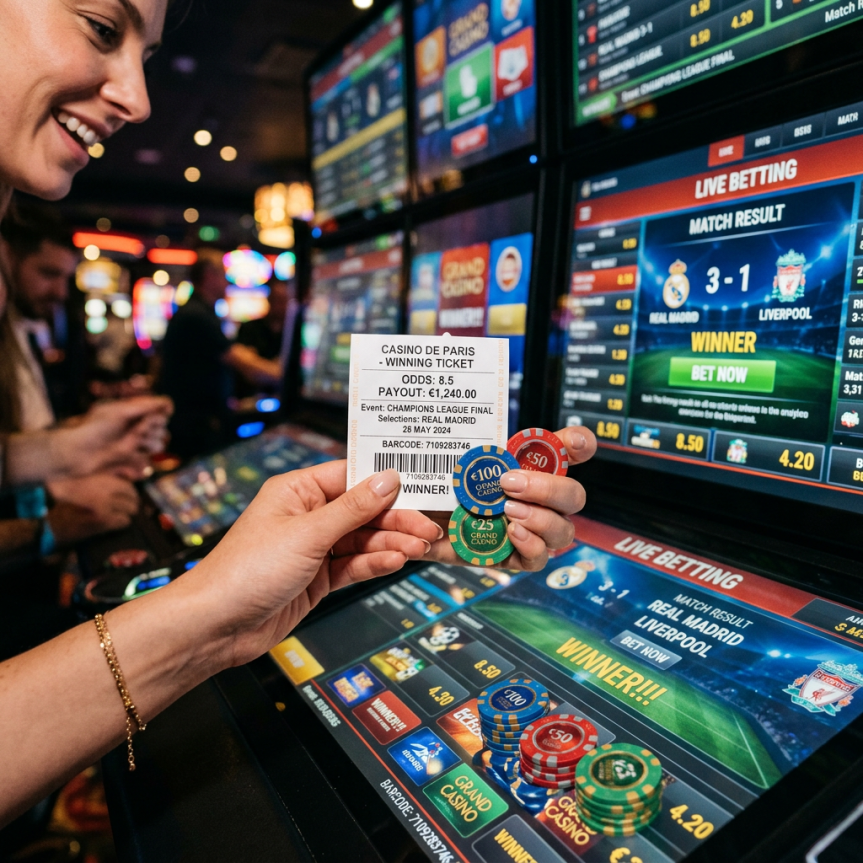
Winning Champions League ticket reading Real Madrid, payout €1,240, and winner
A winning Champions League betting ticket is displayed beside live match screens and casino chips.

The highs for gamblers are real — and often memorable:

  • The average biggest single win among UK gamblers is £3,096 .
  • Younger adults (25–34) report even larger average wins of £4,386.

These wins create:

  • Intense dopamine spikes, especially during anticipation.
  • A sense of mastery or luck.
  • Social excitement — sharing wins with friends or online.

Your document captures this well: “the highs and lows of the risks of winning and losing does still mess with the brain.”

⚠️ The Lows: Debt, Addiction, and Social Harm

1. Addiction Without Substances
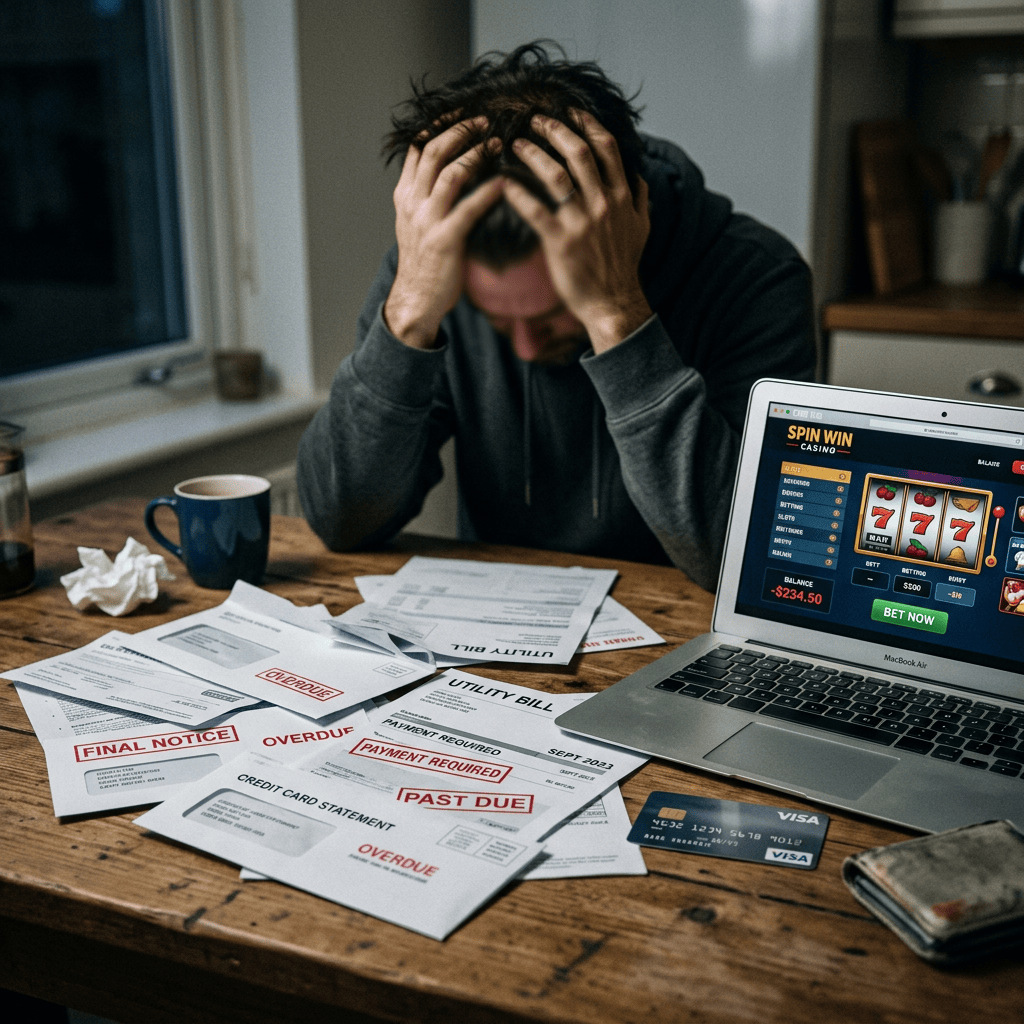
Distressed man surrounded by overdue bills and online casino losses
A distressed man faces overdue bills beside a laptop displaying online casino losses.

Your document explains clearly that gambling addiction is a behavioral addiction that hijacks the brain’s reward system:

“I’m a little surprised by how strong an addiction something like gambling can be… the highs and lows… mess with the brain.”

This is reinforced by:

  • Dopamine release during anticipation, not just winning.
  • Near‑misses triggering the same neural response as wins.
  • Unpredictable rewards, which are neurologically addictive.

These mechanisms mirror substance addiction in intensity.

2. Financial Harm

The lows are severe and often hidden:

  • The average biggest single-session loss is £1,640 — over half the average win .
  • Many gamblers report extreme behaviours to keep playing, including missing bills or staying up all night.

The Gambling Commission highlights consequences such as:

  • Financial difficulties
  • Loss of control
  • Heavy involvement leading to problem gambling

Your document emphasises the worst outcomes:

“Those that do get into debt can suffer serious negative consequences such as family breakdown, loss of home and suicide.”

3. Social Fabric Damage

Warm family room with scattered papers and a toppled wooden chair
A warmly lit family room shows scattered papers, a toppled chair, and signs of everyday activity.

The ripple effects extend far beyond the individual:

  • Relationship breakdown and secrecy (over 5.3 million Britons hide gambling from loved ones) .
  • Social isolation, conflict, and even violence linked to gambling stress.
  • Increased rates of depression and suicide ideation among problem gamblers .

Your document summarises this powerfully:

“It really does mess with the social fabric of society.”

📊 Highs vs Lows: A Quick Comparison

AspectHighsLows
FinancialBig wins (£3,096 average) and corporate profitsLarge losses (£1,640 average), debt, bankruptcy
PsychologicalExcitement, anticipation, dopamine highsAddiction, loss of control, severe distress
SocialShared wins, entertainmentSecrecy, relationship breakdown, isolation
SocietalTax revenue, employmentIncreased mental health burden, homelessness, suicide risk

🧭 Why Gambling Is So Polarising

Gambling sits at the intersection of pleasure and harm. The same mechanisms that make it thrilling — unpredictability, dopamine, risk — also make it dangerous. For most people it’s entertainment; for a minority, it becomes a destructive force.

]

Mind over Mutter!

To mutter to speak quietly and in a voice that is not easy to hear, often when you are anxious or complaining about something: He muttered to himself as he walked or I heard him mutter something.

A week from tonight our polling stations where people vote will be closing about now and the councils will begin the count to determine which MPs are local neighbourhoods, towns and cities decide to elect and send to parliament. When I was 18 I studied Public Policy at Southampton Institute, I had learning difficulties and it was the first place I got offered that offered a course I really wanted to study.

It involved the study of UK contemporary Politics, Economics, Sociology and Constitutional Law. The course gave me a good understanding of and an ability to interpret political views and issues, while  developing my own views and perspectives on politics too.

Sadly though due to a serious mental health issue and drug addiction I only lasted on the course for about 18 months then crashed and burned. But in that time and to this day it gave me a good understanding of learning – not just about the power of education the importance of politics and breaking down concepts and rebuilding them back up again in my mind. But also the addictive and damage nature of illegal drugs the limits and fragility of my mental health and mind.   

After some real life altering choices which I mainly had to force upon myself due to the sad truth of the fact that for me illegal hallucinogenic drugs and any forms of cannabis are just seriously damaging to my mental health and an absolute no go zone for me and my head. From the age of about 16 up to about the age of 25 I still did not realise or believe the damage that certain illegal drugs could do to me ,I just did not want to accept it. I don’t advocate abstention for everyone and think many forms of drugs should be licensed or legally controlled not simply banned. But just as an alcoholic should not touch a whisky, I should not touch hallucinogens or cannabis due to the impacts on my mental health and life.

I have a form of mental health condition which means I have been on a form of medication that prevents or dampens down hallucinations’ for over probably 20 years or more now. The form I am on at the moment works really well for me and keeps me balanced and well enough to hold down a job and function having only had a few blips in my mental health road over the years and managed to stay on track with my life, job and home.

When I occasionally have, for want of a better word had a mental hiccup I have had enough incite to know what was going on and to ask for help and hold on for dear life and look after myself and all I am and have as best as I could until things calmed down and imporved. But saying all that if I knew what triggered these mental health incidents then I can’t promise I would try to do those things that increase the risk of them not happening again.

You still must live your life because you are still alive you can’t completely block yourself of from the things that you fear or hurt you in the outside world. To experience life is to experience a range and spectrum of emotions and experiences some positive and sadly some at times negative. The only constant that seems to appear in life is change and those that best adapt and act on that change are the ones that tend to survive and thrive.

Amy Macdonald – This is the life