Can Politicians Legally Buy Votes?

Part of me can’t even believe I am posing this question of whether politicans can buy our votes – is democracy that cheap and easy?

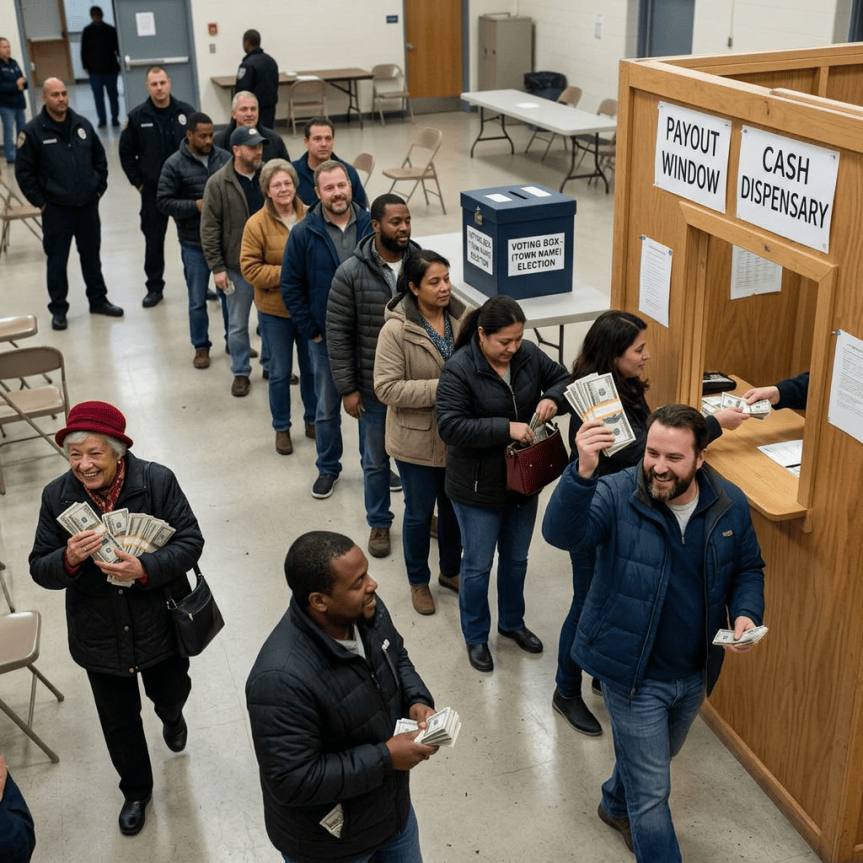
Direct vote buying—exchanging physical cash, goods, or direct personal favors for a vote—is strictly illegal in almost all democratic countries. However, politicians frequently navigate a fine legal line by offering sweeping policy promises, tax cuts, or financial incentives targeted at broad groups of voters. While a politician cannot legally hand you a hundred-dollar bill at a polling station, they can legally promise to pass legislation that puts money in your pocket if they win.

he concept of “buying votes” lives in a complex space between outright criminal bribery and standard campaign strategy.

⚖️ The Legal Line: Direct vs. Indirect

To understand how politicians legally “buy” influence, it helps to look at the difference between criminal bribery and policy-based incentives.

Type of IncentiveWhat It Looks LikeIs It Legal?
Direct Cash BriberyHanding an individual cash, groceries, or alcohol in exchange for a ballot.No. Under laws like U.S. Federal Code (18 U.S.C. § 597), it is a federal crime to make an expenditure to any person to vote or withhold their vote.
Targeted Policy PromisesPromising student loan forgiveness, specific tax credits, or localized infrastructure funding.Yes. Courts generally view policy proposals as protected political speech, even if they explicitly offer financial gains to specific groups of voters.
Mass Payout VowsPromising a broad national stimulus or a “dividend” payout contingent on an election outcome.Grey Area. While heavily criticized as political bribes, they are rarely prosecuted because they require congressional approval and are framed as economic policies.

🔍 Current Controversies and Historical Context

The debate over where campaign promises end and voter bribery begins is a massive topic right now:

  • The “Trump Dividend” (September 2026): At a Republican Midterm Convention in Dallas, President Donald Trump promised a $5,000 cash payment to every American adult if Republicans retain control of Congress. While critics and consumer advocacy groups blasted it as an open attempt to bribe voters, legal experts note it mimics historical tax-cut promises and would require a trillion-dollar congressional authorization to ever happen, keeping it outside traditional criminal prosecution.

Past Precedents: In 2021, former President Joe Biden faced similar criticism from opponents when he tied the passage of $2,000 Covid stimulus checks directly to the outcome of the Georgia Senate runoff elections.

Historical Roots: In early American history, vote-buying was much more explicit. During his 1758 run for the Virginia colonial legislature, George Washington famously supplied voters with 144 gallons of wine, beer, and cider to secure a landslide victory.

🌍 Global Perspectives

In many developing democracies, direct vote-buying remains heavily entrenched despite being illegal:

  • Indonesia: Known locally as politik uang (“money politics”), candidates often use a tactic called serangan fajar (“dawn attack”)—handing out small envelopes of cash a day or two before the election.
  • India: Political parties frequently distribute cash or gifts to fence-sitters. Interestingly, political scientists find that while it levels the playing field for candidates, it rarely guarantees a win because voters often take the cash but still vote for whoever they want in the privacy of the voting booth.

Should the trump dividened be illegal?

Whether the “Trump Dividend” should be illegal is a matter of intense legal and ethical debate, dividing legal scholars, politicians, and voters alike.

Under current law, the proposal is almost certainly legal under the First Amendment, as the U.S. Supreme Court heavily protects campaign promises as political speech. However, critics argue that conditional cash payouts erode democratic norms and resemble large-scale political bribery.

The arguments on both sides of the issue outline the core conflict between free speech and ethical campaigning:

Arguments That It Should Be Illegal (The Anti-Dividend View)

Critics, including many Democrats and nonpartisan watchdogs, argue that the proposal violates the spirit, if not the letter, of anti-bribery laws.

  • It Looks Like Explicit Vote-Buying: Legal experts like former federal prosecutor Michael McAuliffe note that conditioning a massive personal financial reward directly on an election outcome crosses an ethical line. Opponents argue it incentivises people to vote out of direct self-interest rather than civic principle.
  • Misuse of Taxpayer Funds: California Governor Gavin Newsom criticized the idea as an attempt to “buy your vote with $5,000 in taxpayer-funded blood money”. Critics argue that public funds should serve the public good, not a specific party’s electoral strategy.
  • Fiscal and Economic Danger: Watchdog groups like the Committee for a Responsible Federal Budget warn the plan would cost roughly $1.2 trillion, severely worsening national debt and fueling inflation. Opponents believe dangling a financially damaging policy to win an election should be restricted.

Arguments That It Should Remain Legal (The Pro-Dividend View)

Supporters and constitutional experts maintain that penalizing this type of speech would severely infringe on American democratic principles. [1, 2]

  • Protected Political Speech: The definitive legal precedent is the 1982 Supreme Court case Brown v. Hartlage. The Court ruled that candidates have a First Amendment right to tell voters how they intend to financially benefit them. Restricting these promises could criminalize ordinary policy proposals, like tax cuts or student loan forgiveness.
  • It Is Not a Direct Bribe: Legal scholars point out that the dividend does not check how an individual voted—every adult citizen would receive it regardless of their party affiliation or whether they voted for a Republican, Democrat, or didn’t vote at all.
  • A Standard Economic Strategy: Vice President JD Vance and other administration officials argue the dividend is a legitimate way to distribute national wealth created by the administration’s tariffs and economic investments back to shareholders—the American people. [1, 2]

The Ultimate Reality: The Congressional Check

Even if the promise is legal to make on the campaign trail, President Trump cannot unilaterally hand out the money. The U.S. Constitution gives Congress the sole power of the purse. House Speaker Mike Johnson confirmed that the plan would require congressional approval. Whether it should be illegal to promise such a pay-out remains a philosophical question, but the legislative process serves as the ultimate barrier to it actually happening.

The gift that keeps on giving

There are also strong arguments for universal income so is a universal basic income the same thing as votes being bought and could this be the start of something more profound and bigger leading to the adoption and provision of a universal income?

A Universal Basic Income (UBI) is fundamentally different from a policy like the Trump Dividend in its frequency, purpose, and structure, even though both involve the government sending direct cash payments to citizens.

Political scientists and economists view a Trump Dividend as a one-off, conditional political payoff, whereas UBI is a permanent, unconditional economic safety net.

The core differences illustrate how they diverge in practice:

📊 Direct Comparison: Trump Dividend vs. Universal Basic Income

FeatureThe Trump DividendUniversal Basic Income (UBI)
FrequencyOne-time pay-out. A single cash injection (e.g., $5,000).Regular and ongoing. Distributed at fixed intervals, usually monthly, forever.
Primary GoalEconomic reward or political incentive. Framed as sharing national growth or wealth from tariffs.Eradicating poverty. Designed to cover basic survival needs (food, shelter) as a baseline floor.
Political ConditionHighly conditional. Explicitly tied to a specific political party winning a legislative majority.Completely non-partisan. Established by permanent law; does not change based on who wins an election.
Target PopulationMeans-tested. Explicitly excludes high-income earners.Truly universal. Paid to every single citizen regardless of their wealth or employment status.
Funding SourceVariable federal revenue. Allegedly funded by temporary mechanisms like tariffs or agency savings.Systemic tax restructuring. Funded via permanent income, carbon, or value-added taxes (VAT).

💡 Why the Distinction Matters

Prominent advocates of cash transfers, like former presidential candidate Andrew Yang, have noted that temporary checks do not provide the long-term psychological and economic security of a UBI.

When a payout is a one-time event, citizens tend to treat it as a windfall bonus (like a tax refund or a stimulus check). Because a UBI is guaranteed every single month, it allows people to make long-term life choices, such as going back to school, leaving an abusive relationship, or starting a business or having a roof over their head, food and clothing.

The Waterboys – This Land Is Your Land

Understanding Voter Support for Far-Right Immigration Policies

The narrative around elections used to be its the economy stupid though now the right seem to be desperately playing it as its the dangerous economic migrant and people are voting for this narrative across the western democratic globe in large numbers and the causes and affects of such voting patterns though playing out in the USA we have not fully seen the consequence yet of the immigrants out focus in society yet. Most people claim to be good honest Christian folk in western nations but our voting patterns seem to show an opposite to love and empathy in a divide conquer and rule pattern of political play instead.

Public concern over immigration is highly complex and driven by a mix of self-interest, economic anxieties, and cultural values, rather than simple selfishness. Political scientists and polling data show that while far-right parties successfully capitalise on these concerns to win votes, the motivations of voters span a broad spectrum of legitimate public policy anxieties.

Why Voters Support Far-Right Immigration Platforms

Political scientists categorise the motivations behind anti-immigration sentiment into three distinct pillars:

Motivation CategoryCore DriverCommon Voter Concerns
Economic Self-InterestProtection of personal livelihood and resources.* Fear of wage suppression in lower-skilled sectors.
* Increased competition for affordable housing and public services.
“Compositional Amenities”Preservation of familiar social environments.* Rapid changes to local neighbourhoods, schools, and workplaces.
* Concerns over social cohesion and cultural integration.
Political ProtestFrustration with mainstream governance.* Perception that centrist parties have failed to control borders or manage public infrastructure.

It does also beg the question if it’s such a contentious and yet majority motivating issue for the public, heaven forbid but why don’t more parties take a harder line on immigration – just for the votes.

The Political Strategy of the Far Right

Far-right and populist parties across the West—such as Reform UK in Britain or the Alternative for Germany AfD – have experienced a surge in support by directly linking immigration to everyday domestic struggles.

By framing immigration as an immediate threat to the economic well-being and security of the “in-group,” these parties transform a macro-level policy issue into a deeply personal, pocketbook issue for the individual voter. Sociological studies indicate that when public infrastructure feels strained, voting to limit immigration is often viewed by individuals not as malice, but as a rational act of self-preservation.

President Donald Trump can be seen as an example of the damage done by the far right today when elected with deliberate lies and misrepresentation to the voting public, wilful ignorance and breaking of political laws and unlawfully operating political institutions also causing irreparable damage with with ice on immigration, unlawful tariffs on trade and illegal wars in middle east.

The Critical Perspective: Institutional Damage and Policy Overreach

Critics align closely with the view that his tenure significantly strained democratic norms and international law:

  • Immigration & ICE: Critics point to policies like the family separation mandate at the US-Mexico border and expanded Immigration and Customs Enforcement (ICE) detentions as humanitarian crises that damaged the moral standing of the United States.
  • Trade Tariffs: Many economists argue that his administration’s unilateral tariffs—particularly on allies and China—disrupted global supply chains, violated World Trade Organisation principles, and acted as a consumption tax on domestic consumers.
  • Foreign Policy & Military Action: Critics highlight actions like the 2020 assassination of Iranian General Qasem Soleimani as provocative escalations that bypassed traditional congressional approval and risked wider, unlawful conflict.
  • Democratic Institutions: His rhetoric surrounding election integrity, ongoing legal challenges regarding his handling of classified documents, and actions related to the events of January 6, 2021, are frequently cited as deliberate attempts to undermine institutional trust.

With a straight face and without irony his supports argue that the actions Trump takes are in defence of the working man (or his wealthy benefactors and himself) as a necessary disruption of a failed political establishment. Even though it is his actions and policies that are intent on causing the state and even international institutions to fail.

International aid is currently in a state of unprecedented, generational collapse following the second Trump administration’s sweeping financial cuts and structural dismantlement.

As the world’s largest single aid donor, the absolute withdrawal of U.S. financial backing has created a massive funding vacuum that other wealthy nations have been unable or unwilling to fill.

The Scale of the Funding Collapse

  • Dismantling of USAID: Following a total freeze initiated in January 2025, the Trump administration systematically dismantled the United States Agency for International Development (USAID), transferring nominal duties to the State Department. The agency’s final operations permanently closed in September 2026.
  • 80%+ Program Cancellations: Driven by spending-reduction initiatives like the “Doge” project managed by Elon Musk, the U.S. cancelled between 80% and 83% of its global foreign aid projects, leaving a funding gap exceeding $35 billion across 120 countries.
  • Plummeting Global Humanitarian Funds: According to data from the Financial Tracking Service, total global humanitarian funding imploded from roughly €23.97 billion down to €7.34 billion between 2025 and 2026. Direct U.S. humanitarian support alone plummeted from approximately $14 billion to $3.7 billion.
  • Multilateral Withdrawals: In January 2026, President Trump signed a memorandum withdrawing the U.S. from 66 international organizations, including 31 United Nations entities. UN anchor funding for humanitarian crises was slashed to just $2 billion (down from historic averages of $8 billion to $10 billion), strictly barring any projects related to climate change.

Global Consequences and “The Domino Effect”

The shockwaves of the U.S. withdrawal have crippled non-governmental organizations (NGOs) and severely altered the geopolitical aid landscape:

Sector / Region AffectedCore Impact
The “Domino Effect” on DonorsFollowing the U.S. retreat, other wealthy donor nations (such as Canada and various European countries) scaled back their own anti-poverty funds or shifted focuses toward trade and economic development.
Healthcare in AfricaThe loss of USAID funding has destabilized critical local frameworks fighting HIV, malaria, and tuberculosis. Nations heavily reliant on aid—such as Mozambique, which suffered a 50% cut in U.S. health assistance—face immediate coverage gaps, medicine stockouts, and understaffed facilities.
Central & Northern AmericaIn regions previously reliant on the U.S. for two-thirds of their humanitarian budgets, programs managing families displaced by gang violence and extreme weather have ceased. Funding in Honduras dropped to just 10% of what was needed, while initiatives in El Salvador and Guatemala were entirely discontinued.
NGO DisruptionMajor international non-profits were hit by immediate “stop-work” orders. For example, BRAC (the world’s largest non-profit) was forced to suspend programs affecting 3.5 million people overnight.

While the European Union and its member states have stepped up to cover over 40% of remaining global development aid, a substantial portion of Europe’s aid remains heavily directed toward Ukraine. Experts from organizations like Refugees International and Oxfam warn that the current outlook remains extraordinarily bleak, leaving millions of the world’s most vulnerable populations entirely without a safety net.

To ethically minded Christian folk these should be matters that matter but more often than not they are ignored at best and blatantly cast aside as ‘we can’t take refugees and immigrants there is no room and we hate them as there not our type of people they are criminals. Such views and stereo types are then promoted and fuelled further by political activists and politicians.

Trumps economic incompetence has also resulted in his two terms in office leading to the US national debt having increased by approximately $11.6 trillion. The total national debt crossed a historic milestone of $40 trillion so Trumps incompetence on the economy is also not an issue that concerns immigrant haters but fear of foreigners is still an international fear voting issue and thus we go full circle – there and back again a racists tail.


Trump’s Ambitions: US Ownership of Global Territories

Whether US President Donald Trump is being “selfish” regarding the Falkland Islands is a matter of intense debate, as observers view his actions through vastly different lenses depending on their perspective on international diplomacy and US interest.

President Donald Trump has repeatedly floated territorial ambitions, suggesting that the United States should own, annex, or reclaim several sovereign nations and territories. Since returning to office for his second term, these proposals have expanded beyond his well-known interest in Greenland to include several countries, territories, and strategic waterways.

Explicitly Suggested for US Ownership or Annexation

Greenland: Trump has intensely revived his campaign to acquire the semi-autonomous Danish territory, calling American ownership an “absolute necessity” for national security. He stated that the US needs to “own” the island to prevent Russian and Chinese control, warning that the US would do it the “easy way” or the “hard way,” and initially refused to rule out annexation by force before shifting to formal negotiations.

The Panama Canal: Trump has publicly stated that the United States should regain control of the Panama Canal, despite the waterway being formally transferred to Panamanian sovereignty in 1999.

Canada: Trump has floated the idea that Canada should become the 51st US state.

Venezuela: He has suggested making Venezuela a US state following his administration’s operations targeting the government of Nicolás Maduro. [1, 2]

The Strait of Hormuz: While not a land territory, Trump posted a map labelling this vital global shipping lane as a US territory. He claimed that because of the US military presence blocking Iran, the US has effective “ownership” and control over which ships may pass.

Micronesia and the Marshall Islands: Trump raised eyebrows by publishing a post that appeared to portray these two independent Pacific island nations as US territories, signalling a desire to bring them under direct US ownership or influence.

Other Strategic Regions Discussed for Control

In addition to the territories above, Trump has suggested taking control or intervening militarily in the Gaza Strip, Cuba, and Mexico. While his administration has not claimed direct ownership over the Falkland Islands, US officials have reportedly threatened to withdraw recognition of British sovereignty over the islands as a transactional lever to force the UK into spending more on defence.

The Perspective That It Is Transactional or “Selfish” concerning the Falklands

Critics—particularly within the UK and the Falkland Islands—argue that the administration is treating a sensitive geopolitical issue and the right to self-determination as a mere bargaining chip. From this viewpoint, the approach is seen as self-serving because:

  • Leverage for Defence Spending: The Daily Telegraph and other outlets reported that US defence officials proposed reviewing support for UK sovereignty over the Falklands specifically to pressure the UK into increasing its military funding and meeting NATO commitments. [1, 2]
  • Disregarding Islanders’ Wishes: Falkland Islanders expressed deep disappointment, stating that treating their home as a “possession” or a “rock to be owned” ignores the 2013 referendum where 99.8% of voters chose to remain a UK British Overseas Territory.
  • Airing Personal Grievances: In a September 2026 interview with GB News, Trump hinted that the US might not come to the UK’s aid in a future conflict, complaining that Britain had “not been there to help me” with conflicts involving Iran. Critics view this as prioritizing personal political grievances over long-standing allied commitments.

The Perspective of “America First”

Supporters and foreign policy realists argue that the President’s stance is not “selfish,” but rather a pragmatic application of his “America First” foreign policy, aimed at maximizing benefits for the United States. From this perspective in other words the what’s in it for me and screw you policy which we have seen on many issues addressed by Trump while in power.

1. The “What’s In It For Me” (The Transaction)

The Trump administration approached a highly sensitive territorial dispute not through the lens of historical alliance or international law, but as economic leverage.

  • The Leverage: US officials explicitly proposed reviewing their stance on the Falklands to pressure the UK into meeting higher NATO spending targets.
  • The Mindset: The logic is strictly transactional: the US will only protect or support a close ally’s core national interests if that ally provides a direct, measurable financial or military return to the US first.

2. The “Screw You” (The Disregard for the Ally)

The policy fundamentally ignores the traditional “Special Relationship,” the wishes of the local population, and the political fallout for the UK government.

  • The Disregard: In a GB News interview, Trump openly shrugged off the UK’s security concerns, stating that Britain had “not been there to help me” with historical conflicts involving Iran.
  • The Mindset: By treating the home of the Falkland Islanders as a mere bargaining chip—or a “rock to be owned”—the policy conveys a blunt message to a long-standing ally: if you do not meet American demands, the US is entirely willing to undermine your national sovereignty and security without remorse.
  • Strengthening Strategic Alliances: President Trump shares close ideological ties with Argentine President Javier Milei. Some analysts see the willingness to pivot on this issue as a way to strengthen ties with a key ally in South America.
No amount of prayers is going to make this man a righteous man

Ultimately, whether the strategy is viewed as a “selfish” betrayal of a close ally or a shrewd, strategic negotiation depends entirely on whether one prioritizes the traditional US-UK “special relationship” and self-determination, or a transactional approach to international alliance management.

But just because he sits on the throne of the most powerful nation in the world does not make his actions right or supportable at all times. Other countries must be mindful of how they operate around Trump and just hope his term of office will not damage their interests to much before he is out of power.

The Levellers – Plastic Jeezus

Understanding the Surge of Global Conflicts Amidst Climate Crises

The 2020s have unfolded as a decade of overlapping crises — pandemics, political instability, economic shocks, and a sharp resurgence of war. But beneath the headlines lies a deeper question: are wars genuinely more common today, and if so, are climate pressures and diminishing resources part of the cause?

Conflict research suggests the answer to the first question is yes. The second is more complicated.

Recent data from global conflict monitors shows that state‑based wars have reached their highest levels since World War II, driven by major conflicts in Ukraine, Gaza, Sudan, Ethiopia, and Myanmar. Wars and armed conflicts have become significantly more common and deadly since 2020, reaching their highest levels since World War II. This marks a clear break from the relative stability of the early 2000s and 2010s.

The New Landscape of War

The post‑2020 conflict environment is defined by several striking shifts:

  • Record-high active state conflicts
  • Annual battle deaths exceeding 240,000
  • Foreign interventions doubling since 2008
  • Global military spending rising to $2.9 trillion

These trends point to a world where diplomacy is weakening, geopolitical rivalry is intensifying, and international norms are eroding.

One particularly alarming metric is that peace agreements are failing, with only 4% of conflicts ending via treaties compared to 23% in the 1970s.

The machinery of peace is breaking down. There seems to be less will for peace and greater investment in sustained conflict.

Climate Change: Not the Spark, but the Fuel

Climate change and resource scarcity are often cited as causes of modern conflict. Yet the evidence shows they are not primary drivers — they are risk multipliers.

Climate as a Threat Multiplier

Climate change rarely ignites wars directly. Instead, it destabilises societies already under strain:

  • Droughts destroy crops and livelihoods
  • Floods displace communities
  • Desertification pushes pastoralists into farming regions
  • Extreme weather undermines fragile governments

Climate change does not typically cause direct inter-state warfare. Instead, it worsens underlying social and economic vulnerabilities.

When livelihoods collapse, recruitment by armed groups becomes easier. When governments fail to respond, grievances deepen. When desperation rises, violence follows.

Scarcity — and Abundance — of Resources

Resource scarcity fuels localised conflicts, especially in fragile regions:

  • Water shortages
  • Loss of arable land
  • Competition between herders and farmers

But abundance can be even more dangerous.

The global race for lithium, cobalt, nickel, and rare minerals — essential for green technology — has intensified geopolitical competition. In places like the DRC, resource wealth funds armed groups and prolongs war.

The War–Climate Feedback Loop

The relationship between war and climate is not one‑directional. It is a destructive cycle.

Global militaries account for roughly 5.5% of all global greenhouse gas emissions… war heavily accelerates climate change.

Conflict destroys infrastructure, burns cities, and releases massive emissions. Rebuilding after war produces even more.

Climate change increases conflict risk. Conflict accelerates climate change. A vicious loop.

Some might argue that the real drivers of Post‑2020 conflict are as follows – but these assumptions lead to more questions than answers

Despite environmental pressures, the perceived influential drivers of modern war remain political:

  • Weak governance and corruption
  • Breakdown of diplomacy
  • Major powers ignoring international norms
  • Foreign interventions escalating local conflicts
  • Rising authoritarianism and geopolitical rivalry

Climate change amplifies these forces, but for me increasing wars and fights for resources were very much predicted to be on the cards years ago as an output due to climate crisis, global warming and a hunt for resources.

Conclusion: A Hotter World, A Colder Politics

Wars are more common in the 2020s — not because the planet is simply running out of resources, but because political systems are failing to manage the pressures of a warming, crowded, unequal world.

Climate change doesn’t start wars. But it makes them easier to start, harder to stop, and far more devastating.

The 2020s show us a world where environmental stress and geopolitical instability now move in tandem. Understanding this relationship is essential if we hope to break the cycle.

A goose stepped boot of fascism has Reformed and has its hold on the body of the UK

Nigel Farage’s Reform UK has emerged as a significant force on the British right by capitalizing on anger over immigration, the cost of living, and disillusionment with mainstream parties. They really have smashed through into a form of political mainstream acceptability and voted in by considerable political sales and gullibility and buy in to what ever Farage is choosing to peddle to the masses.

Political Shifting: The party has successfully shifted the UK political spectrum to the right, with some observers positioning them as a radical right populist party that challenges liberal democratic norms, rather than a classical fascist movement.

Have we not seen and heard this all before – there is a old economic phrase if the “When America sneezes, the world catches a cold” is a long-standing economic adage, popular since the 1929 Great Depression, highlighting that a U.S. economic downturn (the sneeze) causes severe global financial instability (the cold). It stems from an 1830s phrase by Klemens von Metternich regarding France. It seems that the US fascism through Trump is being exported across the world right now too. Also exporting chaos and crisis caused by Trumps war with Iran is also causing a cold economic climate for the world and the UK is economically feeling the shivers from the increase in prices in fuel, food and future product purchases and companies left, right and centre going bust like I have not seen in nearly 30 years or so in the UK. It’s easier and also neater to blame the UK government and punish them during voting at election time for forces well out of UK politicians and peoples control.

Capitalizing on Discontent: Reform draws support by exploiting dissatisfaction with both the Conservative and Labour parties. Nigel Farage and his party, Reform UK, have positioned themselves as a “plague on both your houses” alternative to the traditional Conservative and Labour parties in the UK, feeding on voter disillusionment and anger toward the political establishment – this sounds almost very Trump like in its regurgitating into the political arguments ok the UK just like the US.

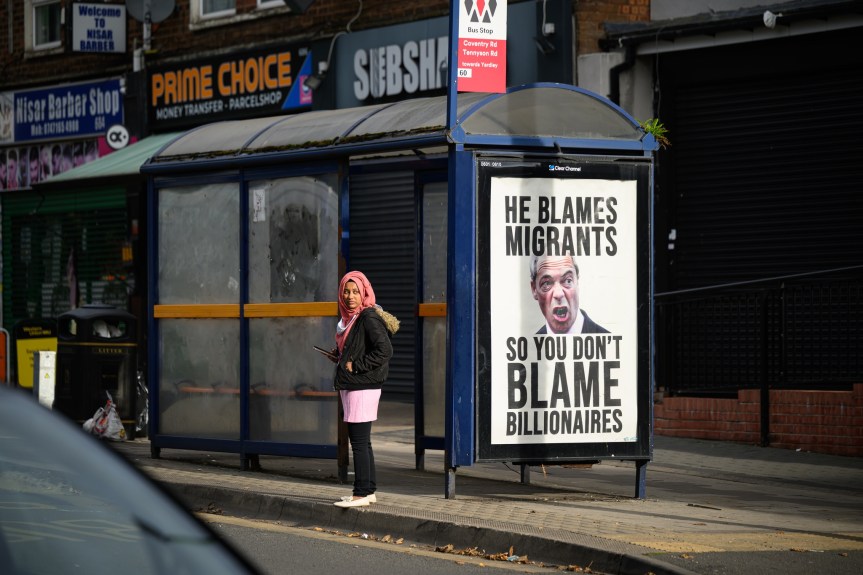
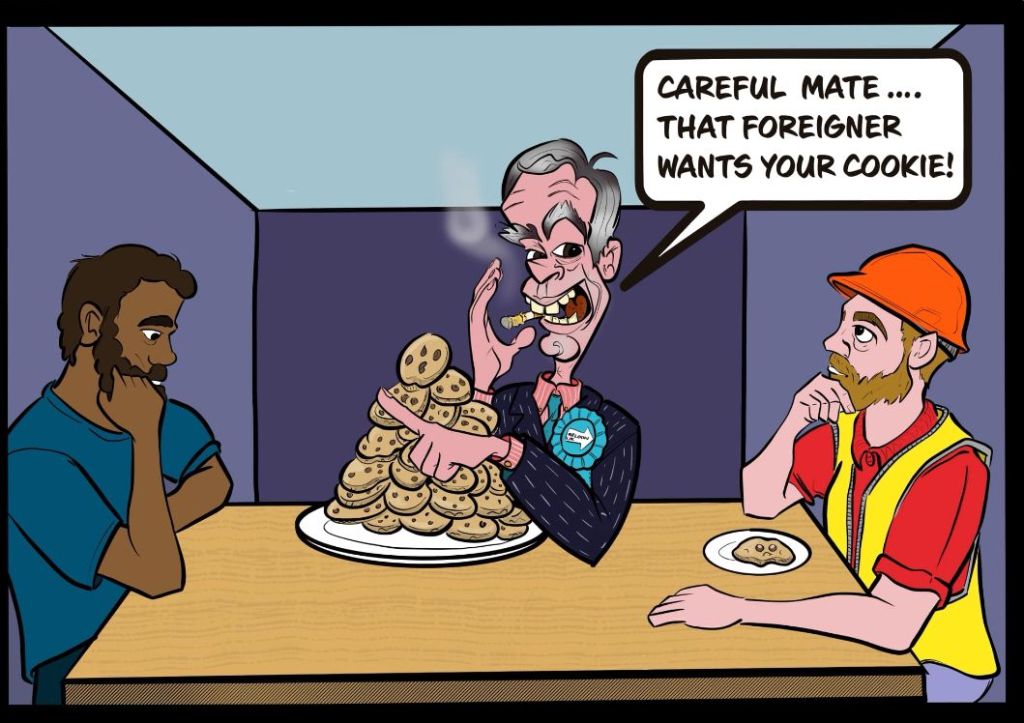
Anti-Immigration Sentiment: The party focuses heavily on immigration, which has fuelled its support. This is sadly very popular for the majority of people in the UK blame the foreigners for your own short comings, hate a foreigner for your own self loaving and lastly blame the foreigner not the billionaires for the problems destroying the society and nations that we all thought we lived in and love.

Populist Rhetoric: Nigel Farage presents the party as a defender of “the people” against a “corrupt elite,” a common populist strategy. This picture is very much echoed by the mainstream giants of the press such as Murdoc owning press.

Defections: Several former Conservative MPs and members have joined Reform, strengthening its position. To me this is just a rehashing and reinvention of the right wing wealthy classes who historically maintain power in the UK and globally – I have seen it happen a lot in British media when the right wing really show their teeth and do not pull their punches in hating the enemy and doing their damnedest to make sure you hate them to.

Social Media and Technology: The rise is facilitated by social media, which allows for the rapid spread of far-right ideologies and populist narratives.

There are a lot of fake, dishonest or false narrative social media accounts churning out hate speech on social media today boasting about how much they hate the left love Reform this is sadly new to me but its just a another weapon in the armoury of the wealthy and far right.

What does this all mean to a United Kingdom and does Nigel Farage now have the keys to Downing Street and the heart of British politics in 3 years time? Sadly I think it does it appears wealth, hate and might are presently stronger across the world and UK love, peace and righteousness reasoning.

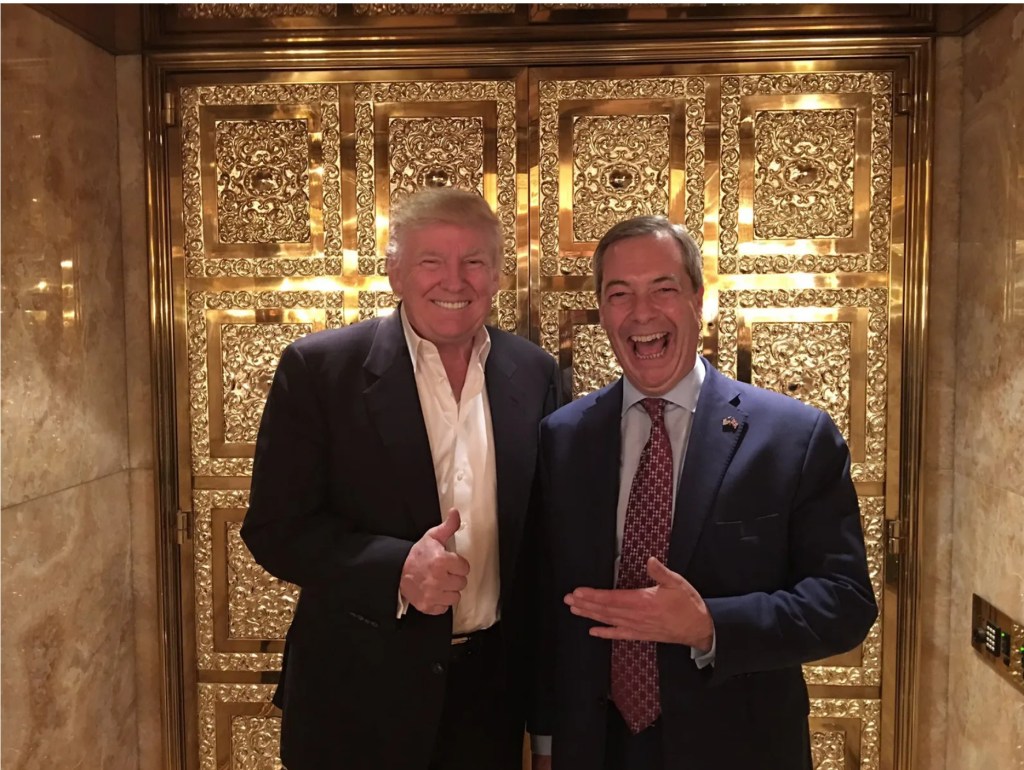
Farage and Trump have infiltrated fascism into the western world in a way that Hitler could only dream of.

Leaving Europe has seriously economically damaged the UK although initiated by Farage he seems to be the master beneficiary of the pain and no gain that has happened due to this.

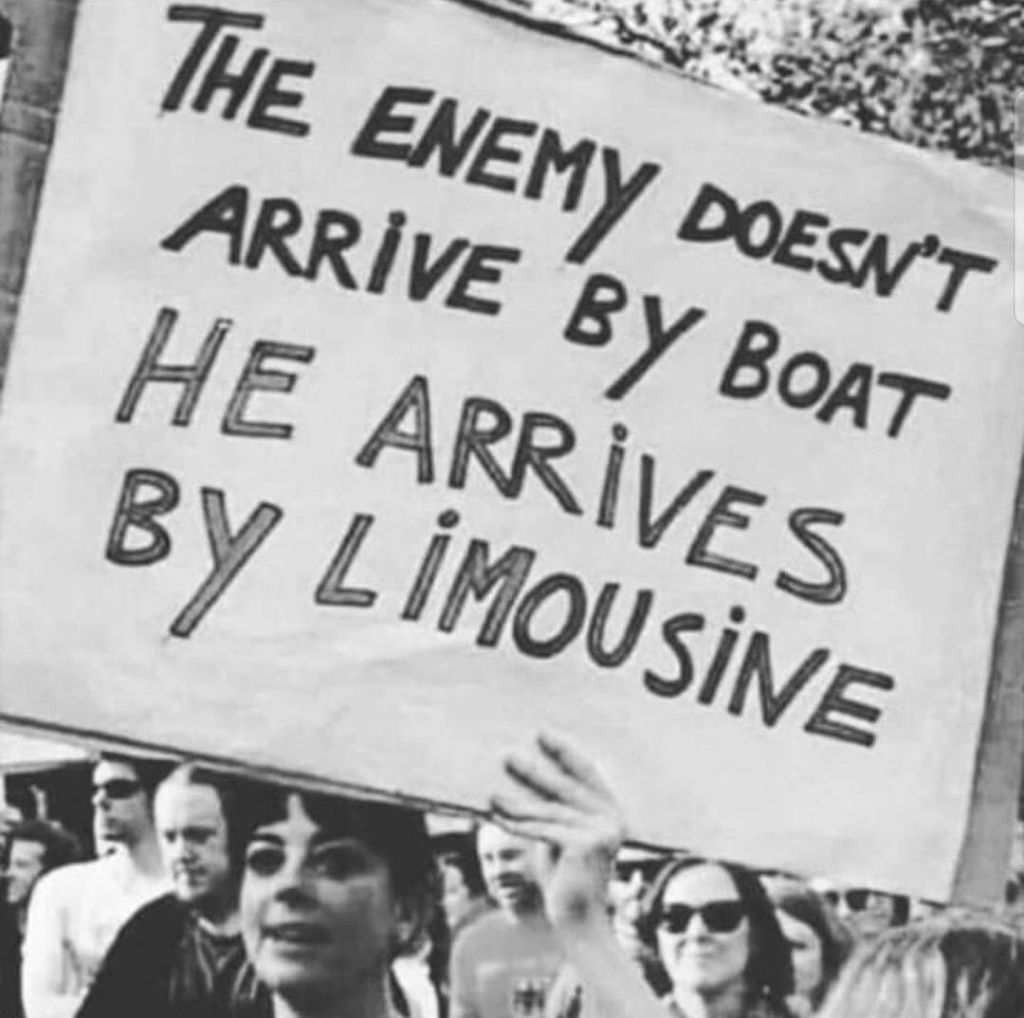
Globally taking placed wars orchestrated by power players such as Putin and Trump and climate damage due to climate change (ignored by Trump and Farage) are bound to result in immigrants escaping with their lives to places that they stand a better change to live and thrive and survive and rather than try to understand and respect peoples fears and attempts to make a better life, we demonise them and teach and promote the hating of them so as to avoid the real enemy that of excessive manipulation of us for the benefit of the billionaires classes and to maintain their power and wealth to exploit and play with the rest of us as there toys or digits on a spreadsheet rather than free thinking and feeling human beings that we are.

Whether To Weather The Storm

Sometimes I find myself and others in crisis, not one of there making but one that they or myself or others are very much being weathered by and emotionally unable to take shelter from what is raining down.

Although the instinct is sometimes to try and wipe them or yourself dry with reassuring words and all knowing answers, such words and answers can not always stop the emotional rain.

its upsetting and frustrating for both you and a person caught in an emotional storm, but sometimes its better to wait for a storm to pass before you look for a place to recharge from the storm. Sometimes you will only know a storm will have passed once the darn thing has finished and not knowing what it will do or when it will stop can be frustrating in its self.

On an economic front there is a storm coming in the UK. Lots of business some long established business have been being announced as going bust in the UK and it really does feel like we are on the cusp of an economic storm of a recession with concerns on job fronts, stock market highs leading to potential stock market lows and Trumps war in the middle east and threats of tariffs and tantrums to those that don’t support his brain rotten madness there really are potentially several economic storms on the horizon.

Darkside Of A Super Power: How U.S. Undermined Left‑Leaning Governments Worldwide

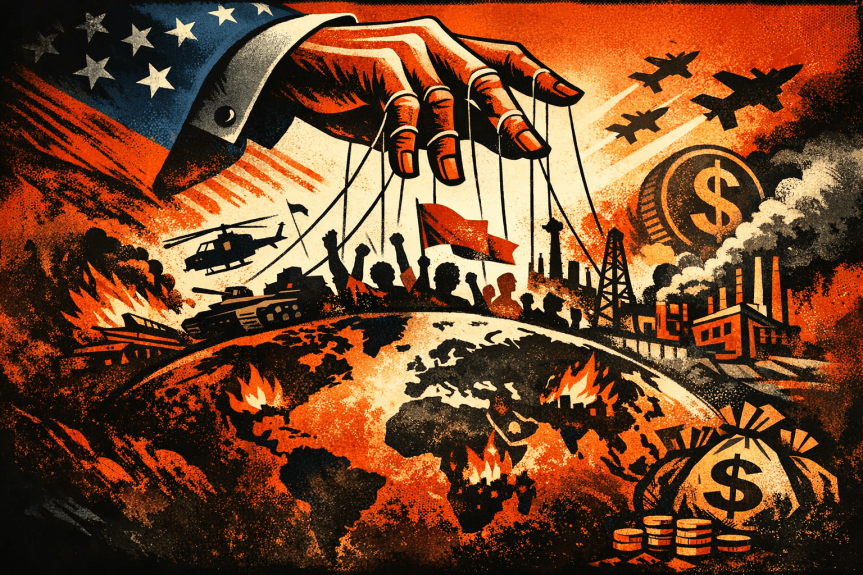
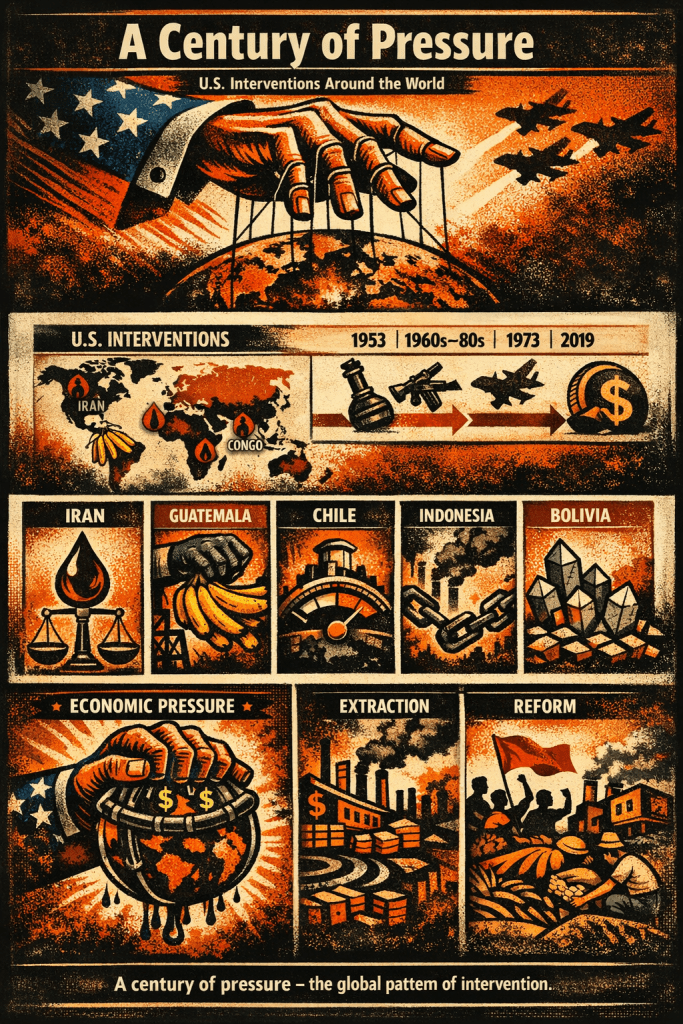
For the last hundred years, the United States has repeatedly intervened—covertly, economically, and sometimes militarily—against governments that tried to redistribute wealth, nationalise resources, or break from Western corporate and strategic influence. Historians argue that these actions were driven by Cold War ideology, corporate lobbying, and the desire to maintain a U.S.-led global order.

What was good for a country, its people and it’s ability to stand taller on it’s own two feet would not necessarily match with what would be in the interests of the US. When an agenda of profit over people would and continues to override the agenda, then something was going to have to give and yes people are going to suffer at the expense of profit. This is not a question of simply destroying possible authoritarian undemocratic non US influenced countries across the globe that worked against the interests of the US. But often a case of destroying left leaning democracies of countries that no longer saw the US as having their democracies interests at heart and looked to stand on their own two feet rather than in someone else’s corporate shadow. Israel’s belief to wipe out infrastructure and opposition across the middle east at this present time with the support and backing of Donald Trumps government appears to come across as regime destruction on steroids.

Below is tour of ten countries where left‑leaning governments attempted major reforms—and what happened next.

Iran (1953) — Oil Nationalisation Meets Cold War Anxiety

Mossadegh nationalised Iran’s oil to fund national development. The U.S. and UK removed him, restoring Western control of oil and installing the Shah. Impact: dictatorship, repression, and decades of instability.

Guatemala (1954) — Land Reform vs. United Fruit

Árbenz redistributed unused land, including United Fruit’s vast holdings. A CIA-backed coup followed. Impact: a 36‑year civil war and mass atrocities.

Congo (1960–61) — Lumumba’s Independence Project

Lumumba wanted Congo’s mineral wealth to benefit its citizens. He was removed and later killed during Cold War manoeuvring. Impact: Mobutu’s long dictatorship and entrenched poverty.

Brazil (1964) — Social Reform Meets U.S. Alarm

Goulart pushed land and tax reform and expanded voting rights. Washington supported a military coup. Impact: 21 years of authoritarian rule.

Indonesia (1965) — The Anti‑Communist Purge

Sukarno balanced nationalist and communist factions. The U.S. supported forces that eliminated the PKI. Impact: mass killings and Suharto’s authoritarian regime.

Chile (1973) — Allende’s Democratic Socialism

Allende nationalised copper and expanded social programmes. The U.S. backed efforts to destabilise his government. Impact: Pinochet’s dictatorship and widespread human rights abuses.

Nicaragua (1980s) — The Sandinista Revolution

The Sandinistas expanded healthcare, literacy, and land reform. The U.S. funded Contra forces to undermine them. Impact: civil conflict and economic collapse.

Grenada (1983) — Maurice Bishop’s Vision

Bishop promoted workers’ rights and social programmes. The U.S. invaded after internal political turmoil. Impact: end of an independent development model.

Burkina Faso (1987) — Sankara’s Anti‑Imperialism

Sankara pursued vaccination, women’s rights, and debt rejection. He was killed in a coup widely viewed as externally influenced. Impact: reversal of reforms and renewed dependency.

Bolivia (2019) — Lithium, Gas, and Indigenous Power

Morales nationalised resources and reduced poverty. He was forced out amid disputed election claims. Impact: political instability and policy reversals.

The Pattern

Across these cases, historians highlight recurring themes:

  • Resource control: oil, copper, bananas, lithium, minerals.
  • Corporate lobbying: United Fruit, ITT, major oil firms.
  • Cold War containment: fear of Soviet influence.
  • Prevention of alternative models: successful left‑leaning democracies risked inspiring others.

The result was often the same: authoritarian regimes, economic dependency, and long-term instability, while the U.S. secured strategic allies, resource access, and corporate protection.

Trump as Continuity, Not Exception

Trump’s foreign policy sits in the same long arc of U.S. interventionism—but with a different style and toolkit rather than a different underlying logic.

Continuities with past interventions

  • Same core objectives: Regime alignment, not democracy per se. Like earlier coups and covert ops, Trump’s moves aimed to weaken governments seen as hostile to U.S. interests—especially left‑leaning or anti‑U.S. ones (Venezuela, Iran, Cuba, Nicaragua)—and to favour regimes or oppositions more open to U.S. strategic and corporate priorities.
  • Economic warfare instead of classic coups: Where the 1950s–70s used CIA coups and military backing, Trump leaned heavily on sanctions, financial strangulation, and diplomatic isolation—“maximum pressure” on Iran, crushing sanctions on Venezuela, tightening the embargo on Cuba. The mechanism changed, but the goal—forcing political change by making the economy scream—echoes Chile under Allende.
  • Targeting left or left‑populist governments:
    • Venezuela: Recognition of Juan Guaidó, sanctions on oil, and open talk of regime change mirror older U.S. hostility to resource‑nationalising, left‑populist governments in Latin America.
    • Cuba & Nicaragua: Expanded sanctions and rhetorical framing of these states as part of an “authoritarian socialist” axis continues the Cold War pattern of isolating left governments in the hemisphere.
    • Iran: “Maximum pressure” and talk of regime change fit the long line from the 1953 coup through to contemporary attempts to weaken the Islamic Republic.
  • Protection of strategic and corporate interests: Just as United Fruit, copper companies, and oil majors shaped earlier interventions, Trump’s policies aligned with energy, defence, and financial interests: backing Gulf monarchies, supporting fossil‑fuel exporters, and pushing for favourable investment conditions in Latin America while punishing governments that nationalised or tightly controlled key sectors.

What’s different about the Trump era

  • More overt, less covert: Earlier interventions were often deniable; Trump frequently said the quiet part out loud—talking openly about “taking the oil,” “dominance in the western hemisphere,” or regime change in Venezuela and Iran. The underlying logic wasn’t new; the candour was.
  • Transactional framing instead of grand ideology: Cold War presidents wrapped interventions in anti‑communist rhetoric and “freedom” language. Trump framed many moves as deals, leverage, and dominance—America First rather than a universal mission—though the effect on targeted states (economic collapse, political destabilisation) often resembled earlier anti‑left operations.
  • Less state‑building, more pressure and exit: Compared with Bush’s Iraq or earlier occupations, Trump was less interested in long‑term reconstruction and more in short, sharp pressure: sanctions, recognition of rival leaders, targeted strikes (e.g. killing Soleimani) and then stepping back, leaving fractured political landscapes behind.

How to read Trump in the longer history

If you zoom out, Trump looks less like a rupture and more like a loud, stripped‑down version of an old pattern:

  • Left‑leaning or anti‑U.S. governments that control strategic resources are pressured, isolated, or targeted.
  • Economic tools (sanctions, financial blockades) now do much of the work that coups and covert ops once did.
  • The language has shifted—from anti‑communism to “terrorism,” “dictatorship,” or “socialism”—but the structural aim is similar: prevent alternative economic and political models that might weaken U.S. strategic and corporate advantage.

Cometh the hour, cometh the mad king DJT

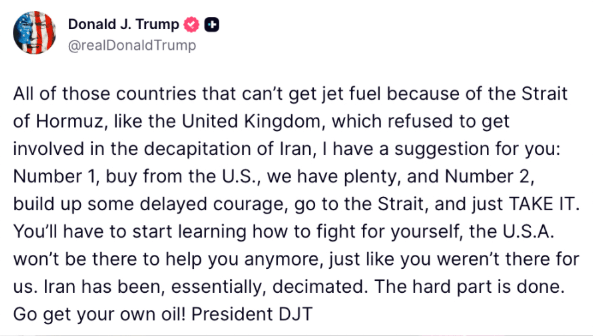
You just can’t make this stuff up in a very Game of Thrones style the President of the USA has just tweeted the above tweet. Just when countries are trying to deal with Trump and Netanyahu’s oil war Trump decides to set fire to social media with a Molotov cocktail. He is certainly no cool and calm head in a self engineered social, political and economic storm or war.

Matthew E. White – Rock & Roll Is Cold (Official Video)

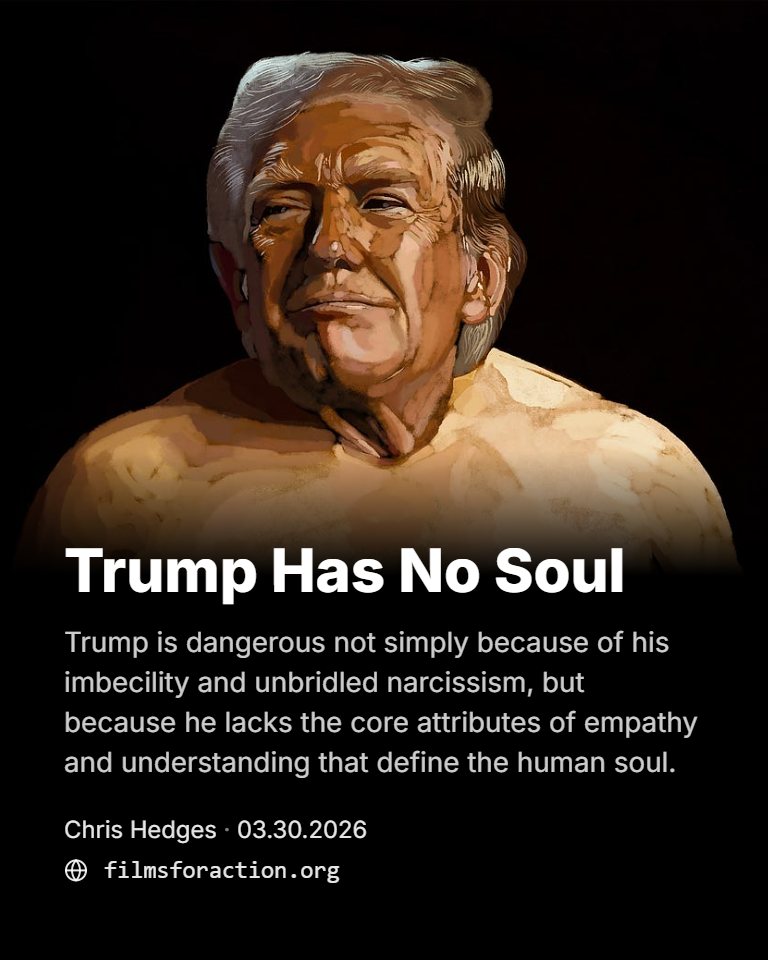
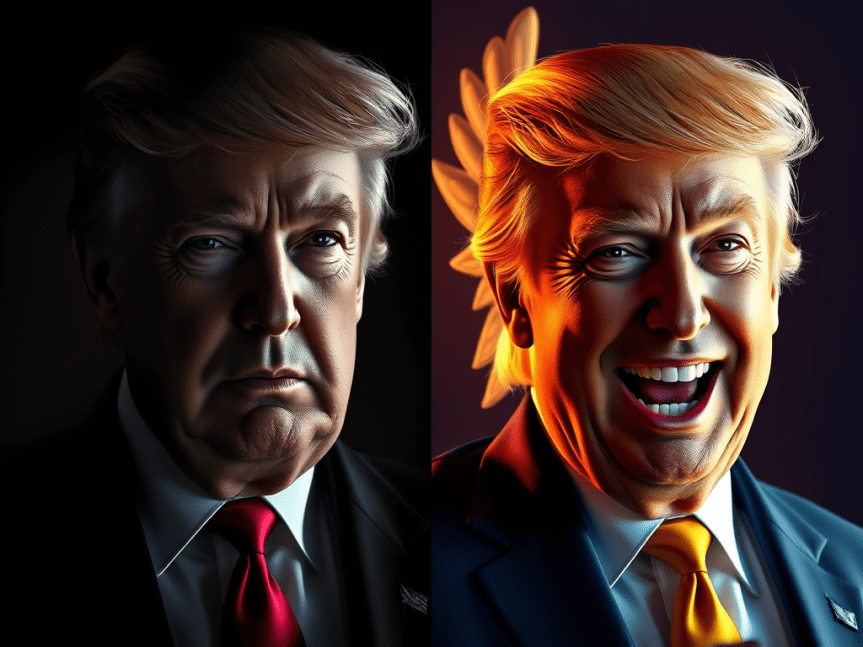
Is Donald Trump a ‘Saint’ or a ‘Sinner’ in the time of political echo chambers?

Whether Donald Trump is “evil” is a matter of intense public debate and subjective judgment, with no consensus. The term is used by various critics, supporters, and observers to describe his character, policies, and political impact from widely differing perspectives.

Arguments for Characterizing Him as evil

Critics and some public figures often use the term “evil” to describe Trump based on his actions and rhetoric:

  • Moral and Ethical Critique: Figures like actor Robert De Niro have explicitly called him “evil,” citing a lack of morals, ethics, or regard for others.
  • Impact of Policies: Some commentators argue that his policies, such as certain immigration measures or his handling of the COVID-19 pandemic, have caused significant suffering and death, which they categorize as a form of “multidimensional evil”.
  • Political Rhetoric: His use of language to demonise domestic political opponents—labelling them as “evil”—is seen by some as a dangerous shift in American political discourse.
  • Cultural Symbolism: In popular culture and media, Trump has been frequently depicted or used as a template for villainous characters, representing archetypes of greed and cynicism. 

Counter-Perspectives and Alternative Labels

Other observers reject the “evil” label, offering different interpretations:

  • Incompetence vs. Malice: Some critics argue he is not evil but rather a “chaotic fool” or “buffoon” whose detrimental impacts stem from ego and incompetence rather than calculated malevolence.
  • “Necessary Evil”: Some supporters or pragmatic observers have characterized him as a “necessary evil”—a disruptive force required to challenge established political systems.
  • Psychological Framing: Many analysts prefer clinical or psychological terms, such as “narcissistic” or “pathological,” to describe his behaviour rather than moralistic terms like “evil”.

Perception and Bias

Research suggests that whether an individual perceives Trump as “devil or messiah” is often influenced by their own pre-existing biases or political echo chamber and how they weigh his public persona as a successful businessman against his controversial actions as a political leader.

Sinner or saint in the time of political echo chambers/

Maybe in a time of political echo chambers where environments are often created by social media algorithms and selective exposure, where individuals only encounter information, opinions, and beliefs that reflect and reinforce their own. These insular spaces, sometimes termed “neotribalism,” intensify political polarization, normalize extreme views, and shield users from opposing perspectives. such a time is the perfect time to create a sinner or a saint in Donald Trump. We don’t want to see the good in what we perceive to be bad and alternatively those that see only the good in what he does are ignorant to the bad.

But also on the other hand if Donald Trump himself only chooses to listen and follow his own political echo chambers perspective and train of thought, then what will he loose out on or what damage will be done or has or is already being done by ignoring a more overarching or balanced set of views and perspectives on politics and the globe. Presidents can now be hoodwinked just as easily as people can by their own political echo chambers.

Final a religious perspective to Trumps entourage

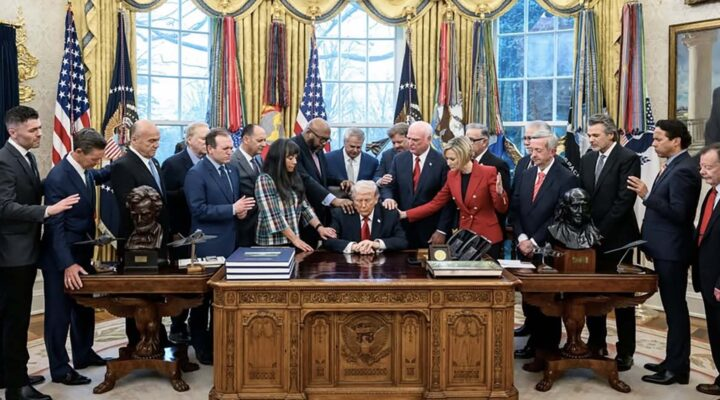
Pastors pray over Trump in the Oval Office

In Matthew 23:3, Jesus tells his followers to obey the teachings of the scribes and Pharisees, but not to follow their actions, stating: “for they talk but do not do”. This is a warning against hypocrisy, specifically criticizing religious leaders who preach the law but do not practice it themselves. 

Key details regarding this, and similar phrasing:

  • Context: Jesus was calling out hypocritical leaders who “tie up heavy, cumbersome loads” (strict religious rules) but are unwilling to lift a finger to help.
  • Meaning: This is a command to follow the authorized, sound doctrine (“what they say”), but avoid copying the behaviour of those who fail to live up to it (“what they do”).

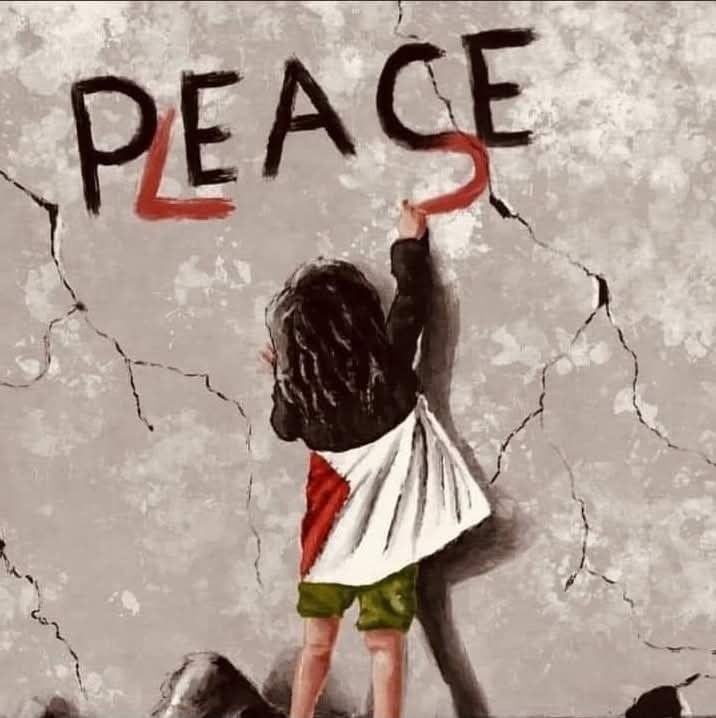
Have people forgotten about Gaza due to the invasion of Iran

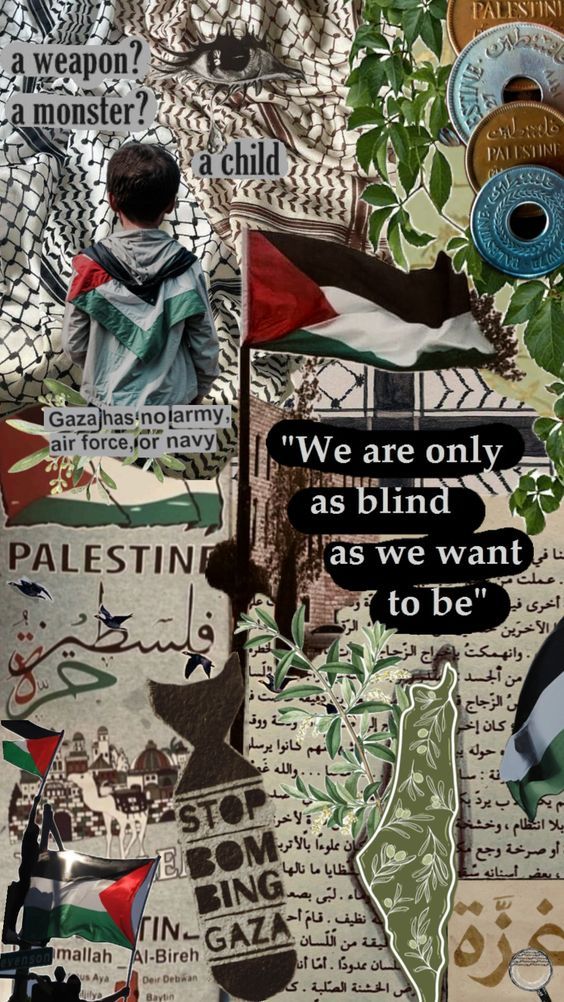
From the murder of many thousands of civilians in Gaza not even perceived to be human by some of their killers to a change in pace and pursuit of an illegal invasion of an unlawful nation state. As of late February 2026, the estimated number of Palestinians killed in the ongoing war has reached significant levels, with official and independent sources reporting varying figures based on direct and indirect causes.

Reported Death Toll (Gaza)

  • Official Recorded Deaths: At least 73,188 Palestinians have been reported killed in the Gaza Strip since the conflict began on 7 October 2023.
  • Total Reported Deaths (Including West Bank): Some sources indicate the total number of Palestinians killed across both Gaza and the West Bank exceeds 80,692.
  • Indirect Deaths: Independent studies, including those published in The Lancet, suggest the total death toll could be significantly higher—possibly surpassing 186,000 to 335,500—when accounting for indirect causes such as starvation, disease, and the collapse of the healthcare system.
  • Demographics: Women and children are estimated to make up approximately 70% of the total fatalities

The vast majority of the West see Israel as a beacon of democracy in the middle east with a right to exist sadly leading to inherent will and right to enter ongoing wars to fight for its survival against its enemies that it sees if it does not destroy will destroy her.

While the Israel-Palestine conflict remains a critical, ongoing situation, the new, high-intensity conflict with Iran—which has included strikes on Tehran and retaliation from Iranian forces—has created a “Tale of Two Wars,” where the latter dominates international headlines and diplomatic focus.

Here is a breakdown of the situation as of March 2026:

  • Shifting Focus & “Forgotten” Fears: Palestinians in Gaza have expressed deep concern that their ongoing, dire situation is being overlooked as the world focuses on the rapidly escalating conflict between Israel, the US, and Iran.
  • Impact on Humanitarian Aid: The outbreak of the Iran conflict has had direct, immediate consequences for Gaza. Israel blocked border crossings to Gaza following air strikes on Iran, causing fear of renewed famine and causing supply lines for humanitarian aid to be severely disrupted.
  • Ongoing Catastrophe in Gaza: Despite the shift in attention, the situation in Gaza remains critical, with reports of continued, intense, and, in some cases, widening, military actions, following a two-year period of severe destruction.
  • The “Two Wars” Context: The 2026 conflict is being characterized by the simultaneous, yet competing, catastrophes of a new war with Iran and the continuing humanitarian crisis in Gaza, with the former often acting as a “shadow” that masks the ongoing devastation in the latter. 
  • While international awareness of the situation in Gaza remains, the intensity and potential for a massive, regional war with Iran have altered the primary focus of international media and political leaders, creating a perception that Palestine is being forgotten.

The main justification for war with Iran is the fear that Iran will develop a nuclear bomb capacity if not stopped. This would be an existential threat to Israel, given Tehran’s frequent rhetoric calling for the destruction of the Israeli state. So although the war with Iran might be seen as one that must be fort, must it be thought unlawfully and does it excuse or explain Israel’s actions in Palestine.

Gaza by David Rovics