Call to arms

New York Needs a Legion of Disease Detectives

It can’t do this alone.

By The Editorial Board

The editorial board is a group of opinion journalists whose views are informed by expertise, research, debate and certain longstandingvalues. It is separate from the newsroom.

  • April 17, 2020, 7:26 p.m. ET
A drive-through coronavirus testing site in Syracuse, N.Y.
A drive-through coronavirus testing site in Syracuse, N.Y.Credit…Damon Winter/The New York Times

If the United States gets it right, coronavirus testing will eventually become available in community centers and parks, at mobile clinics and sports arenas. A Postal Service worker may even bring a test to your door. If that seems far-fetched, think again. Public health experts agree that finding our way back from the coronavirus pandemic will almost certainly require testing, monitoring and contact tracing on a giant scale.

In New York, especially, among the hardest hit places in the world, the challenge will require a mass mobilization of resources from government and the private sector.

Public health experts say wide-scale testing has saved lives in countries like South Korea and Germany, which have seen far fewer deaths from Covid-19 than the United States. Public health officials suggest that if it had been deployed sooner in the United States, it could have saved thousands of lives here, too. They also say it is now the best way forward to control the pandemic safely and to restart the economy.

New York State is conducting about 25,000 tests per day, about 10,000 of those in New York City, according to state and city officials. But the figure is still far less than experts say is needed to reopen society.

To make that happen, New York will need to enlist a legion of health workers, disease detectives and others to regularly test large portions of the population, trace the spread of the virus by finding those who may have been exposed and enact a system of isolation and quarantine that stops the disease in its tracks. The key will be not only deploying enough medical workers and finding enough test kits but also expanding lab capacity to rapidly process a high volume of tests daily. Moreover, the state needs the other equipment and supplies necessary to conduct the tests, including protective gear. Without that, test kits will be useless.

“It’s not about how many tests we’ve done,” said Dr. Tom Frieden, the former director of the Centers for Disease Control and Prevention. “It’s about how many tests per day compared to the total population, and how well targeted that testing is. What portion of health care workers are getting tested? What portion of nursing home residents, and with what frequency? No health department can manage alone. It’s a massive undertaking.”

New York needs help from the federal government. For now, the state is trying to do what it can.

Gov. Andrew Cuomo won approval in mid-March to conduct testing using public and private labs, a measure that greatly expanded the state’s testing capacity.

In New York City, Mayor Bill de Blasio has overseen a promising effort to spur local companies to make protective gear and rapid testing kits. This week, he said local businesses will be producing an additional 50,000 test kits per week by May and buying another 50,000 from a company in Illinois.

To reopen New York’s schools and its economy, though, the effort will have to be much bigger, touching large numbers of residents in a state of nearly 20 million people.

Editors’ Picks

The Neighbors of Ninth StreetWhat Were the Origins of the Holocaust?One Bright ThingContinue reading the main story

Officials in New York City, which is home to more than 8.5 million people, say they are weighing ways to quickly scale the capacity for testing and epidemiological tracing. The mayor has rightly said the city would focus on getting testing to medical and other essential workers and vulnerable populations first.

Plans are underway to hire or redeploy roughly 1,000 additional workers to do the work of contact tracing, supplementing the work of the city’s roughly 150 disease detectives. City officials said they will most likely need to hire thousands more workers to help in the efforts. This work is also beginning in Massachusetts, where Gov. Charlie Baker said nearly 1,000 contact tracers would reach out to sick residents and their recent contacts.

The city is identifying locations to set up community testing sites, like parks and recreation centers, sexual health clinics, outpatient clinics at public hospitals, pharmacies and urgent-care centers, and the network of community health centers and mobile testing sites that has proved effective in the fight against H.I.V. over the past three decades. It is also exploring how to pool tests to process more samples at once.

“The goal is to ideally have hundreds of thousands of people who could take tests any day of the week,” said Emma Wolfe, Mr. de Blasio’s chief of staff and deputy mayor for administration.

This is a time to think bigger.

In Germany, mobile teams of medical workers help treat people, a model that could be useful in New York for testing seniors, disabled people and others who can’t leave their homes.

Dr. Harvey Fineberg, who leads the Standing Committee on Emerging Infectious Diseases and 21st Century Health Threats at the National Academies of Sciences, Engineering and Medicine, has suggested using the Postal Service to deliver surgical masks and hand sanitizer to every American household, once front-line medical workers are sufficiently supplied. The federal government could help hard-hit places like New York by sending a medical worker along these same postal routes to test people at their homes, either by using nasal swabs or possibly saliva samples if proven effective and approved by regulators. Another source of help may be the National Guard.

One advantage New York has is the city’s Health Department. It has been a pioneering force in public health for decades, from the AIDS crisis to antismoking campaigns and efforts to close racial disparities in health outcomes.

Restaurant innovation – food for supper

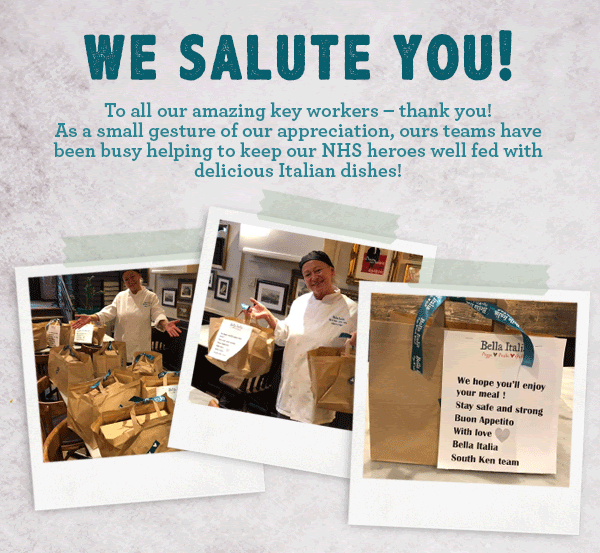
Just got this great email from a local Italian restaurant what a great idea cooking there food in your home.

Bella Italia <info@emails.bellaitalia.co.uk>16:08 (1 hour ago)
to me
Image
You can update your profile and change your restaurant here.

If you no longer wish to receive our news and offers, please click below to manage your preferences. Update Consents.

Your privacy is important to us and we won’t share your information. For more information please see our Privacy Policy.

View In Browser.

ACRE NEWSFLASH

Corinium Suite, Unit 9
Cirencester Office Park
Tetbury Road, Cirencester Gloucestershire, GL7 6JJ

01285 653 477

www.acre.org.uk

@ACRE_national

PRESS RELEASE

For Immediate Release

How Helpful is the Chancellors Charity Support Package to rural communities?  

ACRE has been working with NCVO and other national charities to help Government get to grips with the impact of Covid-19 on rural people and community organisations throughout England.

A priority for ACRE is the small charities and community organisations that exist in every rural community; especially those delivering essential support to vulnerable rural people.  The greatest concern is that vulnerable people were already at risk of isolation and loneliness before the government’s ‘lockdown’ measures were introduced. The current situation has only made life more difficult for those in need of support.  

In the midst of a crisis of this kind it is understandable that maximum focus is being placed on the nation’s major urban centres, but are the 9.5 million people living in rural England, out of sight, and therefore out of mind?

Small rural community organisations and charities are heavily dependent on local events, fayres and other community-based fundraising.  They do not have the fundraising machinery or reserves that could help them survive the unforeseeable times we are living through; without fundraising, the future of those rural charities looks bleak.

The Chancellor’s support package is largely aimed at charities that are helping with the crisis and is, therefore, very welcome.  However, it will not help to sustain those whose viability is affected by the crisis.  A stark contrast to what has been done for profit making organisations in the retail, leisure and hospitality sectors.  

David Emerson, Chair of ACRE said:

 “The lifeline that very local charities provided to those who are vulnerable, lonely and isolated in rural areas is being wrenched away by this crisis.  No amount of money will restore the warmth of close human contact these organisations can no longer provide, but it will take more than this limited financial commitment to ensure they are still there when the crisis is over.”

ACRE remains fully operational throughout the pandemic and is committed to continue its work with other national charities, Government and DEFRA to make sure that England’s rural communities come out of this crisis in a healthier and more resilient state than when it started.

Ends   Issued 09 April 2020   Media contact: Flick Humphrey, Public Affairs and Communications Manager, 07842 820 592 f.humphrey@acre.org.uk Available for comment & interview: Jeremy Leggett, Policy Lead, 07787573658 j.leggett@acre.org.uk   Twitter @MrsFlickH   Tweet ACRE @ACRE_national     Notes to editor   Background ACRE (Action with Communities in Rural England) is the national body for 38 independent county based organisations that make up the ACRE Network. Our vision, to be the voice of rural communities, is supported by the wealth of evidence and intelligence on rural matters that we collect from our members. We use this evidence to influence national policy on rural issues, from housing, health and transport to broadband, services and fuel poverty.   We have a strong track record of speaking up for rural communities on the national stage and delivering multi-million pound projects that enable our communities to find innovative solutions to the challenges they face.   Our Network Members, many of whom date back 90 years, have a long, fruitful history of making a difference at grassroots level. They are charitable local development agencies, generally based at county level, which lead, support and enable community initiatives, reaching 52,000 grassroots organisations.

Corona-19 Devon strikes back

Email template of what Communities in Devon are doing to confront the Corona-19 virus. To be continued!!

  1. Community emergency grants for new & old resilience groups across Devon https://www.devoncommunities.org.uk/grant-funding-emergency-flood-resilience 

New groups that have been formed in response to the pandemic may wish to apply under scheme one to support costs associated with formalising the group into a community emergency planning group and creating a community emergency plan; a document that helps to plan your response and is shared with relevant local authorities and emergency services. We can also provide practical guidance, advice, and support around the creation of a community emergency planning group and writing a community emergency plan.

For questions and queries about grant applications please contact louise.macallister@devoncommunities.org.uk. For questions and queries about practical guidance and support in forming a community emergency planning group and writing an emergency plan please contact martin@devoncommunities.org.uk 

  1. Devon Highlights is a community project led by Devon Communities Together, that supports older people (aged 55+) living in 6 areas of Devon, who may be at risk of loneliness and isolation. The project has but in place a number of measures to help ensure that older people are still able to access the support of this project throughout the Covid19 restrictions, please do share this information with those you know who may benefit from this. We are now operating a one to one telephone service for those people that do not have access to the internet or are unsure how to use digital devices.  

We are also using Zoom to hold groups online, so that participants can still see each other in real time, and talk about activities they are doing. In fact, this is a great opportunity for anyone that is 55+ living in Devon who wants to get connected.  

Devon Highlights is here to connect you in this time of isolation. For anyone who wants to get involved they can contact us on – info@devoncommunities.org.uk, or via telephone: 01392 218919.

  1. A village community working together – practical  example – Ashreigney Village Hall have shared how they are looking after the hall and supporting the community during the Covid19 restrictions;

The Hall is now closed except for Friday mornings 0900-1100hrs when our Post Service operates.

The Foyer is cleaned on a Thursday afternoon each week prior to its opening and our Risk Assessment has been updated accordingly.

The Hall is physically checked twice a week by 2 Charity Trustees to ensure that all is fine.

We will look to turn off the heating in the next couple of weeks; all other electrical items have been switched off.

We have reduced the Committee to a quorum so that any decisions that have to be made can be done more quickly; this was done with all Trustees knowledge and agreement.

On the Contingency side, our Contingency Gold Group meets over Zoom and information is promulgated down through the ashreigneyhelp email. 

We have a list of volunteers who have all been individually contacted by email and been given guidance on protocol, health and safety and general well being.

We have also produced a list of local producers and shops with contact details and payment methods as well as price lists.

The Co-ordinator manages the list of volunteers and updates information as we feed it in to her.

Following the delivery of the Ashreigney and Riddlecombe Emergency Measures information sheet to all households which provides the names and contact details of the co-ordinators and how to seek assistance, we currently have a number of active requests for help which are being managed.

I should also say that the community is managing a lot of self help and care for neighbours and friends; the purpose of the volunteers is to fill the gaps where existing support networks fail or have not been established.

Our church bells ring out every Thursday at 8pm and last Thursday we had a wonderful accompaniment of drums as well as clapping!

Around a hundred of Devon’s towns and parishes have an Emergency Plan registered with Devon Community Resilience Board, others have unregistered* plans.

Many Emergency Plans include a local response team, ready to take action when an incident occurs.

  1. A message from Martin Rich (martin@devoncommunties.org.uk) We want to find out how the local emergency teams have become involved in the response to Covid 19:

Has your group been activated?

Is your group leading the community response?

Have you joined up with others in your community?

What are you doing?

What difficulties have you come up against and how have you resolved them?

Do you have any outstanding requirements?

How have you funded your activities?

How are you communicating with your community?

How are you communicating within your group?

What have you done that other groups might want to know about?

When circumstances permit, we want to hold a Resilience Forum event to learn from this emergency. It may not be a further hundred years until there is another comparable event; also learning and experiences from today may help address other events. 

Please tell us about your experiences and help us to compile an insight into Emergency Planning in action.

Thank you.

* Registration of a plan means that local details are available to the emergency services and primary response organisations in the event of an emergency and for data analysis.

5)Community Business Survey

We are keen to continue gathering more information to understand the many ways in which the Covid-19 crisis is affecting community businesses. So to help us to understand which government-backed support packages are actually being accessed by community businesses we are inviting you to please complete this short survey.

The document below is a scan and so unfortunately none of the links work but the info is still accurate on it.

Of rats and men

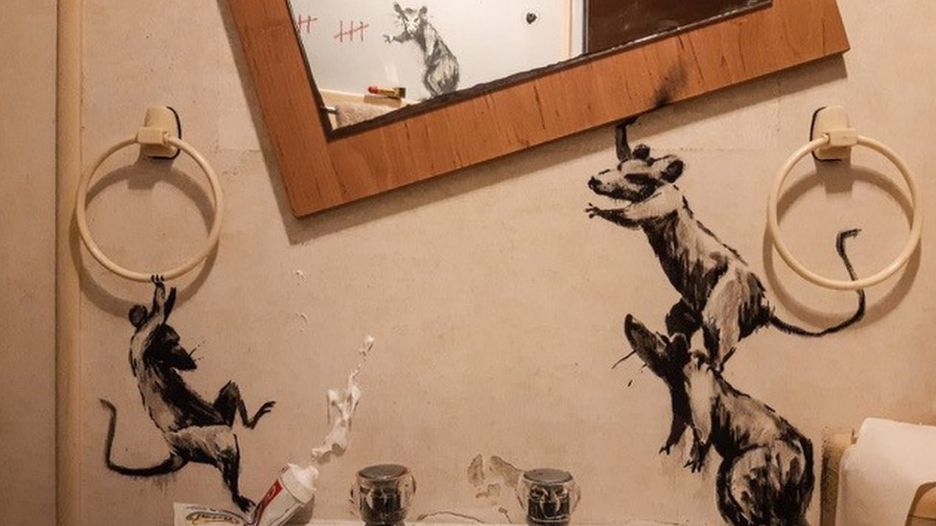
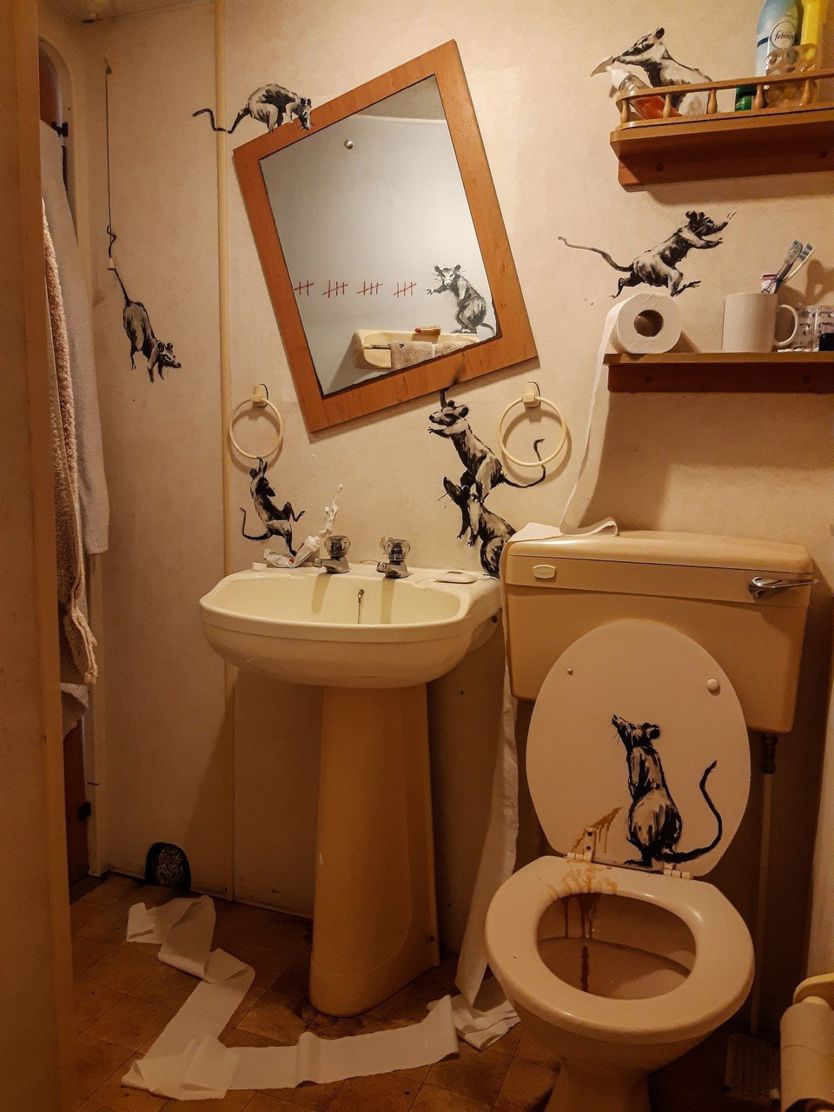
Coronavirus: Banksy makes ‘bathroom’ lockdown art

  • 16 April 2020

Related Topics

Bansky's latest artwork showing a group of rats in his bathroom
Image captionBanksy’s distinctive rats were seen wreaking havoc in a bathroom

Banksy has published a series of pictures showing rats causing mayhem in a bathroom during the coronavirus lockdown.

The elusive artist, whose identity has never been publicly revealed, published five pictures on his Instagram account on Wednesday.

They show rats, which have featured in several of his pieces, wreaking havoc in what is assumed to be his home.

The caption on the picture reads: “My wife hates it when I work from home.”

One of the rats pictured in Banksy's latest artwork
Image captionThe mischievous rodents were seen jumping over toilet rolls and squeezing toothpaste tubes

Nine rats appear in the new pictures, hanging from the towel ring, stepping on a tube of toothpaste and knocking the bathroom mirror to one side.

One appears to be counting the days of lockdown while another is swinging from the light cord.

Who is the mysterious artist Banksy?

The entire piece published by Banksy on Wednesday
Image captionFive photographs appeared on the artist’s Instagram account

Banksy’s last public artwork appeared on Valentine’s Day in his home city of Bristol and showed a girl firing red flowers from a catapult.

It was vandalised 48 hours after it first appeared.

Large rat mural advertising Banksy's Exit Through the Gift Shop exhibition in Los Angeles
Image captionRats have often featured in Banksy’s work

Related Topics

Money for nothing get your clicks for free

If you have a WordPress.com account linked to your facebook page for your business there is a chance of obtaining funding from Facebook towards the running of your digital business.

Small Business Grants programme

We’ve heard from small businesses that a little financial support can go a long way, so we are offering USD 100M in cash grants and ad credits to help during this challenging time.Learn More

There is a catch though

You have to not be a sole trader so more than one person in your business. If you disagree with this choice Facebook have made you could always lobby Facebook to include sole traders.

Hope all is good in your neck of the woods.

Lots of Love

Huw x

Love thy neigbour

Baal Shem Tov – Wikipediaen.wikipedia.org › wiki › Baal_Shem_Tov

Rabbi Israel ben Eliezer (born circa 1698, died 21 May 1760), known as the Baal Shem Tov (Hebrew: בעל שם טוב, /ˌbɑːl ˈʃɛm ˌtʊv, ˌtʊf/) or as the BeShT, was a Jewish mystic and healer from Poland, who is regarded as the founder of Hasidic Judaism.

Love thy neighbor as thyself. A version of the Golden Rule: Do unto others as you would have them do unto you. First found in the Old Testament. Jesus tells the parable of the Good Samaritan to illustrate this commandment.

If you know a friend or neighbor is vulnerable in your local community why not phone, knock on their door or drop them a letter to check how they are doing and see if they are ok. Make sure you give them your phone number so they can speak to you.Together we stand divided we fail. Thank you so much if you are willing and able to help.

Emergency services

Warning as UK coronavirus outbreak leads to sharp rise in deaths at home

A&E chiefs believe many people who could be saved are too scared to go to hospital

Denis CampbellSarah Marsh and Sarah Johnson

Thu 16 Apr 2020 07.18 BSTFirst published on Wed 15 Apr 2020 21.09 BST

Shares969

Paramedics say they are attending far more emergencies when the patient is already dead.
 Paramedics say they are attending far more emergencies when the patient is already dead. Photograph: Andrew Milligan/PA

The coronavirus crisis has led to a sharp rise in the number of seriously ill people dying at home because they are reluctant to call for an ambulance, doctors and paramedics have warned.

Minutes of a remote meeting held by London A&E chiefs last week obtained by the Guardian reveal that dozens more people than usual are dying at home of a cardiac arrest – potentially related to coronavirus – each day before ambulance crews can reach them.

‘It’s heartbreaking. People dying at home, help denied them’

 Read more

And as the chair of the Royal College of GPs said that doctors were noticing a spike in the number of people dying at home, paramedics across the country said in interviews that they were attending more calls where patients were dead when they arrived.

The A&E chiefs’ minutes said that on the weekend of 4-5 April the number of 999 calls in which someone had had a cardiac arrest rose from 55 a day in normal times to 140. Most of the people concerned died, doctors said.

The minutes also reveal acute concern among senior medics that seriously ill patients are not going to A&E or dialling 999 because they are afraid or do not wish to be a burden.

“People don’t want to go near hospital,” the document said. “As a result salvageable conditions are not being treated.”

The stark warning of another hidden toll caused by the pandemic followed the Guardian’s disclosure that hundreds of victims dying in care homes were not being included in official counts – with fears that the toll has since grown to thousands.

Those dying at home of coronavirus would also not be included in the initial daily government updates.

With the number of patients attending A&E plummeting, NHS leaders moved last week to urge the public to continue to seek help if they have a serious health problem. An NHS spokesperson said: “Anybody who needs urgent help – people experiencing heart failure, or expectant mums worried about their baby – should absolutely come forward and seek help from their local NHS.

“There is no doubt that, as the chief medical officer said, coronavirus is putting more pressure on NHS services, but NHS staff are freeing up thousands more beds for critical care whilst also keeping other essential services running, so parents, relatives and anyone worried about their health should continue to use their NHS.”

Coronavirus survivor: ‘I’m still asking myself why I’m here and others aren’t’

 Read more

The minutes of the online meeting, held on Monday 6 April, said that “some patients [are] coming to harm as not coming in or being brought in”.

“Patients with conditions that are time critical re not presenting and concerns rising as to how we manage these patients, eg, no longer able to perform an open appendectomy [for an inflamed appendix],” they continue.

A&E doctors believe that many of the extra deaths from cardiac arrest are due to Covid-19 which, by making it difficult for someone to breathe, puts serious strain on their heart. “Of these 85 extra cardiac arrest deaths a day in London, they must be mainly Covid,” said the head of one A&E department.

Leading medical organisations have voiced anxiety that some people are inadvertently damaging their own health, and even risking their life, by shunning NHS care. People are either too scared to go to hospital or do not want to add to the strain on the NHS when it is under its greatest ever pressure with Covid-19, they said.

“GPs are noticing an increase in people dying in the community, often at home,” said Prof Martin Marshall, the chair of the Royal College of GPs (RCGP). “If patients are dying at home because they are fearful of seeking medical attention, or concerned about being a burden, then it is incredibly concerning.

“We would reassure them that the NHS is here for them, and we will do whatever we can to keep them as safe as possible when they access care.”Quick guide

What to do if you have coronavirus symptoms in the UK

Show

Coronavirus: the week explained – sign up for our email newsletter

 Read more

Paramedics in London, other parts of England and Northern Ireland have told the Guardian how they are turning up at unprecedentedly large number of incidents where the ROLE – recognition of life extinct – procedure has been carried out because the patient is already dead.

“We are going to more people that we are pronouncing dead. We’d average one a week normally, but I had days a week ago when I was doing three or four a day,” said one London ambulance service (LAS) paramedic.

Sources at the LAS said that its crews are attending many more 999 calls than usual involving a cardiac arrest where the person has already passed away. It is unclear how many are occurring in people with Covid-19, said officials, speaking anonymously.

Those dying at home include people whose underlying health is poor because they have pre-existing conditions, and then they get Covid-19, according to a paramedic with the East of England Ambulance Service.

“For some with diabetes or chronic obstructive pulmonary disease it wouldn’t take much to tip them over the edge,” the paramedic said. “It’s quite scary. there are lots more out there that aren’t being counted.

“People are being told to self-isolate, they get poorly at home and speak to doctors or NHS 111 before they call us. They get to the point where they are already very poorly. Perhaps they’re on their own or haven’t recognised [how unwell they are].”

Dr Katherine Henderson, the president of the Royal College of Emergency Medicine, which represents A&E doctors, said she was worried that the recent 29% fall in people attending A&E may mean that people who need urgent medical help are not seeking it.

“We are concerned that some people, particularly parents of young children, might not be seeking medical help when they probably need it for fear of contracting Covid-19.

“Some may also not be seeking help as they worry about adding pressure to the NHS at a time of crisis. But patients should not risk their health – and lives – by staying away as part of an understandable but undue effort to help the NHS. They should seek help if they need it – it is what we are here for.”

Dr Simon Walsh, the British Medical Association’s lead for emergency care, voiced his unease too.

“While it’s understandable that there may be fewer broken bones and sprains because of the confinement, the reduction in patients with diseases such as heart attacks, strokes and appendicitis, which we would expect to occur at a relatively constant rate at any one time of the year, is of concern.”

Marshall, the chair of the RCGP, added: “It’s vital that during this Covid-19 pandemic people continue to seek medical attention for conditions and illnesses unrelated to the virus – and if it’s an emergency, that they call 999 for help.

“The last thing we want is for patients to wait too long before seeking help, and that help arriving too late as a result.”

Midnight hour part 2

covid-newsletter-masthead
Coronavirus lockdown makes for a bittersweet holiday season in BethlehemMonks attend an Orthodox Easter service at the Church of the Holy Sepulcher in Jerusalem’s Old City after the church was closed as a precaution against COVID-19, April 11, 2020. (Photo: Afif Amira/WAFA)

It’s been 40 days — though it feels much longer — since a state of emergency was declared in Palestine, and the first city in the West Bank was put under lockdown due to a coronavirus outbreak.

Since then, the number of confirmed cases has soared to 284 in Gaza and the West Bank, with an unexpected spike of 10 new confirmed cases on Tuesday.

Relative to the rest of the world, and neighboring Israel in particular, the number of cases in Palestine still seem exceptionally low. For Palestinians, however, who are painfully aware of their ill-equipped healthcare system, every new case presents a new threat.

With every passing week, Palestinians in Bethlehem, who have been under lockdown the longest, have faced new challenges.

The beginning of the outbreak saw the city’s bustling tourism industry come to a screeching halt, suddenly putting most of the city’s residents out of work.

As people struggled to adjust to a new normal, they were soon faced with the reality that the Israeli occupation would not be leaving them alone during the pandemic as soldiers raided local refugee camps in the city.

A few weeks in, just as the situation in the city seemed to be getting better, with little to no new cases reported, Palestinian laborers in Israel began flooding back into the West Bank, spreading the virus across the rest of the territory.

This week, Palestinians, both Muslim and Christian, are being overwhelmed with mixed emotions of joy and sadness as the Easter holidays and beginning of Ramadan, times of celebration and togetherness, are being celebrated under quarantine.

While much of the world celebrated Easter this past Sunday, in accordance with the Catholic and Protestant churches, the majority of Palestinians will celebrate Easter this upcoming Sunday, following the Orthodox calendar.

Church bells still rang out in Jerusalem and Bethlehem this Sunday, but the churches themselves, save a few clergy members, remained empty. The Church of the Holy Sepulchre in Jerusalem was closed on Easter Sunday for the first time since the Black Death in 1349.

Things are expected to remain similarly quiet for Orthodox Easter next week, as usual processions through the holy streets of Jerusalem and Manger Square in Bethlehem have been cancelled for the masses, with some churches urging followers to tune into Easter services online.

The coming of Easter has been a bittersweet reminder for the people of Bethlehem of the reality that, while they celebrate in their homes, the hundreds of thousands of tourists that the city relies on during the holiday season are not coming this year.

After the coming Easter celebrations, in around 10 days, Muslims will begin observing the holy month of Ramadan.

Ramadan, especially in Palestine, in every sense of the month, is characterized by togetherness. People pray en masse together, eat meals together, and stay up into the late hours of the night sitting with family, friends, and neighbors.

Hundreds of mosques around Palestine, which have been closed since the state of emergency was declared, are expected to remain closed, and many families who are out of work are worried about how they will be able to put food on the table throughout the month,

At this time of year, businesses are open until late as they sell the newest and brightest decorations and lights for Ramadan, families are taking late night walks out in the city, while the streets waft with the sweet smells of ‘Qatayef’, a sweet folded pancake filled with cream or spiced walnuts, the official dessert of Ramadan.

For now, the streets are empty; empty of people, and empty of the nostalgic smells of street vendors frying Qatayef frying and incense wafting out from the churches.

As Palestinian Muslims and Christians’ hearts fill with joy over their shared celebrations, those feelings are inevitably overwhelmed with the sadness that this year, the coronavirus has, in a sense, robbed the holy city of Bethlehem of the festivities that make the city who she is.