
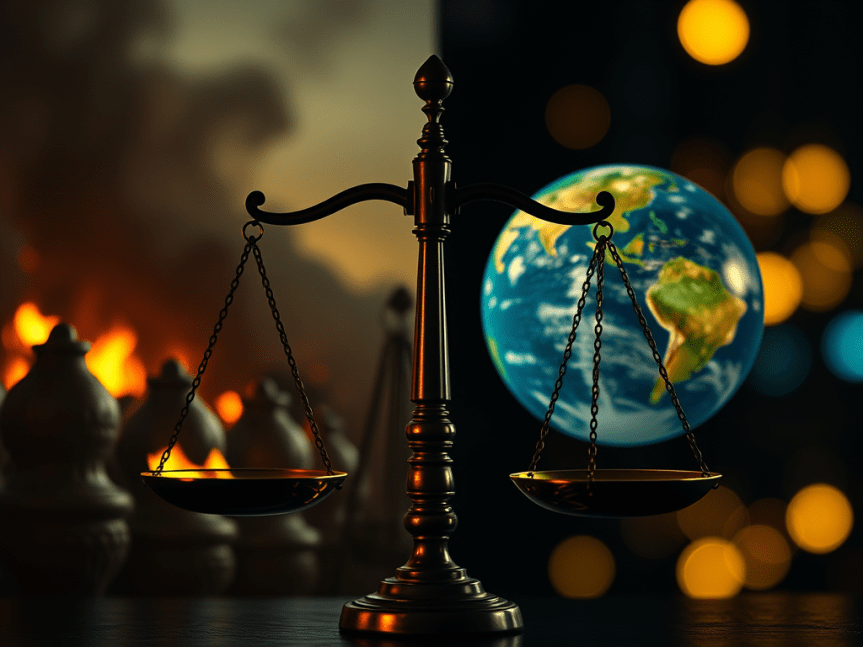

Whether our global system is immoral or corrupt is one of the most debated questions in modern philosophy, economics, and sociology. There isn’t a single factual answer, but rather a tension between two primary perspectives:
The Argument for Systemic Corruption
Critics argue the system is inherently flawed because it often prioritises capital accumulation over human well-being. They point to:
- Extreme Inequality: A tiny percentage of the population holds more wealth than the bottom half of the globe combined.
- Environmental Exploitation: Economic growth often relies on the depletion of natural resources, leading to the climate crisis.
- Power Imbalance: Large corporations and wealthy individuals often have disproportionate influence over political legislation, which can undermine democratic processes.
- Environmental Degradation: The current economic model relies on extracting natural resources, which has led to overshooting planetary boundaries. Seven out of eight earth system boundaries—including climate, biodiversity, and fresh water—have been breached.
- Inequality: Despite overall growth in global GDP, wealth inequality is increasing in most countries. This leads to a concentration of power and wealth, where “marginalized communities often bear a disproportionate burden of environmental pollution and degradation”.
- Unsustainability: The focus on short-term profit and “planned obsolescence” results in excessive waste and pollution. The current model is described by some researchers as an “environmental pyramid scheme” that depends on intergenerational theft.
- Social Distress: Modern economic life, characterized by high-demand jobs and job insecurity, is linked to lower social connectedness and higher mental distress.
The Argument for Systemic Progress
Conversely, proponents argue that the current global exchange has done more to improve the human condition than any previous system. They point to:
- Poverty Reduction: Global extreme poverty rates have plummeted over the last 50 years.
- Innovation: Competition drives advancements in medicine, technology, and renewable energy.
- Rule of Law: While imperfect, modern systems have established human rights frameworks and international trade laws that provide a level of stability unprecedented in history.
Conclusion on Future Outlook
Ineffective Decoupling: It is unlikely that economic growth can be fully decoupled from environmental damage at a global scale, meaning a, “selective downscaling of production and consumption” is necessary to lower the ecological footprint.
Fundamental Transformation Needed: Research indicates that to ensure a “good life for all within the planet’s limits,” the current system must be drastically restructured.
Towards a “Wellbeing Economy”: Many experts advocate for a shift toward “wellbeing economies” that prioritize sustainability, social health, and environmental safety over purely economic, growth-based metrics like GDP.

 Welcome to Huwspace
You must be logged in to post a comment.