What is Freedom?

freedom/ˈfriːdəm/ Learn to pronounce nounnoun: freedom; noun: freedom from; plural noun: freedom froms; plural noun: freedoms

  1. 1. the power or right to act, speak, or think as one wants.”we do have some freedom of choice” h Similar:right to

entitlement to privilege prerogative due

  • absence of subjection to foreign domination or despotic government. “he was a champion of Irish freedom” h Similar:independence

self-government self-determination self-legislation self rule home rule sovereignty autonomy autarky democracy self-sufficiency individualism separation non-alignment emancipation enfranchisement manumission h Opposite:dependence the power of self-determination attributed to the will; the quality of being independent of fate or necessity. h Similar: scope latitude leeway margin flexibility facility space breathing space room elbow room licence leave free reina free hand leisure carte blanche

  • h Opposite:restriction

2. the state of not being imprisoned or enslaved.”the shark thrashed its way to freedom” h Similar: liberty liberation release emancipation deliverance delivery dischargenon-confinemen textrication amnesty pardoning manumission disenthralment h Opposite:captivity

  • the state of being unrestricted and able to move easily.”the shorts have a side split for freedom of movement”
  • unrestricted use of something.”the dog has the freedom of the house when we are out”

3. the state of not being subject to or affected by (something undesirable).”government policies to achieve freedom from want” h Similar: exemption immunity dispensation exception exclusion release relief reprieve absolution exoneration impunity letting offa let-offderogation h Opposite:liability4. Britisha special privilege or right of access, especially that of full citizenship of a city granted to a public figure as an honour.”he accepted the freedom of the City of Glasgow”5. archaicfamiliarity or openness in speech or behaviour. h Similar: naturalness openness lack of reserve/inhibition casualness informality lack of ceremony spontaneity ingenuousness impudence familiarity over familiarity presumption forwardness

  1. cheek

Origin

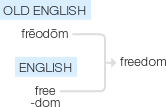
Old English frēodōm (see free, -dom).Translate freedom toUse over time for: Freedom

Freedom Tree, Elizabeth Marina, St. Helier, Great Britain

Food for thought!

Ask not what you can do to your country but what your country can do to you.

President Trump is no Kennedy but let your country have a Future and your children have  a Mother or Father an Uncle or an Aunt a Grandparent or guide or most importantly let your future seed have a life.

Ich bin ein Berliner

Ich bin ein Berliner (German pronunciation: [ˈʔɪç ˈbɪn ʔaɪn bɛɐ̯ˈliːnɐ], “I am a Berliner“) is a speech by United States President John F. Kennedy given on June 26, 1963, in West Berlin. It is widely regarded as the best-known speech of the Cold War and the most famous anti-communist speech. Kennedy aimed to underline the support of the United States for West Germany 22 months after Soviet-occupied East Germany erected the Berlin Wall to prevent mass emigration to the West. The message was aimed as much at the Soviets as it was at Berliners and was a clear statement of U.S. policy in the wake of the construction of the Berlin Wall. Another phrase in the speech was also spoken in German, “Lasst sie nach Berlin kommen” (“Let them come to Berlin”), addressed at those who claimed “we can work with the Communists”, a remark at which Nikita Khrushchev scoffed only days later.

The speech is considered one of Kennedy’s best, both a notable moment of the Cold War and a high point of the New Frontier. It was a great morale boost for West Berliners, who lived in an enclave deep inside East Germany and feared a possible East German occupation. Speaking from a platform erected on the steps of Rathaus Schöneberg for an audience of 120,000, Kennedy said,

From Wikipedia, the free encyclopedia

Jump to navigation Jump to search

https://upload.wikimedia.org/wikipedia/commons/thumb/c/c0/Audio-input-microphone.svg/50px-Audio-input-microphone.svg.pngIch bin ein Berliner (I am a Berliner) speech Play media Speech from the Rathaus Schöneberg by John F. Kennedy, June 26, 1963. Duration 9:01; “Ich bin ein Berliner” first appears at 1:45, then again at 8:43. Ich bin ein Berliner (“I am a Berliner”) speech (audio) Menu 0:00 Audio-only version (Duration 9:22)
Problems playing these files? See media help.
Part of a series on the
History of Berlin
Coat of arms of the City of Berlin
Margraviate of Brandenburg (1157–1806)
Kingdom of Prussia (1701–1918)
German Empire (1871–1918)
Free State of Prussia (1918–1947)
Weimar Republic (1919–1933)
1920s Berlin Greater Berlin Act
Nazi Germany (1933–1945)
Welthauptstadt Germania Bombing of Berlin in World War II Battle of Berlin
West Germany and East Germany (1945–1990)
West Berlin and East Berlin Berlin Wall Berlin Blockade (1948–1949) Berlin Crisis of 1961 “Ich bin ein Berliner” (1963) “Tear Down This Wall” (1987) Fall of the Berlin Wall
Federal Republic of Germany (1990–present)
History of Germany and History of Europe
See also
Timeline of Berlin

June the 2nd 2020 – Where is the Love?

Heart of the free world

I see the U.S.A. as the heart of the free world. With Covin-19, your President’s volatile nature where he bates and try’s to control or cancel all and any he see as his opposites or enemies, along with the recent protests over the death of George Floyd. The heart of the free world is really taking a heart beating and palpitating close to having a full on cardiac arrest.

I never wanted to visit the U.S.A. it always looked too dangerous, too scary and finally too expensive. But some of its people that I meet on the World Wide Web are hugely inspiring and influence my views and perspective on life. They appear if in the realms of fantasy and fiction like living legends, earth angels and walking saints.

So in essence the U.S.A is a paradox.

Paradox/ˈparədɒks/ Learn to pronounce nounnoun: paradox; plural noun: paradoxes

  1. a seemingly absurd or contradictory statement or proposition which when investigated may prove to be well founded or true.

Throughout the history of the free world it has many times thought led and beaten back all in the name of freedom. Free thought, free economicsish (ok but true freedom should be a freedom to purchase the perfect product for example clean water not just the right to flog any old shit to anyone i.e. dirty chemically polluted water). Plus your normal lack of safety netting for those that need support to stand up and get back into the economy is just downright destructive to all.

When the U.S.A gifts freedoms to corporations it has forgotten or refused to equally gift both rights and responsibilities of not being ripped off, persecuted, shot, stolen from or killed to its own citizens regardless of race, creed or colour.

Where all are equal but some more than others

No Peace in death – Or justice in blood

People now demand change – which they are right to demand

But what will that change be?

One humans freedom risks being another humans tyranny –

If you wish to free all then do not free them to their death.

Universal suffrage

From Wikipedia, the free encyclopedia Jump to navigationJump to search

Part of the Politics series
Elections
Basic types
By-election Corporate Direct / Indirect Fixed-term General Local Mid-term Plurality Primary Proportional Recall Snap Sortition Two-round system
Terminology
Anonymous elector Apportionment Audits Boundary delimitation Crossover voting Election silence Gerrymandering Initiative Psephology Secret ballot Suffrage
Subseries
Political party Voting Electoral systems
Lists
Elections by country Close elections Most recent Next general electionsNational and local elections in 2020
Related
Election security Electoral fraud Referendum (by country)
Politics portal
vte

Universal suffrage (also called universal franchise, general suffrage, and common suffrage of the common man) gives the right to vote to all adult citizens, regardless of wealth, income, gender, social status, race, ethnicity, or any other restriction, subject only to relatively minor exceptions.[1][2] In its original 19th-century usage by reformers in Britain, universal suffrage was understood to mean only universal manhood suffrage; the vote was extended to women later, during the women’s suffrage movement.[3][4]

There are variations among countries in terms of specifics of the right to vote; the minimum age is usually between 18 and 25 years (see age of majority) and “the insane, certain classes of convicted criminals, and those punished for certain electoral offenses” sometimes lack the right to vote.[2]

In the first modern democracies, governments restricted the vote to those with property and wealth, which almost always meant a minority of the male population.[5] In some jurisdictions, other restrictions existed, such as requiring voters to practice a given religion.[6] In all modern democracies, the number of people who could vote has increased progressively with time.[7][8] The 19th century saw many movements advocating “universal [male] suffrage”, most notably in Europe, Great Britain and North America.[9][10]

In the United States, after the principle of “one man, one vote” was established in the early 1960s by U.S. Supreme Court under Earl Warren,[11][12] the U.S. Congress together with the Warren Court continued to protect and expand the voting rights of all Americans, especially African Americans, through Civil Rights Act of 1964, Voting Rights Act of 1965 and several Supreme Court rulings.[13][14] In addition, the term “suffrage” is also associated specifically with women’s suffrage; a movement to extend the franchise to women began in the mid-nineteenth century and culminated in 1920, when the United States ratified the Nineteenth Amendment to the United States Constitution, guaranteeing the right of women to vote.

Banner State Woman's National Baptist Convention

Historian Martha S. Jones takes a look at the question of race versus gender in the quest for universal suffrage

Source: How the Daughters and Granddaughters of Former Slaves Secured Voting Rights for All

Donald Trump’s Retort

A retort is a short, clever response to someone’s comment or question. … Today retort is used as both a noun and a verb, and both come from 16th- and 17th-century sources meaning “to twist or turn back.” To retort is to make a comeback, or a quick, witty answer or remark.

What is the greater good?

Can Computers Become Conscious and Overcome Humans?

What would be a computers definition of the greater good?

President threatens to cut off own nose!

Cutting off the nose to spite the face” is an expression to describe a needlessly self-destructive over-reaction to a problem: “Don’t cut off your nose to spite your face” is a warning against acting out of pique, or against pursuing revenge in a way that would damage oneself more than the object of one’s anger.

So President Trump claims wrongly the following in a fecking tweet!

Donald J. Trump@realDonaldTrump·….Twitter is completely stifling FREE SPEECH, and I, as President, will not allow it to happen!

The morons over reaction are to then, yep you have guessed it; threaten to shut down free speech. In other words. He claims he will do the very thing he is upset about. He claims they are stifling his FREE SPEECH so his reaction is to stifle everyone’s free speech. What a moron. It’s like he says because you will no longer entitle me to blatantly lie on social media then I isn’t going to let the world use social media.

Can you imagine the shit storm that would cause if he somehow tried to do what the moron is threatening? It would be most amusing.

His devil’s would most certainly be in his detail.

The devil is in the detail

From Wikipedia, the free encyclopedia Jump to navigationJump to search

Look up devil is in the details in Wiktionary, the free dictionary.

The devil is in the detail” is an idiom that refers to a catch or mysterious element hidden in the details,[1] meaning that something might seem simple at a first look but will take more time and effort to complete than expected[2] and derives from the earlier phrase, “God is in the detail” expressing the idea that whatever one does should be done thoroughly; i.e. details are important.[1]

Time for Trump Truth

One of the weirdest videos I have posted so far – your welcome!

Twitter tags Trump tweet with fact-checking warning

Image copyright EPA Image caption Donald Trump accused Twitter of interfering in the 2020 presidential election in the US

A post by US President Donald Trump has been given a fact-check label by Twitter for the first time.

President Trump tweeted: “There is NO WAY (ZERO!) that Mail-In Ballots will be anything less than substantially fraudulent.”

Twitter put a warning label under the post and a subsequent tweet under its new policy on misleading information.

Mr Trump responded by tweeting again, saying the social media giant “is completely stifling free speech”.

Twitter’s notification displays a blue exclamation mark underneath the tweets, suggesting readers “get the facts about mail-in ballots”.

What is Twitter saying about Trump’s posts?

Twitter’s link directs users to a page on which Mr Trump’s claims about mail-in ballots are described as “unsubstantiated”. The social media company cites reporting on the issue by CNN, the Washington Post and others.

This is followed by a “what you need to know” section where Twitter corrects what it says are false claims by the US president.

The social media company had pledged to increase the warning labels under false or misleading information on its site – but it has been slow to take steps against the US president.

Twitter updated its policies on warning labels early this month.

What is President Trump’s response?

In his new tweets, Mr Trump accused Twitter of interfering in the US presidential election scheduled for 3 November 2020.

He said that the social media company was “completely stifling free speech, and I, as president, will not allow it to happen”.

Mr Trump’s presidential campaign manager Brad Parscale also criticised Twitter.

“Partnering with biased fake news ‘fact checkers’ is a smoke screen to lend Twitter’s obvious political tactics false credibility. There are many reasons we pulled all our advertising from Twitter months ago, and clear political bias is one of them,” Mr Parscale tweeted.

Only the first test for Twitter

Analysis by BBC’s Technology reporter Zoe Thomas

President Trump has used Twitter as a platform to pick fights with other politicians and celebrities. Now he may be in for a fight with the platform itself.

Following the firm’s decision to label his tweets as misleading, he claimed on Twitter that the company was stifling free speech and that he wouldn’t allow it. But Twitter as a private company gets to set its own rules for what happens on its platform.

The trouble for many was that up until Tuesday the firm didn’t seem to be enforcing its rules when it came to the US president or other global leaders.

This is not the first time President Trump has made claims on Twitter that some say would have gotten less powerful people blocked from the site.

But Mr Trump’s bombastic comments are part of what draws some of his more than 80 million followers to the site in the first place. The company doesn’t want to lose them.

It sees the new labelling system as a way to balance both the desire to allow Twitter users including the president to say what they like, while also giving readers protection against misleading claims. The strategy mostly worked with tweets about Covid-19.

But with the US election in November, Twitter should expect a lot more posts with potentially misleading information. Meaning this is likely only the first test for its new enforcement plans.

Coronavirus-Apocalypse

I can feel it calling in the air tonight

Coronavirus zombies out in force – spread onto others as you would have spread onto yourself.

Coronavirus: Americans flock to beaches on Memorial Day weekend

Americans have flocked to beaches and lakes for Memorial Day weekend, often flouting restrictions imposed to tackle the coronavirus outbreak.

Coronavirus: Cummings row raises fears over future of lockdown

The PM’s decision to back his chief aide’s lockdown trip to Durham has sparked fears that the government’s coronavirus message will be undermined.

Cummingd ‘Broke Lockdown Rules’
Adam Hills Rants About Dominc Cummings

Equality, beliefs and a democratic beast

Victories are not written for or by a mortal winner in the eyes of an omnipresent God

If you are Godless do not justify your actions as Godlike for God will see through your veil.

If you know what you are doing is wrong, do not seek to coat or lace your actions as if what you do is righteousness or good.

FOR THE JEDI WITHIN

Your Allie is the force and a powerful ally it is.

We do not take seek control of the force nor are we slaves or masters of its will.

FOR THE CITIZEN

Do not be in a hurry to be seen to break your enemies rules.

Do not go gently into a trap designed to snare your thoughts and dreams.

FOR ALL

When a hope of victory becomes real that is a time to move and when we see peace on the horizon that is the worthy fight.

The best sort of battle is thought not with sword or sheild, but pen and paper within the ballot box.

Dead Poet Society – What will your verse be?

Is democracy the worst form of Government?

There is no alternative to Democracy that works for the people and nor should there be.

‘Many forms of Government have been tried, and will be tried in this world of sin and woe. No one pretends that democracy is perfect or all-wise. Indeed it has been said that democracy is the worst form of Government except for all those other forms that have been tried from time to time.…’

Winston S Churchill, 11 November 1947

Voice of Democracy (VOD) is an annual nationwide scholarship program sponsored by the Veterans of Foreign Wars (VFW). It is an audio-essay contest for high school students in grades 9-12. The program annually provides more than $2.3 million in scholarships. The first-place winner, who competes with all the first-place VFW Department (state) winners, receives a $30,000 scholarship that is paid directly to the recipient’s American university, college or vocational/technical school.

Besides competing for the top scholarship prize, as well as other national scholarships ranging from $1,000 to $16,000, each Department’s first-place winner receives an all-expense-paid trip to Washington, D.C. in March (annually).

The Voice of Democracy Program began in 1946 and was originally sponsored by the National Association of Broadcasters. Initially, there were four winners selected, representing the North, South, East and West regions of the country. Each winner received a $500 savings bond and a wristwatch. The second year of the program, a student by the name of Charles Kuralt, the late television news broadcaster and author, was one of the winners.

It is endorsed by the contest criteria of the National Association of Secondary School Principals and is designed to foster patriotism by allowing students the opportunity to voice their opinion in a three- to five-minute essay based on an annual theme. Historically, the Voice of Democracy theme (chosen by the VFW Commander-in-Chief annually) is purposely kept broad in scope to allow the participant flexibility in interpretation, and thus, encourage originality. The new theme is posted on the website by May of each year.

The audiotape or audio CD (with the typed essay recited word-for-word), the actual typed essay, and completed official student entry form must be delivered to a local, participating VFW Post by the student entry deadline of October 31.

Profit and pain of wildlife plunder

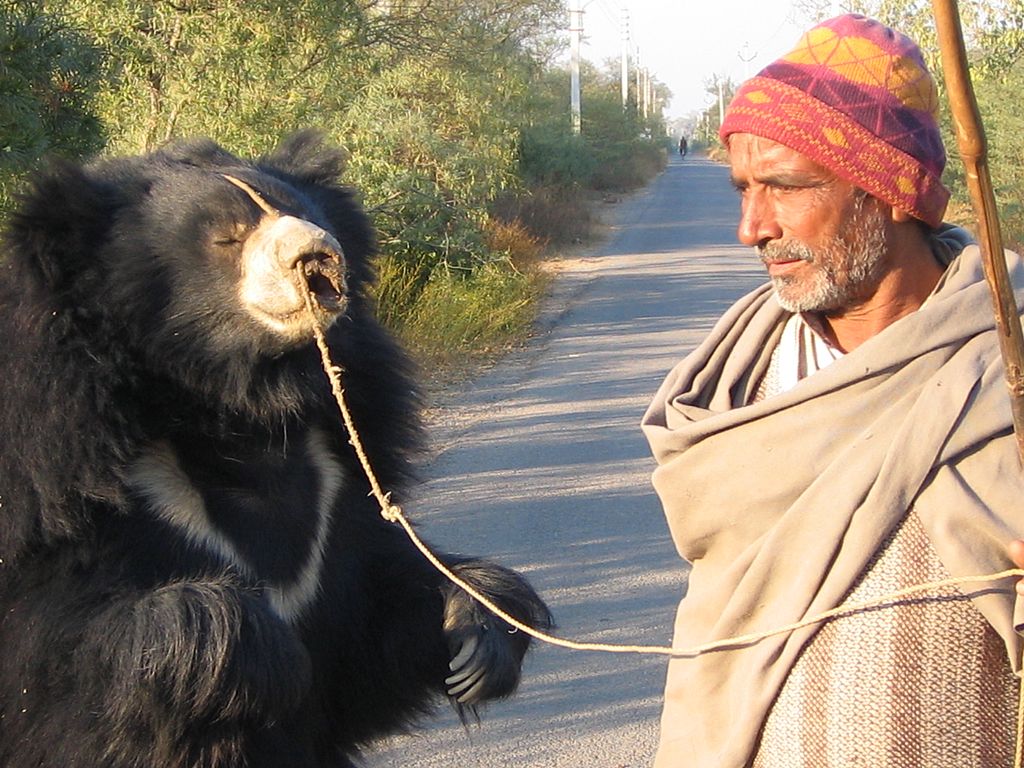
Wildlife SOS is credited with the eradication of the ‘dancing bear’ practice in India,[5] rescuing bears from abusive owners and poachers and rehabilitating them in one of four centers in India-

1. Agra Bear Rescue Facility (2000) in Agra

2. Bannerghatta Bear Rescue Facility (2005) in Karnataka

3. Van Vihar Bear Rescue Facility (2006) in Bhopal

4. Purulia Bear Rescue Centre (2007) in West Bengal

The bears are given the medical care required, fed and allowed to socialize and roam in large, free-range areas. So far, more than 640 sloth bears have been rehabilitated by the organization. Wildlife SOS also carries out ex-situ conservation studies on the bears to enhance existing conservation measures for the species’ survival and provides sustainable, alternative livelihoods to the bears’ former owners and their families.[6]

Much progress has been made but much more still needs to be done. Just as many governments around the world aspire to have certain universal human rights and universal suffrage so we must aim to deliver policies and principles that enact a culture of no longer tolerating wildlife profiteering of pain and plunder.

If people will actively social distance and where masks to prevent themselves catching and spreading disease than why can’t they also see the bigger picture and find wildlife pain and plunder policies adopted and promoted so as to ensure not only do the cruel acts no longer take place but also acknowledge the economic and social benefits of such policies and the immensely expensive and costly act to human lives and the ecomicies of humans in shutting down a global economy due to the spread like wildfire of any new potential pandemic conditions.

If we do not fight to draw a new line in the sand or adaopt a new social and economic norm what will be the future alternative for man? Some people believe it’s a matter of life and death, I can assure you it’s much more important than that!

Collaring and Handling Bears for the Changing Tides Project

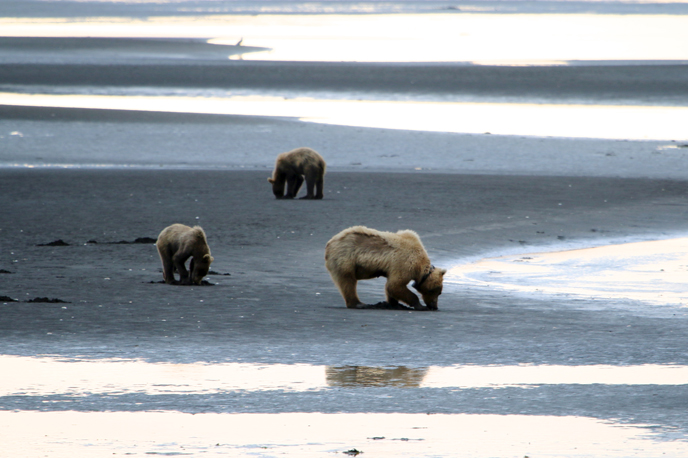
On Katmai’s coast, eight female bears are currently collared with GPS devices. The collars represent one initiative of Changing Tides, a three-year research project. The collars transmit location information on a daily basis, which provides researchers with details on the bears’ home ranges and how their movements correspond to seasonal food availability.

After the collars were placed on the bears in May, six of the sows were recaptured in July in order to run tests, collect physical samples, and upload more complex data from the collars. In October, the collared sows will be captured again in order to collect a final round of samples and remove the collars prior to hibernation. In the event that some of the sows cannot be recaptured, there is an automatic mechanism installed on the collars that will cause them to fall off.

Technology in itself is not fundamentally evil it has potential for great good as well as great ill.