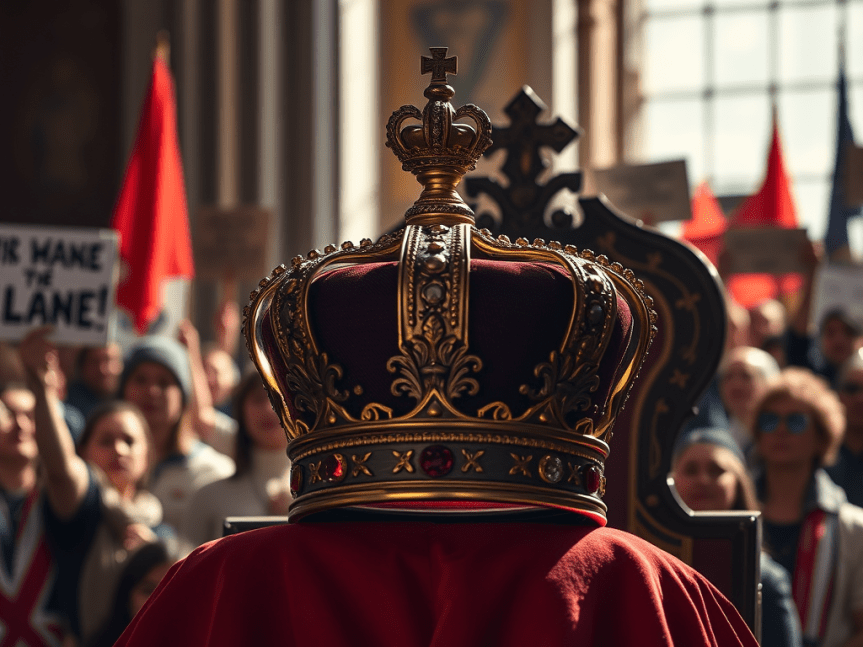
The Case Against Monarchy in Modern Democracies

Many a revolution and civil war has played out across the world in many a country including the UK to sever the head of a monarch from the political control of a country. It seems bizarre in this day and age that Britain has a monarch as the head of it’s state, political and religious institutions. But what is even more bizarre is the strength of will at the heart of the establishment to maintain the status quo and make no change to this set of institutions, state of affairs or even review or to ensure transparency concerning where money goes to the monarch and how or why it is then spent.

For me this is not an argument about whether a King or Queen are good people or not but whether they have the right to be born into the role they play and I strongly believe that there should be no birth right to any position in our state let alone that of the head of state.

Arguments against supporting monarchies in democratic societies generally center on principles of equality, accountability, and the desire for a modern, meritocratic state. Critics argue that inherited power is fundamentally incompatible with the democratic ideal that all citizens are equal and that leaders should be chosen by the people.

  1. Lack of Democratic Accountability 

A core tenet of democracy is that leaders must be answerable to the people they serve. 

No Choice or Removal: Unlike elected officials, monarchs cannot be held to account or removed at the ballot box by the public.

Hereditary Risk: Relying on inheritance means there is no selection process to ensure the leader is capable; a nation risks being stuck with an incompetent, “petty,” or “vindictive” individual for decades. 

2. Incompatibility with Popular Sovereignty

Democracy is rooted in the idea that power belongs to the people, not a specific family. 

Anachronism: Critics view monarchy as a vestige of a feudal past that has no place in a modern world where legitimacy should derive from the consent of the governed.

Secrecy and Lobbying: In some systems, monarchies are exempt from transparency laws (like Freedom of Information requests), allowing for “lobbying by stealth” for private business interests. 

3. Economic and Social Costs

Opponents often point to the tangible burdens of maintaining a royal institution. 

Taxpayer Expense: Critics argue that the significant funds spent on the “extravagant lifestyle” of a royal family—including security, travel, and palace maintenance—could be better used for public services.

Colonial Legacy: For former colonies, retaining a distant monarch as a head of state can be seen as an obstacle to fully reconciling with their history and achieving true national independence. 

4. Institutional Resilience vs. Democratic Values

While some argue that constitutional monarchies provide stability, critics contend: 

Borrowed Time: Monarchies in democratic countries are often described as “operating on borrowed time,” requiring manufactured goodwill to survive.

Fragile Neutrality: A monarch’s perceived neutrality is easily shattered if they attempt to intervene in political matters, leading to constitutional crises.

Will the UK always have a monarchy?

Whether the UK will always have a monarchy is uncertain, as it is not guaranteed by law and relies on public support, which has shown a long-term decline. While it remains popular as a symbol of unity and tradition, support dropped to a record low of 54% in 2023, with around 25% favoring abolition. 

Key Factors Regarding the Future of the Monarchy:

Public Opinion & Trends: While a majority still support the institution, backing has fallen from 76% in 2012 to 54% in 2023. A growing minority, now around 25%, supports a republic, marking a 10% increase in just five years.

Constitutional Pathway: There is no legal barrier to abolition; it could be achieved through a parliamentary act and a referendum, creating a new, elected head of state.

Arguments for Removal: Critics argue the institution is incompatible with modern democratic values, lacks transparency, and that its wealth (e.g., the Duchy estates) should belong to the public.

Arguments for Retention: Proponents highlight the monarch’s role in providing political stability, acting as a non-partisan head of state, and contributing to tourism and international soft power.

Future Adaptability: The monarchy’s survival has relied on its ability to adapt to changing times, a strategy that future monarchs like Prince William will likely need to continue to maintain support.

The monarchy’s future depends on the “oxygen of public support” and its ability to remain relevant to future generations, making its permanence not guaranteed. 
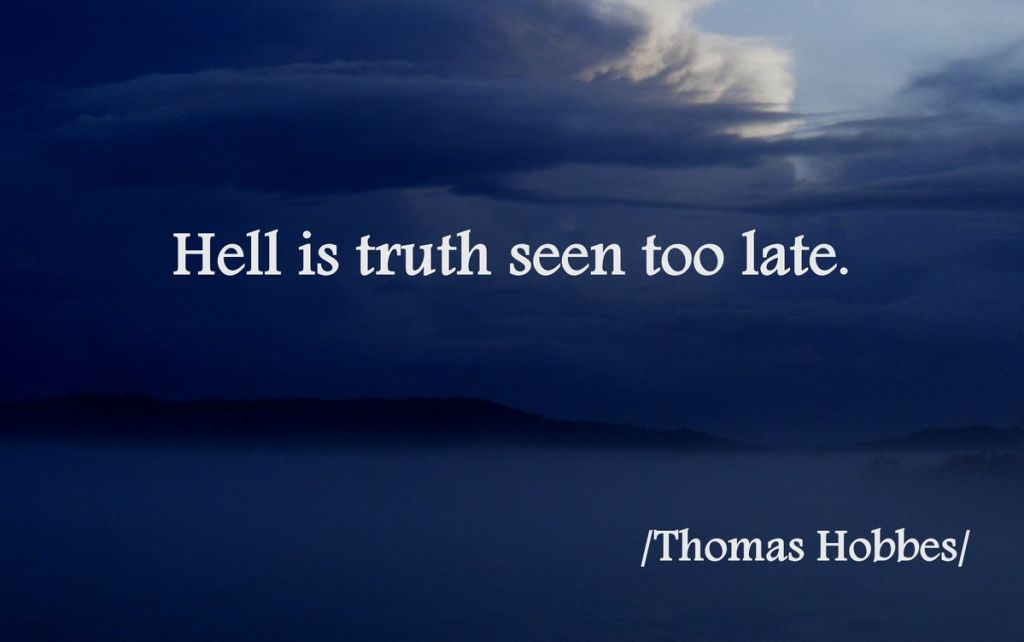
Removing the power base of a born and bred King or Queen from the head of the UK will not be easy or happen overnight but it does feel like a form of constitutional madness to still have a monarch today as the head of a democratic society and is very much one that has been in place for so long it is sadly perceived to be a normal state of affairs.

I’m with stupid!

So why is democracy seen as the worst form of government bar all other forms of governance tried?

Democracy is often characterized as the “worst form of government” primarily through a famous aphorism attributed to Winston Churchill: “Indeed it has been said that democracy is the worst form of Government except for all those other forms that have been tried from time to time”

In the UK we could end up having a Reform government led by Nigel Farage in after the next general election or the very threat of this happening could in effect keep him voted out, the idea of a Britsh Trumping of social norms and political structures is a delight to some and terrifying to others. The political party Reform now has so many dangerous former Conservative Politicians in it they are more regurgitated Tories than they are reformed human beings.

Life, the world and technological futures seem to be creating the perfect storm for our future endeavours which as we vote and how we are governed will show the best and worst of us all. Do we care for ourselves or others, rich man, poor man, beggar man or thief. How should we act and treat one another when a crisis is right at our feet.

The political sentiment for democracy being the best of a bad bunch reflects a pragmatic recognition that while democratic systems are riddled with inherent flaws—such as inefficiency, corruption, and the potential for “mob rule”—they remain preferable to authoritarian alternatives that lack accountability and individual justice. 

Russia, China and Iran all must supress, lock up and kill their own citizens as well as ones abroad in order to maintain their supremacy and there are not enough words on a board to express the horror and suffering they inflict on others in order to get their own way. Democracies do not aspire to be brutal totalitarian regimes but in stead aim to fend of the madness of such regimes from inflicting their brutality and suppressing nature onto us all.

Core Philosophical and Practical Criticisms of democracies

The perception of democracy as a “bad” or “flawed” system stems from several long-standing arguments:

1. Competence and “Mob Rule”

  • Voter Ignorance: A central critique, dating back to Plato, is that democracy gives equal weight to the votes of experts and those who may be “incompetent” or poorly informed. Modern studies have shown that many voters lack basic civic knowledge, making them susceptible to emotional manipulation and propaganda.
  • Tyranny of the Majority: Critics like Alexis de Tocqueville and John Stuart Mill warned that a “poor majority” could dominate decision-making at the expense of minority rights and individual excellence.
  • Mob Law: Churchill himself distinguished true democracy from “mob law,” where armed groups or “gangsters” seize power under the guise of popular will to implement totalitarian regimes. 

2. Structural Inefficiencies

  • Slow Decision-Making: Unlike autocracies, where a single leader can act quickly, democracies require constant deliberation, negotiation, and compromise, which can lead to stagnation or gridlock during crises.
  • Short-Termism: Electoral cycles incentivize politicians to prioritize immediate, popular benefits to win votes, often ignoring long-term risks like climate change, debt crises, or pension sustainability. 

3. Corruption and Elite Capture

  • Influence of Money: Democratic systems are often criticized for becoming “oligarchies” in practice, where economic elites and special interest groups have significantly more influence over policy than the average citizen.
  • Iron Law of Oligarchy: Sociologists have argued that any organization, including a democracy, eventually becomes dominated by a small elite due to the practical demands of organizing power. 

Contemporary Challenges (2025–2026)

Current political analysis highlights specific modern threats that exacerbate these negative perceptions:

  • Erosion of Trust: As of early 2025, global trust in democratic institutions like parliaments has significantly declined, while trust in the police has risen. This disillusionment often leads to support for populist leaders who promise to dismantle existing democratic structures.
  • Information Ecology: The spread of algorithmically-driven disinformation and “fake news” has made it difficult to establish a common factual basis for democratic debate.
  • Polarization: Modern democracies are facing extreme political fragmentation and the formation of “echo chambers,” making social discourse across political lines increasingly difficult. 

The “Least Bad” Perspective

Despite these significant failings, democracy is defended as the only social order consistent with justice and human dignity. Proponents argue that its “built-in flaws” and tendency to decay are actually safeguards; a certain level of skepticism and the ability to change leaders without violence are advantages that other systems, which are often more brittle, do not possess. 

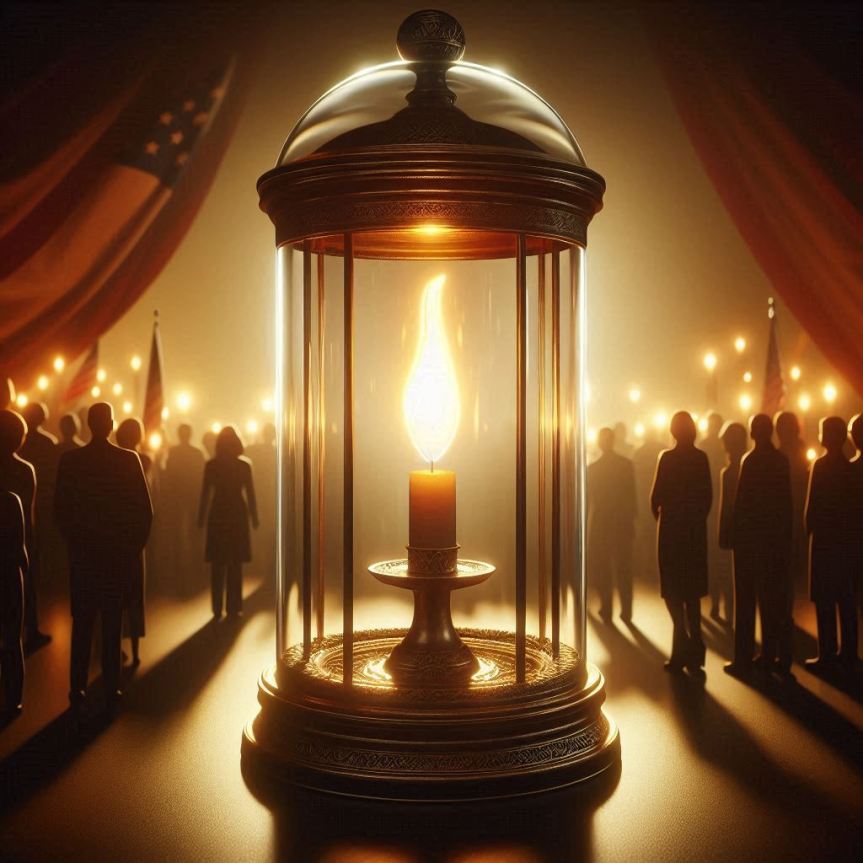
Democracies hold a kinship to freedom like a shining beacon in the dark

Political freedoms to vote, freedom of expression, Freedom to think and freedom to do and be.

Though these freedoms have in some ways restrictions so that one persons freedom does not inflict damage or disregards another persons freedom it is I feel our freedoms that are the eternal beacon of hope which guides and shapes our democracies to not just survive but to live on into a forever future like the eternal flame of freedom, hope and democracy.

The “eternal flame” serves as a global symbol for freedom, hope, and democracy, manifesting in several prominent memorials and monuments worldwide: 

Key Memorials & Symbols

  • The King Center Eternal Flame (Atlanta, USA): Located at the tomb of Dr. Martin Luther King, Jr., it was recently restored to reaffirm King’s vision for justice and peace. It serves as a reminder that the work of freedom and democracy is a shared, ongoing responsibility.
  • Flame of Democracy (Constitution Hill, South Africa): Lit by Nelson Mandela to commemorate the 15th anniversary of South Africa’s constitution. It burns outside the Constitutional Court as a symbol of the country’s liberation and the enduring spirit of human rights.
  • Flame of Peace (Hiroshima, Japan): Lit in 1964, this flame is intended to burn until all nuclear weapons are destroyed, representing hope for a world defined by peace rather than conflict.
  • Freedom Park Eternal Flame (Pretoria, South Africa): A symbol of gratitude and remembrance for those who played pivotal roles in South Africa’s liberation struggle.
  • The Centennial Flame (Ottawa, Canada): First lit in 1967, it commemorates the first hundred years of Canadian Confederation and symbolizes the spirit of national unity. 

Cultural and Global Context

Artistic Expression: Musicians like Bruce Springsteen have recently launched tours (e.g., “Land of Hope and Dreams”) explicitly centered on themes of democracy and defending the American ideal. 

United Nations: Secretary-General António Guterres has used the metaphor to urge the world to “keep the flame of democracy alive” for future generations.

International Day of Democracy: Observed annually on 15 September, this day reinforces the idea that democracy must be nurtured and defended as a “flame” that requires active citizen participation.

Don’t Cry – Seal


Fascism has never been slain it has only been sleeping

Modern fascism, is a post-WWII far-right, ultranationalist ideology that adapts classic fascist characteristics like authoritarianism, a cult of the leader, and aggressive nationalism to modern contexts, incorporating contemporary tools such as social media and identity politics to promote xenophobia, racial nationalism, and often a perception of national decline. While rejecting the overt totalitarianism of historical fascism, neo-fascism shares a fundamental distrust of democracy, liberalism, and pluralism, aiming to create a unified, ethnically homogenous nation-state through populism and the suppression of opposition. 

How Far Is It From Here to Nuremberg? By David Rovics

Key Characteristics of Modern Fascism (Neo-Fascism)

  • Populist Ultranationalism:A central focus on a fervent, exclusionary form of nationalism that emphasizes the nation’s identity and perceived victimhood, often tied to ethnic or racial superiority. 
  • Authoritarianism:Support for a strong, centralized government headed by a cult-like leader who claims infallibility and suppresses dissent. 
  • Identity Politics:The use of immigration, ethnicity, race, and gender to create an “us vs. them” narrative, identifying scapegoats for societal problems. 
  • Modern Tools:The use of new technologies like social media and AI to spread propaganda, organize, and recruit members. 
  • Nativism and Xenophobia:Strong opposition to immigration, globalization, and multiculturalism, fostering a belief that these elements threaten national culture and identity. 
  • Opposition to Democracy:A rejection of liberalism, democracy, pluralism, and social democracy, seeing them as weak or divisive. 
  • Disdain for Human Rights:A focus on national “purity” and a willingness to disregard or suppress human rights for the perceived good of the nation

When we start to dehumanise an individual we risk dehumanising everyone and to what end that could lead is as yet unclear. Sadly the politics of hate and difference continue to grow heavy on my mind. I have a number of social media accounts that I sit and watch when wanting to unwind and unplug and this weekend for the first time ever, there were a lot of pro English, White pride and hate to others content seeping onto the pages that I scroll through, being promoted on social media posts underlined with the view I have my right to hate and not care what you thing. Ignorance is their weapon of mass media manipulation.

The bullshit is easy to spread across fields of social media accounts and watch the seeds of hate grow across across the pages which they then harvested likes and further their spread of opinions of ignorance and hate. I believe with all my heart there is more that unites humanity than divides it but that seems a tough sell at present.

https://en.wikipedia.org/wiki/Race_(human_categorization)#:~:text=Race%20is%20a%20categorization%20of,characterized%20by%20close%20kinship%20relations.

On Wikipedia in relation to ‘Race (Human) stated the following:- Modern science regards race as a social construct, an identity which is assigned based on rules made by society. While partly based on physical similarities within groups, race does not have an inherent physical or biological meaning. The concept of race is foundational to racism, the belief that humans can be divided based on the superiority of one race over another.

Aggressive apathy

Went out on the town tonight to meet with a friend and one thing that struck me with two men we met in the smoking area of the first pub was that we went into and met is that they started talking about politics, but in a very disparaging way they gave the impression that they have no belief in the importance of voting and the power of democracy. 

The fact that we have an election in parliament about to happen and that they boasted about their complete contempt for whoever has been elected in the past and also contempt for whoever will be elected in the future. Comments such as ‘they all bend the knee to the king’ and it’s all a waste of time ‘their all in it for themselves’, ‘they don’t represent the working man’.

Such negative views and contempt for UK democracy, I just don’t understand and sadly the older I get I choose not to challenge people face to face, that I don’t know (or trust), concerning their views and whether I agree with them. It did not feel like an appropriate place or time to challenge them. I feel sad for them and feel it’s a shame that they have the perspective that they do and I guess they have their reasons which I do not know.

Television broadcasters on TV love to ask members of the public for a variety of opinions on topics and politics is no different and when you hear people on TV interviewed about politics one of the views that sometimes tends to hit the TV is people saying they don’t care about politics, they are (politicians) all in it for themselves and nothing will change so there is no point in voting.

I do think such a view is again a sorry state of affairs to think and it’s hard to be critical while not being offensive to those views. Ultimately if you do nothing, boast of not thinking or having an opinion and say it’s all pointless then it becomes a self fulfilling prophecy to you. If you detach yourself from the political views of others and those in power or have potential for power then you make your negative view your version of reality.

I feel like I am a citizen of the UK and not a subject – Subject is derived from the latin words, sub and jacio, and means one who is under the power of another; but a citizen is an unit of a mass of free people, who, collectively, possess sovereignty. Subjects look up to a master, but citizens are so far equal, that none have hereditary rights superior to others.

On Thursday July the 4th 2024 across the whole of the United Kingdom we the people, citizens of this country will walk into a polling station and vote by putting an X against a person’s name on a piece of paper, which will then ultimately impact on the choice of a nation as to whom will be elected as Prime Minister and govern the for the citizens of our country.  

Yes no one citizen elects the ruler or governor of this country (thank god, as that would be a dictatorship a little like Russia), but collectively we will make a decision as to who will govern the United Kingdom.  

Born in a Storm – Deacon Blue