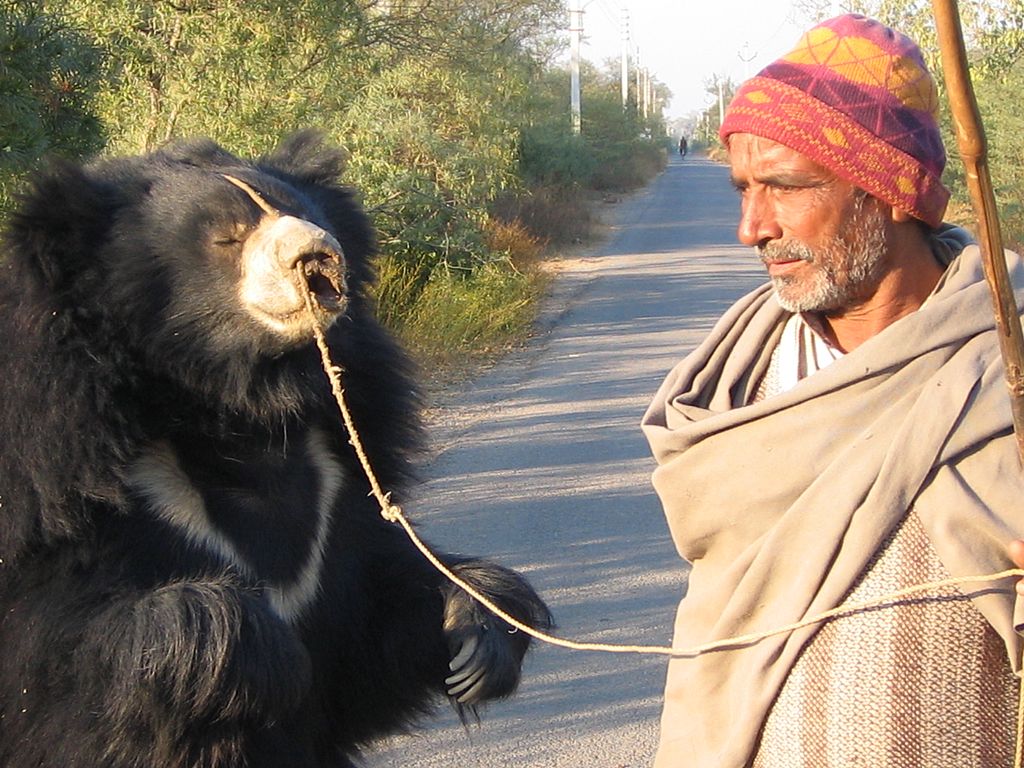
Wildlife SOS is credited with the eradication of the ‘dancing bear’ practice in India,[5] rescuing bears from abusive owners and poachers and rehabilitating them in one of four centers in India-
1. Agra Bear Rescue Facility (2000) in Agra
2. Bannerghatta Bear Rescue Facility (2005) in Karnataka
3. Van Vihar Bear Rescue Facility (2006) in Bhopal
4. Purulia Bear Rescue Centre (2007) in West Bengal
The bears are given the medical care required, fed and allowed to socialize and roam in large, free-range areas. So far, more than 640 sloth bears have been rehabilitated by the organization. Wildlife SOS also carries out ex-situ conservation studies on the bears to enhance existing conservation measures for the species’ survival and provides sustainable, alternative livelihoods to the bears’ former owners and their families.[6]
Much progress has been made but much more still needs to be done. Just as many governments around the world aspire to have certain universal human rights and universal suffrage so we must aim to deliver policies and principles that enact a culture of no longer tolerating wildlife profiteering of pain and plunder.
If people will actively social distance and where masks to prevent themselves catching and spreading disease than why can’t they also see the bigger picture and find wildlife pain and plunder policies adopted and promoted so as to ensure not only do the cruel acts no longer take place but also acknowledge the economic and social benefits of such policies and the immensely expensive and costly act to human lives and the ecomicies of humans in shutting down a global economy due to the spread like wildfire of any new potential pandemic conditions.
If we do not fight to draw a new line in the sand or adaopt a new social and economic norm what will be the future alternative for man? Some people believe it’s a matter of life and death, I can assure you it’s much more important than that!
Collaring and Handling Bears for the Changing Tides Project
On Katmai’s coast, eight female bears are currently collared with GPS devices. The collars represent one initiative of Changing Tides, a three-year research project. The collars transmit location information on a daily basis, which provides researchers with details on the bears’ home ranges and how their movements correspond to seasonal food availability.
After the collars were placed on the bears in May, six of the sows were recaptured in July in order to run tests, collect physical samples, and upload more complex data from the collars. In October, the collared sows will be captured again in order to collect a final round of samples and remove the collars prior to hibernation. In the event that some of the sows cannot be recaptured, there is an automatic mechanism installed on the collars that will cause them to fall off.
Technology in itself is not fundamentally evil it has potential for great good as well as great ill.
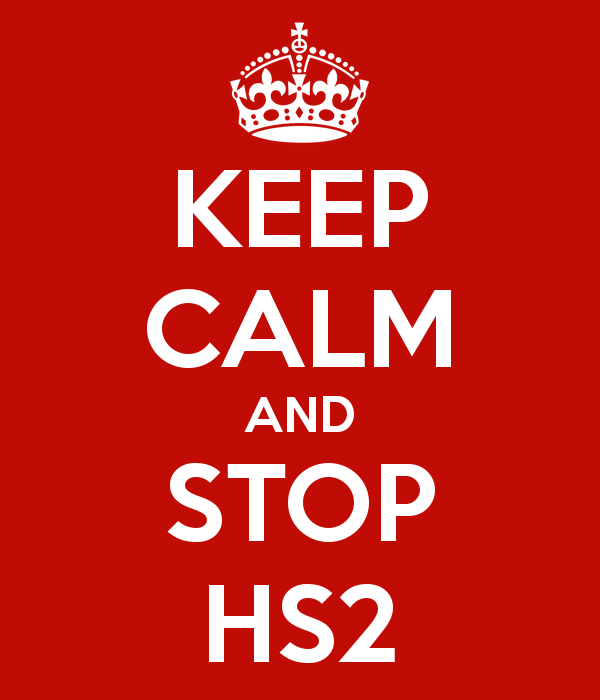
Below is media generated propaganda that even Joseph Goebbels would have been proud of back in the day as HS2 bosses manipulate their way into naming the first HS2 Tunnel Boring Machines into that of iconic women.
If HS2 were in charge of the Atomic bombs on Hiroshima and Nagasaki no doubt they would have elected for them to be called freedom and hope. They are presently running a campaign to name the first pair of tunnel boring machines to be used on the high-speed rail project.
HS2 Ltd has also temporarily closed its offices and its contracting partners continue to review works taking place across its construction sites to ensure they are operating within the UK Government and Public Health England advice on dealing with COVID-19. Find out more information.
In other words the destruction goes on and the propoganda desk is still open for missinformation and promtion of ecocide to one and all.
The HS2 Helpdesk remains operational all day, every day, and is your first point of contact: Freephone 08081 434 434; Minicom 08081 456 472; Email: HS2enquiries@hs2.org.uk. If you contact us by post there will be an extended delay in us receiving and responding.
Earlier this year, HS2’s contractor Align engaged with local schools in Buckinghamshire, Hertfordshire and Hillingdon and asked students to put forward names of women who have made their mark on history through their achievements.
As their tradition dictates that in order to keep the tunnellers safe underground, tunnel boring machines (TBMs) are given a female name before they are launched. The women below were shortlisted and they now want you to vote for your favourite name for our machines. Voting rights to pretend that this is being done in a transparent and democratic way.
After the above news item they then run propaganda piece in an online magazine called railtechnologymagazine.com entitled HS2: More important than ever to invest in essential skills.
This is a question of propoganda versus truth everyone involved in the production of HS2 from the Boris downwards is responsible for this macroshambles that is being peddled across the media.
So the world health organisation has just announced we may never find a cure. That covin-19 might never be eradicated. But one thing we must take into the calculation is that life finds a way and we are not alone in this battle as the virus burns its way across our earth it keeps on coming into contact with our greatest and best ally we have. A sleeping giant so as to speak. One that has yet to be defeated and adapts to fight for our right at every turn. I am not talking about a single person, place country or continent, but the greatest Mom of them all Mother Nature. She fights for us. This virus is an alien to her fighting in an alien environment and every time it tries to spread through us it hits her and I am very confident she is doing her best to hit back and find a way to defeat this virus.
In my minds eye this has been an attack on mother nature not from her to us and she will fight for us.
The awakening of an old god for modern times. In this life as well as the next.
A staple of Insular art, the Celtic cross is essentially a Latin cross with a nimbus surrounding the intersection of the arms and stem. Scholars have debated its exact origins, but it is related to earlier crosses featuring rings. The form gained new popularity during the Celtic Revival of the 19th century; the name “Celtic cross” is a convention dating from that time. The shape, usually decorated with interlace and other motifs from Insular art, became popular for funerary monuments and other uses, and has remained so, spreading well beyond Ireland.
I have been in two minds today about whether to post this it feels a little meaningless and worried that my emails just go up in a puff of smoke sometime and don’t actually reach out to those that might be able to do something with the information and experiances I try to share.
Missing the reaction of a another human being to bounce ideas and share their company with too. I try not to feel sorry for myself because there is always someone else in greater need and who suffered more today. But that said I guess its all realitve I am after all only human I have my ups and downs too. Though I do try and put a spin on this but it just feels a little dark today. Well below is an email that I have been preparing for Devon Communties I just post other peoples hard work a showman you might say putting on a front all the actual hardwork has been done by others.
I will be fine just need to recharge my batteries really.
Coronavirus: Update, advice and resources 21st April 2020
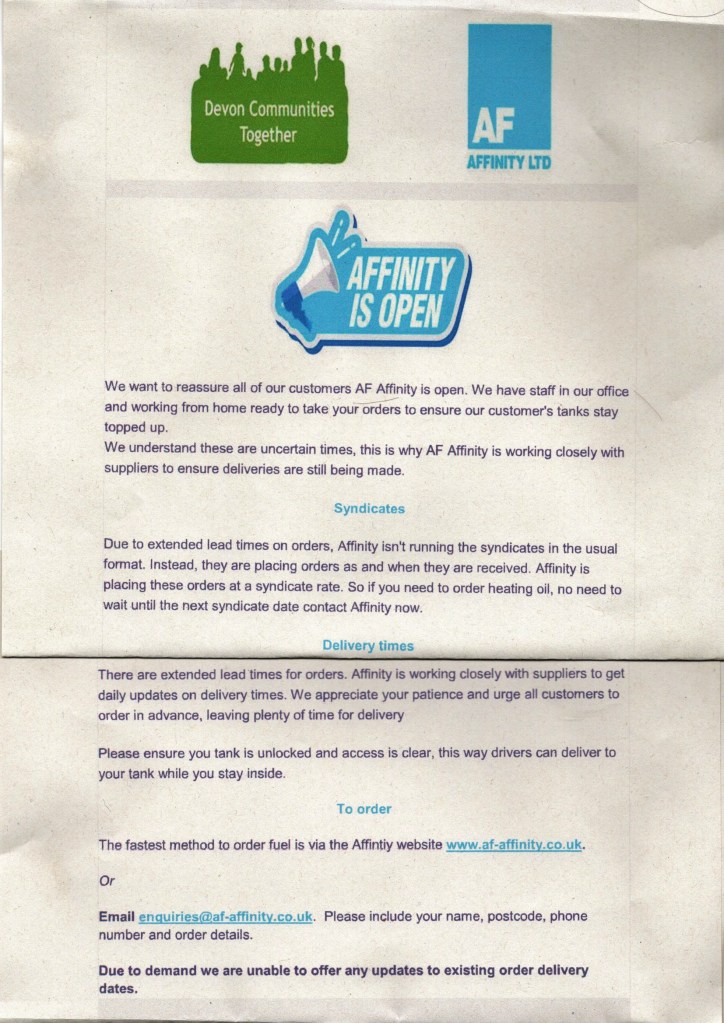
2)Even before Covid-19 the international oil market was uncertain and now plunging prices will cause uncertainty in supply and so it is important that suppliers have good awareness and negotiating skills. Devon Oil Collective has entrusted Affinity with our oil supply and they are working hard to keep our members supplied. Their latest newsletter is below.
3)Charity Tax Group – link reports has provided the following update in respect of Gift Aid on donations freely given to charities and CASCs while membership subscriptions have been suspended.
4)Useful information for village halls and local organisations that have had to call off events on converting ticket refunds for cancelled events into Gift Aid donations
HMRC has issued guidance to help charities process ticket refunds, collect donations and reclaim Gift Aid for cancelled charity events. If a charity event is cancelled due to COVID-19, HMRC will accept that, where a person due a refund decides to donate this to a charity, the Gift Aid requirements are met provided the individual donor:
Does not receive a benefit as a result of their donation. Agrees that the cost of their ticket becomes a donation. Completes a Gift Aid declaration.
5) Join National Energy Action in The 2.6 Challenge to help to Save the UK’s Charities add link to website.
The 2.6 Challenge will launch on Sunday 26th April – what should have been the date of the 40th London Marathon, the world’s biggest one-day annual fundraising event.
6) Government Extends Coronavirus Job Retention Scheme (CJRS) Cut-off Date
Online applications are now open for the CJRS.Through the CJRS, employers can claim a grant covering 80% of the wages for a furloughed employee, subject to a cap of £2,500 a month https://www.gov.uk/coronavirus/business-support
So have had a busy morning our Corin-19 communciations are picking up apace and we are gettting quite alot of useful details to send to Devon Communities I will send another sample email later today as I think the info we are sharing is both interesting and relavant to others. Below is an article from my paper I bought this morning.
Mon 20 Apr 2020 11.27 BST Last modified on Tue 21 Apr 2020 08.39 BST
Shares 756
A woman using a laptop on a dining room table. Photograph: Joe Giddens/PA
While the coronavirus pandemic has led to unprecedented restrictions for billions of people, for many with disabilities, the lockdown has paradoxically opened up the world. As society embraces “virtual” living, disabled people – who for years have missed out due to poor access – are suddenly finding themselves able to take part in work, culture, or socialising from their own home.
Nicola Welsh, 43, has always loved going to museums but a painful nerve condition means she’s been housebound for 17 years. As cultural institutions including the National Theatre and the Royal Opera House go online, she’s been able to tour the world visiting museums.
“I ‘went’ to the Watts Gallery [in Surrey] and then the Louvre. The Rijks [museum in Amsterdam] had a walkthrough on their Instagram account,” she said. The experience has been profoundly moving. “Having the opportunity to visit virtually has given me back something that I’d resigned myself to not being able to do within my limitations. I hadn’t realised how much I had missed it.”
Share your story
Share your stories
If you have been affected or have any information, we’d like to hear from you. You can get in touch by filling in the form below, anonymously if you wish or contact us via WhatsApp by clicking here or adding the contact +44(0)7867825056. Only the Guardian can see your contributions and one of our journalists may contact you to discuss further.
I have just seen on the news and now also read on the NY Times oil article about oil. I signed up to a NY Times subscription this week and also pay my BBC subs online so feel ok posting this article. I can’t believe black gold or oil is now in negative equity in the USA and people will pay you to take it away. It’s a market working in the new environment. Not many cars on the road, not many planes in the sky and not many industries pumping out pollution. I knew that this was theortically profitable and possible, but genuinly never thought I would see it happen in my life time let alone to black gold or oil. During the 90’s the theory was about peak oil pricing and that it would be worth more than what people could afford to pay but negative equity! The brain boggles. So I have just searched for an article on the internet that I can post about it and found a good old BBC page.
“This is off-the-charts wacky,” said Stewart Glickman, an energy equity analyst at CFRA Research. “The demand shock was so massive that it’s overwhelmed anything that people could have expected.”
The severe drop on Monday was driven in part by a technicality of the global oil market. Oil is traded on its future price and May futures contracts are due to expire on Tuesday. Traders were keen to offload those holdings to avoid having to take delivery of the oil and incur storage costs.
June prices for WTI were also down, but trading at above $20 per barrel. Meanwhile, Brent Crude – the benchmark used by Europe and the rest of the world, which is already trading based on June contracts – was also weaker, down 8.9% at less than $26 a barrel.
Mr Glickman said the historic reversal in pricing was a reminder of the strains facing the oil market and warned that June prices could also fall, if lockdowns remain in place. “I’m really not optimistic about the prospects for oil companies or oil prices,” he said.
OGUK, the business lobby for the UK’s offshore oil and gas sector, said the negative price of US oil would affect firms operating in the North Sea.
“The dynamics of this US market are different from those directly driving UK produced Brent but we will not escape the impact,” said OGUK boss Deirdre Michie.
“Ours is not just a trading market; every penny lost spells more uncertainty over jobs,” she said.
The oil industry has been struggling with both tumbling demand and in-fighting among producers about reducing output.
Earlier this month, Opec members and its allies finally agreed a record deal to slash global output by about 10%. The deal was the largest cut in oil production ever to have been agreed.
But many analysts say the cuts were not big enough to make a difference.
“It hasn’t taken long for the market to recognise that the Opec+ deal will not, in its present form, be enough to balance oil markets,” said Stephen Innes, chief global market strategist at Axicorp.
The leading exporters – Opec and allies such as Russia – have already agreed to cut production by a record amount.
In the United States and elsewhere, oil-producing businesses have made commercial decisions to cut output. But still the world has more crude oil than it can use.
And it’s not just about whether we can use it. It’s also about whether we can store it until the lockdowns are eased enough to generate some additional demand for oil products.
Capacity is filling fast on land and at sea. As that process continues it’s likely to bear down further on prices.
It will take a recovery in demand to really turn the market round and that will depend on how the health crisis unfolds.
There will be further supply cuts as private sector producers respond to the low prices, but it’s hard to see that being on a sufficient scale to have a fundamental impact on the market.
For US drivers, the decline in oil prices – which have fallen by about two-thirds since the start of the year – has had an impact at the pumps.
“The silver lining is, if you for various reason actually need to be on the roads, you’re filling up for far less than you would have been even four months ago,” Mr Glickman said. “The problem for most of us is even if you could fill up, where are you gong to go?”
Meanwhile, concern continues to mount that storage facilities in the US will run out of capacity, with stockpiles at Cushing, the main delivery point in the US for oil, rising almost 50% since the start of March, according to ANZ Bank. “We hold some hope for a recovery later this year,” the bank said in its research note.
Mr Innes said: “It’s a dump at all cost as no one, and I mean no one, wants delivery of oil with Cushing storage facilities filling by the minute.”
A couple of years ago in Exeter I met a homeless man from Dublin he was quite old and all he had was his travel suitcase. He was trying to settle by a supermarket. I could see he looked out of place as though he should not be there.
We got talking and he had ran out of money and needed help. He had an Irish state pension but did not get paid that night. He was in huge pain due to swelling in his feet to from what he said was a sevear beating he had taken in his youth that now meant walking was very painfull on swollen feet.
So I decided to get him to hospital and give him some money. I booked a taxi for him paid for the taxi directly with the driver when he arrived and then gave the man a £10 for his troubles and he went on his way.
I noramally wouId not have stopped or had money to give to him but I had just had a big win on the horses and so knew that giving £20 for him was neither here nor there to me and at that moment in time it meant the world to him.
I hoep that Dublin man is ok alive and has a roof over his head now.
How can you stay at home if you do not have one?
03/24/2020
By David Hennessy
The manager of a West London soup kitchen has expressed concern for homeless people who cannot get their usual help because of lockdowns everywhere.
Because they are “invisible and forgotten” they do not show up in statistics or GPs’ surgeries – meaning no-one knows how many of them are infected or how seriously.
Andrew McLeay said Ealing Soup Kitchen which he manages, for instance, has been unable to provide its usual Friday service because the church from which is operates has been locked down.
But the Salvation Army has been allowing their building to be used on Monday nights so the soup kitchen has been open one night a week for a takeaway service with minimal contact.
Ealing Soup Kitchen has been operating an outreach service to get food, clothes, tents, sleeping bags and other essential items to those most in need without putting anyone at risk of infection.
Mayor of London Sadiq Khan and the Greater London authority say they have rented 300 hotel rooms in the capital to temporarily take rough sleepers off the streets in the interests of wider public health.
But, said Mr McLeay, people who use services like his “will be forgotten” because they do not show up in any official statistics.
He told The Irish World: “People are saying they’re going to do stuff but we’re yet to see it.
“Apparently Julian Bell, the leader of the Ealing Council, is supposed to be helping sort out extending night shelters and things like that.
“(But) we’ve actually seen numbers rise and they don’t look like they’re going down.
“It really shouldn’t be so bad here – a posh, west London suburb – that 400 people have to come to a soup kitchen every week.
“If they were getting stuff done then we wouldn’t need to serve as many people – but we do.
“I’m just a little sceptical that they’re going to help the people that are really in most need.
Usual service: Mary Whelan O’Neill dishes out the soup prior to the Covid-19 lockdown.
“The government is saying they’re going to requisition hotels, or office spaces, for the homeless.
“(Then) last week they said they were going to do hostels as hospitals.
“Which is it? There’s so many mixed messages.
“What’s going to happen, inevitably, is that the homeless are going to get the short end of the stick because they always do.
“People don’t care about them. They’re not part of any official statistics a lot of the time so they don’t care. If they have to release data, it won’t mention them so it will seem as though they‘ve done a good job.
“It’s a mess.”
With the soup kitchen no longer able to feed people as normal, it also precludes them from carrying out their more important work of finding accommodation for people.
Losing its contact point – the soup kitchen – for their homeless clients means they cannot try to find accommodation for people on the streets, he said.
“The food is the thing that draws people in and it’s from that that we can get them housed and then get them back into society.
“That’s one of the biggest strengths of this charity and that arm’s been taken away because now we’re not able to open to do the housing stuff.
“They are the invisible people and they are the forgotten people. That’s a historical thing but it doesn’t have to be.”
“Homeless people and rough sleepers don’t go to GPs very often, how would they know if they have pre-existing medical conditions? We just don’t know.
“We have to be careful but at the same time we just don’t want to give up.
“It’s got to be trying to mobilise as many people as possible for as long as we can because we all know eventually the game will be up and everyone is going to be in proper isolation, and we won’t be able to leave our homes. I want to be as active as possible while we can be.”
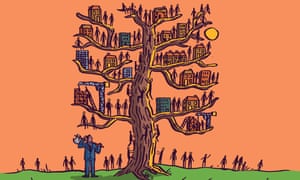
‘The landscape after the plague will be unfamiliar.’ Illustration: Dom McKenzie/The Observer
The French used to be mad about the cure de sommeil – the sleep cure. Dr Jakob Klaesi of Bern invented it. Drugged, you pass out for days or even weeks. Then, cautiously, you are woken up. You are supposed to find you feel quite differently about things.
Politicians insist that lockdown under coronavirus is like the experience of wartime. It’s not – except in one way, which I’ll come to. It’s so quiet, for one thing. War is noisy. Sirens, soldiers tramping past singing, Luftwaffe engines in the night sky.
These lockdown weeks are more like induced sleep. Nine out of 10 of us see and hear nothing of the nurses and doctors, the bus drivers and key workers. We learn of their bravery and their deaths only by radio, from a screen or a newspaper left by a boy in a mask. For most people, life is on hold. A trance descends, soothed by birdsong, a dog barking, an ambulance in the distance.
What happens when it’s over? European literature has a genre of “the landscape after the battle” – the ruins, the hunger and cold, the search for family survivors. The landscape after the plague will be unfamiliar, but not like that.
In the first place, emerging from isolation – waking up – must be handled carefully. It’s the phase de sevrage, weaning the patient from sleep. “This prolonged dive into the world of dream can allow a patient to exercise their fantasies, perhaps to discover the links between them,” warns a French doctor. “Harmful after-effects are possible, provoking in some patients paroxysms of depressive anxiety.”
The fantasies and anxieties are already with us. And here one comparison with wartime does work. The longer the virus emergency lasts, the more the memory of the pre-virus world begins to grow unreal, unconvincing. It was like that in the Second World War. “Peacetime…”
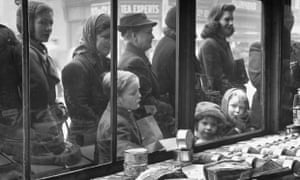
Was there really a Britain, only a few years ago, when you could buy as many sweeties as you wanted? A time when the work of millions of men and women wasn’t wanted, when the poor couldn’t afford a doctor, when middle-class families had servants they could sack when Madam was in a bad temper? It wasn’t just working-class people who began to ask: “Could we really have lived like that? This war’s changed everything. Pity, in some ways, but it couldn’t go on.”
Facebook Twitter Pinterest Was there really a Britain, only a few years ago, when, outside the schools medical service, the poor couldn’t afford a doctor? Photograph: Daily Herald Archive/SSPL via Getty Images Advertisement
Now, unmistakably, there’s a feeling that “things will never be the same after it’s over” and “we can’t go back to all that”.
Can’t we, just? Some of those who govern us can imagine only restoring “their” Britain, disfigured by inequalities. They will exploit the real and moving solidarity shown in these pandemic months, as they confront the colossal debts left by rescue spending. They will impose another “we’re all in this together” campaign of savage austerity at the expense of social services and the poor.
And yet, just as in 1945, voices are starting to say “never again”. As in: never again “austerity”, which leaves people helpless in an emergency. Never again the emaciation of the welfare state, and the NHS above all. Come to that, never again neoliberalism. But who will do the politics of “never again” when we open our eyes? Or are these hopes just “prolonged dives into the world of dream”, pathetic fantasies dissolving into “paroxysms of depressive anxiety” as Britain wakes from its corona coma?
The landscape will look different. Mass unemployment, as hundreds of firms go bust in spite of government loans, made much worse if the suicidal idiocy of a no-deal Brexit really happens at the end of this year. Concentration of wealth and power in fewer hands, as big companies cannibalise what’s left of smaller enterprises. Bankruptcies devastating those charities and funds that maintained so much welfare and research as public spending withered under austerity.
Facebook Twitter Pinterest Never again? Londoners queue outside a butcher’s shop in 1947. Photograph: Pat English/Time & Life Pictures/Getty Image
Yet there’s new light, too. Neoliberalism is dead, but Boris Johnson’s own path away from it leads to a UK version of European neopopulism: a powerful nationalist state, insular and xenophobic, harsh on human rights, big spender on the welfare of the “left-behind” masses. Rishi Sunak’s discovery of billions for business rescue, like the cities’ discovery of millions to house their rough sleepers, shows what was always possible. Debt and deficit soar but – turning Tory orthodoxy inside out – they seem not so lethal after all. And a dose of moderate inflation? Why not? Advertisement
The state is back. A liberating thought for Labour under Keir Starmer. But a strong British state in the 2020s – what will that smell like? The historian David Edgerton, asking himself: “When was Britain?”, answers: not in the high days of empire, not even in 1940, but in the postwar decades after 1945. Then Britain became a strictly centralised and planned state. Almost self-sufficient (“Export or Die!”), it was industrialised as never before or since. Operated by Tories as well as Labour, this “economic nationalism” only broke down in the 1980s, says Edgerton. In came free-market dogma, the shrinking of the state and devolution wrenching open the faultlines of the United Kingdom.
That “strong Britain” left its peoples healthier, safer, better educated and more equal. But there’s no way back to it. The industrial economy is over. Dragging Scotland and Wales back under Whitehall control – forget it! Johnson’s “strong Britain” may amount only to England weakly imitating the repressive populism of Poland or Hungary.
Yet a great emergency, like this shared time of pestilence, leaves people sensing their own power, aware that they can act without waiting for yesterday’s leaders. When we finally wake up from the long sleep cure, there is a chance to make those “never agains” more than a fading dream. A chance – but lasting only for a few months of creative confusion as we all stand up again and look around. “Rise like lions after slumber,” said Shelley. There is plenty to do, but we have to do it fast.
• Neal Ascherson is a journalist and writer
I have seen these lovely ladies sing in Exeter at the Hole in the Wall which is a hot bed of student life now owned by the TimePiece http://www.timepiecenightclub.co.uk/ These lovely singers also used to work at Timepeice too.
Update 17:28 19/04/2020 Just heard this beautiful song from another Devonian Earth Angel and whats more she is a childrens nurse in London what a star.
Texas judge rules all registered voters can vote by mail if they fear catching coronavirus
By Kelly Mena, CNN
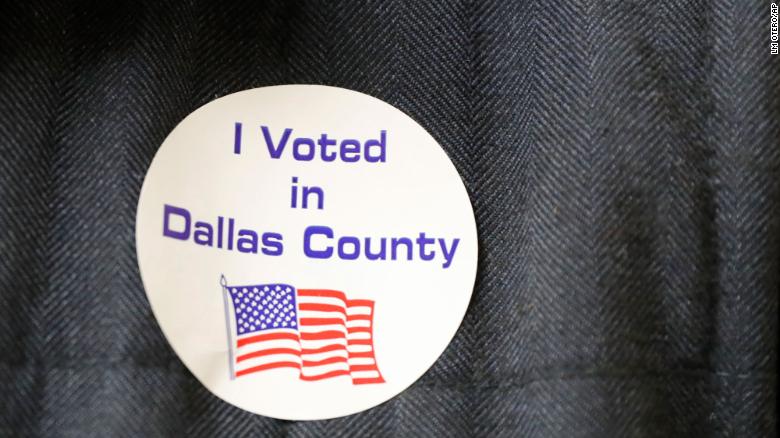
Updated 0011 GMT (0811 HKT) April 18, 2020Democrat Jamie Wilson displays a sticker after voting in the Super Tuesday primary at John H. Reagan Elementary School in the Oak Cliff section of Dallas, Tuesday, March 3, 2020. (AP Photo/LM Otero)
Washington, DC (CNN)A Texas judge on Friday ruled that all registered voters in the state should be allowed to request and use mail-in ballots due to the coronavirus pandemic.District Judge Tim Sulak, in a ruling filed Friday in Travis County, issued a temporary injunction that eases the definition of “disability” in Texas’ vote-by-mail provision, making it apply to all registered voters who fear for their health in casting ballots in person for the state’s upcoming elections.Texas’ election code defines “disability” as “a sickness or physical condition that prevents the voter from appearing at the polling place on election day without a likelihood of needing personal assistance or of injuring the voter’s health.” Voters who meet this definition and wish to vote by mail must submit applications.Sulak acknowledged during a court hearing on Wednesday that he expects an appeal from the state attorney’s office, which has issued guidance that fear of Covid-19 does not qualify as a disability.”Moreover the evidence shows that voters and these Plaintiffs … are reasonable that voting in person while the virus that causes Covid-19 is still in general circulation presents a likelihood of injuring their health, and any voters without established immunity meet the plain language definition of disability thereby entitling them to a mailed ballot,” the order read.In late March, Gov. Greg Abbott postponed dozens of election runoffs statewide for party nominations to congressional and local offices, set for May 26, until July 14. The new date was made to coincide with a competitive special election for a Texas state Senate seat. In issuing the delay, Abbott didn’t weigh in on whether to expand mail-in voting access.In a separate ruling on Friday, Sulak also aligned the dates for early voting for the special election and the runoff to July 6-10.The Texas Democratic Party, the original plaintiff in the case, rushed to declare victory after leaving court on Wednesday, in anticipation of the court ruling in their favor. The group argued that Covid-19 posed a significant health threat to voters if they were forced to cast ballots in person.”We cannot allow this public health crisis to be the death of our democracy when it is taking so many of our loved ones,” Texas Democratic Party Chair Gilberto Hinojosa said in a press release.”Our state is better off when more Texans participate in our democracy. Voting by mail is safe, secure, and accessible. It allows more voters to participate in our democracy, and it’s a commonsense way to run an election, especially during a public health crisis,” Hinojosa added.”We just won a preliminary injunction in Texas. All voters get to vote by mail in the primary. No individualized excuses necessary. The coronavirus is a universal excuse. GREAT WORK,” David Cole, national legal director for the ACLU, said Wednesday in a Twitter post.In response, Texas Attorney General Ken Paxton, in a statement late Wednesday, expressed disappointment, saying in part that the district court had ignored the plain text of the state election code in order to allow healthy voters to take advantage of special protections made available to Texans with illnesses or disabilities.”This unlawful expansion of mail-in voting will only serve to undermine the security and integrity of our elections and to facilitate fraud. … My office will continue to defend Texas’s election laws to ensure that our elections are fair and our democratic process is lawfully maintained,” Paxton, a Republican, said in the statement.The Texas state attorney’s office, in response to the court ruling, filed a notice of appeal late Friday.
NEW YORK TODAYGet our daily newsletter, with the latest information about the coronavirus outbreak, in your inbox.
Pedestrians with covered faces in the Kingsbridge neighborhood of the Bronx on Saturday.Credit…Desiree Rios for The New York Times
Masks become mandatory in New York as governor’s order takes effect.
From surgeon-quality personal protection to the home-stitched square and the bandit’s bandanna, New Yorkers pulled on a newly essential accessory and ventured into a landscape that changed yet again on Friday with the mandated wearing of masks in public.
The new rule, which took effect at 8 p.m. Friday night, would be striking anywhere, but more so in New York City, where teeming crowds and if-I-can-make-it-there chutzpah are baked into the national imagination.
“This is just the next step,” said a retired corrections officer, Stanley Woo, 63, sitting down to play chess in a park in Forest Hills, Queens, with his old friends and his new mask.
“Nobody likes it, but we’ve got to do what we’ve got to do,” said Amanda Neville, 43, inside her wine store, Tipsy, in Clinton Hill, Brooklyn.
The measure was intended to further flatten the curve of new coronavirus infections in New York, which has had more than 12,000 deaths because of the virus and more than 200,000 confirmed cases.
Gov. Andrew M. Cuomo offered some encouraging signs on that effort at his daily briefing on Friday: the three-day average number of hospitalized virus patients, considered one of the most reliable measures of the fight against the virus, dropped for the third straight day, by its biggest margin yet — almost 3 percent.
Still, the number of virus patients newly admitted to hospitals had remained high, at nearly 2,000 per day, and the governor announced 630 new deaths in the state.
Mr. Cuomo said the state’s economy could not fully reopen without more widespread testing, which would require both supplies and an operational capacity that the health system does not currently have.
“We cannot do it without federal help,” the governor said.
New York is not the only state to make face coverings mandatory: Maryland, New Jersey and Pennsylvania are requiring that masks be worn in stores; likewise in Los Angeles and some surrounding California counties. New York’s order is the most expansive, requiring face coverings anywhere in the state where two people might come within two yards of each other, though for now there is no fine for disobeying.COVERING UP New Yorkers are complying — sometimes begrudgingly — with the new mandate for face coverings.
N.Y.C. schools report 84 percent attendance rate for virtual learning.
New York City’s abrupt switch to remote learning last month created myriad challenges for the nation’s largest school system. One of the thorniest issues was how to take attendance for 1.1 million public school students who were suddenly at home.Sign up to receive an email when we publish a new story about the coronavirus outbreak.Sign Up
On Friday, the Department of Education provided initial data indicating that most students are still interacting with school in some way: About 84 percent of students signed on in some way during the first week of April. Average daily attendance before the coronavirus pandemic was around 92 percent.
Each of the city’s 1,800 schools have created their own attendance plans, meaning that being marked “present” could include participating at live instruction at one school, and answering a brief question every morning at another school. Attendance during remote learning was higher for younger children, who are typically supervised by parents during the day, and lower for high school students.
About 20 percent of city schools, including some large high schools, have not yet reported their attendance data. The city will release attendance weekly.
They filed for unemployment last month. They haven’t seen a dime.
Melvin Taylor II, who has yet to receive a debit card with his unemployment benefits, said he was searching through coats and pants for loose change.Credit…James Estrin/The New York Times
Unemployment systems, some of which rely on an antiquated computer programming language, were not built for such a rush of claimants. They also were not built for a new class of workers — independent contractors and the self-employed — who are now eligible for assistance during the pandemic.
In New York, the results have been maddening. Many people have had their online applications crash before they could hit submit, requiring them to start from scratch.
They have endured hourslong wait times only to get randomly disconnected, or be connected with representatives who say they cannot fix their issues.
Carly Keohane, who lost her waitressing job in Rochester, N.Y., has been waiting a month to receive $2,124 in unemployment payments as a direct deposit into her bank account.
But the state instead told her that the money had been deposited on a state-issued debit card, which she never received. Ms. Keohane, 31, said she could not get anyone on the phone to find out where it is.
Speaking on Thursday, the secretary to Gov. Andrew M. Cuomo, Melissa DeRosa, said the state had been staggering under the weight of the claims for unemployment insurance.
“We are going to continue doing everything we can to bring the system up to deal with this scale,” she said.MADDENING WAIT Crashing websites and problems with state-issued debit cards have frustrated New Yorkers seeking unemployment benefits.
Are you a health care worker in the New York area? Tell us what you’re seeing.
As The New York Times follows the spread of the coronavirus across New York, New Jersey and Connecticut, we need your help. We want to talk to doctors, nurses, lab technicians, respiratory therapists, emergency services workers, nursing home managers — anyone who can share what’s happening in the region’s hospitals and other health care centers. Even if you haven’t seen anything yet, we want to connect now so we can stay in touch in the future.
A reporter or editor may contact you. Your information will not be published without your consent.What hospital or health care facility do you work at?*Tell us what you’ve seen so far.0 wordsWhat is your name?*Full name preferredWhat is your email?*What is your phone number?By clicking the submit button, you agree that you have read, understand and accept the Reader Submission Terms in relation to all of the content and other information you send to us (‘Your Content’). If you do not accept these terms, do not submit any content. Of note:
Your Content must not be false, defamatory, misleading or hateful or infringe any copyright or any other third party rights or otherwise be unlawful.
We will use the contact details that you provide to verify your identity and answers to the questionnaire, as well as to contact you for further information on this story. If we publish Your Content, we may include your name and location.














 Democrat Jamie Wilson displays a sticker after voting in the Super Tuesday primary at John H. Reagan Elementary School in the Oak Cliff section of Dallas, Tuesday, March 3, 2020. (AP Photo/LM Otero)


 Welcome to Huwspace
You must be logged in to post a comment.