Lady Liberty

What does Lady Liberty represent? The Statue of Liberty stands in Upper New York Bay, a universal symbol of freedom. Originally conceived as an emblem of the friendship between the people of France and the U.S. and a sign of their mutual desire for liberty, over the years the Statue has become much more.

Godless Trump

godless/ˈɡɒdləs/ Learn to pronounce adjective adjective: godless

  1. not believing in God.”a sceptical, godless society” h Similar: atheistic

unbelievingnon-believing non-theistic agnostic sceptical heretical faithless irreligious ungodly unholy impious profane infidel barbarian barbarous heathen heathenish idolatrous pagan satanic devilish fiendish demonic diabolical infernal nullifidian h

Opposite:religious

  • without a god.”humanity coming to terms with a godless world”
  • profane; wicked.”a mob reeling out from their godless pleasures” h Similar :immoral

wicked sinful wrong morally wrong wrongful evil

Bishop ‘outraged’ over Trump’s church photo op during George Floyd protests

The Rev Mariann Budde says the institution aligns itself with those seeking justice for Floyd’s death.

The Statue of Liberty (Liberty Enlightening the World; French: La Liberté éclairant le monde) is a colossal neoclassical sculpture on Liberty Island in New York Harbor in New York, in the United States. The copper statue, a gift from the people of France to the people of the United States, was designed by French sculptor Frédéric Auguste Bartholdi and its metal framework was built by Gustave Eiffel. The statue was dedicated on October 28, 1886.

The statue is a figure of Libertas, a robed Roman liberty goddess. She holds a torch above her head with her right hand, and in her left hand carries a tabula ansata inscribed JULY IV MDCCLXXVI (July 4, 1776 in Roman numerals), the date of the U.S. Declaration of Independence. A broken shackle and chain lie at her feet as she walks forward, commemorating the recent national abolition of slavery.[8] After its dedication, the statue became an icon of freedom and of the United States, seen as a symbol of welcome to immigrants arriving by sea.

What is Freedom?

freedom/ˈfriːdəm/ Learn to pronounce nounnoun: freedom; noun: freedom from; plural noun: freedom froms; plural noun: freedoms

  1. 1. the power or right to act, speak, or think as one wants.”we do have some freedom of choice” h Similar:right to

entitlement to privilege prerogative due

  • absence of subjection to foreign domination or despotic government. “he was a champion of Irish freedom” h Similar:independence

self-government self-determination self-legislation self rule home rule sovereignty autonomy autarky democracy self-sufficiency individualism separation non-alignment emancipation enfranchisement manumission h Opposite:dependence the power of self-determination attributed to the will; the quality of being independent of fate or necessity. h Similar: scope latitude leeway margin flexibility facility space breathing space room elbow room licence leave free reina free hand leisure carte blanche

  • h Opposite:restriction

2. the state of not being imprisoned or enslaved.”the shark thrashed its way to freedom” h Similar: liberty liberation release emancipation deliverance delivery dischargenon-confinemen textrication amnesty pardoning manumission disenthralment h Opposite:captivity

  • the state of being unrestricted and able to move easily.”the shorts have a side split for freedom of movement”
  • unrestricted use of something.”the dog has the freedom of the house when we are out”

3. the state of not being subject to or affected by (something undesirable).”government policies to achieve freedom from want” h Similar: exemption immunity dispensation exception exclusion release relief reprieve absolution exoneration impunity letting offa let-offderogation h Opposite:liability4. Britisha special privilege or right of access, especially that of full citizenship of a city granted to a public figure as an honour.”he accepted the freedom of the City of Glasgow”5. archaicfamiliarity or openness in speech or behaviour. h Similar: naturalness openness lack of reserve/inhibition casualness informality lack of ceremony spontaneity ingenuousness impudence familiarity over familiarity presumption forwardness

  1. cheek

Origin

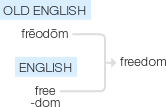
Old English frēodōm (see free, -dom).Translate freedom toUse over time for: Freedom

Freedom Tree, Elizabeth Marina, St. Helier, Great Britain

Food for thought!

Ask not what you can do to your country but what your country can do to you.

President Trump is no Kennedy but let your country have a Future and your children have  a Mother or Father an Uncle or an Aunt a Grandparent or guide or most importantly let your future seed have a life.

Ich bin ein Berliner

Ich bin ein Berliner (German pronunciation: [ˈʔɪç ˈbɪn ʔaɪn bɛɐ̯ˈliːnɐ], “I am a Berliner“) is a speech by United States President John F. Kennedy given on June 26, 1963, in West Berlin. It is widely regarded as the best-known speech of the Cold War and the most famous anti-communist speech. Kennedy aimed to underline the support of the United States for West Germany 22 months after Soviet-occupied East Germany erected the Berlin Wall to prevent mass emigration to the West. The message was aimed as much at the Soviets as it was at Berliners and was a clear statement of U.S. policy in the wake of the construction of the Berlin Wall. Another phrase in the speech was also spoken in German, “Lasst sie nach Berlin kommen” (“Let them come to Berlin”), addressed at those who claimed “we can work with the Communists”, a remark at which Nikita Khrushchev scoffed only days later.

The speech is considered one of Kennedy’s best, both a notable moment of the Cold War and a high point of the New Frontier. It was a great morale boost for West Berliners, who lived in an enclave deep inside East Germany and feared a possible East German occupation. Speaking from a platform erected on the steps of Rathaus Schöneberg for an audience of 120,000, Kennedy said,

From Wikipedia, the free encyclopedia

Jump to navigation Jump to search

https://upload.wikimedia.org/wikipedia/commons/thumb/c/c0/Audio-input-microphone.svg/50px-Audio-input-microphone.svg.pngIch bin ein Berliner (I am a Berliner) speech Play media Speech from the Rathaus Schöneberg by John F. Kennedy, June 26, 1963. Duration 9:01; “Ich bin ein Berliner” first appears at 1:45, then again at 8:43. Ich bin ein Berliner (“I am a Berliner”) speech (audio) Menu 0:00 Audio-only version (Duration 9:22)
Problems playing these files? See media help.
Part of a series on the
History of Berlin
Coat of arms of the City of Berlin
Margraviate of Brandenburg (1157–1806)
Kingdom of Prussia (1701–1918)
German Empire (1871–1918)
Free State of Prussia (1918–1947)
Weimar Republic (1919–1933)
1920s Berlin Greater Berlin Act
Nazi Germany (1933–1945)
Welthauptstadt Germania Bombing of Berlin in World War II Battle of Berlin
West Germany and East Germany (1945–1990)
West Berlin and East Berlin Berlin Wall Berlin Blockade (1948–1949) Berlin Crisis of 1961 “Ich bin ein Berliner” (1963) “Tear Down This Wall” (1987) Fall of the Berlin Wall
Federal Republic of Germany (1990–present)
History of Germany and History of Europe
See also
Timeline of Berlin

June the 2nd 2020 – Where is the Love?

Heart of the free world

I see the U.S.A. as the heart of the free world. With Covin-19, your President’s volatile nature where he bates and try’s to control or cancel all and any he see as his opposites or enemies, along with the recent protests over the death of George Floyd. The heart of the free world is really taking a heart beating and palpitating close to having a full on cardiac arrest.

I never wanted to visit the U.S.A. it always looked too dangerous, too scary and finally too expensive. But some of its people that I meet on the World Wide Web are hugely inspiring and influence my views and perspective on life. They appear if in the realms of fantasy and fiction like living legends, earth angels and walking saints.

So in essence the U.S.A is a paradox.

Paradox/ˈparədɒks/ Learn to pronounce nounnoun: paradox; plural noun: paradoxes

  1. a seemingly absurd or contradictory statement or proposition which when investigated may prove to be well founded or true.

Throughout the history of the free world it has many times thought led and beaten back all in the name of freedom. Free thought, free economicsish (ok but true freedom should be a freedom to purchase the perfect product for example clean water not just the right to flog any old shit to anyone i.e. dirty chemically polluted water). Plus your normal lack of safety netting for those that need support to stand up and get back into the economy is just downright destructive to all.

When the U.S.A gifts freedoms to corporations it has forgotten or refused to equally gift both rights and responsibilities of not being ripped off, persecuted, shot, stolen from or killed to its own citizens regardless of race, creed or colour.

Where all are equal but some more than others

No Peace in death – Or justice in blood

People now demand change – which they are right to demand

But what will that change be?

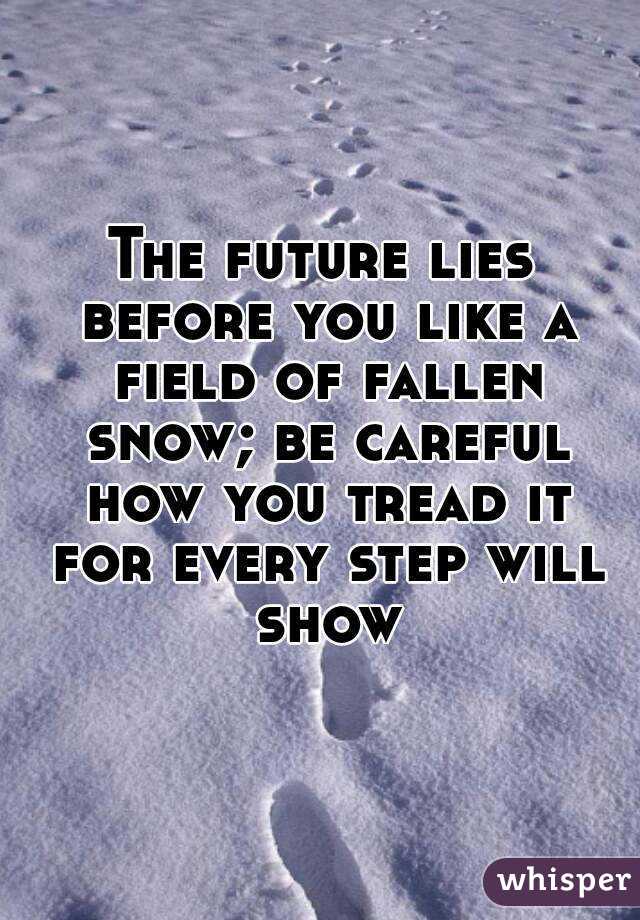
One humans freedom risks being another humans tyranny –

If you wish to free all then do not free them to their death.

Universal suffrage

From Wikipedia, the free encyclopedia Jump to navigationJump to search

Part of the Politics series
Elections
Basic types
By-election Corporate Direct / Indirect Fixed-term General Local Mid-term Plurality Primary Proportional Recall Snap Sortition Two-round system
Terminology
Anonymous elector Apportionment Audits Boundary delimitation Crossover voting Election silence Gerrymandering Initiative Psephology Secret ballot Suffrage
Subseries
Political party Voting Electoral systems
Lists
Elections by country Close elections Most recent Next general electionsNational and local elections in 2020
Related
Election security Electoral fraud Referendum (by country)
Politics portal
vte

Universal suffrage (also called universal franchise, general suffrage, and common suffrage of the common man) gives the right to vote to all adult citizens, regardless of wealth, income, gender, social status, race, ethnicity, or any other restriction, subject only to relatively minor exceptions.[1][2] In its original 19th-century usage by reformers in Britain, universal suffrage was understood to mean only universal manhood suffrage; the vote was extended to women later, during the women’s suffrage movement.[3][4]

There are variations among countries in terms of specifics of the right to vote; the minimum age is usually between 18 and 25 years (see age of majority) and “the insane, certain classes of convicted criminals, and those punished for certain electoral offenses” sometimes lack the right to vote.[2]

In the first modern democracies, governments restricted the vote to those with property and wealth, which almost always meant a minority of the male population.[5] In some jurisdictions, other restrictions existed, such as requiring voters to practice a given religion.[6] In all modern democracies, the number of people who could vote has increased progressively with time.[7][8] The 19th century saw many movements advocating “universal [male] suffrage”, most notably in Europe, Great Britain and North America.[9][10]

In the United States, after the principle of “one man, one vote” was established in the early 1960s by U.S. Supreme Court under Earl Warren,[11][12] the U.S. Congress together with the Warren Court continued to protect and expand the voting rights of all Americans, especially African Americans, through Civil Rights Act of 1964, Voting Rights Act of 1965 and several Supreme Court rulings.[13][14] In addition, the term “suffrage” is also associated specifically with women’s suffrage; a movement to extend the franchise to women began in the mid-nineteenth century and culminated in 1920, when the United States ratified the Nineteenth Amendment to the United States Constitution, guaranteeing the right of women to vote.

Banner State Woman's National Baptist Convention

Historian Martha S. Jones takes a look at the question of race versus gender in the quest for universal suffrage

Source: How the Daughters and Granddaughters of Former Slaves Secured Voting Rights for All

Exeter Anti-social distancing

It appears there are large swathes of people the globe over that have manged to justify to themselves the importance of no longer socially isolating whether it be to fonicating, fighting or fraternizing.

The consequences of this choice of action is simply too early to say but I don’t think medical professionals and key works are geared up yet to start nursing the needlessly dying of a second wave.

If I were to be uncharitable I would stereotype right now the very small minority of people most likely to kill you in Exeter is a very small minority of sun worshipers and festival goers or party people, that seem to think this is an exciting time to break the rules, not really mindful of how many viruses they are spreading or who in their family they might now have inadvertently put at risk or are in the process of putting to death, let alone the countless numbers of people they don’t know that might die.

For those that have been working to keep you alive I am sorry about the potential spread by arseholes and idiots and for those that go onto die because of this behaviour I have no words to describe my sorrow.

Death has not had it’s fill on my patch yet!

The south west of England now has the highest ‘R rate’ in the UK. An ‘R’ number for each region in the UK has been revealed for the first time – and the South West has the highest.

The number, also known as ‘reproduction rate’, represents the coronavirus infection rate. If it goes above 1, new restrictions and tougher social distancing measures could be needed.

The South West is estimated to have the highest infection rate with 0.9. The North East and East Midlands are thought to have the next highest, followed by the North West.

Simple acts of Kindness

kindness/ˈkʌɪn(d)nəs/ Learn to pronounce nounnoun: kindness

  1. the quality of being friendly, generous, and considerate.
Lancaster, a Harris hawk, is one of many different birds of prey owned by Keith Mutton, owner of Phoenix Bird Control, used to patrol the RAF Mildenhall flightline to disperse nuisance birds. The birds of prey play a vital role to the base; they help prevent birdstrikes, thus drastically reducing the risk of damage to, or loss of aircraft. (U.S. Air Force photo by Staff Sgt. Jerry Fleshman)

Donald Trump’s Retort

A retort is a short, clever response to someone’s comment or question. … Today retort is used as both a noun and a verb, and both come from 16th- and 17th-century sources meaning “to twist or turn back.” To retort is to make a comeback, or a quick, witty answer or remark.

What is the greater good?

Can Computers Become Conscious and Overcome Humans?

What would be a computers definition of the greater good?

A Wizard is never late!

Gandalf

He wore a tall pointed blue hat, a long grey cloak, and a silver scarf. He had a long white beard and bushy eyebrows that stuck out beyond the brim of his hat.” —The Fellowship of the Ring,A Long-expected Party

Gandalf (Norse; IPA: [gand:alf] – “Elf of the Wand” or “Wand-elf”) the Grey, later known as Gandalf the White, and originally named Olórin (Quenya; IPA: [oˈloːrin] – “Dreamer” or “Of Dreams”), was an Istar (Wizard), sent to Middle-earth in the Third Age to combat the threat of Sauron. He joined Thorin and his company to reclaim the Lonely Mountain from Smaug, convoked the Fellowship of the Ring to destroy the One Ring, and led the Free Peoples in the final campaign of the War of the Ring.

Wolf a keystone species

Why is a wolf a keystone species? Wolves and other top-level (or apex) predators greatly influence their environment. Existing in relatively low numbers, especially when compared to other animals like deer, they disproportionately affect the ecosystems in which they live. … For this reason, wolves are considered a keystone species. 4 May 2020