Understanding U.S. Tariffs: Costs and Consequences

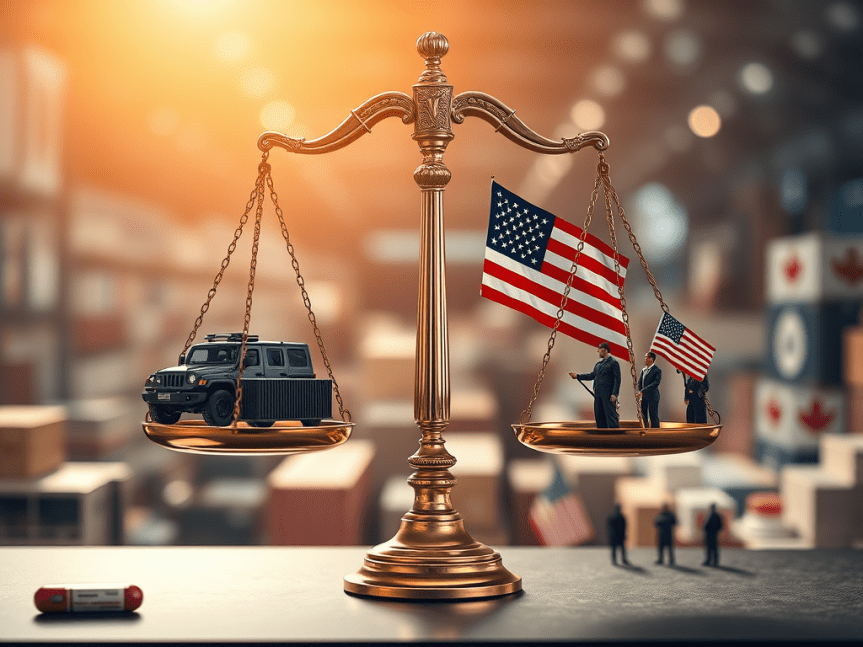
In 2025, U.S. tariffs are taxes levied by the federal government on imported goods at the border. While intended to protect domestic industries and reduce trade deficits, these duties directly impact American citizens through higher prices and broader economic shifts.

What are the 2025 U.S. Tariffs?

As of late 2025, the U.S. has implemented an aggressive trade regime characterized by widespread “reciprocal” and sectoral tariffs: 

  • Baseline Tariff: A minimum 10% baseline tariff applies to imports from nearly all trading partners.
  • Sectoral Tariffs: High specific duties apply to key industries, including:
    • Automobiles and Parts: 25% on most foreign-made cars and light trucks.
    • Metals: 50% on steel and aluminum (up from 25% earlier in the year).
    • Pharmaceuticals: 100% on branded or patented drugs, unless the company builds manufacturing plants in the U.S..
    • Lumber and Furniture: 10% on timber and up to 50% on kitchen cabinets and some furniture.
    • De Minimis Change: On August 29, 2025, the $800 exemption for low-value imports was removed, making small packages from retailers like Shein or Temu subject to duties.

How They Affect American Citizens

The primary impact on citizens is financial, as tariffs act as a “consumption tax” passed from businesses to individuals. 

1. Increased Costs of Living

  • Direct Price Hikes: Importers often pass the cost of the tariff directly to consumers. In 2025, households face an average estimated loss of $1,100 to $2,700 annually.
  • Specific Good Impacts: By late 2025, shoppers have seen significant price jumps in staples:
    • Groceries: Up 2.7%, with beef and coffee surging by 14% and 19%, respectively.
    • Cars: New car prices have risen by an average of $4,000 to $6,500 due to auto and metal tariffs.
    • Apparel: Clothing and leather goods prices have increased by up to 28%.

2. Regressive Tax Burden

Tariffs disproportionately affect lower-income families because they spend a larger share of their income on essential goods that are now more expensive. The poorest 20% of households face a tax increase equivalent to roughly 6% of their income, compared to only 1.7% for the top 1% of earners.

3. Labor Market and Job Security

  • Sector Gains vs. Losses: While tariffs aim to boost manufacturing jobs, research indicates that job losses in “downstream” industries (which use imported materials) often outweigh gains in protected industries.
  • Unemployment: Projections suggest the current tariff policy could lead to an increase in the unemployment rate by 0.6 percentage points by the end of 2026. 

4. Retaliation Impacts

Trading partners like China and Canada have imposed their own “tit-for-tat” tariffs on U.S. exports. This hurts American farmers and manufacturers who sell products abroad, further straining local economies. 

5. Reduced Consumer Choice 

Higher costs and trade uncertainty often lead retailers to carry fewer imported brands, resulting in fewer options and lower product variety for American shoppers. 

In essence, tariffs act as a regressive tax, raising the cost of living and operating for Americans while often failing to deliver promised economic benefits, shifting costs from foreign producers to domestic consumers and businesses. 

Taxman (Remastered 2009)

Taking stock of my share of shares

Holly sh*t what the feck just happened in my bank account it is leaking cash faster than a Trumpian Bull breaks ceramics in a China shop!

Along time ago in a bank account far, far away I started to dabble in buying a type of UK bank account called an ISA (Individual Savings Account). ISAs are seen as a tax-efficient way to save and invest your money. That means you’ll pay no tax on any interest, gains or returns you make. What a great idea I thought. I also thought I could turn a little pot of money into a little bit bigger pot of money with me chipping some in monthly and also with the interest earned on the ISA. The only problem was that at the time I had decided to do this some 15 years or more ago interest rates were so low that in relation to inflation the interest earned was not keeping up with the low inflation rate so it felt like for every year you kept money in a regular ISA it was still in fact degrading over time in real terms.

So like everyone I was looking for a way out of this slightly silly system and so about 5 years ago or longer (I forget how long ago I decided to invest in a type of stocks and shares account with a online stocks and shares company. Again kept my little ISA ticking over to not earn interest on but also started saving into a type of stocks and shares account, again it was small potatoes and did not really have any major success but also did earn a little bit more than when putting money into an ISA so no big wins but no losses either still quite dull I thought really.

But then after a recommendation from a family member I consolidated my many minor pension schemes and cash ISA all into one company in the UK that had a steady higher rate of return for my money than any think I had tried in the past and low and behold I soon started to take interest in the interest and start finally seeing the benefits of my savings whilst at the same time as the stocks market would be stable and go up so would my stocks and shares ISA.

It was all going so well, I would pay a small amount in every week into my account and each week the money as well as the interest would grow. I thought I had finally become an adult without responsibilities that could and was planning for my rainy days and saving for my future. But then comes along President Trump like a bull in a China shop, who after many years of nonsensical speeches and stupid opinions was finally able to put those two things into practice with no less than  a trade war with the rest of the world – a literal economic DO NOT DO under no circumstances economic policy. Oh my the bigger they are the harder they fall kind of economic suicide that he has chosen to inflict on the globe and the US – its quite literally the top number one dumbest thing he could think to do and not only did he think about it he went ahead and did it and now will not back down and spend the next four years saying how it will be other countries and politicians and policies fault for the very dump policy that he implemented all on his own. You wonder how a person can even bankrupt a casino in their lifetime and we now know and start to see just how his logic did that and start to say ahh thats how, that’s why.

Finance and the direction of flow of money, shall always have a flow, an economic flow, it is not personal, it is not prejudicial, it simply flows from what it is able to make from money to who it then  able to buy with money, simple economic rule really on a micro and macro scale.

The barriers Trump is attempting to put up might well speed up or damage even more severely the things that Trump was in fact trying to protect and solve. China has a wall of businesses, bureaucrats, financial clout and desire to beat the US and where as Trump is dismantling the US government machine, China is only getting started with facing its machine up against the US in the trade war of all trade wars that Trump is initiating. Trump put quite simply this is a trade war you cannot and could never win. Just as Brexit saw a painful divorce for Britain from Europe, in a most likely irreversible circumstance so to is Trump trying to divorce himself right now from the economic flows of international finance and trade and oh boy have his shenanigans kicked my savings down right into my stocks and shares! No one can predict where this will end for global stocks or shares or for the US, China or rest of the world just yet. But my money is on the fact that this will not bode well for Trumps Tariffs’ philosophy at all.

Pink Floyd – Money

Blocking the rivers of trade

Stopping the flow of money & watching some rivers of finance run dry, all for an experiment that will fail and a crash and burn to the US economy.

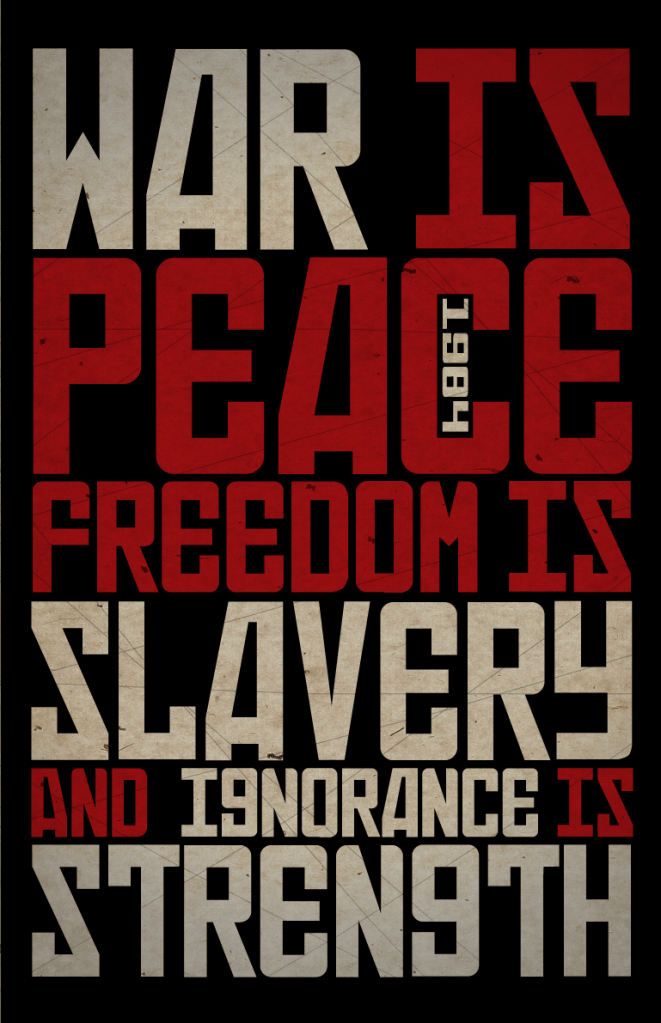
If we were still in George Orwell’s 1984 novel then the great trade war has begun and if it was up to Trump no matter what damage he does he will be reporting this war as a victory. No matter how many jobs are lost he will be reported as improvements and gains and no matter how much money people loose they will be reported as having increased and gained.

The normal rivers of Economic trade being blocked and dammed by Trumpian probable failing economic policies will cut deep. Damaging both economic systems across the globe and Trumps ego and people’s perception of him as an intelligent and knowledgeable business man. Trump likes to see himself as a brilliant business man and an assumption of this brilliance should be a keen understanding of international economics and trade is unravelling before his eyes and stock markets around the world and recessions are on the horizon while his attempt to block flows of trade fails for the USA and rest of the world. Trade and flows of trade will likely find a way even if this is further away from the USA rather than directly to it. Yes, Trump it will be a painful transition for many but what no one can really predict with and clear insight is what the change will look like and what that change ultimately leads too. Will it result in more or less jobs and money in the USA in the long run is yet to be seen.

Economic policies and trade from country to country can be viewed as flowing of goods and services to and from places across the globe. These flows are natural and part of economic cycles. Where there is financial clout to purchase goods and services and where there is an ability to produce and design, market and provide excellent goods and services and then transport them across the globe then these flows of products and services are natural economic eco systems that take place. It’s a consumers market and Trumps policies go completely against the free flow of consumption and he fails to allow the flow of trade and consumption and in my opinion Trumps policies will ultimately fail just like many of his other policies.

But the fact that he sees himself as such a great business man means that this failure will likely hurt him the most as well as his own country the place he is in fact trying to make great again. With the shocks to share and trading markets and likely continued break down in flows of trade and consumption this will be a damming of the river of financial, goods and services trade. Jobs will be lost, goods will go up in price and business will go out of business.   

Trump says that the USA has been treated unfairly, what he is really stating is he does not agree with the economic flows of finance and he is conducting a global experiment that will likely fail for him and cause more damage to USA and global business than good for goods and services. Trump cannot buy rivers of flow and Trump can not force the USA consumer or businesses to by USA goods and services. Freedom of consumption is natural to human markets and trade he’s peddling ideas and views that will fail and meddling in economic markets and trade flows he simply just does not understand. Like a bull in a china shop its likley there will be a crash or two of the economy.

Big brother Putin is misinforming you

If the battle between right and wrong is one of truth, integrity and righteousness then Putin’s Russia has already lost.

If it is a battle between might versus right then the battle is still being thought and we are all witnesses to the war that has unfolded.

What will Russia do when there are only lies left to tell to people that don’t want to believe them by people who know what they say is wrong?  

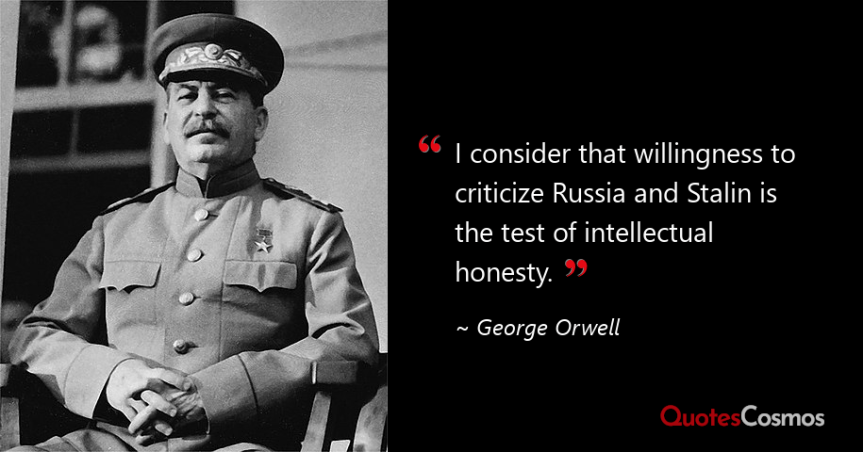
In the age of Putin’s Russia, George Orwell’s 1984 is stiflingly relatable today

Just like Russia today, Winston Smith’s world is both lawless and full of rules, incomprehensible from a human point of view but perfectly logical as a system, indiscriminately cruel and privately lyrical or even heroic.

When a lie is your currency that you pronounce to be truth you have already lost. If Russia persuades through lies, gold and oil for China to join its war in Ukraine the conflict is escalated for the many and not just the few.

Seal – Crazy

China attempts to ride two horses while life on earth walks along a tightrope

China has an authoritarian cloak that casts a shadow over the world over the issue of Ukraine and its relationship with Russia.

Russia and China are strategic allies and partners although China has not endorsed openly Russia’s invasion of Ukraine it also struggles to call or show the military situation as a war and certainly does not broadcast the atrocities being committed in Ukraine on state media. My gut feeling is that China feels behind the scenes that it could potentially benefit from a war between the West and Russia with which if it does not choose sides upon and by not competing in it ends to benefit therefore from the outcome of the conflict situation stronger than those that entered into conflict.

Even worse for the global none authoritarian and pro democratic nations if it believes that NATO goes too far in its defence of Ukrainian citizens it could have the potentially side with Russia. An escalation to a nuclear reactor incident or accident in Ukraine or a nuclear conflict in Europe alone let alone a wider nuclear conflict could destroy the ozone layer of the earth an d risk all life on earth as we know it, let alone result in a potential nuclear winter from the nuclear fallout in the sky destroying crops and life across the globe or where the situation occurs.

It is only last year that China showed its distain for the will of citizens and democracy in Hong Kong. It should also not be forgotten that China has been accused of committing crimes against humanity and possibly genocide against the Uyghur population and other mostly-Muslim ethnic groups in the north-western region of Xinjiang. Human rights groups believe China has detained more than one million Uyghurs against their will over the past few years in a large network of what the state calls “re-education camps”, and sentenced hundreds of thousands to prison terms.

The truth of the matter on how China operates within its own country and what it thinks of others and what rights others have is masked or casts a shadow on the world. They are not open and transparent about their own agenda and what their ultimate goal for their own citizens or others is.

China says officially that it respects Ukraine’s sovereignty and Russia’s security concerns – hence it is trying to ride to horses which means – to do (or attempt to do) two or more things simultaneously, often when those things conflict or are at odds with one another.

So what is at stake if something goes wrong well very much life as we or anyone else knows it hence life is walks/treads a tightrope, where we have to deal with difficult situations, especially one involving making decisions between two opposing plans of action. The present is unfolding before our eyes and the future is not written or yet to take place. The fact that we are still here is a cause of optimism and hope although the decisions that are to be made in the next few hours, days months and years will be difficult ones.  

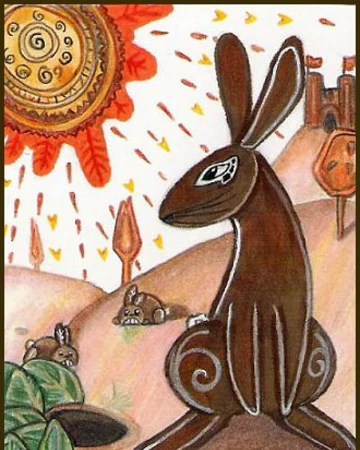
Watership Down is the tale of a group of rabbits in search of a home. Fiver, a small, young rabbit, has a gift: He can tell when things are going to happen and he can sense whether they will be good or bad. Fiver foresees great danger to the rabbits’ home warren.

Might Vs Democratic Rights

The Tiananmen Square protests or the Tiananmen Square Incident, commonly known as the June Fourth Incident (Chinese: 六四事件; pinyin: liùsì shìjiàn, literally the six-four incident) in mainland China, were student-led demonstrations held in Tiananmen Square in Beijing during 1989. The popular national movement inspired by the Beijing protests is sometimes called the ’89 Democracy Movement (Chinese: 八九民運; pinyin: bājiǔ mínyùn). The protests started on April 15 and were forcibly suppressed on June 4 when the government declared martial law and sent the military to occupy central parts of Beijing. In what became known as the Tiananmen Square Massacre (Chinese: 天安門大屠殺; pinyin: tiān’ānmén dà túshā), troops with assault rifles and tanks fired at the demonstrators and those trying to block the military’s advance into Tiananmen Square. Estimates of the death toll vary from several hundred to several thousand, with thousands more wounded.[2][3][4][5][6][7]

Set off by the death of pro-reform Communist general secretary Hu Yaobang in April 1989, amid the backdrop of rapid economic development and social changes in post-Mao China, the protests reflected anxieties about the country’s future in the popular consciousness and among the political elite. The reforms of the 1980s had led to a nascent market economy which benefited some people but seriously disaffected others, and the one-party political system also faced a challenge of legitimacy. Common grievances at the time included inflation, corruption, limited preparedness of graduates for the new economy,[8] and restrictions on political participation. The students called for greater accountability, constitutional due process, democracy, freedom of the press, and freedom of speech, although they were highly disorganized and their goals varied.[9][10] At the height of the protests, about 1 million people assembled in the Square.[11]

As the protests developed, the authorities responded with both conciliatory and hardline tactics, exposing deep divisions within the party leadership.[12] By May, a student-led hunger strike galvanized support for the demonstrators around the country, and the protests spread to some 400 cities.[13] Ultimately, Deng Xiaoping and other Communist Party elders believed the protests to be a political threat and resolved to use force.[14][15] The State Council declared martial law on May 20 and mobilized as many as 300,000 troops to Beijing.[13] The troops advanced into central parts of Beijing on the city’s major thoroughfares in the early morning hours of June 4, killing both demonstrators and bystanders in the process.

The international community, human rights organizations, and political analysts condemned the Chinese government for the massacre. Western countries imposed arms embargoes on China.[16] The Chinese government made widespread arrests of protesters and their supporters, suppressed other protests around China, expelled foreign journalists, strictly controlled coverage of the events in the domestic press, strengthened the police and internal security forces, and demoted or purged officials it deemed sympathetic to the protests.[17] More broadly, the suppression ended the political reforms since 1986 and halted the policies of liberalization in the 1980s, which were only resumed partly after Deng Xiaoping’s Southern Tour in 1992.[18][19][20] Considered a watershed event, the protests set the limits on political expression in China up to the present day.[21] Its memory is widely associated with questioning the legitimacy of Communist Party rule and remains one of the most sensitive and most widely censored topics in China.