Is Our Global System Corrupt or Immoral? Insights and Impacts

Whether our global system is immoral or corrupt is one of the most debated questions in modern philosophy, economics, and sociology. There isn’t a single factual answer, but rather a tension between two primary perspectives:

The Argument for Systemic Corruption

Critics argue the system is inherently flawed because it often prioritises capital accumulation over human well-being. They point to: 

  • Extreme Inequality: A tiny percentage of the population holds more wealth than the bottom half of the globe combined.
  • Environmental Exploitation: Economic growth often relies on the depletion of natural resources, leading to the climate crisis.
  • Power Imbalance: Large corporations and wealthy individuals often have disproportionate influence over political legislation, which can undermine democratic processes. 
  • Environmental Degradation: The current economic model relies on extracting natural resources, which has led to overshooting planetary boundaries. Seven out of eight earth system boundaries—including climate, biodiversity, and fresh water—have been breached.
  • Inequality: Despite overall growth in global GDP, wealth inequality is increasing in most countries. This leads to a concentration of power and wealth, where “marginalized communities often bear a disproportionate burden of environmental pollution and degradation”.
  • Unsustainability: The focus on short-term profit and “planned obsolescence” results in excessive waste and pollution. The current model is described by some researchers as an “environmental pyramid scheme” that depends on intergenerational theft.
  • Social Distress: Modern economic life, characterized by high-demand jobs and job insecurity, is linked to lower social connectedness and higher mental distress. 

The Argument for Systemic Progress

Conversely, proponents argue that the current global exchange has done more to improve the human condition than any previous system. They point to: 

  • Poverty Reduction: Global extreme poverty rates have plummeted over the last 50 years.
  • Innovation: Competition drives advancements in medicine, technology, and renewable energy.
  • Rule of Law: While imperfect, modern systems have established human rights frameworks and international trade laws that provide a level of stability unprecedented in history. 

Conclusion on Future Outlook

Ineffective Decoupling: It is unlikely that economic growth can be fully decoupled from environmental damage at a global scale, meaning a, “selective downscaling of production and consumption” is necessary to lower the ecological footprint.

Fundamental Transformation Needed: Research indicates that to ensure a “good life for all within the planet’s limits,” the current system must be drastically restructured.

Towards a “Wellbeing Economy”: Many experts advocate for a shift toward “wellbeing economies” that prioritize sustainability, social health, and environmental safety over purely economic, growth-based metrics like GDP.

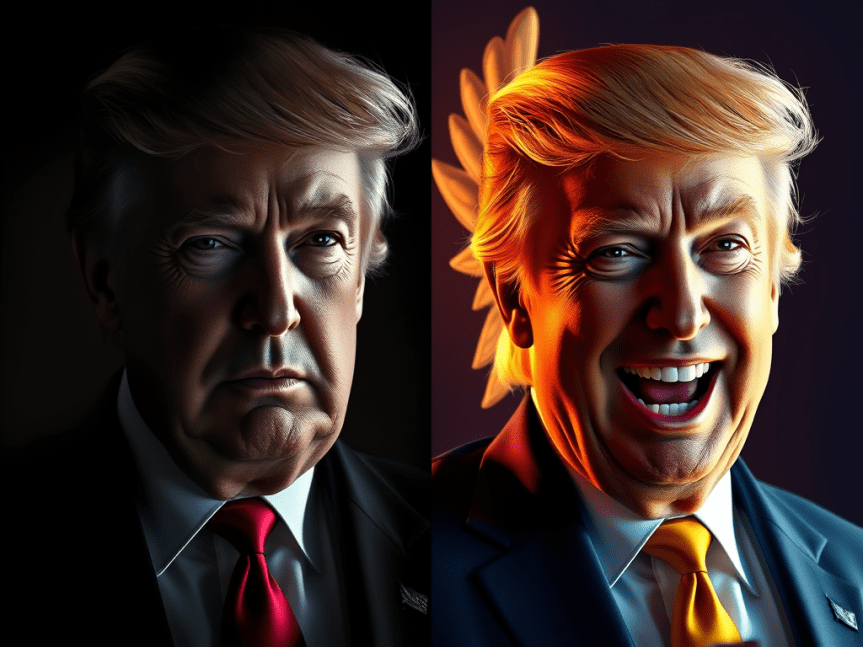
Is Donald Trump a ‘Saint’ or a ‘Sinner’ in the time of political echo chambers?

Whether Donald Trump is “evil” is a matter of intense public debate and subjective judgment, with no consensus. The term is used by various critics, supporters, and observers to describe his character, policies, and political impact from widely differing perspectives.

Arguments for Characterizing Him as evil

Critics and some public figures often use the term “evil” to describe Trump based on his actions and rhetoric:

  • Moral and Ethical Critique: Figures like actor Robert De Niro have explicitly called him “evil,” citing a lack of morals, ethics, or regard for others.
  • Impact of Policies: Some commentators argue that his policies, such as certain immigration measures or his handling of the COVID-19 pandemic, have caused significant suffering and death, which they categorize as a form of “multidimensional evil”.
  • Political Rhetoric: His use of language to demonise domestic political opponents—labelling them as “evil”—is seen by some as a dangerous shift in American political discourse.
  • Cultural Symbolism: In popular culture and media, Trump has been frequently depicted or used as a template for villainous characters, representing archetypes of greed and cynicism. 

Counter-Perspectives and Alternative Labels

Other observers reject the “evil” label, offering different interpretations:

  • Incompetence vs. Malice: Some critics argue he is not evil but rather a “chaotic fool” or “buffoon” whose detrimental impacts stem from ego and incompetence rather than calculated malevolence.
  • “Necessary Evil”: Some supporters or pragmatic observers have characterized him as a “necessary evil”—a disruptive force required to challenge established political systems.
  • Psychological Framing: Many analysts prefer clinical or psychological terms, such as “narcissistic” or “pathological,” to describe his behaviour rather than moralistic terms like “evil”.

Perception and Bias

Research suggests that whether an individual perceives Trump as “devil or messiah” is often influenced by their own pre-existing biases or political echo chamber and how they weigh his public persona as a successful businessman against his controversial actions as a political leader.

Sinner or saint in the time of political echo chambers/

Maybe in a time of political echo chambers where environments are often created by social media algorithms and selective exposure, where individuals only encounter information, opinions, and beliefs that reflect and reinforce their own. These insular spaces, sometimes termed “neotribalism,” intensify political polarization, normalize extreme views, and shield users from opposing perspectives. such a time is the perfect time to create a sinner or a saint in Donald Trump. We don’t want to see the good in what we perceive to be bad and alternatively those that see only the good in what he does are ignorant to the bad.

But also on the other hand if Donald Trump himself only chooses to listen and follow his own political echo chambers perspective and train of thought, then what will he loose out on or what damage will be done or has or is already being done by ignoring a more overarching or balanced set of views and perspectives on politics and the globe. Presidents can now be hoodwinked just as easily as people can by their own political echo chambers.

Final a religious perspective to Trumps entourage

Pastors pray over Trump in the Oval Office

In Matthew 23:3, Jesus tells his followers to obey the teachings of the scribes and Pharisees, but not to follow their actions, stating: “for they talk but do not do”. This is a warning against hypocrisy, specifically criticizing religious leaders who preach the law but do not practice it themselves. 

Key details regarding this, and similar phrasing:

  • Context: Jesus was calling out hypocritical leaders who “tie up heavy, cumbersome loads” (strict religious rules) but are unwilling to lift a finger to help.
  • Meaning: This is a command to follow the authorized, sound doctrine (“what they say”), but avoid copying the behaviour of those who fail to live up to it (“what they do”).

The Case Against Monarchy in Modern Democracies

Many a revolution and civil war has played out across the world in many a country including the UK to sever the head of a monarch from the political control of a country. It seems bizarre in this day and age that Britain has a monarch as the head of it’s state, political and religious institutions. But what is even more bizarre is the strength of will at the heart of the establishment to maintain the status quo and make no change to this set of institutions, state of affairs or even review or to ensure transparency concerning where money goes to the monarch and how or why it is then spent.

For me this is not an argument about whether a King or Queen are good people or not but whether they have the right to be born into the role they play and I strongly believe that there should be no birth right to any position in our state let alone that of the head of state.

Arguments against supporting monarchies in democratic societies generally center on principles of equality, accountability, and the desire for a modern, meritocratic state. Critics argue that inherited power is fundamentally incompatible with the democratic ideal that all citizens are equal and that leaders should be chosen by the people.

  1. Lack of Democratic Accountability 

A core tenet of democracy is that leaders must be answerable to the people they serve. 

No Choice or Removal: Unlike elected officials, monarchs cannot be held to account or removed at the ballot box by the public.

Hereditary Risk: Relying on inheritance means there is no selection process to ensure the leader is capable; a nation risks being stuck with an incompetent, “petty,” or “vindictive” individual for decades. 

2. Incompatibility with Popular Sovereignty

Democracy is rooted in the idea that power belongs to the people, not a specific family. 

Anachronism: Critics view monarchy as a vestige of a feudal past that has no place in a modern world where legitimacy should derive from the consent of the governed.

Secrecy and Lobbying: In some systems, monarchies are exempt from transparency laws (like Freedom of Information requests), allowing for “lobbying by stealth” for private business interests. 

3. Economic and Social Costs

Opponents often point to the tangible burdens of maintaining a royal institution. 

Taxpayer Expense: Critics argue that the significant funds spent on the “extravagant lifestyle” of a royal family—including security, travel, and palace maintenance—could be better used for public services.

Colonial Legacy: For former colonies, retaining a distant monarch as a head of state can be seen as an obstacle to fully reconciling with their history and achieving true national independence. 

4. Institutional Resilience vs. Democratic Values

While some argue that constitutional monarchies provide stability, critics contend: 

Borrowed Time: Monarchies in democratic countries are often described as “operating on borrowed time,” requiring manufactured goodwill to survive.

Fragile Neutrality: A monarch’s perceived neutrality is easily shattered if they attempt to intervene in political matters, leading to constitutional crises.

Will the UK always have a monarchy?

Whether the UK will always have a monarchy is uncertain, as it is not guaranteed by law and relies on public support, which has shown a long-term decline. While it remains popular as a symbol of unity and tradition, support dropped to a record low of 54% in 2023, with around 25% favoring abolition. 

Key Factors Regarding the Future of the Monarchy:

Public Opinion & Trends: While a majority still support the institution, backing has fallen from 76% in 2012 to 54% in 2023. A growing minority, now around 25%, supports a republic, marking a 10% increase in just five years.

Constitutional Pathway: There is no legal barrier to abolition; it could be achieved through a parliamentary act and a referendum, creating a new, elected head of state.

Arguments for Removal: Critics argue the institution is incompatible with modern democratic values, lacks transparency, and that its wealth (e.g., the Duchy estates) should belong to the public.

Arguments for Retention: Proponents highlight the monarch’s role in providing political stability, acting as a non-partisan head of state, and contributing to tourism and international soft power.

Future Adaptability: The monarchy’s survival has relied on its ability to adapt to changing times, a strategy that future monarchs like Prince William will likely need to continue to maintain support.

The monarchy’s future depends on the “oxygen of public support” and its ability to remain relevant to future generations, making its permanence not guaranteed. 

Removing the power base of a born and bred King or Queen from the head of the UK will not be easy or happen overnight but it does feel like a form of constitutional madness to still have a monarch today as the head of a democratic society and is very much one that has been in place for so long it is sadly perceived to be a normal state of affairs.

I’m with stupid!

So why is democracy seen as the worst form of government bar all other forms of governance tried?

Democracy is often characterized as the “worst form of government” primarily through a famous aphorism attributed to Winston Churchill: “Indeed it has been said that democracy is the worst form of Government except for all those other forms that have been tried from time to time”

In the UK we could end up having a Reform government led by Nigel Farage in after the next general election or the very threat of this happening could in effect keep him voted out, the idea of a Britsh Trumping of social norms and political structures is a delight to some and terrifying to others. The political party Reform now has so many dangerous former Conservative Politicians in it they are more regurgitated Tories than they are reformed human beings.

Life, the world and technological futures seem to be creating the perfect storm for our future endeavours which as we vote and how we are governed will show the best and worst of us all. Do we care for ourselves or others, rich man, poor man, beggar man or thief. How should we act and treat one another when a crisis is right at our feet.

The political sentiment for democracy being the best of a bad bunch reflects a pragmatic recognition that while democratic systems are riddled with inherent flaws—such as inefficiency, corruption, and the potential for “mob rule”—they remain preferable to authoritarian alternatives that lack accountability and individual justice. 

Russia, China and Iran all must supress, lock up and kill their own citizens as well as ones abroad in order to maintain their supremacy and there are not enough words on a board to express the horror and suffering they inflict on others in order to get their own way. Democracies do not aspire to be brutal totalitarian regimes but in stead aim to fend of the madness of such regimes from inflicting their brutality and suppressing nature onto us all.

Core Philosophical and Practical Criticisms of democracies

The perception of democracy as a “bad” or “flawed” system stems from several long-standing arguments:

1. Competence and “Mob Rule”

  • Voter Ignorance: A central critique, dating back to Plato, is that democracy gives equal weight to the votes of experts and those who may be “incompetent” or poorly informed. Modern studies have shown that many voters lack basic civic knowledge, making them susceptible to emotional manipulation and propaganda.
  • Tyranny of the Majority: Critics like Alexis de Tocqueville and John Stuart Mill warned that a “poor majority” could dominate decision-making at the expense of minority rights and individual excellence.
  • Mob Law: Churchill himself distinguished true democracy from “mob law,” where armed groups or “gangsters” seize power under the guise of popular will to implement totalitarian regimes. 

2. Structural Inefficiencies

  • Slow Decision-Making: Unlike autocracies, where a single leader can act quickly, democracies require constant deliberation, negotiation, and compromise, which can lead to stagnation or gridlock during crises.
  • Short-Termism: Electoral cycles incentivize politicians to prioritize immediate, popular benefits to win votes, often ignoring long-term risks like climate change, debt crises, or pension sustainability. 

3. Corruption and Elite Capture

  • Influence of Money: Democratic systems are often criticized for becoming “oligarchies” in practice, where economic elites and special interest groups have significantly more influence over policy than the average citizen.
  • Iron Law of Oligarchy: Sociologists have argued that any organization, including a democracy, eventually becomes dominated by a small elite due to the practical demands of organizing power. 

Contemporary Challenges (2025–2026)

Current political analysis highlights specific modern threats that exacerbate these negative perceptions:

  • Erosion of Trust: As of early 2025, global trust in democratic institutions like parliaments has significantly declined, while trust in the police has risen. This disillusionment often leads to support for populist leaders who promise to dismantle existing democratic structures.
  • Information Ecology: The spread of algorithmically-driven disinformation and “fake news” has made it difficult to establish a common factual basis for democratic debate.
  • Polarization: Modern democracies are facing extreme political fragmentation and the formation of “echo chambers,” making social discourse across political lines increasingly difficult. 

The “Least Bad” Perspective

Despite these significant failings, democracy is defended as the only social order consistent with justice and human dignity. Proponents argue that its “built-in flaws” and tendency to decay are actually safeguards; a certain level of skepticism and the ability to change leaders without violence are advantages that other systems, which are often more brittle, do not possess. 

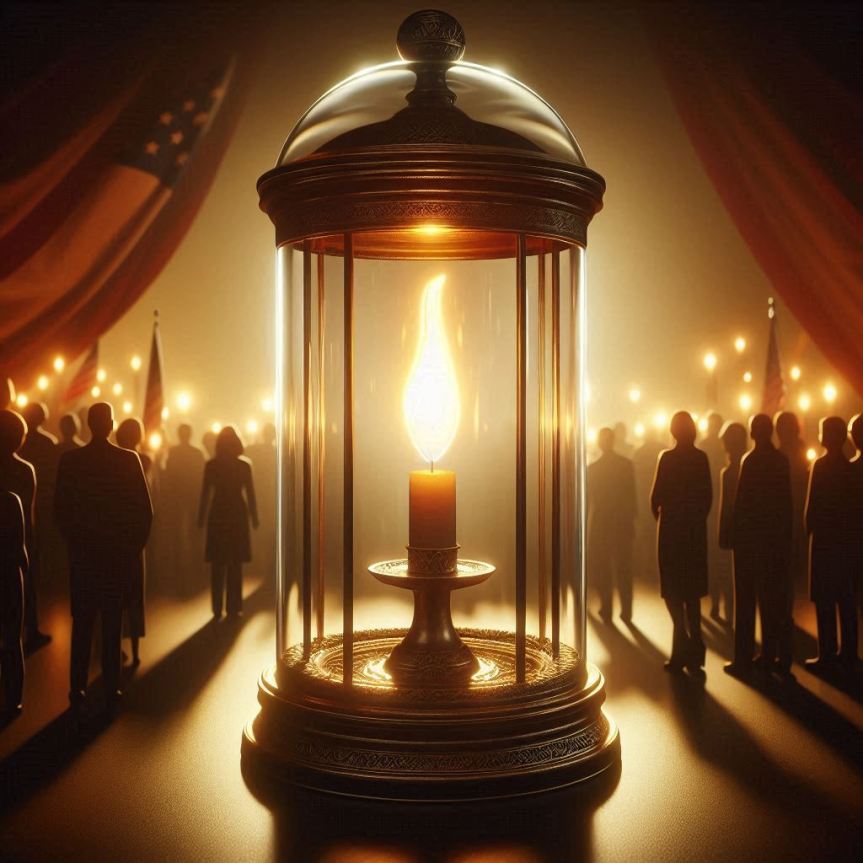
Democracies hold a kinship to freedom like a shining beacon in the dark

Political freedoms to vote, freedom of expression, Freedom to think and freedom to do and be.

Though these freedoms have in some ways restrictions so that one persons freedom does not inflict damage or disregards another persons freedom it is I feel our freedoms that are the eternal beacon of hope which guides and shapes our democracies to not just survive but to live on into a forever future like the eternal flame of freedom, hope and democracy.

The “eternal flame” serves as a global symbol for freedom, hope, and democracy, manifesting in several prominent memorials and monuments worldwide: 

Key Memorials & Symbols

  • The King Center Eternal Flame (Atlanta, USA): Located at the tomb of Dr. Martin Luther King, Jr., it was recently restored to reaffirm King’s vision for justice and peace. It serves as a reminder that the work of freedom and democracy is a shared, ongoing responsibility.
  • Flame of Democracy (Constitution Hill, South Africa): Lit by Nelson Mandela to commemorate the 15th anniversary of South Africa’s constitution. It burns outside the Constitutional Court as a symbol of the country’s liberation and the enduring spirit of human rights.
  • Flame of Peace (Hiroshima, Japan): Lit in 1964, this flame is intended to burn until all nuclear weapons are destroyed, representing hope for a world defined by peace rather than conflict.
  • Freedom Park Eternal Flame (Pretoria, South Africa): A symbol of gratitude and remembrance for those who played pivotal roles in South Africa’s liberation struggle.
  • The Centennial Flame (Ottawa, Canada): First lit in 1967, it commemorates the first hundred years of Canadian Confederation and symbolizes the spirit of national unity. 

Cultural and Global Context

Artistic Expression: Musicians like Bruce Springsteen have recently launched tours (e.g., “Land of Hope and Dreams”) explicitly centered on themes of democracy and defending the American ideal. 

United Nations: Secretary-General António Guterres has used the metaphor to urge the world to “keep the flame of democracy alive” for future generations.

International Day of Democracy: Observed annually on 15 September, this day reinforces the idea that democracy must be nurtured and defended as a “flame” that requires active citizen participation.

Don’t Cry – Seal


What will be the reckoning for Donald Trump?

While Donald Trump runs around and spreads his wrath to all and sundry in a continues and seemingly unstoppable motion. It must be asked what reckoning will there be for him, either when or even before his time is spent in the presidential office. Just turning on my little TV this evening and listening to the tone of conversations and news articles it does finally feel like something has or is changing and the mad king of democracy will no longer be able to afford to get everything his own way from now on.

As of January 2026, the concept of a “reckoning” for Donald Trump refers to several impending legal, political, and social challenges scheduled to unfold throughout the year: 

1. The 2026 Midterm Elections (November 3, 2026) 

Political analysts describe the upcoming midterms as a primary “reckoning” for the second Trump presidency. While Trump’s name will not be on the ballot, the elections will serve as a referendum on his administration’s first year back in power. If Democrats regain control of the House of Representatives, they could launch new impeachment proceedings, which some describe as a “visceral reckoning” for his recent executive actions. 

2. Supreme Court and Legal Challenges

The 2026 Supreme Court term is set to address multiple cases that could redefine or limit Trump’s presidential authority. Key issues include: 

Executive Power Disputes: The court will hear cases regarding the president’s power to fire federal officials, such as those at the Federal Reserve.

Immunity and Investigations: While past rulings granted expansive immunity, the administration currently faces more than 400 lawsuits related to policies on immigration, trade, and the economy.

Media Defamation: Trump is personally involved in several high-stakes lawsuits against major media outlets, including a $10 billion claim against the Wall Street Journal and a $15 billion claim against the New York Times. 

3. Internal MAGA and Public Backlash

Critics and even some supporters suggest a potential “reckoning” within his base over specific unmet promises or controversial actions: 

Epstein Files: There is growing frustration among some “MAGA” supporters regarding the administration’s failure to release the full Jeffrey Epstein files as previously suggested.

Foreign Interventions: The January 2026 U.S. military raid to capture Venezuelan President Nicolás Maduro has sparked a debate within his base. While many applaud the action, others see it as a contradiction of his “America First” promise to avoid foreign entanglements.

International Withdrawal: The January 8, 2026, executive order to withdraw from 66 international organizations, including the UN Framework Convention on Climate Change, is creating a “foreign policy reckoning” for U.S. allies. 

4. Moral and Institutional Reckoning

Social commentators describe 2026 as a year of “moral reckoning” for American democracy, citing the administration’s use of active-duty military for mass deportations and the weaponization of the Justice Department against critics. These observers argue that the survival of democratic institutions depends on how these actions are held to account by the courts and the public in the coming months. 

Nina Simone – Sinnerman (Audio)

What is political freedom and what should restrict it and why?

Political freedom is the capacity of individuals to participate in their society’s governance and political processes without unreasonable external constraints. It is often categorized into negative freedom (the absence of interference from the state) and positive freedom (the actual capacity to exercise one’s rights).

Core Components of Political Freedom

  • Political Participation: The right to vote, run for office, and hold governments accountable.
  • Freedom of Expression: The ability to hold, receive, and share opinions and ideas—including unpopular or shocking ones—without state censorship.
  • Freedom of Assembly and Association: The right to form political parties, unions, or groups and to conduct peaceful protests and demonstrations.
  • Rule of Law: A system where governmental power is constrained by fixed, public laws applied equally to all, preventing arbitrary abuse of power. 

Political freedom does not entail absolute, unrestricted liberty; it comes with limitations designed to protect public order, national security, and the rights and reputations of others. Actions that abuse or undermine the freedom of others are generally excluded from the scope of political freedom. 

Specific actions and behaviours that do not entail political freedom (and are often restricted by law) include:

  • Incitement to violence or hatred: Political freedom does not protect speech that encourages or incites violence, hatred, or discrimination against individuals or groups based on their religion, ethnicity, race, gender, or sexual orientation.
  • Defamation and slander: The right to freedom of expression does not extend to damaging the reputation or rights of others through libel or slander.
  • Rebellion and unlawful conduct: Using the right to freedom to incite people to rebel against the government or engage in other unlawful conduct is not protected.
  • Disorderly conduct and carrying weapons: While peaceful assembly is a key political right, this right does not extend to carrying weapons during a meeting or procession, or engaging in behaviour likely to cause a breach of the peace.
  • Online abuse and harassment: Forcing others off communication platforms through abuse or online mobbing is not considered a valid exercise of freedom of expression.
  • Actions that violate others’ rights: Political freedom does not grant a “freedom to pollute” or deforest, as such activities create negative consequences that violate other groups’ liberty to not be exposed to harm.

Treason or sedition: Actions that undermine the state or national security can be subject to legal restrictions. 

In essence, the limits of political freedom are generally drawn where its exercise infringes upon the fundamental rights and safety of other members of society. Laws define what people must not do, while individual responsibility and morality guide what people ought to do beyond legal constraints. 

Aretha Franklin – Think

Economic Black Holes: The Threat of Extreme Wealth Inequality

I think those with wealth and power seek to sustain or increase said wealth and power. The system’s not flawed from the players perspective it is simply one to be used and manipulated to bend to ones own rules and will.

We don’t need monarchs to supress and control us, as we now have a feudal system where the masses work or starve for millionaires and billionaires.

The desire for political and economic domination among wealthy individuals stems from a complex interplay of psychological factors, the nature of wealth accumulation, and systemic influences.

Key reasons include:

Power and Control Wealth provides power and influence, which some individuals enjoy exercising over others. The ability to control one’s own outcomes and exert influence over others becomes an appealing strategy for maintaining status.

Personality Traits Psychologists have noted a correlation between high socioeconomic status and certain personality traits referred to as the “dark triad”:

Machiavellianism: A willingness to manipulate and exploit others for personal gain.

Narcissism: An over-inflated sense of self-importance and entitlement, coupled with a lack of empathy.

Psychopathy: Characterized by a lack of empathy or remorse, antisocial behavior, and a desire to dominate others.

Systemic Reinforcement In highly unequal societies, dominance-based strategies can be more effective and carry less risk of backlash, as those with less power have fewer resources to resist. The existing system often rewards selfish actions, creating a feedback loop where those who engage in such behaviour become wealthier and more powerful.

Fear and Insecurity For some, the drive to accumulate and maintain power is rooted in fear—a fear of losing their status, security, or identity.

Addiction and Competition The pursuit of power and wealth can become an addiction, as achieving success can trigger dopamine responses in the brain. This is often reinforced by a competitive mindset, where status is a relative game, and there’s a constant drive to be “on top”.

Lack of Empathy The wealthy may live in social “bubbles,” isolating them from the realities of those with fewer resources and leading to a reduced capacity for empathy for those in lower socioeconomic classes.

Mega wealth can form economic black holes that suck up and damage alomst everything else in its path.

Extreme wealth concentration is widely reported by major economic institutions as an ongoing and accelerating issue that leads to significant economic and social damage, effectively acting as the “economic black holes” you describe. It exacerbates poverty, distorts democratic processes, and can impede overall economic growth, particularly in developing nations. 

Current State of Wealth Concentration

Recent reports from 2025 highlight the severity of the situation:

  • Millionaires own nearly half of the world’s total personal wealth.
  • The top 10% of earners in the U.S. owned almost two-thirds of the total wealth in Q1 2025, while the bottom 50% owned just 2.5%.
  • Between 2000 and 2024, the world’s top 1% captured 41% of all new wealth, compared to just 1% for the bottom 50%.
  • A recent study found that the world’s richest people own three times more wealth than the bottom half of the global population combined. 

Key Economic and Social Damages

The effects of this wealth concentration are far-reaching and consistently linked to negative outcomes:

  • Impeded Economic Growth: While some level of inequality might incentivize innovation in developed economies, research in 2025 indicates that excessive inequality generally acts as a brake on growth, especially in developing countries. This is partly due to reduced aggregate demand and underinvestment in human capital (education and healthcare) among lower-income groups.
  • Increased Poverty and Precarity: High wealth inequality drives poverty and economic insecurity for those at the bottom. The absence of a financial safety net means many households struggle to manage unexpected shocks, and a significant portion of the population can have net negative wealth (more debt than assets).
  • Distortion of Democracy and Power: Extreme wealth translates into disproportionate political power, allowing the rich to influence rules and policies in their favor, such as through lax inheritance tax laws. This creates a vicious cycle that entrenches inequality and erodes public trust in institutions.
  • Amplification of Other Inequalities: Wealth disparities amplify existing inequalities based on race, gender, and geography. For example, studies show significant wealth gaps between ethnic groups and a substantial difference in average wealth between men and women.
  • Environmental Harm: Consumption patterns of the wealthy elite drive higher carbon emissions, while the poorest populations, who contribute least to climate change, are often the most vulnerable to its impacts. 

Regional Inequality

Wealth inequality is a global issue but is most severe in certain regions. Brazil, Russia, and South Africa have the highest Gini coefficients for wealth inequality in 2024, indicating a highly concentrated distribution of assets. In contrast, countries like Slovakia and Belgium exhibit more even wealth distribution, often attributed to strong social safety nets and policies promoting broader asset ownership.

Future Outlook and Recommendations

Experts warn that without significant policy interventions, such as progressive taxation and stronger social safety nets, the current high levels of inequality are likely to persist or worsen. The next decade is projected to see trillions of dollars in wealth passed down through inheritance, which, in the absence of effective inheritance taxes, is expected to further entrench wealth disparities and undermine social mobility.

What does the Republican party think of Hitler today?

Republican right in the US holds a range of views on Hitler, with the mainstream and many senior figures condemning him and Nazism, while an extreme fringe openly expresses praise, antisemitic rhetoric, and Holocaust denial. These extremist views have a significant point of internal conflict within the party. 

Mainstream Condemnation

The official stance of the Republican Party, and the views expressed by most of its prominent figures, is one of strong condemnation of Adolf Hitler, Nazism, and antisemitism.

Official Denunciations: High-ranking officials, including House Speaker Mike Johnson and Senator Ted Cruz, have explicitly denounced incidents of praise for Hitler and antisemitic remarks among Young Republican groups, calling for those responsible to step down.

Rejection of Extremism: Mainstream commentators and politicians like Sean Hannity and Laura Loomer have called for the GOP to dismiss Nazi sympathizers and white nationalists within their ranks.

Public Opinion: A majority of Republicans (60%) view Hitler as a “completely bad person,” according to a 2024 YouGov poll

Fringe and Extremist Views

Despite the official stance, recent years have seen the rise of an influential far-right fringe that has brought explicitly pro-Hitler and antisemitic sentiments into public discourse. 

Open Admiration: Far-right figures such as white nationalist Nick Fuentes, who once dined with Donald Trump at Mar-a-Lago, have publicly called Hitler “f***ing cool” and dismissed Holocaust education as “propaganda”.

Leaked Communications: Messages from private group chats of young Republican leaders across multiple states, which were leaked to the media in late 2025, revealed extensive racist and antisemitic rhetoric, including praise for Hitler and jokes about gas chambers.

Holocaust Denial/Exaggeration: A December 2025 Manhattan Institute survey reported that 37% of Republicans believe the Holocaust was exaggerated or did not occur. 

Internal Conflict

These divergent views have created a clear division. Figures like Senator Ted Cruz have described the rise of this antisemitism as an “existential crisis” for the party, while others have been accused of being slow to condemn or even giving a platform to individuals with extremist views. This conflict highlights a tension between the traditional conservative movement and the influence of a growing, more extreme, nationalist faction. 

David Rovics – How Far Is It From Here To Nuremberg

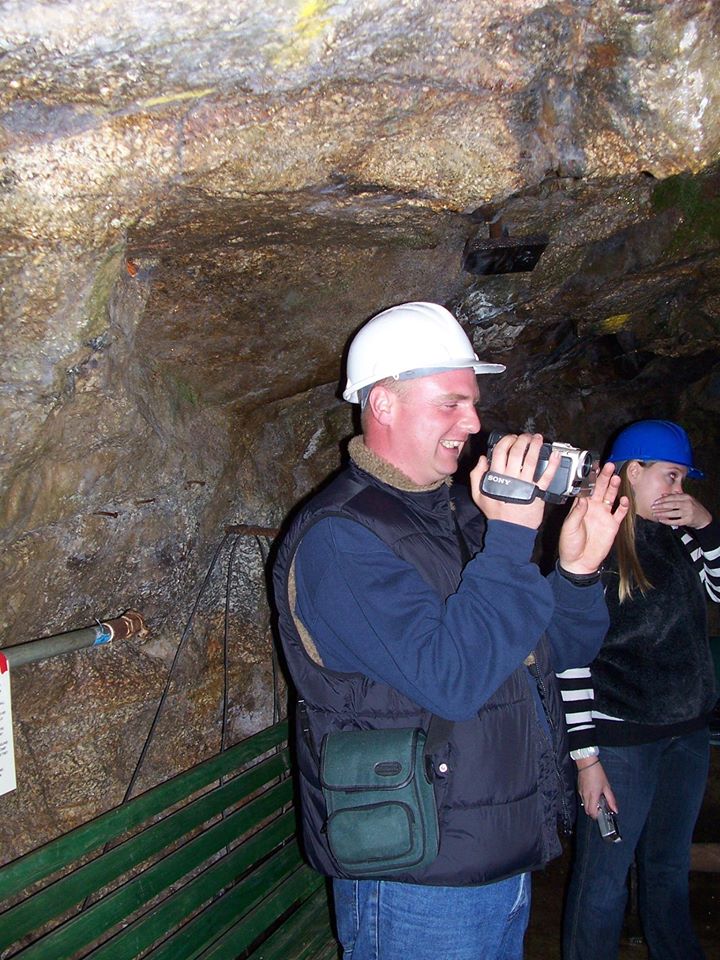
Andy “Ed” Edwards ghost hunter in Poldark mine Cornwall

My brother would have been 53 this year on Saturday November 29th

Andy with his dog Sam and Andy’s son Ben with his dog Defor

Had by brother survived his moment of madness, when he took his own life I know there would have been so much more joy to have come through and for him in his life path no matter which road it could have led him down. I was doing a Google search about him tonight as I know there was information on him on the internet about being a paranormal investigator and wondered what I migth still find.

I found the video below which I just find too spooky to watch myself of my brother from beyond the grave talking to ghosts. Its just a bit too spooky and close to comfort for me to listen and watch. I know he is still around and sends me and mum signs of his presence, for me it might be buggering around with the electrics on my nights out singing karaoke, as if he is having his moment up on the stage up there with me too, when I get up and sing. I can often get electric lights flickering next to me for no apparent reason too and it often makes me think it’s simply him saying hello bro.

I know there are lots of people that don’t believe in the supernatural and they believe it to be either fraud or coincidence. But for me though not religious I am very much a spiritual person and believe and hope that right and light will triumph over wrong and darkness wherever and whenever it must or can.     

Ghost box In Poldark Mine Cornwall UK with GHOST- Andy “Ed” Edwards, Soph Beharrell & Nettie Tasker.

Furthe rinformation on this page on youtube says the following – This was filmed in 2010 at Poldark Mine Cornwall UK. with GHOST UK. A team of Paranormal Investigators – Andy “Ed” Edwards, Sophi Beharrell, Jeanette “Nettie” Tasker & Simon Colgan. (Simon was unavailable for this investigation) This was the first time we had used the Ghost box aka Spirit box in the mine with amazing results. We have investigated many places, but found the mine to be a perfect place to use the Ghost box. We have experienced the draining of the batteries from our equipment many times, but you can see from this investigation this also happens with Soph’s Video Camera. Thanks for watching.

How to Identify Your Political Bias Effectively

Are you a Faith and Flag Conservative? Progressive Left? Or somewhere in between?

Determining your political bias involves a combination of 

self-reflection, using structured assessment tools, and being critically aware of your information sources

1. Structured Self-Assessment Tools

Quizzes and surveys designed by research organizations and political scientists can help quantify your views on various social, economic, and foreign policy issues, and map them onto a political spectrum. 

  • Political Typology Quizzes: The Pew Research Center offers a quiz that categorizes your beliefs into specific groups based on nationally representative surveys.
  • The Political Compass: This survey places your views on a two-dimensional chart, with an economic scale (left/right) and a social scale (authoritarian/libertarian).
  • 8 Values Political Quiz: This tool rates your leanings on four axes: Economic, Diplomatic, State, and Society, providing a detailed breakdown.
  • Implicit Association Tests (IAT): Offered by Harvard, the IAT can help reveal unconscious biases or automatic associations you might have regarding different social and political groups, which can influence your conscious beliefs.
  • General Voter Quizzes: Websites like Britain’s Choice and Vote Compass offer quizzes tailored to specific elections and demographics, comparing your views to those of political parties or “tribes” in your country. 

2. Critical Self-Reflection

Beyond quizzes, genuine self-reflection is key. Consider the following:

  • Your Core Values: Identify the fundamental principles that drive your decisions (e.g., individual freedom, equality, order, tradition).
  • Views on Specific Issues: Reflect on your stances on a range of issues, such as taxation, healthcare, immigration, environmental regulations, and social welfare programs. Your positions across different topics may not always align perfectly with one single ideology.
  • The “Why”: Understand the reasoning behind your views. Are they based on personal experience, family upbringing, education, or deep-seated psychological traits (e.g., openness to experience, threat perception)? 

3. Analyzing Your Information Diet

The media you consume significantly shapes and often reinforces your existing biases (confirmation bias). 

  • Diversify Your Sources: Actively seek out news and opinions from sources across the political spectrum.
  • Use Media Bias Tools: Websites like AllSides, Media Bias/Fact Check, and Ad Fontes Media provide ratings for news sources, allowing you to compare how different outlets cover the same story and identify potential leanings in language or framing.
  • Recognize Confirmation Bias: Be aware of the tendency to favor information that confirms your pre-existing beliefs and to dismiss evidence that challenges them. 

By combining these methods, you can gain a more accurate and comprehensive understanding of your own political leanings and biases.

My best fit

Establishment Liberals

… along with 13% of the public

Roughly half of Establishment Liberals describe their political views as liberal. They hold liberal positions on nearly all issues and support an expanded role for government and a larger social safety net. They also hold liberal attitudes on issues of racial and ethnic equality. Establishment Liberals are more likely than any other group to say that compromise is how things get done in politics. About half say they are satisfied with the way things are going in the country today, and an overwhelming majority say they approve of the job Joe Biden is doing as president.

Progressive Activists

13% of the population

‘It’s not really a meritocracy we live in. The people who have privilege to begin with are far more likely to end up in their dream career.’
Sally, 29, South East England

Progressive Activists are highly-educated, urban, and more likely than any other group to be in work. They think globally and are motivated to fight inequality and injustice. Their sense of personal identity is connected to their strong political and social beliefs. They are often supporters of Labour, the Greens and, in Scotland, the SNP. They like to take part in debates and have their voice heard. They are far more active in posting about politics on social media than any other group, and are big consumers of news from many sources, with The Guardian newspaper a big favourite.

Top priorities: Climate change, the economy, inequality

Compared to other groups:

More likely to say they are ‘extremely worried’ about climate change than any other group (72 per cent v 34 per cent average)

Much more pessimistic about the direction the country is heading in, with only 2 per cent saying it is going in the right direction (v 29 per cent average)

Strongly believe that the system is rigged to serve the rich and influential (95 per cent v 67 per cent average)

Very engaged with the news, with 83 per cent reporting use of social media in the past day, 54 per cent reading a newspaper online or in print, and 17 per cent reading a blog – in all cases more than any other segment

Much more active on social media, with 55 per cent posting political content on social media – more than four times as much as any other segment

Least confident that once we are through the worst of the Covid-19 crisis, we will address the problems in society (68 per cent v 46 per cent average). 

More likely to think that the people they agree with politically need to stick to their beliefs and fight (35 per cent v 22 per cent average)

Least proud of being British of any segment (22 per cent v 59 per cent  average) and most likely to say their national identity is not important to them (55 per cent v 24 per cent average)

Strongly believe that white people have advantages over ethnic minorities (93 per cent v 60 per cent average)

Strongly believe that immigration has had a positive impact on the UK (85 per cent v 43 per cent average)

STAND BY ME. (Ultimate Mix, 2020) – John Lennon (official music video HD)