Europe’s heart vs. Putin’s arsenal and Trump’s ego

Can Europe find what is at its heart as it tries to face Putin arsenal and negotiate away through Trump’s ego and attitude? The next four years of Trump being in power could be painful, worryingly unpredictable and unwrap over 80 years of global rules of law that brought stability in Europe in a way that damages all in the long run. Some might profit from this, whilst many will lose. Elections have resulted in people voting for change, whilst not knowing what that change will look like or more to the point what can be delivered or gotten away with. Change is constant and inevitable in life, you just hope to adapt or improved your present situation facing you.

This present modern phase of political problems and proposed solutions appears to be an age of populism where misinformation, impossible promises are made that cannot be delivered and then a blame game of blaming  “others” for what is happening to you.

The wealthy that are now in the mainstream of political power in Russia and the US are no longer playing from the sidelines anymore but are out in the open seeking to deregulation business, destroy or ignore international trade and climate cooperation and treaties, whilst making it easier for them to make even more money and further line the pockets of oligarchs and multimillionaires across the globe, who or what will they profit from or take power away from when they are profiting from and take power away from the people you are their commodities and it is from what they do to you that they will profit. They will take your freedom, finances and rights of autonomy whilst blaiming others and if need be you for what they do to you!

 The European Union’s world view against Putin and it’s need to try to advocate the defence of  Ukraine is because of a pivotal stand against aggression that threatens the very fabric of international law and European security. When considering both Vladimir Putin and Donald Trump in this context, the EU’s worldview encompasses concerns about authoritarianism, the undermining of democratic institutions, and the importance of solidarity among democratic nations and their citizens.

The EU perceives Putin’s actions—beginning with the annexation of Crimea in 2014 and escalating to the full-scale invasion of Ukraine in 2022—as blatant violations of a sovereign nation’s territorial integrity. This aggression is not just an assault on Ukraine but a challenge to the post-World War II international order that prohibits the forcible acquisition of territory.

Putin’s military endeavours are seen as a threat that extends beyond Ukraine’s borders, destabilizing the entire European continent. The EU fears that unchecked aggression could set a dangerous precedent, encouraging other nations to disregard international norms and territorial boundaries. For the EU, supporting Ukraine is synonymous with defending democracy, human rights, and the rule of law right on the edge of Europe. Ukraine also aspires to integrate more closely with Western institutions aligns with the EU’s vision of a Europe whole, free, and at peace.

The EU has implemented comprehensive sanctions targeting key sectors of the Russian economy, provided humanitarian and military aid to Ukraine, and sought to isolate Russia diplomatically. These actions aim to pressure Russia to cease its aggression while supporting Ukraine’s defence and resilience. The US nwo looks to potentially reward Russia for it’s stance in creating new trade relations with Putin’s Russia and brining Russia in from the political cold by saying it’s war with Ukrain is not it’s fault and generating new business contracts with Russia benfiting Trump’s USA and Putin’s Russia and giving Russia a renewed voice and prestige on the global stage.

The EU’s stance is about more than just Ukraine or Russia—it’s about affirming a commitment to a world order based on rules, mutual respect, and peaceful coexistence. By taking a firm position against Putin’s actions, the EU hopes to discourage similar aggression elsewhere and promote a stable international environment.

The situation also raises fascinating questions about the shifting dynamics of global power. How might this conflict influence relationships between other major players on the world stage, like China or the United States? And what could this mean for the future of international alliances and partnerships?

If Russia is seen as winning or having won vs Ukraine will this then embolden China to invade Taiwan, will Trump turn Gaza into a new hot piece of real-estate for the wealthy in the middle east and will trade wars be based on Trump’s might and not upon whether his actions are of those of someone who is in the right.

Quite frankly Trump does not like or approve of democratic niceties or the rule of law which is very much at the heart of what the European Union stands for. Having had two world wars start and bloody the soil of Europe, Europe has learned a considerable amount about the importance of emancipation and freedom from tyranny and the will and power to dominate over others in a way that perhaps Trumps US, has yet to learn and Putin’s Russia has been blind by a will for vengeance against the EU for alleged harm and transgressions done to it due to the defeat of the USSR.

Why don’t East European Countries attack Russia first?

This is a question that has been going around my head for a while now and I have just tried doing a little basic AI chat bot research around this question. But putting it simply it seems only possible to defend and risk then losing against Russia. There is no desire or possible or probable scenario for countries in eastern Europe to attack Russia first. They are simply too small against Russia and need to rely on partner organisations such as NATO in order to have a chance to survive.

Image by Anthony Beck

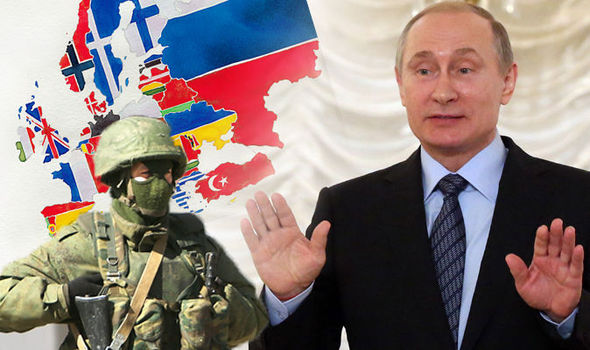
These countries are looking for self determination not to dethrone Putin’s Russia. Putin on the other hand is old school and has dreams and is motivated by the past glory days of the USSR and would happily gobble up as much of Europe as it could possibly get away with consuming and his imagination and desires and ambition have no limits.

So how many soldiers does Russia have compared to eastern European countries he wishes to dominate?

Estimating the exact number of soldiers in Russia and the Eastern European countries it opposes can be challenging due to fluctuations in military personnel and the sensitivity of defense information. However, as of my knowledge cutoff in October 2023, I can provide approximate figures to offer a comparative perspective.

Russia’s Military Personnel

  • Active Duty Personnel: Approximately 1 million soldiers.
  • Reservists: Around 2 million reservists who can be mobilized if needed.

Russia maintains one of the largest military forces in the world, with significant investments in modernization and strategic capabilities, including nuclear arms.

Eastern European Countries

Let’s consider some Eastern European countries that have historically been concerned about Russia’s military posture. Many of these nations are members of NATO, which influences their defense strategies.

Poland

  • Active Duty Personnel: About 120,000 soldiers.
  • Reservists: Approximately 75,000.
  • Notable Aspects: Poland has been increasing its defense budget and modernizing its military equipment in response to regional tensions.

Ukraine

  • Active Duty Personnel: Roughly 250,000 soldiers.
  • Reservists and Paramilitary Forces: Over 400,000.
  • Context: Due to the ongoing conflict with Russia since 2014, Ukraine has significantly expanded and reformed its military forces.

Baltic States

  1. Estonia
    • Active Duty Personnel: Around 7,000 soldiers.
    • Reservists (Defense League): Approximately 15,000.
  2. Latvia
    • Active Duty Personnel: About 6,500 soldiers.
    • Reservists (National Guard): Approximately 8,000.
  3. Lithuania
    • Active Duty Personnel: Around 20,000 soldiers.
    • Reservists (Riflemen’s Union): Approximately 12,000.
  • Notable Aspects: The Baltic states focus on rapid mobilization and territorial defense, with strong support from NATO forces deployed in the region.

Romania

  • Active Duty Personnel: Approximately 70,000 soldiers.
  • Reservists: Around 50,000.
  • Notable Aspects: Romania emphasizes modernization of its forces and hosts elements of NATO’s missile defense system.

Bulgaria

  • Active Duty Personnel: About 30,000 soldiers.
  • Reservists: Approximately 300,000 (though not all are actively trained).
  • Notable Aspects: Bulgaria is modernizing its military but faces budgetary constraints.

Hungary, Slovakia, and the Czech Republic

  • Combined Active Duty Personnel: Each has around 20,000 to 25,000 soldiers.
  • Notable Aspects: These countries contribute to NATO missions and focus on niche capabilities within the alliance.

Collective Comparison

  • Total Active Duty Personnel of Mentioned Eastern European Countries: Approximately 500,000 soldiers.
  • Russia’s Active Duty Personnel: Approximately 1 million soldiers.

While individually these countries have smaller forces compared to Russia, their membership in NATO plays a crucial role. NATO’s collective defense principle means that an attack on one member is considered an attack on all, effectively amplifying their defensive capabilities through the support of other powerful member nations like the United States, the United Kingdom, France, and Germany.

Additional Considerations

  • Quality vs. Quantity: Military effectiveness isn’t solely about troop numbers. Training, equipment, technology, logistics, and morale are critical factors.
  • Modern Warfare: Cyber capabilities, intelligence, special forces, and precision weapons significantly impact military strength.
  • Economic Factors: Defense budgets influence the ability to maintain and modernize forces. Russia’s economy faces challenges due to sanctions and fluctuating energy prices.
  • NATO Presence: Enhanced Forward Presence battlegroups are deployed in Eastern Europe, providing deterrence and rapid response capabilities.

Final Thoughts

The military balance in Eastern Europe is complex and influenced by historical, political, and strategic factors. While Russia has a larger standing army, the collective defence mechanisms and modern capabilities of Eastern European countries and their NATO allies play a significant role in regional security dynamics.

Is Trump being played by Putin?

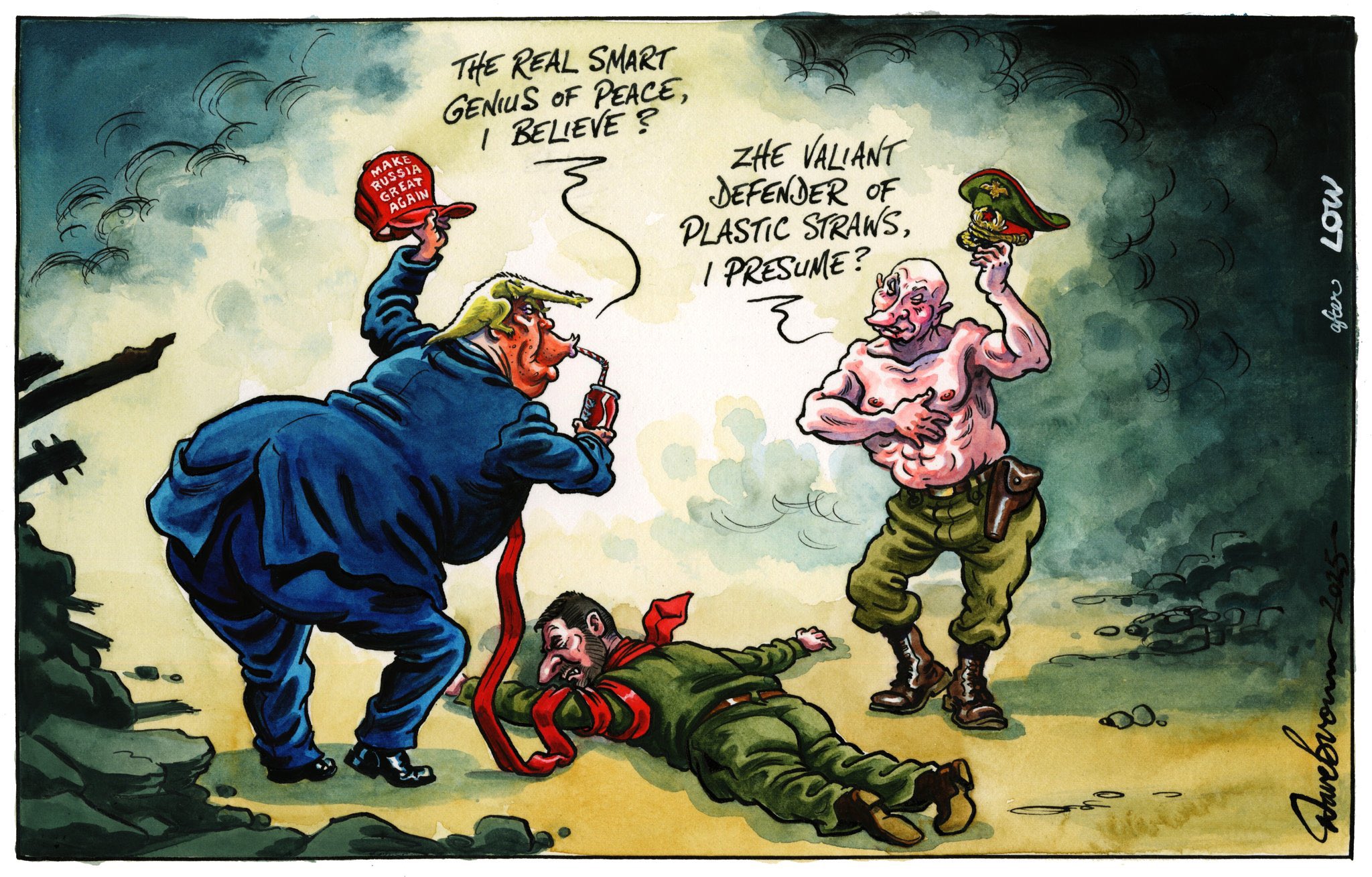
The United States’ steadfast allegiance to Ukraine during that country’s three-year war against Russia appears to be rapidly eroding under the Trump administration. President Donald Trump on Feb. 19, 2025, referred to Ukrainian President Volodymyr Zelenskyy as “a dictator” and inaccurately blamed him for the conflict that Russia instigated as part of a land grab in the border regions of the two countries.

Zelenskyy, meanwhile, said on Feb. 19 that Trump is trapped in Russian President Vladimir Putin’s “disinformation space.”

Earlier this week, the US president claimed America had given Ukraine at least $200bn (£158bn) more than Europe has since Russia invaded the country in February 2022.

Mr Trump said: “I think Europe has given $100bn (£79n)… and we’ve given, let’s say, $300bn (£237bn) plus.”

There are a number of figures available for the amount of money being given to Ukraine by different countries.

The Kiel Institute for the World Economy’s Ukraine Support Tracker shows that countries in Europe have allocated a total of €132bn (£109bn or $139bn) in help for Ukraine.

The tracker shows the US has allocated around €114bn (£95bn or $120bn).

There is also a debate about how much money countries say they have given to Ukraine has actually gone to the country itself.

According to The Washington Post, some of the money given by Washington includes sending money through “drawdowns” from US weapon stockpiles and money to pay US-based defence contractors for equipment.

One thing that has fuelled the fires of anti Ukrainian sentiment by both those on the left and right is the belief that the whole war is a money making scam – the sovereignty of the nation of Ukraine does not matter in this argument and their ability to self determination also unimportant, the more I think about it this perspective is very much one pushed by Putin onto the west and lapped up by President Trump and conspiracy theorists arguing the toss about money spent rather than a democratic right and mandate to defend and have ones own land.

Land, liberty, and the pursuit of happiness—those once beautiful values all democracies believed in and aspired to. Such views, though claimed by the right to be at the heart of their ideals, are no longer really recognized, sadly, by Trump’s America or by other rising stars of the right across the globe.

When the Brazilian president offered a chainsaw as a gift to Elon Musk, it carried deeply troubling connotations for me: this was a gift from a country that is razing one of the lungs of the Earth, the Brazilian rainforest, and the president of Brazil presents Musk with the very symbol of what is being used to destroy his own country’s rainforests – it feels like a flagrant display of right-wing fascism, tasteless and defiant, a blatant middle finger to the world under the banner of hate, cuts, and a conqueror’s philosophy.

With the climate breakdown and global warming, there were those that believed that the breakdown of social norms and an increase in wars would occur as the planet warmed and climate change impacted our lives, but I had underestimated and underfeared the true nature of the changes now occurring right in front of our eyes. I knew there would be wars, but I thought they would be over mineral deposits in Africa or oil in the middle east and not economic wars over the sovereignty of whole nations in what was once seen as relatively stable or growing democracies such as Ukraine or even well established democracies such as Canada are not safe against Trumps trade wars. Sadly know where is safe anymore; it’s mental, really, what is happening.

Teaching Donald Trump on Ukraine!

President Trump is leaning towards and learning more from Putin than he is from Zelensky. This reasoning sheds light on various aspects of his political behaviour and rhetoric.

Firstly, he’s a proven liar, often distorting the truth to suit his narrative and support his positions. This continuous pattern of misinformation creates an environment where trust becomes difficult to establish, not only with the general public but also with international allies.

Moreover, he does not accept that the war in Ukraine was an invasion by Putin’s Russia. This denial can be seen as a troubling alignment with Putin’s narrative, which ultimately undermines the sovereignty of Ukraine and the reality of the conflict at hand.

His lies must be supported by his allies, suggesting a need for a closed circle of support where dissenting opinions are unwelcome. This creates an echo chamber that amplifies falsehoods rather than fostering constructive dialogue or critical examination of facts.

In addition to misleading statements, he’s a proven bully. His brash demeanor and aggressive tactics in both personal and political arenas demonstrate a tendency to intimidate those who oppose him. Coupled with this is an ego that appears to need constant validation and massaging, further complicating his interactions with both leaders and constituents.

Furthermore, he often speaks out on matters that he does not care to understand fully. This lack of depth in comprehension can lead to misguided policies and decisions that have far-reaching implications, not just for the U.S., but for global stability as well.

Trump offers up taking resources off Ukraine, resources that do not belong to him and should be reserved for the needs of the Ukrainian people and their fight for independence. This approach reveals a troubling disregard for international norms and the principles of sovereignty.

Additionally, he accuses Zelensky of being a dictator, a claim that reflects more on Trump’s understanding of democracy than on the reality of Ukraine’s leadership under Zelensky. This kind of accusation showcases a broader tendency to mislabel opponents and allies alike, often for political gain rather than based on actual governance.

Finally, it seems Trump wishes for a world where the United States does not play an essential role. This sentiment, although echoed by some who are weary of entangling alliances, can lead to a dangerous isolationism that disregards the importance of U.S. involvement in global matters. Ironically, while many people share a desire for peace and self-sufficiency among nations, the path to achieving that vision lies through collaboration, not withdrawal.

The existential threat of modern warfare

The Courage of the people of Ukraine is unquantifiable, Putin has threatened and acts like he is trying to bomb and shell the people of Ukraine out of existence and yet still they fight on. The west though offering shelter for any that can get out to a foreigner land in a strangers home or arms Ukrainians with guns on the street, is not able to stand side by side with Ukraine and offer cover from the sky.

We create sanctions against Russia and though the people of Russia will suffer it will not stop Putin from eating what he wants and firing bullets and bombs where he wants, so in some way they seem not an effective method of shielding the Ukrainian people from Putin’s wrath.

The Untouchables (1987)

People argue that Putin wants NATO to join his war, I disagree he thinks he is untouchable and no laws apply to what he does or say. NATO has a considerable fear of engaging in world war 3 unnecessarily. Though what we don’t know yet is if Putin has already chosen to begin world war 3 and we are still watching from the sidelines, while the people of Ukraine fight and die for the benefit of the wider world.

I feel like for the first time in my life I am no longer a dove or a man or peace. But would respect and support the defence of the people of Ukraine. But wiser minds in power are fully aware that that could escalate to a full scale nuclear war if Putin wanted such a war to occur.

Putin engages in war and wishes to confront and deafeat the west democracy and free peoples of the earth, for a war he fights that he believes was originally waged by the west against him and the USSR. The collapse of the USSR was a result of a system that imploded upon itsself it was not destroyed or conquered from the outside, though try telling Putin that.  

He blames the west and NATO for the collapse of the Soviet union and with great fury and vengeance he wishes to turn the tables on the west and NATO and beat it in a war and at a game that has never actually been plaid out or lost or won. Like a gangster he hits first and doesn’t even ask questions later on. Might and fight is right for him.

I can’t bare the concept of living in a world occupied by his forces or run by him and yet his desire and will to dominate others has no limits. So with a finger on the red button of nuclear war and obliteration for us and him he truly is a dangerous man whom Ukraine stands up against and is bombed by.

Putin’s darkness does not come from his will to dominate others but from the weapons and arms of a so called modern military nation that has a great deal of capacity and capability to destroy this world many times over.

Hundreds and thousands of years ago a man of war had to fight and enslave people on one field in one battle at a time, Putin is no greater danger of a man than tyrants and villains of the past. The only difference between past and present tyrants is the perfection and evolution of destructive warfare that makes him an existential threat to humanity.

When genocide has been committed against people in the past it was never done with such precision as it can be done today, or on such a scale. This is a curse of modern warfare and mans capacity to invent ever greater weapons of death and mass destruction and is not a result of Putin being any greater or more competent in his capacity for evil than those that came before him or may rise up against humanity in the future. He is just one very bad man with a modern arsenal of global destruction at his command.

Villagers – Little Bigot