The American bison or simply bison (Bison bison), also commonly known as the American buffalo or simply buffalo, is an American species of bison that once roamed North America in vast herds. Its historical range, by 9000 BCE, is described as the great bison belt, a tract of rich grassland that ran from Alaska to the Gulf of Mexico, east to the Atlantic Seaboard (nearly to the Atlantictidewater in some areas) as far north as New York and south to Georgia and, according to some sources, down to Florida, with sightings in North Carolina near Buffalo Ford on the Catawba River as late as 1750.[2][3][4] It nearly became extinct by a combination of commercial hunting and slaughter in the 19th century and introduction of bovine diseases from domestic cattle. With a population in excess of 60 million in the late 18th century, the species was down to 541 animals by 1889. Recovery efforts expanded in the mid-20th century, with a resurgence to roughly 31,000[5] animals today, largely restricted to a few national parks and reserves. Through multiple reintroductions, the species is now also freely roaming wild in some regions in Yakutia as well as Mexico.
It’s very simple, but very difficult to see that any political, legal or economic structure are comprehending it and if they do not comprehend it in our lifetime they and us we risk planetary suicide, murder and death.
destruction of the natural environment, especially when deliberate.”their crime is nothing less than attempted ecocide”
Why should this be the number one problem in a world full of problems.
Well I belive that with out an organic living breathing earth we will no longer have the bedrock to solve any and all other problems.
You can’t decide who lives and dies on a planet where everyone is dead and right now like no time ever, ecodide threatens to consume this planet.
Mass damage and destruction of nature is taking place globally. And right now, it’s legally permitted. We call it ECOCIDE and we’re working to make it an INTERNATIONAL CRIME.
Join the growing movement of Earth Protectors to help make this happen.
a person who seeks by contemplation and self-surrender to obtain unity with or absorption into the Deity or the absolute, or who believes in the spiritual apprehension of truths that are beyond the intellect.
“the poetry of the 16th-century Spanish mystic, St John of the Cross”
adjective
adjective: mystic
another term for mystical.
Origin
Middle English (in the sense ‘mystical meaning’): from Old French mystique, or via Latin from Greek mustikos, from mustēs ‘initiated person’ from muein ‘close the eyes or lips’, also ‘initiate’. The current sense of the noun dates from the late 17th century.
Whether you see a sunsetting or a sunrising the photo is still the same.
So yesterday was a weird one, some awesome news in that I have a start date for a new job which I am so pleased about. I still have my old job and had my job interview for the new one just before lockdown kicked in. It’s all been on hold with Covin-19 taking hold.
So In order to treat myself, celebrate and kick back and watch a Blu-Ray I thought I would get a chicken burger, fries and a sprite. Lush, lush, lush.
So food is on its way driver can’t find me home and I go out to meet said driver and try and direct him to my flat with no success.
But that first meal was not to be. The driver did not find my address, cancelled my meal and buggered off. Gee thanks Drive.
Well next thing that happens is I now had time to deal with the homeless man that had decide to crash out outside the front of my flat complex. This was not a pleasure, honour or problem that I wished to address.
I went up to the bloke asked if he was ok, at this time he was leaning against a wall with his eyes shut and sitting in the hot sun. I lost count of how many people that had already walked past him blanking him like he might have been asking for change which they were not going to give him.
Lots more happened and I don’t have the heart to write it down here but to cut a long story short, I gave him some water in a plastic milk bottle which he took on his way with himself.
I got my meal in the end from Uber Eats and was told it would be free but still got charged for it. I might chase my money back on that today will have to see how I go. They might have cancelled the charge I am not sure yet.
My celebrations ended up being having a bath, watching part of the movie and falling asleep and trying not to sound to pissed off when explaining what the hell happened to my parents on the phone.
I was angry not with the homeless man but for want of a better description God. I thought way give me this sh*t show to me to deal with now. Why not give a guy a break for a change and let someone else act like the village idiot for a change?
Oh well another day another dollar.
If you are reading this I hope you are well and have a good day.
Covid-19 is still out there, people will still die from it and Covid-Zombies still walk the earth thinking they will not get it or that it does not matter to them even if they do.
At first it took one of our basic human needs/natural instincts – that to socialise and be close to one another without fear or risk of spreading death.
Some people were able to obey these rules for a short while but the reasons to not obeying seem to have become even greater to many than the need to obey them now. It’s like a Covid-19 Passover and if you obey the newly developed rules you have an increased chance of living thought this (may the odds forever be in your favour).
Many people choosing to disobey the rules in my city have been getting drunk, peeing and littering areas of nature and/or hanging out together to hug, kiss and probably be extremely intimate together too. I kind of consider these people now to be Covid-19 Zombies.
They are most likely to result in a longer lingering of the virus, an increase in deaths from the virus and an increase in contamination from the virus.
So my government has now in its wisdom announced that in order to travel on public transport from a week on Monday people now need to wear a mask or scarf while travelling.
So I have promptly whizzed onto the internet to order some masks and hand gel for me and my Dad.
It seems our defence against the virus has been raised to yet another level where we were first not meant to have contact with one another; we are now no longer aloud to easily speak or see the lips move on one another when out and about publically transporting one another.
Covin-19 3 wise monkies Hear nothing about the virus, Speak nothing about the virus & See no virus.
This virus feels like it is trying to rob us of our humanity and see what we will do with that and quite simply we are having to adapt to survive or have for thought and vision in order to see our way through this.
May the odds for ever be in your favour? Good luck and God speed
The Tiananmen Square protests or the Tiananmen Square Incident, commonly known as the June Fourth Incident (Chinese: 六四事件; pinyin: liùsì shìjiàn, literally the six-four incident) in mainland China, were student-led demonstrations held in Tiananmen Square in Beijing during 1989. The popular national movement inspired by the Beijing protests is sometimes called the ’89 Democracy Movement (Chinese: 八九民運; pinyin: bājiǔ mínyùn). The protests started on April 15 and were forcibly suppressed on June 4 when the government declared martial law and sent the military to occupy central parts of Beijing. In what became known as the Tiananmen Square Massacre (Chinese: 天安門大屠殺; pinyin: tiān’ānmén dà túshā), troops with assault rifles and tanks fired at the demonstrators and those trying to block the military’s advance into Tiananmen Square. Estimates of the death toll vary from several hundred to several thousand, with thousands more wounded.[2][3][4][5][6][7]
Set off by the death of pro-reform Communist general secretary Hu Yaobang in April 1989, amid the backdrop of rapid economic development and social changes in post-Mao China, the protests reflected anxieties about the country’s future in the popular consciousness and among the political elite. The reforms of the 1980s had led to a nascent market economy which benefited some people but seriously disaffected others, and the one-party political system also faced a challenge of legitimacy. Common grievances at the time included inflation, corruption, limited preparedness of graduates for the new economy,[8] and restrictions on political participation. The students called for greater accountability, constitutional due process, democracy, freedom of the press, and freedom of speech, although they were highly disorganized and their goals varied.[9][10] At the height of the protests, about 1 million people assembled in the Square.[11]
As the protests developed, the authorities responded with both conciliatory and hardline tactics, exposing deep divisions within the party leadership.[12] By May, a student-led hunger strike galvanized support for the demonstrators around the country, and the protests spread to some 400 cities.[13] Ultimately, Deng Xiaoping and other Communist Partyelders believed the protests to be a political threat and resolved to use force.[14][15] The State Council declared martial law on May 20 and mobilized as many as 300,000 troops to Beijing.[13] The troops advanced into central parts of Beijing on the city’s major thoroughfares in the early morning hours of June 4, killing both demonstrators and bystanders in the process.
The international community, human rights organizations, and political analysts condemned the Chinese government for the massacre. Western countries imposed arms embargoes on China.[16] The Chinese government made widespread arrests of protesters and their supporters, suppressed other protests around China, expelled foreign journalists, strictly controlled coverage of the events in the domestic press, strengthened the police and internal security forces, and demoted or purged officials it deemed sympathetic to the protests.[17] More broadly, the suppression ended the political reforms since 1986 and halted the policies of liberalization in the 1980s, which were only resumed partly after Deng Xiaoping’s Southern Tour in 1992.[18][19][20] Considered a watershed event, the protests set the limits on political expression in China up to the present day.[21] Its memory is widely associated with questioning the legitimacy of Communist Party rule and remains one of the most sensitive and most widely censored topics in China.
I have watched this week’s unfolding events, angry and appalled. The words “Equal Justice Under Law” are carved in the pediment of the United States Supreme Court. This is precisely what protesters are rightly demanding. It is a wholesome and unifying demand-one that all of us should be able to get behind. We must not be distracted by a small number of lawbreakers. The protests are defined by tens of thousands of people of conscience who are insisting that we live up to our values-our values as people and our values as a nation.
When I joined the military, some 50 years ago, I swore an oath to support and defend the Constitution. Never did I dream that troops taking that same oath would be ordered under any circumstance to violate the Constitutional rights of their fellow citizens-much less to provide a bizarre photo op for the elected commander-in-chief, with military leadership standing alongside.
We must reject any thinking of our cities as a “battlespace” that our uniformed military is called upon to “dominate.” At home, we should use our military only when requested to do so, on very rare occasions, by state governors. Militarizing our response, as we witnessed in Washington, D.C., sets up a conflict-a false conflict between the military and civilian society. It erodes the moral ground that ensures a trusted bond between men and women in uniform and the society they are sworn to protect, and of which they themselves are a part. Keeping public order rests with civilian state and local leaders who best understand their communities and are answerable to them.
James Madison wrote in Federalist 14 that “America united with a handful of troops, or without a single soldier, exhibits a more forbidding posture to foreign ambition than America disunited, with a hundred thousand veterans ready for combat.” We do not need to militarize our response to protests. We need to unite around a common purpose. And it starts by guaranteeing that all of us are equal before the law.
Instructions given by the military departments to our troops before the Normandy invasion reminded soldiers that “The Nazi slogan for destroying us…was `Divide and Conquer.’ Our American answer is `In Union there is Strength.” We must summon that unity to surmount this crisis-confident that we are better than our politics.
Donald Trump is the first president in my lifetime who does not try to unite the American people- does not even pretend to try. Instead he tries to divide us. We are witnessing the consequences of three years of this deliberate effort. We are witnessing the consequences of three years without mature leadership. We can unite without him, drawing on the strengths inherent in our civil society. This will not be easy, as the past few days have shown, but we owe it to our fellow citizens; to past generations that bled to defend our promise; and to our children.
We can come through this trying time stronger, and with a renewed sense of purpose and respect for one another. The pandemic has shown us that it is not only our troops who are willing to offer the ultimate sacrifice for the safety of the community. Americans in hospitals, grocery stores, post offices, and elsewhere have put their lives on the line in order to serve their fellow citizens and their country. We know that we are better than the abuse of executive authority that we witnessed in Lafayette Square. We must reject and hold accountable those in office who would make a mockery of our Constitution. At the same time, we must remember Lincoln’s “better angels,” and listen to them, as we work to unite.
Only by adopting a new path-which means, in truth, returning to the original path of our founding ideals-will we again be a country admired and respected at home and abroad.
No matter what your colour, creed or race to discriminate due to colour, creed or race will only lead to hate
hate/heɪt/ Learn to pronounce verbverb: hate; 3rd person present: hates; past tense: hated; past participle: hated; gerund or present participle: hating
feel intense dislike for.”the boys hate each other” h Similar:loathe
detest dislike greatly abhorabominate despise execrate feel aversion towards feel revulsion towards feel hostile towards be repelled by be revolted by regard with disgust not be able to bear/standbe unable to stomach find intolerable shudder atrecoil from shrink from hate someone’s guts disrelish h Opposite : love like
have a strong aversion to (something).”he hates flying”
used politely to express one’s regret or embarrassment at doing something.”I hate to bother you” h Similar:be sorry
be reluctant be loath be unwilling be disinclined regret dislike not like
hesitate
informal express strong dislike for; criticize or abuse.”I can’t hate on them for trying something new”
nounnoun: hate
intense dislike.”feelings of hate and revenge” h Similar:loathing
denoting hostile actions motivated by intense dislike or prejudice.modifier noun: hate“a hate campaign”
informalan intensely disliked person or thing.plural noun: hates“Richard’s pet hate is filling in his tax returns” h Similar:bugbear
bane bogey buga boopet aversion thorn in one’s flesh/sidebane of one’s lifebête noire
h Opposite:favourite thing
Origin
Religious views of Adolf Hitler
Adolf Hitler’s religious beliefs have been a matter of debate. Historians regard Hitler as having anti-Christian[1] and anti-atheist views.[2]
Hitler was born to a practicing Catholic mother, and was baptized in the Roman Catholic Church. In 1904, he was confirmed at the Roman Catholic Cathedral in Linz, Austria, where the family lived.[3] According to John Willard Toland, witnesses indicate that Hitler’s confirmation sponsor had to “drag the words out of him … almost as though the whole confirmation was repugnant to him”.[4] Rissmann notes that, according to several witnesses who lived with Hitler in a men’s home in Vienna, he never again attended Mass or received the sacraments after leaving home at 18 years old.[5]
In his book Mein Kampf and in public speeches prior to and in the early years of his rule, Hitler expressed himself as a Christian.[6][7][8] Hitler and the Nazi party promoted “Positive Christianity“,[9] a movement which rejected most traditional Christian doctrines such as the divinity of Jesus, as well as Jewish elements such as the Old Testament.[10][11] In one widely quoted remark, he described Jesus as an “Aryan fighter” who struggled against “the power and pretensions of the corrupt Pharisees”[12] and Jewish materialism.[13] In his private diaries, Goebbels wrote in April 1941 that though Hitler was “a fierce opponent” of the Vatican and Christianity, “he forbids me to leave the church. For tactical reasons.”[14]
It Shoots Further Than He Dreams by John F. Knott, March 1918.
The phrase “violence begets violence” (or “hate begets hate”) means that violent behaviour promotes other violent behaviour, in return. The phrase has been used since the 1830s.[1]
Hate begets hate; violence begets violence; toughness begets a greater toughness. We must meet the forces of hate with the power of love… Our aim must never be to defeat or humiliate the white man, but to win his friendship and understanding.[6]
What does Lady Liberty represent? The Statue of Liberty stands in Upper New York Bay, a universal symbol of freedom. Originally conceived as an emblem of the friendship between the people of France and the U.S. and a sign of their mutual desire for liberty, over the years the Statue has become much more.
The statue is a figure of Libertas, a robed Roman liberty goddess. She holds a torch above her head with her right hand, and in her left hand carries a tabula ansata inscribed JULY IV MDCCLXXVI (July 4, 1776 in Roman numerals), the date of the U.S. Declaration of Independence. A broken shackle and chain lie at her feet as she walks forward, commemorating the recent national abolition of slavery.[8] After its dedication, the statue became an icon of freedom and of the United States, seen as a symbol of welcome to immigrants arriving by sea.
1. the power or right to act, speak, or think as one wants.”we do have some freedom of choice” h Similar:right to
entitlement to privilege prerogative due
absence of subjection to foreign domination or despotic government. “he was a champion of Irish freedom” h Similar:independence
self-government self-determination self-legislation self rule home rule sovereignty autonomy autarky democracy self-sufficiency individualism separation non-alignment emancipation enfranchisement manumission h Opposite:dependence the power of self-determination attributed to the will; the quality of being independent of fate or necessity. h Similar: scope latitude leeway margin flexibility facility space breathing space room elbow room licence leave free reina free hand leisure carte blanche
h Opposite:restriction
2. the state of not being imprisoned or enslaved.”the shark thrashed its way to freedom” h Similar: liberty liberation release emancipation deliverance delivery dischargenon-confinemen textrication amnesty pardoning manumission disenthralment h Opposite:captivity
the state of being unrestricted and able to move easily.”the shorts have a side split for freedom of movement”
unrestricted use of something.”the dog has the freedom of the house when we are out”
3. the state of not being subject to or affected by (something undesirable).”government policies to achieve freedom from want” h Similar: exemption immunity dispensation exception exclusion release relief reprieve absolution exoneration impunity letting offa let-offderogation h Opposite:liability4. Britisha special privilege or right of access, especially that of full citizenship of a city granted to a public figure as an honour.”he accepted the freedom of the City of Glasgow”5. archaicfamiliarity or openness in speech or behaviour. h Similar: naturalness openness lack of reserve/inhibition casualness informality lack of ceremony spontaneity ingenuousness impudence familiarity over familiarity presumption forwardness
cheek
Origin
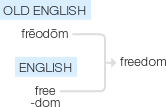
Old English frēodōm (see free, -dom).Translate freedom toUse over time for: Freedom
Freedom Tree, Elizabeth Marina, St. Helier, Great Britain
Food for thought!
Ask not what you can do to your country but what your country can do to you.
President Trump is no Kennedy but let your country have a Future and your children have a Mother or Father an Uncle or an Aunt a Grandparent or guide or most importantly let your future seed have a life.
Ich bin ein Berliner
“Ich bin ein Berliner“ (German pronunciation: [ˈʔɪç ˈbɪn ʔaɪn bɛɐ̯ˈliːnɐ], “I am a Berliner“) is a speech by United States PresidentJohn F. Kennedy given on June 26, 1963, in West Berlin. It is widely regarded as the best-known speech of the Cold War and the most famous anti-communist speech. Kennedy aimed to underline the support of the United States for West Germany 22 months after Soviet-occupied East Germany erected the Berlin Wall to prevent mass emigration to the West. The message was aimed as much at the Soviets as it was at Berliners and was a clear statement of U.S. policy in the wake of the construction of the Berlin Wall. Another phrase in the speech was also spoken in German, “Lasst sie nach Berlin kommen” (“Let them come to Berlin”), addressed at those who claimed “we can work with the Communists”, a remark at which Nikita Khrushchev scoffed only days later.
The speech is considered one of Kennedy’s best, both a notable moment of the Cold War and a high point of the New Frontier. It was a great morale boost for West Berliners, who lived in an enclave deep inside East Germany and feared a possible East German occupation. Speaking from a platform erected on the steps of Rathaus Schöneberg for an audience of 120,000, Kennedy said,










 Welcome to Huwspace

You must be logged in to post a comment.