Live, Work, Die Repeat

The UK economy consists of workers, unemployed and those that profit from the status quo.  

The UK economy in 2026 is characterized by a high-inequality structure where the richest 1% own roughly 21% of wealth, while over 14 million people live in poverty. A weakening labor market has seen unemployment rise to 5.2% with over 9 million economically inactive, often due to long-term sickness, while corporate profits have contributed significantly to cost-of-living pressures.

Those that Work (75.0% employment rate): As of Oct-Dec 2025, approximately 34.24 million people are in work, though the labor market has loosened, with payrolled employees falling in early 2026.

Those that Don’t (20.8% inactivity rate): Economic inactivity remains high, driven primarily by long-term sickness, and an aging population, with youth unemployment (18-24) hitting high levels in early 2026.

Those that Profited: Wealth concentration is high; the richest 56 billionaires hold more wealth than 27 million other people combined. This group’s wealth has grown significantly faster than earnings, benefiting from capital growth, while many households face stagnant incomes and high costs. 

The UK economy in 2026 is defined by a widening gap between earned income and accumulated wealth, with persistent “economic inactivity” and high levels of wealth concentration among a small minority. 

1. Those Who Work (The Employed)

The workforce remains the primary driver of the economy, though it faces significant pressure from “fiscal drag” and rising costs. 

Employment Rate: As of late 2025/early 2026, the UK employment rate stands at approximately 75.0%.

Tax Burden: Many workers are paying more in direct taxes due to frozen income tax thresholds (Personal Allowance remains at £12,570), a phenomenon known as “fiscal drag” that brings more people into higher tax brackets as nominal wages rise.

Income Inequality: The top 1% of income taxpayers account for 12.9% of all pre-tax income, while the bottom 10% account for just 0.3%. 

2. Those Who Don’t (The Unemployed and Inactive)

This group includes both those looking for work and a historically large number of people who are “economically inactive.” 

Unemployment: The unemployment rate has risen to 5.2% (approx. 1.88 million people), with youth unemployment (ages 16–24) being particularly high at 16%–17%.

Economic Inactivity: Roughly 20.8% of the working-age population (over 9 million people) is economically inactive.

Health Drivers: A major driver of this inactivity since 2020 has been long-term health conditions, which remain at historically high levels. 

3. Those Who Have Profited (The Wealthy)

Wealth in the UK is increasingly decoupled from active work, favoring those with existing assets like property and pensions. 

Wealth Concentration: The top 10% of households own more than one-third of the national wealth, with an average of roughly £2.3 million per person. The bottom 10% have almost no net wealth.

Asset Divide: Total household wealth is over 15 times higher for those who own their homes outright compared to those who rent.

Difficulty of Advancement: In 2008, it took 10 years of typical earnings to move from the middle to the top of the wealth distribution; by 2018, this had increased to 16 years, making it harder for working families to “climb” through labor alone.

Corporate Profiteering: Some analysis suggests a “profiteering crisis,” where corporate profits have outpaced wage growth, further concentrating gains among shareholders and asset owners. 

Survive, vote and demand change for the better for you and all.

Those of us blessed to live in democracies should vote for and advocate for positive political and economic change. With the rise of the green party as a potential political and economic force for good in the UK this can only be positive for all. Old invested interests will fight hard for the states quo to continue but what even if there reaches a threshold when even the statues quo of profiting at the expense of everything else also ultimately becomes unsustainable then change must and will come. We should vote and advocate for what shape that change must and will be in the form of.

With rising pressures on human employment stability and continued worsening growths in gaps in wealth between those that exploit others and those that are exploited, political change needs to take place to readdress a balance between the humans that have a right to live and exist over those that wish to dominate for their own self interests at the expense of others.

Is Our Global System Corrupt or Immoral? Insights and Impacts

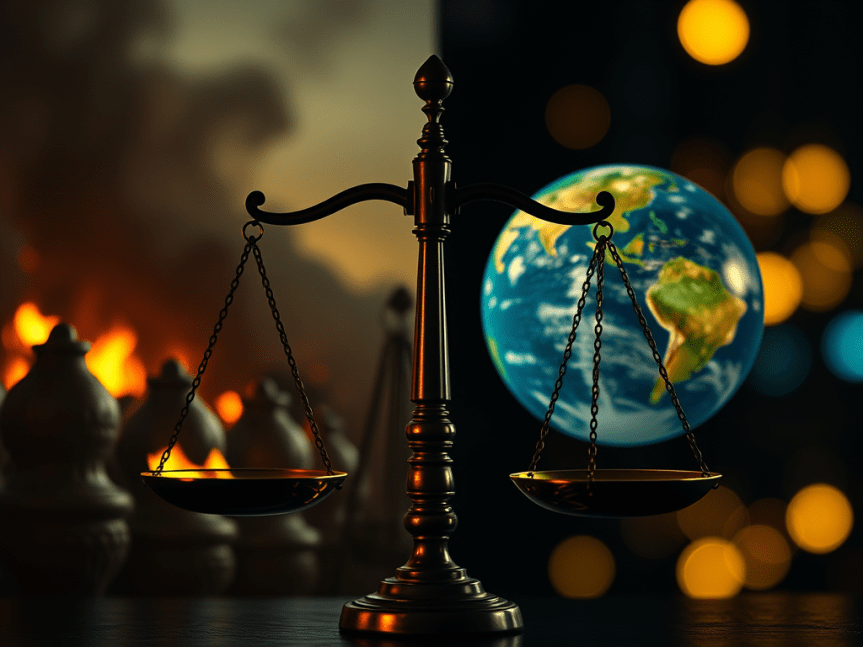
Whether our global system is immoral or corrupt is one of the most debated questions in modern philosophy, economics, and sociology. There isn’t a single factual answer, but rather a tension between two primary perspectives:

The Argument for Systemic Corruption

Critics argue the system is inherently flawed because it often prioritises capital accumulation over human well-being. They point to: 

  • Extreme Inequality: A tiny percentage of the population holds more wealth than the bottom half of the globe combined.
  • Environmental Exploitation: Economic growth often relies on the depletion of natural resources, leading to the climate crisis.
  • Power Imbalance: Large corporations and wealthy individuals often have disproportionate influence over political legislation, which can undermine democratic processes. 
  • Environmental Degradation: The current economic model relies on extracting natural resources, which has led to overshooting planetary boundaries. Seven out of eight earth system boundaries—including climate, biodiversity, and fresh water—have been breached.
  • Inequality: Despite overall growth in global GDP, wealth inequality is increasing in most countries. This leads to a concentration of power and wealth, where “marginalized communities often bear a disproportionate burden of environmental pollution and degradation”.
  • Unsustainability: The focus on short-term profit and “planned obsolescence” results in excessive waste and pollution. The current model is described by some researchers as an “environmental pyramid scheme” that depends on intergenerational theft.
  • Social Distress: Modern economic life, characterized by high-demand jobs and job insecurity, is linked to lower social connectedness and higher mental distress. 

The Argument for Systemic Progress

Conversely, proponents argue that the current global exchange has done more to improve the human condition than any previous system. They point to: 

  • Poverty Reduction: Global extreme poverty rates have plummeted over the last 50 years.
  • Innovation: Competition drives advancements in medicine, technology, and renewable energy.
  • Rule of Law: While imperfect, modern systems have established human rights frameworks and international trade laws that provide a level of stability unprecedented in history. 

Conclusion on Future Outlook

Ineffective Decoupling: It is unlikely that economic growth can be fully decoupled from environmental damage at a global scale, meaning a, “selective downscaling of production and consumption” is necessary to lower the ecological footprint.

Fundamental Transformation Needed: Research indicates that to ensure a “good life for all within the planet’s limits,” the current system must be drastically restructured.

Towards a “Wellbeing Economy”: Many experts advocate for a shift toward “wellbeing economies” that prioritize sustainability, social health, and environmental safety over purely economic, growth-based metrics like GDP.

Amazon and Red Nose Day: A Controversial Partnership

Jeff Bezos outsourced his staff and tax responsibilities while asking us to raise funds for red nose day to help fight local and global poverty.

The Red Nose Day Controversy

Partnership Role: Since 2023, Amazon has been the official home of the Red Nose, handling the production and distribution of the noses and related merchandise.

Public Reaction: Critics and some members of the public have labelled the partnership as hypocritical, arguing that a company accused of aggressive tax avoidance is being positioned as a champion for addressing poverty and the cost of living in the UK.

Employee Fundraising: While Amazon encourages its staff to participate in fundraising activities like virtual photobooths and fancy-dress walks, critics point out that these same workers have reportedly faced benefit cuts to fund their own pay rises. 

Staff and Outsourcing Allegations

Worker Conditions: Reports have surfaced of Amazon warehouse workers being under significant pressure to meet targets, with some reportedly sleeping in tents because they cannot afford local rent on their wages.

Relief Fund Backlash: During the pandemic, Amazon faced intense criticism for allowing the public to donate to a relief fund for its own contract and seasonal workers, despite the company’s multi-billion dollar profits. 

UK Tax Responsibilities

Reported Tax Gap: Campaigners estimate that Amazon’s “systematic corporation tax avoidance” may have cost the UK Treasury as much as £575 million in 2024 alone.

Tax Credits: Investigations by Tax Justice UK highlighted that Amazon’s main UK division paid no corporation tax in 2022 and instead received millions in government tax credits for infrastructure investments.

The idea that “charity is people stepping in where governments are failing” is a widely discussed perspective, particularly in the context of rising demand for food banks, housing support, and social care in the UK. While charities have historically played a role in social welfare, evidence suggests they are increasingly serving as a, sometimes strained, safety net due to gaps in state provision.

Ani DiFranco – Work Your Way Out

A microcosm of international politics in Britain’s dealings with Donald Trump

British Politician Keir Starmer working for and with Trump as he sees that he can’t afford to deny his lies for what he calculates the United Kingdom will lose politically and economically.

What red lines if any have been drawn and what will it take to cross them?

Keir Starmer’s government (elected in 2024) has prioritized a pragmatic, realpolitik approach to managing the UK’s “special relationship” with Donald Trump’s US administration. While he has publicly condemned Trump’s past rhetoric and some specific actions, he has avoided drawing explicit public “red lines,” opting instead for diplomatic engagement to protect UK national interests. 

Stated Position on Trump 

Starmer has moved from calling Trump’s past comments “absolutely repugnant” to adopting a more measured, Prime Ministerial tone, stating that a leader must work with whoever the American people elect. He has emphasized the need to “make it work” due to the importance of the UK-US relationship. 

In 2026, Prime Minister Keir Starmer’s relationship with President Donald Trump is defined by a “realpolitik” strategy that prioritizes economic and national security over ideological confrontation. Facing a global landscape altered by aggressive U.S. actions, Starmer has adopted a “softly-softly” approach to manage the risks of a trade war and maintain the UK’s influence.

Strategic Pragmatism and “Atlantic Bridge” Diplomacy

Starmer has resisted choosing between the U.S. and the EU, attempting to position the UK as a bridge between the two. This calculation is driven by several factors: 

  • Avoiding Trade Penalties: Starmer led efforts to cut deals with the Trump administration to insulate the UK from high tariffs. However, this has come at a cost; the UK recently ceded to U.S. threats regarding pharmaceutical tariffs, which may increase costs for the NHS.
  • Security Alignment: In recent calls (January 7–8, 2026), Starmer and Trump agreed on the need to deter Russian aggression in the Arctic, despite deep tensions over other U.S. maneuvers.
  • The “Trump Corollary”: Following the U.S. military intervention in Venezuela in early 2026, Starmer declined to condemn the action’s legality, focusing instead on maintaining a “holding position” to avoid alienating the White House. 

Key Areas of Friction in 2026

“Red Lines” and Crossing Them

Starmer has avoided drawing firm public red lines, a strategy that has drawn criticism from opposition parties and some Labour backbenchers who accuse him of “craven subservience”. 

  • International Law: The closest an implicit “red line” has been tested is over US military actions in Venezuela and Trump’s comments on acquiring Greenland in January 2026. While the Scottish First Minister and others urged Starmer to condemn these actions as breaches of international law, Starmer declined to do so publicly, stating it was “for the US to justify the actions it has taken” and that he was waiting for all the facts. This pragmatic approach suggests that verbal condemnation of US military action is not a red line that would break the relationship.
  • NATO Commitment: Starmer has stressed the importance of backing Ukraine and maintaining a strong Euro-Atlantic security alliance, which is a core value for his government. A significant US withdrawal from NATO or security cooperation would force a major UK policy rethink, although Starmer has not publicly stated this would end the relationship.
  • Trade: The Starmer government has engaged in trade discussions with the Trump administration, making compromises such as reducing import tariffs on cars and scrapping tariffs on US beef to secure deals and prevent trade wars. This demonstrates a willingness to make concessions to maintain economic stability. 

Potential Political and Economic Losses

Starmer and analysts have identified several potential political and economic risks associated with Trump’s presidency: 

Political/Diplomatic:

  • Loss of moral compass: By refusing to condemn actions like the invasion of Venezuela, critics argue the UK government risks losing its moral authority on the international stage and its standing as an advocate for international law.
  • Subservience: The perception of the UK as a subservient partner to the US (where the “US says jump, Britain asks how high”) is a significant political risk that can be exploited by domestic rivals like Reform UK.
  • Isolation: Trump’s “America First” approach and hostility to multi-lateral institutions may leave the UK more exposed on security and global issues, pushing Britain into a “strategic bind” between the US and Europe.

Economic:

  • Tariff wars: Trump’s use of tariffs has created significant economic uncertainty. While the UK has so far managed to mitigate some of the worst impacts through negotiation, the threat of tariffs (e.g., on pharmaceuticals) remains and could impact the NHS and other sectors.
  • Trade-offs: Securing trade deals with the US has required painful concessions, such as the potential impact on the NHS through pharmaceutical access or the agricultural sector via increased US imports.
  • Reduced EU cooperation: The necessity to court Trump for a US trade deal may impede Starmer’s goal of achieving closer economic ties with the EU, which some analysts believe offers a larger potential GDP boost than a US deal. 

It seems at this moment time it seems almost like it is the powerless with the most to lose or who have already lost so much, that show the greatest power to stand up against Trump.

Politik by Coldplay

Understanding U.S. Tariffs: Costs and Consequences

In 2025, U.S. tariffs are taxes levied by the federal government on imported goods at the border. While intended to protect domestic industries and reduce trade deficits, these duties directly impact American citizens through higher prices and broader economic shifts.

What are the 2025 U.S. Tariffs?

As of late 2025, the U.S. has implemented an aggressive trade regime characterized by widespread “reciprocal” and sectoral tariffs: 

  • Baseline Tariff: A minimum 10% baseline tariff applies to imports from nearly all trading partners.
  • Sectoral Tariffs: High specific duties apply to key industries, including:
    • Automobiles and Parts: 25% on most foreign-made cars and light trucks.
    • Metals: 50% on steel and aluminum (up from 25% earlier in the year).
    • Pharmaceuticals: 100% on branded or patented drugs, unless the company builds manufacturing plants in the U.S..
    • Lumber and Furniture: 10% on timber and up to 50% on kitchen cabinets and some furniture.
    • De Minimis Change: On August 29, 2025, the $800 exemption for low-value imports was removed, making small packages from retailers like Shein or Temu subject to duties.

How They Affect American Citizens

The primary impact on citizens is financial, as tariffs act as a “consumption tax” passed from businesses to individuals. 

1. Increased Costs of Living

  • Direct Price Hikes: Importers often pass the cost of the tariff directly to consumers. In 2025, households face an average estimated loss of $1,100 to $2,700 annually.
  • Specific Good Impacts: By late 2025, shoppers have seen significant price jumps in staples:
    • Groceries: Up 2.7%, with beef and coffee surging by 14% and 19%, respectively.
    • Cars: New car prices have risen by an average of $4,000 to $6,500 due to auto and metal tariffs.
    • Apparel: Clothing and leather goods prices have increased by up to 28%.

2. Regressive Tax Burden

Tariffs disproportionately affect lower-income families because they spend a larger share of their income on essential goods that are now more expensive. The poorest 20% of households face a tax increase equivalent to roughly 6% of their income, compared to only 1.7% for the top 1% of earners.

3. Labor Market and Job Security

  • Sector Gains vs. Losses: While tariffs aim to boost manufacturing jobs, research indicates that job losses in “downstream” industries (which use imported materials) often outweigh gains in protected industries.
  • Unemployment: Projections suggest the current tariff policy could lead to an increase in the unemployment rate by 0.6 percentage points by the end of 2026. 

4. Retaliation Impacts

Trading partners like China and Canada have imposed their own “tit-for-tat” tariffs on U.S. exports. This hurts American farmers and manufacturers who sell products abroad, further straining local economies. 

5. Reduced Consumer Choice 

Higher costs and trade uncertainty often lead retailers to carry fewer imported brands, resulting in fewer options and lower product variety for American shoppers. 

In essence, tariffs act as a regressive tax, raising the cost of living and operating for Americans while often failing to deliver promised economic benefits, shifting costs from foreign producers to domestic consumers and businesses. 

Taxman (Remastered 2009)

Taking stock of my share of shares

Holly sh*t what the feck just happened in my bank account it is leaking cash faster than a Trumpian Bull breaks ceramics in a China shop!

Along time ago in a bank account far, far away I started to dabble in buying a type of UK bank account called an ISA (Individual Savings Account). ISAs are seen as a tax-efficient way to save and invest your money. That means you’ll pay no tax on any interest, gains or returns you make. What a great idea I thought. I also thought I could turn a little pot of money into a little bit bigger pot of money with me chipping some in monthly and also with the interest earned on the ISA. The only problem was that at the time I had decided to do this some 15 years or more ago interest rates were so low that in relation to inflation the interest earned was not keeping up with the low inflation rate so it felt like for every year you kept money in a regular ISA it was still in fact degrading over time in real terms.

So like everyone I was looking for a way out of this slightly silly system and so about 5 years ago or longer (I forget how long ago I decided to invest in a type of stocks and shares account with a online stocks and shares company. Again kept my little ISA ticking over to not earn interest on but also started saving into a type of stocks and shares account, again it was small potatoes and did not really have any major success but also did earn a little bit more than when putting money into an ISA so no big wins but no losses either still quite dull I thought really.

But then after a recommendation from a family member I consolidated my many minor pension schemes and cash ISA all into one company in the UK that had a steady higher rate of return for my money than any think I had tried in the past and low and behold I soon started to take interest in the interest and start finally seeing the benefits of my savings whilst at the same time as the stocks market would be stable and go up so would my stocks and shares ISA.

It was all going so well, I would pay a small amount in every week into my account and each week the money as well as the interest would grow. I thought I had finally become an adult without responsibilities that could and was planning for my rainy days and saving for my future. But then comes along President Trump like a bull in a China shop, who after many years of nonsensical speeches and stupid opinions was finally able to put those two things into practice with no less than  a trade war with the rest of the world – a literal economic DO NOT DO under no circumstances economic policy. Oh my the bigger they are the harder they fall kind of economic suicide that he has chosen to inflict on the globe and the US – its quite literally the top number one dumbest thing he could think to do and not only did he think about it he went ahead and did it and now will not back down and spend the next four years saying how it will be other countries and politicians and policies fault for the very dump policy that he implemented all on his own. You wonder how a person can even bankrupt a casino in their lifetime and we now know and start to see just how his logic did that and start to say ahh thats how, that’s why.

Finance and the direction of flow of money, shall always have a flow, an economic flow, it is not personal, it is not prejudicial, it simply flows from what it is able to make from money to who it then  able to buy with money, simple economic rule really on a micro and macro scale.

The barriers Trump is attempting to put up might well speed up or damage even more severely the things that Trump was in fact trying to protect and solve. China has a wall of businesses, bureaucrats, financial clout and desire to beat the US and where as Trump is dismantling the US government machine, China is only getting started with facing its machine up against the US in the trade war of all trade wars that Trump is initiating. Trump put quite simply this is a trade war you cannot and could never win. Just as Brexit saw a painful divorce for Britain from Europe, in a most likely irreversible circumstance so to is Trump trying to divorce himself right now from the economic flows of international finance and trade and oh boy have his shenanigans kicked my savings down right into my stocks and shares! No one can predict where this will end for global stocks or shares or for the US, China or rest of the world just yet. But my money is on the fact that this will not bode well for Trumps Tariffs’ philosophy at all.

Pink Floyd – Money

 We need to talk about wealth and tax the rich

It really is a taboo to talk about taxing the wealthy or super rich, let alone electing political officials that introduce such measures. Most people with millions and billions of pounds can not only afford to hire great minds and accountants to ensure they pay the bare minimum in taxes, they can also afford to fund political interests in both the left and right side of the mainstream political establishment to stand up and enforce a no tax policy for the super wealthy to such an extent that it is never mainstream enough political idea or policy that might be adopted by governments across the global mainstream of wealthy or developed economies and countries where such policies could truly save and enhance lives.  

In the US wealth is good and talking about taxing wealth in some way makes you a communist ,which is just nonsense, but again the propaganda painted like dirty mud on a wall it sticks backed up by both mainstream republican and democrat parties.  

In the UK the super wealthy people here are often landowners and royalty, asset owners and stripers but not really in the game of working or being out of work but like many with wealth very quick to judge those out of work or in low paid jobs. It is so taboo in the UK to say or even argue that the monarchy should pay its fair share of tax or live within the countries means and have money spent on it that the country can afford or even just pay for its own affairs AND be taxed too – such views are heresy and taboo.  No knighthoods for the PM that advocates the downsizing of a royal budget. Its in the interest of the wealthy of the UK to see the defence of the monarchy and the money that is spent on maintaining it and not taxing it as sacrosanct because it also keeps in line the rest of the population with the illusion that no super wealthy people should be taxed of their wealth especially the royals and their chums.

Since Covid-19 the amount of money that has gone to the super rich and already wealthy has sky rocketed and they will do all they can to keep hold of said wealth even though they will do vary little with it accept have a few more digits on a bank account or two.

When money is given an opportunity to be earned or provided to those that are deemed working class, underclass or even middle class the vast majority of that finance will be ploughed back into the consumption economy which will be good for jobs and consumer spending and retailers. But when money just becomes digits in a bank account sitting generating interest for the super rich, it has no capacity to oil the wheels of an economy like it can seeing real finance in the hands of those that are able to directly spend said finance into a consumption economy.

The UK labour government are bending over backwards at present to please people that have no interest in being pleased by them. You have Trump taxing the globe for trade arguments and divisiveness generating dollars for a US government that is presently stopping many good products and services it delivers to its own citizens as well as those around the world as a huge experiment in how to screw things up that will likely go badly wrong. You have Labour in the UK rolling out Austerity 2.0 for those on benefits in the UK there is no plan 1.0 let alone 2.0 on how to modernise the monarchy or increase wealth generation from the rich in the UK, you can in no way provide for a society by piddling around at the edges of an already failing wealth maintaining system as is the UK. Those across the globe that increase their own wealth and fortune at the expense of the spending power of others often seem more like black holes absorbing and destroying other areas of the economy and sucking out the life of all in their way without replacing the taken away wealth with a a positive generated benefit at all.

This is not just a collection of theories but an unsustainable model of consumption and wealth generation. Just as economic drivers and wealth holders do not care for the wildlife and environment that sustains us all, that their wealth generation has destroyed, shock horror they also do not care about the people damaged and destroyed in the process of this pattern of wealth creation either. Hence tax the wealth before it destroys us all and there is then nothing left to be destroyed or taxed at all.   

If governments are not their to save lives and enhance the way we live then what are we voting for at all, we don’t vote for slightly better terms or existence. We vote to be given an opportunity to be alive and thrive not just to survive or slowly be chipped away at or suddenly stolen from us until we die.

Running To Stand Still – Elbow

Blocking the rivers of trade

Stopping the flow of money & watching some rivers of finance run dry, all for an experiment that will fail and a crash and burn to the US economy.

If we were still in George Orwell’s 1984 novel then the great trade war has begun and if it was up to Trump no matter what damage he does he will be reporting this war as a victory. No matter how many jobs are lost he will be reported as improvements and gains and no matter how much money people loose they will be reported as having increased and gained.

The normal rivers of Economic trade being blocked and dammed by Trumpian probable failing economic policies will cut deep. Damaging both economic systems across the globe and Trumps ego and people’s perception of him as an intelligent and knowledgeable business man. Trump likes to see himself as a brilliant business man and an assumption of this brilliance should be a keen understanding of international economics and trade is unravelling before his eyes and stock markets around the world and recessions are on the horizon while his attempt to block flows of trade fails for the USA and rest of the world. Trade and flows of trade will likely find a way even if this is further away from the USA rather than directly to it. Yes, Trump it will be a painful transition for many but what no one can really predict with and clear insight is what the change will look like and what that change ultimately leads too. Will it result in more or less jobs and money in the USA in the long run is yet to be seen.

Economic policies and trade from country to country can be viewed as flowing of goods and services to and from places across the globe. These flows are natural and part of economic cycles. Where there is financial clout to purchase goods and services and where there is an ability to produce and design, market and provide excellent goods and services and then transport them across the globe then these flows of products and services are natural economic eco systems that take place. It’s a consumers market and Trumps policies go completely against the free flow of consumption and he fails to allow the flow of trade and consumption and in my opinion Trumps policies will ultimately fail just like many of his other policies.

But the fact that he sees himself as such a great business man means that this failure will likely hurt him the most as well as his own country the place he is in fact trying to make great again. With the shocks to share and trading markets and likely continued break down in flows of trade and consumption this will be a damming of the river of financial, goods and services trade. Jobs will be lost, goods will go up in price and business will go out of business.   

Trump says that the USA has been treated unfairly, what he is really stating is he does not agree with the economic flows of finance and he is conducting a global experiment that will likely fail for him and cause more damage to USA and global business than good for goods and services. Trump cannot buy rivers of flow and Trump can not force the USA consumer or businesses to by USA goods and services. Freedom of consumption is natural to human markets and trade he’s peddling ideas and views that will fail and meddling in economic markets and trade flows he simply just does not understand. Like a bull in a china shop its likley there will be a crash or two of the economy.

World Economic War 1

So rather than World War 3 has Donald Trump started an economic war and how has he done this and why? Well in simple terms he does not like the fact that US tends to buy more goods and services from other countries than other countries buy from the US. Secondly because he is a moron willing to do as yet incalculable damage to the global economy in the name of the USA and Trumpism Economics (whatever they might be) by raising tariffs against other countries across the globe that are looking to sell their goods and services to the US. A tarrif is a tax added to imported goods. Trump has done this for a variety of reasons such as A) he does not like a country that boarders his attitude to emigration and so wacked a tariff on, or B) because a countries goods and service are simply better or more competitive on the global market so he hits a tax on those too. Or finally C) where there are taxes already charged to US goods in the way of such as in the UK where nearly all goods and services including its own are charged VAT (value added tax) as an income stream for the UK. So Trump is adding this 20% tax to all goods imported from the UK too.   

Trumps Tariffs might make the US a considerable amount of taxable income in the short term but it will increase inflation and prices to US citizens as well as other citizens across the globe and as yet in world history I am not sure if anyone has won a trade war it just tends to unnecessarily hurt those countries and citizens of those countries that get caught up in it.  

Ultimately Trump is detonating an economic bomb simply because he can.

It’s the economy stupid!

The state of a countries economy is one of the main headline topics in the news these days and it is judged by whether the economy is doing well by growth and stability and its very much a numbers game.  Economic growth refers to an increase in the size of a country’s economy over a period of time. The size of an economy is typically measured by the total production of goods and services in the economy, which is called gross domestic product (GDP). Economic stability definition is a term used to describe the financial system of a nation that displays only minor fluctuations in output growth and exhibits a consistently low inflation rate.

GDP in a country is usually calculated by the national statistical agency, which compiles the information from a large number of sources. In making the calculations, however, most countries follow established international standards. These types of financial measurement are seen and believed to be accurate.

Bigger question to ask might be what’s the point in these stats? How does a growing or stable economy effect our lives? Well in basic terms a growing and stable economy increases an individual living within that economy of having a job and prosperous opportunities to live and have a future.

So what are the strengths & weaknesses to this model and to an economy within this model. Strengths are the measurement are generally accurate and can be updated and corrected if and when needed, when the sums add up a country can be confident that it is doing something right.

Weaknesses of this model relies on growth of an economy as a sign of health and productive economy although a sustainable and environmentally non-destructive economy that provides value to its citizens and environment whilst not necessarily increasing profitability on a spreadsheet can still add tremendous value to its citizens and also enhance the environment of the country and people within that society but this is more difficult to measure on a spreadsheet but invaluable over time. A damaged and dying ecosystem can still be tremendously profitable up to a typing point where then the damage might be so catastrophic that the land or sea has no value or profit to it at all.

Adoption of circular economy principles can help in reducing the negative impact on natural resources as well as damage to our climate.