From UK Parties to Cartel Territories: The Cost of Cocaine

Why Britain’s Cocaine Habit Depends on Someone Else’s Fear & Suffering

If you knew your sneaky little habbit cost lives and was not a victimless crime would it make you stop to think? In Mexico alone, drug-related and criminal cartel violence has consistently driven over 30,000 to 35,000+ homicides per year in recent years, according to the Council on Foreign Relations Global Conflict Tracker.

The Great Luxury of Distance

One of the greatest privileges of living in the United Kingdom is that most of us rarely have to think about lawlessness.

We worry about crime, complain about policing, and debate government policy. Yet for the vast majority of people, the state remains firmly in control. We expect courts to function, police to respond, and elected officials to govern. These assumptions feel so normal that we rarely stop to appreciate them.

In other parts of the world, they are luxuries.

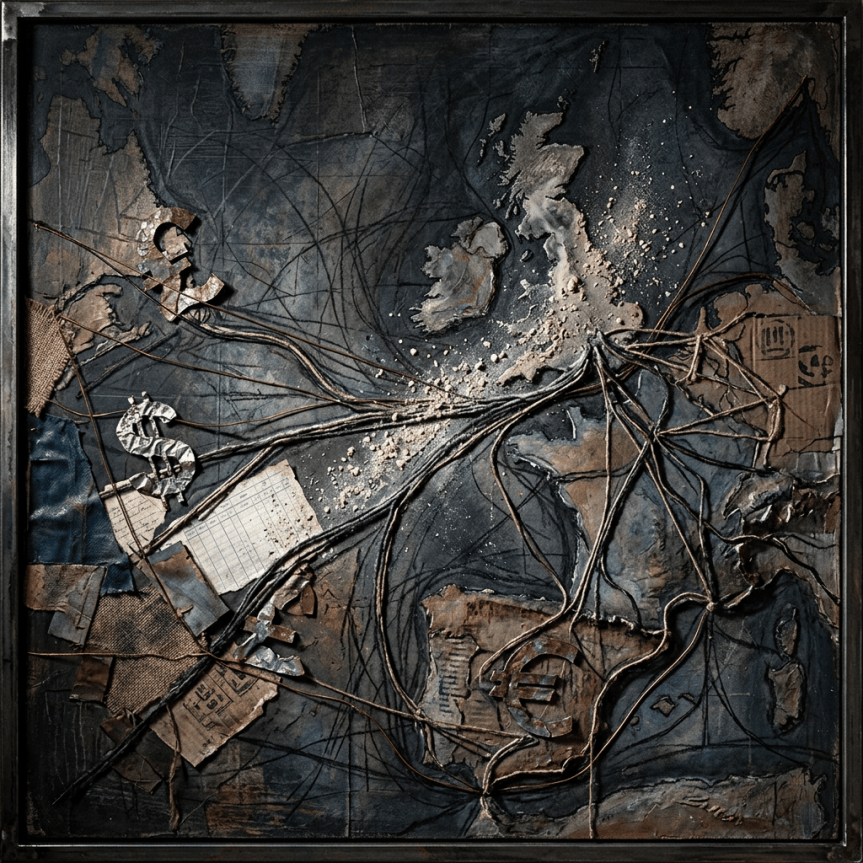
Across regions of Latin America, entire communities live under the shadow of criminal organisations whose power rivals or exceeds that of the state. Armed groups control territory, dictate local rules, and determine who prospers, who suffers, and sometimes who lives. Communities are displaced, leaders are intimidated, and ordinary families find themselves trapped within systems they never chose.

The uncomfortable truth is that many Britons help fund these systems without ever thinking about them.

A Crime Hidden by Geography

The modern world is remarkably effective at separating cause from consequence.

Most people buying cocaine in Britain will never visit a coca-growing region. They will never meet a displaced farming family. They will never see a river polluted by chemical waste from processing laboratories. They will never hear the stories of communities caught between rival criminal groups.

Instead, the drug arrives neatly packaged at a house party, a festival, or a weekend gathering.

The suffering remains thousands of miles away.

This distance creates a powerful illusion. It allows consumers to view cocaine as a personal choice rather than a transaction connected to a much larger system.

When consequences become invisible, responsibility often becomes invisible too.

Living With Fear as Routine

For many people in Britain, fear is an occasional visitor.

For millions living in cartel-influenced regions, fear can become part of the daily landscape.

It influences decisions that most of us never consider:

  • Is it safe to travel today?
  • Can I report a crime?
  • Will local authorities help me?
  • Can community leaders speak openly?
  • Will my children be drawn into criminal networks?

The violence associated with drug trafficking is not confined to dramatic headlines. It manifests through intimidation, extortion, corruption, and the constant threat of retaliation against those who challenge criminal interests. Human rights advocates, environmental campaigners, journalists, and local politicians can become targets simply for opposing organised crime.

These are not extraordinary events.

In many communities, they are ordinary realities.

The Myth of the Victimless Drug

Perhaps the most persistent myth surrounding cocaine is that it harms only the user.

This belief survives because the victims remain unseen.

The violence occurs elsewhere.

The environmental damage occurs elsewhere.

The corruption occurs elsewhere.

The intimidation occurs elsewhere.

Yet all of these consequences remain linked by the same economic chain.

The money generated by demand in wealthier countries creates incentives for territorial wars, criminal expansion, and the corruption of local institutions. The profits involved are so immense that they can distort entire regions, weakening law enforcement, undermining democratic institutions, and replacing the rule of law with the rule of fear.

The user may never pull a trigger.

But their money still enters the system.

The Comfort of Not Knowing

Most users are not monsters.

Many are ordinary people who would be horrified by the realities experienced by those living within cartel-controlled territories.

That is precisely why ignorance matters.

If people genuinely witnessed the consequences of the trade, many would struggle to reconcile those realities with the casual language often used around cocaine consumption.

The phrase “cheeky weekend treat” sounds very different when viewed alongside forced displacement, child exploitation, environmental destruction, and political intimidation. The gap between the language and the reality becomes impossible to ignore.

Yet that gap persists because one side of the story remains largely invisible.

Looking Beyond Our Shore

Britain is fortunate.

We are not immune from crime, corruption, or organised criminal activity, but most of us still live within a society where democratic institutions, legal protections, and public accountability remain strong.

That security creates an opportunity.

It allows us to ask difficult questions about how our choices affect people beyond our borders.

The discussion about drugs is often framed around personal freedom, health risks, or criminal justice. All of those issues matter.

But there is another question that receives far less attention:

What responsibility do we have towards people whose lives are shaped by the violence that helps sustain our consumption?

The answer may be uncomfortable.

Yet meaningful compassion begins when we recognise that suffering does not become less important simply because it happens somewhere else.

Final Reflection
Perhaps the greatest privilege enjoyed by many people in Britain is not freedom from violence itself.

It is the ability to ignore where that violence comes from.

For those living under the influence of powerful criminal organisations, lawlessness is not a documentary, a headline, or a political talking point.

It is life.

And the more we understand that reality, the harder it becomes to pretend that what happens thousands of miles away has nothing to do with us.

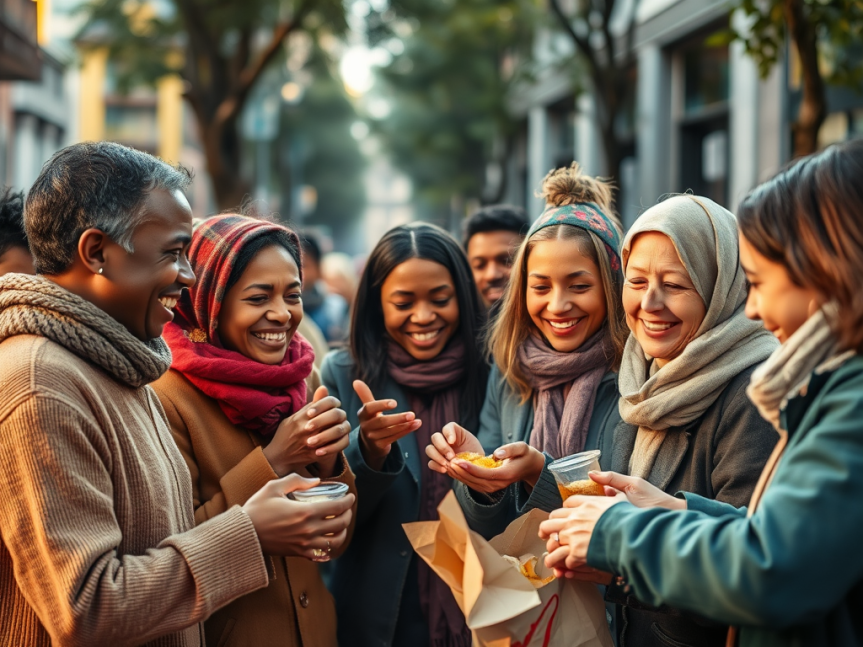
The poor will always have you

The phrase, “The poor will always have you,” is an inversion of a well-known quote from the New Testament of the Bible, which in modern translations generally reads, “The poor you will always have with you“. 

This statement is recorded in the Gospels of Matthew (26:11), Mark (14:7), and John (12:8), and is part of Jesus’ response to his disciples when they object to a woman anointing him with expensive perfume that could have been sold to help the poor. 

Origin and Context

Jesus’ statement is a direct allusion to Deuteronomy 15:11 in the Old Testament, which states, “For there will never cease to be poor in the land; that is why I am commanding you to open wide your hand to your brother and to the poor and needy in your land”. 

Meaning and Interpretation

When Jesus said this, he was not dismissing the plight of the poor or suggesting that poverty is an unchangeable fate to be ignored. Instead, the original context highlights several points: 

  • A Call to Action: By referencing Deuteronomy, Jesus was reminding his followers of their ongoing, God-given responsibility to be open-handed and generous toward the poor.
  • Prioritizing Worship: The statement served as a defense of the woman’s act of worship. Jesus emphasized that while the disciples would always have opportunities to help the poor, the unique, physical opportunity to honor him before his imminent death and burial was fleeting.
  • Critique of Motives: In John’s Gospel, the objection came from Judas Iscariot, who was a thief and did not genuinely care for the poor, adding a layer of rebuke to those who use concern for the needy as a mask for their own self-righteousness or misplaced priorities. 

In summary, the phrase is a reminder of the perpetual existence of poverty in a fallen world and a constant call for believers to show ongoing compassion and generosity, but it also establishes the importance of wholehearted devotion and worship of Christ.

I am not normally one for looking to biblical texts for inspiration but this just struck a cord with me this morning. Although I am employed (happyish in my work) receive enough pay to keep a roof over my head and to try to save money for rainy days and buy goods and services that I think I need in my life, there is very little leftover to do anything else with after that.

Not that I need more money for myself but there is also a complete lack of employment opportunities to move up any form of career ladder nowadays across Britain, even if I made the time and effort to apply for other jobs. Unlike in my youth, administration manager roles or project support staff roles roles just no longer exist in a way like they used to. I know people with a desire to work that are finding it extremely difficult to step into employment now and have never witnessed an employment market as difficult and competitive as the one that exists today.

There are ways and means of getting into work and you must go the extra mile if unemployed every time to prove your worth to potential employers. I have always looked to work in a place of my choice doing something that interests me as a volunteer when out of work and that has always proved so far to be an excellent stepping stone to employed work and also a huge motivator to get out of bed and rewarding me with enjoyment and self respect.

I had up until recently been contributing small amounts or money each month to the Green Party and also a charity called International Rescue. I stopped those payments recently and it has to some extent been playing on my mind. How can someone like me help people those with less than what I have.

I would like to think there are many ways I can continue to help others. Such as how I vote, what I advocate for in the political system. What I say on my blog, what I believe in and live by. Helping a friend with less cash than me with a drink on a night out or making sure they have enough money to safely get a taxi home or other little things like that are small wins that help the people that I respect and want to support.

Poverty has felt like a real life possibility for me at times one which could if I am unlucky enough or we are all propelled into some cataclysm come back top haunt me. I was homeless (for a very short time myself once, which lead to me having the home that I have now lived in for over 15 years provided by a housing association which I now also work voluntarily for on a scrutiny panel to help improve the housing association for others, they have helped me so I am helping them now. I have always found in life that when I can not afford to give to a charity or good cause financially I can always make up for by giving my time and effort instead.

I have also been on benefits in the past when out of work or unwell with which without which I could have had nothing although saying that I have always had the love and support of my parents. They will not always be around to help me though which does make me focus my mind on ensuring I am there to stand on my own two feet on my own. To think of safety nets is not just theoretical for me but absolutely vital in order to have gone from where I was to where I am today.

To pay my way in life and hold my own not relying on anyone now financially but myself is a huge achievement to me. Though some might see holding your own and paying your way as perhaps a form of failure to me it is a genuine success. Well it must be some kind of religious quotes day for me so I will bail out with another interesting quote from the bible. “Blessed are the poor in spirit, for theirs is the kingdom of heaven”.

JAMES – Sit Down (Original Rough Trade Version Music Video)

 We need to talk about wealth and tax the rich

It really is a taboo to talk about taxing the wealthy or super rich, let alone electing political officials that introduce such measures. Most people with millions and billions of pounds can not only afford to hire great minds and accountants to ensure they pay the bare minimum in taxes, they can also afford to fund political interests in both the left and right side of the mainstream political establishment to stand up and enforce a no tax policy for the super wealthy to such an extent that it is never mainstream enough political idea or policy that might be adopted by governments across the global mainstream of wealthy or developed economies and countries where such policies could truly save and enhance lives.  

In the US wealth is good and talking about taxing wealth in some way makes you a communist ,which is just nonsense, but again the propaganda painted like dirty mud on a wall it sticks backed up by both mainstream republican and democrat parties.  

In the UK the super wealthy people here are often landowners and royalty, asset owners and stripers but not really in the game of working or being out of work but like many with wealth very quick to judge those out of work or in low paid jobs. It is so taboo in the UK to say or even argue that the monarchy should pay its fair share of tax or live within the countries means and have money spent on it that the country can afford or even just pay for its own affairs AND be taxed too – such views are heresy and taboo.  No knighthoods for the PM that advocates the downsizing of a royal budget. Its in the interest of the wealthy of the UK to see the defence of the monarchy and the money that is spent on maintaining it and not taxing it as sacrosanct because it also keeps in line the rest of the population with the illusion that no super wealthy people should be taxed of their wealth especially the royals and their chums.

Since Covid-19 the amount of money that has gone to the super rich and already wealthy has sky rocketed and they will do all they can to keep hold of said wealth even though they will do vary little with it accept have a few more digits on a bank account or two.

When money is given an opportunity to be earned or provided to those that are deemed working class, underclass or even middle class the vast majority of that finance will be ploughed back into the consumption economy which will be good for jobs and consumer spending and retailers. But when money just becomes digits in a bank account sitting generating interest for the super rich, it has no capacity to oil the wheels of an economy like it can seeing real finance in the hands of those that are able to directly spend said finance into a consumption economy.

The UK labour government are bending over backwards at present to please people that have no interest in being pleased by them. You have Trump taxing the globe for trade arguments and divisiveness generating dollars for a US government that is presently stopping many good products and services it delivers to its own citizens as well as those around the world as a huge experiment in how to screw things up that will likely go badly wrong. You have Labour in the UK rolling out Austerity 2.0 for those on benefits in the UK there is no plan 1.0 let alone 2.0 on how to modernise the monarchy or increase wealth generation from the rich in the UK, you can in no way provide for a society by piddling around at the edges of an already failing wealth maintaining system as is the UK. Those across the globe that increase their own wealth and fortune at the expense of the spending power of others often seem more like black holes absorbing and destroying other areas of the economy and sucking out the life of all in their way without replacing the taken away wealth with a a positive generated benefit at all.

This is not just a collection of theories but an unsustainable model of consumption and wealth generation. Just as economic drivers and wealth holders do not care for the wildlife and environment that sustains us all, that their wealth generation has destroyed, shock horror they also do not care about the people damaged and destroyed in the process of this pattern of wealth creation either. Hence tax the wealth before it destroys us all and there is then nothing left to be destroyed or taxed at all.   

If governments are not their to save lives and enhance the way we live then what are we voting for at all, we don’t vote for slightly better terms or existence. We vote to be given an opportunity to be alive and thrive not just to survive or slowly be chipped away at or suddenly stolen from us until we die.

Running To Stand Still – Elbow