A microcosm of international politics in Britain’s dealings with Donald Trump

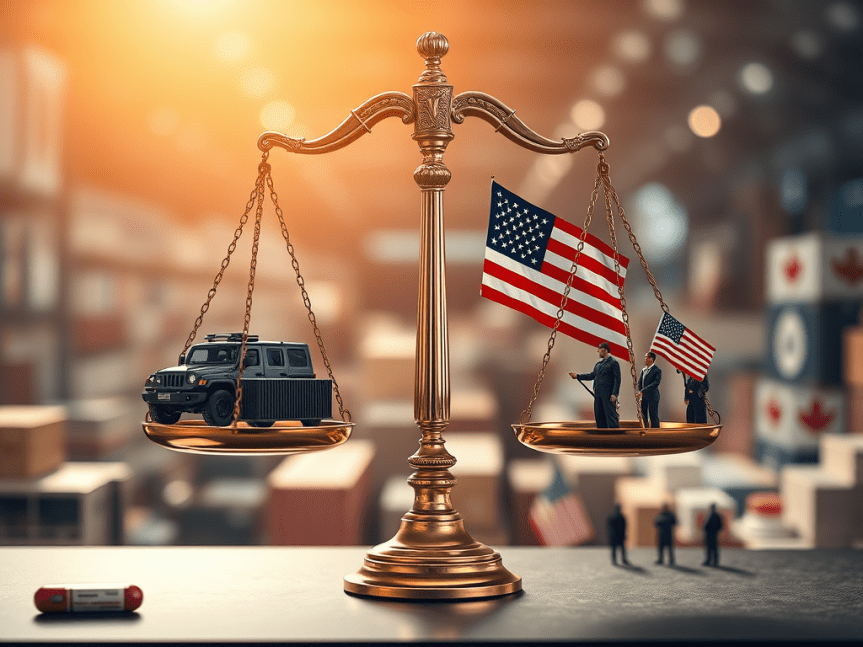
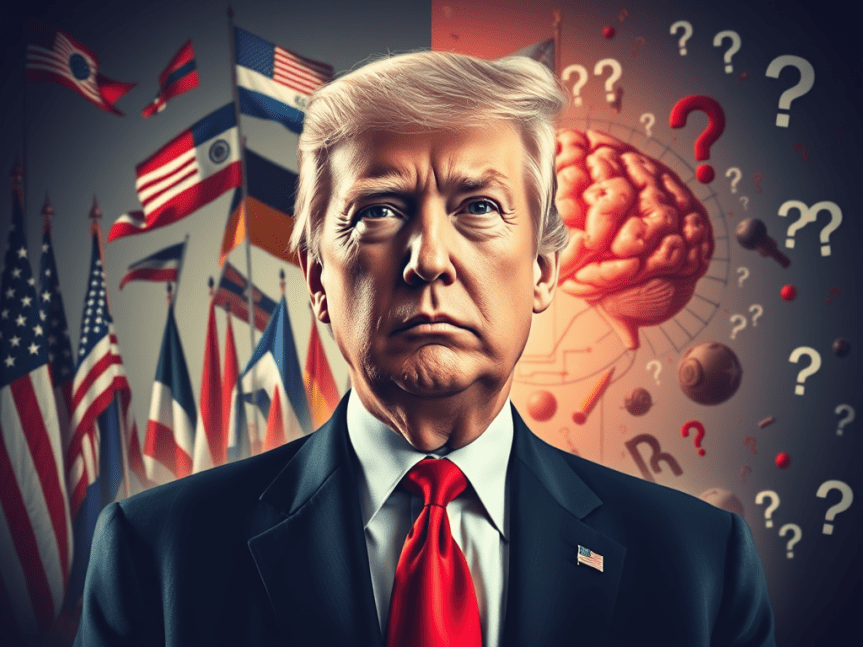
British Politician Keir Starmer working for and with Trump as he sees that he can’t afford to deny his lies for what he calculates the United Kingdom will lose politically and economically.

What red lines if any have been drawn and what will it take to cross them?

Keir Starmer’s government (elected in 2024) has prioritized a pragmatic, realpolitik approach to managing the UK’s “special relationship” with Donald Trump’s US administration. While he has publicly condemned Trump’s past rhetoric and some specific actions, he has avoided drawing explicit public “red lines,” opting instead for diplomatic engagement to protect UK national interests. 

Stated Position on Trump 

Starmer has moved from calling Trump’s past comments “absolutely repugnant” to adopting a more measured, Prime Ministerial tone, stating that a leader must work with whoever the American people elect. He has emphasized the need to “make it work” due to the importance of the UK-US relationship. 

In 2026, Prime Minister Keir Starmer’s relationship with President Donald Trump is defined by a “realpolitik” strategy that prioritizes economic and national security over ideological confrontation. Facing a global landscape altered by aggressive U.S. actions, Starmer has adopted a “softly-softly” approach to manage the risks of a trade war and maintain the UK’s influence.

Strategic Pragmatism and “Atlantic Bridge” Diplomacy

Starmer has resisted choosing between the U.S. and the EU, attempting to position the UK as a bridge between the two. This calculation is driven by several factors: 

  • Avoiding Trade Penalties: Starmer led efforts to cut deals with the Trump administration to insulate the UK from high tariffs. However, this has come at a cost; the UK recently ceded to U.S. threats regarding pharmaceutical tariffs, which may increase costs for the NHS.
  • Security Alignment: In recent calls (January 7–8, 2026), Starmer and Trump agreed on the need to deter Russian aggression in the Arctic, despite deep tensions over other U.S. maneuvers.
  • The “Trump Corollary”: Following the U.S. military intervention in Venezuela in early 2026, Starmer declined to condemn the action’s legality, focusing instead on maintaining a “holding position” to avoid alienating the White House. 

Key Areas of Friction in 2026

“Red Lines” and Crossing Them

Starmer has avoided drawing firm public red lines, a strategy that has drawn criticism from opposition parties and some Labour backbenchers who accuse him of “craven subservience”. 

  • International Law: The closest an implicit “red line” has been tested is over US military actions in Venezuela and Trump’s comments on acquiring Greenland in January 2026. While the Scottish First Minister and others urged Starmer to condemn these actions as breaches of international law, Starmer declined to do so publicly, stating it was “for the US to justify the actions it has taken” and that he was waiting for all the facts. This pragmatic approach suggests that verbal condemnation of US military action is not a red line that would break the relationship.
  • NATO Commitment: Starmer has stressed the importance of backing Ukraine and maintaining a strong Euro-Atlantic security alliance, which is a core value for his government. A significant US withdrawal from NATO or security cooperation would force a major UK policy rethink, although Starmer has not publicly stated this would end the relationship.
  • Trade: The Starmer government has engaged in trade discussions with the Trump administration, making compromises such as reducing import tariffs on cars and scrapping tariffs on US beef to secure deals and prevent trade wars. This demonstrates a willingness to make concessions to maintain economic stability. 

Potential Political and Economic Losses

Starmer and analysts have identified several potential political and economic risks associated with Trump’s presidency: 

Political/Diplomatic:

  • Loss of moral compass: By refusing to condemn actions like the invasion of Venezuela, critics argue the UK government risks losing its moral authority on the international stage and its standing as an advocate for international law.
  • Subservience: The perception of the UK as a subservient partner to the US (where the “US says jump, Britain asks how high”) is a significant political risk that can be exploited by domestic rivals like Reform UK.
  • Isolation: Trump’s “America First” approach and hostility to multi-lateral institutions may leave the UK more exposed on security and global issues, pushing Britain into a “strategic bind” between the US and Europe.

Economic:

  • Tariff wars: Trump’s use of tariffs has created significant economic uncertainty. While the UK has so far managed to mitigate some of the worst impacts through negotiation, the threat of tariffs (e.g., on pharmaceuticals) remains and could impact the NHS and other sectors.
  • Trade-offs: Securing trade deals with the US has required painful concessions, such as the potential impact on the NHS through pharmaceutical access or the agricultural sector via increased US imports.
  • Reduced EU cooperation: The necessity to court Trump for a US trade deal may impede Starmer’s goal of achieving closer economic ties with the EU, which some analysts believe offers a larger potential GDP boost than a US deal. 

It seems at this moment time it seems almost like it is the powerless with the most to lose or who have already lost so much, that show the greatest power to stand up against Trump.

Politik by Coldplay

What will be the reckoning for Donald Trump?

While Donald Trump runs around and spreads his wrath to all and sundry in a continues and seemingly unstoppable motion. It must be asked what reckoning will there be for him, either when or even before his time is spent in the presidential office. Just turning on my little TV this evening and listening to the tone of conversations and news articles it does finally feel like something has or is changing and the mad king of democracy will no longer be able to afford to get everything his own way from now on.

As of January 2026, the concept of a “reckoning” for Donald Trump refers to several impending legal, political, and social challenges scheduled to unfold throughout the year: 

1. The 2026 Midterm Elections (November 3, 2026) 

Political analysts describe the upcoming midterms as a primary “reckoning” for the second Trump presidency. While Trump’s name will not be on the ballot, the elections will serve as a referendum on his administration’s first year back in power. If Democrats regain control of the House of Representatives, they could launch new impeachment proceedings, which some describe as a “visceral reckoning” for his recent executive actions. 

2. Supreme Court and Legal Challenges

The 2026 Supreme Court term is set to address multiple cases that could redefine or limit Trump’s presidential authority. Key issues include: 

Executive Power Disputes: The court will hear cases regarding the president’s power to fire federal officials, such as those at the Federal Reserve.

Immunity and Investigations: While past rulings granted expansive immunity, the administration currently faces more than 400 lawsuits related to policies on immigration, trade, and the economy.

Media Defamation: Trump is personally involved in several high-stakes lawsuits against major media outlets, including a $10 billion claim against the Wall Street Journal and a $15 billion claim against the New York Times. 

3. Internal MAGA and Public Backlash

Critics and even some supporters suggest a potential “reckoning” within his base over specific unmet promises or controversial actions: 

Epstein Files: There is growing frustration among some “MAGA” supporters regarding the administration’s failure to release the full Jeffrey Epstein files as previously suggested.

Foreign Interventions: The January 2026 U.S. military raid to capture Venezuelan President Nicolás Maduro has sparked a debate within his base. While many applaud the action, others see it as a contradiction of his “America First” promise to avoid foreign entanglements.

International Withdrawal: The January 8, 2026, executive order to withdraw from 66 international organizations, including the UN Framework Convention on Climate Change, is creating a “foreign policy reckoning” for U.S. allies. 

4. Moral and Institutional Reckoning

Social commentators describe 2026 as a year of “moral reckoning” for American democracy, citing the administration’s use of active-duty military for mass deportations and the weaponization of the Justice Department against critics. These observers argue that the survival of democratic institutions depends on how these actions are held to account by the courts and the public in the coming months. 

Nina Simone – Sinnerman (Audio)

Donald drill baby drill Trump

Well it’s either a coincidence that this so called “Narco-Terrorism” state of a nation has tonnes of oil or the state of Venezuela has been targeted for it’s oil reserves on the pretence of it being an illegitimate government that simply no one would care about. Such reckless statesmanship by Trump could present a green light to both China and Russia to do as they choose in their own spheres of influence tearing up all agreed post world war two international rules of law and understandings on statehood. The day is truly a dark one indeed and the world is a more dangerous place thanks to Trump.

When you begin to accept the simple truth that Donald Trump lies in his presentations and statements in order to get his own way, this whole mess that is the invasion and kidnapping of the president of Venezuela really is a shit sandwich.

News media stations over in the UK are reading out the Trumps administrations statements as newsworthy factual documents whilst many of the citizens here have or are waking up to the fact that Donald Trump is a bad man that lies a lot and a con artist – but none of that is yet coming across in the mainstream media or our political representatives.

 On January 3, 2026, the Trump administration launched Operation Absolute Resolve, a large-scale military strike and Special Forces raid in Caracas that resulted in the capture of Venezuelan President Nicolás Maduro and his wife, Cilia Flores. They were subsequently transported to New York to face federal charges. 

The Trump administration has provided several primary reasons for this intervention: 

1. Law Enforcement and “Narco-Terrorism” 

The central legal justification used by the administration is the enforcement of a 2020 U.S. Department of Justice indictment. 

Criminal Charges: Maduro and Flores were charged with narco-terrorism conspiracy, cocaine importation, and weapons offenses.

Drug Influx: Trump accused the Maduro government of leading the “Cartel de los Soles” and flooding the U.S. with illegal drugs, including fentanyl and cocaine. 

2. National Security and Migration

Border Control: Trump explicitly blamed Maduro for the surge of Venezuelan migrants to the U.S., claiming Maduro “emptied his prisons” to force inmates to migrate.

Foreign Influence: U.S. officials highlighted Maduro’s close ties to Iran, Cuba, and Russia, accusing him of providing a foothold for hostile actors (including Hezbollah) in the Western Hemisphere. 

3. Economic and Oil Interests

In public remarks following the raid, Trump stated that the U.S. would now “run” Venezuela until a “safe, proper, and judicious transition” could be made. 

Oil Reserves: Trump announced plans for U.S. oil companies to move into Venezuela—which holds the world’s largest proven crude oil reserves—to rebuild infrastructure and “take back” oil wealth.

Reimbursement: He suggested that oil proceeds would be used to reimburse the U.S. for its efforts and for American interests previously pushed out of the country. 

Current Status (as of January 6, 2026)

Court Proceedings: Maduro and Flores have pleaded not guilty in a Manhattan federal court. Maduro has characterized his capture as a “kidnapping” and himself as a “prisoner of war”.

Interim Government: Following the raid, Vice President Delcy Rodríguez was sworn in as interim president in Caracas. The Trump administration has warned her she must comply with U.S. demands—including cracking down on drug flows and removing Iranian and Cuban operatives—to avoid a similar fate.

International Legality: The operation has been widely condemned by the UN Secretary-General and various world leaders as a violation of international law and the UN Charter. 

Coldplay – Spies

What is political freedom and what should restrict it and why?

Political freedom is the capacity of individuals to participate in their society’s governance and political processes without unreasonable external constraints. It is often categorized into negative freedom (the absence of interference from the state) and positive freedom (the actual capacity to exercise one’s rights).

Core Components of Political Freedom

  • Political Participation: The right to vote, run for office, and hold governments accountable.
  • Freedom of Expression: The ability to hold, receive, and share opinions and ideas—including unpopular or shocking ones—without state censorship.
  • Freedom of Assembly and Association: The right to form political parties, unions, or groups and to conduct peaceful protests and demonstrations.
  • Rule of Law: A system where governmental power is constrained by fixed, public laws applied equally to all, preventing arbitrary abuse of power. 

Political freedom does not entail absolute, unrestricted liberty; it comes with limitations designed to protect public order, national security, and the rights and reputations of others. Actions that abuse or undermine the freedom of others are generally excluded from the scope of political freedom. 

Specific actions and behaviours that do not entail political freedom (and are often restricted by law) include:

  • Incitement to violence or hatred: Political freedom does not protect speech that encourages or incites violence, hatred, or discrimination against individuals or groups based on their religion, ethnicity, race, gender, or sexual orientation.
  • Defamation and slander: The right to freedom of expression does not extend to damaging the reputation or rights of others through libel or slander.
  • Rebellion and unlawful conduct: Using the right to freedom to incite people to rebel against the government or engage in other unlawful conduct is not protected.
  • Disorderly conduct and carrying weapons: While peaceful assembly is a key political right, this right does not extend to carrying weapons during a meeting or procession, or engaging in behaviour likely to cause a breach of the peace.
  • Online abuse and harassment: Forcing others off communication platforms through abuse or online mobbing is not considered a valid exercise of freedom of expression.
  • Actions that violate others’ rights: Political freedom does not grant a “freedom to pollute” or deforest, as such activities create negative consequences that violate other groups’ liberty to not be exposed to harm.

Treason or sedition: Actions that undermine the state or national security can be subject to legal restrictions. 

In essence, the limits of political freedom are generally drawn where its exercise infringes upon the fundamental rights and safety of other members of society. Laws define what people must not do, while individual responsibility and morality guide what people ought to do beyond legal constraints. 

Aretha Franklin – Think

Understanding U.S. Tariffs: Costs and Consequences

In 2025, U.S. tariffs are taxes levied by the federal government on imported goods at the border. While intended to protect domestic industries and reduce trade deficits, these duties directly impact American citizens through higher prices and broader economic shifts.

What are the 2025 U.S. Tariffs?

As of late 2025, the U.S. has implemented an aggressive trade regime characterized by widespread “reciprocal” and sectoral tariffs: 

  • Baseline Tariff: A minimum 10% baseline tariff applies to imports from nearly all trading partners.
  • Sectoral Tariffs: High specific duties apply to key industries, including:
    • Automobiles and Parts: 25% on most foreign-made cars and light trucks.
    • Metals: 50% on steel and aluminum (up from 25% earlier in the year).
    • Pharmaceuticals: 100% on branded or patented drugs, unless the company builds manufacturing plants in the U.S..
    • Lumber and Furniture: 10% on timber and up to 50% on kitchen cabinets and some furniture.
    • De Minimis Change: On August 29, 2025, the $800 exemption for low-value imports was removed, making small packages from retailers like Shein or Temu subject to duties.

How They Affect American Citizens

The primary impact on citizens is financial, as tariffs act as a “consumption tax” passed from businesses to individuals. 

1. Increased Costs of Living

  • Direct Price Hikes: Importers often pass the cost of the tariff directly to consumers. In 2025, households face an average estimated loss of $1,100 to $2,700 annually.
  • Specific Good Impacts: By late 2025, shoppers have seen significant price jumps in staples:
    • Groceries: Up 2.7%, with beef and coffee surging by 14% and 19%, respectively.
    • Cars: New car prices have risen by an average of $4,000 to $6,500 due to auto and metal tariffs.
    • Apparel: Clothing and leather goods prices have increased by up to 28%.

2. Regressive Tax Burden

Tariffs disproportionately affect lower-income families because they spend a larger share of their income on essential goods that are now more expensive. The poorest 20% of households face a tax increase equivalent to roughly 6% of their income, compared to only 1.7% for the top 1% of earners.

3. Labor Market and Job Security

  • Sector Gains vs. Losses: While tariffs aim to boost manufacturing jobs, research indicates that job losses in “downstream” industries (which use imported materials) often outweigh gains in protected industries.
  • Unemployment: Projections suggest the current tariff policy could lead to an increase in the unemployment rate by 0.6 percentage points by the end of 2026. 

4. Retaliation Impacts

Trading partners like China and Canada have imposed their own “tit-for-tat” tariffs on U.S. exports. This hurts American farmers and manufacturers who sell products abroad, further straining local economies. 

5. Reduced Consumer Choice 

Higher costs and trade uncertainty often lead retailers to carry fewer imported brands, resulting in fewer options and lower product variety for American shoppers. 

In essence, tariffs act as a regressive tax, raising the cost of living and operating for Americans while often failing to deliver promised economic benefits, shifting costs from foreign producers to domestic consumers and businesses. 

Taxman (Remastered 2009)

Political Strategy or Mental Illness? Analyzing Trump’s Statements

President Trump is described as “delusional” by mental health professionals, political commentators, and world leaders due to his persistent assertion of claims that directly contradict documented facts. These descriptions often center on several key behaviors:

Clinical and Psychological Perspectives

  • Fixed False Beliefs: Psychiatrists define a delusion as a “fixed false belief” that is resistant to reason or confrontation with fact. Experts have cited his insistence on “stolen” elections and exaggerated crowd sizes as fulfilling this criteria.
  • Narcissistic Personality: Many specialists argue his perceived delusions are rooted in Malignant Narcissism or Narcissistic Personality Disorder, which can lead to a “delusional detachment from reality” to protect an inflated self-image or “personal myth of greatness”.
  • The Gospel of Positive Thinking: Some analysts link his behavior to his lifelong adherence to Norman Vincent Peale’s “Power of Positive Thinking,” where reality is shaped by one’s own mental attitude, leading to a refusal to acknowledge negative outcomes. 

Recent Examples and Actions (2024-2025)

  • Economic Claims: Critics describe his 2025 assertions that tariffs “magically” bring in billions from foreign countries—rather than taxing domestic consumers—as economically “nuts” and detached from reality.
  • Polling Discrepancies: In late 2025, Trump was described as delusional for claiming he had the “highest poll numbers” of his career on Truth Social, despite concurrent data from the Associated Press and Fox News showing some of his worst approval ratings.
  • Foreign Policy Assertions: Observers pointed to “delusional fantasies” in his 2025 claims regarding foreign leaders, such as incorrectly stating he ended a war between Azerbaijan and Albania (two countries not at war) and suggesting he could “own” or “take over” the Gaza Strip for real estate development.
  • Annexation of Canada: His public discussion in 2025 about Canada potentially becoming the “51st state” was cited as an example of a belief system that ignores the reality of sovereign nations and public opinion.

Debates and Counterpoints

  • Political Strategy vs. Mental Illness: Some observers argue he is “crazy like a fox,” using conspiracy theories and falsehoods as calculated tools for political success rather than out of a true clinical delusion.
  • The Goldwater Rule: The American Psychiatric Association’s “Goldwater Rule” prohibits members from diagnosing public figures without a personal examination, causing some professionals to push back against colleagues who label the president “delusional” publicly.
  • “Trump Derangement Syndrome”: Supporters often use this term to argue that it is actually his critics who are delusional, reacting irrationally to his unconventional but effective political style. 
Buffalo Springfield – For What It’s Worth (Official Audio)

Why does Donald Trump lie and why do people want to believe him?

Analysts suggest several reasons for the unprecedented frequency and nature of Trump’s lies: 

Political Strategy: Lying serves as a deliberate tactic to “flood the zone” with claims, overwhelming media fact-checkers and public discourse. Falsehoods, such as claims about the 2020 election, can be more interesting and emotionally engaging than complicated truths. Some analysts characterize his statements as “bullshit” rather than lies, arguing he often disregards the truth entirely to guide group beliefs in a politically desirable direction.

Strengthening Group Identity: Psychologists note that some of his statements are “blue lies”—falsehoods told on behalf of a group that can strengthen bonds among members of that group.

Psychological Factors: Observers point to personality traits such as narcissism, where lying helps him look better, avoid blame or embarrassment, and maintain an image of strength. He rarely, if ever, accepts responsibility for mistakes and may get “duping delight” from successfully convincing others of falsehoods.

Repetition: Trump is known for repeating claims, aware that frequent repetition can eventually make people believe false information is true, a phenomenon known as the illusory truth effect. 

Why People Want to Believe Him?

The reasons people believe Trump’s falsehoods are complex and rooted in human psychology and social dynamics:              

Identity and Partisanship: For many, political affiliation has become a tribal identity. Believing Trump’s claims can be a way to express loyalty to this group and boost self-esteem by feeling like a “winner” rather than a “loser”. Challenging a falsehood might feel like an attack on their personal identity.

Confirmation Bias and Information Bubbles: People tend to seek information that confirms their existing beliefs (confirmation bias). Many of Trump’s supporters rely on right-leaning news outlets that echo his claims and rarely present contrary evidence, creating a feedback loop where his version of events is the only one they hear.

Emotional Appeals: Trump’s rhetoric often appeals to emotions and instincts rather than rational analysis, making vivid, emotionally charged images that stick in the mind more effectively than facts.

Distrust of Mainstream Sources: By repeatedly attacking the mainstream media as “fake news” and the “enemy of the people,” Trump undermines their credibility with his base. This encourages his supporters to trust only him as their source of truth.

First Aid Kit – America

What does the Republican party think of Hitler today?

Republican right in the US holds a range of views on Hitler, with the mainstream and many senior figures condemning him and Nazism, while an extreme fringe openly expresses praise, antisemitic rhetoric, and Holocaust denial. These extremist views have a significant point of internal conflict within the party. 

Mainstream Condemnation

The official stance of the Republican Party, and the views expressed by most of its prominent figures, is one of strong condemnation of Adolf Hitler, Nazism, and antisemitism.

Official Denunciations: High-ranking officials, including House Speaker Mike Johnson and Senator Ted Cruz, have explicitly denounced incidents of praise for Hitler and antisemitic remarks among Young Republican groups, calling for those responsible to step down.

Rejection of Extremism: Mainstream commentators and politicians like Sean Hannity and Laura Loomer have called for the GOP to dismiss Nazi sympathizers and white nationalists within their ranks.

Public Opinion: A majority of Republicans (60%) view Hitler as a “completely bad person,” according to a 2024 YouGov poll

Fringe and Extremist Views

Despite the official stance, recent years have seen the rise of an influential far-right fringe that has brought explicitly pro-Hitler and antisemitic sentiments into public discourse. 

Open Admiration: Far-right figures such as white nationalist Nick Fuentes, who once dined with Donald Trump at Mar-a-Lago, have publicly called Hitler “f***ing cool” and dismissed Holocaust education as “propaganda”.

Leaked Communications: Messages from private group chats of young Republican leaders across multiple states, which were leaked to the media in late 2025, revealed extensive racist and antisemitic rhetoric, including praise for Hitler and jokes about gas chambers.

Holocaust Denial/Exaggeration: A December 2025 Manhattan Institute survey reported that 37% of Republicans believe the Holocaust was exaggerated or did not occur. 

Internal Conflict

These divergent views have created a clear division. Figures like Senator Ted Cruz have described the rise of this antisemitism as an “existential crisis” for the party, while others have been accused of being slow to condemn or even giving a platform to individuals with extremist views. This conflict highlights a tension between the traditional conservative movement and the influence of a growing, more extreme, nationalist faction. 

David Rovics – How Far Is It From Here To Nuremberg

Why Learning from Mistakes is Crucial

A repeated mistake is like running around on a giant hamster wheel, exhausted and weary not knowing how to step off the darn thing or where the stop button is or not knowing when or how to press the stop button or how or when to step off. Repeating the same mistakes again and again while not learning a thing from them is defiantly a mad idea!

To repeat a mistake is often described as making a choice rather than an accident the second or subsequent time. 

Common sayings and proverbs related to this concept include:

  • “A mistake repeated more than once is a choice.” – Paulo Coelho
  • “You can never make the same mistake twice because the second time you make it, it’s not a mistake, it’s a choice.” – Unknown
  • “If you make the same mistake twice, it is no longer a mistake, it is a habit.”
  • Insanity is doing the same thing over and over again and expecting a different result.” (Often attributed to Albert Einstein, but likely not his)
  • “Fool me once, shame on you; fool me twice, shame on me.”
  • “As a dog returns to his vomit, so a fool repeats his folly” (from the Book of Proverbs in the Bible). 

The underlying idea in these expressions is the importance of learning from past errors and taking responsibility for one’s actions and the resulting consequences.

It seems to me politics is the biggest field of play, where this type of collective irresponsibility tends to take place.

Where an elected wealth of political officials, wish to control our finances and keep people within poverty instead of lifting them up out of it, maintain and enhance their own wealth crying foul to those from abroad that might no longer wish to be impoverished . Hmm what would Jesus think of such monetarising people and forces? From what I have read of the bible and learned from my religious teachers then those that choose to enrich themselves at the expense of others such as billionaires, wealthy politicians, using their own power to line their pockets with even greater profits, would repulse the son of god and if you believe in monsters heading to your definition of hell then that is what they likely are too.

What attracts, tempts or even provides people with conviction to vote for such inhumane politicians is hard to know what thoughts go through their heads or try to contemplate what they believe in and why they have those thought thought for such hateful people and views I do not know and will (god willing) likely never know or have.

Life is precious and time is short and for each of the power-hungry politicians voted into power across the globe chosen by their peers or people – Trump, Putin, Xi and Netanyahu are all incredibly dangerous political beasts we will be incredibly fortuitous to escape this time in the worlds history unscathed. Sadly each leader will be thinking from their own perspective, that they must be strong men in order to fight and conquer their own monsters. But what happens when they are the monsters that should instead need to be stopped or in someway fought.

They each poses within them the capability to light a match that within their hands could then set fire to million trees and sadly it takes only one of these four to strike first to make it all come crashing down.

When we are born into this world we arrive with nothing and when we depart this earth we depart with as little as when we arrived. It is what we do with our time here that truly makes our existence all worthwhile.

The National – ‘The System Only Dreams in Total Darkness’

Trump is waging a personal war on our world and us

In real-time with continued unquenchable thirst to manipulation freedoms and thoughts by working to silencing the press that disagree with him or shut down comedians that make fun of him.

Corporation America, the once big belly of the beast of free speech and freedom, now live in fear of Trump and that’s exactly how he wants it and that’s the game he continues to play and he is winning said game. Corporations bend the knee to Trump and these are profound changes to organisations being driven by what makes Donald Trump happy and what makes him laugh and smile. They now look to do what they have to do to make him leave them alone or so to entertain him like a Roman Emperor but instead of sitting at the coliseum standing up and encouraging the massed crowds to be baying for the blood of his enemies he instead takes to social media platforms where he does the same their instead.

Facts and freedom of speech and even a sense of humour are now obstacles to pleasing him. Trump is a fighter and he takes no prisoners and is never happier than when in conflict with others. No good will come from such a war hungry spirit.

But while this war hungry spirit also just so happens to be the President of the USA, manipulating all the powers of the oval office to his will and ensuring his role as commander in chief of America is done purely to suit him, so that he is at war with anyone that might disagree with him or find what he does funny at his expense and call him out or show signs of not lapping up his distortions of truth and reality or all out lies and frankly his bullshit, well right now if your not pro Trump it seems that anything goes in taking you down or denying you oxygen in main stream media channels. The support of the Donald Trump administration really is the only ticket in town that Trump wants to be shown and he’s flexing his political muscles to make this happen right now.

Comedians in western democracies have often entertained us and enlightened us on the dark side of power and media manipulation. Comedians have long used humour to hold political and media figures accountable, exposing hypocrisy and misuse of power through satire, parody, and blunt commentary. By questioning authority and deconstructing official narratives, they offer a powerful counter-narrative to the political status quo.  

Deconstructing the illusion of power

  • Holding leaders accountable: Political comedy makes even the most untouchable or authoritarian leaders appear fallible and human, bringing their power back down to earth. By mocking perceived weaknesses or moral failings, comedians can diminish the aura of infallibility that some leaders try to cultivate.
  • Forcing uncomfortable truths: In oppressive regimes, satire can serve as a release valve and a form of resistance, allowing citizens to share grievances about inefficiency or injustice. Comedians may frame their jabs as a joke, giving them cover while still managing to “sting our consciousness” and highlight moral failures.
  • Targeting hypocrisy: Many comedians specialize in revealing the gap between a politician’s public image and their private actions. By zeroing in on inconsistencies and absurdities, they expose the performance of politics and the self-serving nature of some political agendas. 

Exposing media manipulation

  • Calling out media bias: Comedians like Jon Stewart and Stephen Colbert have long parodied the format of news and punditry shows, drawing attention to how bias shapes the media landscape. This form of parody allows them to critique biased reporting and manipulative framing from within the media’s own structure.
  • Dissecting algorithmic influence: More recently, comedians have turned their attention to the digital landscape. Jon Stewart, for example, has dissected how social media algorithms are designed to incentivize extreme engagement, manipulate users, and promote polarized and misleading content for profit.
  • Focusing on underreported stories: Programs like Last Week Tonight with John Oliver dedicate long segments to covering complex issues that mainstream outlets often ignore or simplify. By using a mix of thorough research and comedy, they shed light on the systemic failures and manipulative practices behind issues like predatory lending, data mining, and problematic local media coverage. 

Famous comedians and their methods

  • The Daily Show (Jon Stewart, Trevor Noah): Famously used a fake news format to deliver hard-hitting political commentary. The show’s “moment of Zen” provided a memorable critique of media absurdity, while field reports and interviews challenged political figures and conventional wisdom.
  • The Colbert Report (Stephen Colbert): Featured Colbert in a satirical persona of a right-wing pundit, mimicking figures like Bill O’Reilly. By using hyperbole to argue from this fabricated, self-important position, Colbert exposed the flaws and hypocrisy of personality-driven political commentary.
  • Last Week Tonight (John Oliver): Combines in-depth investigative reporting with comedic segments. The show often takes on complex policy issues, holding corporations and political systems accountable with deep dives that go far beyond typical news coverage.

ABC suspends talk show host Jimmy Kimmel indefinitely over remarks about right-wing influencer Charlie Kirk’s killing, suddenly the denial of a comedian to express his sense of humour in a joke and have freedom of speech is not making anyone laugh, except perhaps Trump and his supporters who have been calling for the cancelation of his critics for quite some time now.

I expect in Trumps eyes if you silence all mainstream criticism of him he can do no wrong and be seen to tell no lies.