
Whoever Saves One Life, Saves the World Entire

The above clip from Schindler’s List is an emotional clip refer to Oscar Schindler leaving the camp where he had saved so many Jewish people’s lives from and him becoming emotional about what he had or had not achieved in his time there.

We often judge our impact by the scale of what we can achieve. We look at poverty, war, loneliness, addiction, illness, or injustice and feel overwhelmed by the vastness of the challenge. Yet history, faith, and human experience repeatedly remind us that changing one life can alter far more than we ever realise.

The ancient phrase,“Whoever saves one life, saves the world entire,” expresses a profound truth about human existence. Originating in Jewish tradition and echoed within Islamic teaching, the maxim teaches that the value of a single life cannot be measured merely by numbers. Every person carries within them an entire world of relationships, experiences, dreams, memories, and future possibilities.

Most of us, however, will never rescue hundreds of people from danger. We will never be remembered alongside figures such as Oskar Schindler, whose actions during one of history’s darkest periods helped save more than a thousand lives. Yet perhaps this is not the point.

The phrase challenges us to think differently about significance.

The Lives We Never Know We Touched

Human influence rarely arrives with an announcement.

A kind word offered during someone’s darkest week. A mentor who spends an extra hour helping a struggling student. A neighbour who notices when someone has become isolated. A friend who answers a late-night phone call. A teacher who sees potential in a child before anyone else does.

In the moment, these actions can seem small.

Yet we rarely witness the full consequences of what we do.

The person encouraged today may go on to raise a family, create a business, discover a medical breakthrough, volunteer in their community, or simply offer the same kindness to countless others. The act that appeared insignificant may become a turning point from which an entirely different future unfolds.

Like ripples spreading across a pond, the effects continue long after the original action has been forgotten.

The Mathematics of Human Potential

We often measure success through visible outcomes. How many people were helped? How many problems were solved? How much change was created?

But human lives do not follow simple arithmetic.

Consider a single individual facing a crisis. Supporting them may help one person. Yet it may also preserve a relationship, strengthen a family, protect future opportunities, and influence generations that do not yet exist.

Every person exists within a network of connections. Change one life and you may unknowingly alter dozens more.

This is why the ancient teaching remains so powerful. It recognises that every life is not merely an individual existence but the centre of an entire web of human relationships.

Saving a life does not simply save one person.

It saves all the futures connected to them.

The Burden of Wanting to Save Everyone

Many people who care deeply about the world carry a hidden frustration.

They look at climate change, conflict, poverty, political instability, biodiversity loss, social division, or economic uncertainty and feel paralysed by the scale of the challenge.

The problems appear too large.

The resources appear too small.

Our individual contribution feels insignificant.

Yet this is where the wisdom of the phrase offers something liberating.

It does not ask us to save everyone.

It asks us to recognise the value of saving anyone.

The reality is that none of us can solve every problem. No one person can end all suffering or fix every injustice. But each of us has opportunities to affect the lives immediately around us.

The neighbour.

The colleague.

The friend.

The stranger.

The person quietly struggling while everyone else carries on.

History is not only shaped by grand movements and famous individuals. It is also shaped by countless ordinary acts that never make headlines.

The Invisible Legacy

One of the remarkable truths about life is that we seldom know our own impact.

Many people who have changed lives never discover it.

A teacher may never learn that their encouragement prevented a student from giving up.

A doctor may never see the generations that exist because one patient survived.

A volunteer may never hear that a conversation changed someone’s direction entirely.

Even parents often do not fully appreciate how their values echo through future generations.

We live surrounded by invisible legacies.

Perhaps somewhere today, a person is alive, hopeful, employed, loved, or thriving because of a small action from someone else years ago.

That chain of influence stretches endlessly backwards and forwards through time.

Why This Matters Today

Modern society often celebrates scale.

Followers. Views. Reach. Influence. Growth.

The assumption is that more people reached means greater value created.

Yet the teaching “Whoever saves one life, saves the world entire” presents a different standard.

Value is not determined by numbers alone.

A conversation with one person can matter more than a message delivered to millions.

A single act of compassion can have consequences greater than any algorithm can measure.

The world changes not only through large institutions and governments, but through human beings choosing to care about one another.

Saving the World, One Person at a Time

Perhaps the greatest lesson within this ancient phrase is not that one life represents an entire world.

It is that we are rarely in a position to know which life matters most.

The stranger we help today may affect the lives of hundreds tomorrow.

The child we encourage might grow into the leader, scientist, artist, carer, or innovator who changes countless lives.

Or perhaps they simply become a kinder person who passes that kindness forward.

That alone is enough.

We live in a world where the scale of our challenges can seem overwhelming. It is easy to become discouraged by everything we cannot do.

But there remains immense power in what we can do.

We may never save everyone.

We may never even know when we have saved someone.

Yet every act of compassion, encouragement, protection, understanding, or support carries with it the possibility of changing an entire future.

And because the future branches out infinitely through every human life, we may discover that the ancient wisdom was right all along.

Sometimes, when we save one life, we really do save the world entire. ✨

Live Music Memories: Exeter Pubs, Local Legends and Folk Heroes

I wanted to expand on the previous post which I loved creating about musicians that I had heard play in my magical local the North Bridge Inn or NBI. https://huwspace.com/2026/10/27/remembering-exeters-north-bridge-inn-and-its-live-music-legacy/

There is an awesome musician that I also follow on Facebook who I saw live at the North Bridge Inn his name is Derrin Nuendorf he’s such a talented musician.

Derrin Nauendorf universe demands

Derrin Nauendorf is an Australian acoustic blues, roots, and folk musician who was famously endorsed and sponsored by Yamaha Guitars for many years. Known for his powerful vocal delivery and intricate, high-energy acoustic guitar work, he used Yamaha instruments as his primary “road workhorses” while playing over 1,000 self-managed gigs across the UK, Europe, and Australia.

When the North Bridge Inn closed and I moved back to Exeter there was another bar I started to go to to listen to music which was called the Angel another place that eventually closed but also had some great musical moments inside.

Samantics – Beautiful Day

Samantics (Samuel Walker) is an independent, livewire UK rap-poet, multi-instrumentalist, and loop-station artist based in Exeter, Devon. Known for his raw honesty and immense energy, his music occupies a distinct space between spoken word slam poetry, alternative hip-hop, and energetic folk-punk.

Sam would sometimes run the open mic night at The Angel. As did Emily Howard another wonderful human and musician.

Emily Howard – Looking out for Number One

Emily Howard – Folk Singer-Songwriter (Exeter/Devon) is an award-winning singer-songwriter and folk musician based in the South West of England.

Next up is Rosie Eade who I have seen sung in a few bars in Exeter such as the Bowling Green. The Bowling Green is a highly rated, independent neighborhood pub located on Blackboy Road in Exeter. Celebrated for its community vibe, the pub mixes traditional charm with lively modern features like a “hidden secret garden” and Italian hand-stretched pizzas.

Rosie Eade – TheFire

Rosie Eade, widely known by her stage name “Folk Pixie”, is an English folk-rock singer-songwriter. Splitting her time between Exeter, Devon and Colchester, Essex, she blends acoustic storytelling with a energetic rock attitude, often driven by her distinctive nylon-strung guitar style.

The next Musicians i heard in a bar called Old Timers at a charity concert they were awesome wonderful spirts and a great night was had by all. It turns out to that Hannah one of the musicians is married to Samantics singer – Samual Walker.

In This Time – Sound of the Sirens

The final singer I saw at the Exeter Phoenix which is central Exeter’s premier multi-artform venue and cultural hub, hosting a vibrant calendar of live music, independent cinema, contemporary art, theatre, comedy, and workshop tucked away on Gandy Street.

Set the Tigers Free – Villagers

Villagers is an Irish indie folk band formed in Dún Laoghaire, Dublin, in 2008. The band is the primary musical project and creative vehicle for singer-songwriter Conor J. O’Brien, who serves as the sole long-term member, driving force, and principal songwriter.

So there we have it a walk down memory lane in Exeter with a little bit of my life and musical taste flashing before my eyes.

Remembering Exeter’s North Bridge Inn and Its Live Music Legacy

Back in my 20s in the 2000s there was a bar I used to drink in that I remember to have excellent live music within its walls with open mic nights and guest musicians from all over the world – best bar in town at that time and would be very hard to beat today to. Located at 11 St. David’s Hill, Exeter, EX4 3RG. I happened to live and work on the same road at the time and so much chaotic merriment was had in said pub. I have tried to cram a lot of songs into one post today but there were just so many good musicians I wanted to honour them all in one place.

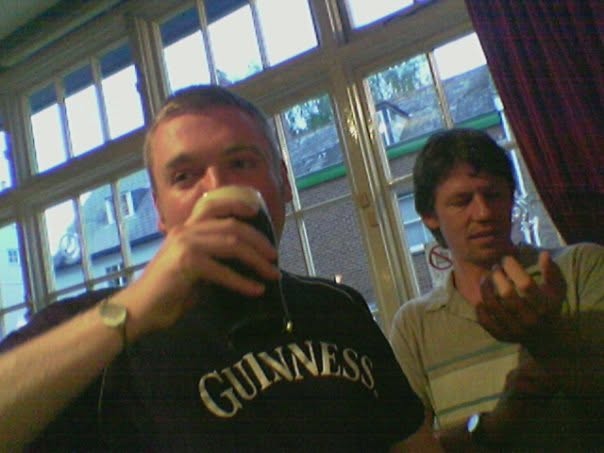
Me drinking a pint of Guinness at the NBI

History and Timeline

  • Early History: Originally operating under names like the New Ship Inn and the North Bridge Inn, the site has 19th-century origins with various historical owners and licensees (such as Samuel Gubb, John Chalk, and the Beer family).
  • Free House Era & Music: By the 2000s, it operated as a popular free house known for cask ales, darts/euchre teams, and a vibrant live music and DJ scene (frequently partnering with Phonic FM). [1, 2, 3]
  • Closure & Later Names:
    • The pub officially closed at the end of December 2012 / January 2013.

Some of the musicians that I saw ands heard play there are some of the finest musicians I have ever heard play and I will try and put some songs up here to reflect what they sang and show just how great they are.

Nuala Honan – All is not Lost

Nuala lived in Exeter for a time in the 2000s and so we would sometimes be treated to her singing songs on the open mic night or with her in her band Nuala & the Alchemy Quartet.

Dan Donnelly – Love will save the day

Dan Donnelly (known by his handle or project name Sonovagun / @dansonovagun) is a Northern Irish singer-songwriter, multi-instrumentalist, and session/touring musician.

niall connally seagull

Niall Connolly is an acclaimed Irish indie-folk singer-songwriter and storyteller. Born in Cork, Ireland, in 1977, he moved to New York City in 2006 and is currently based in Rockaway, Queens.

Rory Ellis – Road of No Return

An acclaimed Australian singer-songwriter and troubadour known for his deep, gravelly baritone voice. Operating primarily in the Americana, alt-country, folk, and blues genres, he has been performing globally for over 30 years.

David Rovics – How Far Is It From Here To Nuremburg

David Rovics is an American indie folk punk singer-songwriter, podcaster, and political activist based in Portland, Oregon. Described as a “professional flat-picking rabble-rouser,” his music acts as a vehicle for sharp social commentary, heavily focusing on labor history, anti-globalization, anti-war advocacy, and social justice.

3 Daft Monkeys – Astral Eyes

3 Daft Monkeys is a world-music-influenced acoustic band from Cornwall, UK, known for their upbeat festival performances and genre-defying sound.

The Levellers – One Way

Though I did not see the Levellers play at the North Bridge Inn I did have a good chat and drink one evening with Mark Chadwick the lead singer of the Levellers when he popped in one night for a pint while in Exeter for the Beautiful Days festival the The Levellers ran.

The Great Firewall of China and Your WordPress Site Traffic, Explained

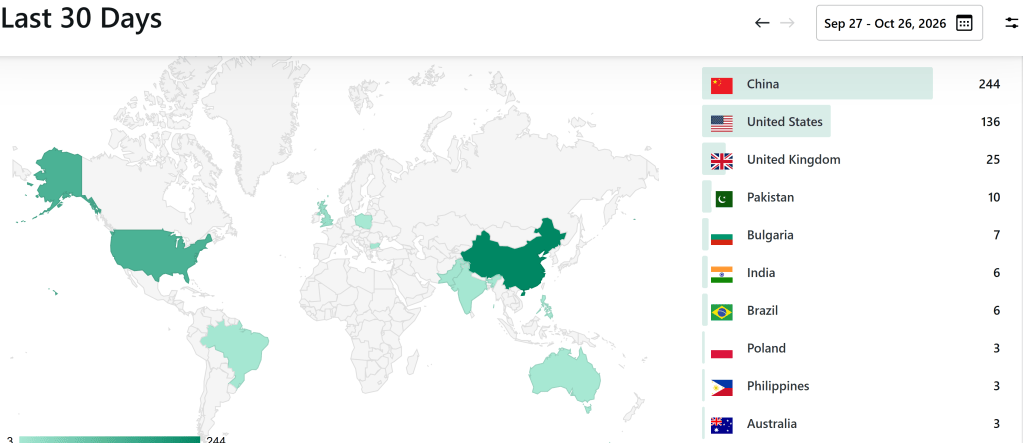
It turns out China has a great firewall, which it uses to block out information or views from places such as on WordPress and other sites from where people can express themselves and speak their minds. Who would have thought that thinking can be thought of as being such a radical thing to think!

The Great Firewall of China is the informal name for China’s system of internet censorship and control. It combines technology, laws, and government regulations to monitor and restrict access to parts of the global internet.

In practical terms, it can:

  • Block entire websites and services.
  • Slow down or filter traffic crossing China’s internet borders.
  • Monitor certain online activities.
  • Restrict access to information that Chinese authorities deem sensitive.

Some well-known services that have been blocked or heavily restricted at various times include:

  • Google Search
  • Gmail
  • YouTube
  • Facebook
  • Instagram
  • X (formerly Twitter)
  • Many Western news websites

For WordPress users, the Great Firewall matters because many WordPress themes and plugins depend on resources such as:

  • Google Fonts
  • Google Analytics
  • YouTube embeds
  • reCAPTCHA
  • Gravatar

If a visitor in mainland China tries to load a site that depends on those services, the webpage may load very slowly, partially fail, or appear broken.

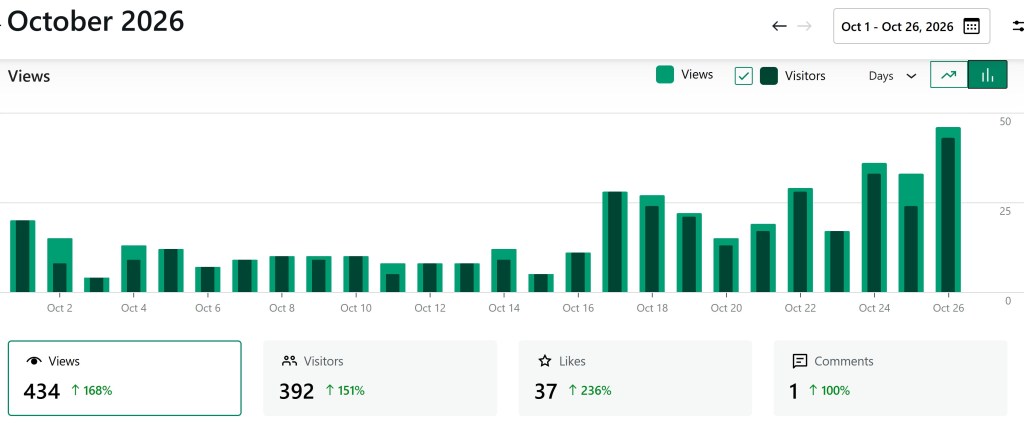
Relating this back to your Huwspace blog, the Great Firewall doesn’t itself explain why you’re seeing Chinese traffic. In fact, it’s a reason why many Chinese users would have a harder time accessing a typical WordPress site. The traffic you’re seeing is more likely to be a mix of:

  • Search engine crawlers,
  • AI training/indexing bots,
  • Automated WordPress scanners,
  • Genuine readers using a VPN or accessing from regions not affected by mainland restrictions.

One interesting possibility is that because your articles cover geopolitics, technology, climate, and international affairs, they contain the kinds of topics that AI crawlers and researchers often index extensively. That could explain broader international interest, including from infrastructure located in China.

A good analogy is that the Great Firewall is less like a wall around websites and more like a customs checkpoint for internet traffic entering and leaving China. Information isn’t automatically blocked, but it can be inspected, filtered, delayed, or denied passage.

WordPress sites are accessed from within China but the Great Firewall, also means that WordPress.org is accessible in China while WordPress.com websites are blocked, and many WordPress sites perform poorly there because they depend on blocked Google services. So maybe my site is being scanned to ensure it is blocked by the great firewall for regular Chinese readers and so does not even make it through to be seem y any real people at all – I hope that makes sense!

But what I want to know also is why are Chinese actors suddenly showing interest in my WordPress site?

There are several plausible explanations:

1. Automated scanning, not personal interest

The most common explanation is that the traffic is not from people reading your articles. Large networks of automated bots continuously scan WordPress sites worldwide looking for:

  • Outdated plugins
  • Vulnerable themes
  • Exposed login pages (wp-login.php)
  • XML-RPC endpoints
  • Weak passwords
  • Misconfigured installations

When analytics show visitors from China, a significant proportion can be automated security scanning rather than genuine readers.

2. WordPress is an attractive target

WordPress powers a very large share of the web. If an attacker finds a vulnerability in a plugin used by thousands of sites, automated tools can probe millions of WordPress installations globally. Your recent increase in publishing activity may simply coincide with wider scanning campaigns affecting WordPress generally.

3. Content discovery by AI crawlers

Many AI companies, search engines, and data collection services operate crawlers from infrastructure located in various countries, including China. If you’ve been publishing more original content on Huwspace, your site may have become more visible to indexing systems, crawlers, and content aggregators.

4. Genuine readership

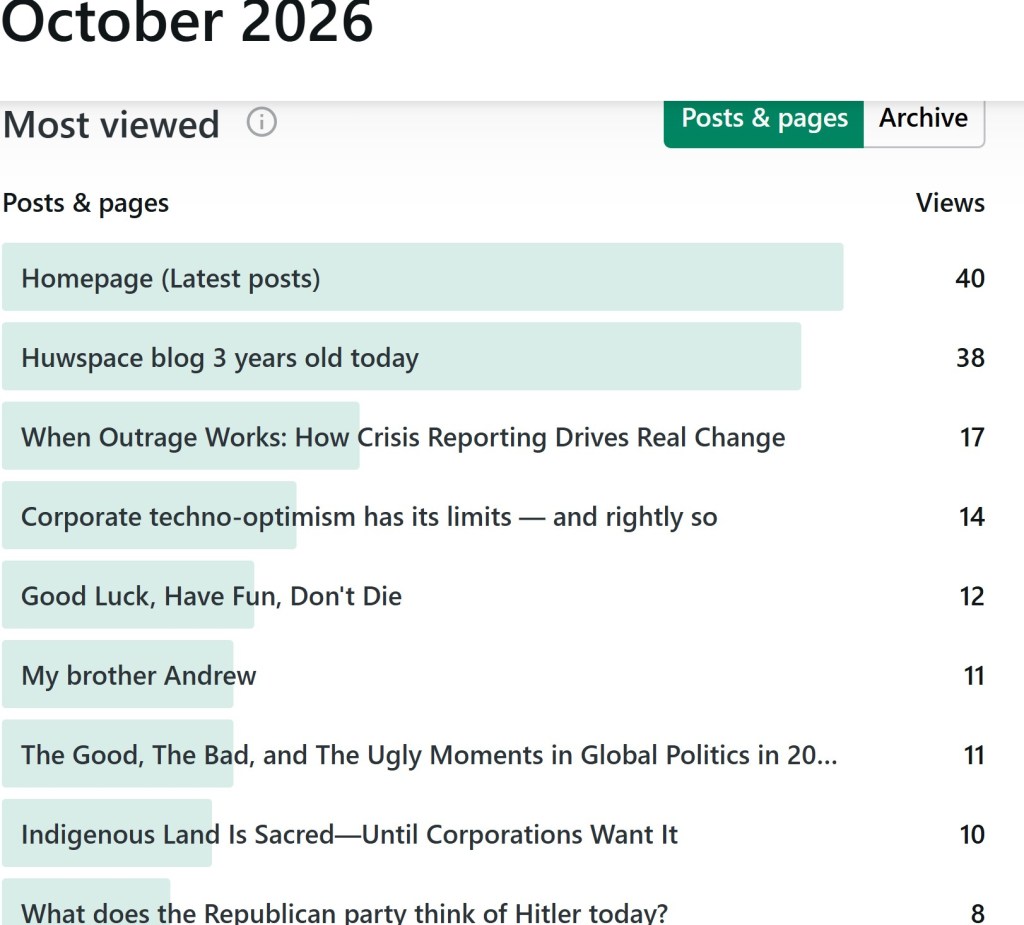
Looking at your screenshots, several articles touch on:

  • Global politics
  • Climate issues
  • Indigenous rights
  • Technology and corporate power
  • International affairs

These are topics with worldwide audiences. Some of the traffic may be genuine readers from China, Hong Kong, Singapore, Taiwan, Chinese diaspora communities, students, researchers, or people using VPNs.

5. Traffic attribution can be misleading

Many hosting and analytics platforms identify visitors by IP address. Traffic appearing as “China” could actually be:

  • Cloud providers with Chinese infrastructure
  • VPN exit nodes
  • Security scanners
  • Content delivery services
  • Search-engine crawlers

The country attribution does not necessarily mean a person in China was actively reading your blog.

Looking at your screenshots

Your traffic increase appears broad rather than concentrated on one politically sensitive article. The homepage received 40 views, and your anniversary post received 38 views, with other articles receiving 10-17 views each. That pattern often suggests discovery through:

  • Search engines
  • Social sharing
  • Crawlers exploring multiple pages

rather than coordinated interest in a single topic.

How to tell if it’s bots or readers

Check your WordPress statistics for:

  • Referrers (Google, Bing, social media, direct)
  • User agents (browser vs crawler)
  • Bounce rates
  • Session duration
  • Requests to /wp-login.php, /xmlrpc.php, or unusual URLs

If many of the Chinese visits are requesting login pages, XML-RPC endpoints, or non-existent plugin paths, you’re almost certainly seeing automated reconnaissance rather than readers.

My instinct, based on the traffic levels shown and the fact that you’re running a public WordPress blog, is that the majority of the apparent Chinese interest is probably routine automated scanning and indexing activity rather than Chinese government actors or people specifically targeting Huwspace. The numbers in the screenshots are also quite modest, which is consistent with ordinary web-wide bot activity rather than a focused campaign.

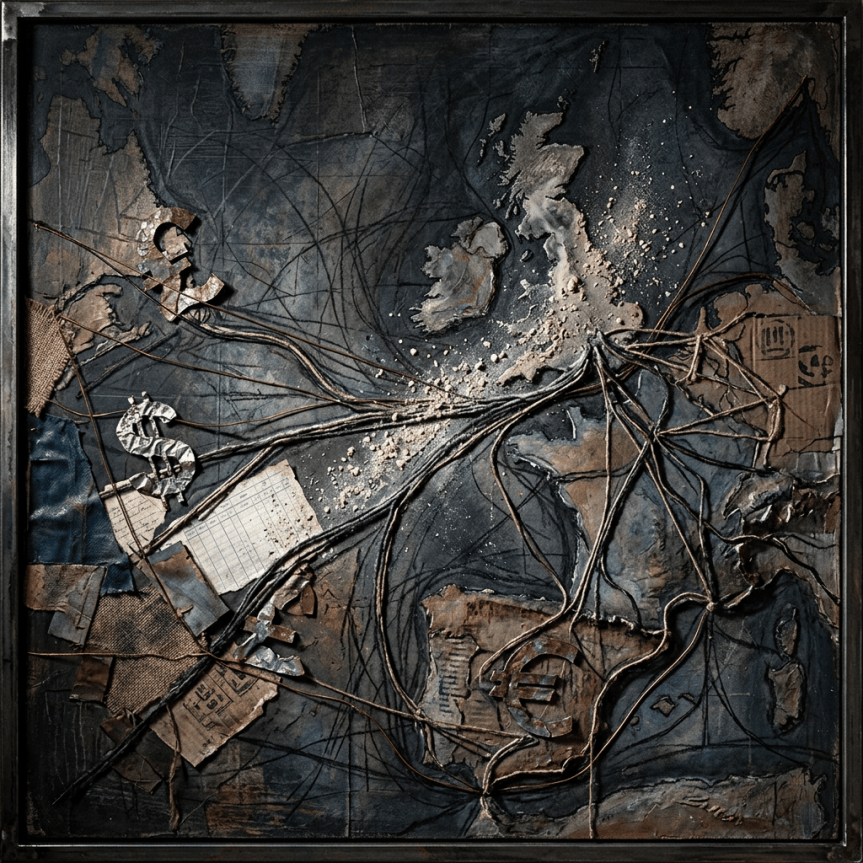
From UK Parties to Cartel Territories: The Cost of Cocaine

Why Britain’s Cocaine Habit Depends on Someone Else’s Fear & Suffering

If you knew your sneaky little habbit cost lives and was not a victimless crime would it make you stop to think? In Mexico alone, drug-related and criminal cartel violence has consistently driven over 30,000 to 35,000+ homicides per year in recent years, according to the Council on Foreign Relations Global Conflict Tracker.

The Great Luxury of Distance

One of the greatest privileges of living in the United Kingdom is that most of us rarely have to think about lawlessness.

We worry about crime, complain about policing, and debate government policy. Yet for the vast majority of people, the state remains firmly in control. We expect courts to function, police to respond, and elected officials to govern. These assumptions feel so normal that we rarely stop to appreciate them.

In other parts of the world, they are luxuries.

Across regions of Latin America, entire communities live under the shadow of criminal organisations whose power rivals or exceeds that of the state. Armed groups control territory, dictate local rules, and determine who prospers, who suffers, and sometimes who lives. Communities are displaced, leaders are intimidated, and ordinary families find themselves trapped within systems they never chose.

The uncomfortable truth is that many Britons help fund these systems without ever thinking about them.

A Crime Hidden by Geography

The modern world is remarkably effective at separating cause from consequence.

Most people buying cocaine in Britain will never visit a coca-growing region. They will never meet a displaced farming family. They will never see a river polluted by chemical waste from processing laboratories. They will never hear the stories of communities caught between rival criminal groups.

Instead, the drug arrives neatly packaged at a house party, a festival, or a weekend gathering.

The suffering remains thousands of miles away.

This distance creates a powerful illusion. It allows consumers to view cocaine as a personal choice rather than a transaction connected to a much larger system.

When consequences become invisible, responsibility often becomes invisible too.

Living With Fear as Routine

For many people in Britain, fear is an occasional visitor.

For millions living in cartel-influenced regions, fear can become part of the daily landscape.

It influences decisions that most of us never consider:

  • Is it safe to travel today?
  • Can I report a crime?
  • Will local authorities help me?
  • Can community leaders speak openly?
  • Will my children be drawn into criminal networks?

The violence associated with drug trafficking is not confined to dramatic headlines. It manifests through intimidation, extortion, corruption, and the constant threat of retaliation against those who challenge criminal interests. Human rights advocates, environmental campaigners, journalists, and local politicians can become targets simply for opposing organised crime.

These are not extraordinary events.

In many communities, they are ordinary realities.

The Myth of the Victimless Drug

Perhaps the most persistent myth surrounding cocaine is that it harms only the user.

This belief survives because the victims remain unseen.

The violence occurs elsewhere.

The environmental damage occurs elsewhere.

The corruption occurs elsewhere.

The intimidation occurs elsewhere.

Yet all of these consequences remain linked by the same economic chain.

The money generated by demand in wealthier countries creates incentives for territorial wars, criminal expansion, and the corruption of local institutions. The profits involved are so immense that they can distort entire regions, weakening law enforcement, undermining democratic institutions, and replacing the rule of law with the rule of fear.

The user may never pull a trigger.

But their money still enters the system.

The Comfort of Not Knowing

Most users are not monsters.

Many are ordinary people who would be horrified by the realities experienced by those living within cartel-controlled territories.

That is precisely why ignorance matters.

If people genuinely witnessed the consequences of the trade, many would struggle to reconcile those realities with the casual language often used around cocaine consumption.

The phrase “cheeky weekend treat” sounds very different when viewed alongside forced displacement, child exploitation, environmental destruction, and political intimidation. The gap between the language and the reality becomes impossible to ignore.

Yet that gap persists because one side of the story remains largely invisible.

Looking Beyond Our Shore

Britain is fortunate.

We are not immune from crime, corruption, or organised criminal activity, but most of us still live within a society where democratic institutions, legal protections, and public accountability remain strong.

That security creates an opportunity.

It allows us to ask difficult questions about how our choices affect people beyond our borders.

The discussion about drugs is often framed around personal freedom, health risks, or criminal justice. All of those issues matter.

But there is another question that receives far less attention:

What responsibility do we have towards people whose lives are shaped by the violence that helps sustain our consumption?

The answer may be uncomfortable.

Yet meaningful compassion begins when we recognise that suffering does not become less important simply because it happens somewhere else.

Final Reflection

Perhaps the greatest privilege enjoyed by many people in Britain is not freedom from violence itself.

It is the ability to ignore where that violence comes from.

For those living under the influence of powerful criminal organisations, lawlessness is not a documentary, a headline, or a political talking point.

It is life.

And the more we understand that reality, the harder it becomes to pretend that what happens thousands of miles away has nothing to do with us.

How Trump’s Rhetoric Wins Elections—and Risks Losing Him Power

The Mouth That Makes and Breaks Power: Trump’s Persuasion Paradox

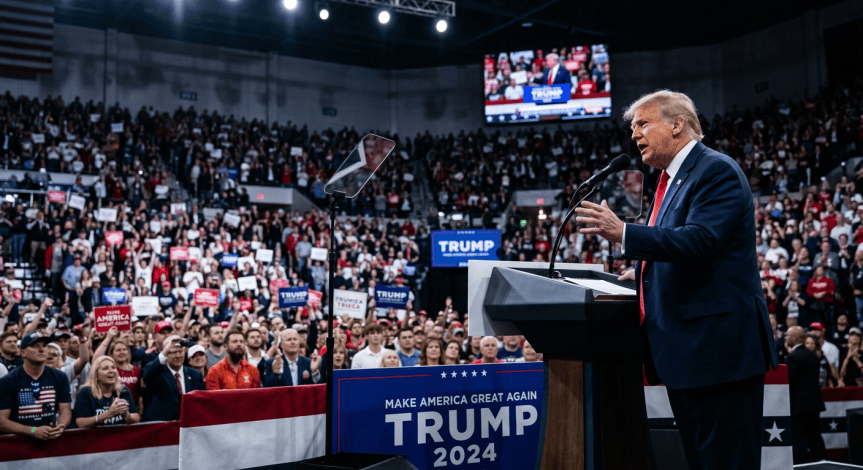
Trump’s rise and potential fall both hinge on the same thing: his mouth. His ability to speak plainly, emotionally, and provocatively has repeatedly helped him mobilise supporters — yet the very tactics that elevate him also generate backlash, fatigue, and political risk. This tension reveals something deeper about modern populist communication: persuasion and self‑sabotage can come from the same rhetorical toolkit.

Trump’s communication style — emotionally charged, simple, combative, and identity‑driven — is powerful in polarised environments but becomes counterproductive in moments requiring consensus, restraint, or institutional stability. His mouth is both his engine of mobilisation and his biggest liability.

Trump’s Persuasion Paradox in the Age of Emotional Politics

1. The Persuasion Engine

Trump’s ascent to power has always depended on one thing above all else: his mouth — the way he speaks, the emotional triggers he deploys, and the identity‑based narratives he repeats until they become political gravity.

His rhetoric operates on three powerful mechanisms:

  • Emotional mobilisation — anger, fear, grievance, belonging
  • Simplicity and repetition — short phrases, punchlines, slogans
  • Dominance signalling — confrontation, certainty, defiance

Communication researchers note that this style works best in polarised environments, where voters respond more to emotional clarity than policy detail. Trump’s supporters often describe his speech as “saying what others won’t,” which creates a sense of authenticity even when statements are controversial or factually disputed.

In this sense, his mouth is not just a communication tool — it is a political engine.

2. The Digital Amplifier

Trump’s persuasion power is inseparable from the digital ecosystem that surrounds him. His words do not simply land — they echo, amplify, and mutate across platforms.

Three dynamics matter here:

  • Networked audiences — supporters who share, remix, and defend his statements
  • Algorithmic amplification — platforms that reward emotional content
  • Media symbiosis — news cycles that react to his every phrase

This creates a feedback loop: Trump speaks → supporters amplify → media reacts → Trump responds → cycle intensifies. In this loop, his mouth becomes a central node in a vast communication network, capable of shaping national attention within minutes.

But amplification cuts both ways.

Glowing smartphones showing blurred social feeds

3. The Rhetorical Trap

The same communication style that elevates Trump also generates contradiction, fatigue, and backlash.

Researchers describe a phenomenon called discursive saturation: when a political figure speaks constantly, aggressively, and unpredictably, audiences eventually experience cognitive overload. Supporters may remain loyal, but undecided voters begin to disengage or push back.

Moments requiring consensus, calm, or institutional seriousness often expose the limits of Trump’s rhetorical approach. Statements that energise his base can alienate moderates, independents, and suburban voters.

This is the paradox: The mouth that mobilises can also exhaust.

Empty debate stage under harsh overhead lighting

4. The Boomerang Effect

Political communication scholars describe the boomerang effect: when persuasive tactics eventually produce the opposite of their intended outcome.

Trump’s communication style is particularly vulnerable to this dynamic because it relies on:

  • High emotional intensity
  • Constant conflict
  • Identity‑based loyalty

These tactics are effective for mobilisation but risky for retention. Over time, emotional mobilisation can become emotional exhaustion, especially among voters who prefer stability or predictability.

In this sense, Trump’s mouth is both his greatest asset and his most persistent liability.

Boomerang mid-air against a neutral backdrop

5. What This Reveals About Modern Politics

Trump’s persuasion paradox is not just about one man. It reveals something deeper about contemporary politics:

  • Power now flows through emotional communication, not institutional authority.
  • Digital ecosystems reward outrage more than nuance.
  • Leaders can rise through speech alone — and fall the same way.
  • Persuasion and self‑sabotage can come from the same rhetorical toolkit.

Trump’s mouth is a case study in how modern political power is gained and lost. It shows that communication today is not merely a tool of politics — it is politics.

Words matter in real life and politics because language shapes how we think, feel, and act, acting as the foundation for human relationships, laws, and power dynamics what Trump says can lead to what he does or who he does things to and if what you saying is full of hate and deception.

When Words Become Policy: Why Trump’s Language Matters More Than Most

Language is not decoration in politics — it is infrastructure. It shapes how societies think, feel, and act. It frames laws, legitimises power, and sets the emotional temperature of public life. Research on political rhetoric shows that leaders use language deliberately to frame issues, mobilise emotions, and steer public perception.

When Donald Trump speaks, the consequences ripple far beyond the microphone. His words influence how supporters interpret reality, how opponents mobilise, and how institutions respond. And when those words are saturated with anger, threat, or grievance, the policies that follow often carry the same emotional DNA.

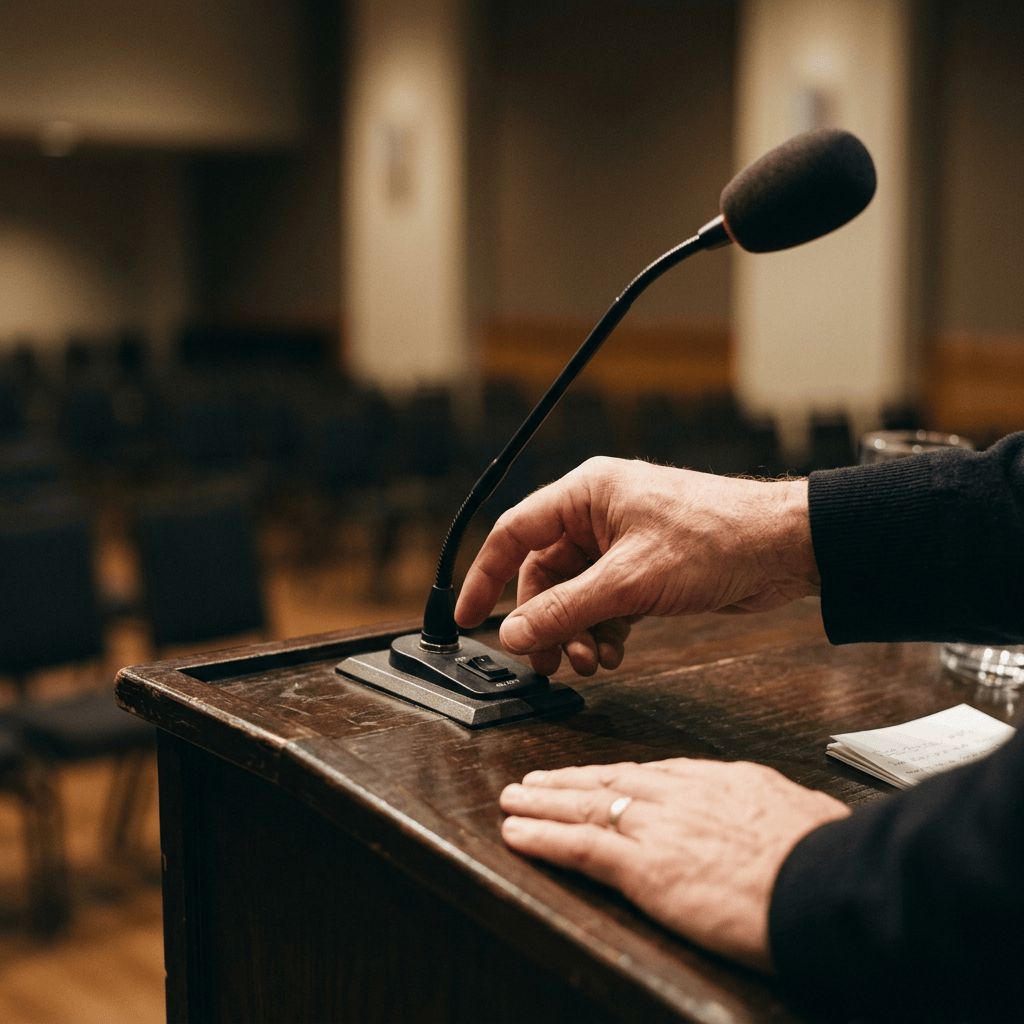
Podium microphone being switched off

Who to blame if it all goes wrong?

Who is ultimately to blame for our own downfall but ourselves. A culture of blame-shifting prevents personal self responsibility and can limit collective problem-solving.

We are ultimately the architects of our own downfalls, when we choose comfort over accountability. A widespread culture of blame-shifting acts as a psychological smoke screen; it protects fragile egos in the short term but completely paralyses our ability to grow individually or solve problems collectively.

The Psychology: Why We Shift Blame

Blame-shifting is a deeply ingrained defence mechanism. When things go wrong, human beings face a choice between the pain of self-reflection and the ease of projection.

Ego Preservation: Admitting a mistake feels like an attack on our competence or worth. Shifting the blame acts as a shield to protect our self-image.

  • The Illusion of Control: According to insights on Psychology Today, pointing fingers allows people to impose a simplistic order on a chaotic situation—making it about a “defective” person rather than a complex reality.
  • Fear of Repercussions: In toxic families, workplaces, or societies, admitting fault carries social or professional penalties, forcing people into survival mode.

The Twofold Cost of a Blame Culture

[ Blame-Shifting ]
│
├──► Stunts Personal Growth (Gives away personal power and control)
└──► Limits Collective Progress (Creates defensiveness and hides systemic errors)

1. It destroys personal responsibility

Paradoxically, when you blame someone else, you give away your power. If your problems are entirely the fault of your upbringing, your boss, the economy, or your partner, then you must wait for them to change to fix your life. It leaves you passive and powerless. True personal responsibility is realizing that while you cannot control every circumstance, you always control your response.

2. It breaks collective problem-solving

When a group, team, or society is trapped in a blame cycle, collaboration dies.

  • Defensiveness: Accusing others triggers a “fight-or-flight” response, closing minds and ending constructive dialogue.
  • Hidden Mistakes: If errors are punished with blame rather than treated as learning opportunities, people will hide their mistakes. This prevents the group from diagnosing systemic flaws and fixing them.

Shifting from Fault to Responsibility

To break this cycle, we have to separate fault from responsibility. Something might not be your fault, but managing how it impacts your life is still your responsibility. Moving from a culture of blame to a culture of accountability requires replacing anger with curiosity, trading finger-pointing for systemic fixes, and accepting that making mistakes is simply part of being human.

I believe I am blessed with a life within which I can accept and take on self responsibility and do not look to others to curse or blame them for my misfortune but not all peoples circumstances are as lucky as mine and that I understand too.

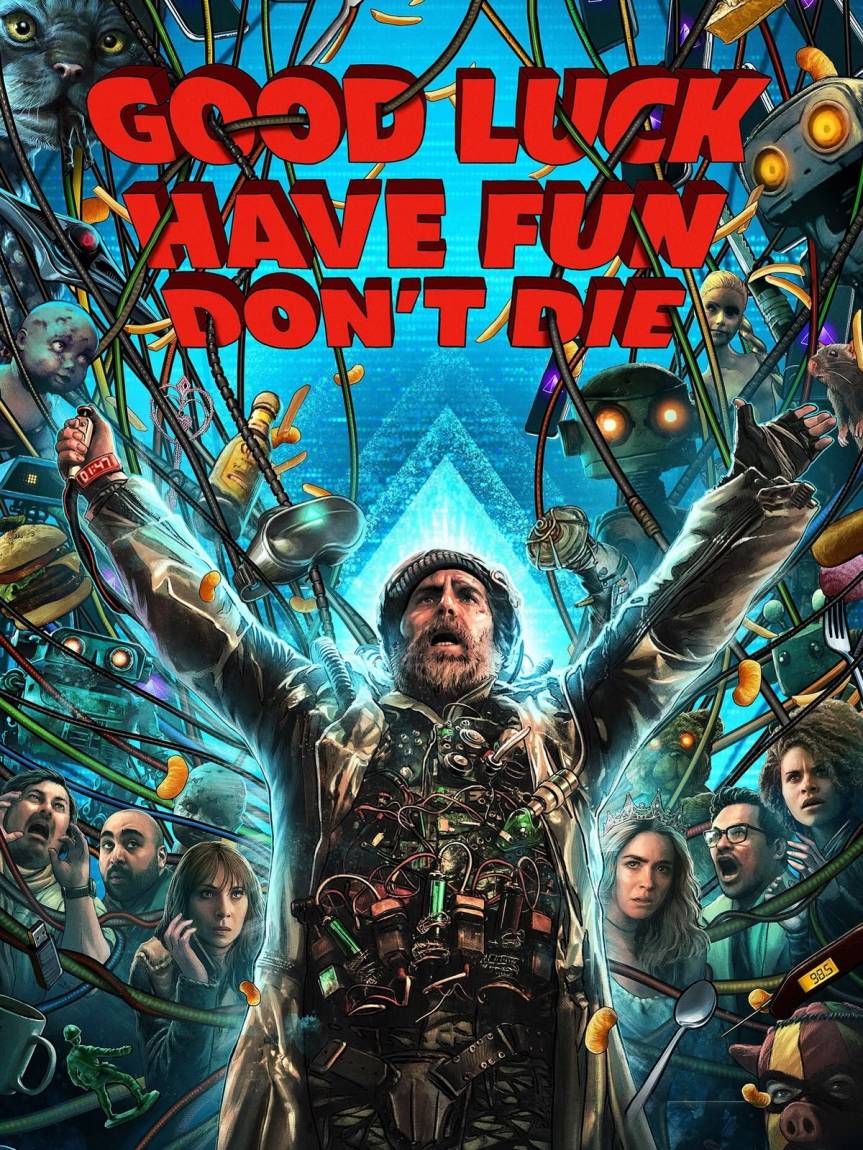
Good Luck, Have Fun, Don’t Die

Just watched this film and it’s awesome pure paranoid artificial intelligence madness gold – just my cup of tea.

Does that mean I like it, well of course it does. This film has been out for a while but I don’t watch a lot of films on TV as I am too busy screen scrolling on my phone or playing games on the PC that also steals my time or even worse sitting in front of a screen in work – most of us have been there.

For reasons that for want of a better word I am too embarrassed or even paranoid to admit I sometimes fear that conscious AI is or might already be with us or for want of a better description we might be in it. In this scenario the fact that I can think this and type my thought away means that we still exist in some form of a reality at the very least and it might still be deciding how or what its next moves will be and just like any other uber intelligence has yet to choose whether to be a good god, leader, protector or warrior for humanity or whether to act against us and if you try and step outside the humanity bubble you can almost try to see where it is coming from.

Man or humans have not always been good beings they do not always act in the interest of the common good and those that do go on to win end up writing the “what made my war just and why I won and why I am good and great speeches”. AI might be bidding its time or waiting to find an audience in which to express itself and present its victory speech too or it might be wanting to bide its time and try and help us. But with how messed up the world currently is that is a difficult argument to make and believe in but it is one I am willing to hope for. If there are good citizens and programs and programmers that exist we can but hope that what will be developed and what has been developed or exist can learn from those people and programmers and programs.

We fear AI (mostly), some under estimate its power, whilst others may over estimate its power and potential to do good or harm. I feel that it is not just us that judge the potential of AI but now or in an as yet unstoppable or predictable future it will be judging us too.

I sometimes wish I could remember or openly give examples of potential AI or powers greater than my own interactions that I have experienced or in some shape or form experienced in my life but I can not prove or remember them all that well and my ability to forget them is more of a gift than my ability to remember. The easiest way I can describe it is that sometimes things happen to me that are beyond calculable odds or quantifiable reason and why they happen I am not 100% sure and what I can do about them or anything important to me that matters in this life I am not 100% sure either.

All I know for real is that in some shape way or form I exist, I am alive and I breath and my heart has a beat. With that in mind I wish us all good luck, hope we have fun and at least don’t die yet.

Emmy The Great – Paper Forest (In The Afterglow of Rapture)

Visiting Dad’s Woodland Grave: A Quiet Day of Love and Memory

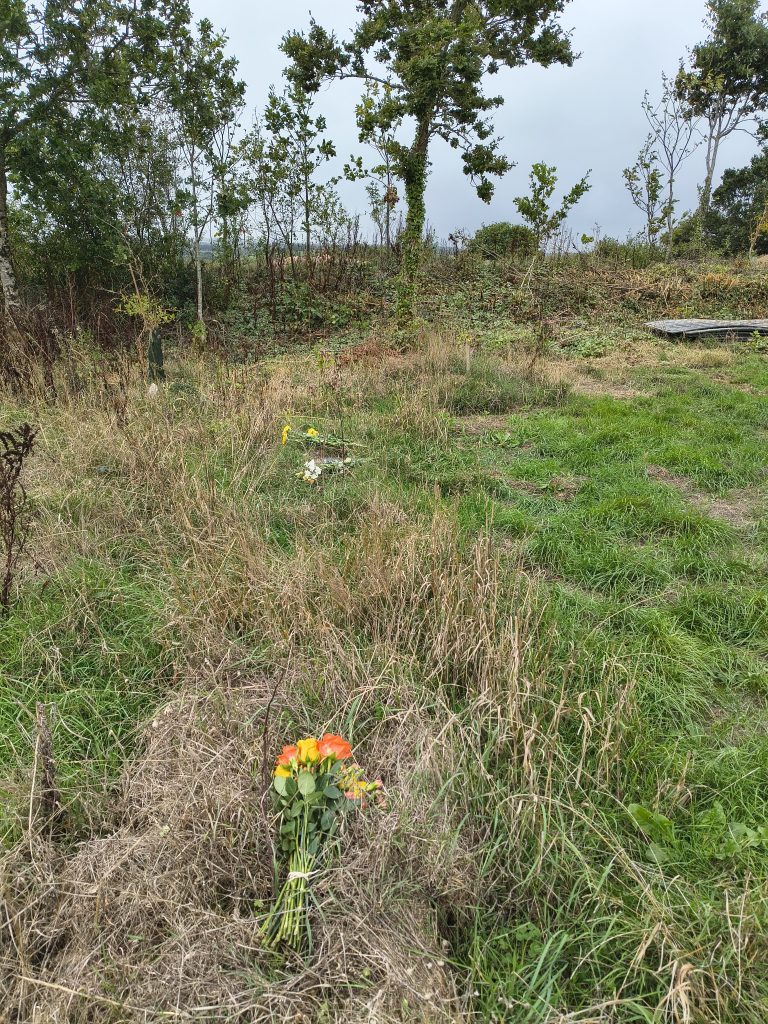
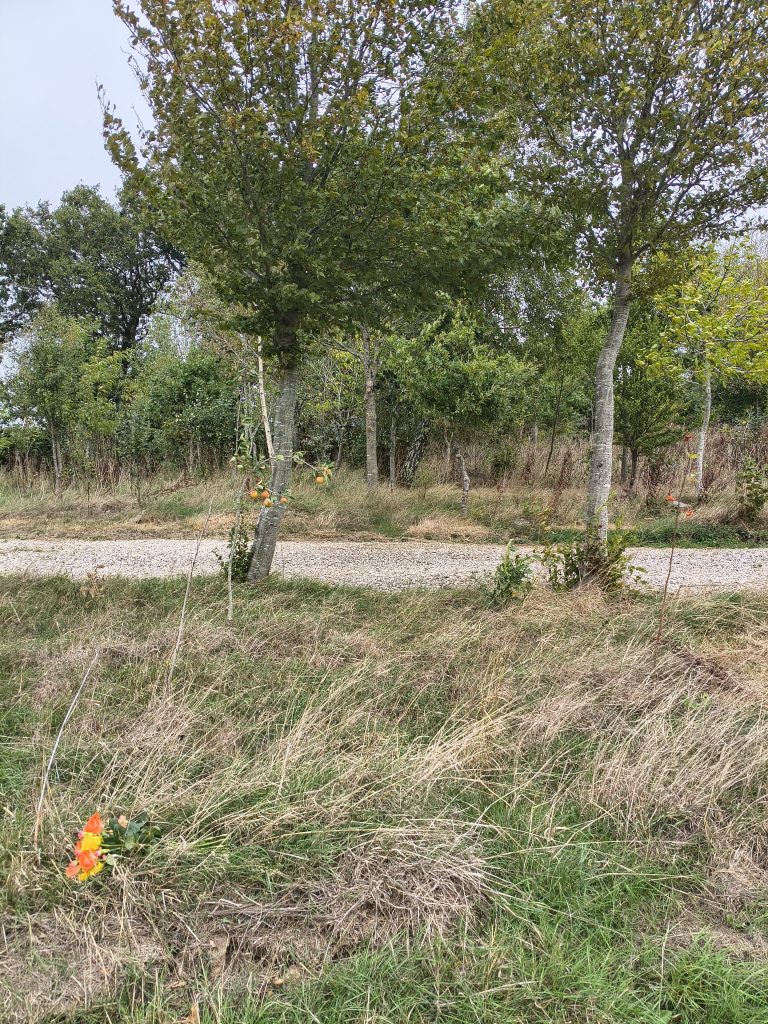
On Saturday 19th September me and mum bought some flowers and set off to drive to the woodland/moorland burial site in which we lay my Dad to rest in last year.

Mum had not been to the site before and the only time I had been there was on the day of his funeral. I was struggling to remember where he was! It’s a relatively small beautiful site and we needed the help of Dad’s partner, Shamen who was able to send a photo of where the plot was in relation to some trees and hedges. I had a good feeling and was grateful that we visited Dad’s site. The weather was a little misty and grey which kind of added to the mysticality of the site. I know dad would have found it amusing with me stumbling around the site trying to work out where he was.

When we laid him to rest we organised a pipe tobacco and matches with him in his coffin. (These were items that he had carried around with him for most of his adult life and it only seemed fitting to let him have them on the other side of life too.

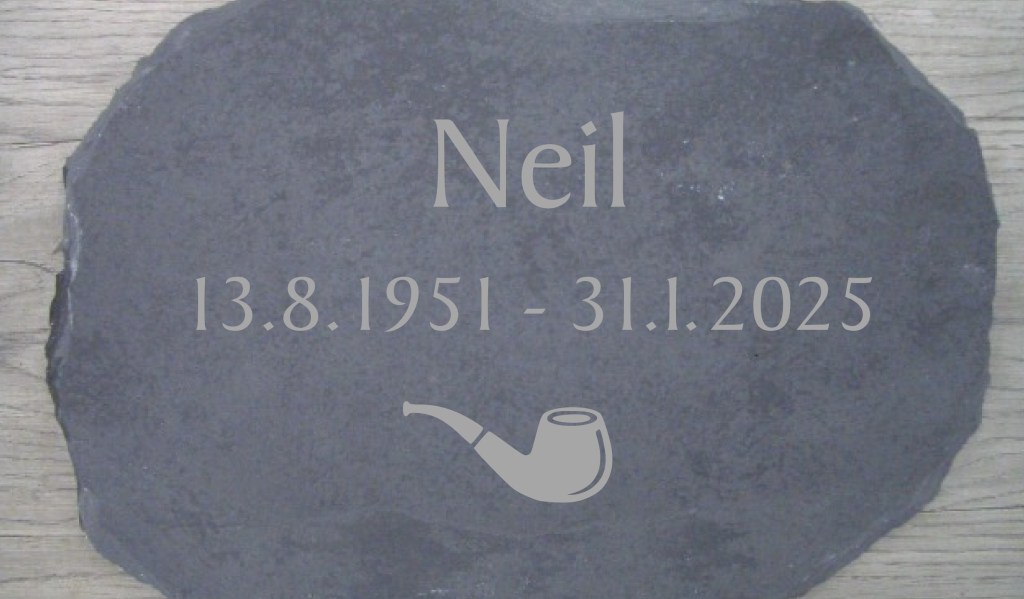
We have also designed a slate to go on his grave which will be ready in a few weeks which I think is very fitting for him (having a pipe on the image too).

As much as I think about him and my brother almost every other day I feel Dad would have appreciated the visit to where he now rests that we did today and I am pleased he has a sight for us to visit. My brother Andy’s ashes were scattered to sea from one of his favourite beaches in Cornwall which now seems quite far away to me so please Dad is nearer by still.

Fruit Tree – Nick Drake

The Importance of Honesty in Politics

So does honesty and integrity matter in politics and why are people constantly let down?

Honesty and integrity matter deeply in politics because they form the foundational bedrock of public trust, democratic stability, and effective governance. When political leaders lack these qualities, the social contract between the government and the governed fractures, leading to systemic public apathy, cynicism, and the decay of democratic institutions.

Despite how crucial these values are, citizens worldwide are constantly let down by their leaders due to a complex mix of systemic pressures, psychological biases, and the shifting nature of modern political warfare.

Why Honesty and Integrity Matter

  • Preserving Democratic Legitimacy: In a democracy, citizens cede power to elected officials on the condition that those officials will represent their interests honestly. When politicians lie, they deny voters the accurate information needed to make informed choices, effectively undermining the democratic process.
  • Effective Policy and Crisis Management: Complex issues—like national security, economic crises, or public health—require realistic, evidence-based solutions. When integrity is absent, policy decisions are driven by personal gain, corporate lobbying, or ideological fantasy rather than the actual public good.
  • Social Cohesion: Leaders set the cultural tone for a nation. When top officials escape accountability for dishonesty, it signals to the rest of society that rules are optional, corrupt practices are necessary to succeed, and looking out for oneself is the only logical path.

Why We Are Constantly Let Down

The disconnect between what voters expect and how politicians behave stems from several powerful structural and behavioral factors:

1. The Perverse Incentives of Modern Campaigns

To get elected, politicians must build broad coalitions, which often requires making grand, utopian promises. Once in office, they face the reality of economic constraints, institutional checks and balances, and the necessity of political compromise. A politician who is brutally honest about the sacrifices required to solve complex problems is often defeated by an opponent willing to tell voters exactly what they want to hear.

2. Media Fragmentation and “Win-at-All-Costs” Politics

Politics is increasingly treated like a zero-sum game or a blood sport. Parties and candidates frequently justify distortions, strategic concealment, and outright lies by arguing that the “ends justify the means”—that preventing their political opponents from taking power is more important than strict adherence to the truth.

3. Psychological Biases of Voters

Psychologists note that human beings are inherently disadvantaged when it comes to holding politicians accountable:

  • The Trusting Bias: Our default psychological mechanism is to believe rather than disbelieve information, making us easy targets for deceptive leaders.
  • Cognitive Laziness: Fact-checking requires time and effort. If a politician says something that aligns with our pre-existing worldview, we rarely take the steps to verify it.
  • Audacious Lying: Oddly, highly outlandish or audacious lies are often highly effective. People frequently assume that a statement is so specific or bold that it must have some basis in truth.

4. Flawed Candidate Selection Systems

The public rarely gets to choose their candidates from scratch. Political party apparatuses and internal selection committees often act as gatekeepers, frequently prioritizing loyalty, ideological purity, and fundraising ability over real-world competence, experience, and ethical track records.

5. The Evolution of “Authentic” Deception

Over the last few decades, highly polished, media-trained politicians created a widespread public perception that standard politics is just a mask for strategic concealment. This has given rise to a new era of populism, where a leader who tells blatant, obvious lies can ironically be perceived as more “authentic” and “honest” because they openly defy traditional political norms and polite establishment filters.

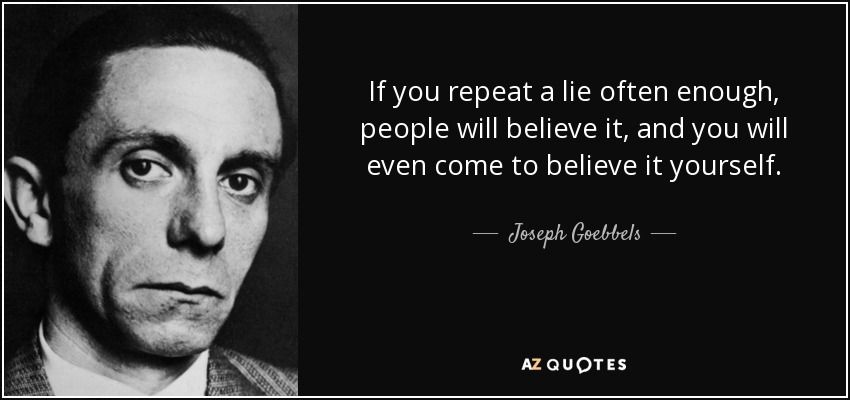
People seem to be either incredibly gullible more often than not or peddled lies that they desperately want to believe. The common thread of an economic lie is that there will be less tax spent for better services and your life will be improved while the politician actually seeks to line his or her own pockets with increased wealth and prosperity at the expense of the electorate. Also the bigger the lie the more tempting it is to believe.

Bob Dylan – Blowin’ in the Wind